Note: This website was automatically translated, so some terms or nuances may not be completely accurate.
 Boost your brand value through collaborations with anime characters! [2/2]
Nippon TV × Fuji TV. Why did the astonishing Lupin collaboration become a reality?

Naoto Inaba
Fuji Television Network, Inc.

Masaki Shioda
Nippon Television Network Corporation

Junzen Kosugi
Dentsu Inc.

The TV anime "Lupin the Third Part 6" (Nippon TV network), launched in 2021 as part of the 50th anniversary anime project, and the movie "Lupin the Third: The Movie - The Daughter of Lupin" (Fuji TV network), released the same year.
Animation and live-action, Nippon TV and Fuji TV.
Despite being completely different types of content, their unprecedented collaborative promotion, breaking down barriers between the two, generated significant buzz.
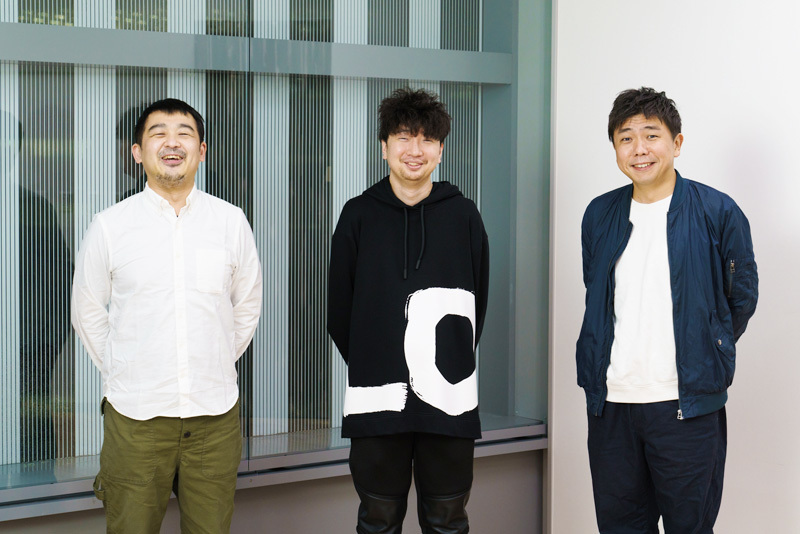
How did this astonishing collaboration come to be? Junzen Kosugi of Dentsu Inc. Content Business Design Center interviewed guests Masaki Shioda, producer at Nippon TV, and Naoto Inaba, producer at Fuji TV.
<Table of Contents>
▼The Shocking Plot Twist: "Lupin the Third" and "Lupin's Daughter" Stealing Each Other's Ads
▼Breaking taboos made an impact not just within the industry, but also with viewers
▼ IP Business is Full of Raw Gems! The Key to TV Lies in "Content First" Thinking
Shocking Development: "Lupin the Third" and "Lupin's Daughter" Steal Each Other's Ads
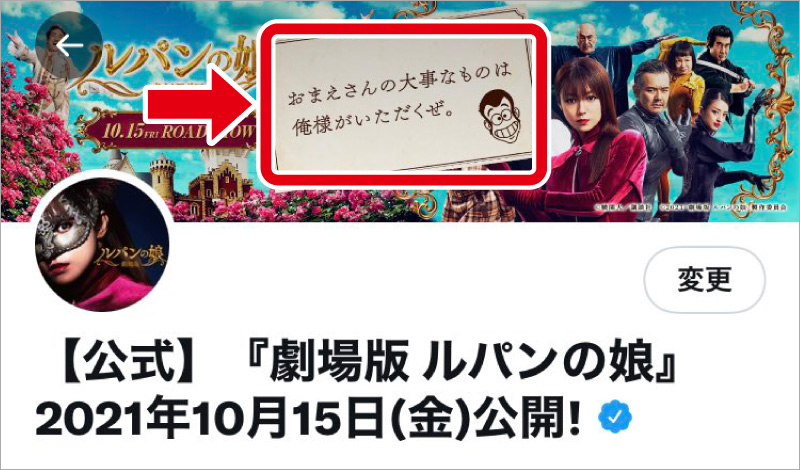
Kosugi: First, let me briefly explain this collaboration. It all started with the official Twitter accounts for "Lupin the Third Part 6" and "Lupin's Daughter: The Movie." Suddenly, a mysterious "crime statement" appeared in their headers. There was no prior announcement, but it caused a stir among users who noticed it on social media.
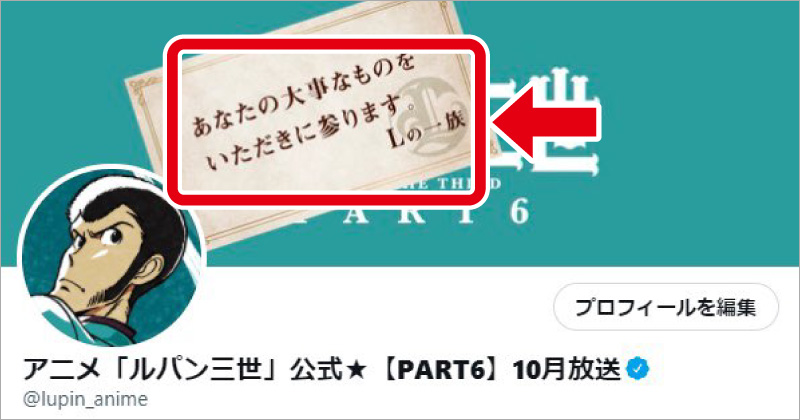
Kosugi: Then, at the end of the teaser videos released on each official YouTube channel, they announced each other's works alongside the criminal message, "We received this advertisement."
This kicked off a series of collaborative promotions, including OOH ads and a clear file giveaway campaign.


Kosugi: That covers the overall collaboration. Regarding the background of this collaboration, I'd like to hear more details from both Nippon TV and Fuji TV's perspectives.
Shioda: Nippon TV's "Lupin the Third" series has always been very "flexible" as content, largely because Monkey Punch-sensei, the original manga creator, was very open-minded towards creators. Thanks to this, diverse works showcasing the unique personalities and ideas of top creators have been produced over the years. Supported by many fans, the anime celebrated its 50th anniversary in 2021. However, we also wanted to increase opportunities to attract new fans and allow casual viewers to enjoy it more deeply.
When Dentsu Inc. proposed this collaboration, I remember feeling truly excited, thinking that if we could make it happen, we might reach audiences we hadn't previously connected with. "Lupin's Daughter" is also a work that embodies a "flexibility" akin to Monkey Punch's approach, and I thought a collaboration between two "Lupin" properties would be incredibly interesting. There were many hurdles to overcome, but thanks to everyone's cooperation, we made it happen.
Inaba: "Lupin's Daughter" is based on a novel by Yokozeki Dai, but for the live-action drama starring Kyoko Fukada, we deliberately pushed a retro, tokusatsu-style atmosphere to the forefront, aiming for something unlike recent dramas. We were a group of guys in our 40s and 50s who got together to make something we thought was fun, but when we actually released it, for some reason it was popular with elementary and junior high school kids and their moms (laughs). It made me realize that even if a work isn't universally appealing, if you pour your passion into it, it will reach the people it's meant for.
Thanks to the drama's popularity with families, the movie project was progressing smoothly. However, the pandemic drastically reduced the number of families going to theaters, making it necessary to find ways to reach a broader audience. Even setting aside the pandemic, there was a growing sense of urgency among TV stations that they couldn't remain too tied to existing ways of thinking, especially as internet content rapidly gained prominence in recent years. Around that time, we learned Nippon TV was starting a new series of "Lupin the Third." My fellow Dentsu Inc. TV station employees and the team who helped promote the Lupin's Daughter movie got really excited, brainstorming, "Couldn't we do something fun together with Lupin?"
Honestly, we thought an actual collaboration would be difficult, but it came together thanks to that colleague's tireless efforts and, above all, Mr. Shioda's character.
Breaking the taboo made an impact not just within the industry, but with viewers too.
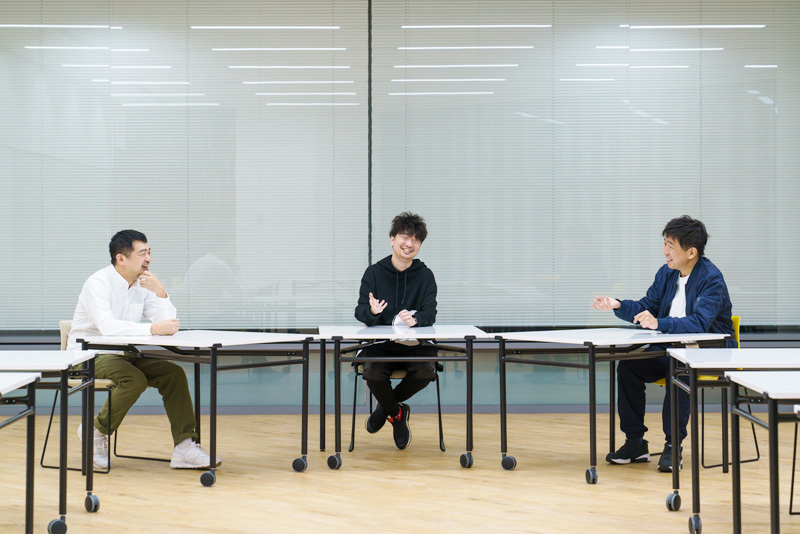
Kosugi: Thank you both. I believe this project wouldn't have been possible without the dedicated efforts of everyone involved at Nippon TV and Fuji TV. How did viewers and fans react?
Shioda: Precisely because "Lupin the Third" is such a long-standing franchise, it tended to be avoided by new or casual audiences. Even among anime fans, many prefer to watch series chronologically from the earliest works, so suddenly being told "PART 6" can feel inaccessible. This time, the bold collaboration became a hot topic, especially on social media. It sparked reactions like "Lupin is doing something weird," even from people who'd never engaged with the franchise before.
Inaba: Conversely, "Lupin the Third: The Daughter" is a relatively new property, so naturally, it faced comparisons to "Lupin the Third" and received some harsh criticism. What made this collaboration especially rewarding was that it felt like we gained a kind of "official endorsement" – we received positive feedback even from "Lupin the Third" fans. Also, viewers these days are quite knowledgeable about "industry rules," so I think the impact of breaking that taboo really resonated.
Shioda: With more spin-offs of specific content emerging lately, I feel an atmosphere is developing where people accept various forms of content, not just viewing things as "authentic" or "fake." It was truly an honor for us to collaborate with new "Lupin" content.
Kosugi: You mentioned taboos earlier. I imagine the hurdle for rival companies like Nippon TV and Fuji TV to collaborate was higher than we anticipated. What are your thoughts on that?
Shioda: Back in the day, the idea of "working with another network to build excitement" would have been absolutely unthinkable. There were plenty of challenges. However, this time, the creative collaboration itself was well-received, and I think we managed to coordinate things well despite the tight schedule. The fact that "Lupin is trying something new" became a talking point both inside and outside the industry suggests that we might see more interesting collaborations crossing TV network boundaries in the future.
Inaba: There's so much content out there, right? We'd love to make dramas or movies together (laughs).
Rough Gems for IP Business! The Key to TV Lies in "Content-First" Thinking
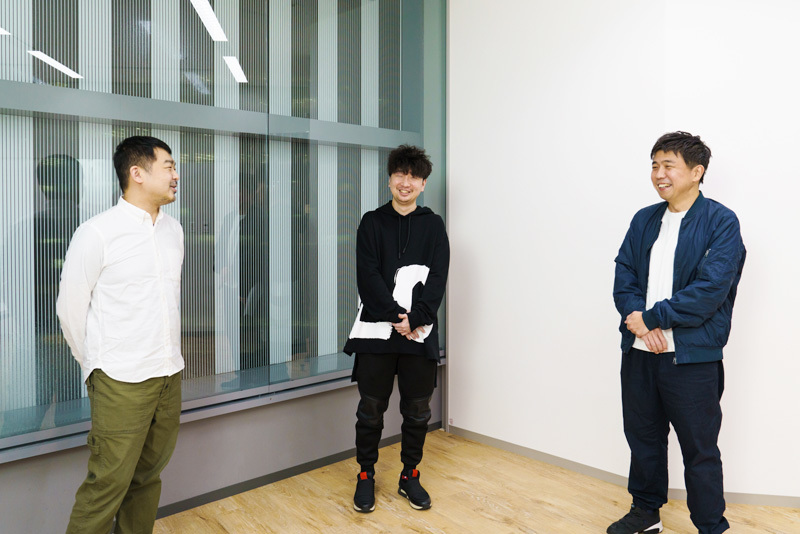
Kosugi: In recent years, broadcasters' business domains have continued to evolve, and "non-broadcast" businesses have become a crucial factor. Specifically regarding IP business, what initiatives are both companies pursuing?
Shioda: For IP business, we're exploring ways to further boost and expand the reach of content like anime series such as "Lupin the Third," and more recently, shows like Nizi Project and THE FIRST, which showcase the artist audition process and have received tremendous response.
Inaba: Currently, one of our company's key focuses is unearthing and delivering "dormant content" – past hit dramas, variety shows, and the like. That said, creating hit original content ultimately has a greater impact for IP business, so we aim to produce new, compelling original content.
Kosugi: Thank you. As Inaba-san mentioned, what I've observed working on IP business at Dentsu Inc. is that there are many raw gems within broadcast content. Even content without a large fan base often possesses a deep appeal that resonates strongly with its core fans, holding significant potential. This collaboration between "Lupin the Third" and "Lupin's Daughter" created a synergistic effect that excited both core fanbases, allowing each other's content to reach a broader audience. By working together from the stage of polishing and making these raw gems shine, we believe we can deliver interesting content to more people and invigorate broadcasters' non-broadcast business.
Shioda: Personally, I also think we should rethink the very concept of "non-broadcast business." I'm trying to break free from that mindset myself. The term "non-broadcast" carries an underlying assumption that broadcasting is the main business and IP is just a side venture. But fundamentally, I believe a TV station's role is to first have compelling content and then use broadcasting and other means to expand its reach. That's precisely why, like this collaboration, working together across the entire TV industry to elevate content—even beyond competitive boundaries—ultimately enhances television's appeal.
Inaba: I agree! When you focus on content, the rivals to TV aren't just internet streaming services—there are mountains of competing content, including communication tools like social media. That makes me think we're no longer in an era where the five commercial networks just compete amongst themselves. To get viewers to choose our programs from all these options, the essential factor is still the power of the content itself. Going forward, broadcasters will be judged on how well they can keep creating strong content. And if strong content is born, monetization will naturally follow.
Kosugi: I think it's significant that this time, two rival companies focused their efforts on elevating each other rather than competing against each other. I hope this case study sparks a wave of new challenges that transcend the boundaries between broadcasters. Thank you very much for today!
For inquiries regarding Dentsu Inc. Content Business Design Center, please contact us here
cbdc-info@dentsu.co.jp

Was this article helpful?
Share this article


Newsletter registration is here
We select and publish important news every day
For inquiries about this article
Author
Naoto Inaba
Fuji Television Network, Inc.
Masaki Shioda
Nippon Television Network Corporation
Global Business Division, Anime Business Department
Junzen Kosugi
Dentsu Inc.
Content Business Design Center