Note: This website was automatically translated, so some terms or nuances may not be completely accurate.
 Let's talk about Cannes. CANNES LIONS 2023 [3/3]
Cannes: Behind the Scenes of the Jury
The Cannes Lions International Festival of Creativity was held in Cannes, France, from June 19 to 23. How did the world's largest celebration of creativity appear to the creators? Creators involved in Cannes in various capacities, including award winners, judges, and presenters, reveal the "now" of Cannes from their respective perspectives.

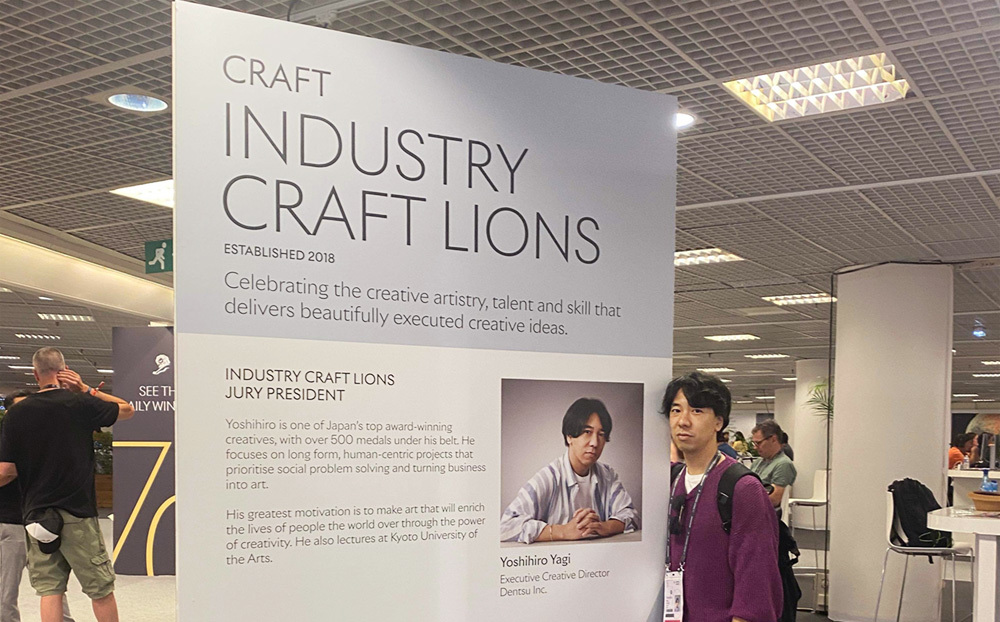
The third interview is with Yoshihiro Yagi, Executive Creative Director at Dentsu Inc. zero, who served as Jury President for the Industry Craft category. How did Cannes look from the perspective of the judges? What went on behind the scenes of the judging process? We asked him about the role of Jury President, the judging process, and the differences between Japanese and global creativity.
The judging results are a message to the world
──How was this year's Cannes Lions festival?
Yagi: Last year, after the COVID-19 pandemic, there seemed to be great joy in being able to gather in person again at Cannes Lions. This year, it felt like business as usual, and I was able to enjoy myself, starting with reuniting with fellow judges from various countries.
Looking at the winning entries as a whole, I felt that many of them were relaxed and unrestrained works, basic and honest in their approach to the brand. Over the past three years, we have experienced how events in distant countries can have a major impact on us, and as this has been shared, I feel that a sense of "connection" and "altruism" has become the norm.
What kind of category is the Industry Craft category, for which you served as jury president?
Yagi: Cannes Lions defines Industry Craft as "honoring beautifully executed solutions, artistry, talent, and technology necessary for creative ideas." I myself have participated in judging the Design category twice, and during that time, I felt that the meaning of craft shared in Japan was inevitably narrower than the conversations taking place in the judging room.Craft is not just craft for craft's sake. In the communications industry, craft greatly influences the final quality of the touchpoints between brands and consumers, which can be said to be the final touch that moves people's hearts. I believe it is a category that evaluates the voice of the vision that a brand presents.
──Please tell us about the role of the Cannes Lions Jury President.
Yagi: First, as Jury President, I announced the criteria before the online pre-selection began. Given the rise of AI, I proposed redefining craft for our era by exploring the emotional connection between brands and users.
Beyond technical craftsmanship, we considered whether the brand was acting according to its own ethics, pursuing what it truly wanted to do for the world. And whether people genuinely chose it as a brand they wanted to support and empathize with, paying a certain price for it.Furthermore, to incorporate intuitive perspectives into the judging, we also presented keywords. At the judging venue, we displayed three criteria: "enrichment > convenience," "emotion > function," and "dreams > efficiency." This signaled our intent to judge based on human values: prioritizing enrichment and richness over convenience, emotion and sentiment over function, and dreams and vision over efficiency.
I also wanted to see AI work that could navigate these criteria. Having said that, I felt a bit of embarrassment explaining this somewhat idealistic approach to the judges. However, everyone agreed, which was a relief. I believe this is precisely the kind of idealism our times demand.
Given the craft-focused nature of the judging, the panel included designers with architecture experience, a creative director with a copywriting background, agency CCO-level executives, and a good geographical balance spanning Europe, Scandinavia, America, and Asia. We even had a participant from Ukraine. Everyone was a great listener and genuinely kind.
The jury chair does not vote in the main judging. The chair's role is facilitation: ensuring high-quality decision-making materials are laid out on the table through discussion before reaching a final decision. To maintain high-quality discussion, I believed keeping the jury motivated was crucial. I strictly managed time allocation and aimed for a well-paced, focused process.
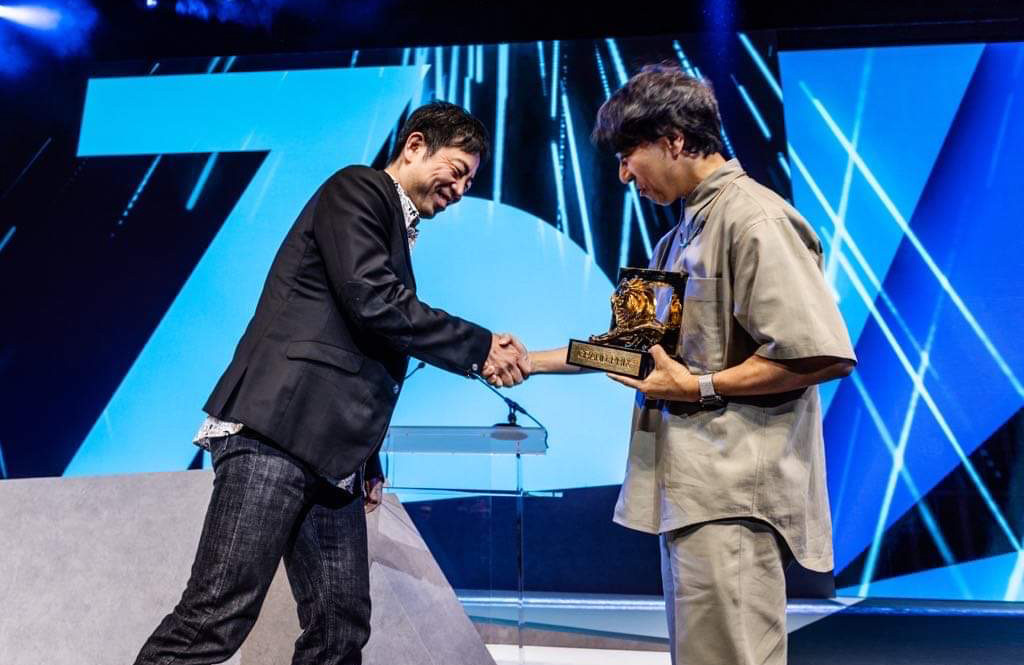
The most important task for the head judge is to work with judges from various backgrounds to create a message for the world through this year's winning works in this category. The head judge then presents the awards at the award ceremony. As head judge, I was also happy to be able to interact directly with the winners. I went up on stage with heartfelt congratulations. I was quite nervous, though...
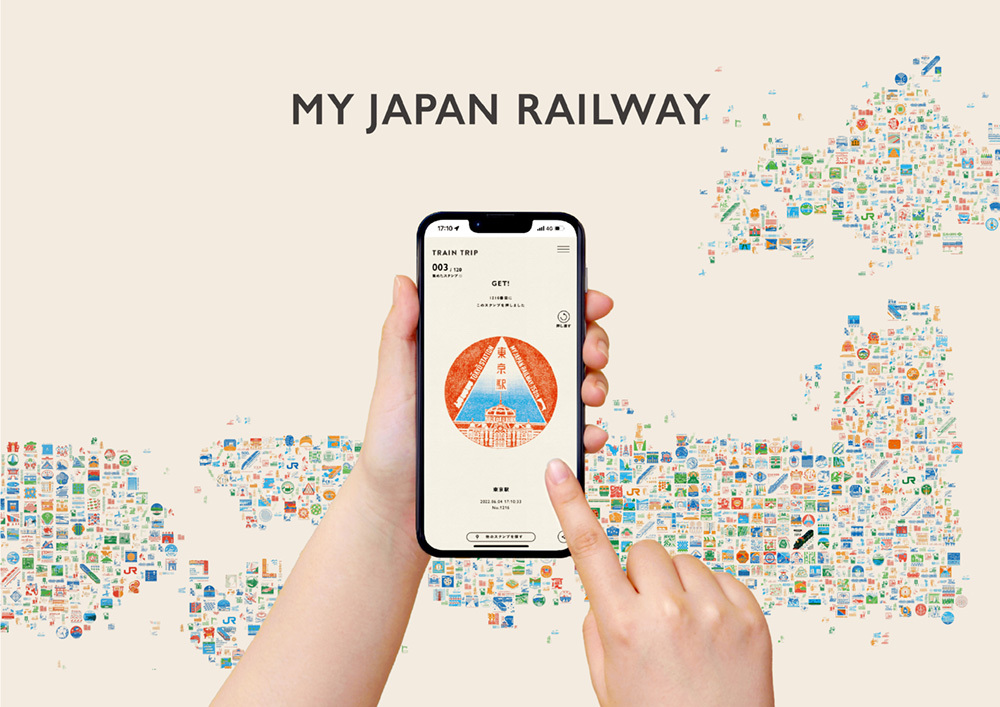
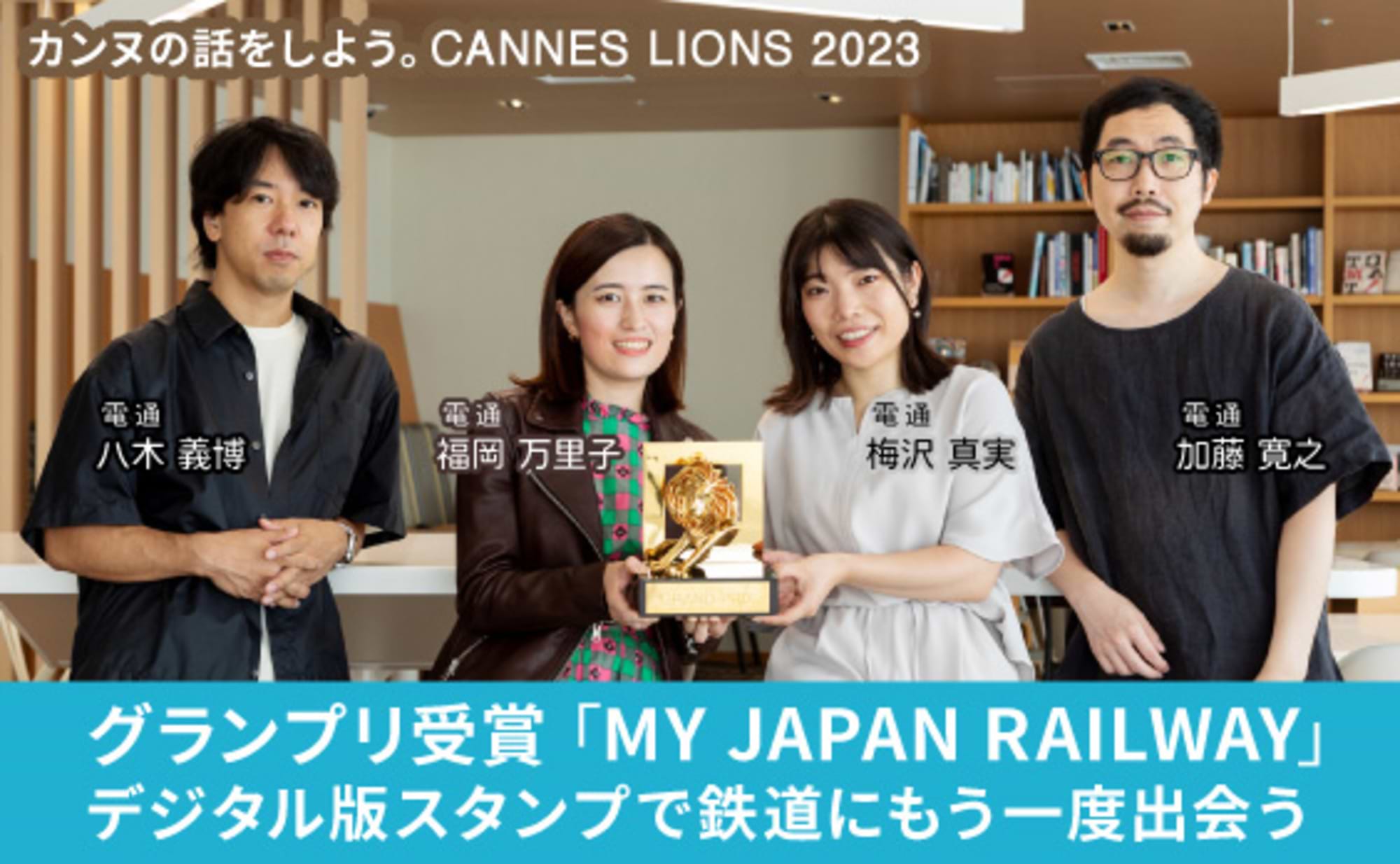
──This time, in the Industry Craft category, the JR Group's " MY JAPAN RAILWAY," which you were involved in producing, won the Grand Prix, resulting in a dramatic outcome.
Yagi: It was a very valuable experience and a great honor, but as the jury chair, I was a little confused during the judging process, wondering, "What if this wins the Grand Prix?" Of course, even in online judging, I couldn't vote for a work produced by my own company, and when discussing the eligible works, even as the jury chair, I was asked to leave the room.We asked the judges to nominate candidates for the Grand Prix from the six Gold Prize-winning works, then decided through discussion and voting. This year, only one work emerged as a candidate, and the award was decided unanimously. While that's wonderful, as jury chair, I felt a little lonely. But that's a luxury complaint, isn't it...
Although a Gold-winning entry by one juror was not selected as a Grand Prix candidate, the Cannes Lions secretariat meticulously confirmed whether they could psychologically participate in the Grand Prix decision discussions and voting. The Grand Prix was decided in a solemn atmosphere, reminiscent of a boxing referee.
Afterwards, to catch up on discussions I couldn't participate in, a roundtable was held after judging concluded. Time was set aside to summarize the discussions within this category, and the press conference report was based on this summary.
In design and craft categories, awards often tend to focus on Japanese craftsmanship or exotic Japanese elements and meticulous detailing. However, the opinions exchanged in the judging room were framed more from a communication strategy perspective. For "MY JAPAN RAILWAY," the emphasis was on questions like: "Where was the craftsmanship applied?" "How did it transform a public facility like a station into something with emotional value?""Can these be sustained and expanded in the future?" – perspectives that cannot be simply dismissed as "craftsmanship." I feel that if creators properly recognize these viewpoints, the level of Japanese work can be raised even further.
At the award ceremony, since I was a presenter, I had Yasuharu Sasaki, CCO, take the stage as the representative for the winners. Looking only at the photo taken when they received the award, it was hard to tell who was handing the trophy to whom. It was a rare case.
Japan's challenges are also the world's challenges
──It's long been considered quite difficult for Japanese work to win the Grand Prix at Cannes. Do you sense differences between Japanese and global creativity?
Yagi: I believe there are significant differences between Japan and other countries. Fundamentally, since the nations are different, languages, cultures, laws, and religions vary, and the nature of the challenges that emerge is different. That means there are as many different forms of creativity as there are challenges.
Generally, I feel campaigns from Europe and America tend to be more essential, vivid, and dynamic. Japan, I observe, often takes a stance of constantly learning from Cannes. Certainly, there are many opportunities to learn from Western examples, and we should strive to apply those lessons to our own work.
However, since the environments in Japan and overseas are different, it's only natural that the types of creativity expressed will also differ. I believe that Cannes Lions evaluates and awards work that should be shared to make the world a better place. With that in mind, I think the work we should submit is work created in Japan that we want to share with the world.
When we started judging this time, we naturally focused on last year's Grand Prix winner in the Industry Craft category, "Hope Reef." I learned that one of the creators who worked on it was on the judging panel, and that the same team had also worked on "Trash Isles," which won the Grand Prix in the Design category a few years ago. I respected that work too, so I felt a little starstruck and had mixed feelings about whether I could properly serve as the head judge for such amazing creators.However, it seems that the creator himself was telling people around him, "Yagi (Yagi) is the creator of Pocky, Panasonic, and JR, right? I'm nervous" (laughs). I felt that just as we respect creators around the world, our colleagues around the world are also aware of us.
I want to see Japan's challenges as the world's challenges too. Rather than just admiring others, I want us to stand tall as part of the global community, face the challenges before us head-on, and keep pursuing original approaches.
──Regarding the increasingly prevalent fusion of technology and creativity these days, did you notice anything through this year's Cannes?
Yagi: Even before judging began this year, I anticipated AI becoming a central topic of discussion. It's true that AI has improved the efficiency of intellectual production, and ChatGPT enables the infinite generation of words. However, precisely because anyone can verbalize ideas, the value of "what cannot be put into words" conversely increases. When new technology emerges, I believe a counter-reaction occurs somewhere. Given the nature of creativity, this counter-reaction can itself become the next hint.
Humans sometimes deviate from logic, acting impulsively from emotion, and it's precisely those emotions that can move people. While AI's flawless output could potentially liberate humans depending on how it's used, when dealing with people, I believe capturing the human heart requires more than logic.I believe creativity should not be derived solely from analyzing past data, but rather born from the emotional connection to a brand—something that emerges when envisioning how the brand should be in the future.
That impulse to make a difference—that's the source of creativity.
──What role do you think creativity will play in the coming era? Please share a message for young creators and advertising professionals.
Yagi: Rather than thinking "I want to do something interesting," "I want to innovate," or "I want to win awards," I believe it's crucial to prioritize that human impulse—the kind that makes your hands move before your mind can think, like "I want to solve this problem right in front of me" or "It would be amazing if this could be realized." Fundamentally, companies and brands were born out of the impulse to solve problems people simply couldn't ignore.
Looking at clients I've worked with, for example, Panasonic's founder saw trains running through the city and thought, "I want to bring the power of electricity to every home." At Honda, the founder's wife had the insight while shopping: "Wouldn't it be easier if bicycles had engines?" That sparked the start of their motorcycle business. I think this is the same as an artist not just painting for self-satisfaction, but trying to raise issues in the world in their own way.
If discovering and solving societal problems is now the essence of business, then it can also be considered akin to art. Therefore, I believe our work demands creating things that are incredibly enjoyable and beautiful more than ever before.
In an era where even the truth of news reporting seems unstable, advertising might become a means to convey a brand's truth. Couldn't outstanding creativity make the advertising industry more sincere, transforming it into the most stimulating place where business and art meet?

Was this article helpful?
Share this article


Newsletter registration is here
We select and publish important news every day
For inquiries about this article
Back Numbers
Author

Yoshihiro Yagi
Dentsu Inc.
CDC
Creative Director / Art Director