Note: This website was automatically translated, so some terms or nuances may not be completely accurate.
 Hints for a symbiotic society found within the gaps [3/3]
Applying Corporate DEI Insights to Education: Mizuho Daiichi High School × GAP MIKKE
Takashi Fukuda
Ibaraki Prefectural Suidōdō First High School and Affiliated Junior High School
Kahori Kishimoto
Dentsu Inc.

Ayaka Kaido
Dentsu Inc.
Have you heard the term "DEI"? It stands for Diversity, Equity, and Inclusion, and interest in it has been growing recently, particularly among companies.
On November 20, 2023, Ibaraki Prefectural Suidou First High School and Affiliated Junior High School held a workshop for its faculty to deepen their understanding of DEI, with the cooperation of Dentsu Inc. Diversity Lab. We spoke with Principal Takashi Fukuda of the school and Kahori Kishimoto and Ayaka Kaido of Dentsu Inc. Diversity Lab about the workshop's objectives and outcomes.
*The interview was conducted on December 12, 2023.
An Unconventional Principal from the Private Sector
──Principal Fukuda, you were appointed principal of Mizuho High School and its affiliated junior high school after working in the private sector.
Fukuda: It started when I saw the news that Suigido High School and its affiliated junior high were publicly recruiting a principal. At the time, I was a Creative Director at Dentsu Inc., but driven by my interest in education, I had launched and was leading an education-related project within the company. The timing of this principal recruitment, coupled with the fact that secondment from a private company was possible, made me feel I had to apply. After presentations and interviews, I was hired. My contract stipulates serving as Vice Principal for the 2022 academic year and then as Principal for the three years from 2023 to 2025.
──Having actually immersed yourself in the educational environment, have you had any discoveries or moments of confusion?
Fukuda: During my first year as vice principal, I did experience some confusion. Schools operate on a different system than companies. For example, to propose something new to the school, you first present it at the planning committee meeting where the department heads gather. Only if it gets a "thumbs up" there does it move on to the faculty meeting – it's a two-step process. Also, the annual schedule is almost entirely set a year in advance, and everything proceeds according to that plan. Getting used to these systems was tough, but now in my second year, I'm much less confused.
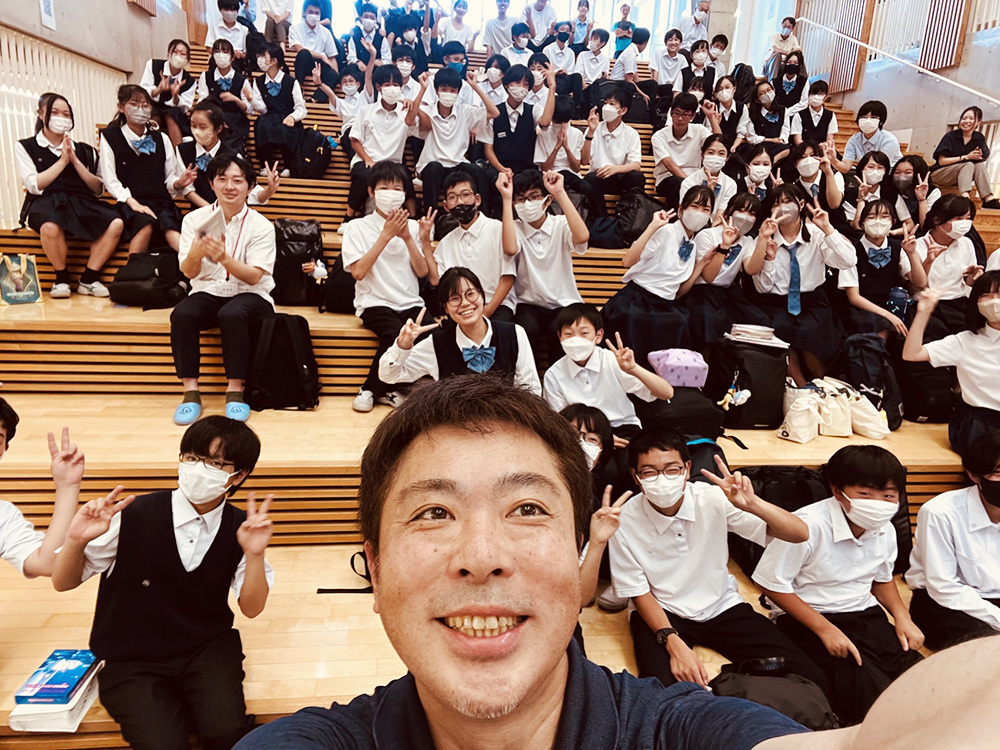
Held a DEI Workshop for Teachers
──This time, you held a workshop on DEI for teachers at Suidōdō First High School and its affiliated junior high school. Could you tell us about the background?
Kishimoto: It started when the web magazine cococolor, operated by Dentsu Inc . Diversity Lab, requested an interview with Principal Fukuda about the diversity and inclusion initiatives at Suidō Ichitō High School and its affiliated junior high. During that conversation, Principal Fukuda instead approached me, asking if we could conduct something like a class for teachers focused on DEI. We held several discussions to understand the challenges faced in the educational setting and school, as well as the specific issues Principal Fukuda was concerned about as the school leader.
Fukuda: At our school, awareness of Diversity and Inclusion within DEI has progressed. Among teachers, I believe awareness of the term "Diversity" is probably over 90%. Many teachers also know the term "Inclusive Education." On the other hand, when it comes to "Equity," I get the impression awareness drops significantly. So, personally, I wanted to give teachers an opportunity to understand and think about DEI.
Additionally, a current issue in our school setting is the high number of students not attending school. While it doesn't reach 10% of the class, there are indeed students who cannot come to school. Some students, overwhelmed by anxiety about keeping up, transfer to correspondence schools midway. Some students experience imbalances in their autonomic nervous system, leading to physical and mental health issues. While schools are establishing safety nets, such as appointing school counselors, there remains a sense that schools might not fully grasp the actual nature of what troubles these students and how they are suffering. Sharing this awareness with the Dentsu Inc. Diversity Lab, I wanted to create workshops that contribute to solving these issues.
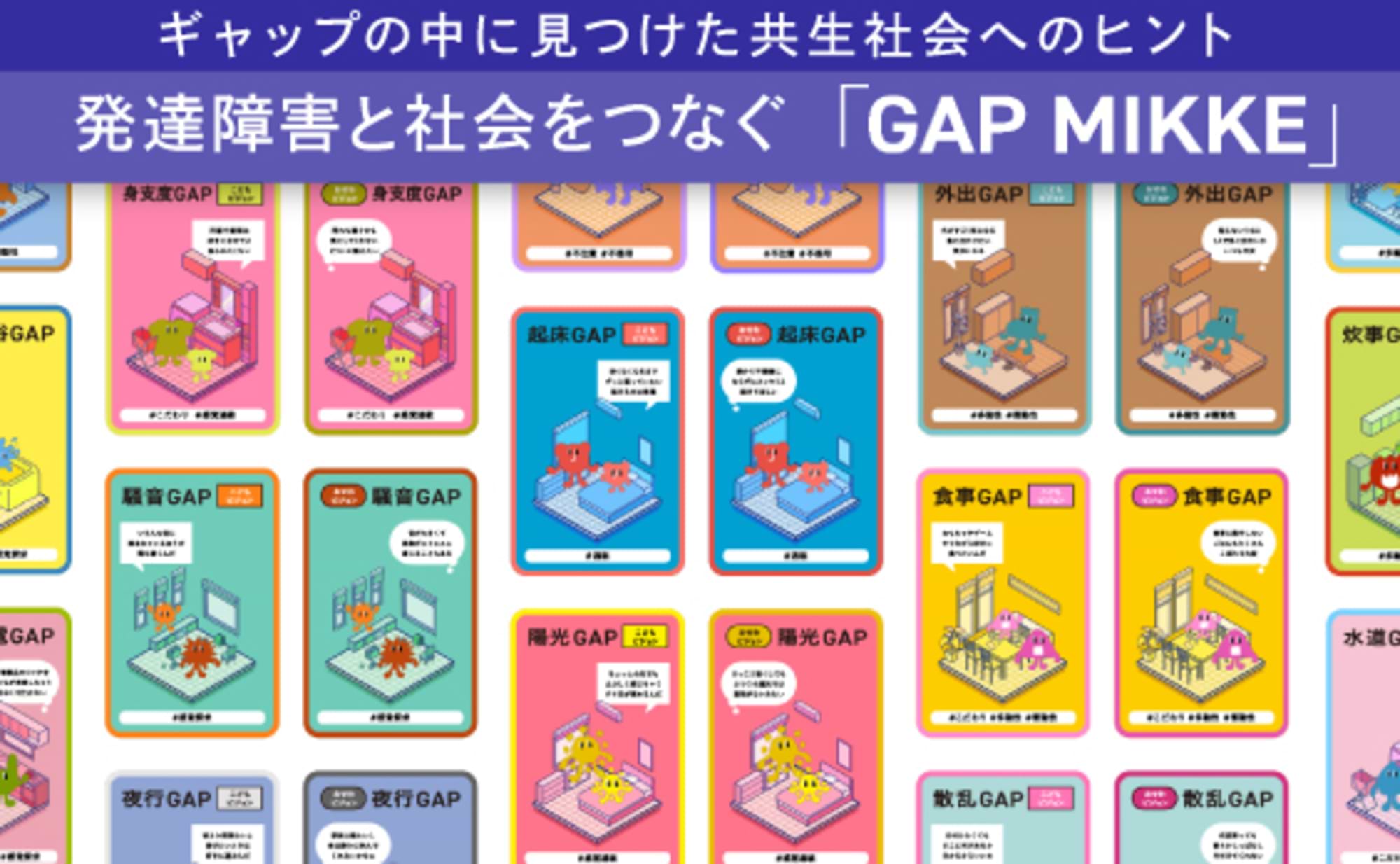
Kishimoto: In conversations with Principal Fukuda, we focused on the process of teacher follow-up and care for students, the stage before the safety net. We thought that if teachers—already busy with classes, clubs, and extracurriculars—had opportunities to reflect or dialogue with colleagues and students before problems arose, it might create mental space and expand their toolkit for addressing previously overlooked challenges. That's why we proposed "GAP MIKKE," a tool developed under expert supervision, as a potential solution for this issue.

──"GAP MIKKE" is a tool that visualizes the gap in perspectives between children with developmental characteristics and their parents, right?
Kaito: Yes. Developmental disorders are disabilities caused by innate variations in brain function development. At Dentsu Inc. Diversity Lab, we conducted surveys and interviews with parents of children diagnosed with developmental disorders, as well as parents concerned about their child's development. This allowed us to visualize the gap between parents' "worries and desires" and what their children "are actually thinking."
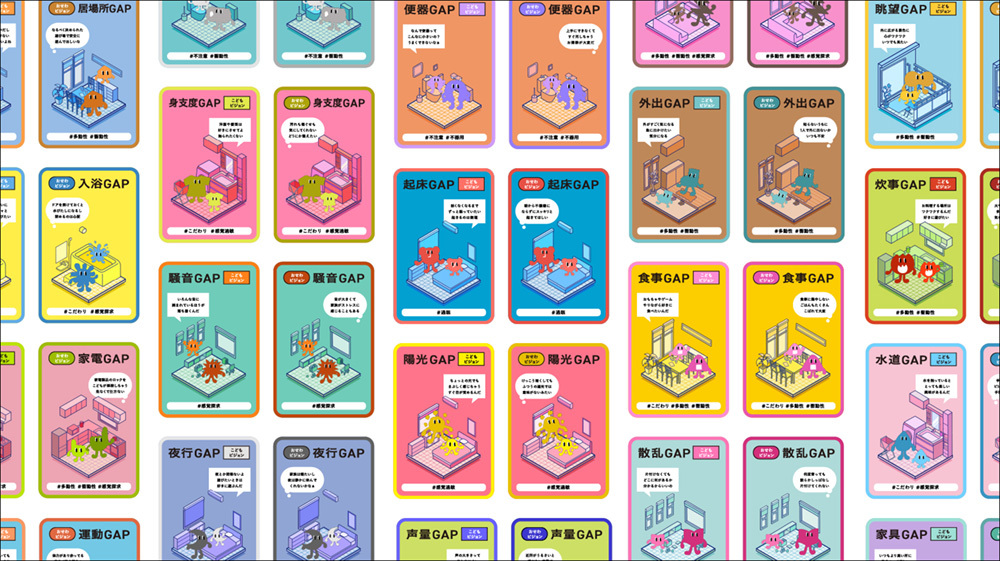
Fukuda: I thought the "GAP MIKKE" approach—focusing on the difference in perspective between children and parents—could be applied not only to developmental disorders but also to the difference in perspective between students and teachers. That's why I decided to incorporate "GAP MIKKE" into this workshop.
──Could you tell us about the specific content and design elements of the workshop?
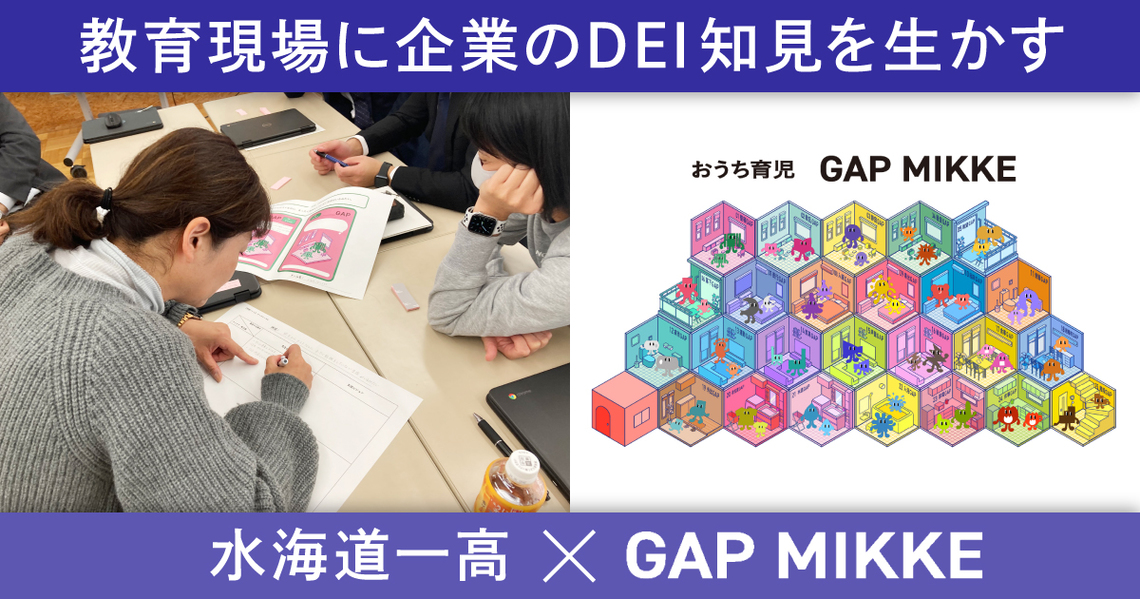
Kaito: This program ran for a total of 90 minutes. The first 30 minutes served as an overview of DEI, covering the importance of incorporating DEI principles into educational settings. The subsequent 60 minutes featured a workshop utilizing "GAP MIKKE." Regardless of whether participants had developmental disabilities, the workshop goal was set as "identifying the gap in feelings between two parties." Teachers engaged in exercises addressing two specific challenges.

The first exercise task used "GAP MIKKE" to deepen understanding of developmental disabilities, using the gap between a child with developmental characteristics and their parent as an example. For instance, regarding room tidying, teachers were asked to imagine how the child with developmental characteristics might feel and what kind of words the parent should use, taking both perspectives, and write their thoughts on a worksheet. Afterward, using "GAP MIKKE" cards, they deepened their understanding of both perspectives and considered what kind of communication or actions could lead to resolving the issue.
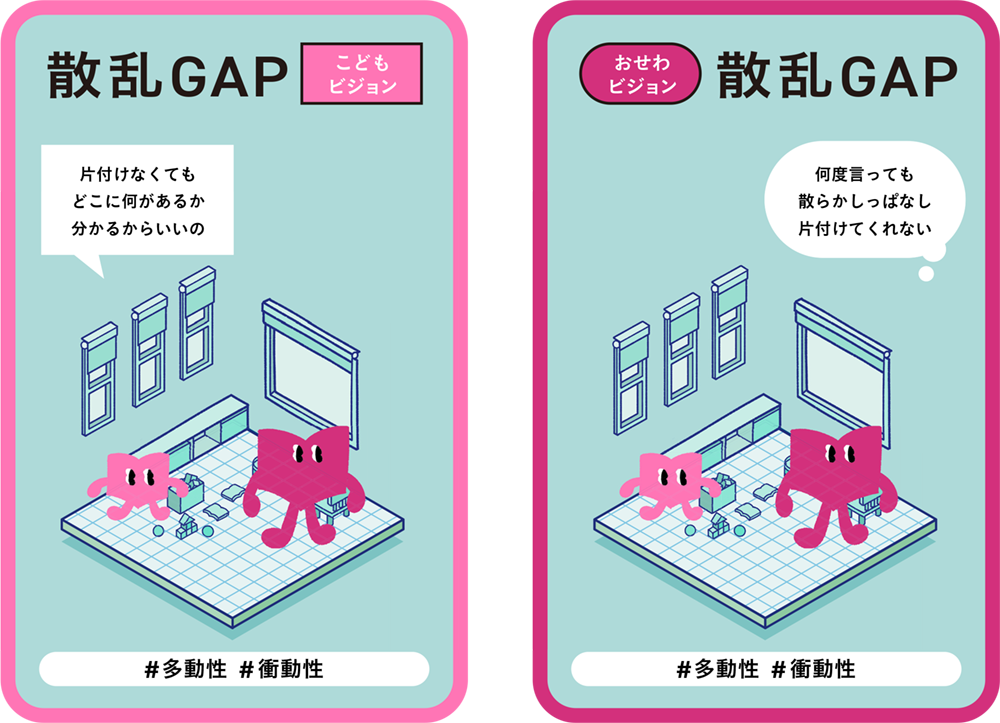
The second exercise applied the "GAP MIKKE" framework to school life, visualizing the gap between students and teachers. For example, given the situation "A student hasn't studied at all despite a test starting tomorrow," participants imagined the student's feelings and engaged in group work to identify the gap between the student's and teacher's perspectives. Other scenarios included: "A student who arrives late almost every day," and "When called on during class, a student turned pale and couldn't speak." These were all common, relatable school life scenarios gathered during prior interviews with Principal Fukuda.
The exercise was split into two stages to start with the gap between children with developmental characteristics and their parents, then broaden to consider the various gaps likely existing between students and teachers within school life. There was also a purpose behind making the second exercise a group activity. Teachers typically teach alone. We hoped this workshop would become a space for sharing perspectives, like "If it were me, I'd do this" or "I'd think about it this way."
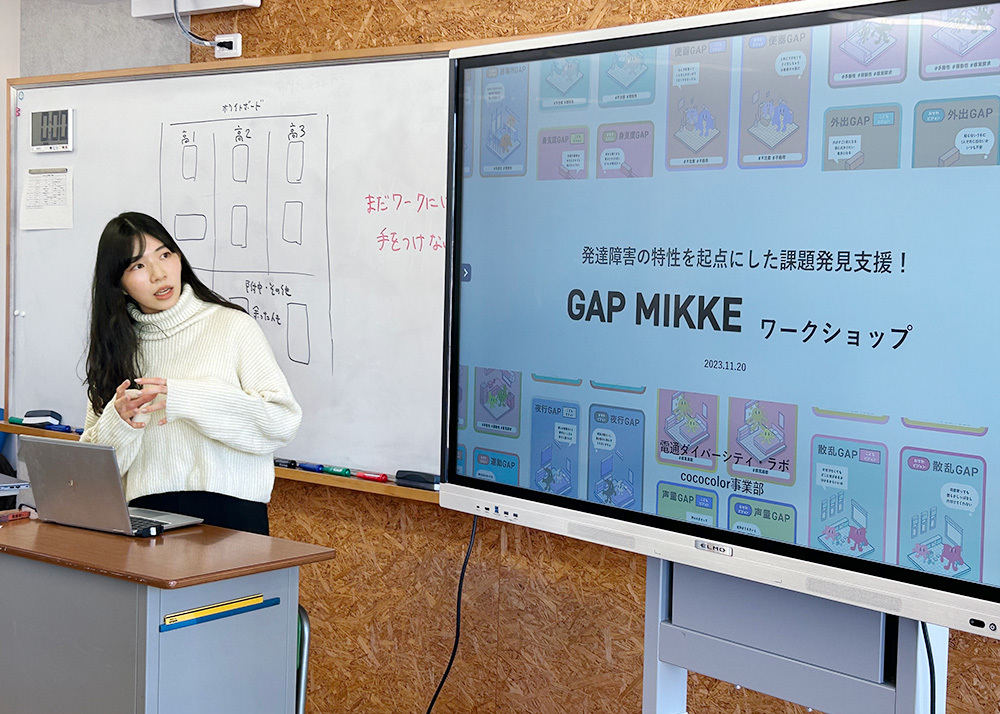
Using Gaps as Clues to Envision Tomorrow's Education
──How did the teachers respond to the workshop?
Fukuda: While teachers consciously practice shifting perspectives, as we did in this workshop, the group work—examining complex issues from different angles—was particularly valuable. It allowed each teacher to understand their peers' viewpoints and exchange ideas.
On the other hand, one point I reflect on is that I wish I had gathered more detailed input beforehand about the specific problems teachers face daily. If we had chosen topics based on the truly difficult issues teachers struggle with, I believe the discussions would have been even more lively and engaging.
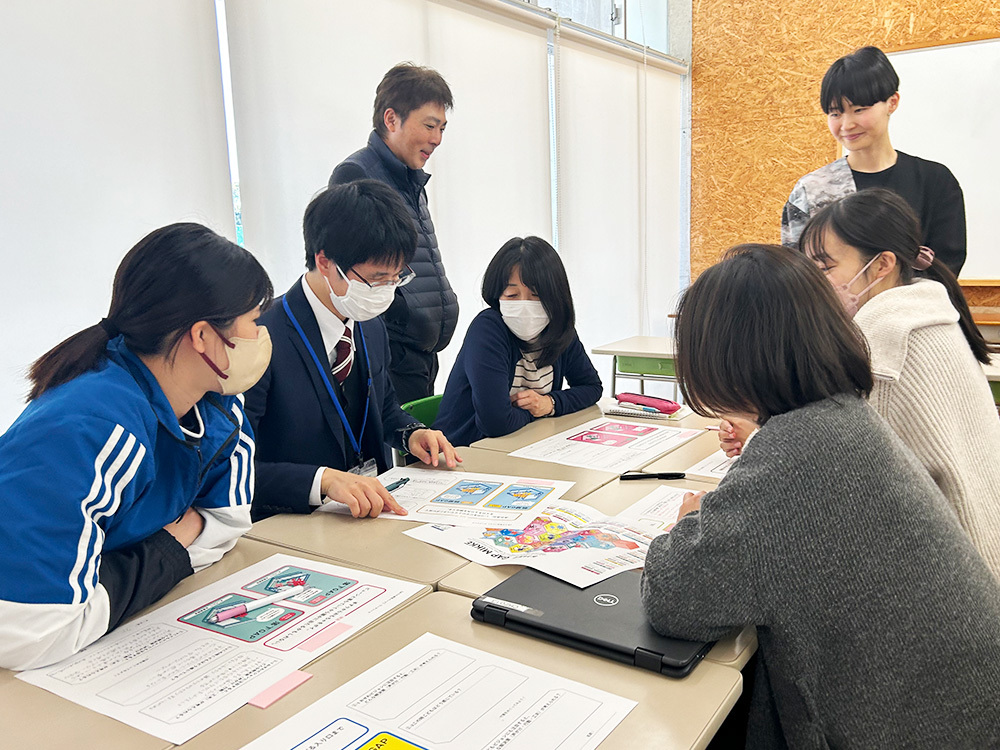
Kaito: What impressed me this time was how enthusiastically the teachers engaged in the exercises. Post-workshop surveys included comments like, "It became a space to share not only the gap between teachers and students, but also the differences in thinking and approaches among teachers themselves."
[Teachers' Voices (Excerpts from the Questionnaire)]
・I thought I understood the meaning of "diversity" in my own way, but I realized society requires more "consideration" than I had imagined.
・I often feel my intentions aren't getting through. In those moments, I sensed that trying to see things from the student's perspective might help find a solution.
・I tend to impose general principles when interacting with students. I want to pause and approach guidance from multiple perspectives.
・I believe most teachers possess ample knowledge and strategies for DEI. However, due to "lack of bandwidth," consistently practicing appropriate words and actions becomes difficult.
・I hope initiatives like this, addressing themes valued by companies, can bring a "breath of fresh air" to our rigid educational environment.
Fukuda: Teachers shared positive ideas about this workshop, such as "This can be applied to club activities and student council situations" and "If students were here, the discussion could expand further."
In club activities, there's often a gap between the advising teacher and the student members. But I also think there's a gap between the students leading the club—like the captain or president—and the members being led. Clubs might face challenges like leaders saying "We're going to the prefectural tournament!" while members think "Nah, it's fine as long as we're having fun," leading to misaligned goals and difficulties. Teachers seemed to grasp how this workshop could help students discuss and bridge such gaps.
──Finally, regarding the theme of DEI, how do you envision approaching it in educational settings moving forward?
Fukuda: Currently, news about free high school and university education is prominent. I see this as addressing the "E" (Equity) aspect of DEI—meaning equal opportunity. While there's still room for discussion on achieving greater equality, I think it's important for everyone to recognize that DEI principles are already being integrated into educational settings.
After posting about this workshop on social media, I immediately received inquiries from principals at other schools asking, "Can we do that at our school too?" I also got inquiries from teachers at schools practicing global education, showing their interest. I think there's a need to explore this global standard concept of DEI together with teachers and students.
Kaito: Following this workshop, I hope we can explore collaborative initiatives between schools and companies, such as joint training programs. While this session involved only teachers, mixing perspectives from diverse backgrounds—students, corporate employees, and others—could spark new insights by creating workshops with varied participants.
While "GAP MIKKE" was developed with developmental disabilities as its starting point, applying this framework to challenges within schools this time made me feel its potential for expansion and application to themes beyond developmental disabilities. I want to further explore what can be achieved using "GAP MIKKE."

Was this article helpful?
Share this article


Newsletter registration is here
We select and publish important news every day
For inquiries about this article
Back Numbers

Author
Takashi Fukuda
Ibaraki Prefectural Suidōdō First High School and Affiliated Junior High School
Principal
Kahori Kishimoto
Dentsu Inc.
Marketing Division 3
Strategist
Ayaka Kaido
Dentsu Inc.
Creative Planning Division 3
Communication Planner