Rapid technological evolution is significantly accelerating the pace of all kinds of change. Furthermore, as people's values and lifestyles diversify, companies must adapt not only to changes in the products and services they offer but also in their very nature.
The " Dentsu Future Mandala 2023" (hereafter: Future Mandala 2023) is an upgraded "mid-term future forecasting tool." It transforms future prediction materials, previously used mainly within the Dentsu Group, into a resource widely applicable for corporate strategy planning, new business development, and service creation. This article features an interview with Takuya Kagata of Dentsu Consulting Inc., who was involved in its creation.In Part 1, we look back on past efforts, covering the background and overview of the "Future Mandala" launch, as well as the new challenges in the latest version.
A Tool Born to Create Business Concepts Valid for the Future 10 Years Ahead
Recently, four domestic Dentsu Group Inc. companies (Dentsu Digital Inc., Dentsu Consulting Inc., Dentsu Inc., and ITID Inc.) jointly announced "Future Mandala 2023," which compiles potential future trends likely to emerge by 2030.This "Future Mandala" forecasting tool was originally developed at Dentsu Inc. in 2010. Since then, it has undergone multiple upgrades primarily as an internal consulting resource, and I understand the latest version has now been completed. Could you explain the origins of the "Future Mandala" and how it has been utilized?
Kagata: The "Future Mandala" was initiated in 2010 by Dentsu Inc.'s marketing team in response to a client's request: "We want to develop a business vision that will remain relevant ten years from now."In response to that request, a planner on the marketing team at the time proposed a rather ambitious plan: "First, let's list every possible change that could happen in the world." During that process, the idea for a "mandala"-style approach emerged: "Let's scatter all the possible future changes in every direction, 360 degrees, and arrange them in a way that allows everything to be seen at a glance."
Although initially created for a single client's business vision, its high precision led to the decision to adapt it for broader use. We extracted only the universally applicable elements, and it was used as an internal Dentsu Inc. document in workshops related to product development.
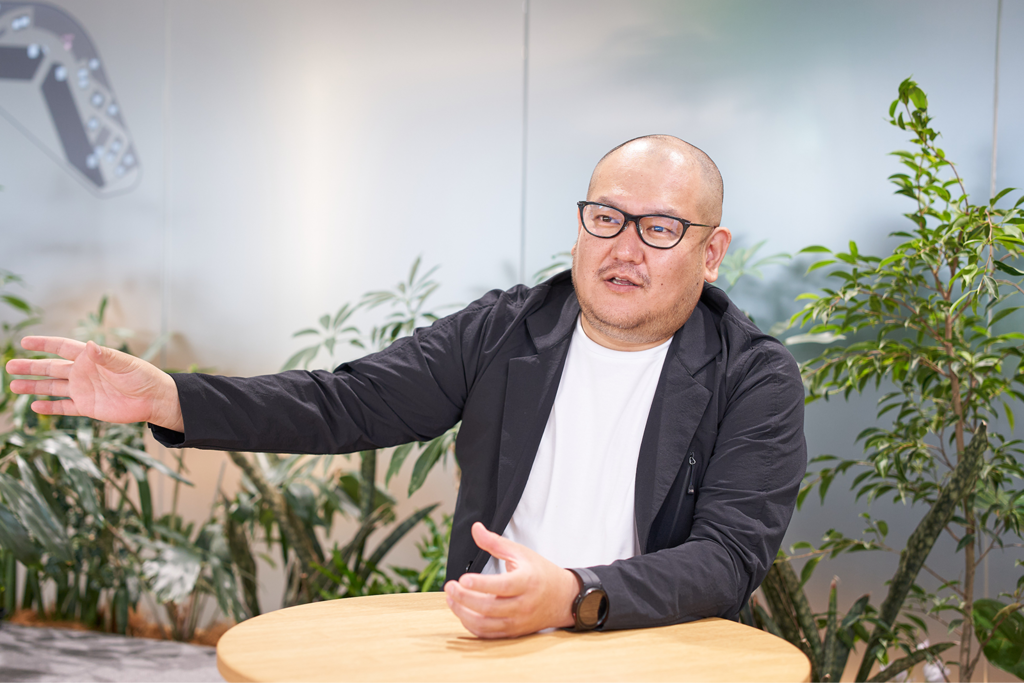
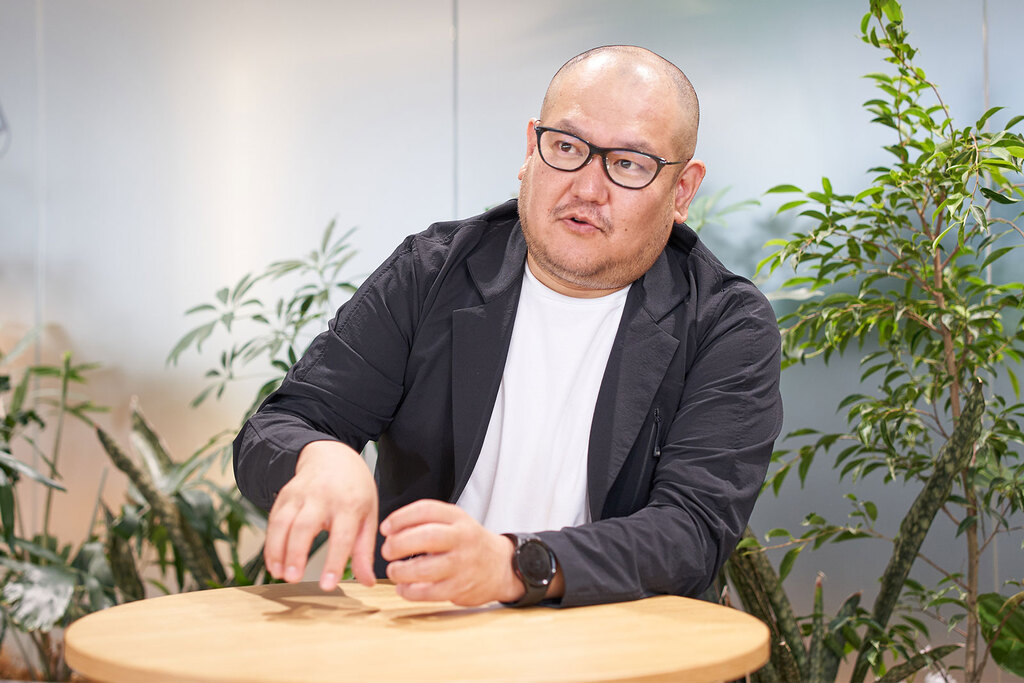
Takuya Kagata, Dentsu Consulting Inc.
Q. How have you been involved with the "Future Mandala"?
Kagata: I originally worked in Dentsu Inc.'s marketing team, involved in business concepts for companies like beverage manufacturers. Then, I was seconded to Dentsu Digital Inc., where I assisted not only with products but also with business and service development and operations. Since last year, I've been seconded to Dentsu Consulting Inc.
Personally, when Dentsu Inc. marketing team developed the "Future Mandala" in 2010, I wasn't directly part of that team. However, I was in the same department, so I watched from the sidelines thinking, "Wow, they're doing something amazing."Later, when I started working on new business and service development at Dentsu Digital Inc., I strongly felt the need to create new things by looking several years into the future, rather than just building services based on the present. That's when I decided to update the original "Future Mandala" and put it to full use. I became the manager tasked with formally developing the "Future Mandala" into a solution. Specifically, this involved creating updated versions every few years and utilizing it in consulting.
Last year, when I moved to Dentsu Consulting Inc., we began collaborating with Dentsu Digital Inc. on this initiative. This year, we further expanded the team to include members from Dentsu Inc. and ITID, creating the "Future Mandala 2023."
The "Future Mandala," updated to reflect societal changes
Q. So, a tool originally created for a specific client gradually aligned with the needs of various companies as times changed. How is the renewal of the "Future Mandala" carried out?
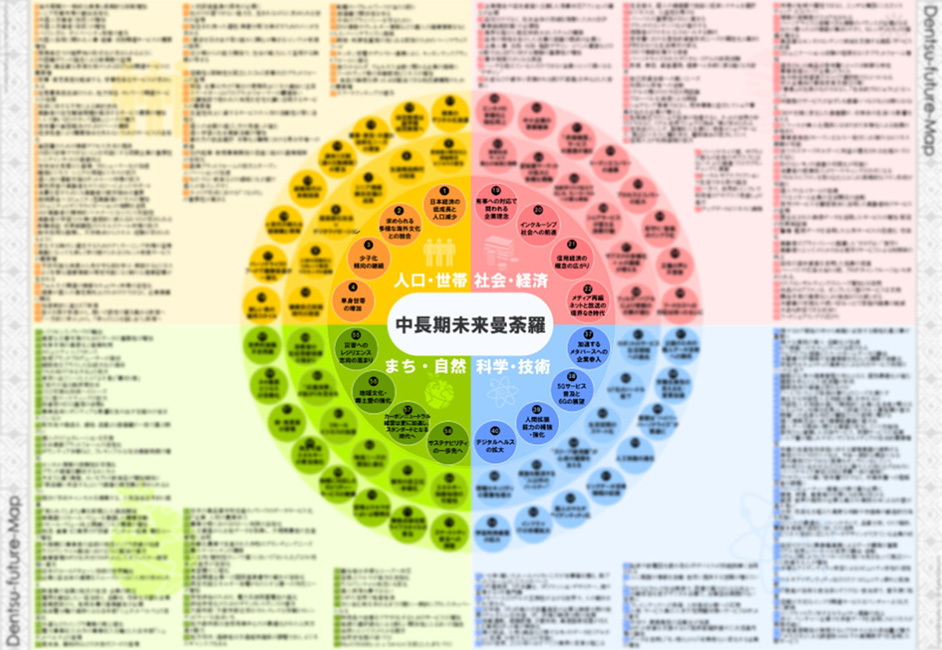
Kagata: Fundamentally, the "Future Mandala," as a mid-term future forecasting tool, comprehensively categorizes trend themes into four categories: "Population & Households," "Society & Economy," "Science & Technology," and "Cities & Nature." It summarizes the overview and data of each trend, related topics, and the changes they will bring to the future along with key perspectives.
Kagata: Previously, we aimed for revisions every two years. However, the 2019 revision was substantial, changing over half the content of the 60 "Future Topics" in response to the rapid changes in society. Furthermore, in response to social changes across many fields from 2019 to 2020, we created the "Future Mandala 2020."
Then, in response to the global spread of the novel coronavirus, we created "Future Mandala 2020-BEYOND Corona-" at the end of April 2020, designed to be used alongside "Future Mandala 2020." Recently, we have been revising it more frequently to keep pace with the changing times.
Q. How are the social changes caused by the spread of the novel coronavirus reflected in the "Future Mandala"?
Kagata: For example, amid restrictions on going out, the spread of ICT, such as tools for remote work, accelerated.In education, the Ministry of Education's "GIGA School Initiative"—which aims to provide every student with a personal device and high-speed, high-capacity communication networks—was accelerated due to the pandemic, and services for online learning have also surged. In response to these developments, we propose initiatives for the post-COVID era, where the purpose and quality of education are being re-examined, as "Hints for the Future."
Q. What are the key features of the latest "Future Mandala 2023"?
Kagata: The biggest challenge for "Future Mandala 2023" is that while previous editions focused on the future 4-5 years ahead, this time we targeted a specific year—2030—and looked further ahead.In the past, hardware changes defined an era, much like car model changes occurring roughly every six years. However, today we feel software is transforming the times. Eras now shift every two to three years as new software spreads, giving birth to something new.While looking ahead to 2030 within this context is quite challenging, we also began receiving requests for a clear, understandable cutoff point like 2030 when making future predictions. This was a challenge we took on to meet that need.
Therefore, "Future Mandala 2023" includes new trend themes like "Generation Alpha (born 2010-2024): Values and Education," skipping over Generation Z. Generation Alpha will build businesses and transform society with values distinct from those currently driven by Generation Z.
Q. So, precisely because the pace of change is accelerating, we need to look even further into the future. That's fascinating, but predicting that must be incredibly challenging.
Kagata: It is tough (laughs). The number of trend themes increased from the previous 60 to 72. Furthermore, another major challenge for "Future Mandala 2023" was organizing a joint production team across four companies. All members worked in pairs to propose theme ideas, and from the roughly 200 collected, we narrowed them down to more concrete ones.When submitting theme proposals, we also researched supporting case studies. Then, we held further discussions involving experts... repeating this process 3-4 times, so it involves many steps. However, we consider it crucial that multiple people are involved in each theme and that incorporating expert opinions adds diverse perspectives.
The "Future Mandala," born from the Dentsu Group's forward-thinking approach, has evolved into a future forecasting tool with the potential to meet the needs of many companies and local governments in a world undergoing significant change following the COVID-19 pandemic. Moreover, precisely because we live in such a rapidly changing era, a perspective that looks further into the future is becoming increasingly necessary.In the second part of this interview, we will explain how to utilize "Future Mandala 2023" based on past implementation cases.
Supports corporate business design at Dentsu Marketing Division ~ Dentsu Digital Inc. ~ Dentsu Consulting Inc., including an insurance company's 2050 vision, an automaker's smart city concept, and a food company's new ventures. Currently involved in business planning and service design in Japan, India, ASEAN, China, and Taiwan. Specializes in consulting with an urban engineering background and facilitation that breaks down silos. Captain of the Dentsu Sumo Club. Right-handed. Signature move: Ushiro Nage (back throw).



 Final Experience Guide: 4 Keywords to Avoid Missing Out