
Note: This website was automatically translated, so some terms or nuances may not be completely accurate.
Opening New Possibilities Through "Material" Branding: A Challenge with Zebra Enterprises
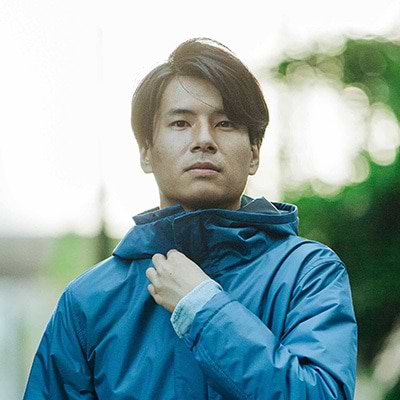
Fukai Yoshitaka
Kapok Japan Co., Ltd.
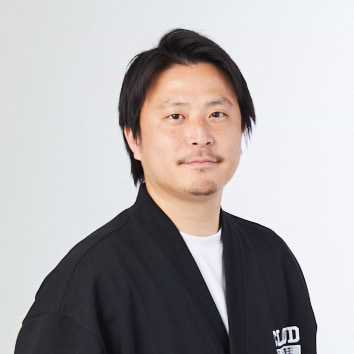
Shono Gen
Dentsu Inc.
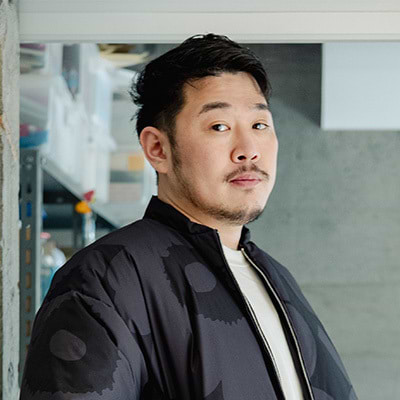
Yuki Miyake
Dentsu Inc.

Teruna Hasegawa
Dentsu Inc.
Have you heard of "Zebra Companies"?
This term likens startups that equally prioritize "pursuing corporate profit" and "coexistence with society" to the black-and-white striped animal, the zebra.
One such company, KAPOK JAPAN (hereafter Kapok Japan), utilizes the kapok plant to develop sustainable apparel materials and operate a fashion brand.
Dentsu Inc. Business Transformation Creative Center (hereinafter BXCC), as a business partner of the company, worked on branding the kapok material itself ("material branding") and creating a logo and statement for their exhibition at "Milan Unica," a materials and textiles trade fair held in Italy.
This article features interviews with Kiyoshi Fukai, President and CEO of Kapok Japan, and Motoki Shono, Yuki Miyake, and Teruha Hasegawa from BXCC. We discuss the importance of "organizing the brand story" as a key point in this project, the potential expanded by material branding, and the necessary BX creative perspective involved.
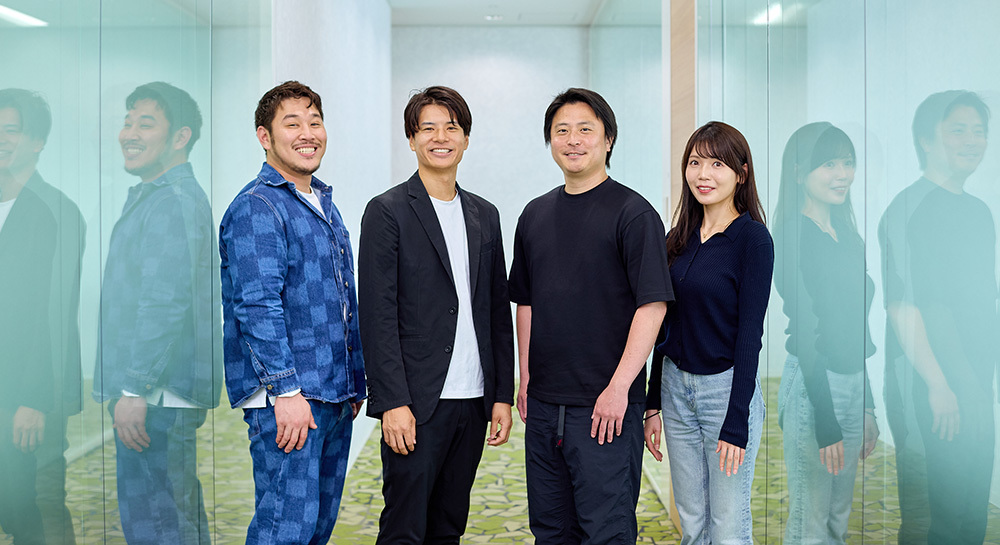
A new brand born from the concept of "down made from tree nuts"
──Please introduce yourselves one by one. Mr. Fukai, please also include an overview of Kapok Japan's business.
Shono: At BXCC, our mission is to leverage the creative power cultivated in advertising to deliver value closer to management and business operations. I participated in this project as Creative Director, responsible for conceptualizing branding and overseeing the overall design aspects of defining business value.
Miyake: I handle branding logos and visual production for a wide range of companies, from national clients to startups, crafting each brand's unique worldview through artwork. I had been expressing my desire to work in fashion-related fields on social media, which led Shono to reach out and invite me to join.
Hasegawa: While I hold multiple roles at BXCC, including planner, I participated in this project as a copywriter. My work philosophy centers on contributing to projects and ideas I haven't encountered before, approaching all my roles with neutrality.
Fukai: My family has been in the apparel business for generations, and I'm the fourth generation. I returned home about eight years ago and launched a new apparel brand called "KAPOK KNOT" in 2019. We manufactured and sold coats made from the fruit of the kapok tree, native to Southeast Asia, which felt like down. The response was so overwhelming that I established a separate company, "Kapok Japan," where I serve as President and CEO.
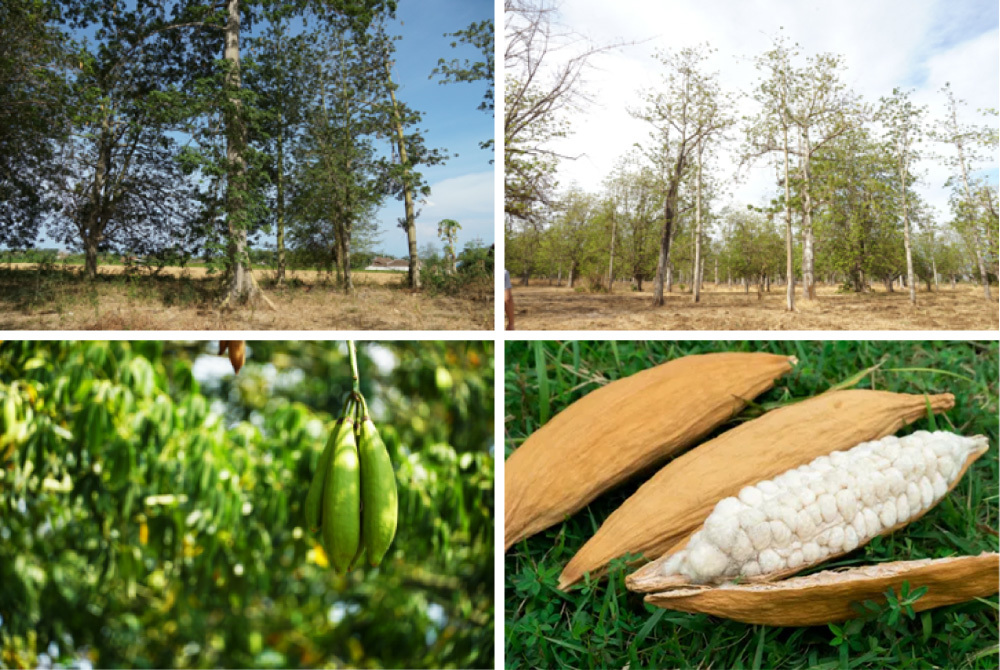
Fukai: Since the roots of our family business were in materials like cotton, I studied for qualifications related to textiles, wondering if I could build a business centered around materials too. That's how I learned about kapok and became interested. Apparently, some companies had tried using it for apparel fabrics before, but processing it into fiber was difficult... So I thought, why not use it as an alternative to down (feathers)?
Kapok is lightweight, highly insulating, and possesses similar functionality to down. Since the raw material is the tree's fruit, it doesn't harm birds, and cutting down the trees themselves isn't necessary. It also absorbs CO2 and costs less than down. That's why I believed it held both business and social significance.
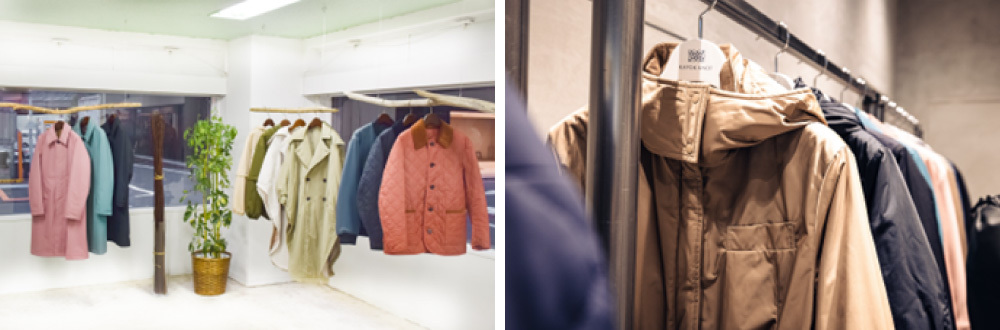
Increasing the number of "material players" is key to expanding a sustainable society
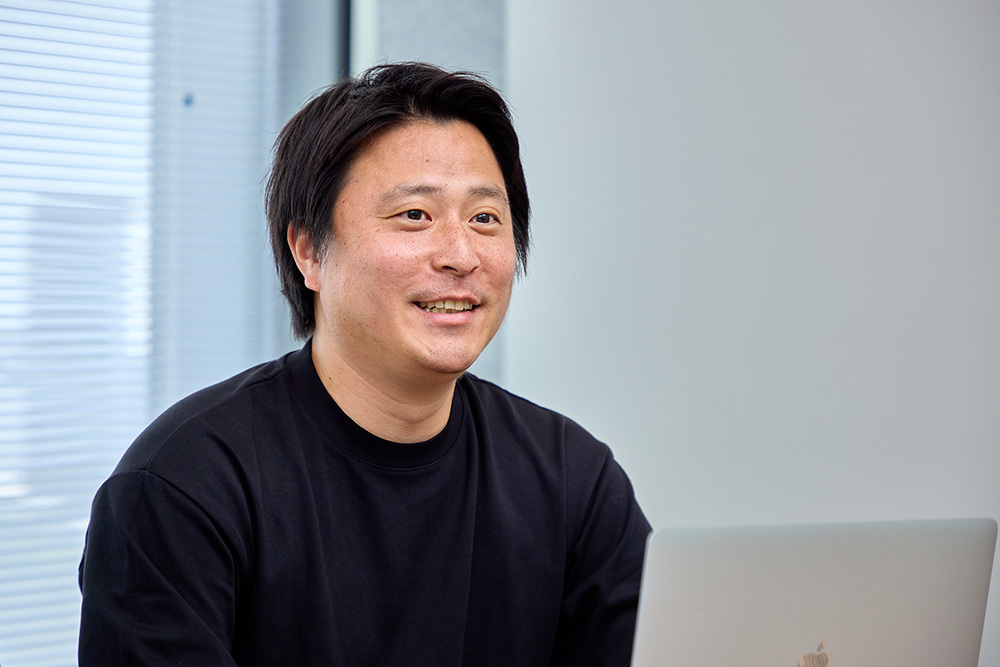
──Please tell us about the background of this project, which involved kapok material branding and creating artwork for the February 2025 Milan Unica exhibition.
Fukai: When we first started the kapok business, we proposed this "material" to other apparel companies, hoping they would adopt it. However, with no adoption track record, the situation was quite challenging. So, I decided to create the track record myself, which led to the development of the Kapok Knot coat. At the time, I intended to produce enough stock for about two years' worth of this coat. After its release, it sold out almost instantly, generating a response far exceeding our expectations.
Following this strong sales momentum, we saw real potential in the material itself. Consequently, in April 2024, we launched our "Material Business," dedicated to material research and sales. This business includes plans for overseas sales, with our first target being an exhibition at Milano Unica, held in Italy in February 2025. During this process, we connected with Dentsu Inc. Since we needed branding for the material and artwork like logos, we decided to collaborate.
Shono: I met Mr. Fukai at an event organized by BXCC as part of its corporate BX promotion initiatives. BXCC has a project supporting startups through open innovation, and last year, we held an event for domestic companies to showcase their businesses globally. When Mr. Fukai participated, we spoke and found mutual interest.
Fukai: That was around October 2024, so it was a perfect situation for material branding ahead of the Milan Unica event in February the following year. The project officially kicked off around December, and we had a very tight schedule aiming to finish by January, spanning the year-end and New Year holidays. I requested we proceed intensively over a short period.
──Was the project focused on material branding from the outset?
Shono: Yes. While Mr. Fukai had a vision for the materials business at the time, Kapok Japan's core business remained its fashion brand. Within that context, we strongly believed in the inherent value of the material itself. We saw the potential that if kapok were adopted by more companies, it could help expand a more sustainable world.
Therefore, we proposed material branding to communicate value through the "material" itself and increase the number of players handling kapok. We thought it would be ideal to create a structure where Kapok Japan, which had pioneered unique processing technologies, would be the foundation.
Sustainability Fatigue? Challenges Facing Zebra Companies

──Branding kapok itself to expand the market could make it easier for zebra companies to balance social responsibility, like sustainability, with business viability. Regarding achieving that balance, could you share any challenges you currently perceive, Mr. Fukai?
Fukai: Around 2019 when we launched Kapok Knot, terms like "sustainable" and "SDGs" were starting to spread as buzzwords, and there was a growing sense they were becoming mainstream. However, I now feel a slight atmosphere of "sustainability fatigue" emerging in society.
Products made from environmentally friendly materials tend to be more expensive. Previously, some customers would choose them simply because "they're sustainable and good." But now that sustainability has permeated and become a kind of standard, it seems increasingly difficult for consumers to keep purchasing based on that reason alone. For businesses, sustainability is now a given when operating. If you can't offer other added value or appeal, you won't be chosen.
Kapok also offers value through functional aspects like insulation. While its price point is lower than down, it's not exactly affordable. We believed that by combining social value with functional value, we could appeal to consumers and get chosen. We created apparel products based on this idea, and initially, they sold out immediately as intended. However, growth since then has been slower than anticipated.
Even before starting the material business, our branding of apparel products combining social impact and functional value was successful. As a zebra company not solely focused on profitability, we could have continued pursuing "healthy growth." However, the challenge then becomes the business sustainability of the people cultivating kapok.
When we told the kapok farmers that we wanted to plant more trees if sales increased, they responded by asking us to keep buying their harvest for the entire 50-year period it takes for the trees to bear fruit. Given the current scarcity of companies producing kapok products, we essentially have to keep increasing our order volume alone. If we continue to pursue "healthy growth" while maintaining the same order volume, we won't be able to sustain their livelihoods.
Therefore, we devised a plan to sell the material itself and create uses for it beyond our company. While this differs from our initial vision, scaling the business to a certain size remains crucial. By scaling our "Material Business" – selling kapok as a raw material – we achieved a positive shift: successfully balancing social impact with business viability.
Shono: What you're describing is a challenge for Zebra companies as a whole. Products related to sustainability tend to end up being just "good things," selling well initially but struggling to gain lasting traction. The crucial and difficult part is how to make them stick, how to get people to keep buying them out of genuine resonance. As sustainability becomes the norm, can we effectively communicate the functionality and intrinsic value, and establish the product itself? This was a point we strongly focused on in this project.
──I understand this project is being conducted as a performance-based business partnership. Is that approach also connected to your earlier point that "to be sustainable, you must scale as a business"?
Shono: Yes. Capoc Japan's growth is also a result of the value BXCC was able to provide. It signifies how seriously we're committed to this, which is why we proposed the performance-based model. Supporting the growth of socially valuable zebra companies through creative power is also our challenge.
Fukai: If it weren't for the performance-based model, it would have been difficult for us to collaborate with Dentsu Inc., so we're very grateful. Internally, it's also rare to have the experience of working closely with creators from a large company like Dentsu Inc. Seeing firsthand how Dentsu Inc. approaches project execution and their way of thinking was also extremely valuable.
Function, social impact, story. The "Brand Value Extraction Session" that thoroughly considered the balance of all the "switches" that move consumers' hearts.

──What topics were discussed during the weekly "Brand Value Extraction Sessions" held for the project, and how did these discussions translate into the actual creative work?
Shono: Through these sessions, we identified and organized both the inherent value of the kapok material and the value held by Kapok Japan itself, building our output from there. In this case, we felt it was particularly important to strongly communicate the value of the kapok material itself, rather than focusing solely on the company.
Currently, the term "kapok" itself is not widely recognized. This led to the creation of the keyword "NEO DOWN KAPOK." By deliberately referencing the word "down," the intent was to clearly show what kapok is. Additionally, with overseas sales in mind, there was discussion about "appealing to Japan Quality," leading to the decision to incorporate Japanese elements into the logo as well.
Miyake: When appealing to those unfamiliar with kapok, we debated whether to convey the actual shape of the kapok fruit or use a design suggesting the material's fluffy texture. For the material brand naming itself, key discussion points were whether to hook on functionality or novelty.
Our benchmark was how materials like "Gore-Tex" are presented—something you might not know exactly what it is, but you've heard of it and it gives a positive impression. Also, since this logo was for exhibiting at Unica Milano, we started from the premise of creating a new material rooted in "Japan Quality." We wanted to convey that this material came "from Japan" when viewed from an international perspective. After repeated discussions with Mr. Fukai, the fluffy, Hinomaru-like shape was adopted.

Hasegawa: I believe this applies beyond just materials. When consumers choose new products or brands, various "switches" that move them come into play. Price, functionality, and social considerations like environmental impact are key, but brand image and the brand's story also influence selection. We didn't view presentation as an all-or-nothing choice, focusing solely on one "switch."
We meticulously discussed how to tune and balance all the "switches" that push consumers—function, story, social responsibility, and others—to decide on the copy and visuals for a test type to be presented at the February Milan Unica event. That approach was both incredibly challenging and enjoyable.
Fukai: That's something I've personally struggled with for a long time. If we were solely focused on social responsibility, we could have named the brand something like "Feather-Free" or "Save the Duck," but that's not the only message we want to convey. As for functionality, we can't definitively say it outperforms high-spec down. And we don't want people to choose it based solely on the story either. While I understand that marketing would find it easier to promote if we focused on one thing, I wanted to communicate that the balance of all these elements is just right.
Hasegawa: Specifically, I focused on placing the core message in the most prominent part of the catchphrase, while gradually weaving in other elements through visuals and body copy. We deconstructed all the appeal points raised during sessions, prioritized them, and strategized how to combine what goes in the catchphrase with what gets woven into the body copy. By meticulously designing that balance, I feel it resulted in a "left-brain" copywriting approach that conveys all of KAPOK JAPAN's appeal.
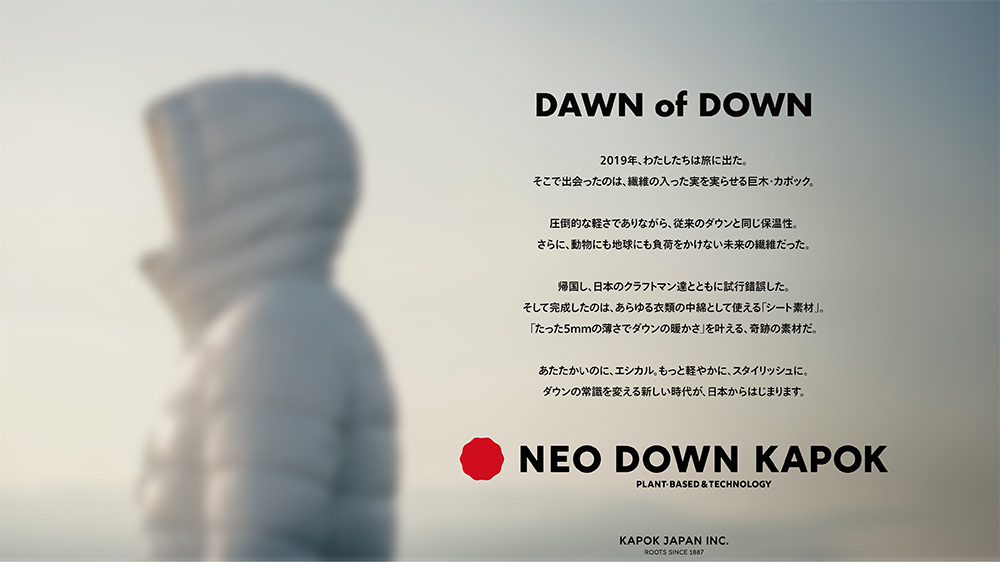
In Italy, we secured business meetings with over 50 companies—exceeding expectations. This established a foothold for business in the European market.
──What results did you achieve from exhibiting at Unica in Milan?
Fukai: Regarding contacts with related companies at the booth, we far exceeded expectations, securing nearly 50 business meetings against a target of about 30 companies. We provided concrete samples and held discussions at the table, and we continue to maintain relationships with about 10 companies even now.
However, in the apparel industry, most companies participating in such events are looking ahead to planning for about one to one and a half years in the future. Since orders aren't placed immediately on-site, it will still be some time before this translates into sales results. We plan to exhibit at the July 2025 Milan Unica as well, aiming to build business connections there.
That said, directly speaking with European companies we previously lacked connections with and opening that initial door is significant progress. With Dentsu Inc.'s support, we feel it was worthwhile to dive into the European market.
──Please tell us about your future initiatives and developments.
Fukai: Besides the July Milano Unica, we've actually secured an exhibition at the 2025 Japan International Exposition (Osaka-Kansai Expo) from Friday, October 3rd to Tuesday, October 7th. They approached us to showcase our "100% Plant-Based Down" concept—part of our "Creating the Down Standard for 2030" initiative—within an experiential exhibit titled "Future Navigation: The Journey of SMEs Aiming for 20XX."
Furthermore, even if the market for kapok expands and its use as an alternative to down increases, the "seeds" themselves currently have little practical use beyond being a byproduct. Therefore, we are advancing a project exploring the potential to create a new economic ecosystem by using oil extracted from these seeds as fuel. Ultimately, we aim to create a kind of "circular impact model" where every part of the kapok tree is utilized without waste. If apparel companies seriously consider this and leap beyond just using sustainable materials to explore areas like creating new biofuels from the seeds, I think it would be incredibly exciting.
There's significant potential for the business segment centered around kapok to expand further. When scaling up and branding, a completely different mindset will be needed, so we're hopeful that continuing to collaborate with Dentsu Inc.'s creators will lead to a very positive outcome.
Miyake: When we created the main copy "NEO DOWN KAPOK," we discussed how wonderful it would be if this material could become as universally recognized as cotton, wool, or cashmere. When that happens, we envision it not just as the logo of one apparel brand, but as a broader symbol where people recognize that "this mark guarantees high quality."
For us, it felt less like branding a single apparel item and creating a logo, and more like working on something truly transformative. It was incredibly inspiring. I'm eager for our next opportunity to collaborate again, combining our ideas and strengths to drive growth.
Hasegawa: As a copywriter, I solidified the brand concept and statement for Milano Unica this time. Next, I want to support creative and PR efforts that widely communicate the appeal of kapok itself and Kapok Japan to more people, ultimately connecting it to business opportunities.
Shono: This output was really just the first step. It was creative work specifically for the Milano Unica exhibition, aimed at introducing the material kapok to overseas companies.
The world is changing, including how sustainability is perceived, and Kapok Japan will continue to grow. Within that context, BXCC has many members who can provide value as creators, offering structural design for the business and ideas for the business itself. There are still many areas where we can support them, so I definitely want to continue accompanying them and contributing to Kapok Japan's business growth.

Was this article helpful?
Share this article


Newsletter registration is here
We select and publish important news every day
For inquiries about this article
Author
Fukai Yoshitaka
Kapok Japan Co., Ltd.
Founder / President and CEO
Shono Gen
Dentsu Inc.
BX Creative Center
Communication Planner
Articles by this person
Yuki Miyake
Dentsu Inc.
BX Creative Center
Art Director
Articles by this person
Teruna Hasegawa
Dentsu Inc.
BX Creative Center
Creative Director / Copywriter

