
Note: This website was automatically translated, so some terms or nuances may not be completely accurate.
 Urban Future Design Unit: Pursuing Happiness in the City [9/12]
The Tokyo Bay Area's Current State: The Future of the City, Co-Created by Diverse Players
Dentsu Inc.'s 'Urban Future Design Unit' is a specialized team that envisions the future of cities and lifestyles, providing support across various fields from conception to realization ( details here ).
This series explores what is required for future urban and community development, as well as what makes cities with high levels of happiness, from various angles.
This time, the focus is on the Tokyo Bay Area. With Toyota Motor Corporation planning to open "Toyota Arena Tokyo" in October 2025 and TV Asahi set to launch "Tokyo Dream Park" in spring 2026, the area is once again gaining significant attention.
Amid these opening preparations, a workshop was held where Toyota Motor Corporation, TV Asahi, and surrounding businesses collaborated to envision the area's future. What future for Tokyo Bay did this diverse gathering of companies and organizations collectively envision?
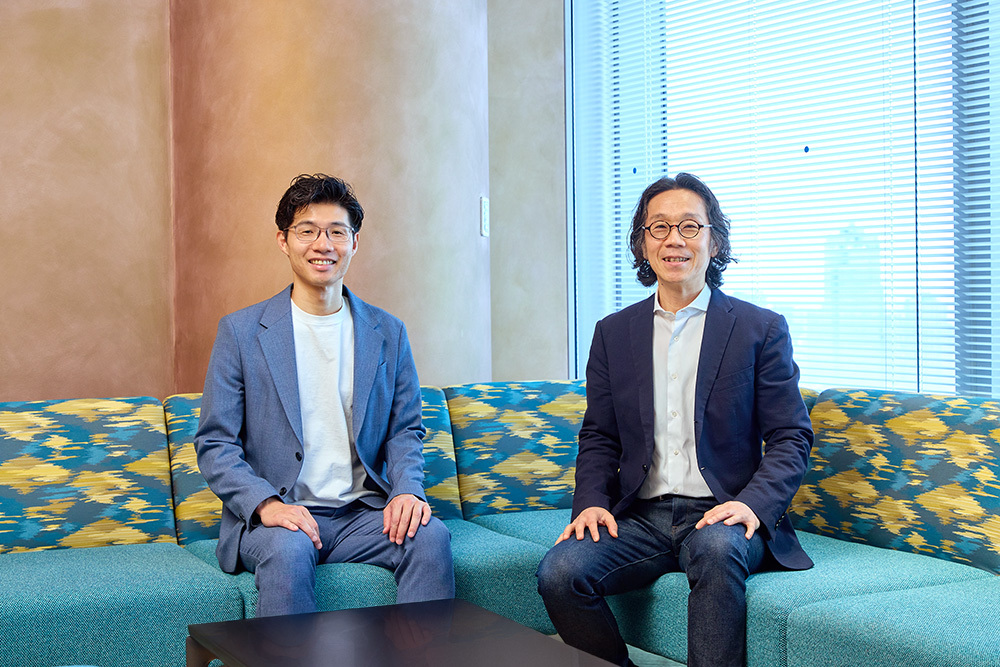
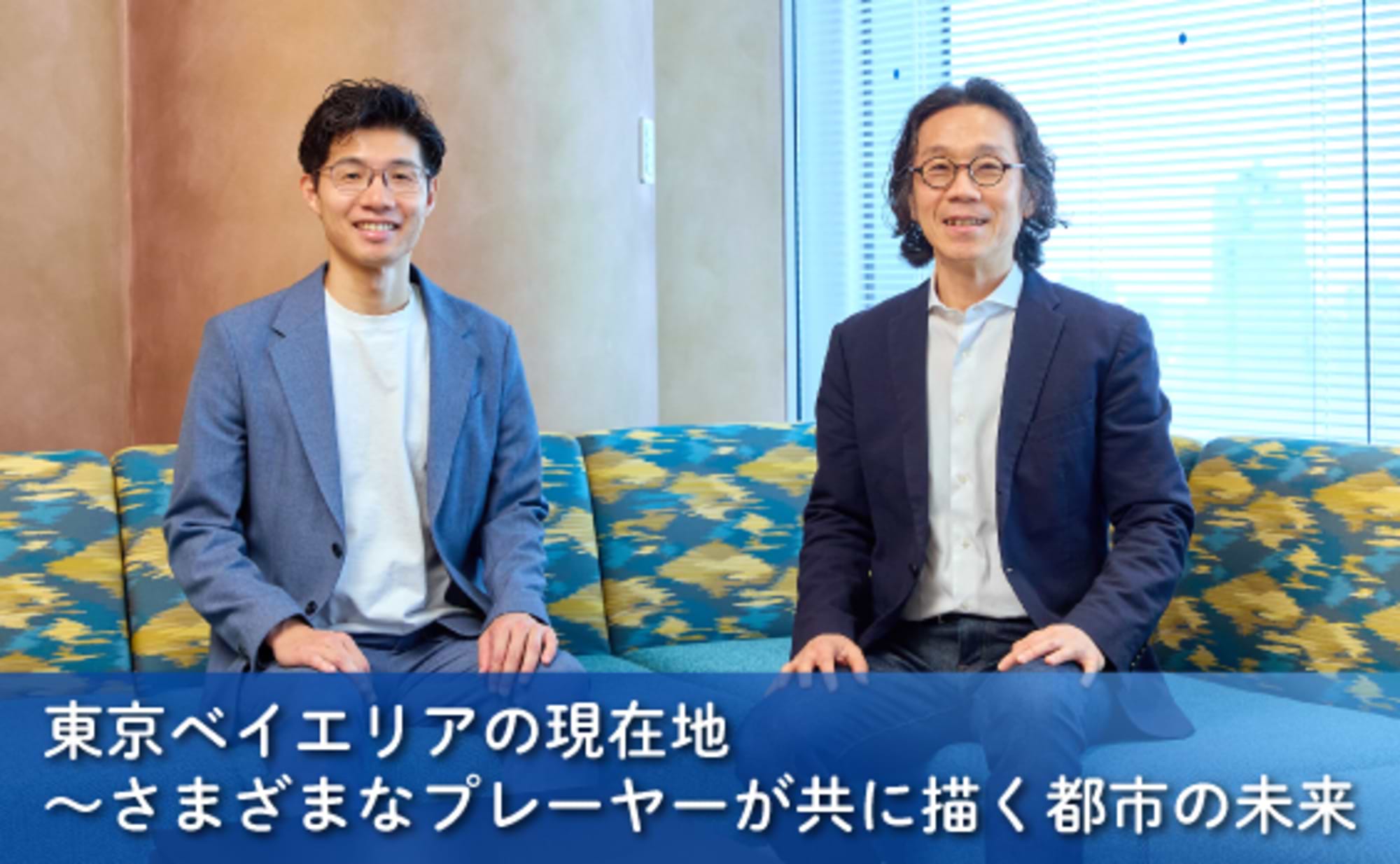
We spoke with Shigeki Kojima, the planner who facilitated the workshop, and Moriyasu Natsume, leader of the "Urban Future Design Unit" and representative director of Mizuto Sōzō Partners, about the workshop's proceedings, its significance, and expectations for Tokyo Bay.
<Table of Contents>
▼Tokyo's Waterfront Areas Showing Increasing Momentum
▼Workshop Held to Envision the Future of the Tokyo Bay Area
▼ "Sharing Visions" Becomes a Milestone in Urban Development Projects
▼It's Crucial for Diverse Urban Development Players to Take Action as Personal Initiatives
Tokyo's Waterfront Areas Show Increasing Momentum
──Mr. Natsume, in December 2023, you introduced "Utilizing Waterfront Areas in Cities" ( article here ) in this series. You also discussed the Tokyo Bay Area then. About a year and a half later, what changes have occurred?
Natsume: In the previous article, I discussed how Tokyo's waterfront spaces are undergoing significant transformation, with various companies and organizations beginning to participate in urban redevelopment. I suggested that this trend is creating momentum to enhance Tokyo's appeal, and that business opportunities could be found across multiple layers moving forward.
Indeed, over this past year and a half, there have been various developments in the Tokyo Bay Area. In 2024, "Harumi Flag" opened its doors, the Formula E Tokyo race—the world championship for electric vehicle racing—was held in the Ariake district, and events like "SusHi Tech Tokyo," one of Asia's largest startup conferences, took place. All of these events have already been held in 2025, and their continuation into 2026 has been confirmed.
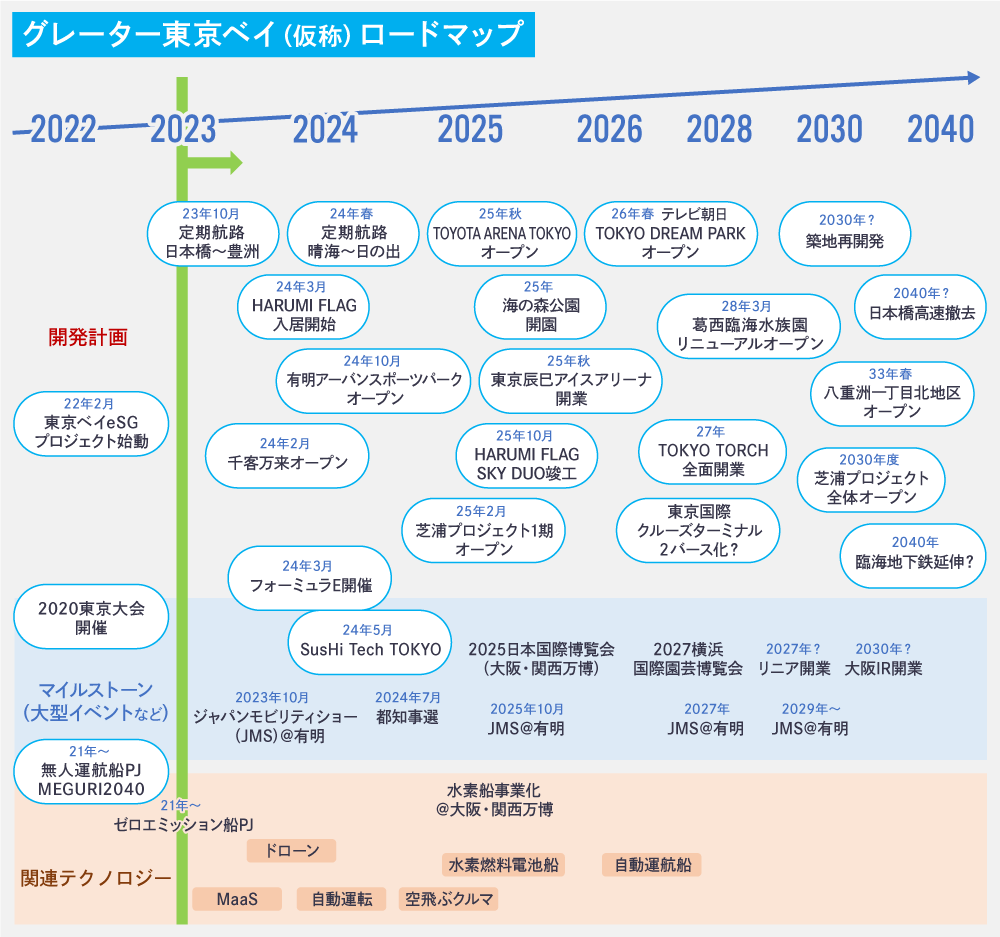
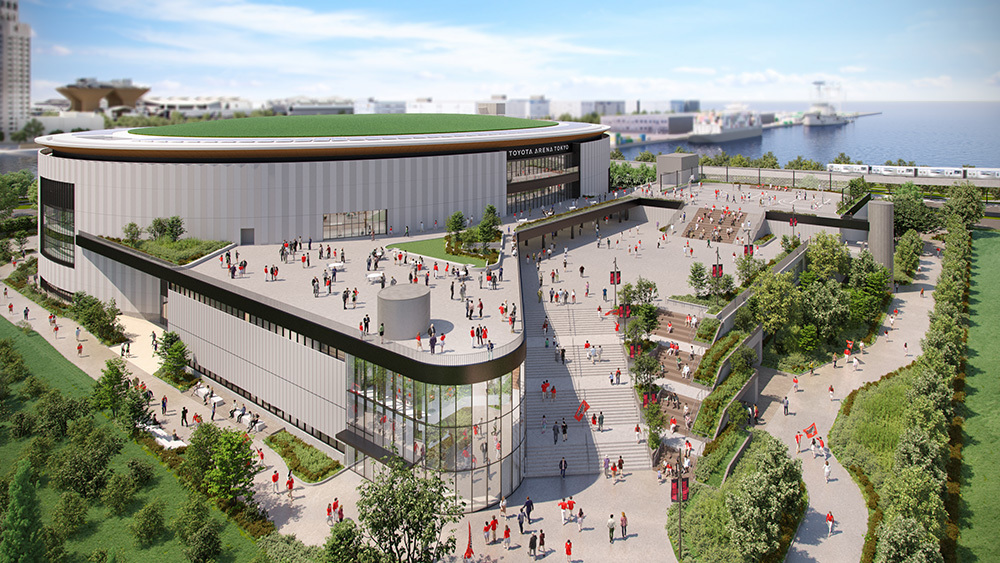
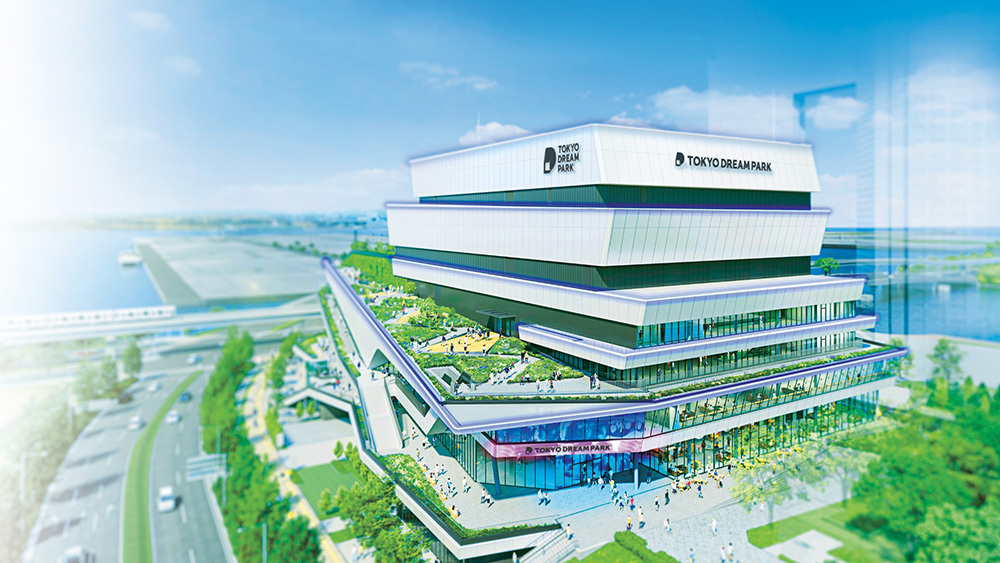
Furthermore, the "Toyota Arena Tokyo" is scheduled to open in October 2025, and the "Tokyo Dream Park" is set to open in spring 2026. The opening of these two facilities is expected to be a major catalyst for further revitalization in the Tokyo Bay Area.
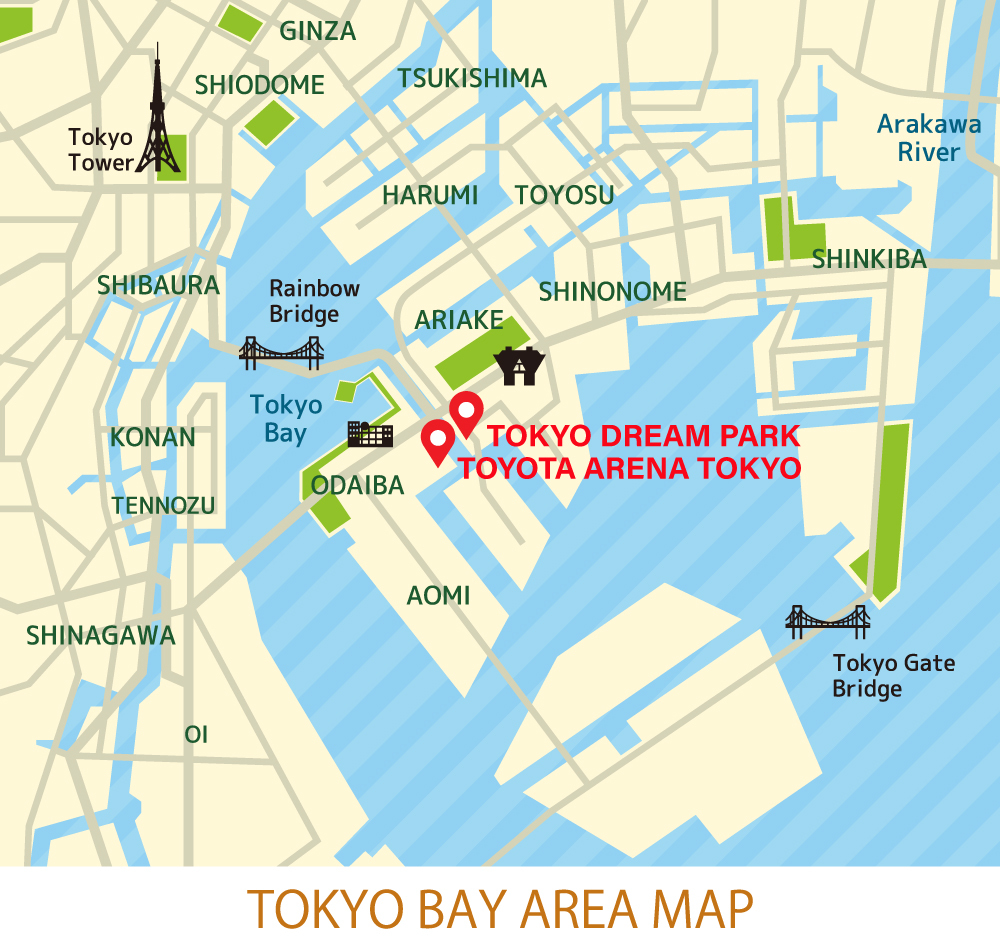
Toyota Arena Tokyo
Scheduled to open in October 2025, this will be the home arena for the B.LEAGUE's Alvark Tokyo. Designed not only for sports but also for various events (concerts, etc.), it features an overwhelming LED vision system that amplifies the excitement and emotion of live entertainment, along with unprecedented high-quality hospitality services. An outdoor basketball court, accessible to anyone even on non-event days, will also be installed.
Tokyo Dream Park
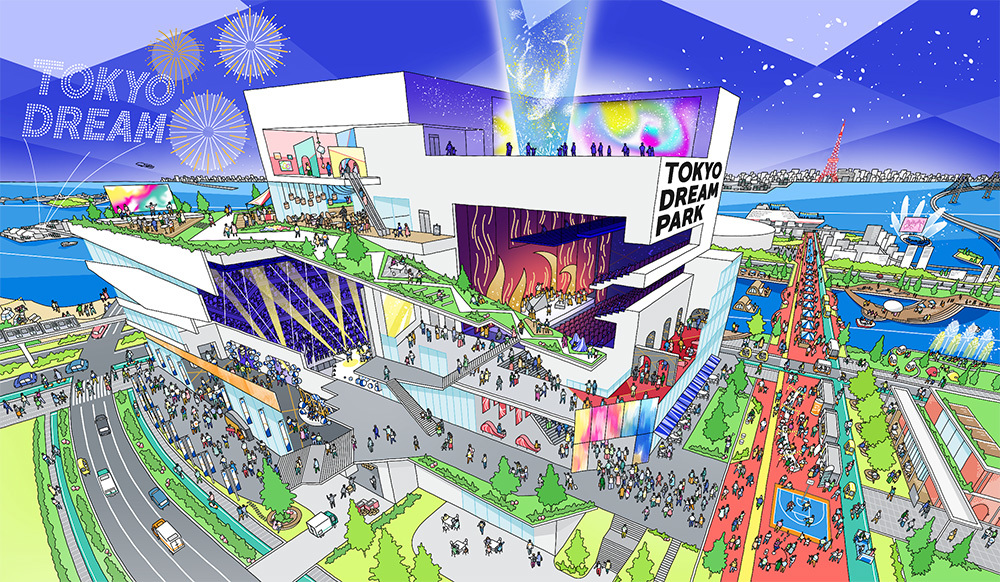
A "multi-purpose entertainment complex originating from Ariake," comprising a music hall seating up to 5,000 people, a 1,500-seat theater, exhibition and event spaces, a rooftop plaza, and dining establishments. Diverse performances and content are scheduled throughout the year.
Workshop held to envision the future of Tokyo Bay Area
──I understand you held a workshop envisioning the future of Tokyo Bay together with Toyota Motor Corporation and TV Asahi, the two companies opening the new facility. Could you tell us about the background for holding this workshop?
Kojima: I had an opportunity to speak with representatives from TV Asahi. They expressed a desire for surrounding facility operators to collaborate and revitalize the area together as they prepared for opening. The Tokyo Bay Area is simply vast, so it's incredibly challenging for a single facility to energize the entire region on its own. Toyota Motor Corporation shared this perspective, so I proposed, "Why don't we hold a workshop together to brainstorm how we can revitalize this area?"
When it comes to the shared vision we all aim for, it rarely works out well if just a few people decide on concepts and buzzwords and then push them down from the top. After all, if someone else makes the decisions, it just feels like being told what to do, and that doesn't inspire motivation, right? (laughs) So, I thought that if members from different companies and organizations could set aside their affiliations and positions and think together, we could create a shared vision that many people could agree on.
──What exactly did you do in the workshop?
Kojima: We held two workshops. The first involved about 15 employees from Toyota Motor Corporation and TV Asahi, plus about five members including a facilitator from Dentsu Inc.
We built on ideas each company already had about what they wanted to do, adding "things we'd like to try in this area." Participants generated ideas along two axes: things achievable in the near future (around five years) and things they hoped could be realized in the distant future (20-30 years).
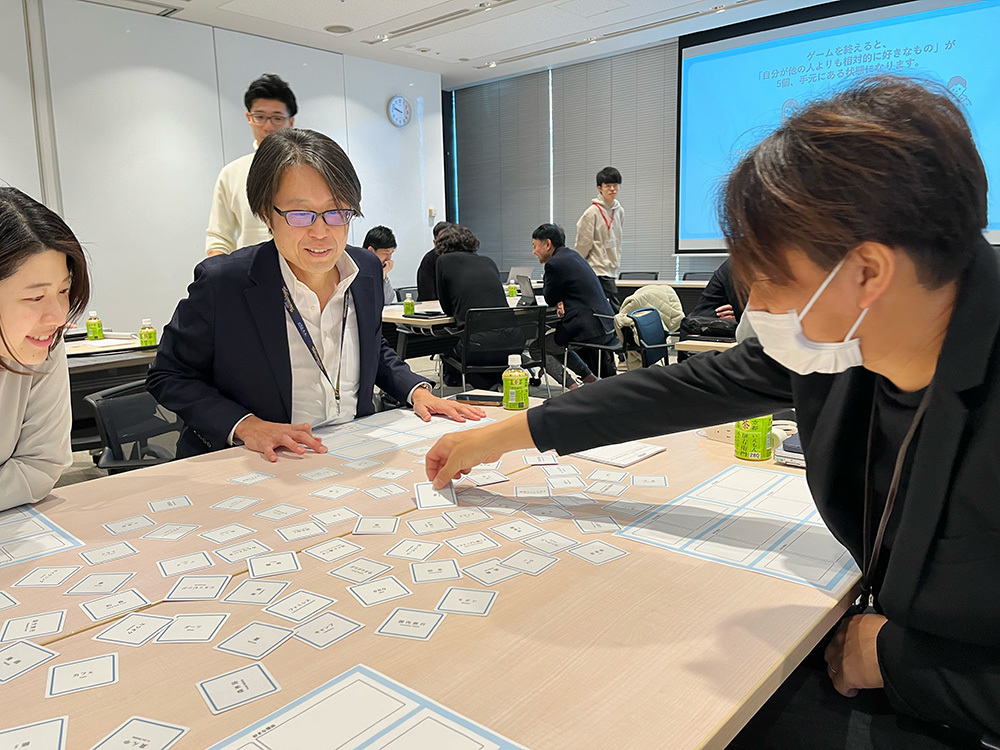
During the workshop, we also utilized the card game "Breakthrough Bridge," developed by Dentsu Inc. This game uses cards to uncover insights based on the emotion of "liking," serving as a hint for generating ideas.
While factors like company profits and regional benefits are important, we deliberately set those aside for the moment. We used the cards to encourage participants to first explore their own personal likes and what they find enjoyable, using that as a foundation for their ideas. I believe this helped participants truly internalize the future of the Tokyo Bay Area as something personally relevant to them.
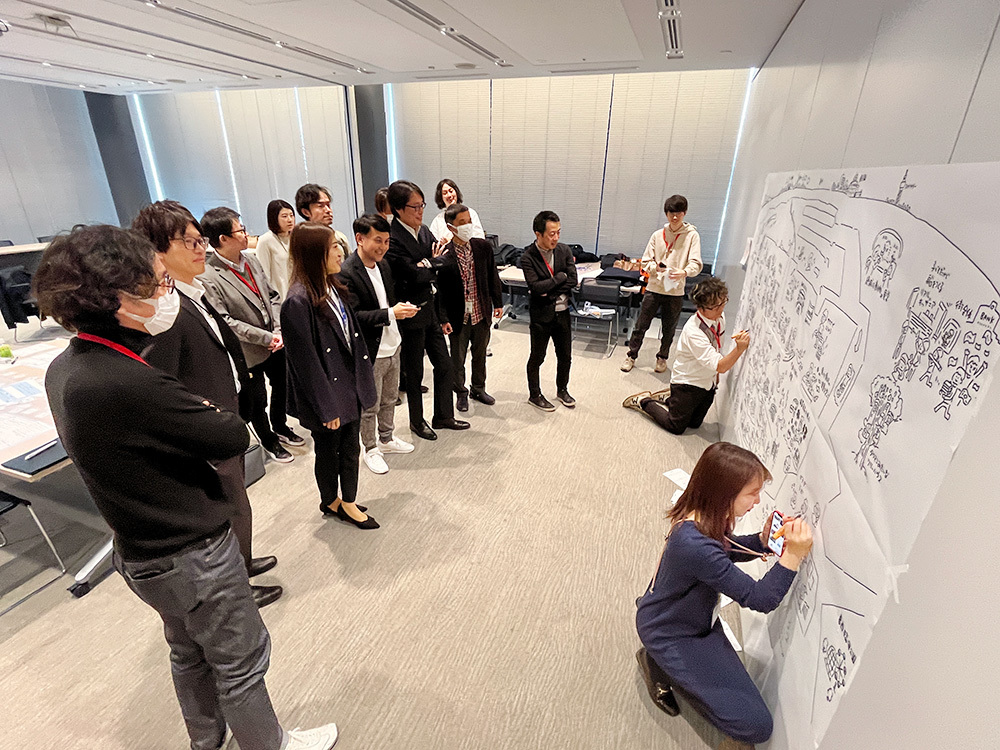
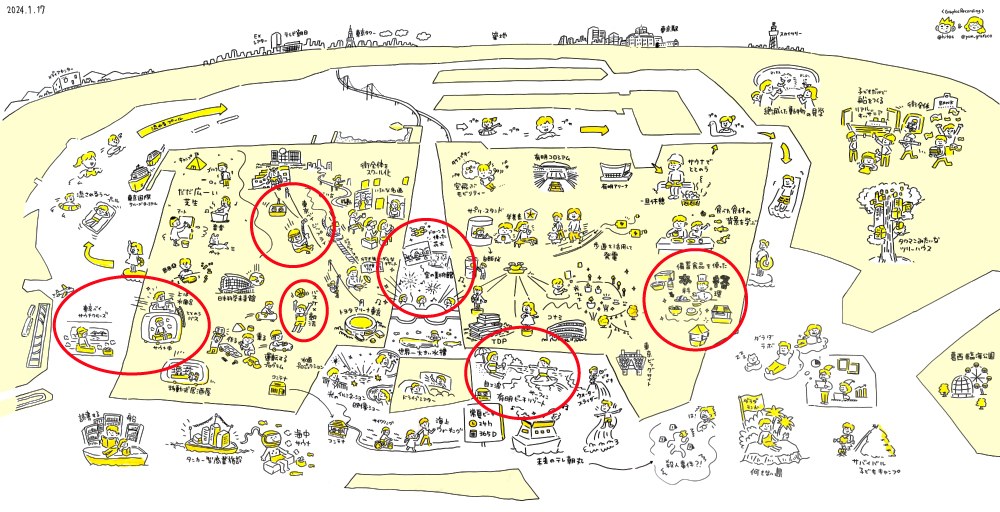
We also conducted "graphic recording," where participants divided into groups to generate ideas, and then each group's presentation was immediately sketched onto a single illustration. Since the Tokyo Bay Area is vast, we mapped these ideas onto a map so the location of each proposed initiative was immediately clear.
──What were some memorable ideas from the workshop?
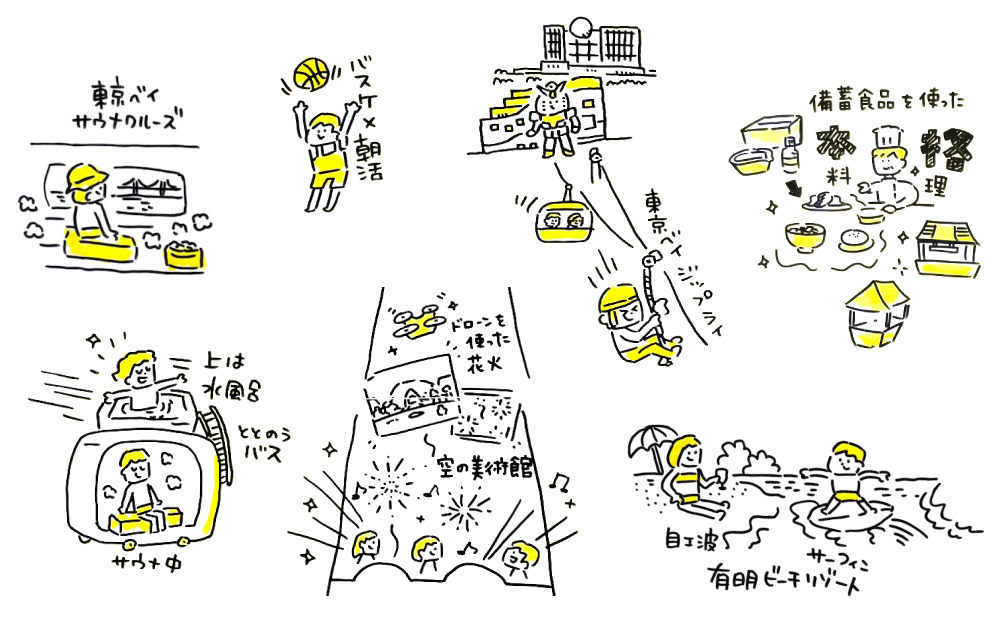
Kojima: Personally, I found the idea of "creating a beach resort in Ariake" fascinating—something only possible because of its location by the sea with open skies. There were also many other ideas leveraging the area's unique characteristics, like an art museum enjoyed on a bridge or saunas designed for boats and the sea.
I also thought the idea of a "Authentic Cuisine Festival using near-expiry stockpiled food" at the Disaster Prevention Plaza was brilliant. It seems like it could become an event with social significance, a bit different from a regular food festival. Many other dream-inspiring ideas emerged, like the "Tokyo Bay Zip Line" for moving around the area and a "Basketball × Morning Activity Event."
"Sharing Visions" is a milestone in urban development projects
──What did you discuss in the second workshop?
Kojima: For the second session, we invited participants from Toyota Motor Corporation and TV Asahi, along with representatives from surrounding businesses and the administration. Building on what we discussed in the first session, we narrowed down the area of focus slightly.
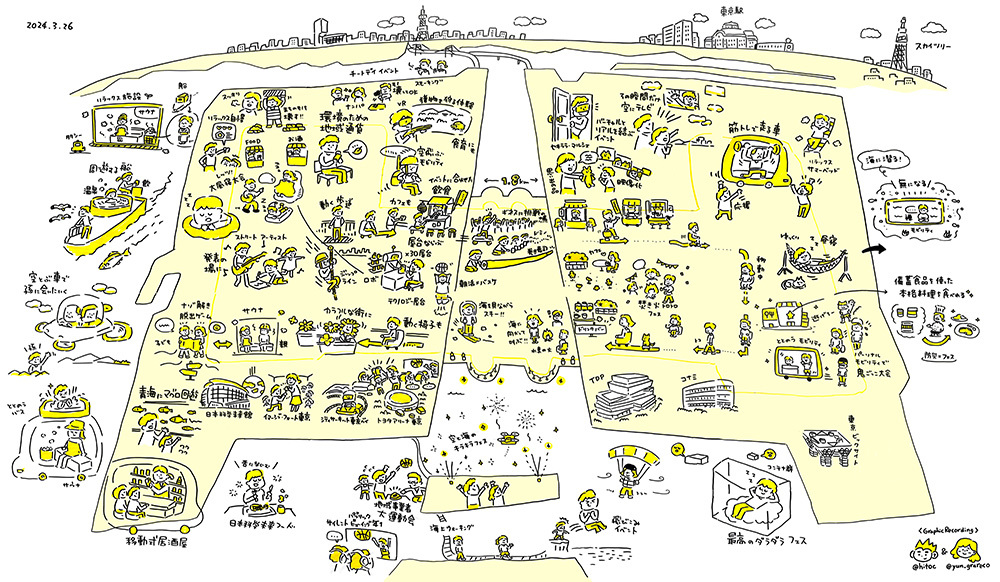
Many ideas emerged for the Center Promenade, including the Dream Bridge connecting Toyota Arena Tokyo and Tokyo Dream Park, as well as ideas utilizing the water surface. We prepared ample space to visualize these concepts. By adjusting the map and refining the ideas to fit it, we were able to align the participants' shared vision for the future of the city.
──Please tell us the objectives of these two workshops and what outcomes were achieved.
Natsume: While it's great when each idea generated in the workshop is interesting, what's truly important is that participants share their thoughts and feelings as residents, saying things like, "Wouldn't it be nice if we could do this?" In fact, after the workshops ended, a sense of camaraderie had developed among everyone. I believe holding workshops to share these feelings is especially effective when participants have diverse roles and backgrounds.
I expect various discussions about urban development in this area will continue going forward. The discussions from these two workshops will form the foundation for those future conversations. While the time spent sharing ideas together may seem brief in the context of the overall project, I believe it represents a significant milestone.
It's crucial that diverse players involved in urban development take action as if it were their own personal matter.
──Did the workshops spark any changes between companies?
Natsume: Moving forward with the project will undoubtedly present various challenges, but I believe the groundwork has been laid for everyone to pool their wisdom and collaborate. I sensed a shared understanding of "let's all work together to make this happen," and the beginnings of a relationship where we can cooperate in the most efficient way.
Kojima: Following the workshop, we also assisted in developing an "Area Vision" that articulates the direction this area aims to take. We revisited and discussed the ideas generated during the workshop. Since the underlying concepts were already shared, I feel we were able to move forward with everyone's understanding and agreement. While not yet publicly announced, we have created a catchphrase and a statement.
──What insights did you gain from this initiative, from the perspective of the "Urban Future Design Unit"?
Kojima: During this workshop, we used graphic recording to visualize ideas on the spot, and I found this method extremely effective. Compared to dozens of pages of text-only minutes, having everything condensed into a single illustration makes it immediately clear what everyone was thinking at that moment when you look back later. Participants also appreciated it, and we've been utilizing it regularly since.
After the workshop, we received a request to create a visual that instantly conveys what Tokyo Dream Park is. I took charge of the creative direction for this project. It incorporates many ideas that emerged during the workshop. I felt that communicating with the client through visuals provided great stimulation, helping both sides expand their thinking. I believe this approach can be applied not just in the Tokyo Bay Area, but in various locations.
Natsume: What I reaffirmed through the workshop is how crucial it is for urban and community development when private entities—various companies and organizations—come together and take action, saying, "Let's collaborate to make this place what we envision." While government entities may find it difficult to address certain matters due to their position, I believe such proactive movements from the private sector make cooperation easier.
The Tokyo Bay Area is one of the rare examples where private entities are taking the initiative to act. Its future momentum will depend on how involved companies and organizations can take ownership and act accordingly. Right now, many seeds are sprouting, and the schedule is packed with upcoming events, including facility openings. We at Dentsu Inc. want to support this effort, and we hope everyone will look forward to and keep an eye on it.
Kojima: Having an environment like the Tokyo Bay Area, where millions of people can enjoy expansive views of the sea and sky within a major metropolis, is truly rare globally and something we can be proud of worldwide.
Therefore, I believe this area will continue to attract significant investment and business activity, not just from Toyota Motor Corporation and TV Asahi, but from many others. I expect that in the near future, investment will flow in not only from domestic but also international companies, making it a place that people worldwide aspire to visit—a "Tokyo Entertainment Bay" they dream of experiencing at least once!
【Contact for Inquiries Regarding This Matter】
Urban Future Design Unit
Website: https://www.dentsu.co.jp/labo/futuredesign_unit/index.html
Email: futuredesign-unit@dentsu.co.jp

Was this article helpful?
Share this article


Newsletter registration is here
We select and publish important news every day
For inquiries about this article
Back Numbers

Author
Morikazu Natsume
Dentsu Inc.
Business Transformation Division 1
Senior Project Director
For many years, I have been involved in projects related to "urban" and "place-making," including planning and implementation of promotional initiatives, planning for stores and commercial facilities, new business model development, and establishing concepts and branding for urban planning and area development. In recent years, I have also been responsible for promoting co-creation projects in collaboration with external partners, as well as building and operating platforms. Dentsu Inc. "Urban Future Design Unit" Leader / Representative Director, General Incorporated Association Aqua City Creation Partners / Class 1 Architect
Nariaki Kojima
Dentsu Inc.
Sports Business Solution Division
Senior Producer
Focusing on stadiums and arenas, I combine architectural expertise with advertising and marketing concepts to handle vision development, experience design, and branding. Past projects include Escon Field HOKKAIDO, Edion Peace Wing Hiroshima, and Waters Takeshiba. I have served in the Sales Division, Marketing Division, and Business Co-creation Division before joining my current division.