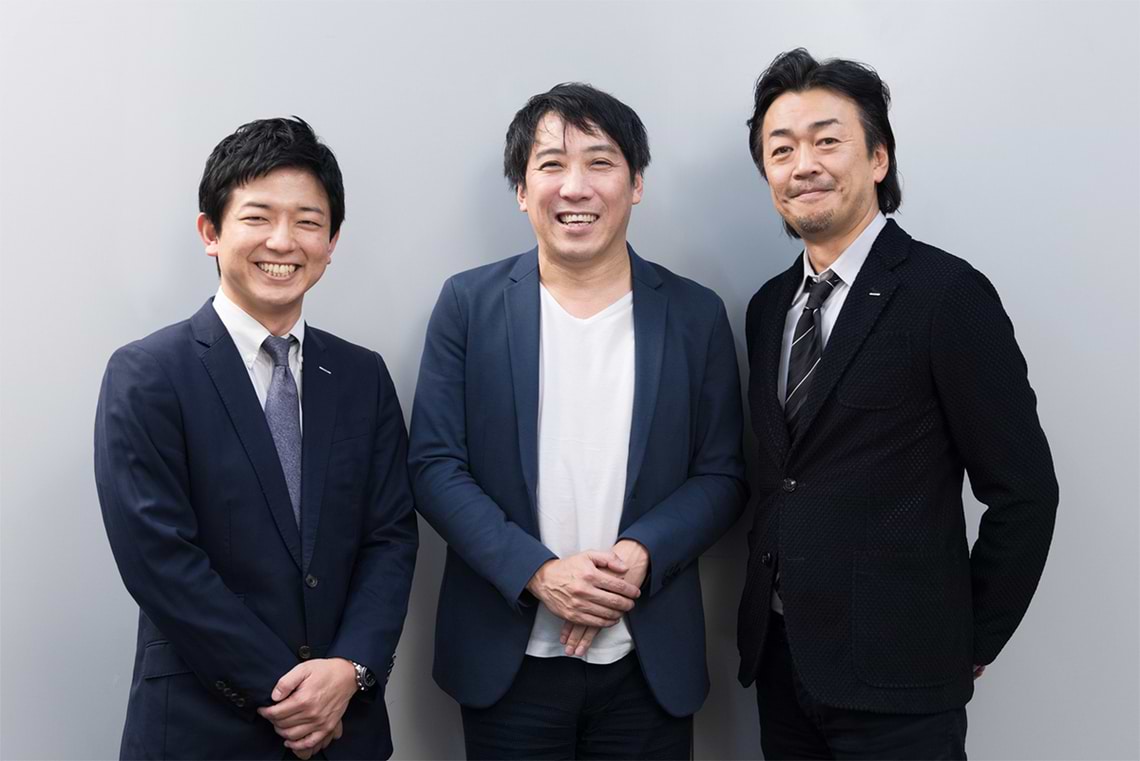
At Dentsu Group's local offices worldwide, proposals rooted in consumer insights and co-creation with local and Japanese companies are conducted daily. This series introduces regional market characteristics and insights for Japanese companies entering new markets through the perspectives of global expatriates leading business in various locations.
The first installment focuses on Vietnam, a rapidly growing Southeast Asian nation attracting significant attention. Using the case of Nisshin Seifun Werna's entry into the Vietnamese market as a lens, we spoke with Yasushi Shinbo of Dentsu Inc. Vietnam about the market's potential revealed through the project and key points for Japanese companies considering expansion.
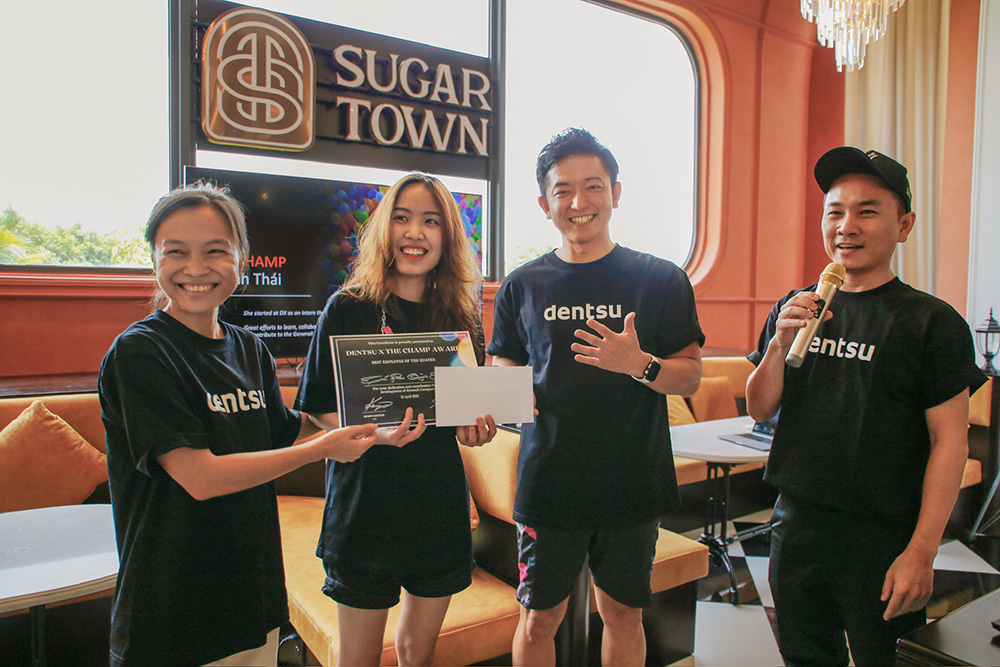
A scene from Dentsu Inc. Vietnam's team building. Yasushi Shinbo is second from the right.
Dentsu Inc. Vietnam: Providing Comprehensive Support for Japanese Companies Entering the Local Market
──First, please introduce yourself. Focus on what kind of work you are currently doing in Vietnam.
Shinbo: First, let me clarify the premise: "Dentsu Vietnam" is the collective name for the entire Dentsu Group presence in Vietnam. We have three main business lines: "Media," "Creative," and "CXM (Customer Experience Management: Data & Technology domain)," each operating as independent legal entities.
I currently serve as CEO of Dentsu Inc. X Vietnam, overseeing the Media domain. My responsibilities span a wide range of management duties, including accountability for business revenue and profit, client relations, talent recruitment and development, team building, and employee motivation management.
Additionally, in a dual-hat role, I serve as the Integrated Client Lead (ICL) for Dentsu Inc. Vietnam as a whole. The ICL role extends beyond sales oversight; it involves taking the lead in managing client relationships across multiple departments. This position aims to provide optimal integrated solutions for clients by managing the Media, Creative, and CXM domains in a cross-functional manner.
──What types of clients does Dentsu Inc. Vietnam support?
Shinbo: Our clients span a very broad range of industries. We provide integrated support across various sectors—including food, beverages, automotive, daily necessities, home appliances, fashion, finance, insurance, telecommunications, retail, and energy—for local, Japanese, and global companies alike.
Market Entry Consulting: Charting the Path into the Vietnamese Market
──Now, let's hear about specific support cases. How did your involvement with Nisshin Seifun Wernah begin?
Shinbo: Nisshin Seifun Werna (hereafter Nisshin Seifun Werna) had already entered Vietnam in 2013, operating a manufacturing base as an overseas plant producing household products (BtoC) locally for export to Japan. Within this context, in 2024, they announced a new strategic step: launching a BtoC business targeting the Vietnamese domestic market.This marked their transition from viewing Vietnam as a "production base" to shifting their focus to Vietnam as a "market."
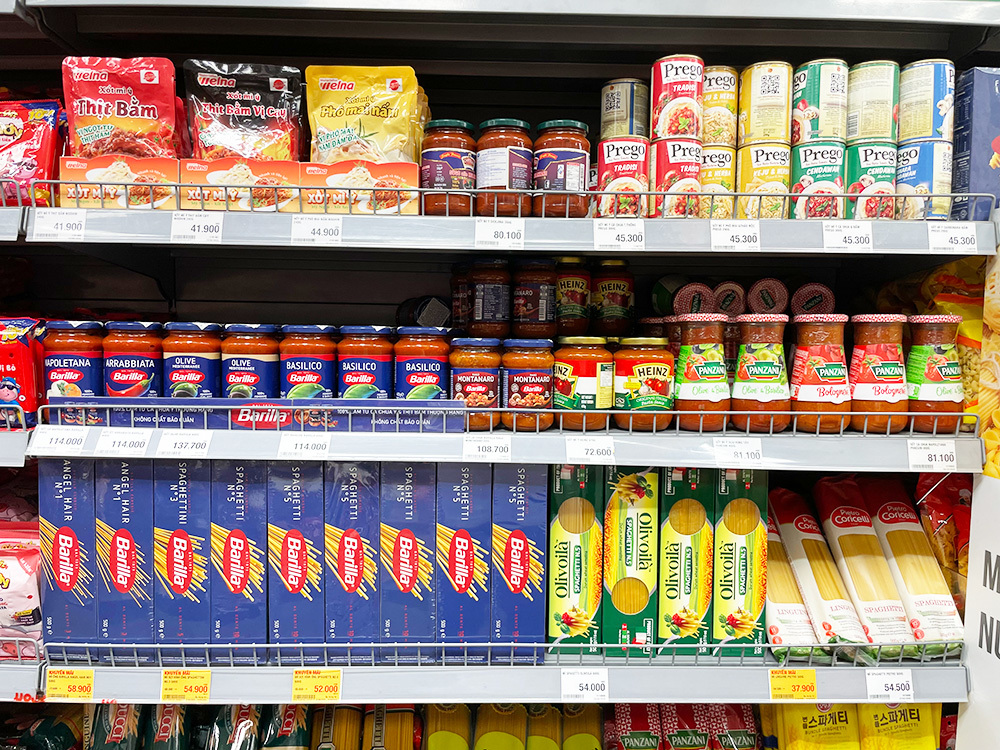
At this juncture, a pitch process was conducted to select a local partner, and we at Dentsu Inc. Vietnam were chosen. The project we undertook together began by supporting Nisshin Seifun Werna in gaining recognition in the Vietnamese market within categories where it holds a competitive advantage, such as "pasta sauce" and "seasoning mixes for rice dishes."
The Dentsu Inc. Vietnam project team and employees from Nisshin Seifun Werna Japan and Vietnam. Yasushi Shinbo is in the center.
──What was the actual process for advancing the project?
Shinbo: While advancing marketing initiatives to expand awareness, Nisshin Seifun Werna also consulted us on more strategic matters: "Which product categories should we expand into next in the Vietnamese market, and in what order?"
This is because while Vietnam is a market with remarkable economic growth and many opportunities, it also has high uncertainty due to rapid political changes and underdeveloped systems, requiring careful business planning. Particularly in the FMCG (Fast Moving Consumer Goods) sector, small mom-and-pop shops account for about 80% of distribution. The challenge with these stores is that purchase information, such as POS data, cannot be obtained, making it difficult to analyze consumer behavior.This was the point of concern for Nisshin Seifun Wernah.
Since data-driven strategy design was difficult, it was necessary to determine "which products to start with" through consumer surveys, market trend analysis, and understanding channel structures.
In other words, they needed to simultaneously consider the overall direction of the business itself while rolling out advertising campaigns. Therefore, we launched a consulting business (BX = Business Transformation) in Vietnam focused on "market entry" (the comprehensive plan a business uses to release products or services into the market), supporting them from the business conception stage and began accompanying them.
After listening to the client's concerns, we collaboratively designed the preparations for delivering products to consumers, starting at the strategic level. We felt this approach was precisely the perspective needed when tackling a market like Vietnam.
──How did you overcome the challenges?
Shinbo: Honestly, we started completely in the dark. At the time, Dentsu Inc. Vietnam lacked the structure and expertise to deeply accompany clients from upstream processes like market entry.
So we systematically identified what functions and expertise we needed to supplement, rather than trying to handle everything internally. That's when we encountered Dream Incubator Inc. Vietnam (DI Vietnam), a Dentsu Group company with consulting strengths.
Their design capabilities combined with our on-the-ground understanding and marketing execution power. We believed that bringing these two strengths together would complement each other's weaknesses and enable us to deliver more valuable proposals to clients. This conviction led us to form the team.
Specifically, we collaboratively designed roles and processes to maximize both companies' strengths. We also established a cross-group team structure, incorporating support from dentsu Japan (the domestic Dentsu Group) as needed.
By building a foundation that flexibly combines resources across the entire group, rather than relying on a single company, we were able to advance the project.
──What kind of analysis did you conduct in the consulting business?
Shinbo: Among Nisshin Seifun Welna's four main product categories – "Flour & Premix," "Pasta," "Retort Sauces," and "Frozen Foods" – by 2024, the retort sauce category had already launched B2C products in Vietnam, such as pasta sauces and rice seasoning mixes, and was in the phase of expanding brand awareness.Building on that, we spent about three months working closely with the client to develop a strategy for how to expand the other categories into the Vietnamese market.
With very limited market data available, we started by scouring every possible information source to gather data. We collected insights from every angle: government and administrative systems, tariff structures, income level trends, time spent cooking at home, types of cooking, demand for convenient prepared foods, and thrift-minded consumer tendencies.
We then conducted a multifaceted analysis for each category, covering areas where data analysis had previously been difficult in Vietnam: sales volume, market size, competitive analysis, distribution performance, price ranges, and brand awareness. Step by step, we derived a strategic scenario indicating that "the frozen food category holds particular winning potential."
──This seems like a case where the collaborative strength of the Dentsu Group truly shone through.
Shinbo: Exactly. By bringing together the strengths and expertise of Dentsu Inc. Vietnam, Dream Incubator Inc. Vietnam, and dentsu Japan, we truly leveraged the group's comprehensive capabilities.
Furthermore, in this project, we prioritized the process of "co-creating with the client" rather than attempting to build a perfect strategy ourselves from the outset. We held biweekly regular meetings, sharing intermediate outputs each time and making on-the-spot revisions and additions to refine the strategy into a highly precise one. Working side-by-side with the client to deeply understand the business became a valuable learning experience for the team as well.
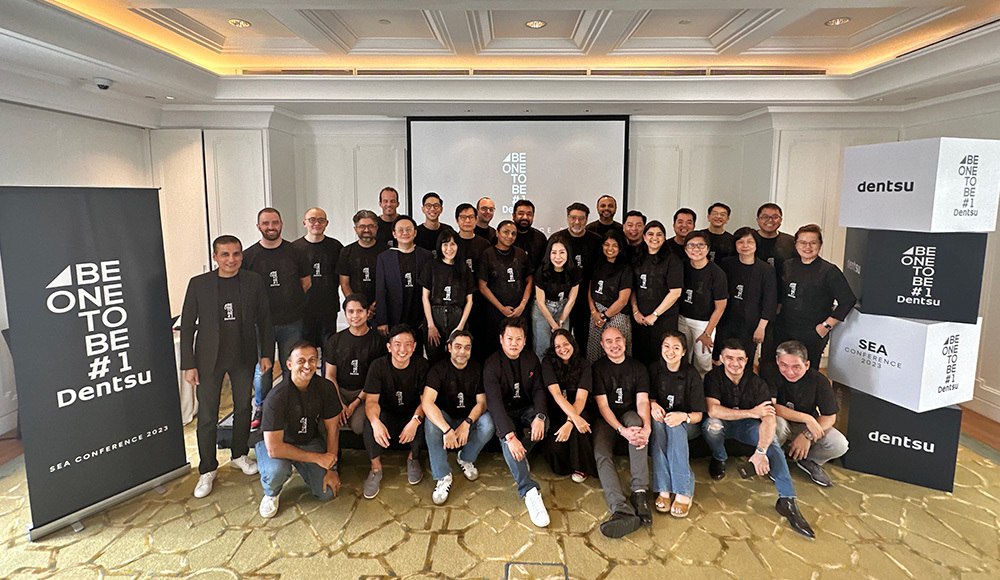
Dentsu Inc.'s SEA (South East Asia) Conference. Aiming for global collaboration across national borders. Yasushi Shinbo is third from the left in the front row.
Hint: Three-Generation Households!? The Potential of Vietnam's Food Market
──While developing the strategy, which product categories did you particularly see growth potential in?
Shinbo: In Vietnam's food market, all four major categories mentioned earlier present growth opportunities. However, some categories face challenges in achieving significant growth at this stage. For example, retort sauce-based rice seasoning mixes currently have no competitors in the market, representing a true "blue ocean" situation.However, a challenge remains: for Vietnamese people who frequently eat plain white rice, the culinary practice of cooking flavored rice is not yet established. This means expanding related products like rice seasoning mixes will also take time.
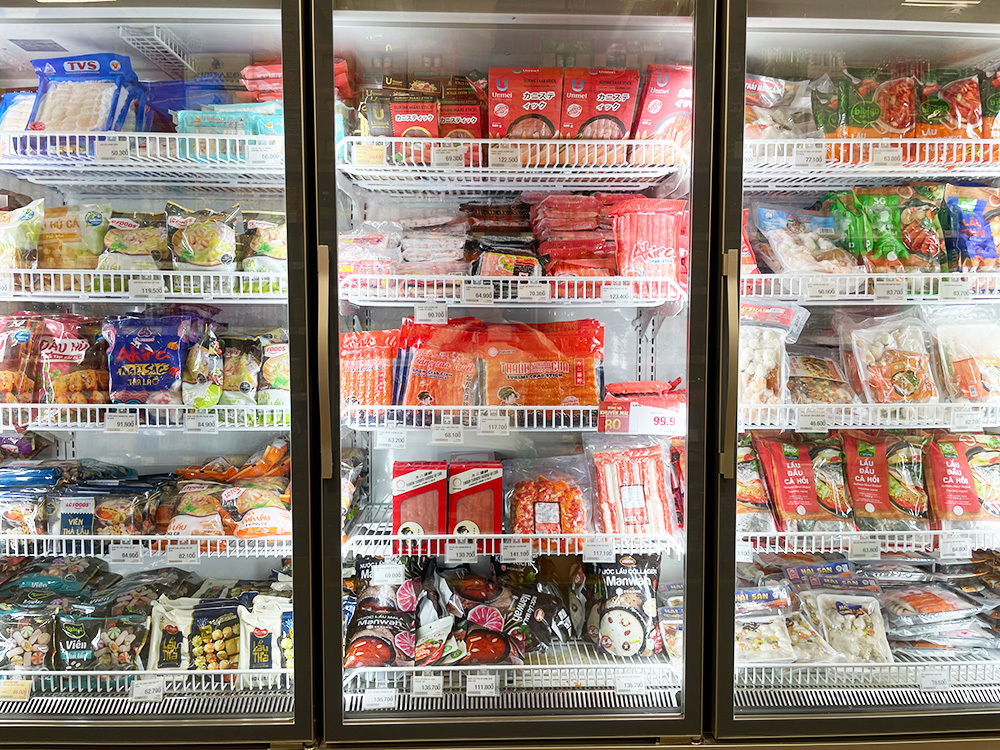
Amidst this, frozen foods were selected as a category where rapid market entry seemed feasible.This choice was driven by recent changes: the rapid increase in microwave oven penetration over the past few years and the development of frozen food distribution and retail infrastructure. Particularly in urban areas, the changing lifestyles of the working population were clearly showing a demand for "high-quality products that are easy to prepare." With Korean and Japanese companies already active in the market, the timing was also favorable for market entry.
Nisshin Seifun Wernah's products will also appear on Vietnamese shelves starting in 2024. Photo top left.
──What about the market for wheat flour and flour mixes?
Shinbo: The flour and baking mix category already has many players, presenting a "red ocean" scenario. While it's certainly an important category, entering as a latecomer requires significant time and investment. In contrast, frozen foods have relatively lower barriers to entry. We felt this was an area easier to attack even now, so we prioritized it.
──Could you also tell us about consumers' values and lifestyles? Vietnam has a deep-rooted street food culture, but what about home cooking?
Shinbo: While street food and dining out are indeed popular, the culture of cooking at home and sharing meals with family remains deeply ingrained. In Vietnam, "time spent with family" is highly valued, and the habit of eating dinner together as a family is common even in urban areas. It is precisely because of this "eating at home" lifestyle that the home food market holds significant potential.
──In Japan, dual-income households have become the norm, driving high demand for time-saving cooking and convenient foods. Is Vietnam seeing a similar trend?
Shinbo: Yes, that's precisely the key point to watch. Vietnam has experienced rapid economic growth over the past 20 years, leading to increased urbanization and rising incomes.Dual-income households are common, and more families prioritize time efficiency and reducing effort. However, unlike Japan, many households in Vietnam are multi-generational. Even when parents work, grandparents often support with housework and childcare, meaning the "eating at home" style itself remains strong. For these families, frozen foods and time-saving cooking products are highly compatible as options that "protect family time while being easy to prepare."
──So frozen foods have aligned well with lifestyle changes in recent years.
Shinbo: Exactly. Previously, inadequate frozen distribution networks and storage limitations were major hurdles, but these challenges are gradually being overcome, especially in urban areas. Being able to introduce the frozen food category at this timing felt very meaningful, as it perfectly synced with local changes.
Supermarkets are also installing larger refrigeration units, and the number of brands is gradually increasing.
Together with reliable partners, we are pioneering this vibrant market.
—If you have any advice for Japanese companies entering Vietnam, please share it. It might be a somewhat broad question...
Shinbo: This is truly a difficult topic. Vietnam is a country experiencing extremely rapid economic growth, yet simultaneously characterized by high volatility in its business environment. For instance, tax regulations are updated almost annually, and interpretations can fluctuate. The accuracy and transparency of official statistical data have limitations, requiring ingenuity in gathering local information.
Furthermore, workforce mobility is extremely high, with annual employee turnover rates of 20-30% being commonplace. Entering the market without understanding these fundamentals carries the risk of being overwhelmed by unforeseen local circumstances. Additionally, policy changes occur rapidly, and guidelines for foreign companies can shift abruptly. Success hinges on how effectively you navigate these "discontinuous environmental shifts."
In this environment, the crucial factor for Japanese companies to achieve reliable results is "having a trustworthy local partner." This could involve partnering with a local Vietnamese company or collaborating with Japanese companies already established there to gain information. The key is building a network with partners who deeply understand the region's unique business practices, talent market, and relationships with government agencies. This significantly enhances resilience against unforeseen events.
──Finally, please share a message for Japanese companies considering entering Vietnam.
Shinbo: Vietnam is a country experiencing remarkable economic growth, with a large young population and abundant energy. Digitalization and shifts in consumer trends are particularly rapid, creating new business opportunities across all industries. Of course, there are significant differences in culture and values compared to Japan, and many things won't go exactly as planned. However, rather than viewing these "discrepancies" negatively, carefully understanding the local context and progressing step by step with partners who can grow together will inevitably open the way forward.
Assuming that "what works in Japan won't necessarily work here," get to know your counterparts, learn yourself, and work hard alongside the local people. The trust built through this process is what will cultivate a truly strong business that thrives across cultures.
The Vietnamese people possess a deep capacity to respond when you reach out, coupled with a passionate drive to move forward. The value in taking on this challenge is undeniable. I sincerely hope your entry into this market becomes the first step in unlocking the next wave of possibilities.
Also serves as CEO of Dentsu X Vietnam Co., Ltd. After joining Dentsu Inc., gained diverse experience spanning strategic design to business operations across a wide range of fields including domestic and international media, content, and sports business. Assigned to Vietnam in 2021 in the current role, overseeing overall management while promoting integrated client management across the group. Driving value creation and establishing sustainable growth models in the Vietnamese market.

 Hints for Japanese Clients Entering New Overseas Markets [1/3]