Note: This website was automatically translated, so some terms or nuances may not be completely accurate.
The book to open when you're unsure about LGBTQ+ issues. ――The journey of the "Ally Action Guide" as it enters its fifth year
In society, at work, at school. Everyone talks about "DEI" and "diversity," but when you're actually asked something about LGBTQ+ issues, you find yourself at a loss for words. Or, in daily life, you don't know the "right answer," you feel confused, and you just can't seem to take that first step.
Have you ever felt this way or struggled with these thoughts?
The "LGBTQ+ Awareness, Reflection, and Action Guide for Allies" is a digital book designed to support you through such struggles. Now, as it enters its fifth year since release, the author responsible for its structure and writing reflects on its origins and journey so far.
<Table of Contents>
▼What is the Ally Action Guide?
▼How Its "Usage" Has Evolved Over 5 Years
▼Why We Made It "Everyone's Tool" Instead of "Our Company's Weapon"
▼Prioritizing "Room for Trial and Error" Over "Perfect Answers"
▼The StrengthofAdvertisers in Addressing DEI
▼Moving Forward Together, Unfinished
What is the Ally Action Guide?

The "Ally Action Guide" is a digital book compiling actions to support LGBTQ+ individuals. dentsu DEI innovations (formerly Dentsu Inc. Diversity Lab), which has promoted LGBTQ+ understanding and support activities since its founding in 2011, has compiled concrete support actions.
Ally Action Guide Publication Page (Dentsu Inc. Site) ↗
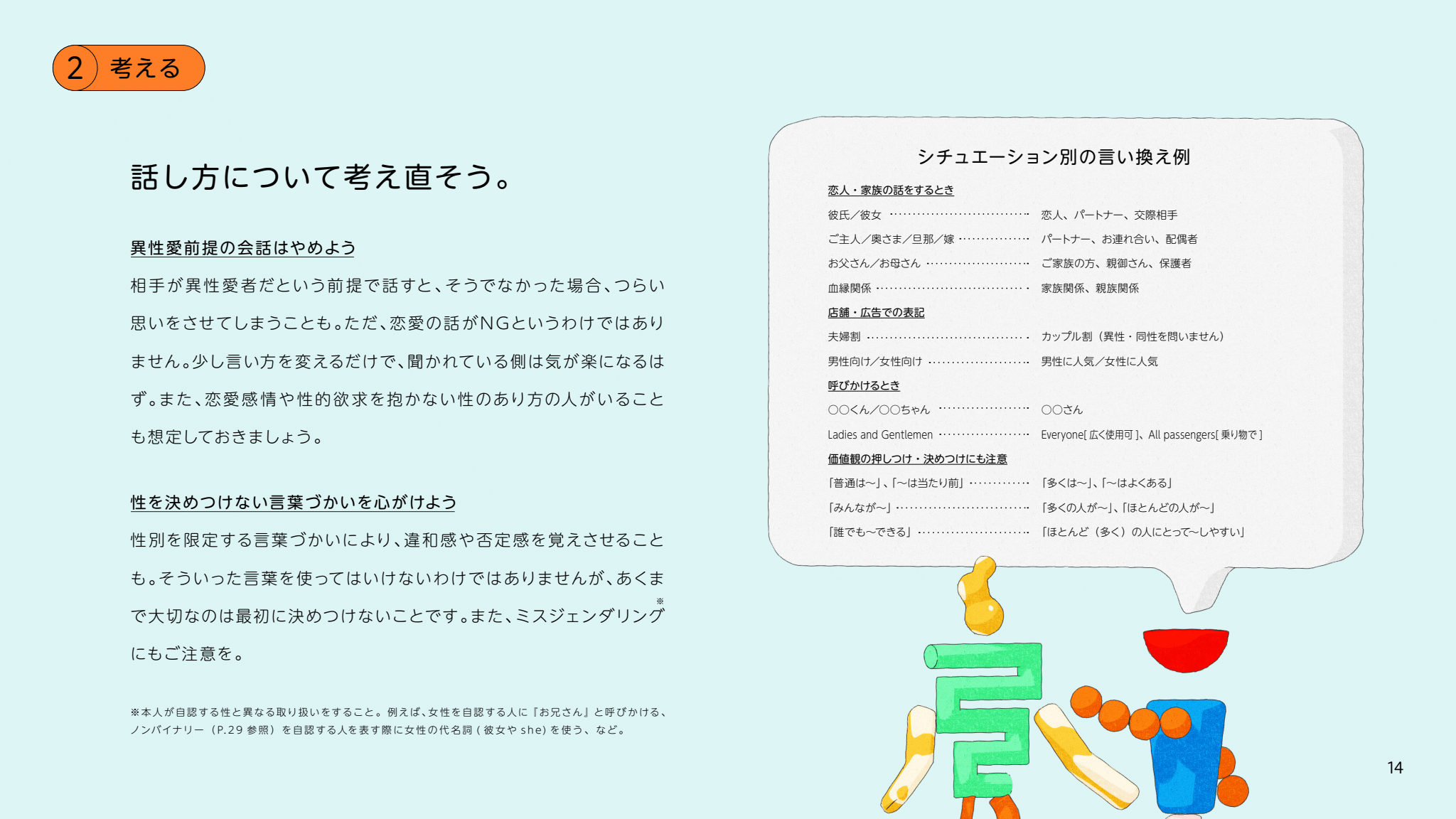
Since releasing the first edition in June 2021 based on the "LGBTQ+ Survey 2020," we have updated it annually around Pride Month, refining expressions and interpretations to be more inclusive. The current version available is the 2025-2026 edition, marking the fifth iteration.
From the outset, this guide has been published as a freely downloadable, reusable digital book. While it's now common for companies to openly share their insights with society, this was a pioneering effort at the time.
How Usage Evolved Over Five Years
The published guide has been utilized not only by individuals but also by numerous companies, organizations, and educational institutions. Here are some actual case studies, shared with permission.
[Case 1] Mitsui Fudosan, HR Department, D&I Promotion Office
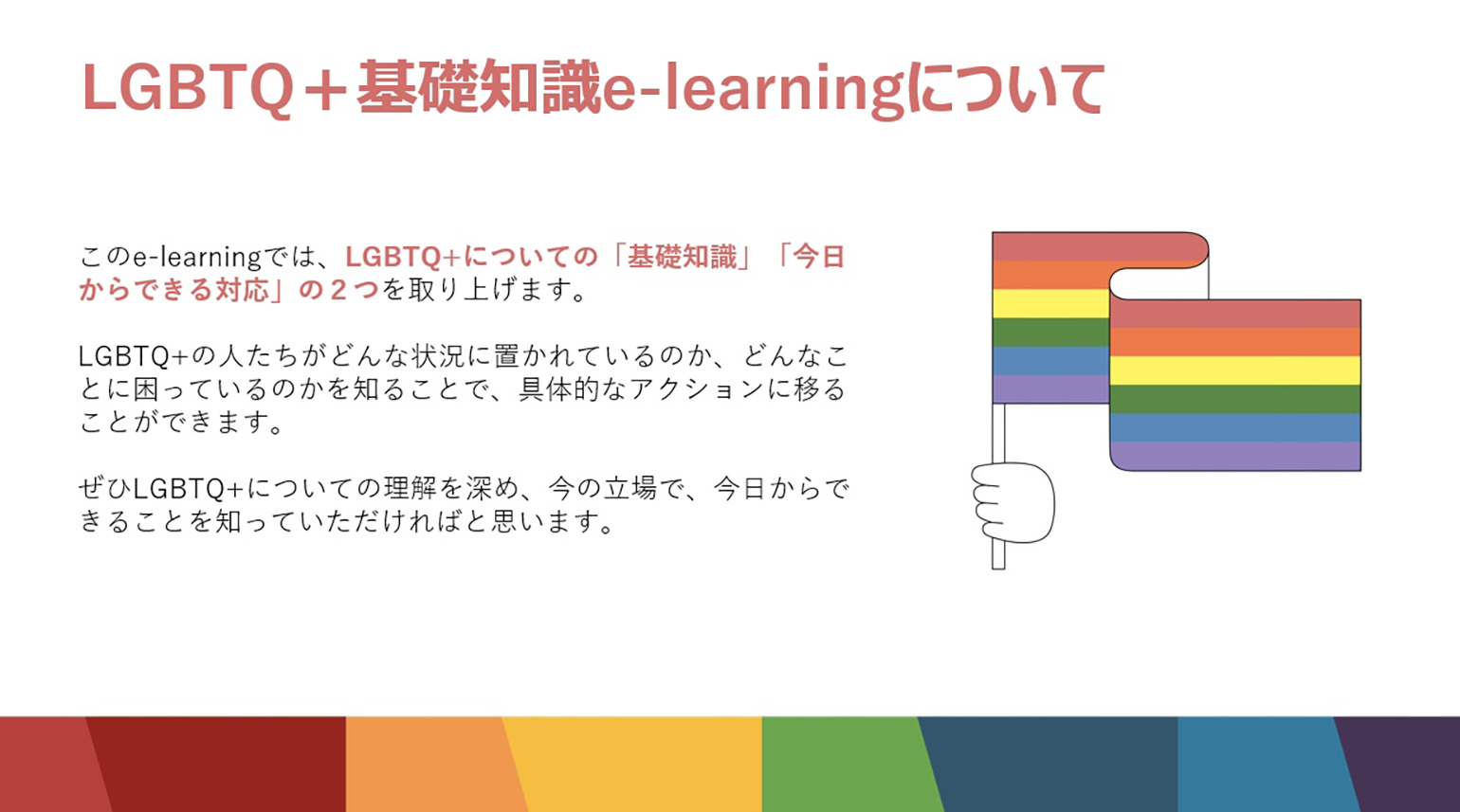
The "Ally Action Guide" was used as the base material for an e-learning program on LGBTQ+ issues for all employees. The guide's content was re-edited for the company's specific needs and structured into slides and quizzes.
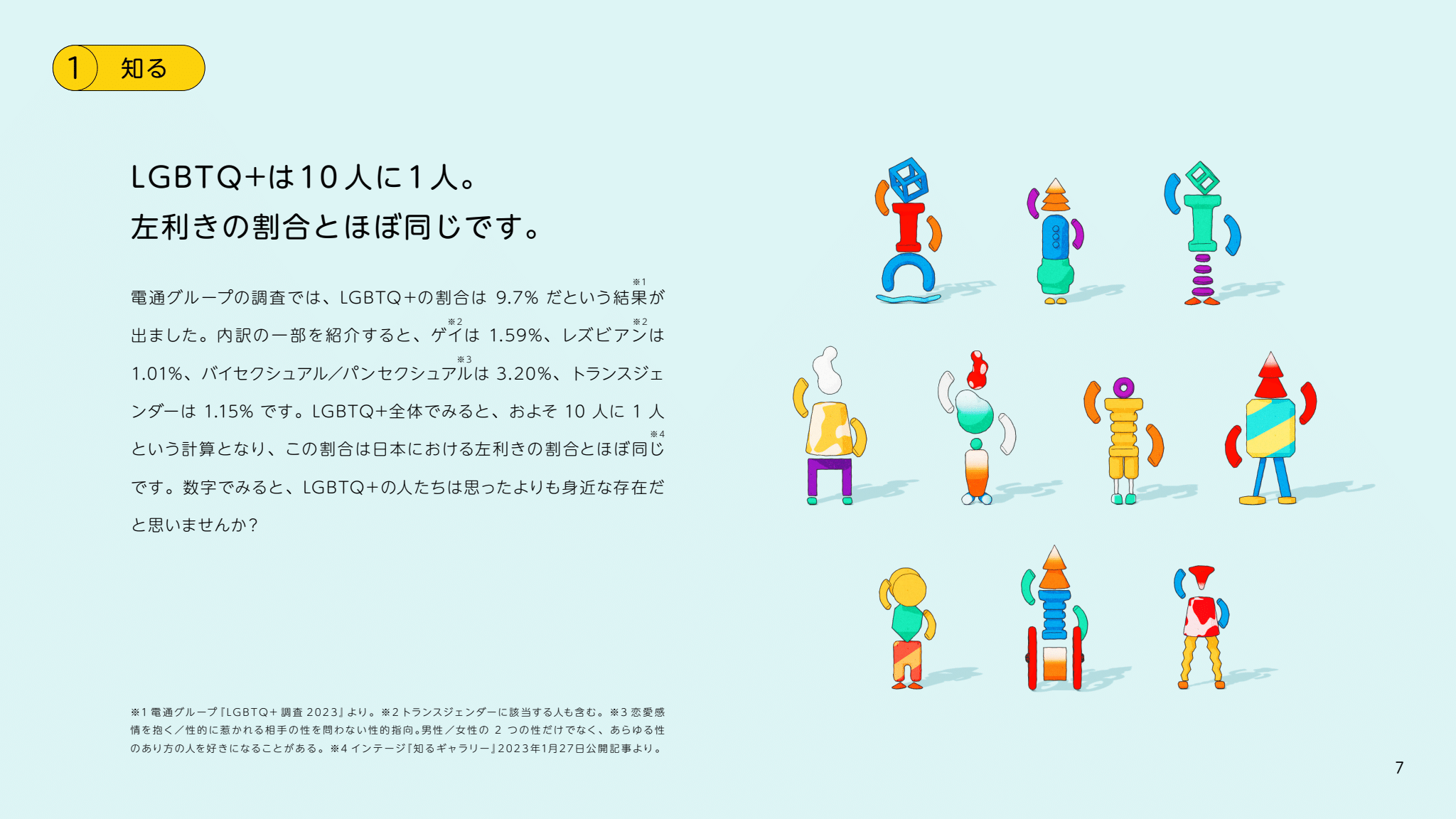
Participants highly praised it, stating "The content is concise and easy to understand" and "The many illustrations make it easy to grasp." They felt the guide contained many memorable phrases that stuck in their minds. Particularly, many commented that "The statement 'LGBTQ+ people are as common as left-handed people' was especially memorable," and positive feedback emerged, such as "I want to consciously act as an ally myself."
Currently, to promote understanding across the entire Mitsui Fudosan Group, we are distributing this material within the group so it can be utilized in training programs at each group company.
[Case 2] Bookoff Group Holdings, Diversity Promotion Manager
While preparing to introduce a family support system internally, we were searching for materials to deepen the understanding of the responsible staff when we came across the "Ally Action Guide." The content was extremely easy to understand, allowing us to absorb the information smoothly. As we read, we felt, "While this is about LGBTQ+ issues, it's also about us."
When creating internal materials to announce the program, we referenced this guide while considering the wording and structure needed to effectively communicate with employees.
We received feedback from LGBTQ+ employees about the Family Support System: "I was worried this company wouldn't support LGBTQ+ people, but knowing I have their backing made me truly happy." That was the moment I felt deeply that implementing this was the right thing to do.
We've received many other reports of how the guide has been used, but a common thread was that it served as a "foundation for learning and dialogue."
Why We Made It "Everyone's Tool" Rather Than "Our Company's Weapon"
One reason this usage became possible is that we insisted on "openness" from the start. If we had confined our LGBTQ+ knowledge solely for internal use, it might have become a competitive "weapon." However, that would have contradicted the very principles of DEI (Diversity, Equity & Inclusion).
DEI is not something to be hoarded by a few organizations; it is a value that should be shared and nurtured by society as a whole. That's precisely why we made our know-how freely available, turning it into a "tool anyone can use." This choice itself embodies the message behind the name "Action: Showing Through Action."
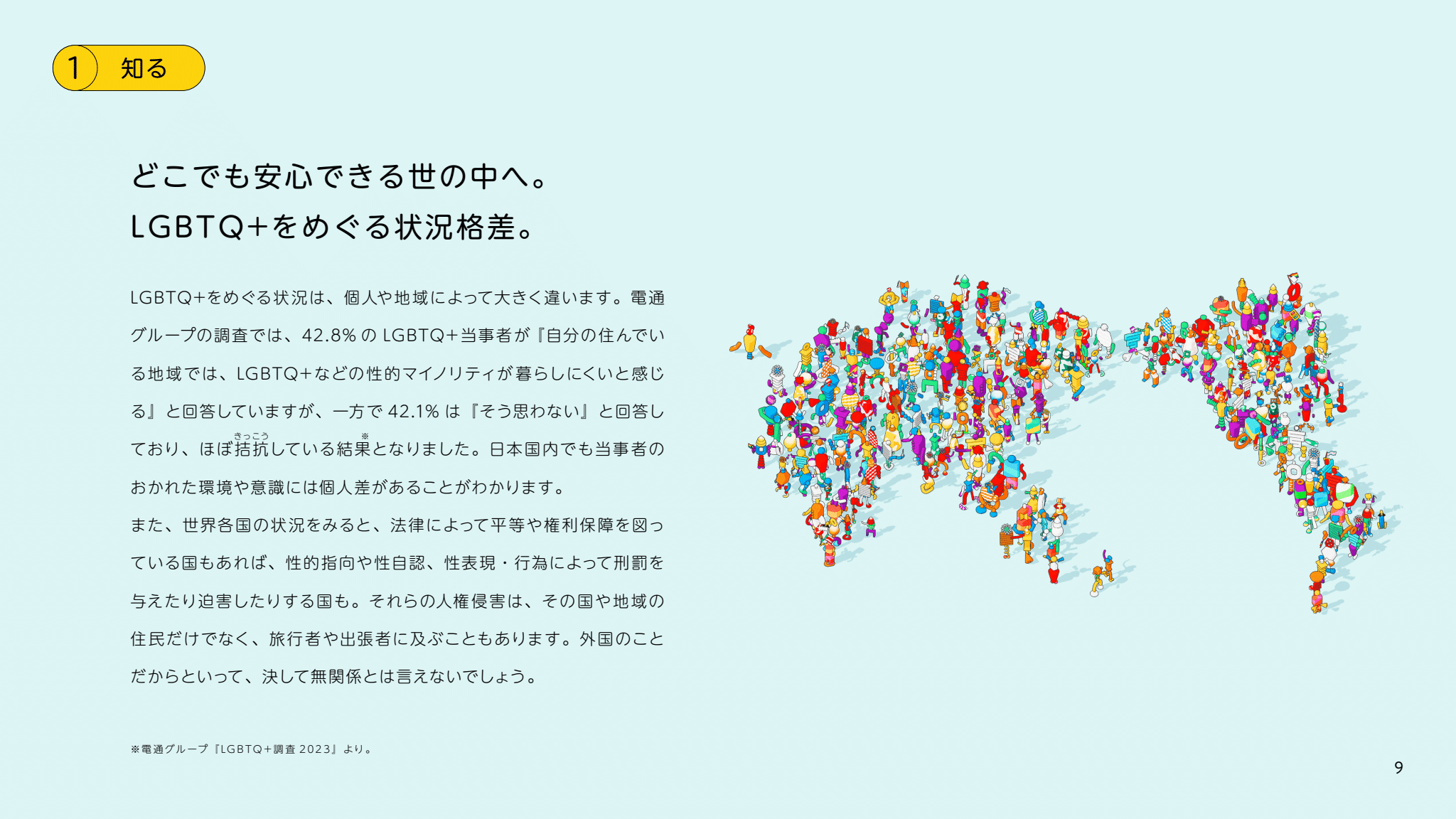
Yet, as the guide was adopted by many workplaces, we were forced to confront an undeniable reality: the circumstances surrounding LGBTQ+ individuals are far from simple.
Rather than a "perfect solution," we need "room for trial and error."
What society tends to discuss is a neatly packaged "diversity." Media-friendly examples and easily digestible, consistent "stories" are prized. But the reality of LGBTQ+ lives is far more intricate, complex, and sometimes painful.
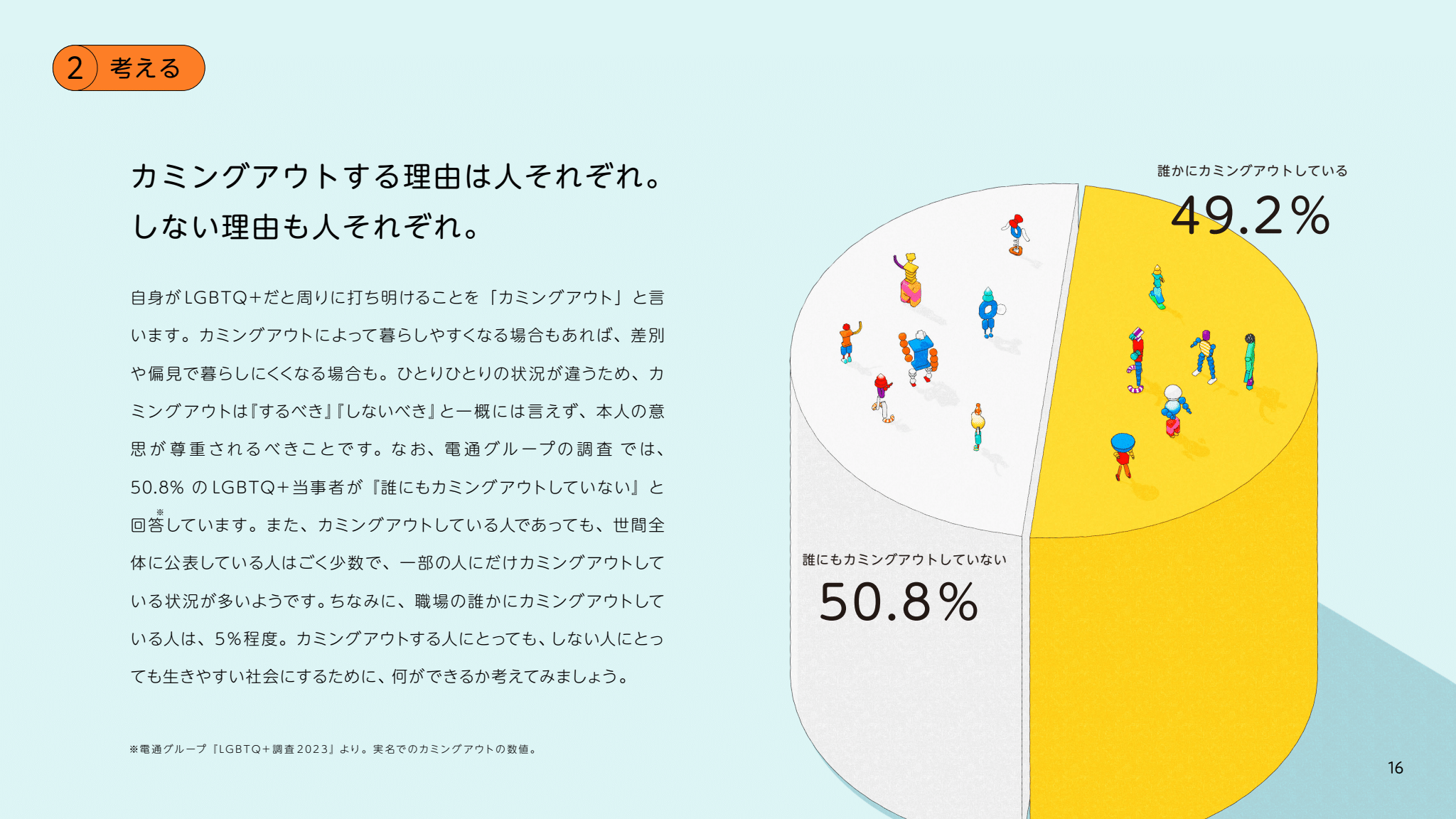
Some live openly after coming out, while others do not. Some want to come out but cannot. Some had to come out even if they didn't want to. Some seek help, while others want to be left alone. And the same person can feel completely different or face entirely different circumstances from one day to the next.
Allies, too, wonder, "Was it okay to speak up?" or "Did I overstep?" They make mistakes. They regret. They pause.
I believe it's dangerous to cover up these fluctuations with a "perfectly neat answer." Because it excludes those who fall outside it, or makes them shrink back, thinking they "didn't act correctly." Reality isn't uniform enough to be neatly organized; it's constantly changing. What's needed isn't a perfect finished product, but a starting point – a clue that says, "Let's start here."
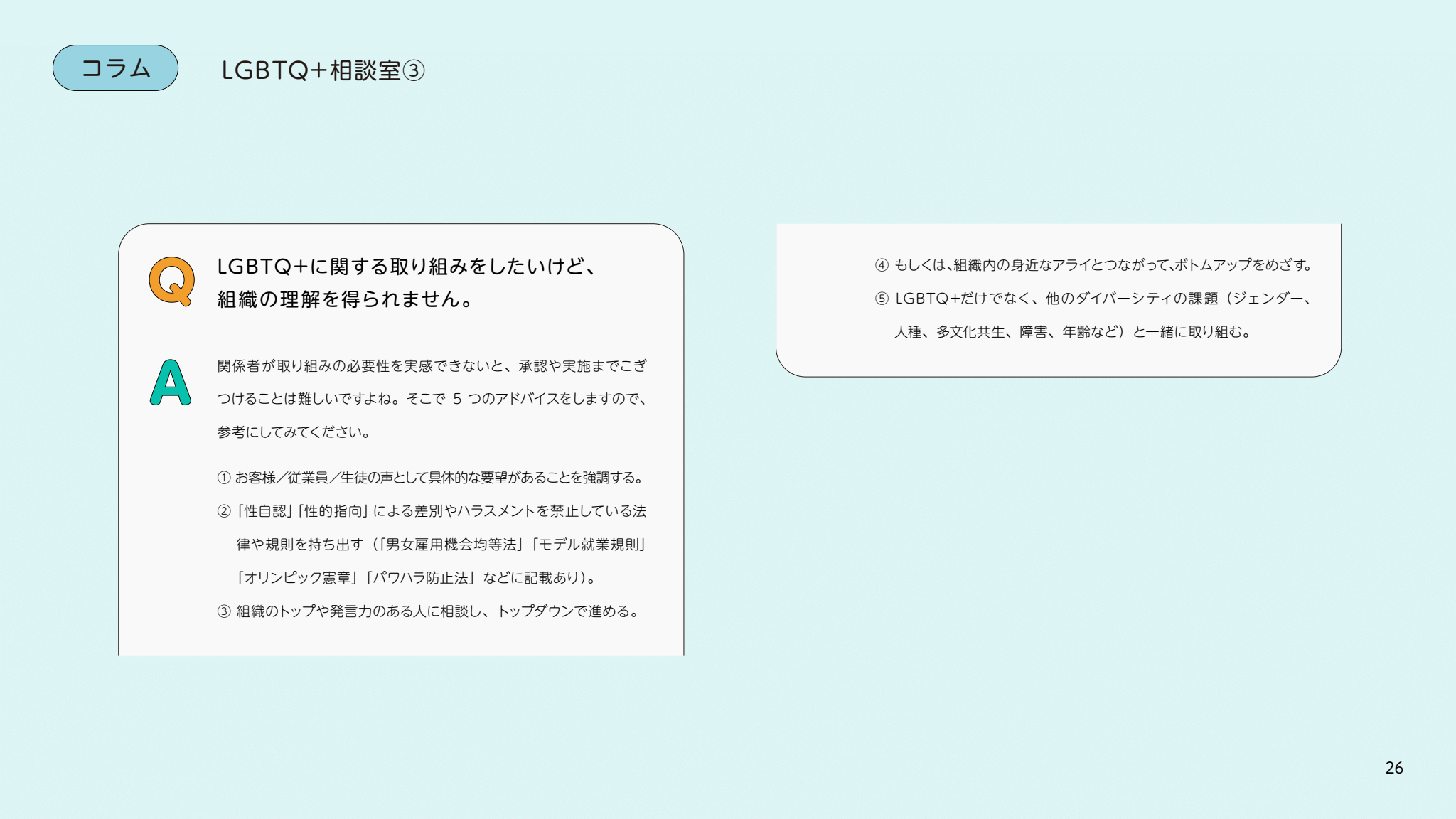
That's precisely why the Ally Action Guide aims to be not a "manual imposing perfect answers," but an "unfinished tool that gives you a push when you're unsure."
The Strength of Advertisers in Addressing DEI
This "value of trial and error" resonates deeply within the advertising industry.
Ad creation rarely goes smoothly from the start. Diverse people are involved, opinions clash, and conflicts arise. We go through multiple revisions, sometimes failing. Yet we get back up without giving up, searching for the next approach or new idea. Only through this accumulation does a single message or expression finally emerge. But even then, we fret, "Was this really the best?" and strive to do better next time.
Advertising professionals might be described as people trained not only to persist through trial and error, but to keep getting back up.
In this sense, I believe advertising creation and DEI practice share similarities. Both inevitably involve conflict and struggle, progressing through uncertainty and failure. That's precisely why the "ability to persistently experiment and keep getting back up" cultivated by advertising professionals can be valuable in DEI too. Not as confidence or bragging, but as encouragement for us advertising professionals.
However, there is a crucial difference. In advertising, trial and error itself is merely a stepping stone; if it doesn't take shape, it ends in futility. DEI is different. The trial and error and the conflicts themselves hold value. They stir up the often-divided "us" and "them," creating opportunities for new understanding and relationships.
That's precisely why, when we advertising professionals engage with DEI, we can naturally bring not only the power to deliver results, but also a perspective that affirms the process of trial and error itself. I believe that's our strength.
Moving forward together, unfinished
Marking its fifth year since publication, I've revisited the "Ally Action Guide" and put my thoughts into words. This wasn't something I had fully articulated from the start of its creation, and of course, it wasn't made alone. It took shape through a team effort of rewriting amid uncertainty, testing, and adjusting.
As the person responsible for the structure and writing of the "Ally Action Guide," what I can say now is that the reality of LGBTQ+ spaces is far more complex, often involving conflict and pain. And diversity, equity, and inclusion (DEI) isn't about putting together a nice-looking initiative; it's about the ongoing effort to continually face that complex reality.
This guide is not a finished product; it aims to be a tool that encourages someone struggling in the field to think, "Let's just try it." We want it to remain unfinished, evolving through updates over the next 10, 20 years, sharing the power to move forward together.
We look forward to your continued support of the "Ally Action Guide"!
Article Edited by: Akira Masuyama (dentsu DEI innovations)
Was this article helpful?
Share this article


Newsletter registration is here
We select and publish important news every day
For inquiries about this article
Author

Fukui Aya
Dentsu Inc.
6th CR Planning Bureau
Copywriter