
Note: This website was automatically translated, so some terms or nuances may not be completely accurate.
Toward a Passionate, Creative Organization—An Approach to Enhancing Human Capital—
Dentsu Inc., once known for its hard-working image, is now undergoing a dramatic transformation.
In OpenWork's "Best Companies to Work For Ranking 2025," Dentsu surpassed foreign companies that had long dominated the top spot to claim first place. How did it achieve this "all-around" organizational reform, dramatically raising compliance awareness to the top 0.01% while simultaneously improving "growth environments for employees in their 20s" and "openness"?Underlying this is the evolution of Dentsu Inc.'s business model. The company has shifted its focus from being an "advertising agency" to becoming an "Integrated Growth Partner" (a partner dedicated to supporting clients' growth), strengthening its consulting services in the areas of corporate and business transformation for client companies.
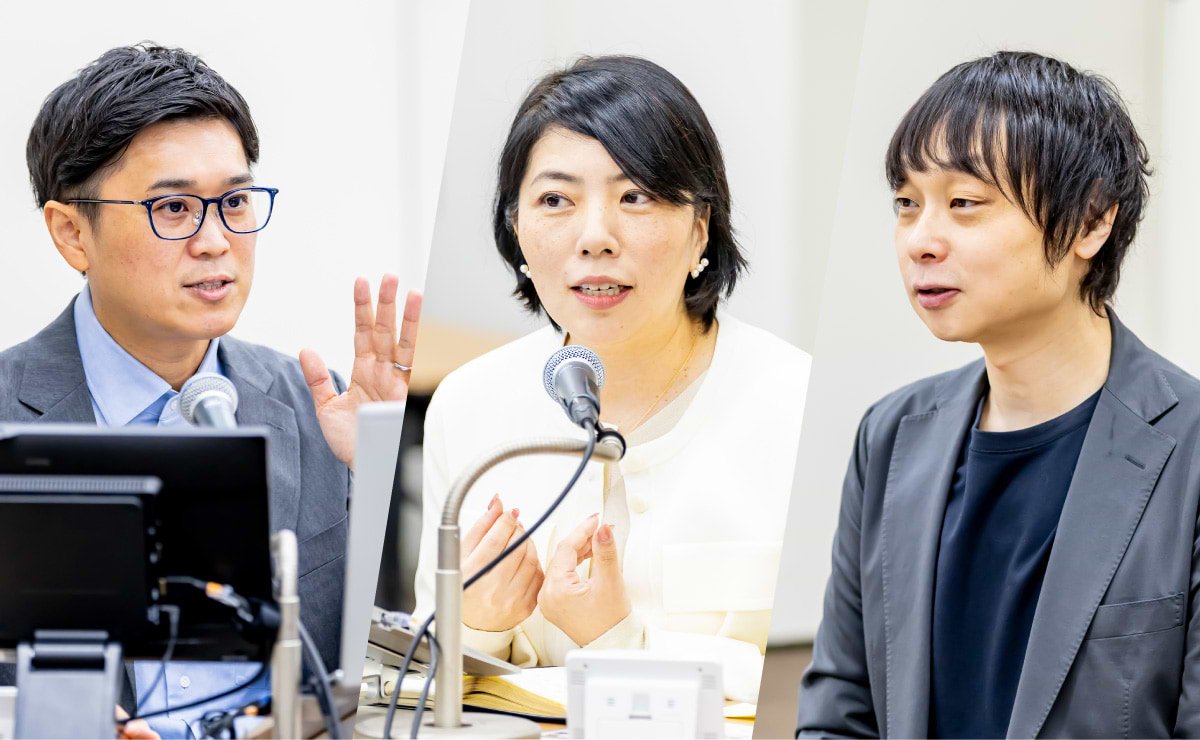
At the " HR Conference 2025 - Autumn" (Japan's HR Department), Miho Tanimoto, leading organizational culture reform as the Dentsu Group's Global CHRO, and Shingo Yamahara, who supports client companies' transformation (BX), took the stage. Moderated by Hiroki Osawa of Openwork, they shared practical insights for building a "high-energy, creative organization" from both internal and external perspectives.
*This article is a modified version of the piece originally published on December 22, 2025, in the " HR Conference " proceedings.
<Table of Contents>
▼Evolving into a Miraculous "Omnidirectional" Model to Avoid Corporate Bureaucracy
▼Shiftingfrom "Management" to "Trust": Starting from the "Perfect Challenge List" Presented by Employees
▼Visualizing and Destroying the "Invisible Walls" Blocking Corporate Transformation
▼ Dialogue that resolves "DNA-level contradictions" and fosters conviction
Miraculous Evolution to an "Omni-Directional" Model, Avoiding Corporate Giant Syndrome
Dentsu Inc. supports client companies' business transformation (BX) by leveraging its cultivated "creativity" and "execution power" in advertising and marketing. The company is currently advancing its evolution into an "Integrated Growth Partner" (a partner dedicated to supporting client growth).
Its particular focus is the transformation domain, providing end-to-end support from defining corporate purpose to transforming organizational culture and creating new businesses. With a team of hundreds of specialized consultants supporting corporate transformation from both HR and business perspectives, Dentsu's approach is gaining attention as a key to breaking through the "barriers to change" faced by many Japanese companies.
At the session's outset, Mr. Osawa presented analysis results on changes in Dentsu Inc.'s organizational state, utilizing approximately 20 million pieces of review data accumulated on OpenWork.
Generally, as a company grows in size and its employee count increases to the thousands or tens of thousands, it inevitably must strengthen its "compliance awareness." However, analyzing data from Japanese companies over the past decade reveals a tendency: the more governance is tightened, the more "openness" and "employee morale" decline in inverse proportion.Osawa described this as an inevitable trade-off accompanying large-scale corporate growth.
"The data clearly shows a pattern: companies with fewer than 300 employees have good communication but low compliance scores, while large corporations with over 1,000 employees have high compliance scores but deteriorating growth environments and communication for employees in their 20s. The larger the organization, the stricter the management becomes, creating an environment where young employees find it difficult to take on challenges. This is the typical state of large Japanese corporations."
However, Dentsu Inc.'s evaluation chart displayed a highly distinctive "all-rounder" waveform that overturned this conventional wisdom. Despite its compliance awareness score surging to the top 0.01% level in recent years, its scores in soft areas like "satisfaction with compensation," "growth environment for employees in their 20s," and "mutual respect among employees" have also maintained or improved to high levels.
This data, dispelling the former image of "intense workloads" and "lax compliance," demonstrates that Dentsu Inc. has achieved both ease of work and job satisfaction. It objectively proves that Dentsu Inc. has avoided the "big company disease" and achieved qualitative evolution as an organization.Mr. Osawa described it as "a rare case where strengthening governance and enhancing the organization's soft power have been achieved simultaneously," then passed the baton to Mr. Tanimoto to explain the specific approaches behind this transformation.
From "Management" to "Trust": Starting from the "Perfect Challenge List" Presented by Employees
Mr. Tanimoto, who joined Dentsu Group Inc. as Global CHRO in 2023 after stints at global companies like GE and Google, is tackling organizational development by combining insights from foreign firms with the potential inherent in Dentsu Inc., a Japanese company. Mr. Tanimoto began by touching on "the difference between Japanese and foreign companies," sharing his candid impressions upon joining the Dentsu Group.
"What surprised me upon joining the Dentsu Group was the overwhelmingly high level of 'administrative capability' and the strong culture of 'seeing things through to the end' for the client. This is a truly remarkable asset we can be proud of globally. On the other hand, I also sensed challenges: tasks that should be simple were often tackled with sheer grit, sacrificing productivity. Furthermore, the 'purpose (Why)' behind the information wasn't shared, leaving KPIs to run rampant on their own."
Instead of pointing out these issues top-down, Tanimoto chose an approach of sharing them through dialogue with employees. At an all-hands meeting, he deliberately projected onto a slide the "uncomfortable truths" gathered from employee interviews.
"At Dentsu Inc., aren't macho types the ones who get promoted?" "Management micromanages employee input and output too much." "There's an extreme lack of women in management positions." "Isn't the board selection just about picking people close to the president?" The frankness of these voices caused a stir in the room. The management team acknowledged them, and while the president denied them on the spot, he demonstrated a sincere willingness to confront them. This marked the beginning of a shift in the organization's atmosphere.
This dialogue led to the formulation of a new HR policy: "Trust employees, don't manage them."
"Previous HR practices may have emphasized micromanaging employees and having them operate strictly within company-defined frameworks. However, what is required in the coming era is trusting each individual employee and maximizing their potential. We aim to transform into a proactive organization where employees empathize with company goals, autonomously consider how they can contribute, and make proposals."
To embody this policy, Tanimoto established a talent vision centered on "creating expectations and exceeding them," articulated the "dentsu Leadership Attributes," and integrated them into evaluation systems and development initiatives.
Notably, the definition of results was broadened beyond mere "numbers" to include "leadership (behavior)." Qualitative behavioral guidelines were clarified, such as "developing talent superior to oneself," "embracing diverse ideas," and "maintaining integrity." These became core evaluation criteria, leading to the introduction of the "People Discussion" talent development meeting using a nine-box grid.This shifts the focus beyond mere past performance reviews. By placing performance on the vertical axis and leadership on the horizontal, it fosters future-oriented discussions: "How should we develop this talent? In which position will they shine?"
We also prioritize dialogue to enhance the organization's "psychological safety." We actively implement "Open Talk Sharing" sessions where the president and executives openly discuss their own weaknesses and failures, as well as team-based dialogue meetings. Furthermore, we launched the "Human Capital Project," holding off-site meetings where employees, leaders, and HR collaborate to explore how the organization can best support individuals in discovering their "Will (desires)" and "Can (capabilities)."
"Our approach of boosting energy through two-way communication, rather than top-down directives, has proven effective, steadily increasing engagement scores."
Visualizing and breaking down the "invisible barriers" hindering corporate transformation
Next, Mr. Yamahara, who supports client companies' BX initiatives within Dentsu Inc., took the stage. Leading one of several hundred-person organizations, Mr. Yamahara stated that the internal reforms advanced by Mr. Tanimoto and the transformation support he provides to clients share a common "essential principle."
Many Japanese companies are attempting to evolve from their existing core businesses into new corporate entities with expanded identities. However, even when new businesses or purposes are proposed, the gravitational pull to revert to the old ways remains strong. Cases where frontline employees fail to resonate and transformation stalls are all too common. Yamahara pinpoints the cause as "walls" within the organization.
"Factors hindering transformation fall into two categories: 'visible barriers' like evaluation systems and organizational structures, and 'invisible barriers' like organizational culture and mindset. The latter is particularly troublesome. For example, what were once strengths—'past successes' or a 'strong brand'—can become conservative forces during transformation, morphing into barriers like a 'culture that prioritizes risk aversion' or 'exclusivity'."
Yamahara introduced heatmap analysis of internal networks as an approach to visualize these "invisible walls." Analyzing whether departments "know each other or not" and "collaborate or compete" by color-coding often reveals that areas where people are completely unaware of what neighboring departments do dominate the landscape.
By visualizing organizational blood flow issues—such as "only the development and sales departments are connected, while everything else is disconnected"—through data, and then digging deeper into why these disconnects exist, we uncover not only systemic problems like "rigid evaluation systems," but also cultural issues like "overly strong risk management stifling new value creation." To resolve these disconnects and reconnect the organization organically, collaboration between HR and business departments is essential.
"HR initiatives and business strategy are like the two wheels of a car. Only when the left wheel—'transforming people and the organization'—and the right wheel—'transforming the business'—mesh together, centered around blueprints like purpose and vision, can a company move forward with real momentum."
Dialogue to resolve "DNA-level contradictions" and foster conviction
In the latter half of the session, Mr. Osawa facilitated a discussion based on questions from the audience.
Was this article helpful?
Share this article


Newsletter registration is here
We select and publish important news every day
For inquiries about this article
Author
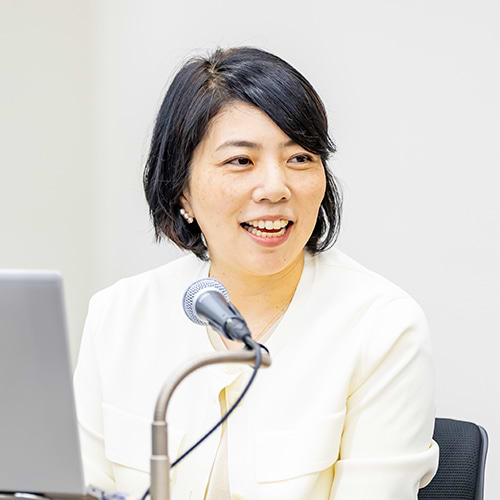
Miho Tanimoto
Dentsu Group Inc.
Global CHRO
Articles by this person
Shingo Yamahara
Dentsu Inc.
Director of Business Transformation Division 2

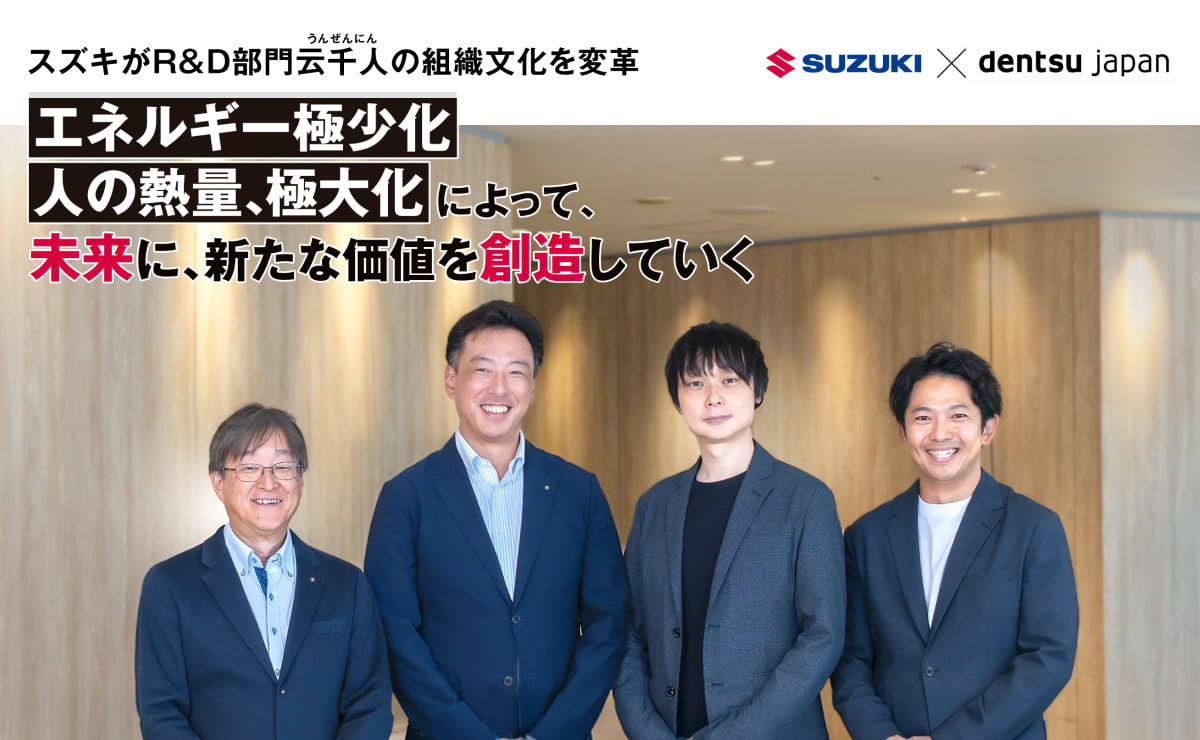

Hiroki Osawa
Open Work Inc.
President and Representative Director