Note: This website was automatically translated, so some terms or nuances may not be completely accurate.
FUKAYOMI members are growing! "What Will Future Consumers Desire?" Book Club Report
Hello, we are the FUKAYOMI team at Dentsu Inc. Desire Design (DDD).
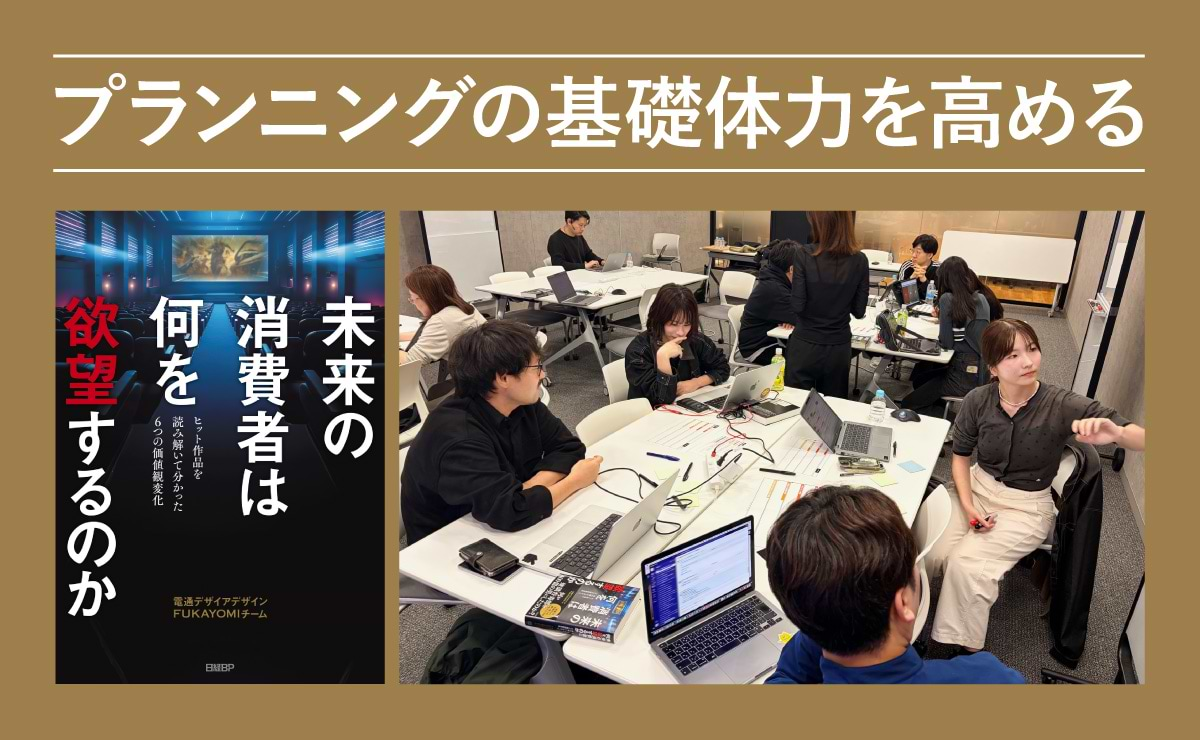
We are a specialized group that FUKAYOMI (deep reads) the impact of hit content on consumers to predict future shifts in values and desires. In July this year, we published the book "What Will Future Consumers Desire? Six Value Shifts Revealed by Analyzing Hit Works" (Nikkei BP), summarizing our FUKAYOMI analysis for 2020-2025, which has received significant feedback from various quarters.
Amid this, D2C Inc. reached out to us, and in November 2025, we held a "book club" to practice FUKAYOMI. This article shares the details of that event and explores the potential of FUKAYOMI as a method to enhance creative thinking in planning environments.
The First "FUKAYOMI Book Club"
The book club originated from an invitation by Hirotaka Yamaguchi, Executive Officer at D2C Inc. He expressed the hope that "employees themselves would understand and practice the FUKAYOMI approach, applying it to their daily planning work."
D2C Inc. is a leading company that leverages data owned by NTT DOCOMO to broadly develop and plan advertising and marketing solutions in the digital space. Within this, the Marketing & Creative Business Division, led by Mr. Yamaguchi, plays a crucial role in creating value within CX (Customer Experience). If FUKAYOMI could support such individuals, it would be an immense honor.
Therefore, this time, we designed it not merely as a "book introduction," but as a workshop-style event where participants could experience FUKAYOMI's methodology and install it into their own thinking. It was also a challenge for us to see how much we could achieve with people encountering FUKAYOMI for the first time.
"What Will Future Consumers Desire?" – This Book Explores That Question
Before discussing the reading group, let's talk about the featured book and FUKAYOMI's approach.
Dentsu Inc. Desire Design (DDD) defines "desire" as "something born from the synthesis of the 'fundamental desires' inherent to all humans (Homo sapiens) and the 'values' that change with the times and are widely shared in society." While "insights" used in marketing refer to individual psychology, DDD views "desire" as the aggregate of people's essential "wants and aspirations."
Within DDD, the FUKAYOMI team's mission is to predict "future desires." They deeply analyze hit content widely embraced by consumers, predict the factors behind its success and its impact on consumer values, and anticipate the next wave of "desire."
This book compiles the FUKAYOMI team's predictions of these "future desires." It analyzes over 30 hit content pieces released between 2020 and 2025 through "FUKAYOMI," predicting "six shifts in consumer values" that will emerge. From there, it examines three "future desires" likely to arise by 2030.Furthermore, based on this analysis, we have written an original novel titled "Future 'Desire' Forecast" that concretely depicts the consumer profile of 2030. This book is packed with insights for capturing the upcoming changes in consumers and applying them to marketing.
Related Article: Could "Deep Reading of Hit Products" Open New Business Opportunities!?
FUKAYOMI's Approach: Why Focus on Hit Content?
So why does FUKAYOMI focus on hit content?
Quantitative research like surveys and behavioral log analysis, along with qualitative research like interviews, are methods that examine consumers' current awareness and actions. Identifying "shifts in values" that consumers themselves are not yet clearly aware of, and the "desires" born from those values, is extremely difficult under current conditions.
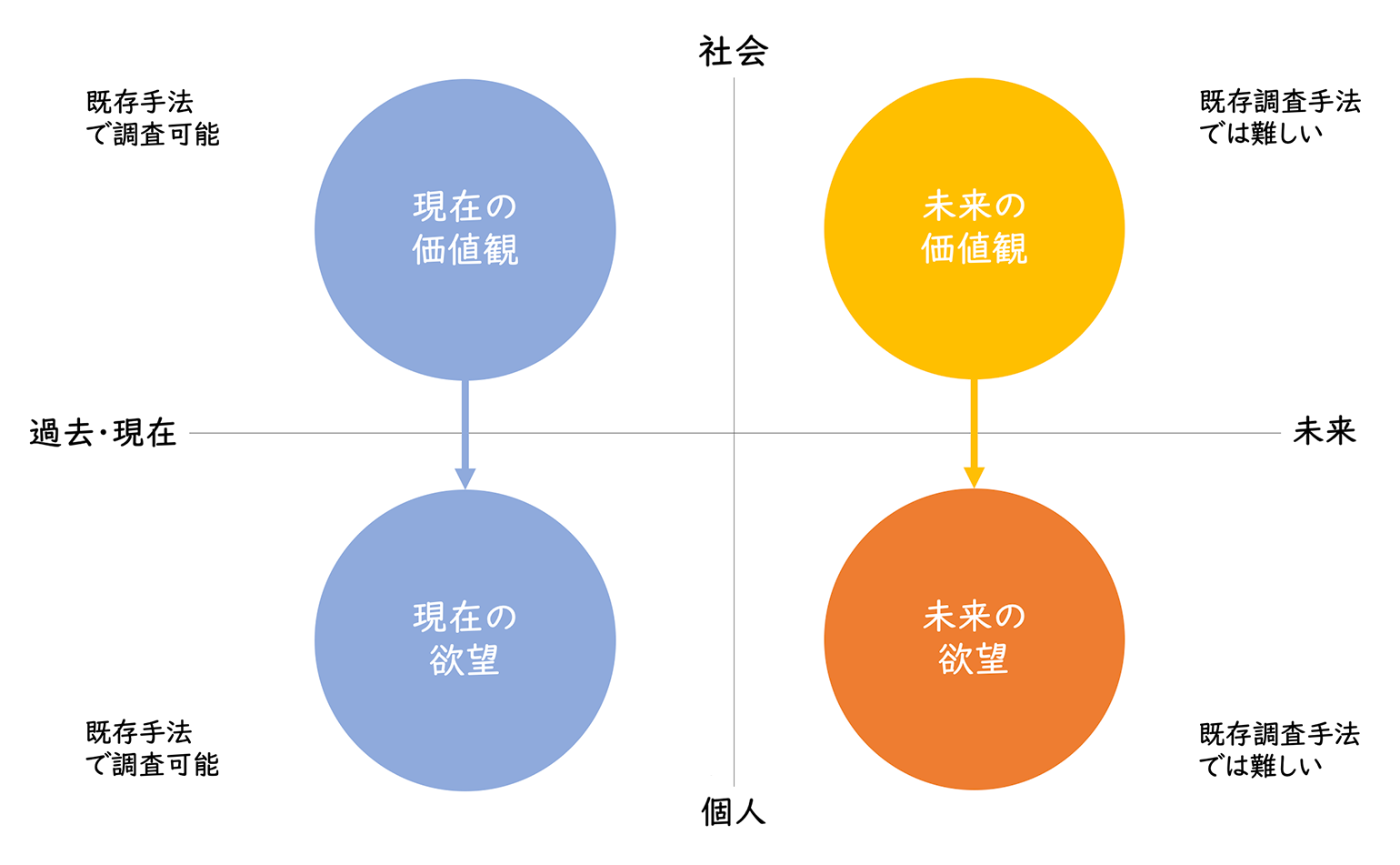
This is why we focus on hit content, particularly visual content with "stories" like movies, dramas, and anime. Stories inherently contain the creators' and producers' "personal desires," whether conscious or unconscious. We find stories "interesting!" not just because of the characters or plot twists, but because we discover, empathize with, and gain catharsis from the "desires" embedded within them.
This experience remains as a "thorn" in the corner of the viewer's mind, gradually shifting their values. Furthermore, visual content like TV dramas, streaming dramas, movies, and anime reaches an audience of vastly greater scale, exerting an enormous influence on society. A work becoming a hit signifies both the level of support for the "desire" (theme) within that story and the sheer number and depth of people influenced by it. Simultaneously, it indicates that many individuals have been prompted to undergo a shift in their values.
This makes it possible to predict future desires by assuming that, on a certain scale, specific desires will manifest in actions and consciousness in the near future.
Can newcomers practice FUKAYOMI?
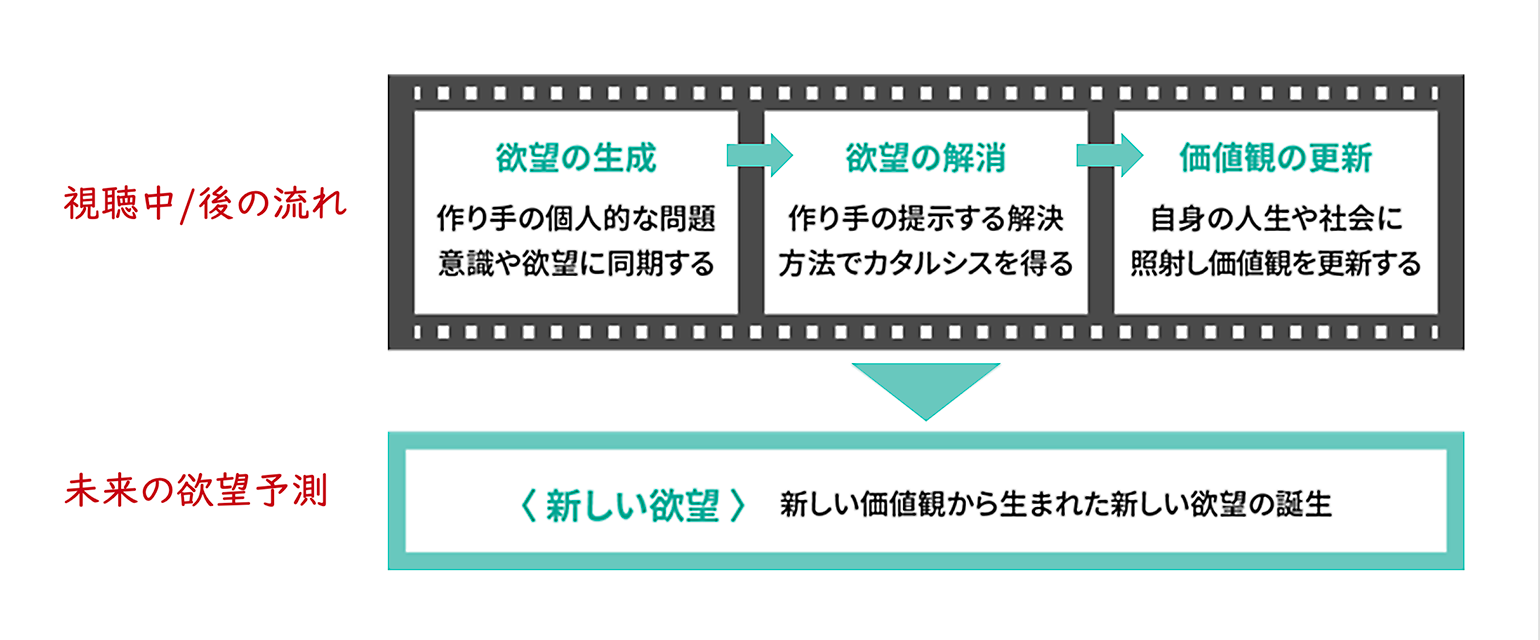
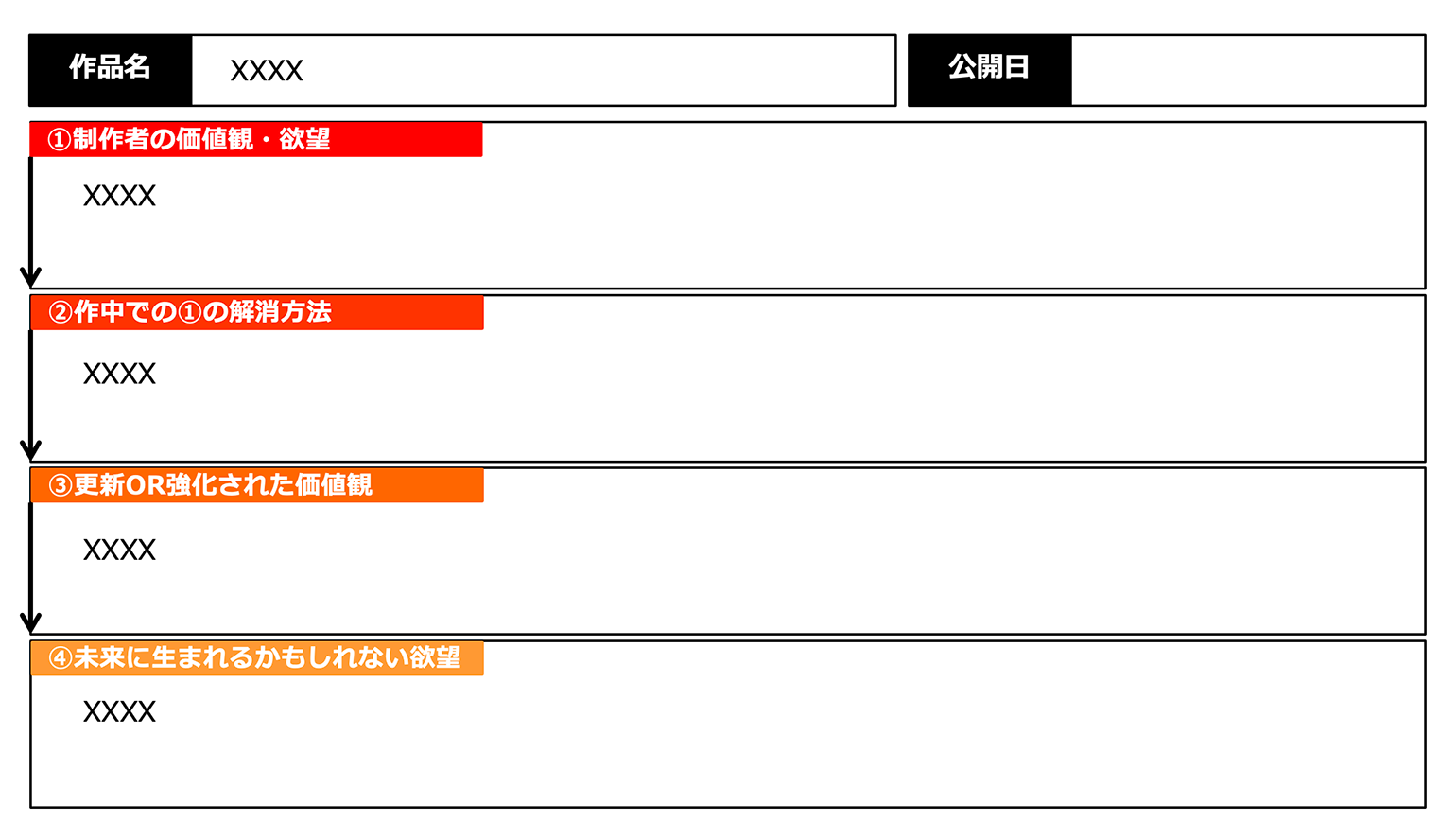
For this reading session, we used the "4 Quadrants" framework, which organizes the FUKAYOMI approach to make it accessible even for beginners. The "4 Quadrants" is the conceptual process actually used by FUKAYOMI team members in their analyses. It is designed so that anyone can reach the goal of identifying "future desires" by following the steps.
The "4 Quadrants" Analysis Steps
Step 1: Creator's Values and Desires
Extract the creator's values and desires embedded in the work and analyze how they influenced viewer psychology. Here, identifying the social and human themes within the work is crucial.
Step 2: How Step 1 is Resolved in the Work
Confirm how the creator's question was resolved within the story. Often, viewers vicariously experience the answer through the story's climax, though techniques that deliberately avoid resolution also exist.
Step 3: Updated or Reinforced Values
We examine how the values of viewers, shaken by the story's climax, have changed. It is necessary to abstract the work's message into values and interpret how these might spread as new values in future society.
Step 4: Potential Desires Emerging in the Future
Predict what desires might emerge in future consumers from these new values. This step involves concretely considering the latent needs generated by these desires, changes in consumer behavior, and shifts in cultural trends.
Of course, following these four steps doesn't guarantee automatic results. Steps ③ and ④ especially demand strong reasoning skills. Therefore, at this book club session, we explained beginner-friendly TIPS compiled from years of FUKAYOMI experience. Furthermore, FUKAYOMI members joined each group to provide support when stuck and to help broaden ideas.
With everything prepared (?), the day of the book club finally arrived.
The Book Club Day: Fierce Discussions
Nineteen participants gathered, and the session began amid a buzz of excitement.
After explaining the book's overview and key points, along with the FUKAYOMI 4 Quadrants and analysis tips, it was finally time for practical FUKAYOMI application. Participants were divided into four groups to practice using four works that had received the most requests during the pre-selection process.
To give one example, a team discussing a particular drama sparked bold discussions about money.The story involved characters trying to make money through land deals from their respective positions, but the key was interpreting the paradoxical structure where those who gained money became increasingly unhappy. A breakthrough insight emerged during the discussion: "Excessively pursuing greed or the desire for possession causes one to lose sight of what they truly want." This led to predicting a shift in values: "Happiness does not necessarily lie beyond money."Furthermore, considering the shift from desire for ownership to desire for non-ownership seen in today's younger generation, we concluded that in the future, desires will evolve toward wanting to possess "value (things, experiences, feelings, experiences) that is meaningful only to oneself, rather than what everyone else wants."
This insight into the "shifting form of desire for ownership" embodies FUKAYOMI's unique thought process: abstracting the work's message as a shift in consumer values, then boldly leaping to predict the evolution of desire.
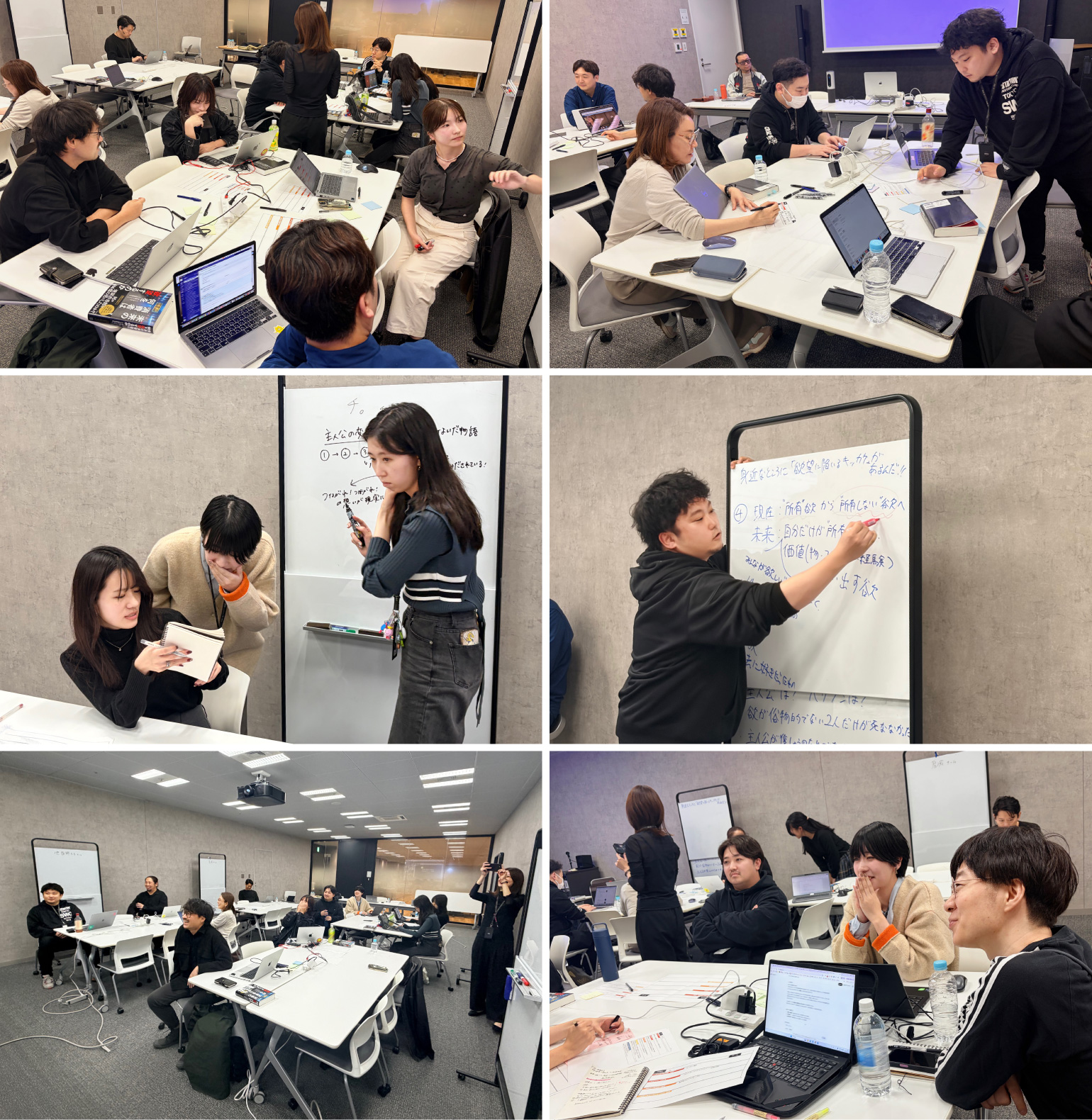
Despite the short 40-minute timeframe, all four groups reached future desire hypotheses, proving our concern—"Can even first-timers do FUKAYOMI?"—was unfounded.
"Fun!" "Useful for work!" Participant Feedback
Here are some impressions from book club participants.
About FUKAYOMI
"It was fun! I've never had a chance to think about how people's values change, so it was stimulating."
"I found value in Step 3 of the 4 Quadrants, where we abstracted the impact a work has on people into values."
"Step 4 of the 4 Quadrants was challenging—thinking about future desires. This part is a challenge to create something from scratch, separate from the work itself. But that's what makes it interesting."
Potential for planning work
"The 4 Quadrants format is easy to use. When brainstorming ideas, it helps organize the flood of concepts."
"It seems useful for analyzing case studies."
"I think it's useful not just for addressing clients' immediate challenges, but also when creating value-driven plans from a mid-to-long-term perspective."
Executive Yamaguchi from D2C Inc. commented, "It provided an opportunity to step away from routine tasks and think freely. I truly felt everyone's planning toolkit expanded."
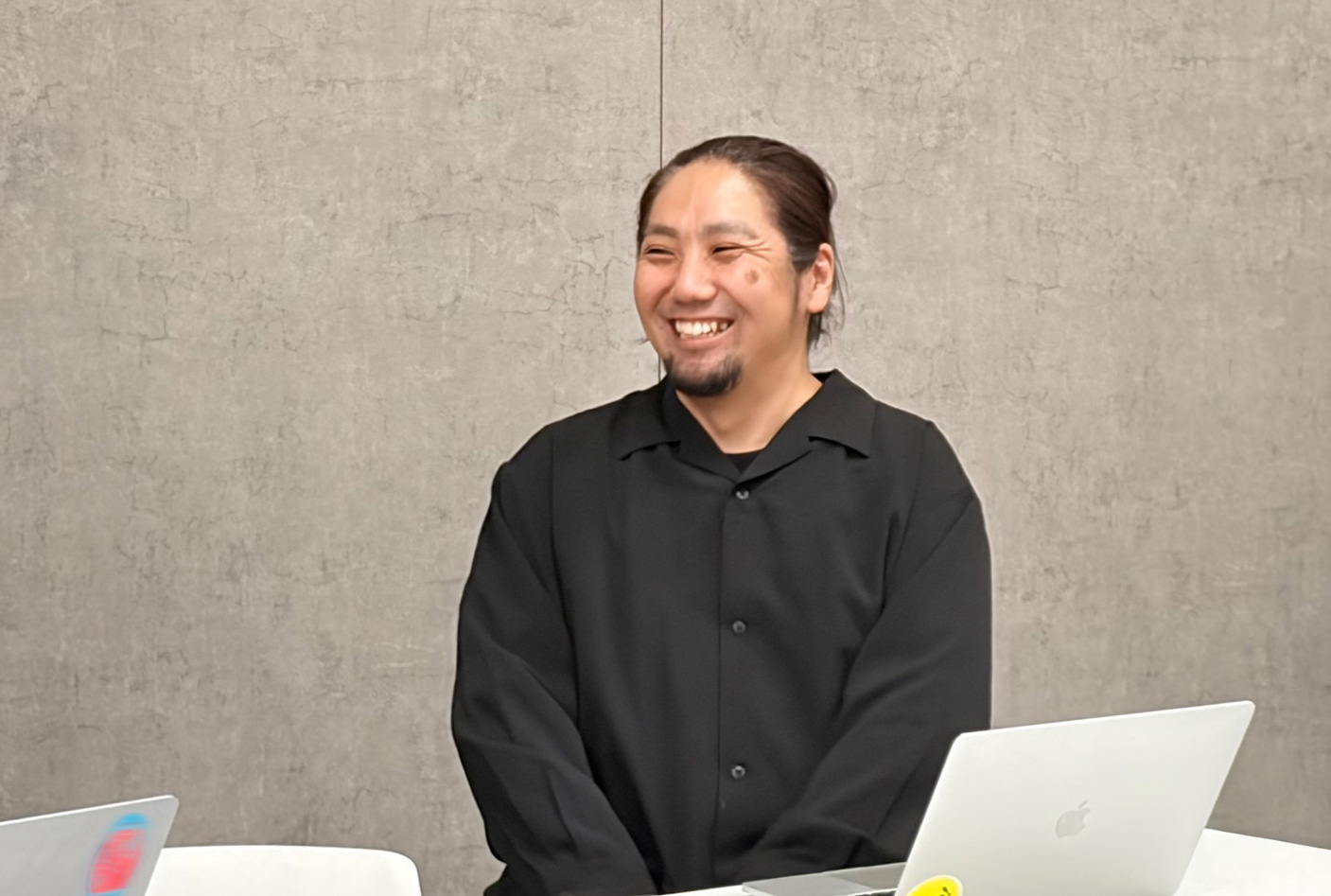
The post-event survey showed over 90% satisfaction. Thank you so much to Director Yamaguchi and everyone from the D2C Inc. Marketing & Creative Business Division for participating in the book club!
Another Potential of FUKAYOMI
FUKAYOMI was originally developed as a method to predict consumer desires and utilize the knowledge gained for communication strategies and product/service development. However, this book club revealed another potential.
It can serve as an effective training recipe for enhancing fundamental planning capabilities, such as the ability to read trends and generate proposal-driven concepts.
During the book club, we observed how FUKAYOMI's framework enabled many participants to generate deep insights and expand their thinking. What was striking was that everyone unanimously said "It was fun" as their first reaction. Building stamina can sometimes be tough, but the FUKAYOMI method might just make it enjoyable and sustainable.
This initiative is still in its early stages. We intend to continue experimenting and pursuing the further potential of FUKAYOMI.
Was this article helpful?
Share this article


Newsletter registration is here
We select and publish important news every day
For inquiries about this article
Author
Naota Ogura
Dentsu Inc.
Future Scenario Consulting Department, 4th Marketing Bureau
General Manager (GM)
 Insight MemoSmartphones: A Decade of Creative DestructionInfluencer Marketing 2.0Keywords for Predicting the FutureThe "Time Performance Era": How Should We Design Viewing Environments for Consumers?From "Reiwa: Survey on the Future Young People Want 2019" Hints for Reaching Young People Living in the Reiwa EraExploring Pathways from the "Quality of Society Survey" to a "Society" Where People Find Meaning in LifeCurrent State of Public Awareness and Values as Seen in the "Quality of Society Annual Survey 2021"