In 2025, the Japan Mobility Show (JMS) became the largest mobility festival to date, with 522 companies and organizations participating.
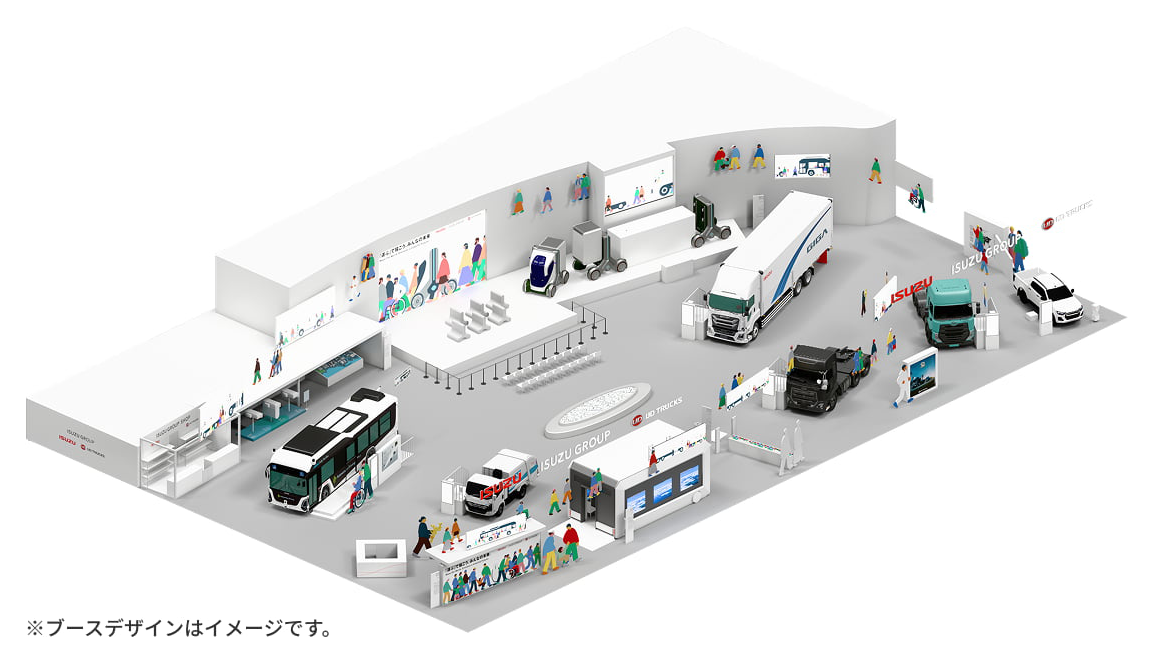
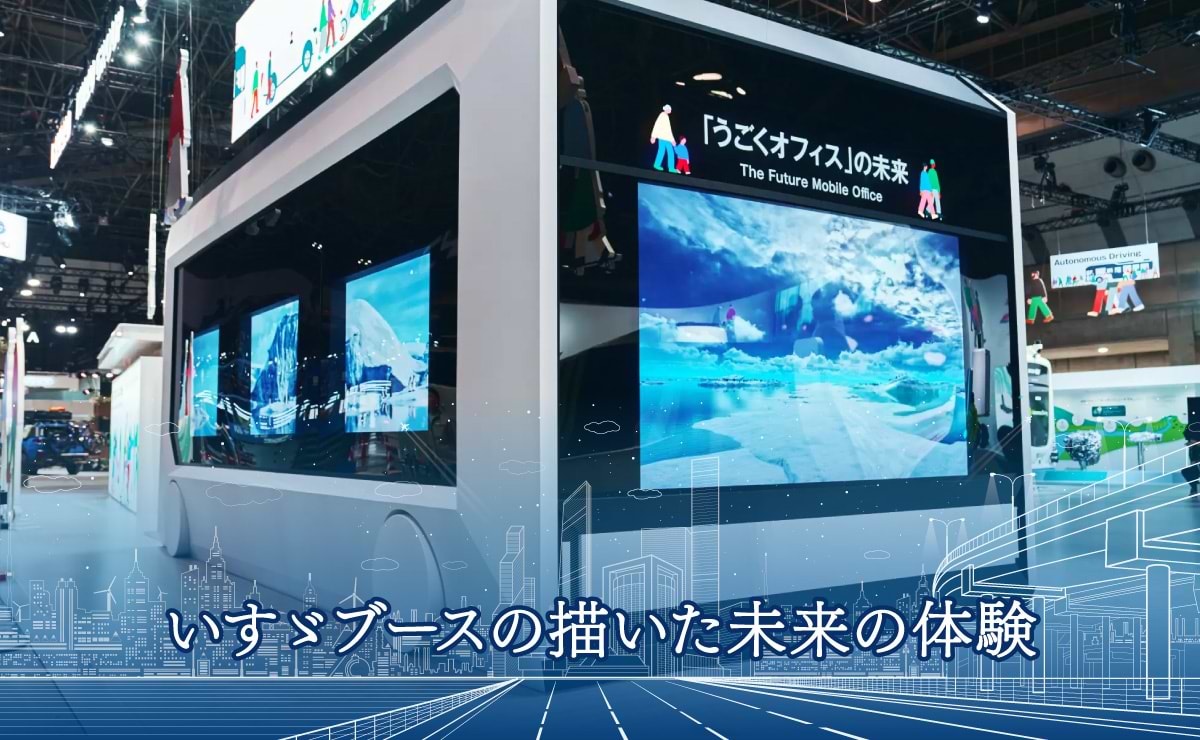
Amidst companies showcasing their latest mobility innovations, the Isuzu Group created an "experiential" space themed around future mobility, making their booth one of the standouts.
Responsible for the overall production of the "Isuzu/UD Trucks Booth" was Ryoichi Nakano, Creative Director at BXCC and a member of Dentsu Lab Tokyo. We asked him about the creation process of the booth, developed in collaboration with creative elites like Abstract Engine and groovisions, and the key points of the experiential design.
Not an "exhibition to view cars," but an "exhibition to imagine the future of 'transportation'"
──JMS began anew in 2023 as the successor to its predecessor, the Tokyo Motor Show, and this was its second iteration. Could you explain the show's positioning, including changes from its predecessor?
Nakano: The biggest difference from the Tokyo Motor Show is that we encompass all forms of mobility—not just traditional automobiles, but also drones, autonomous driving, transportation systems, and more. More fundamentally, our major mission is to let not only car enthusiasts, but also business co-creation partners and the general public enjoy new forms of mobility. We adopted the theme "Let's go find an exciting future!"
──I felt the Isuzu Group truly embodied this overarching theme of "an exciting future." What core concept underpinned this?
Nakano: Precisely, the key point is that we are going out to explore an "exciting future," not just "exciting cars." We consciously aimed to expand the exhibition space into one where visitors could experience lifestyles encompassing mobility.
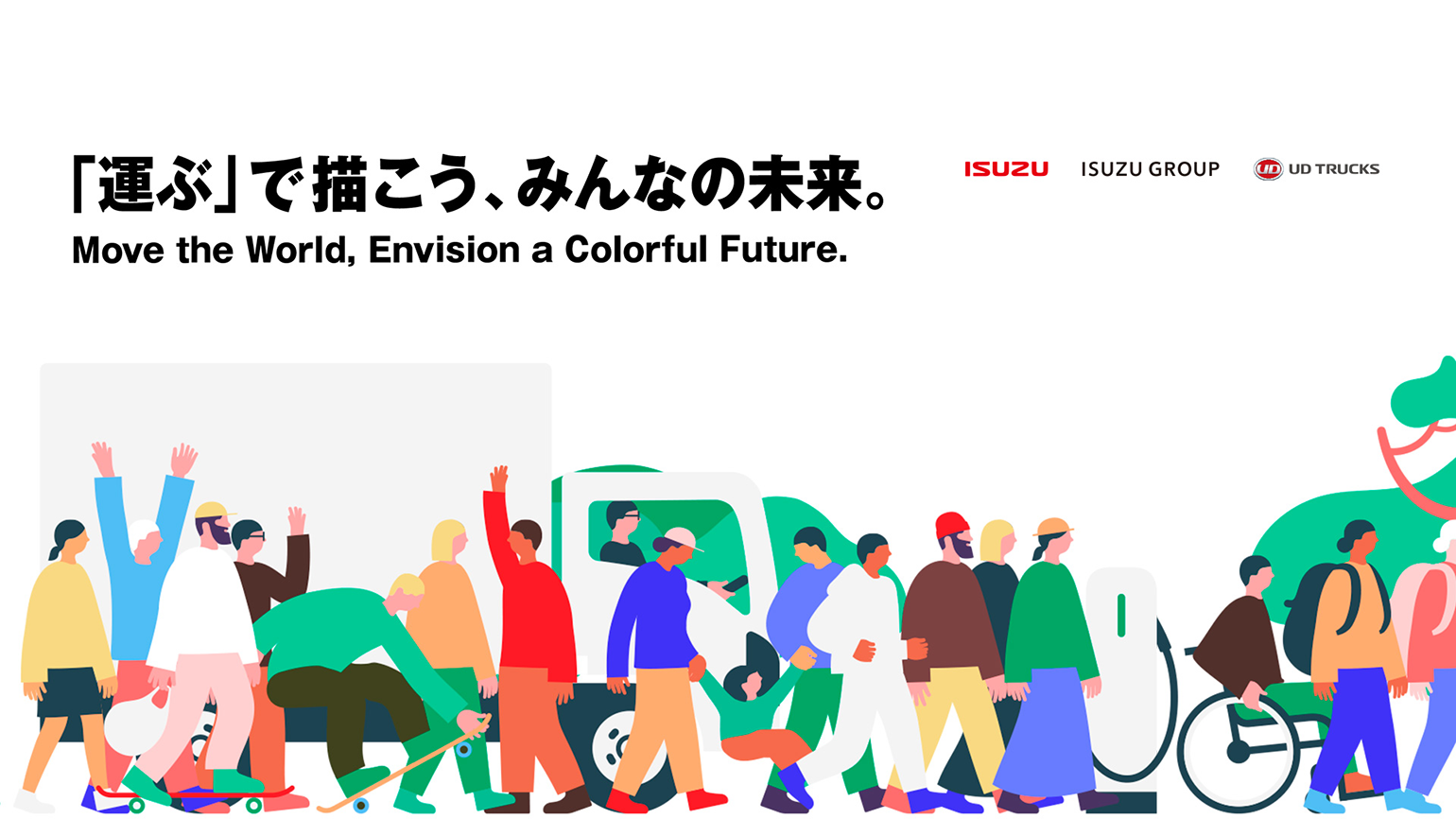
To achieve this, we aimed to create an interactive space where visitors could imagine their future lives through mobility. From this intent, we established the concept: "Let's draw everyone's future with 'transportation'."
──How did you develop this concept?
Nakano: It stems from Isuzu's purpose: "Creating the world's 'transportation'." But when you think of "transportation," doesn't it often bring to mind buses, trucks, or perhaps dry infrastructure? While the "transportation" provided by Isuzu's commercial vehicles is actually deeply intertwined with our lives and society, I felt there was a disconnect—a lack of relatable moments that bring it closer to people's hearts.
Therefore, our challenge was to help people understand that the "transportation" Isuzu aims for supports and expands each individual's life. We chose "Everyone's Future" because we wanted to emphasize that we are a familiar presence supporting the well-being of people's futures.
Booth Design Centered on VCCC, Embodying "Circulation and Co-Creation"
──Among Isuzu's multi-zone exhibition, the concept car "VCCC (Vertical Core Cycle Concept)" was particularly striking. What was the purpose of making the VCCC the central focus of the booth?
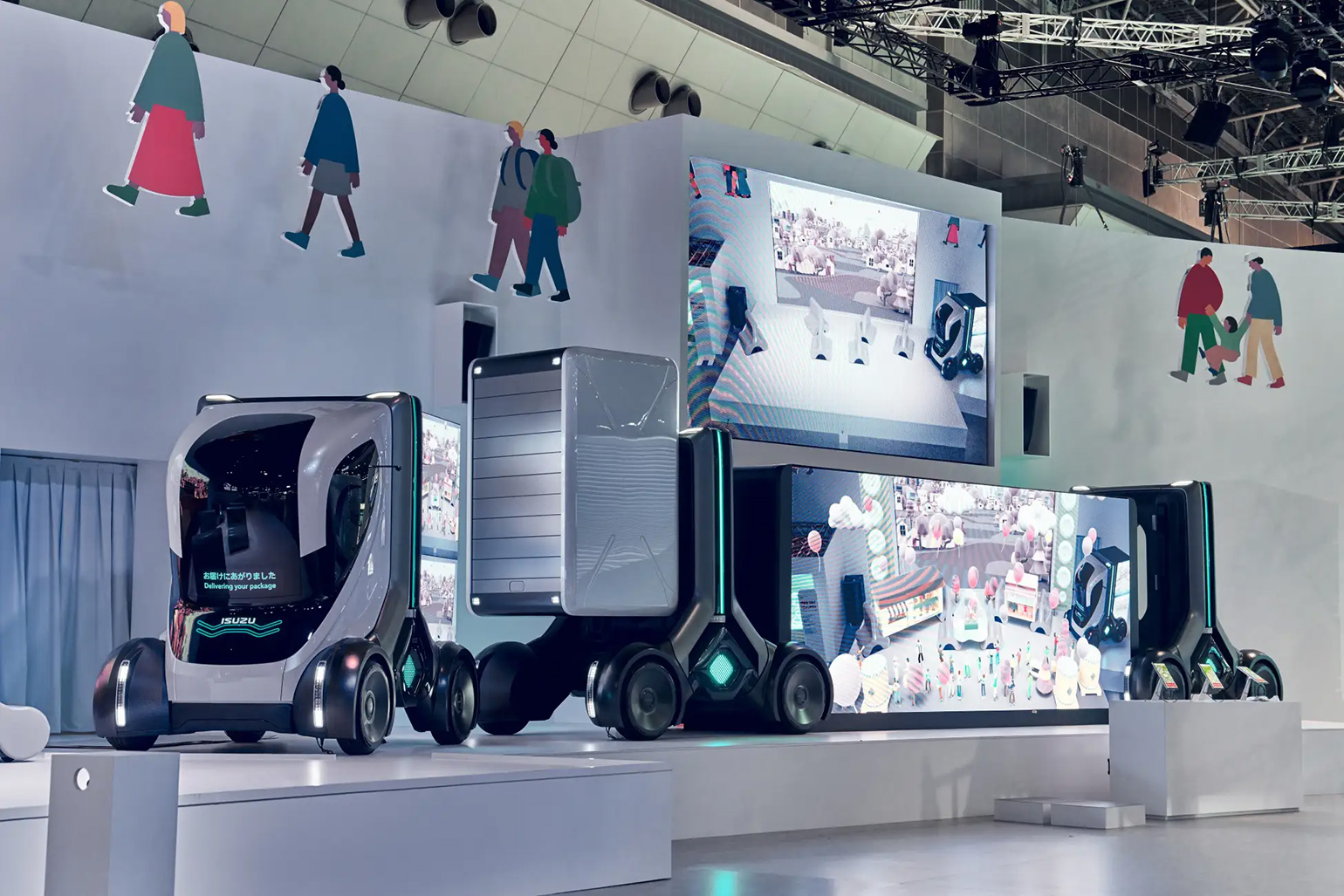
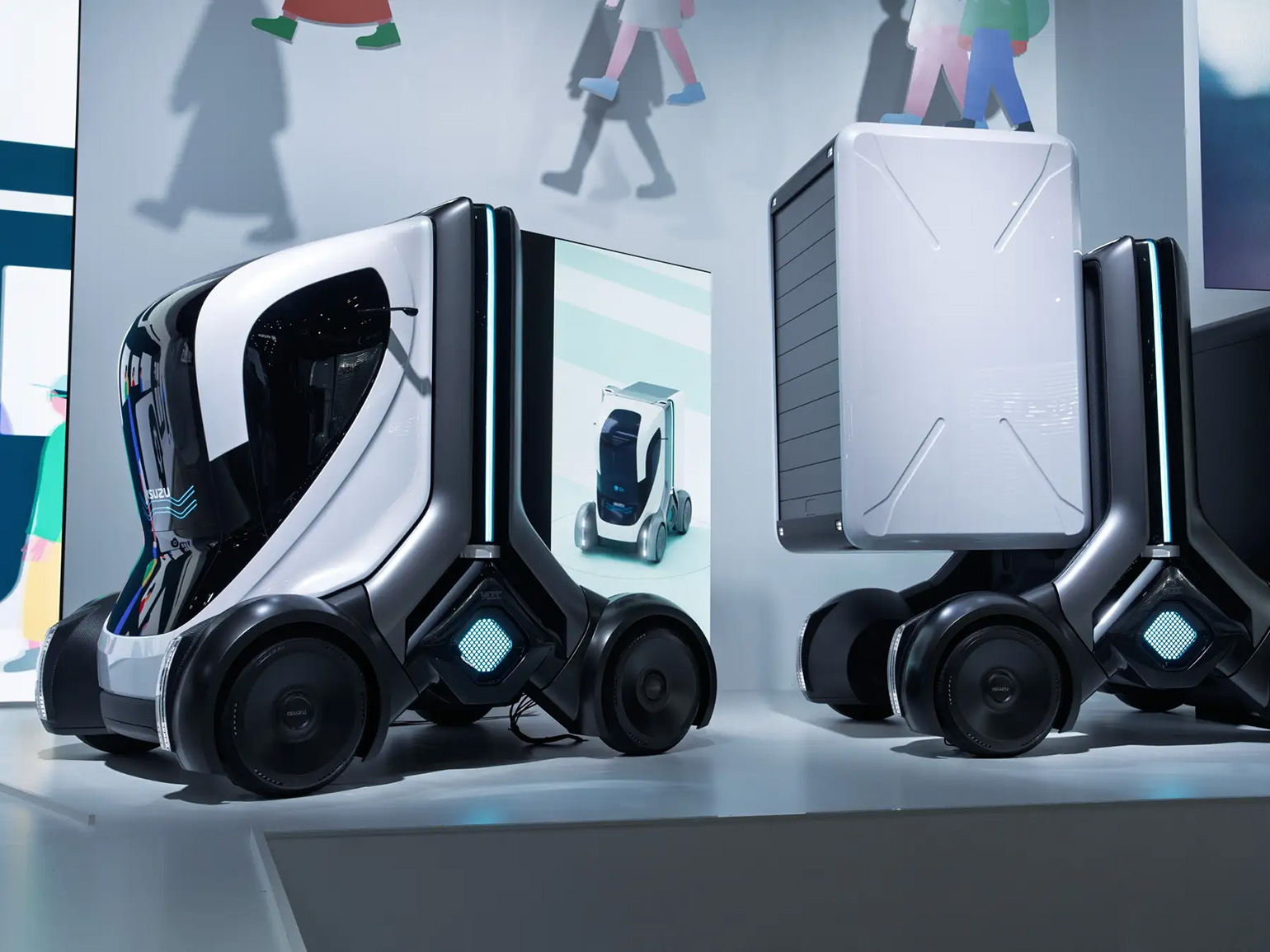
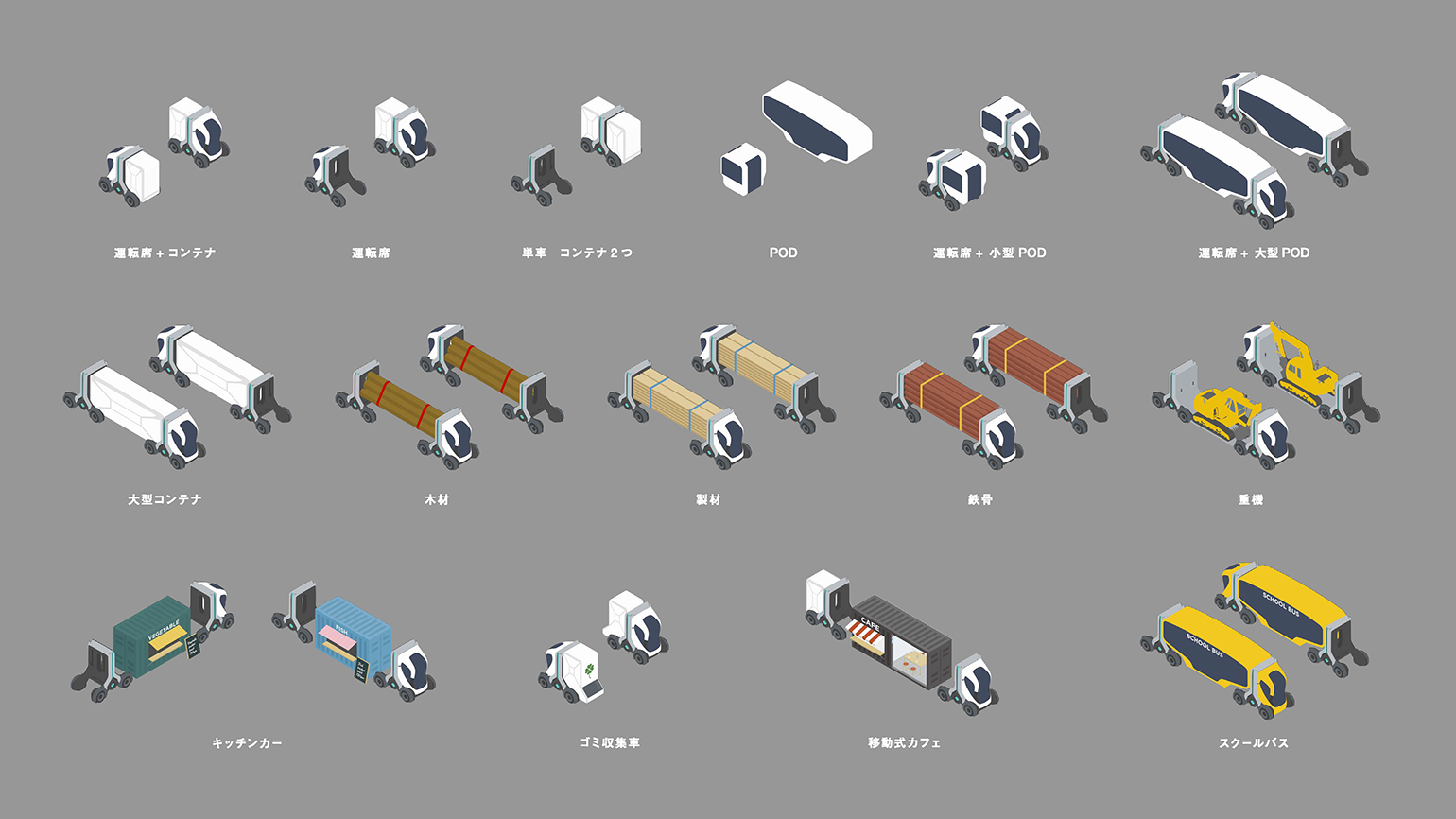
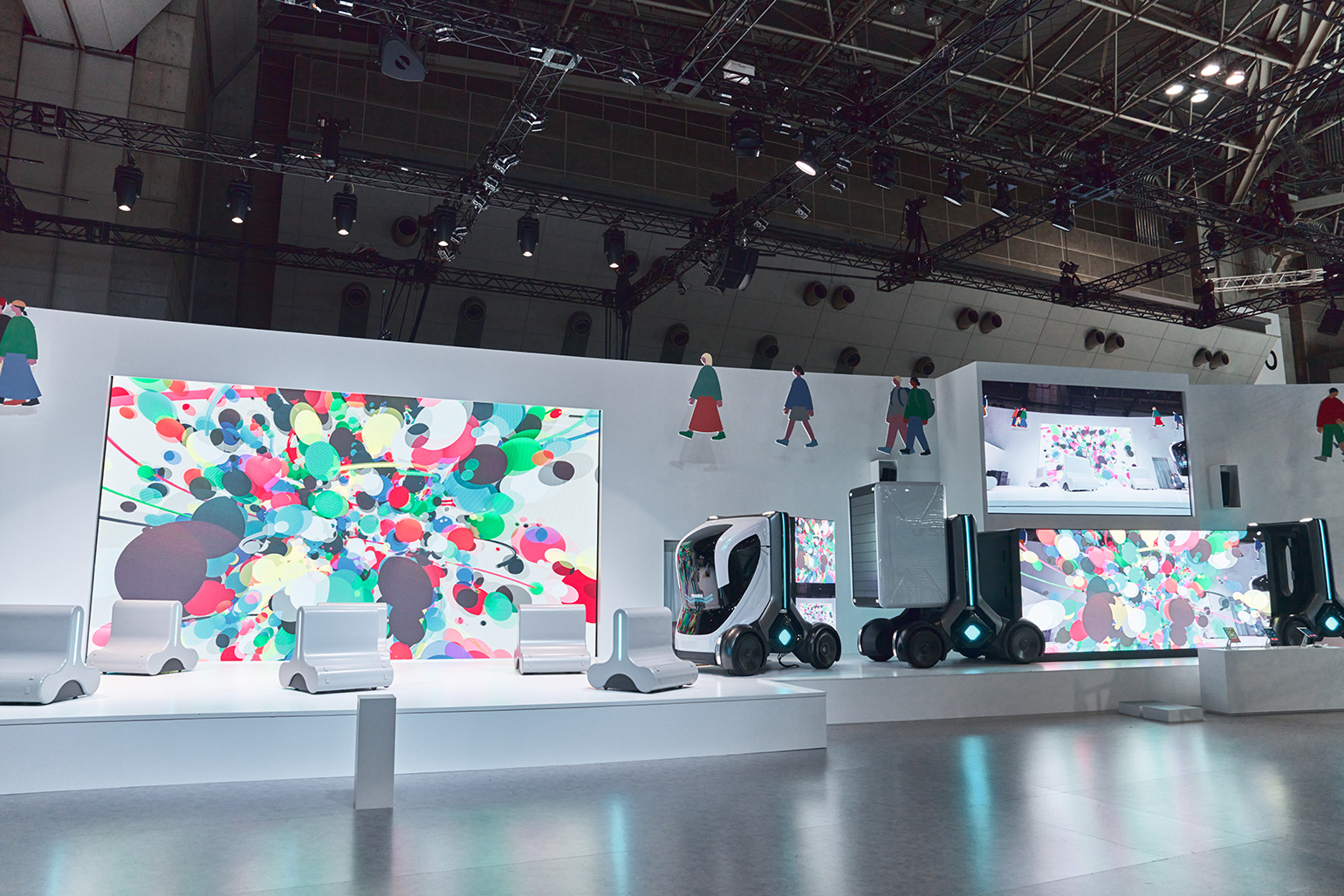
Nakano: The VCCC embodies the theme of "Circulation and Co-creation." By vertically orienting the truck frame—which typically extends horizontally—it creates a flexible mechanism enabling diverse, adaptable, and rapid body configurations. It can transform into a bus, truck, taxi, or food truck depending on the situation."Circulation" means flexibly changing form as needed to circulate people and goods, keeping the flow of people and goods uninterrupted. "Co-creation" signifies that diverse transportation methods can foster business co-creation.
When I first heard this explanation, I intuitively felt this vehicle perfectly embodied the booth's concept. Since co-creation is possible not only B2B but also B2C, the VCCC embodies a future where anyone can freely choose how they "transport."
The VCCC: a concept car adaptable to trucks, buses, or taxis.
Nakano: Another point: when we talk about well-being, it's often framed in terms of restoring something from a problematic, negative state back to zero. For example, converting bumpy roads into universal design is an easy-to-understand example.
That's certainly important, but since we're talking about "future well-being," the stage is set for a world that moves forward—where zero can become 100, where everyone can challenge themselves and live vibrantly. That's why we decided to design the booth centered around the VCCC, the symbol of "transportation" that supports such a future.
──What was the process from designing the overall booth concept to its final form?
Nakano: First, we designed all the necessary "experiences" to embody this concept and presented them to the client. Naturally, Isuzu's solution technologies and philosophy form the foundation of these "experiences," so we held multiple workshops to explore what value Isuzu could offer in the future.
We then translated the defined "value proposition" into tangible elements, updated our communication methods, and spent about 10 months bringing the booth to completion.
Pursuing an Experience Space That Exceeds Expectations with a Dream Creative Team
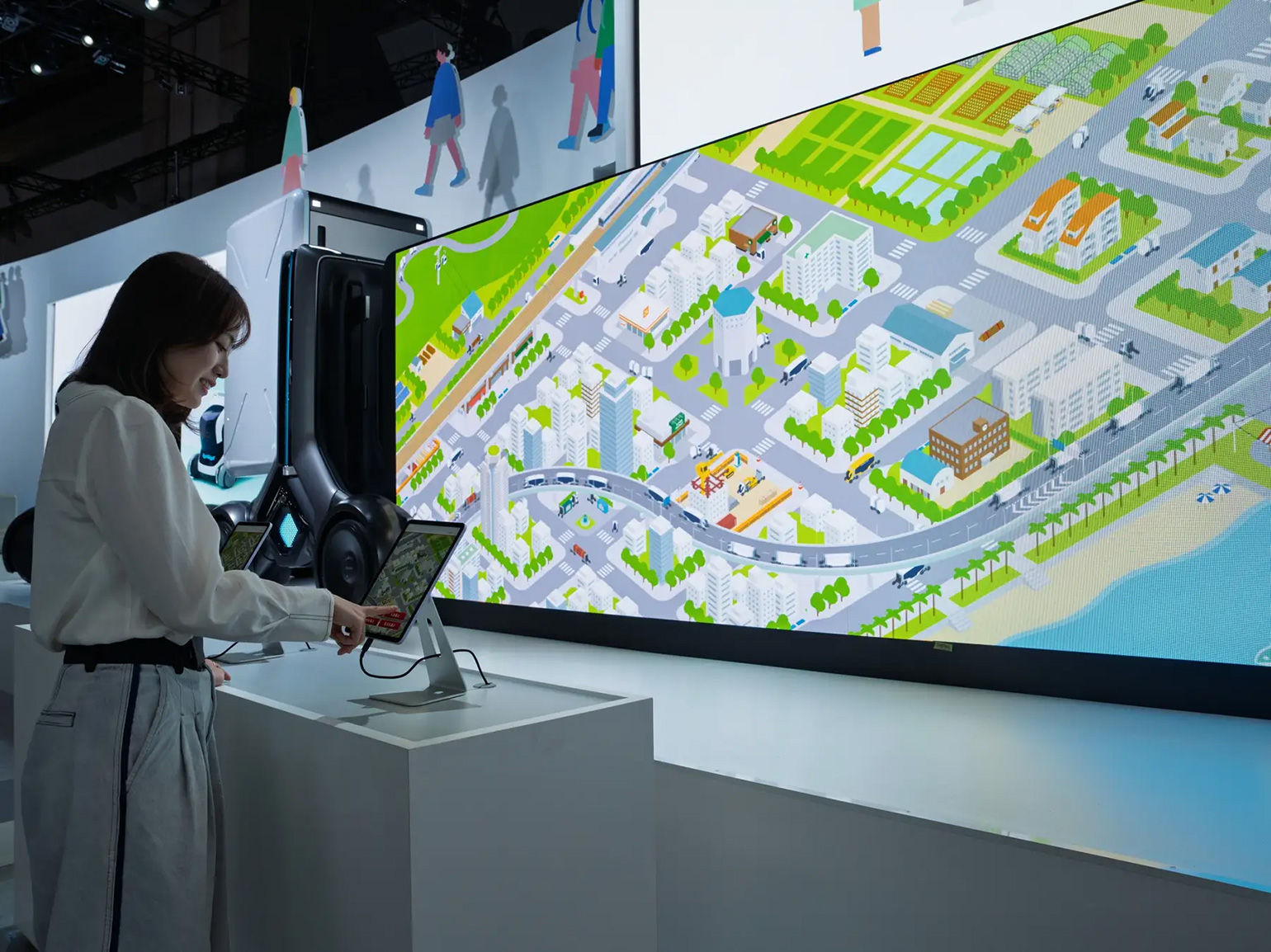
An animated movie created by groovisions, resembling a "moving diorama." It depicts a future where VCCC vehicles are configured in various forms within a town, transporting people and goods, and supporting daily life 24 hours a day. At the actual exhibition, children were seen watching the cyclical town scenes continuously.
──You mentioned focusing on designing experiences that make the "transportation" provided by Isuzu commercial vehicles feel more accessible to the general public. What aspects did you prioritize in the exhibition's structure?
Nakano: First, we felt conveying the "Circulation and Co-creation" concept through a single exhibit would be difficult, so we structured it into three parts.
The first part conveys the functions and mechanisms of the vehicle. The second part communicates the concept of the future vehicle. The third part, to show how the daily well-being of each individual specifically changes in the future where this is provided, depicts the daily life of the protagonist, a flower artist, in the concept movie.
──The animation created by groovisions was very effective in conveying the future lifestyle envisioned by Isuzu.
Nakano: We needed to depict a day in the future city powered by VCCC without sounding preachy, using non-verbal communication, and making it enjoyable for children too. While developing the three VCCC video installations with GMO ENGINE, we decided to commission this animation from groovisions. I believe the visual expression exceeded our expectations.
──Besides groovisions, many top-tier members leading Japan's creative industry participated, including Abstract Engine. How did you assemble this dream team?
Nakano: The fundamental premise is that general visitors pay a 3,000 yen admission fee to come to the Mobility Show seeking an "exciting future." Personally, that felt like an enormous pressure. We couldn't just end up with car advertisements; we had to create exhibits and experiences worth paying 3,000 yen to see.
To achieve that, we absolutely needed the cooperation of professionals who excel in their respective fields and delight people at the forefront of their work. That's why I wanted to collaborate with these individuals.
The request to Abstract Engine stemmed from our intention to create a booth space like a "transportation" theme park centered around stage shows. Even if we couldn't physically operate the VCCC at the venue, we wanted to realistically express its movement. They were the only ones capable of creating a show that leveraged robotics and spatial design, so we offered to collaborate.
──The setup was incredibly three-dimensional: robots resembling VCCC moving on stage were AR-synthesized in real-time and projected onto monitors, while flowers appearing in the video were actually displayed throughout the venue.
Nakano: The AR idea came from Abstract Engine, who had experience with similar projects. It was perfect for simultaneously showing the actual moving mobility and how the world expands through it. They handled the robotics production and AR compositing system development, while TAKCOM directed the AR movie, resulting in an amazing show.
Real-time AR compositing and projection must have been extremely challenging, but I believe this team made it happen.
The stage show, primarily handled by Abstract Engine, featured a synchronized performance where every monitor within the booth moved in unison.
──How did you develop the visual concept that ran throughout the entire booth?
Nakano: Since the theme was everyone's well-being, we wanted to avoid any specific tone, race, or culture. We incorporated bold designs using human motifs. Also, since the track has a hard impression, we consciously aimed for a softer tone and manner to balance it.
Nakano: For art direction and tone/mood design, we collaborated with Yosuke Kitanishi's team from Kaibutsu, who excel at soft, playful designs. We unified the design down to the smallest details, including refreshing staff costumes to a gender-neutral formal-casual style.
Furthermore, we leveraged the strengths of each partner: WOW, with extensive exhibition production experience, handled booth and experiential content design; MARK produced the video CG; and emerging artist Peterparker69 created the show music. Naturally, members of Dentsu Lab Tokyo and Dentsu Live Inc. were also involved in the overall design.
Rethinking the Essence of Exhibition Creativity at the Mobility Show
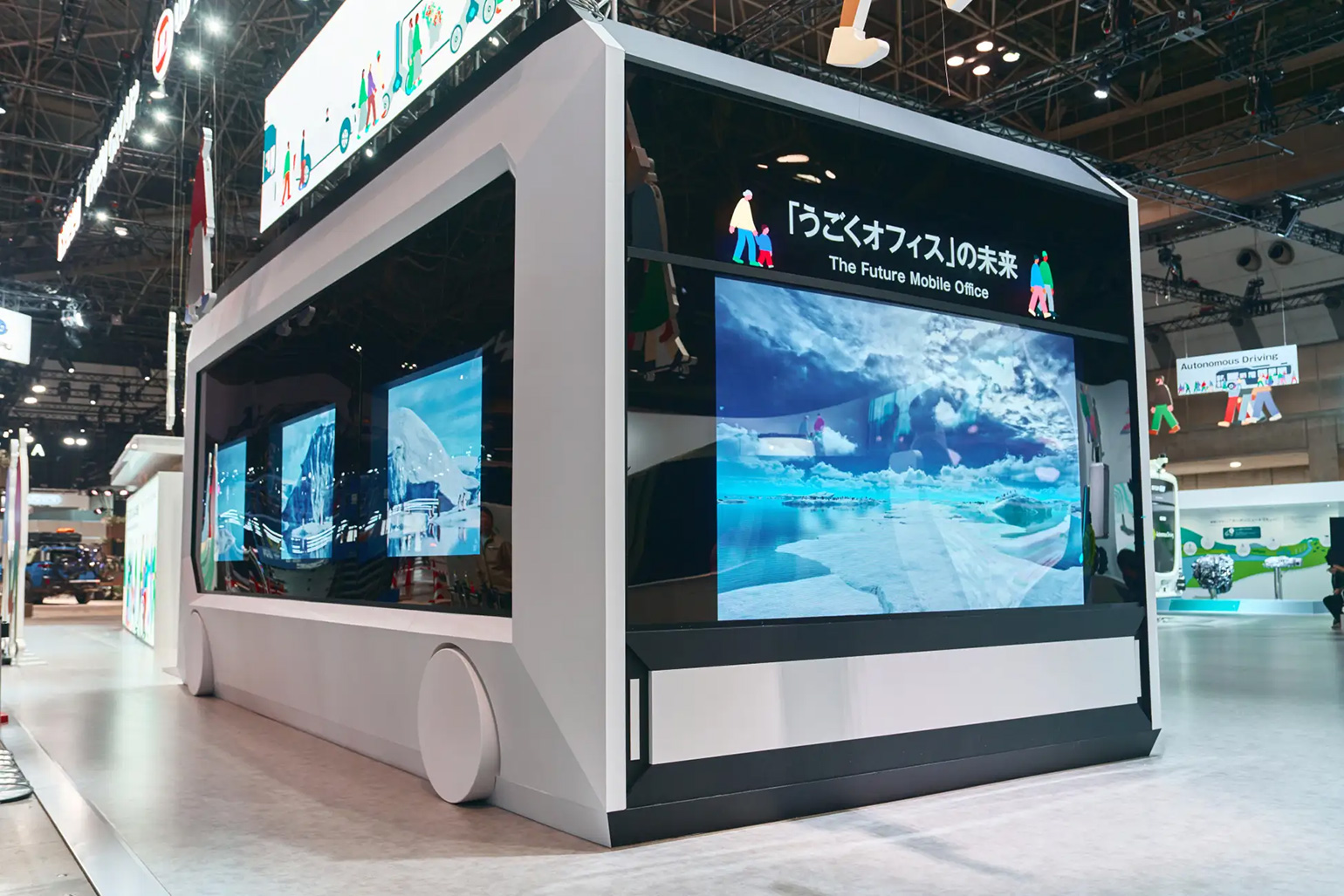
A bus tour where museums, offices, and inns "move" through transportation, enabling visitors to experience a future where they travel between various spaces. This approach—aiming to create a future "experience" rather than simply displaying automobiles—was the defining feature of the Isuzu/UD Trucks booth.
──We saw many families at the Isuzu booth. How was the overall response?
Nakano: Attendance rates for the stage shows and visits from corporate representatives were exceptionally high. We also saw children enjoying themselves every day. Regarding Isuzu's image, we received positive feedback like "approachable" and "feels relatable," which was encouraging.
On the other hand, looking at JMS as a whole, I feel it still leans heavily toward being an event for car enthusiasts, lacking sufficient appeal to the general public. While it's currently thriving with over a million visitors, I worry that unless the fan base expands long-term, the event's scale might shrink.
──Conversely, did you gain any insights for future exhibitions from creating this booth?
Nakano: More than new discoveries, I think it reaffirmed what I value most in exhibition creativity.
First, it goes without saying that we must provide something that exceeds visitors' expectations and imagination, as the value for the admission fee they paid. To achieve this, I was reminded that we need to pour in all our creative experience and insights cultivated by engaging with a wide range of industries.
Second is the importance of amplifying the passion of fans who attend events.Events like JMS or museum exhibitions are, fundamentally, places where fans of the products or works gather. It's easy to focus on deepening that passion "internally." For a mobility show, for example, it's tempting to concentrate on showcasing the latest cars in the coolest way possible, and fans love that. But if you don't show the photos you took at the venue to family, friends, or colleagues who aren't car enthusiasts, that passion doesn't spread.
To sustain IP, brands, and ultimately the entire industry, we need to view museums as public experiential spaces—devices for expanding outward—and implement mechanisms to broaden the fan base.
This is the same as the essence of advertising: the key lies in creating excitement that resonates with the general public when they see it, making them think, "I want to be part of this too." In this regard, there should be room for us to leverage our strengths, and we want to continue valuing this perspective going forward.
Launch of "dentsu Exhibition Value Design": Expanding exhibition content value through creativity and production expertise https://www.dentsu.co.jp/news/release/2025/0207-010840.html dentsu Exhibition Value Design: Expanding Exhibition Content Value with Creativity and Production Ca
After working at a printing company and a PR agency, he joined Dentsu Inc. Following experience in sales and production, he transferred to the strategy division. Later, in the CR division, he handled everything from strategy to communication planning, integrated creative work, exhibition planning and management, creative direction, and product development. He has received awards including Cannes, One Show, Clio, Adfes, and the Japan Spatial Design Grand Prize. His publications include "Rugby Rules: Super Beginner's Edition."

 How to Create an Exhibition. What is an Exhibition in the "Content × Experience" Era? [4/5]