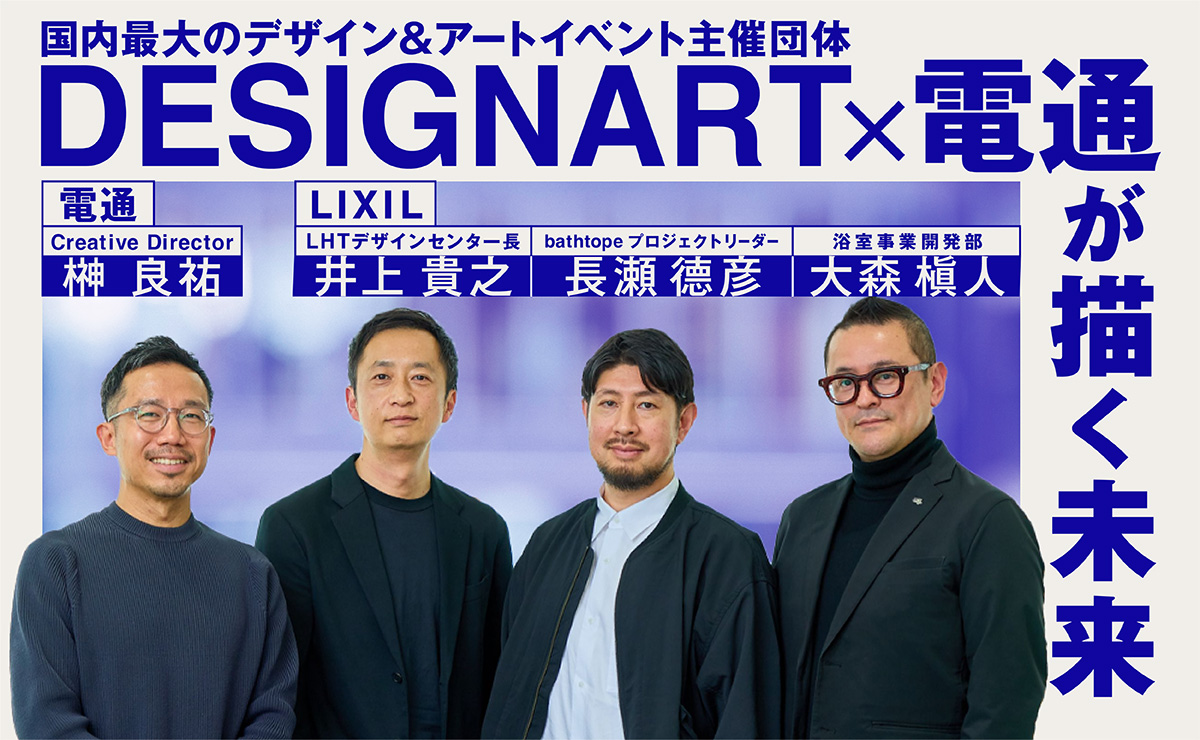
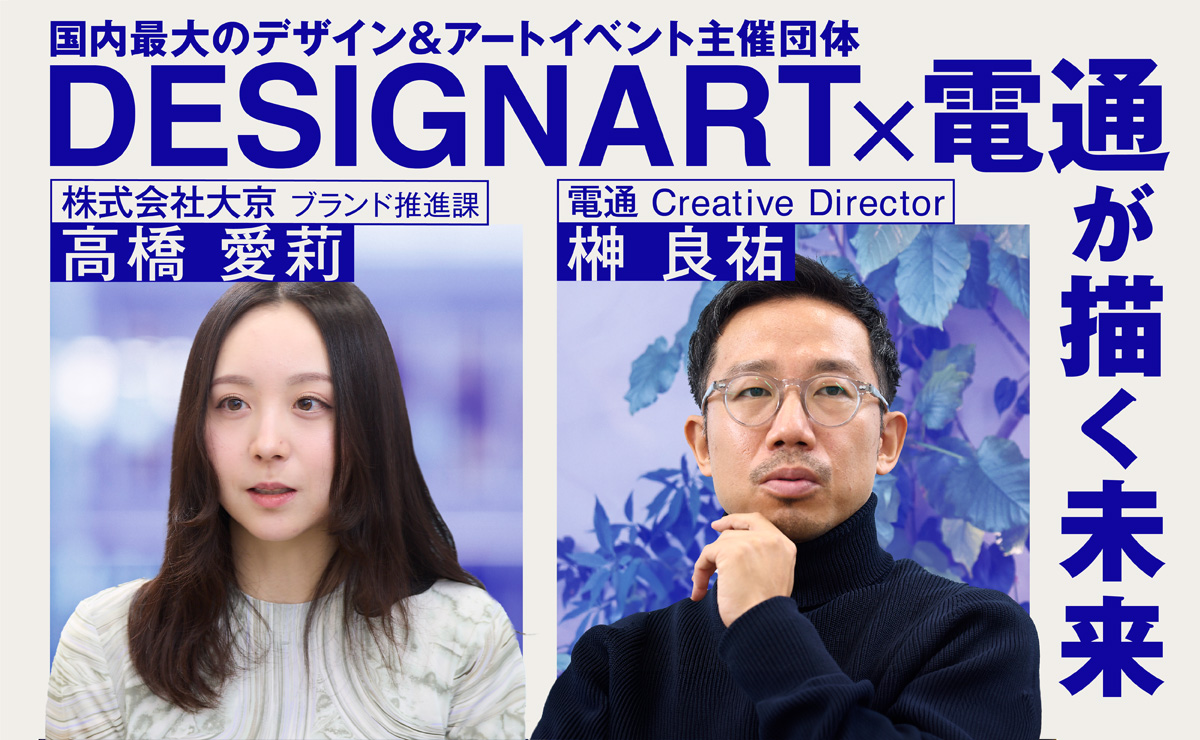
“DESIGNART TOKYO” is one of Japan’s largest festivals of design and art.
Exhibitions by companies are on the rise at this annual creative showcase. Exhibitors range from manufacturers of home appliances, automobiles, and materials to companies whose core business is not manufacturing. A diverse array of companies is beginning to choose “DESIGNART TOKYO” as a strategy for business expansion.
Why has this “festival of design and art” become a new strategic move for businesses? We spoke with Akio Aoki, representative of DESIGNART, and Ryosuke Sakaki, a creative director at Dentsu Inc. who has supported numerous corporate exhibitions.
A scene from DESIGNART TOKYO 2025. This is an urban design event featuring diverse exhibitions held at approximately 100 venues across Tokyo’s urban areas.
An Era Where Companies Are Chosen for Their "Aesthetics"
――First, could you tell us what kind of event DESIGNART TOKYO is?
Aoki: DESIGNART TOKYO is a design and art festival that launched in 2017 and attracts a total of 250,000 visitors. Talented creators from diverse fields—including interior design, art, fashion, technology, and food—gather from around the world to hold exhibitions at various locations throughout Tokyo.
Our overarching concept is “INTO THE EMOTIONS ~The Gateway to Inspiration~.” Using the city of Tokyo as our stage, we aim to increase the moments when people encounter things that offer new insights, thereby sparking innovative chemical reactions that transcend boundaries. We organize this event with the desire to revitalize the creative industries themselves. Thanks to everyone’s support, we’ve reached our 10th anniversary this year.
Akio Aoki, CEO of DESIGNART INC.
――What kind of people exhibit at DESIGNART TOKYO?
Sakaki: In the past, the event focused primarily on creators showcasing their work. However, in recent years, corporate participation has become more prominent. Moreover, what they’re exhibiting aren’t finished products. An increasing number of companies are using prototypes in the development stage or conceptual works to demonstrate their “aesthetics” to society.
――What exactly do you mean by a company’s “aesthetic”?
Sakaki: It refers to their philosophy—questions like “What do we believe in?” and “What kind of future do we want to create?” They present this to society in the form of prototypes or experiential installations. Then, they incorporate the feedback they receive into their next business initiatives. Year after year, more and more companies are utilizing DESIGNART TOKYO as a venue for this kind of dialogue with society.
――Why have more companies started communicating their “aesthetics”?
Sakaki: In today’s world, a company’s value isn’t determined solely by revenue or market capitalization. It’s crucial for people to resonate with a company’s stance and vision, leading them to think, “I like this company” or “I want to choose this brand.” Even if a product isn’t fully developed yet, companies can quickly articulate their philosophy—how they perceive the times and society—at a conceptual stage. I believe DESIGNART TOKYO has begun to hold significant meaning as a platform for precisely that.
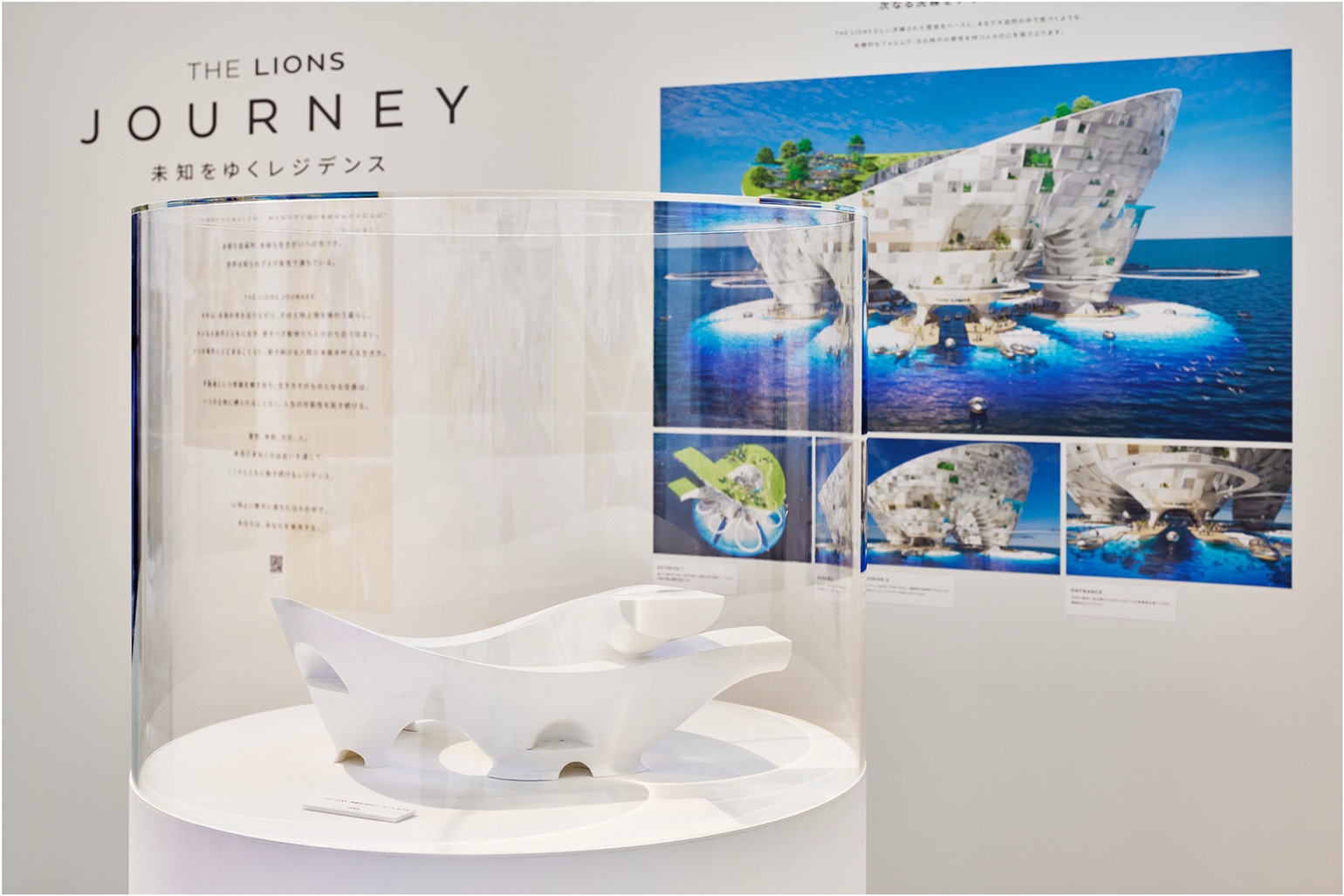
Daikyo presented a groundbreaking vision co-created with employees and diverse experts under the theme of “The Ultimate Well-Being Condominium of 2050.”
Aoki: We’re seeing companies use design and art platforms to communicate their stance overseas as well. A famous example is SXSW (South by Southwest), held in the U.S. It started as a music event, but has now become one of the world’s largest innovation festivals, attracting new ventures and prototypes.
I sense an atmosphere at recent DESIGNART TOKYO events that is somewhat reminiscent of SXSW.When I talk to the exhibiting companies, I’m often surprised to hear, “So you’ve been thinking about something this experimental?” Even companies that tend to give off a conservative impression in everyday life have passion and obsession swirling within their ranks. DESIGNART TOKYO is becoming a place where companies can lay bare the sharpest edges of that creativity in its purest form—a place that liberates the creativity dormant within them.
It’s the “Ultimate Otaku” Who Drives Brand Growth
――What specific value does exhibiting at DESIGNART TOKYO offer companies?
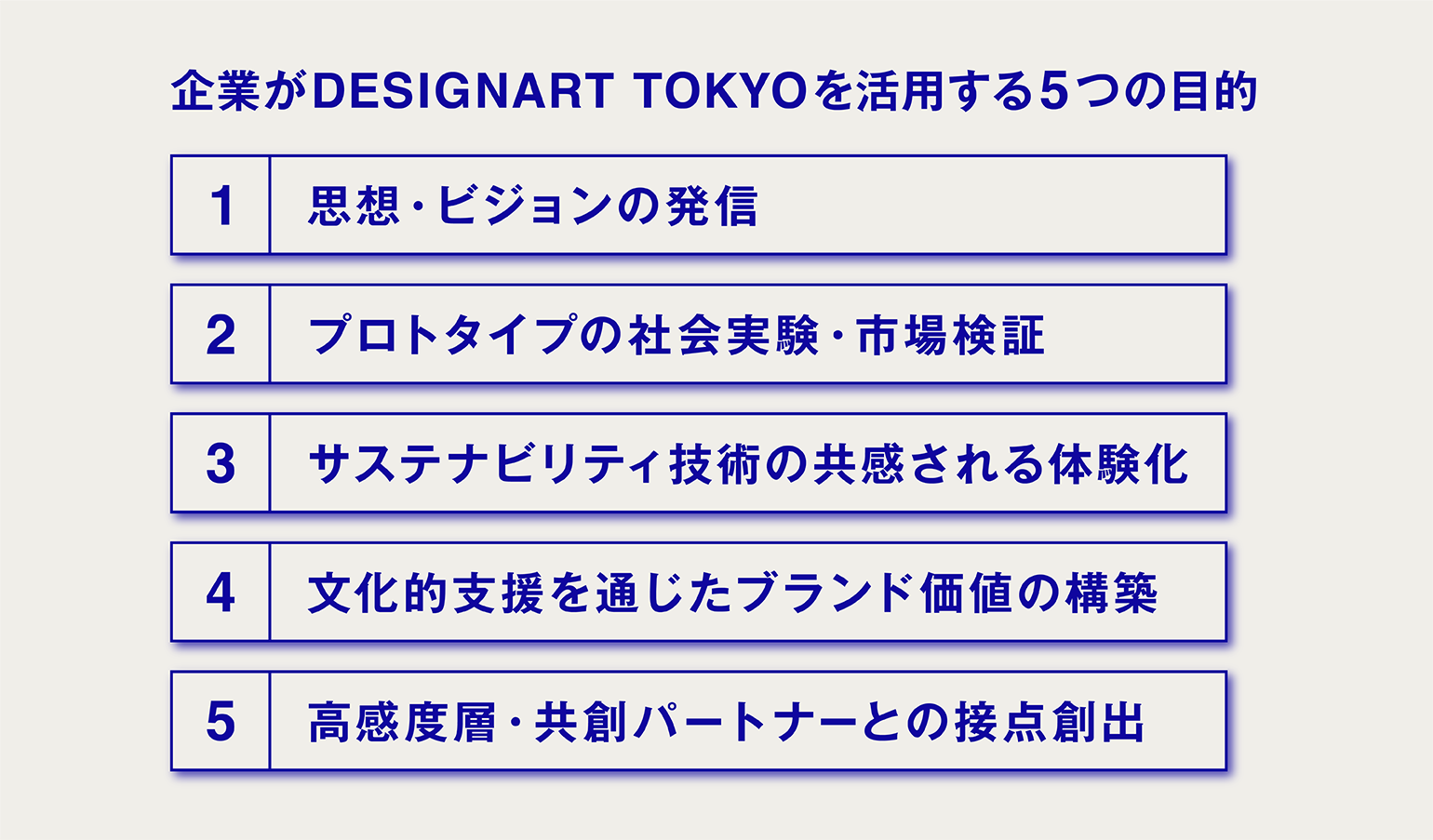
Sakaki: I believe there are five main objectives for exhibiting at DESIGNART TOKYO.
1) Communicating philosophy and vision 2) Social experimentation and market validation of prototypes 3) Creating engaging experiences that resonate with sustainability technologies 4) Building brand value through cultural support 5) Creating connections with trendsetters and co-creation partners
We particularly recommend exhibiting to companies facing the challenge of having a vision, technology, or materials but not knowing how to communicate them to the world. By matching such companies with up-and-coming creators, Dentsu Inc. has successfully brought numerous new values to the world.
――So you also facilitate matchmaking with creators.
Sakaki: Yes. By facilitating collaborations between companies and specialized creators—such as architects and product designers—we generate outputs that further enhance corporate value. The key here is not to settle for something that merely “looks the part.” In today’s world, anyone can produce outputs of a certain quality using generative AI. That is precisely why we have entered an era where originality that surprises people—and avoids a sense of déjà vu—is essential.
What’s crucial for companies isn’t just mastering AI, but becoming the ones AI learns from. Isn’t it about possessing such original ideas and a worldview that they’re worth imitating? The world-class creators we match through DESIGNART TOKYO are people who could be called “ultimate enthusiasts”—those who have delved deeply into their respective fields. By partnering with such creators, who are essentially bundles of passion, companies can create unique brands that stand out even more in the AI era.
Aoki: Exactly. That passion is what matters most right now, and making cutting-edge statements that lead the brand directly translates to corporate branding.I call this the “Single Piece of Cloth Theory.” When you pull up the center of a piece of cloth, the entire cloth rises, and its reach expands. It’s the same with brands: by taking bold risks at the top end, the reach of the middle and bottom segments expands. As a result, the overall brand image improves, and the business’s reach expands as well.
――How long does it take for the effects of branding to become apparent?
Aoki: It takes time for a brand to take root. You need to look at it over the long term to see how challenges at the top end ripple down to the middle and bottom segments. To cite a common mistake, branding that tries to break even solely at the top end amounts to artificially inflating sales through superficial tactics. That approach won’t work.
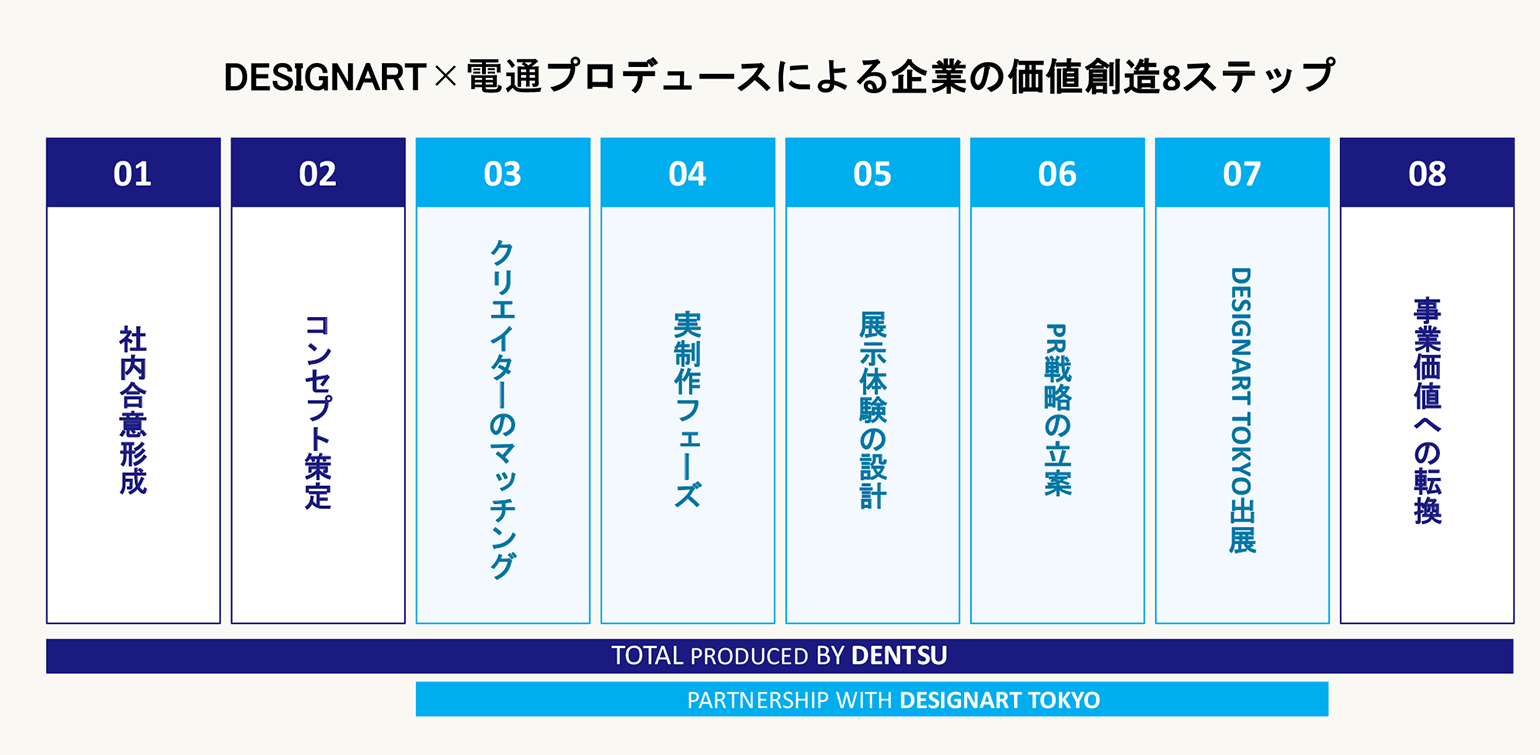
Sakaki: When we at Dentsu Inc. support corporate exhibitions, we design our approach to encompass not only the duration of DESIGNART TOKYO but also the periods before and after. We take into account everything from building internal consensus prior to the exhibition, to conceptual design and the development of PR strategies, all the way through to commercialization after the event. We don’t treat the exhibition as a one-off event; instead, we transform it into an engine for long-term brand growth. We consider this to be one of our key roles.
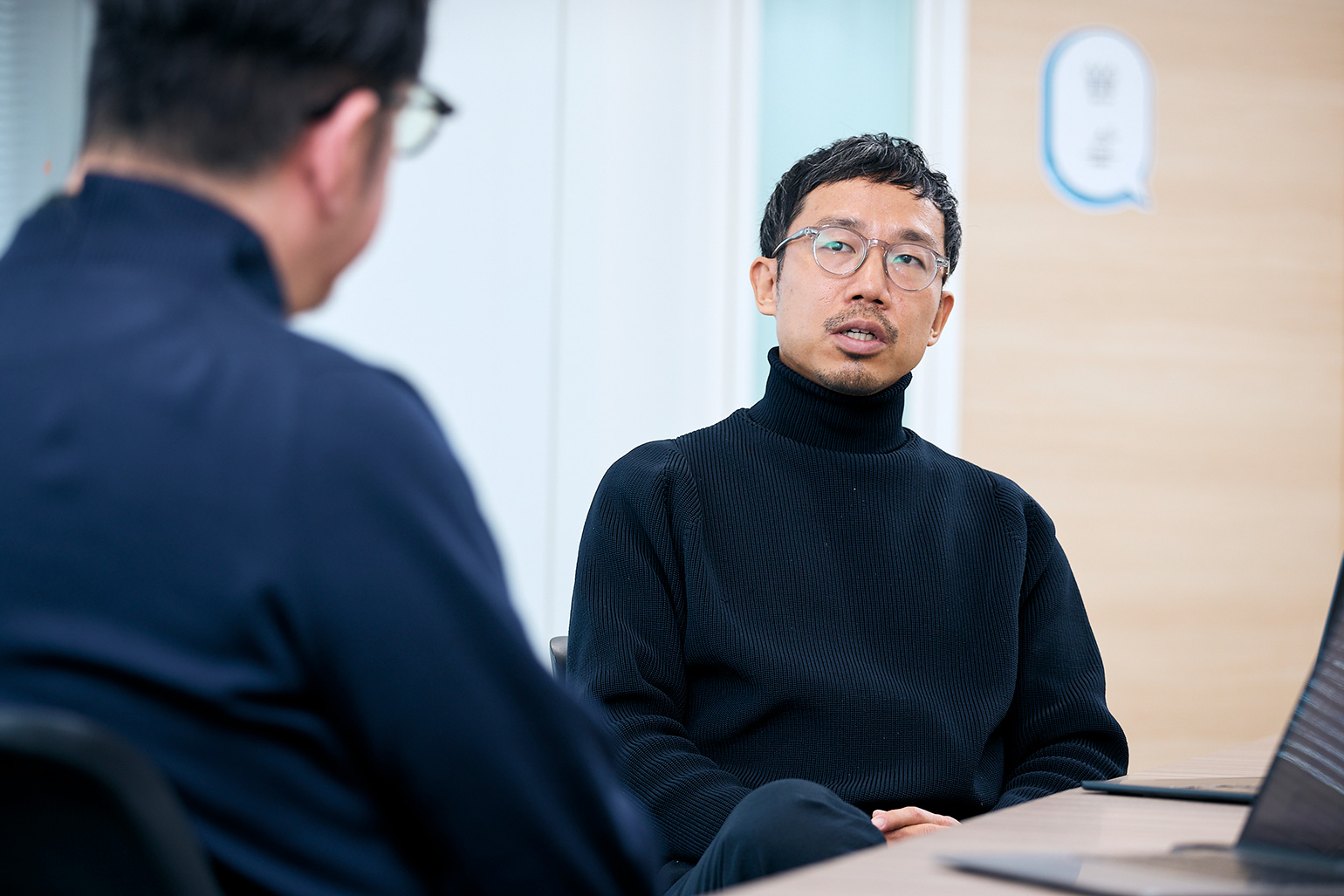
Ryosuke Sakaki, Creative Director, Dentsu Inc.
Growing the Company’s Base of Supporters Both Internally and Externally
――What kind of results have participating companies actually achieved?
Aoki: The most obvious result is the impact on external audiences. Our exhibition content was featured in numerous media outlets, including news programs. However, what’s even more interesting is the change within the company. When a company showcases a prototype at DESIGNART TOKYO and receives positive feedback from the public, the internal atmosphere reportedly shifts. While every company has people who are conservative toward new initiatives, a positive atmosphere emerges that draws even those individuals in.
Furthermore, projecting a challenging spirit is effective for recruiting. Being recognized as a company engaged in interesting initiatives makes talented young people want to work here. We can increase the number of supporters both within the company and externally. I believe that is the major benefit of DESIGNART TOKYO.
――So it’s effective for external and internal audiences, as well as for recruiting.
Aoki: As the number of supporters within the company grows, I believe we’ll see more projects where the R&D and PR departments work together as one. In the typical product development process, roles tend to be divided: the R&D department creates something, and the PR team figures out how to promote it to the public.
However, by utilizing a platform like DESIGNART TOKYO, the PR side can provide feedback to the development side regarding the reactions and evaluations received from society. Hearing raw feedback—such as “It was perceived this way,” “Expectations were high here,” or “This part didn’t resonate”—allows the development team to gain new insights and take on challenges that are a step above the rest. I believe DESIGNART TOKYO also serves as a platform to accelerate development that incorporates the voice of society.
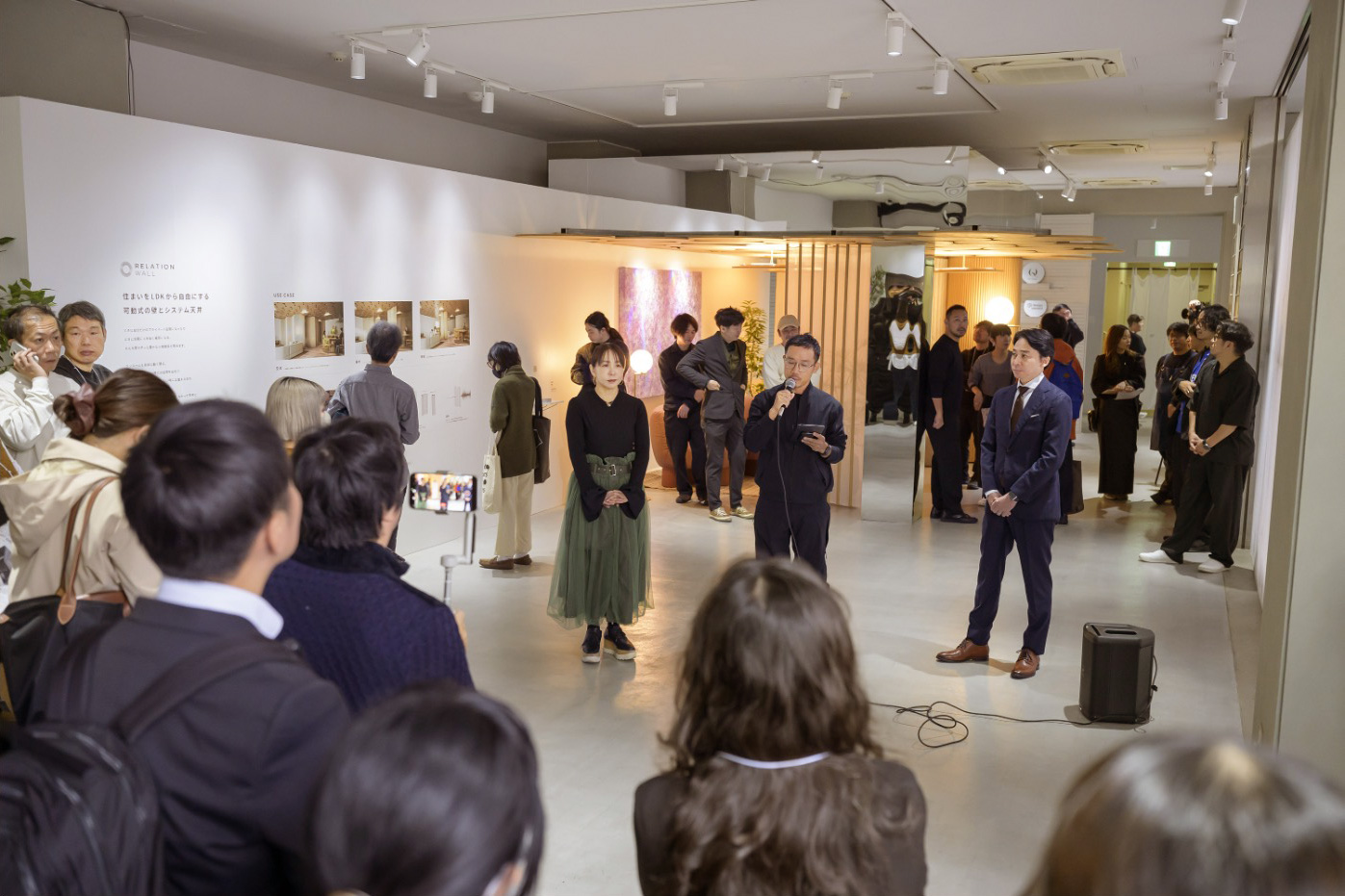
Scene from the DESIGNART TOKYO 2025 Media Tour. Daikyo Executive Officer and architect Yuko Nagayama and Dentsu Inc.’s Ryosuke Sakaki jointly presented the project.
Sakaki: We are living in an era where both technology and societal needs are changing at a breakneck pace. The old approach of perfecting a product before releasing it to the public simply won’t cut it anymore. That’s why prototyping—based on dialogue with the market—has become the mainstream approach in recent years. We release a test version to the public and refine it through iterative improvements based on the feedback we receive.What’s crucial is creating “prototypes that truly allow people to envision future lifestyles.” Only when the design, interface, and experience are concretized to the point where people can see exactly what they’ll be like will consumers give honest feedback like, “That future sounds great.” DESIGNART TOKYO’s strength lies in its ability to use the power of design and art to present the vision of the future depicted in these prototypes in a more concrete way.
――Are there any other unique attractions to DESIGNART TOKYO?
Sakaki: DESIGNART TOKYO offers so many unexpected encounters. I personally met companies with compelling visions during the event, and I witnessed moments where the brand image of companies I already knew completely transformed.
Aoki: Autumn in Tokyo is special. In addition to DESIGNART TOKYO, events related to design, art, and mobility are held all over the city, and people with a keen sense of style are walking the streets. It is precisely because the entire city becomes like an art museum during this time that unexpected encounters between companies and between people take place. In fact, collaborations between companies have emerged from these chance encounters. This kind of serendipity is also a hallmark of DESIGNART TOKYO.
Exhibitions mark the beginning of future business development
――What kind of support does Dentsu Inc. provide to companies exhibiting at the event?
Sakaki: As I mentioned, we support companies by matching them with creators, but that alone isn’t enough to produce great work. There is inevitably a gap between a creator’s expertise and the challenges a company faces. Our role at Dentsu Inc. is to create a common language that bridges that gap. What is it that the company truly wants to convey? What significance does this challenge hold for society? We articulate the core concept, involve the company’s decision-makers, and act as a bridge between them and the creators.
Aoki: Dentsu Inc. always sets the bar high for us. They present concepts that elevate a company’s vision and technology to the next level, propelling them toward the future. We’re grateful for that because it allows us to focus on how to translate those concepts into the spaces and experiences of DESIGNART TOKYO.
Sakaki: Another key principle we uphold when supporting exhibitors is “not stopping at a single point.” DESIGNART TOKYO is merely the starting point; we accompany them with the intention of providing comprehensive production for future business development.Before the exhibition, we hold a series of workshops within the company, involving employees to help shape the concept. We then build a comprehensive plan covering exhibition design, website development, and PR strategy. Furthermore, after the exhibition, we continue to support them all the way through to formulating brand strategies and commercialization.
――What kind of companies would you like to see utilize DESIGNART TOKYO in the future?
Sakaki: For example, companies that want to refine products in the R&D stage by gathering feedback from the public. Or companies that possess sustainability-related technologies or materials but don’t know how to communicate them, leaving these assets unused. We want such companies, in particular, to leverage the power of creativity to solve their management challenges.
Aoki: We also recommend exhibiting at DESIGNART TOKYO to companies considering participation in overseas trade shows. You can receive direct feedback from discerning visitors without incurring the same costs as overseas events. And above all, the city of Tokyo itself offers a unique environment that simply doesn’t exist abroad.Overseas, art and design are clearly separated into distinct genres, and trade shows tend to be compartmentalized. In Tokyo, however, a “mixed culture” has emerged where art, design, crafts, and technology naturally blend together. Precisely because the boundaries between genres are fluid, you can receive feedback from a diverse range of industries without being confined to a single specialized field. In that sense, I feel Tokyo is an exceptionally advantageous environment.
――Finally, could you share a message for companies considering exhibiting at DESIGNART TOKYO?
Sakaki: DESIGNART TOKYO is a place to visualize a company’s aesthetic, engage with society, build a community, and generate the next move. We aim to envision not a predetermined, harmonious future conceived by AI, but a chaotic future that surprises everyone. This challenge will undoubtedly lead to internal branding and stimulate the world. And we don’t intend to stop at the exhibition.When it comes to moving prototypes toward commercialization, we’ll work alongside you, bringing in Dentsu Consulting Inc.’s business consulting team and professionals with hands-on experience in business development at manufacturers. We hope to support you through the entire process, from concept to implementation.
Aoki: Through DESIGNART TOKYO, we hope to work together to build brands whose value continues to rise. We aim to create products that aren’t just cheap and good, but rather, even if they’re expensive, offer unique value found only in that brand. Such brands increase in value over time and expand the market itself. They give us hope for the future market. We would be delighted to work with you all to build such brands.First, let’s discuss whether your technology or concept is a good fit for DESIGNART TOKYO—even if it’s just brainstorming at this stage. Please feel free to reach out to us.
Leveraging a network of creators across architecture, interior design, product design, and art, he plans and produces corporate branding initiatives and exhibitions. Since 2017, he has served as the representative of “DESIGNART TOKYO,” one of Japan’s largest design and art festivals, which has attracted a cumulative total of approximately 250,000 visitors. Since 2023, he has served as the general producer of Osaka Art & Design.He is dedicated to the development of the creative industries through initiatives such as “Description for,” which compiles the latest information on Milan Design Week, and “1% for Art,” a public art support program.
Sakaki Ryosuke
Dentsu Inc.
クリエイティブ・ディレクター
Joined Dentsu Inc. as an art director. Handled advertising campaigns for a diverse range of companies. Currently, centered on the concept of “designing a company’s potential for leapfrog growth,” he connects companies with global creators—such as architects and artists—to practice brand design that generates new value. Founder of OPEN MEALS and Future Vision Studio. Part-time lecturer at the University of Tokyo. Recipient of numerous domestic and international awards, including the Good Design Gold Award and the iF Design Award.

 The Future Envisioned by DESIGNART × Dentsu Inc. [1/3]