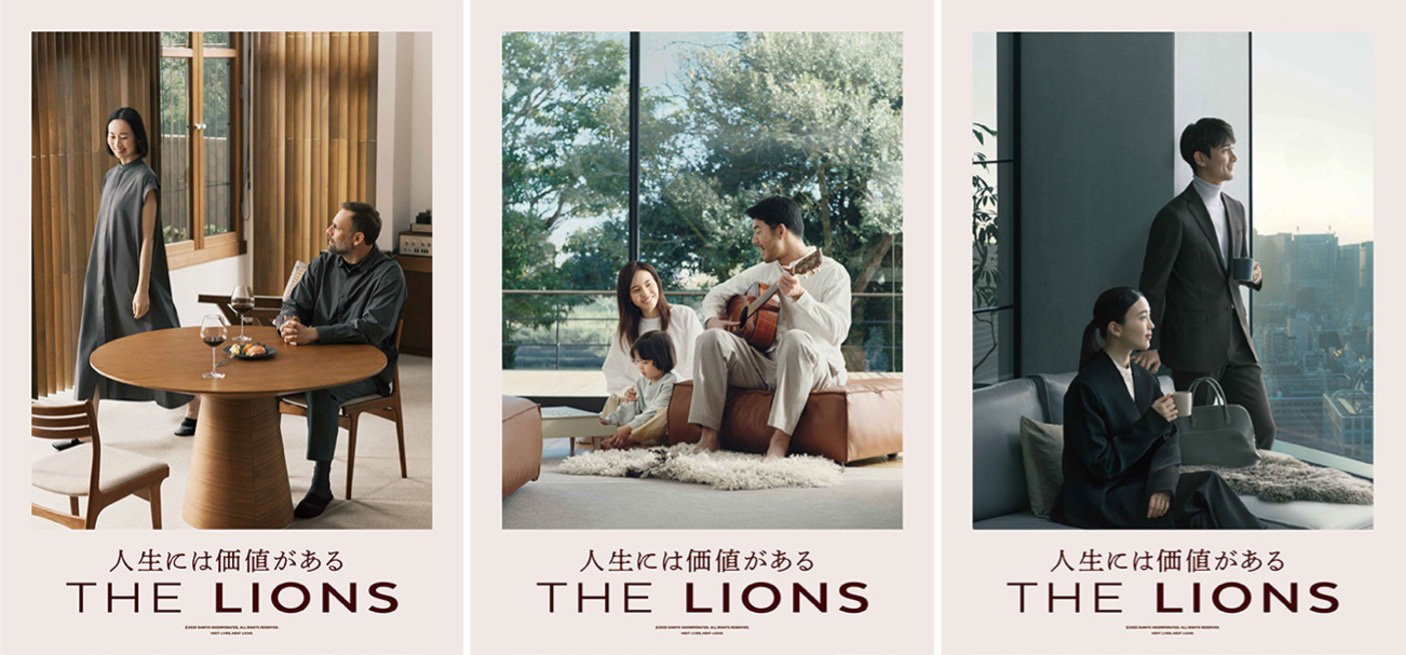
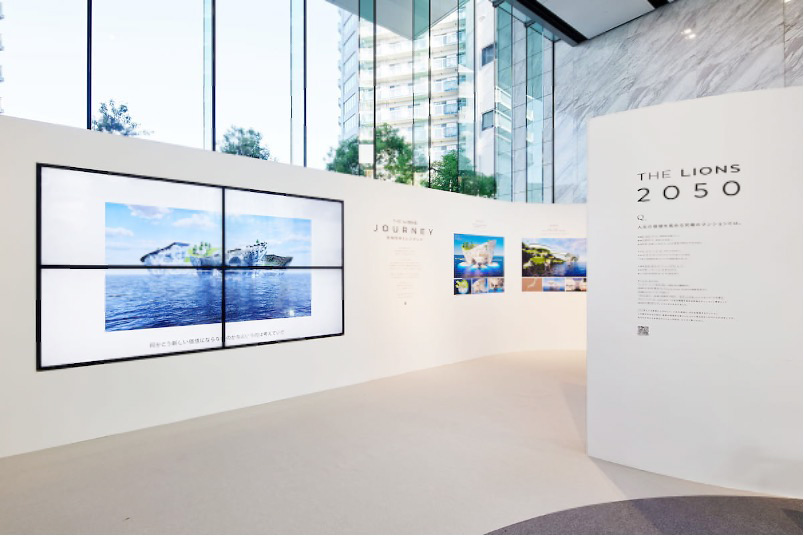
Daikyo, the Orix Group’s real estate division responsible for residential development, decided to rebrand its condominium brand in 2023, 55 years after launching its condominium business. The long-beloved “Lions Mansion” was refreshed as “THE LIONS.” The symbolic action chosen to mark this occasion was an exhibition at “DESIGNART TOKYO,” a festival of design and art.
At the 2023 DESIGNART TOKYO, they unveiled “THE LIONS JOURNEY: A Residence Venturing into the Unknown,” a mobile residence floating on the sea. In 2025, they presented “Relation Wall,” a living space concept that redefines the LDK (living-dining-kitchen) layout. Neither of these initiatives was merely a publicity stunt; they have led to a renewal of the brand image, a shift in employee mindset, and even the promotion of commercialization.
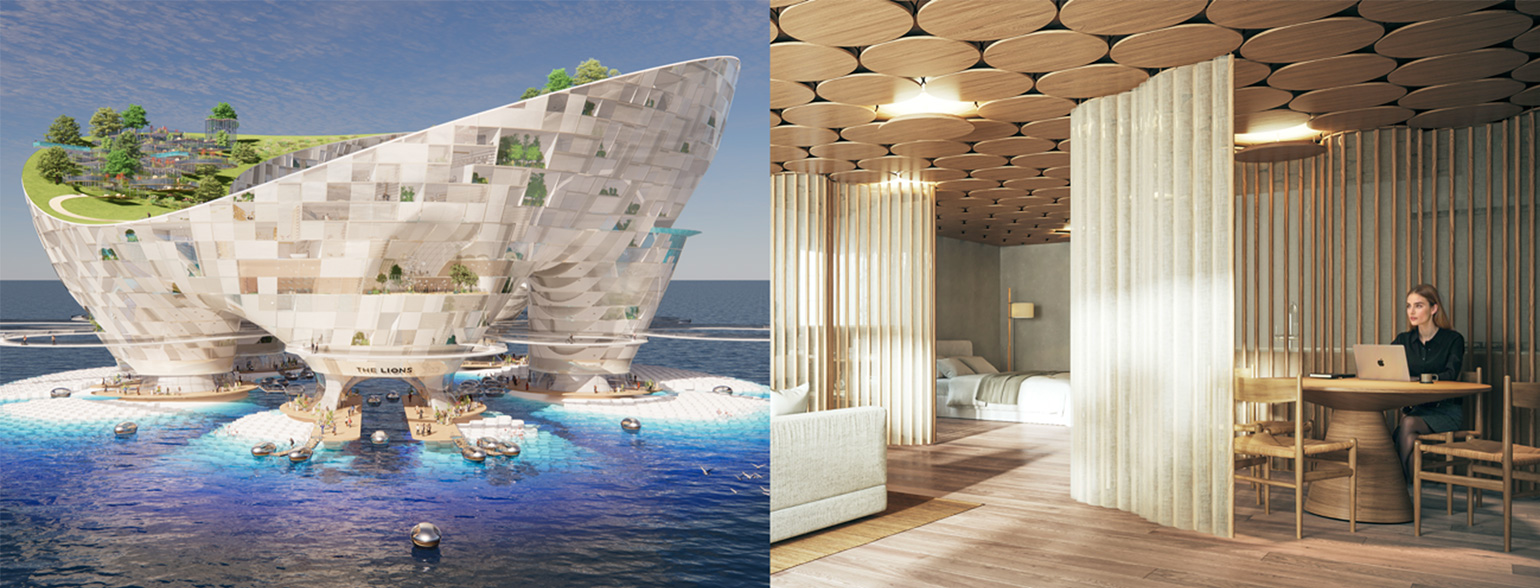
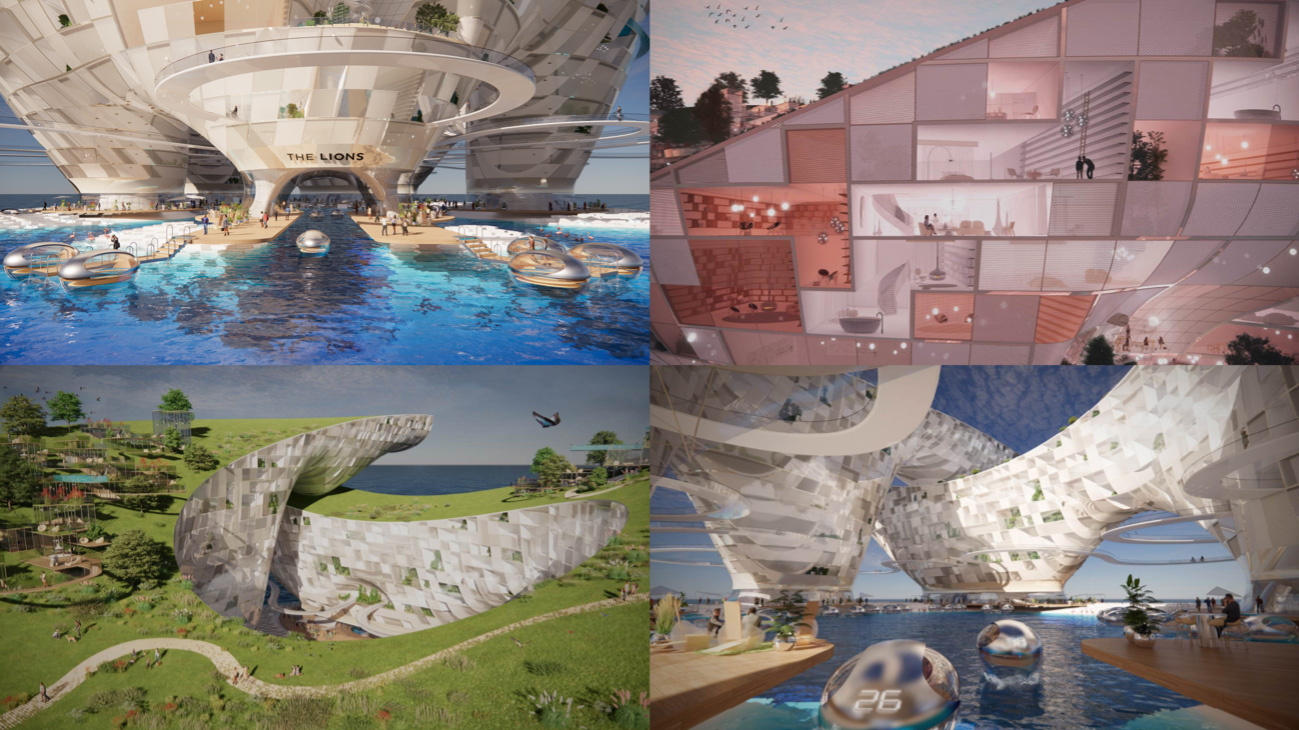
Left: “THE LIONS JOURNEY: A Residence into the Unknown” Right: Main visual for “Relation Wall.” Both innovative apartment concepts were unveiled at DESIGNART.
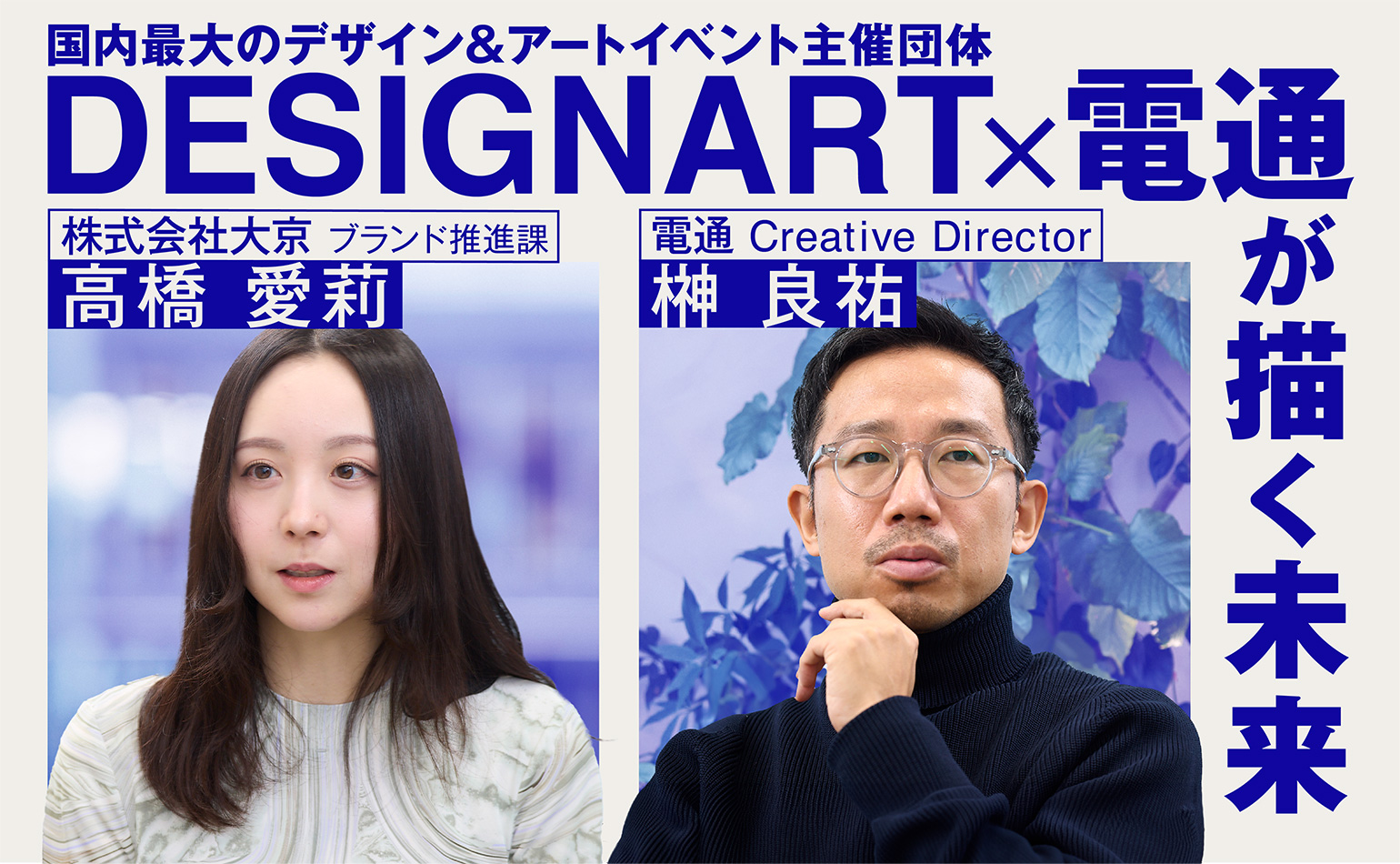
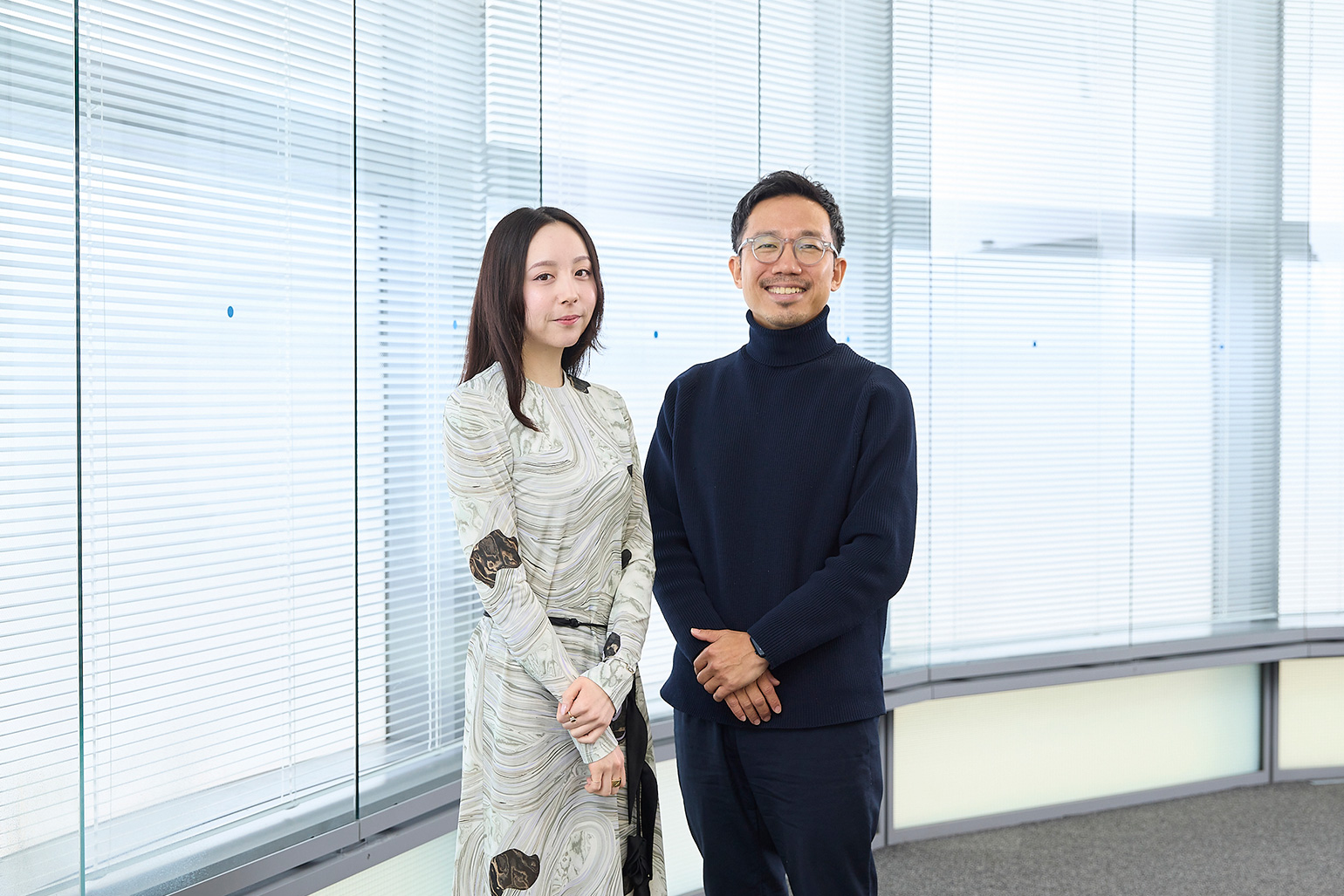
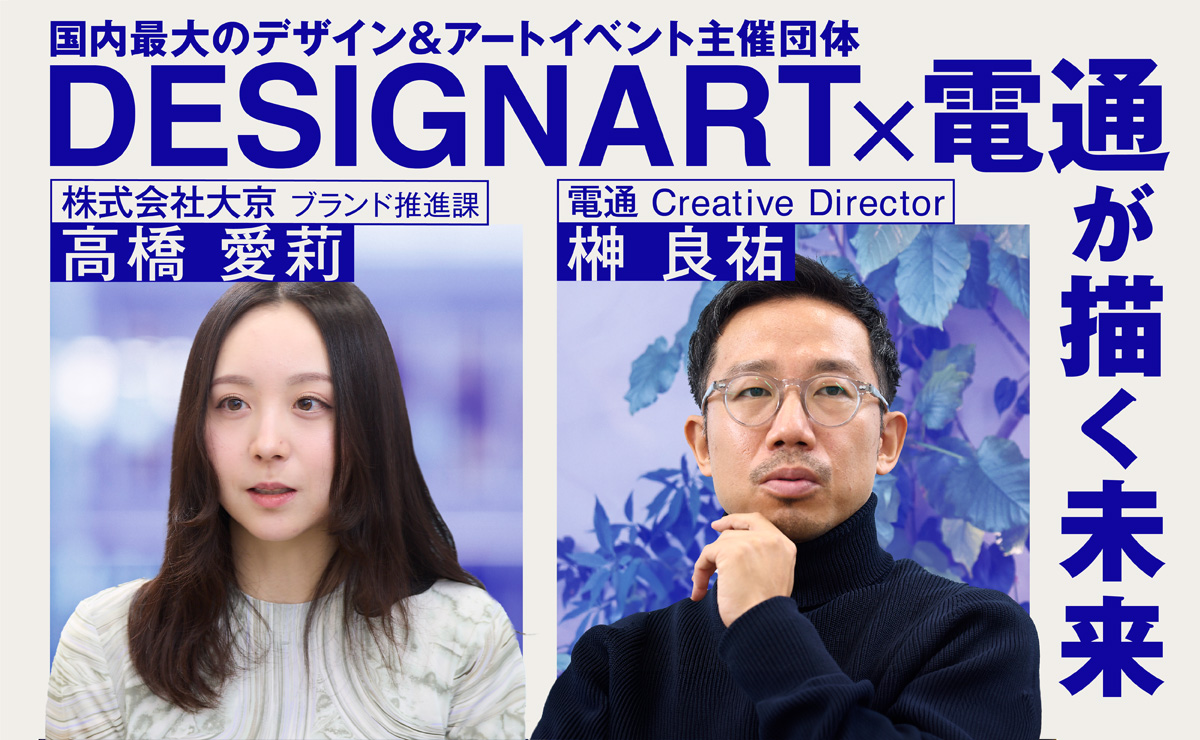
Why did exhibiting at DESIGNART TOKYO lead to such a significant impact on employees and the business? We spoke with Airi Takahashi of Daikyo, who spearheaded the rebranding, and Ryosuke Sakaki, Creative Director at Dentsu Inc.
DESIGNART TOKYO is a design and art festival launched in 2017 that attracts a total of 250,000 visitors. Talented creators from around the world in diverse genres—including interior design, art, fashion, technology, and food—gather to hold exhibitions at various locations throughout Tokyo. The overarching concept is “INTO THE EMOTIONS ~The Gateway to Emotion~.”
――What was the background behind the rebranding of Lions Mansion?
Takahashi: The biggest reason was changes in the market environment. The condominium market is becoming increasingly oligopolistic, and competition is intensifying. If we compete solely on specifications, our products will eventually become commoditized. That is precisely why we want to be a condominium chosen for our brand philosophy. That sentiment was the starting point for this rebranding.
Another important factor was the internal atmosphere. When we conducted an internal survey, we found that while 90% of employees felt there were issues with the “Lions Mansion” brand, an equal 90% also felt pride in and affection for the brand. There were challenges, but it was deeply loved. Seeing this situation, we felt that now was the time to make changes to help the brand grow further, so we consulted with Dentsu Inc.
Sakaki: When I first heard about this, I felt it would be a significant challenge. Since this is a representative brand that has helped shape Japan’s condominium culture, the impact would be substantial. Moreover, there was a positive desire for change among the people at Daikyo. That is precisely why we decided not to make this a top-down decision, but to proceed carefully while involving all employees. We believed that was the kind of rebranding we needed.
The answer to the brand lies within the employees
――How did you go about this rebranding process that involved all employees?
Takahashi: The first step was to work with Daikyo employees to consider and visualize “what kind of homes we want to build in the future” and “what kind of people we want to live there.” We shared the new target profiles and ideal home concepts that emerged from this with all employees, gathered feedback, and refined them. It took time, but I believe that carefully building upon this process was crucial for employees to truly take ownership of the brand.
Sakaki: I believe the answer to the brand lies within our employees. It’s not something creators simply invent on their own; the core lies in the genuine thoughts of each individual working here. “This is the kind of apartment we really want to build,” “We want people like this to live here.” I placed great importance on making the workshops a space to draw out those genuine feelings.
Takahashi: As we held repeated company-wide workshops, the outline of our target brand became clearer, guided by words and example images. For instance, by deepening our discussion on our new target demographic—the “power couple segment”—a new customer profile emerged: the “creative couple,” which differs significantly from the traditional Lions Mansion. Through these discussions, it became increasingly clear that our employees had a genuine desire to change.
Advertising materials were created based on the vision the employees themselves aspired to.
Sakaki: Through these discussions, we ultimately arrived at THE LIONS’ brand statement: “Life has value.” This phrase embodies our desire to be a brand that not only builds high-performance apartments but also enhances the value of our residents’ lives. However, simply proclaiming a vision isn’t enough for it to take root. We needed to enable everyone on the team to think about what “condominiums that enhance the value of life” actually mean in concrete terms and how that connects to their own work.
Takahashi: That’s why we launched the “DAIKYO NEXT ONE PROJECT.” In this project, we established a cycle of (1) input, (2) output, and (3) dissemination. First, we learned from experts and creators; then, in employee workshops, we considered “what constitutes a condominium that enhances the value of life” and gave shape to those ideas; and finally, we shared them with society. The platform we chose for this dissemination was DESIGNART TOKYO.
A great vision is created through imagination × expertise
――How exactly did you proceed leading up to your exhibition at DESIGNART TOKYO?
Takahashi: We started by defining the question: “What is the ultimate apartment that enhances the value of life?”From there, we broadened our perspective through input from experts and held repeated discussions with our employees about our ideal vision of a home. Through this process, three key elements emerged: “continuously encountering the unknown,” “having diverse spaces to call home,” and “living in harmony with nature.” Using these as a starting point, we imagined the condominium of the future and ultimately arrived at the concept of “THE LIONS JOURNEY: A Residence That Travels into the Unknown.”
THE LIONS JOURNEY: A Residence Embarking on the Unknown Project Video
Sakaki: For our discussions, we set the timeline to the year 2050. This is because, when viewed from a short-term perspective, we inevitably become bound by industry conventions and technical constraints, making it difficult to envision a free and compelling vision. On the other hand, simply daydreaming wouldn’t lead to grounded results, so we also placed great importance on thoroughly incorporating architectural trends, future megatrends, and insights into well-being.Furthermore, with the cooperation of architect Keisuke Toyoda, whom DESIGNART introduced to us, we refined the realism of the living space down to the finest details.
Takahashi: During the employee workshops aimed at generating ideas, many very innocent suggestions emerged, such as “I want to switch seasons” or “I want to change the view.” Dentsu Inc.’s creators and Mr. Toyoda carefully picked up on each of these ideas one by one, and as a result, they elevated them into a concept that overturns the very notion of real estate: “an apartment building that continuously moves across the ocean, allowing residents to live while touring various locations.”
Sakaki: I believe these unique ideas took shape because we were able to refine the vision’s concreteness together with the creators.If a vision lacks concreteness, every company ends up with a similar vision of the future. Especially in the age of AI, it’s easy to generate plausible-sounding outputs, but that alone creates a strong sense of déjà vu and doesn’t reach the level required to communicate a company’s unique vision. By partnering with a highly specialized creator like Mr. Toyoda, I believe we were able to create “THE LIONS JOURNEY: A Residence Venturing into the Unknown”—a proposal that successfully balances both ambition and practicality.
A vision for a 2050 apartment complex created in collaboration with architect Keisuke Toyoda. The design was detailed not only in terms of the exterior but also in the interior spaces, common facilities, residents’ lifestyles, and environmentally conscious design.
Exhibiting at DESIGNART TOKYO stimulates the DNA of our employees
――Please tell us why you chose DESIGNART TOKYO as the platform to present “THE LIONS JOURNEY: A Residence into the Unknown.”
Takahashi: Our goal was not merely to propose housing amenities, but to reexamine “future prosperity” itself, taking into account changes in people’s values and the environment. That is precisely why, rather than communicating solely within the real estate industry, we wanted to share our vision in a space where various perspectives—such as architecture, art, design, interior design, and culture—intersect. I believe DESIGNART TOKYO was a perfect fit as a place where we could share our thoughts and ideas with people from diverse backgrounds, not limited to the real estate industry.
――How was the response to your exhibition?
Takahashi: We received feedback from many different angles, not just within the real estate context. I feel that people viewed it not as the traditional image of Lions Mansion, but as a new, high-quality, and sophisticated image of THE LIONS.
In addition, the impact on our internal culture was significant. Daikyo has always had many employees with a “DNA of innovation.” Just as we were the first in the industry to introduce parcel lockers and automatic lock systems, we have a corporate culture of taking on new challenges. I believe that seeing our own exhibition at DESIGNART TOKYO stimulated that innovative spirit in our employees and served as a catalyst for them to start thinking of the new brand as something that truly belongs to them.
Sakaki: Seeing our brand on display for a discerning audience—just witnessing that scene at the venue—radically shifts employees’ mindset. It makes them realize, “It’s okay for our work to envision a future like this.” It functions as internal branding that engages the entire company.
From a Vision for 2050 to Implementation in 2030
――At the subsequent DESIGNART TOKYO 2025, you unveiled “Relation Wall.” How did that come about?
Takahashi: After announcing our 2050 vision, “THE LIONS JOURNEY: A Residence Venturing into the Unknown,” we decided to further refine the details of that vision. So, we focused on “living spaces”—which make it easier to imagine concrete daily life—and held an idea workshop involving our employees.
This led to the concept of “liberation from floor plans.” While many modern homes feature similar layouts, real life possesses a diversity that cannot be fully captured by standardized floor plans. With dual-income households becoming the norm and remote work on the rise, there are times when we want to retreat completely into our own private world, and other times when we prefer to remain loosely connected. We believed that the ability to design spaces tailored to individual lifestyles is essential for the homes of the future.
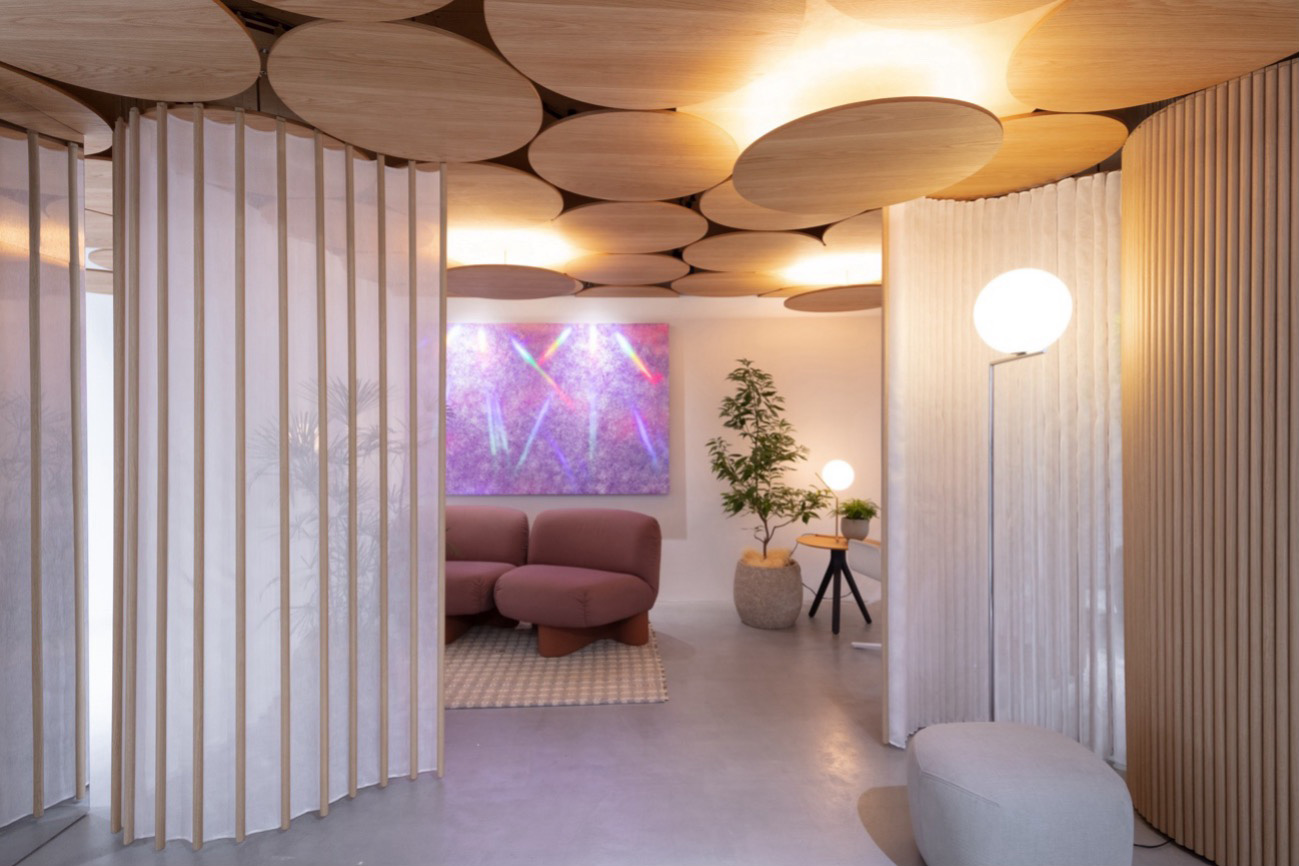
Sakaki: We wanted to liberate homes from the “LDK” concept born in the Showa era and realize a lifestyle with gradations. From that idea came the concept of the “Relation Wall,” a movable partition. By moving the walls—which previously separated people—according to the situation, we aim to design the relationships between people themselves. By changing the element of “walls,” which occupy a large area even within a condominium, we aimed to, so to speak, reinvent the condominium.
To implement “Relation Wall,” we collaborated with architect Yuko Nagayama, who was introduced to us by DESIGNART. What was important here was teaming up with someone whose philosophy and approach aligned with this project. We had heard from the team at DESIGNART that Ms. Nagayama had actually implemented a space with movable walls in her own home, so I believe she was an excellent fit as a partner to create Relation Wall together.
Relation Wall Project Video
The empathy gathered at DESIGNART TOKYO became the driving force behind the implementation
――What kind of response did “Relation Wall” receive?
Takahashi: At the venue, we heard many people say, “I want this wall in my home too.” Going forward, we plan to further validate the technical aspects while working toward a concrete implementation around 2030.
Sakaki: The Relation Wall had already reached a level of completion where it wouldn’t have been out of place to release it right away. Once the resolution gets that high, a sense emerges within the company that “we can seriously move forward to make this a reality.” I believe this is a crucial point.
By presenting at DESIGNART TOKYO, we gauge society’s reaction. That reaction, combined with the product’s level of completion, then drives momentum within the company. A project that began under the leadership of the Brand Promotion Department progresses toward implementation by engaging other departments and even senior management. I believe this process is what gives birth to groundbreaking businesses and products.
If you approach a project with product development as the sole objective from the start, it’s easy to get bogged down by constraints. However, once you’ve envisioned a bold, forward-thinking concept and gained public resonance, the organization becomes more willing to move toward realizing it—even if the idea is unconventional. This enables vision-driven business development.
We exhibited a prototype of Relation Wall at the main venue of DESIGNART TOKYO, where it received a tremendous response.
Takahashi: Additionally, the fact that Relation Wall won the “iF DESIGN AWARD,” one of the world’s three major design awards, has helped boost motivation within the company. The judges highly praised the concept itself—a “wall that designs relationships.” Realizing that our company’s vision and product are capable of being recognized at a global level has given us great confidence, and I feel it will serve as a tailwind for us as we move toward implementation.
――Finally, could you share a few words for those considering using DESIGNART TOKYO for rebranding or business development?
Takahashi: I believe DESIGNART TOKYO is a unique platform where you can engage with exhibitors and visitors from a wide range of fields. By utilizing this venue and seeing the ideas generated in workshops shared with society, employees can gain a great sense of accomplishment.
For companies contemplating new brand possibilities or the future of their business, I believe DESIGNART TOKYO is a valuable venue that can be utilized for internal branding—not just through exhibiting, but by incorporating the entire process.
Sakaki: I believe we’re now in an era where it’s difficult to differentiate ourselves simply by making the “right” products. It’s becoming increasingly important to focus not just on technology and specifications, but also on aesthetics, sensibility, and the questions a company asks itself. DESIGNART TOKYO is one of the few places where we can pose those questions to society.
The venue brings together people from diverse backgrounds—from companies proposing cutting-edge technologies to traditional craftspeople, designers, and artists. When such a diverse group comes together, unexpected chemical reactions occur, giving birth to something new. I believe that simply participating in such an event can serve as a catalyst to move your brand or business forward. If you’re a company looking to make a change, I’d be delighted if you’d reach out to discuss it with us.
Business Management Division, Business Planning Office, Brand Promotion Section
Section Chief
Since joining Daikyo, I have gained extensive practical experience across the housing business, including product development, architectural planning, interior design, and sales. Currently, with a focus on the brand domain, I am driving the redefinition of a brand’s raison d’être and concept while re-examining the relationship between the business and consumers. Through the development of expressions that span products, spaces, experiences, and communication, I am actively creating new value for brands.
Sakaki Ryosuke
Dentsu Inc.
クリエイティブ・ディレクター
Joined Dentsu Inc. as an art director. Handled advertising campaigns for a diverse range of companies. Currently, centered on the concept of “designing a company’s potential for leapfrog growth,” he connects companies with global creators—such as architects and artists—to practice brand design that generates new value. Founder of OPEN MEALS and Future Vision Studio. Part-time lecturer at the University of Tokyo. Recipient of numerous domestic and international awards, including the Good Design Gold Award and the iF Design Award.

 The Future Envisioned by DESIGNART × Dentsu Inc. [2/3]