Note: This website was automatically translated, so some terms or nuances may not be completely accurate.
 A resident of the marketing world peeked into the world of art. [16/16]
【Embodiment】
March is coming to an end once again this year. For many people, March is a season of new beginnings. Yet, I can’t help but feel that even discontinuous events and sudden changes are, in a way, part of a continuous flow. The Great East Japan Earthquake in March 2011 served as the catalyst that connected me, through Dentsu Inc.’s operations and organizational structure, to the “Tohoku Youth Orchestra.”
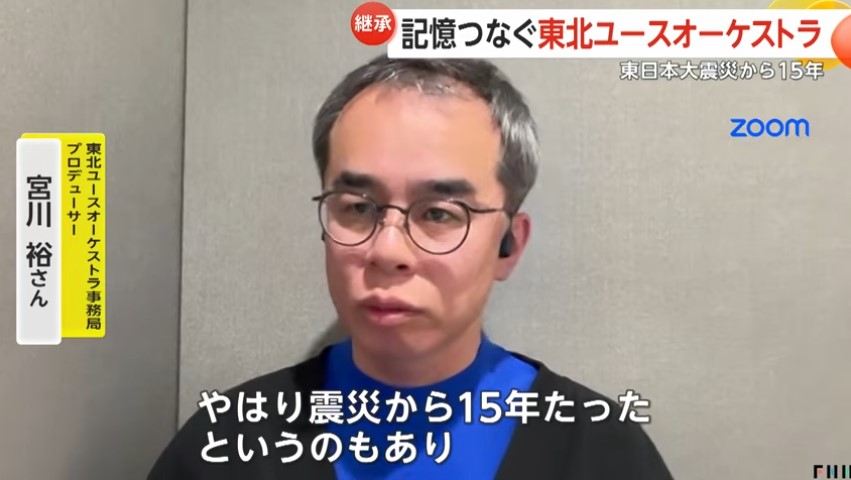
As part of our reconstruction support efforts, we launched the Tohoku Youth Orchestra in line with Ryuichi Sakamoto’s vision. Of course, I wasn’t the only one involved in its launch; through a series of connections, I’ve had the privilege of working closely with people from various companies right from the start. If Dentsu Inc. is a company that provides solutions to solve problems, then perhaps my own value will become apparent by providing a brilliant solution to the Tohoku Youth Orchestra—or by brilliantly solving social issues through the Tohoku Youth Orchestra.However, things haven’t gone quite that smoothly. Not at all. My own limitations became apparent very early on. Yet, the connection has lasted for over ten years. I find the systems of Dentsu Inc., Japanese society, and the world to be wonderful. Needless to say, Ryuichi Sakamoto’s presence is overwhelming in a different dimension.
I’ve decided to write about my recent visit to the Museum of Contemporary Art Tokyo to see the Ryuichi Sakamoto exhibition. It’s been about a year since that experience, and I hoped that by now I might be able to view it with a bit more detachment—or perhaps that my thoughts on the matter have had time to mature. I had decided on the specific events I would describe, but I was surprised, even to myself, that my writing ultimately landed on my feelings toward my own child.And while the Tohoku Youth Orchestra does not appear in the events I describe, when I finished reading what I had written, each and every member of the Tohoku Youth Orchestra came to mind. My gaze toward the Tohoku Youth Orchestra was no different from the gaze I cast upon my own child. Even in that sense—in how powerless or insignificant I feel in relation to them. Yet I love them. Even to that extent. It was unexpected to realize this through the act of writing this time, but at the same time, it felt very natural.
The Tohoku Youth Orchestra, the Museum of Contemporary Art Tokyo, and my own child. All separate, yet all connected. It feels a bit awkward to add my own commentary to my own writing beforehand, but please forgive me. And what is it that you all want to cherish?
◆
I got off at Kiyosumi-Shirakawa Station. My destination was the “Museum of Contemporary Art Tokyo.” A short flight of stairs, then an escalator, and then another flight of stairs to reach street level. A 360-degree view of a cityscape that doesn’t try too hard to stand out. Which way should I go again? I’ve been here more than once or twice, but I always end up like this. If the trees ahead mark Kiyosumi Garden, I’ll try turning the other way—I hope I can at least find the Fukagawa Edo Museum first.This museum has a small theater attached to it. It’s the venue where my child participates in a piano recital once a year. To a father who can’t play an instrument, it’s simply dazzling, and I admire the way they perform on that special stage, embodying something extraordinary. Sorry, that’s not quite right—it’s not about being a temporary “Star Mario”; this performance is telling me—and embodying—that it is, in fact, the culmination of everything you’ve earned, one step at a time. That’s why I respect you from the bottom of my heart.
Now, once you reach this sacred site, the rest is easy. Easy, but the distance to the museum is a hassle.At one point, I decided to think of “this stretch of just under a kilometer as a sacred path.” Before engaging with art, I prepare myself. “That’s actually a pretty nice concept,” I thought to myself. Step by step, deeper in. If I keep going straight, a Daily Yamazaki comes into view. That’s not my destination. But today, amidst the scenery of Kiyosumi-Shirakawa, that yellow and red logo feels strangely vibrant and provocative, and I find myself craving a daifuku stuffed with red beans.I’m about to dive headfirst into the permanent collection and the special exhibition—yet here I am, well before even reaching the museum grounds, and already my mind is wandering. Is this a boomerang thrown back at me for talking about “approach paths” and “concepts”? Ouch. In a cautionary sense, maybe I’ve managed to get myself somewhat in order.
◆
At the permanent collection exhibition, I unexpectedly came across a work titled *Untitled*. Come to think of it, I’d seen a tiny photo of it in the art history timeline in my art textbook. Donald Judd. I knew absolutely nothing about this American artist, but I had heard the term “Minimalism.” From that, I could vaguely form an image.
This piece, part of a series called “Stacks,” is said to be a highly symbolic work in art history. Ten metal-like boxes, each 23 cm tall, are mounted on the wall at 23 cm intervals, stacking up one on top of the other. If you do the math, the top reaches 4.6 meters.The handout I received at the museum offered some guidance on how to appreciate this minimalist art, noting things like “the elimination of the illusion of painting” and “this work extends not only across the wall surface but also broadly to the floor, including the space where the viewer stands.”
But my first impression upon seeing it was simply, “It’s huge!” I hadn’t imagined the “true size” of a work archived in a tiny photo in the chronology, so I was caught off guard. The overwhelming presence and texture of the actual piece. And, unsure whether I’d managed to grasp the academic guidance or had missed the point entirely, I found myself fixated solely on my own 170-cm frame.It’s so huge I have to look up at it. It looks so heavy—it must have been a real struggle to carry it all the way up there and install it. Is it my own standards, or am I simply bound by my own senses? Me, me, me. Even though I tell my own child every day, “Don’t just think about yourself,” the shell that shapes my tiny self is surprisingly stubborn, and I can’t easily break free from it.
◆
The special exhibition is titled “Ryuichi Sakamoto | Seeing Sound, Hearing Time.” There was a huge line of young people—hard to believe they’re from the YMO generation. I even saw an announcement on the museum’s social media about “entry restrictions on weekends.”
The many exhibits here were, in themselves, new and fleeting experiences, yet they also served as triggers to bring back memories.“TIME” at the New National Theatre, “water state 1” at YCAM Satellite A, “Forest Symphony” at the Sesshu Garden, “async - immersion 2023” in the basement of the Kyoto Shimbun building, and “Sensing Streams 2024 - invisible inaudible (GINZA version)” at Ginza Sony Park. A series of deeply personal and irreplaceable experiences.
As I walked down a corridor resembling a veranda where I could see “Sculpture of Mist,” the moment I entered the final exhibition room, something unbelievable caught my eye. It struck me deeply. There was Ryuichi Sakamoto, playing the piano. A live piano playing automatically, and in front of it, a 1997 image of Sakamoto projected onto a transparent screen. The movement of the keys and the movements of the semi-transparent Sakamoto playing the piano were perfectly synchronized. Sakamoto was definitely there. Even though I knew it was just a video.What on earth is this? What am I supposed to do? My emotions are bursting inside my hard shell, echoing chaotically. Waves with nowhere to go grow stronger and sharper, crashing indiscriminately against my insides. It hurts—it hurts so much that my vision blurs.
Is this *Beautiful Blue Sky*? I sit silently, staring intently at Sakamoto’s back and her right hand playing the keys. I see the sound. In contrast to the beautiful resonance and the beautiful installation, the state of my heart—invisible to anyone from the outside—is something I cannot show to anyone. But I also think that the people here now, and the 340,000 who have passed through here, might have harbored the same thing within themselves.
How long had it been? I stand up. It’s time to move on. Step by step. As I passed through the translucent screen, there was only the piano—without Sakamoto. There was only the piano, moving automatically and playing music. Ah, Sakamoto really isn’t here. Really, she isn’t. The exhibition’s finale, which confronts me intensely with the simultaneous presence and absence of “being there” and “not being there.”
Before the pandemic, I received a card from Mr. Sakamoto. Perhaps he had the impression that I was always rushing about, for it contained words of sympathy for my busy schedule. I picture Mr. Sakamoto writing it with his left hand.It was a tremendous honor. But I wasn’t working that hard, and I certainly couldn’t claim with pride that I’d been doing anything useful for society. A sense of unease came rushing over me, as if I were trying to rationalize that this honor was beyond my station. Even though I felt restless and uncomfortable, standing before the self-playing piano without its owner, I was left standing there alone, filled with nothing but a sense of guilt.
◆
Kiba Park, next to the art museum. Children are jumping rope. Can you make it to 20? 1, 2, 3, 4, 5, 6, 7, 8, 9… Are you out of breath? On the way home, “Huh? A piggyback ride?” Such moments have been archived in videos from long ago. Now I can’t even give a piggyback ride, let alone hold them in my arms. And the children have become far busier than I am.We don’t all go to the food court at the Kiba Yokado anymore.
I ask, “Have I shrunk a little?” but no, no—you guys have grown so much in the blink of an eye. Maybe I really have shrunk a bit, but emotionally, the connection hasn’t been broken. It’s okay.
Image by Satoshi Iwashita
Was this article helpful?
Share this article


Newsletter registration is here
We select and publish important news every day
For inquiries about this article
Author
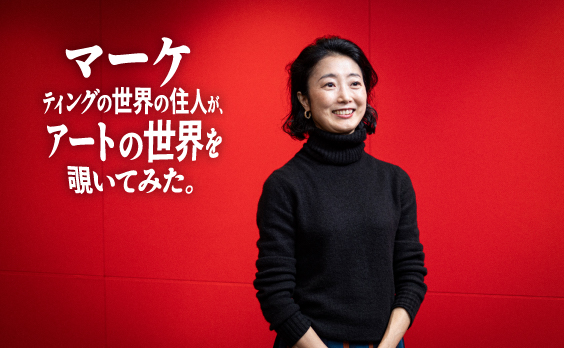
Yutaka Miyakawa
Dentsu Inc.
Marketing Division 5
Consultant