Note: This website was automatically translated, so some terms or nuances may not be completely accurate.
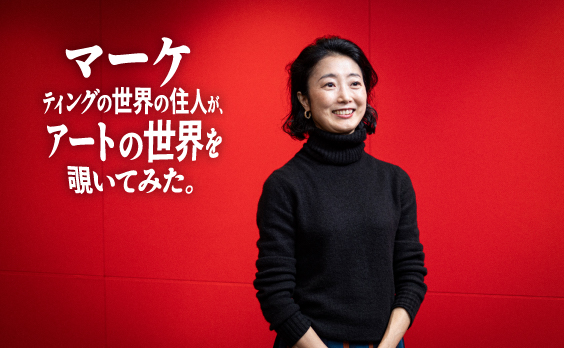
 A resident of the marketing world peeked into the world of art. [15/16]
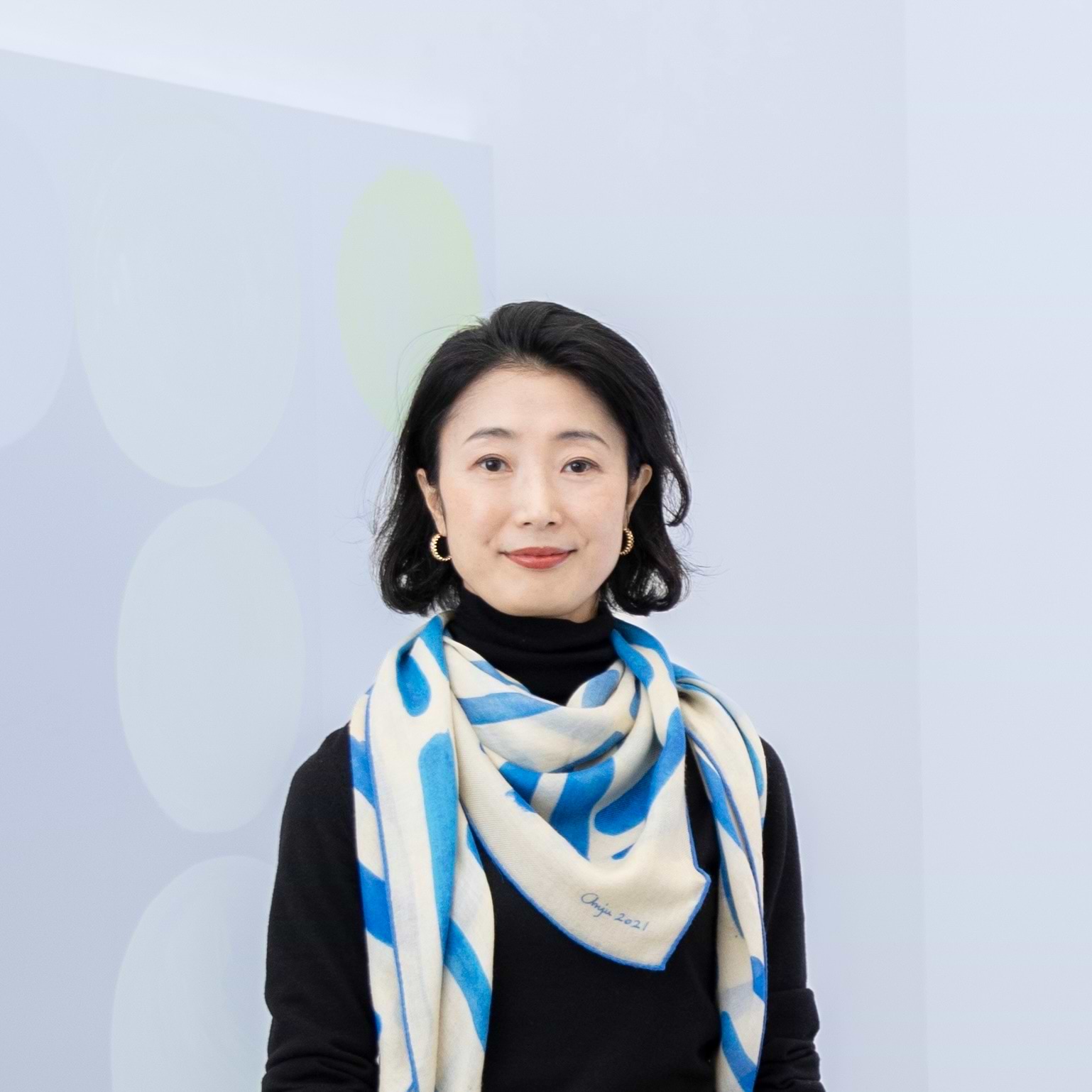
Akiko Shimizu
Akiko Shimizu
Shiseido Japan Co., Ltd.

Yutaka Miyakawa
Dentsu Inc.
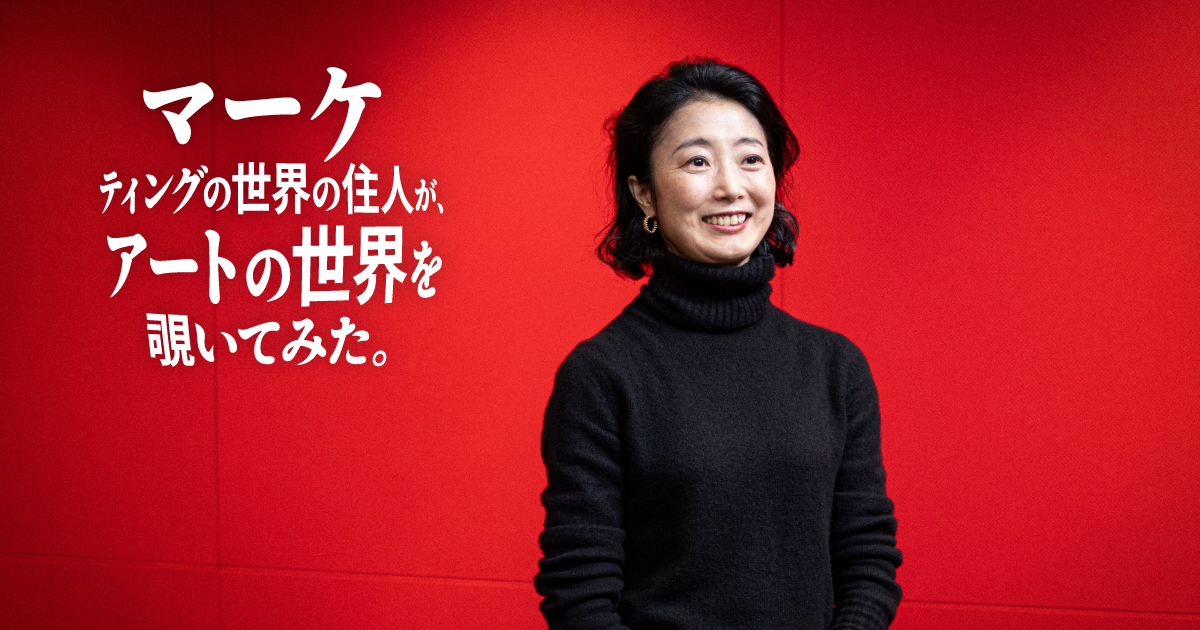
Dentsu Inc.'s Yutaka Miyagawa's series "A Resident of the Marketing World Peeks into the World of Art."
Akiko Shimizu frequently speaks at marketing seminars, and even in those settings, she mentions the usefulness of art. Why would a marketing professional cite art, often perceived as a different world? To get to the heart of this, I felt it necessary to understand the "person" behind Ms. Shimizu.
Cooperation: ShugoArts
◆Marketer × Art Collector?

Miyagawa: Ms. Shimizu is currently Vice President of the Marketing Department within Shiseido Japan's Clé de Peau Beauté Brand Division. She started her career at P&G. Since then, she has worked as a marketer for global brands like L'Oréal, Pernod Ricard, and Loro Piana under LVMH. Simultaneously, she also has the role of an art collector.During your time at Yomiuri Shimbun, you were even involved in organizing exhibitions. I couldn't help but think, "We've found the perfect person for this series!"
Shimizu: Thank you. Marketing and art are like two wheels for me. My involvement has taken various forms, including commissioning artists and collaborating with them while working as a marketer for a business company.
Marketing and art. It's a theme I myself want to explore anew this time.
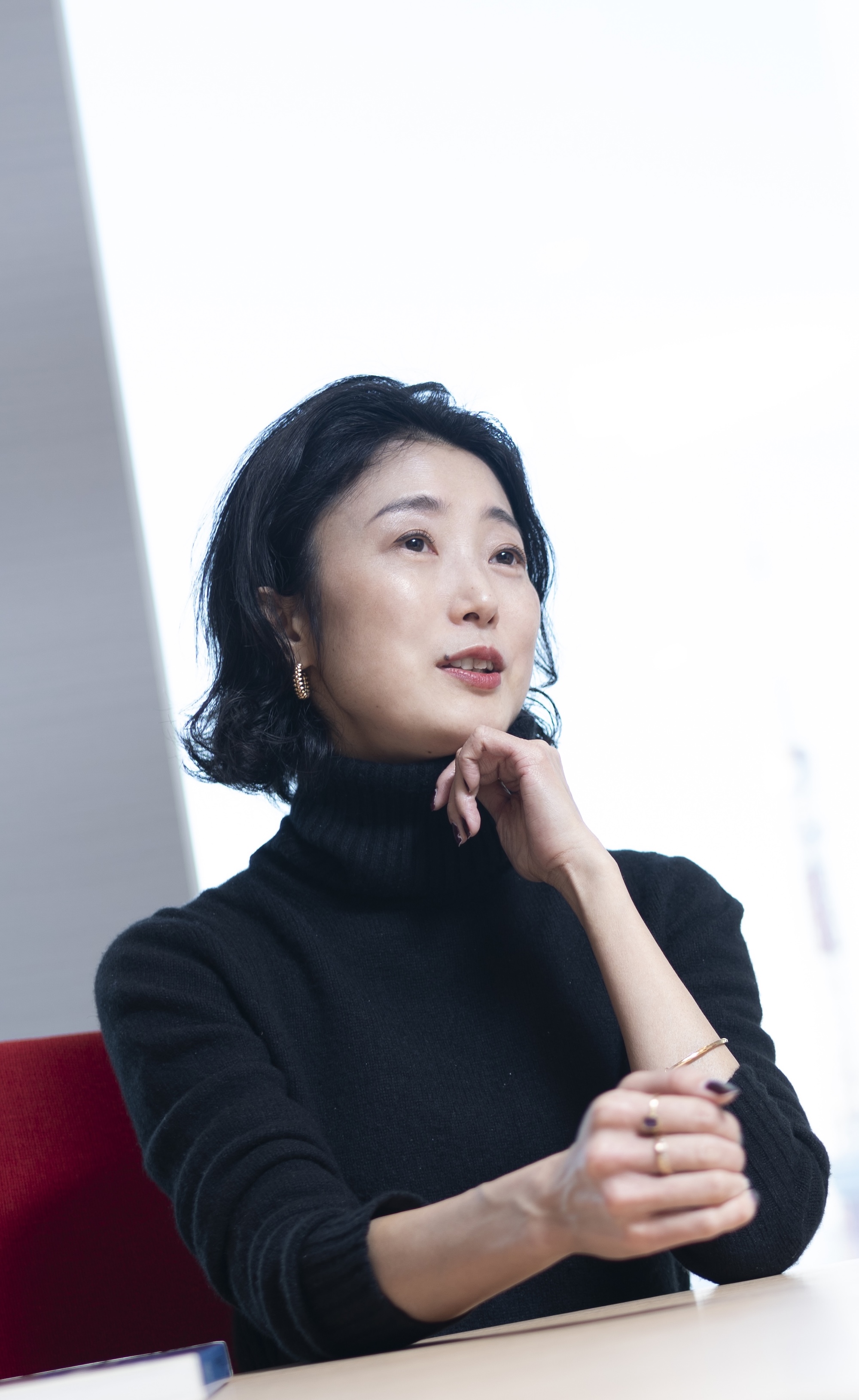
Miyagawa: So, where did your first encounter with art begin?
Shimizu: I lived in the US as a child, and my parents, who loved art and music, often took me to museums and concert halls. But as a kid, I had absolutely no interest in art. My parents laugh at my current situation, saying, "You talking about art?" (laughs).
I only started to appreciate the appeal of art during my university years. I happened to take Professor Yoriko Kobayashi's Western Art History class, which was really fascinating. I took it just to fulfill a general education requirement.
Miyagawa: What specifically resonated with you?
Shimizu: The realization that art is also something to be interpreted.I used to think art was just something you sensed as "beautiful" or "amazing," and I still feel that way to some extent. But through that class, I learned art also holds the joy of "trying to decipher it." What do the icons or attributes depicted in a painting signify? Where does that work fit within art history? I became drawn to art as something to "learn about" and "think about," including the approach of artists who make new proposals grounded in context.
Miyagawa: That's a major shift.
Shimizu: I also had an overwhelming "Wow!" experience during my student days. Seeing Van Gogh's "Wheatfield with Crows" at the Togo Seiji Museum back then was shocking. The moment I stood before it, I felt like I might be swallowed up by its power...I fell in love with Van Gogh and even traveled to Arles, France, to see the location that inspired "Café Terrace at Night" with my own eyes. It wasn't the safest area, but I was determined to see the "night café" at night, so I ventured out after dark. I also visited his grave (laughs).
I also love architecture. After joining P&G, I worked near Kobe, where there are many buildings designed by Tadao Ando, and I visited them all. That led me to visit Naoshima, where I became hooked on contemporary art.

Miyagawa: So as your connection with art deepened, what was your first purchase?
Shimizu: A print of Yayoi Kusama's yellow pumpkin. Prices weren't as sky-high as they are now, and while a Van Gogh painting was out of reach, contemporary art felt accessible even to someone like me, a regular office worker. Also, having art completely transforms a space's atmosphere; art resonates with space and architecture. I believe living with art enriches daily life and everyday spaces.
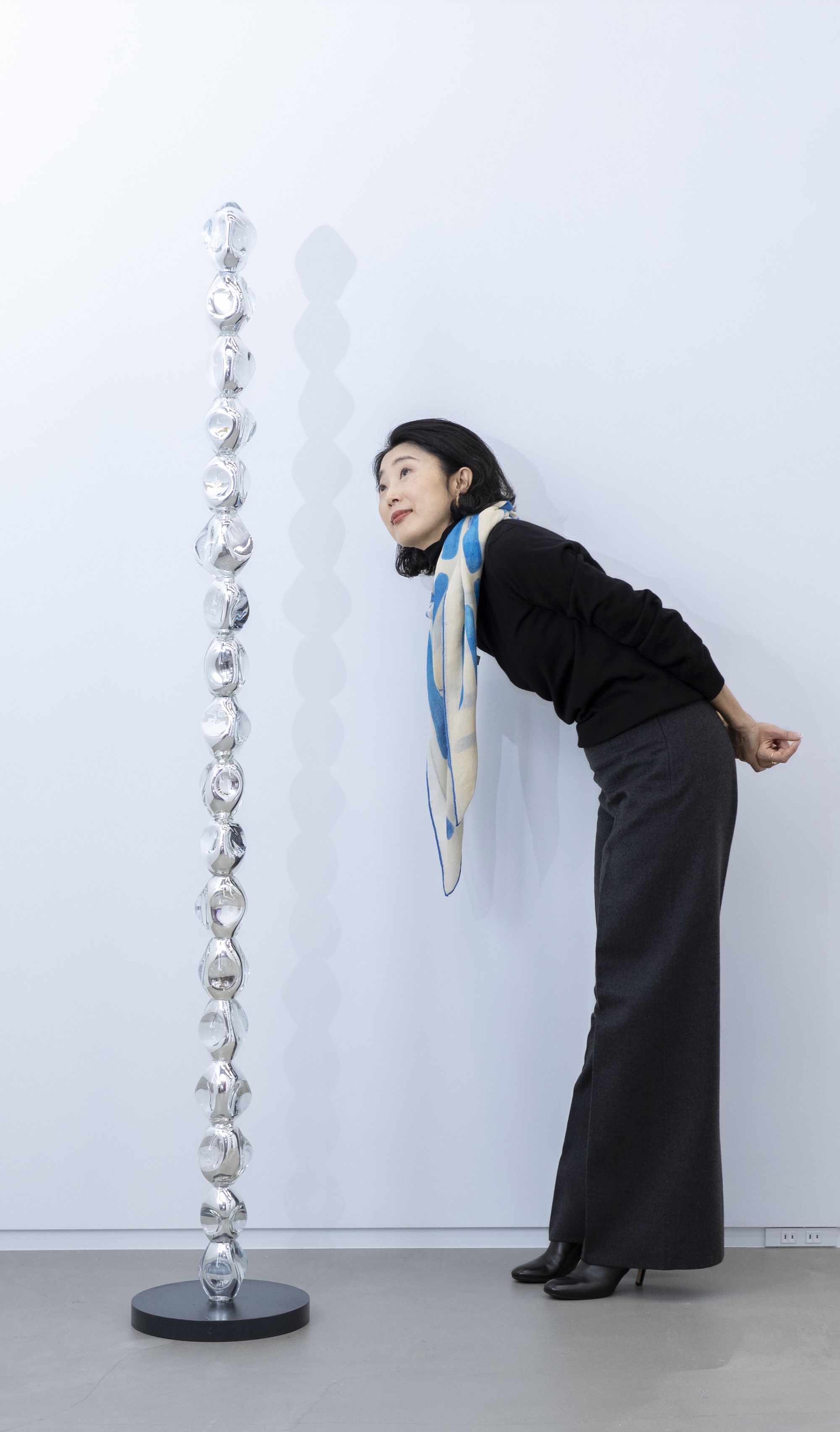
Miyagawa: This time, ShugoArts kindly provided the venue. They're exhibiting works by Ritsue Mishima and Ange Michele, both artists with whom you have deep connections. When did your relationship with them begin?
Shimizu: My first connection with Ms. Mishima was a professional collaboration when I was working on Perrier-Jouët. She is a very free-spirited person, and her unconventional ideas are captivating. I was also drawn to her personality and purchased her work.
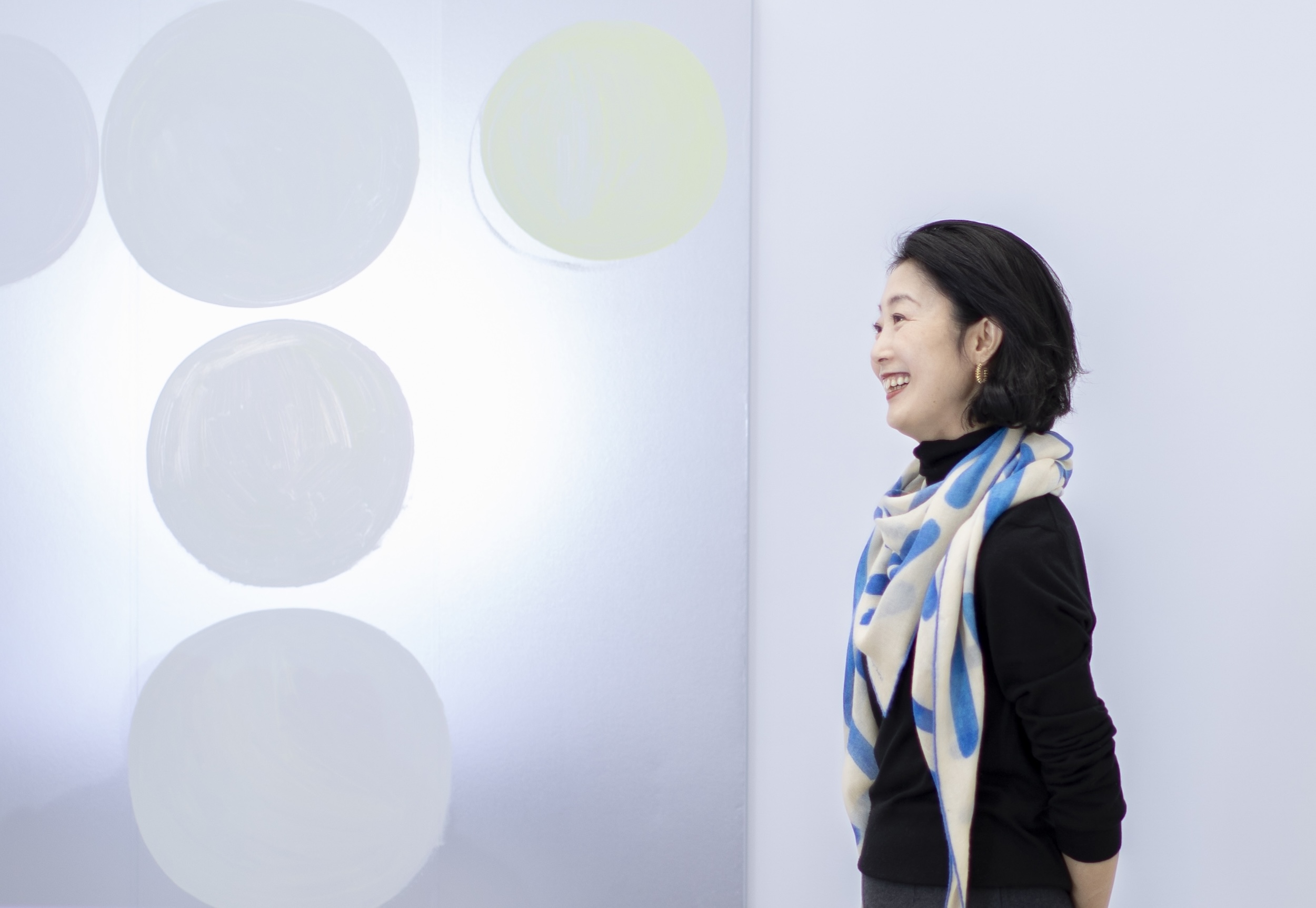
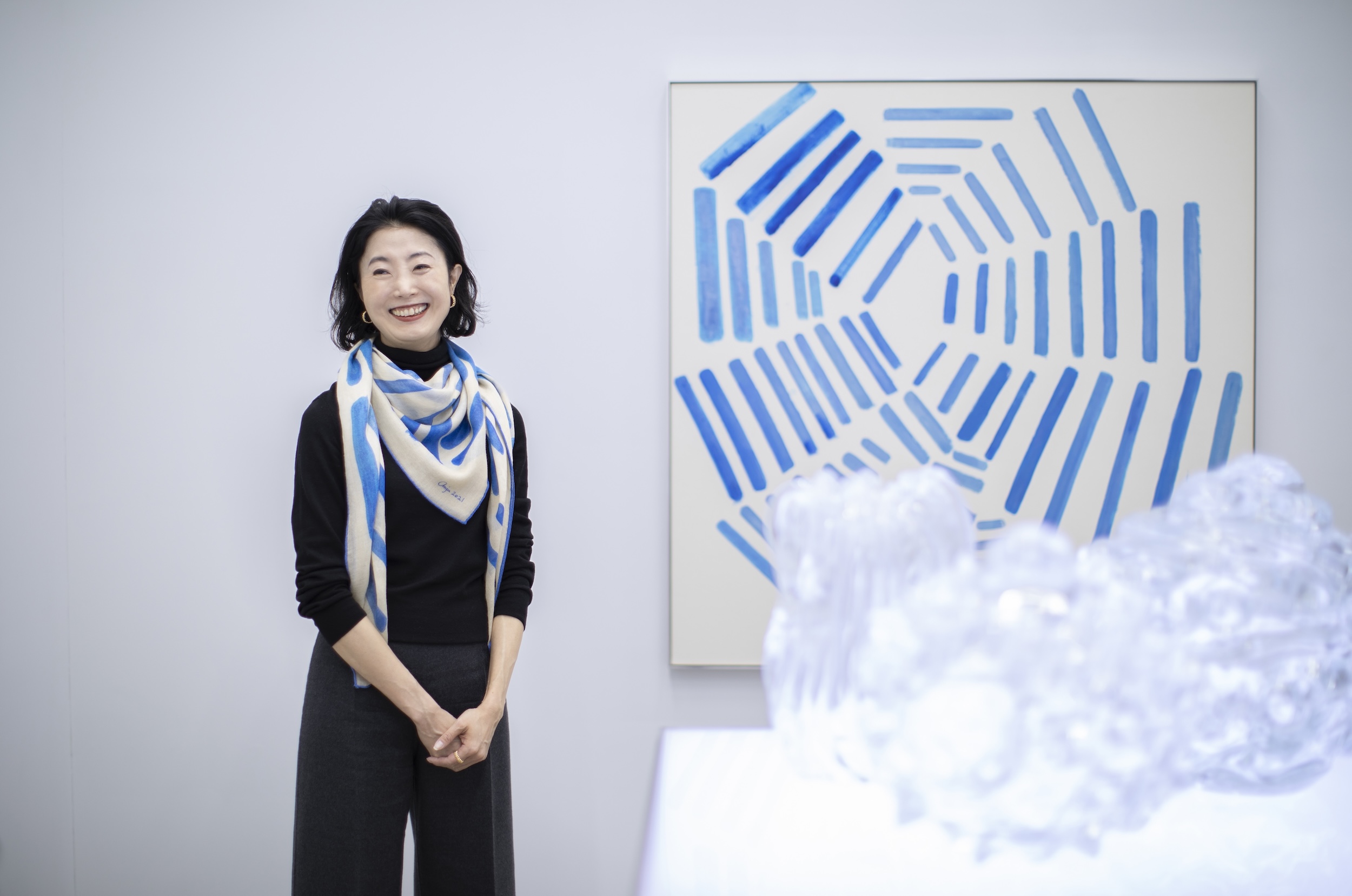
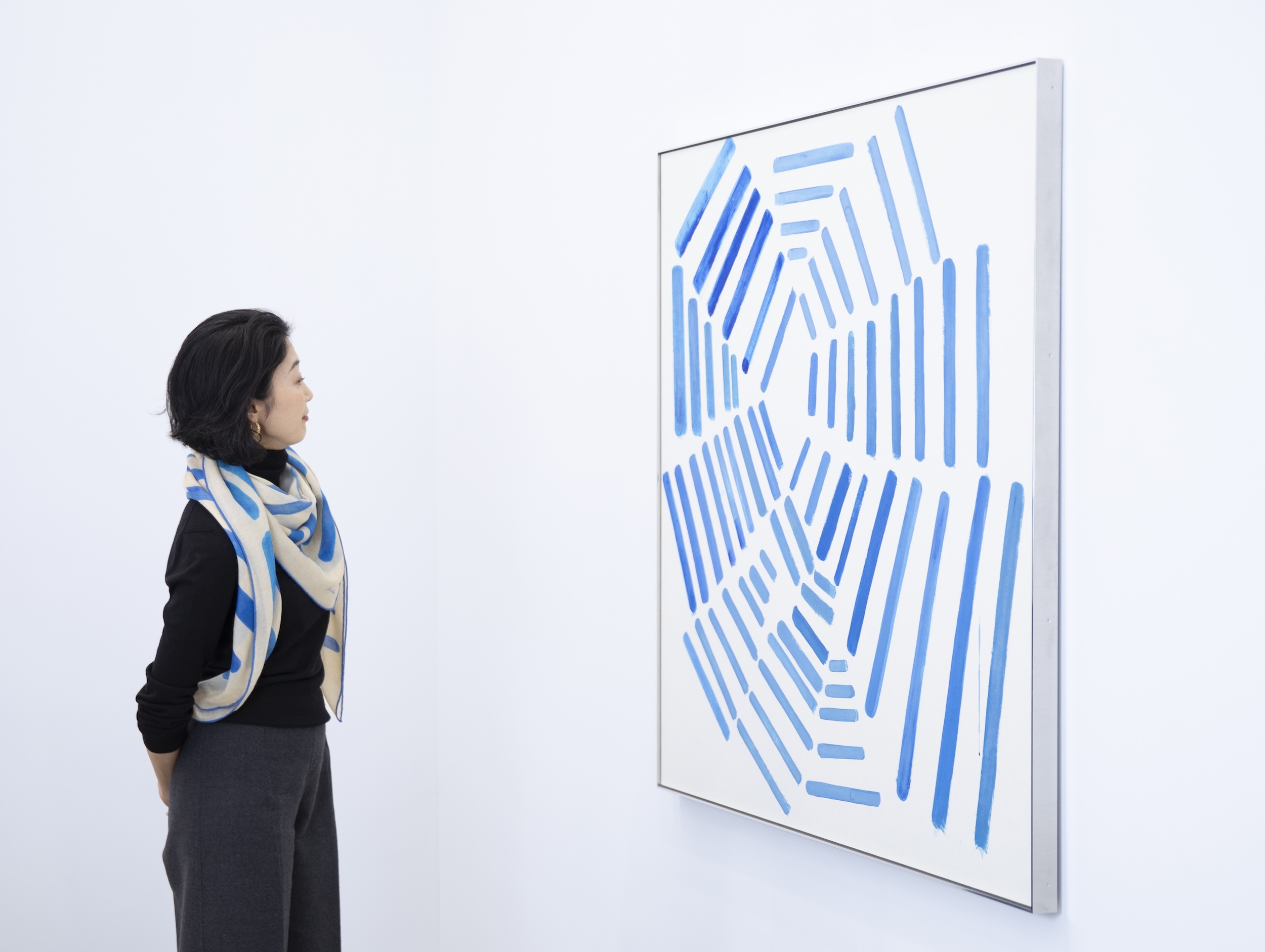
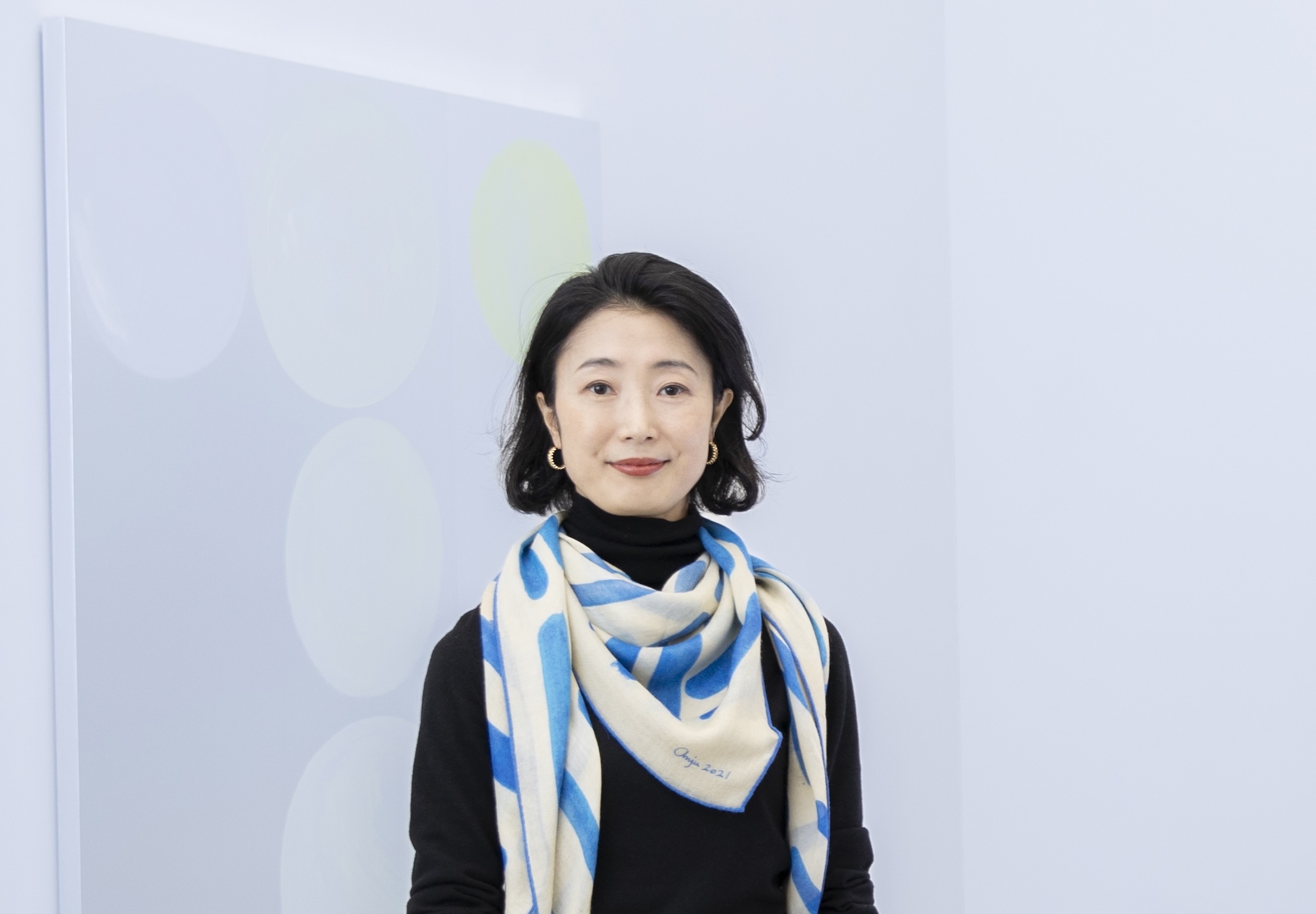
It was through Ms. Mishima that I met ShugoArts and Ms. Ange. I've also purchased some of Ms. Ange's work; I find the feeling of her painting freely, following her heart, truly wonderful.While at Loro Piana, I had the opportunity to plan collaborations with artists. I recommended Anju to the Italian CEO, and it came to fruition. One piece from the series created for that project, titled 'Ray 4', is also being exhibited here. Incidentally, the scarf I'm wearing today is actually a product developed from this series.
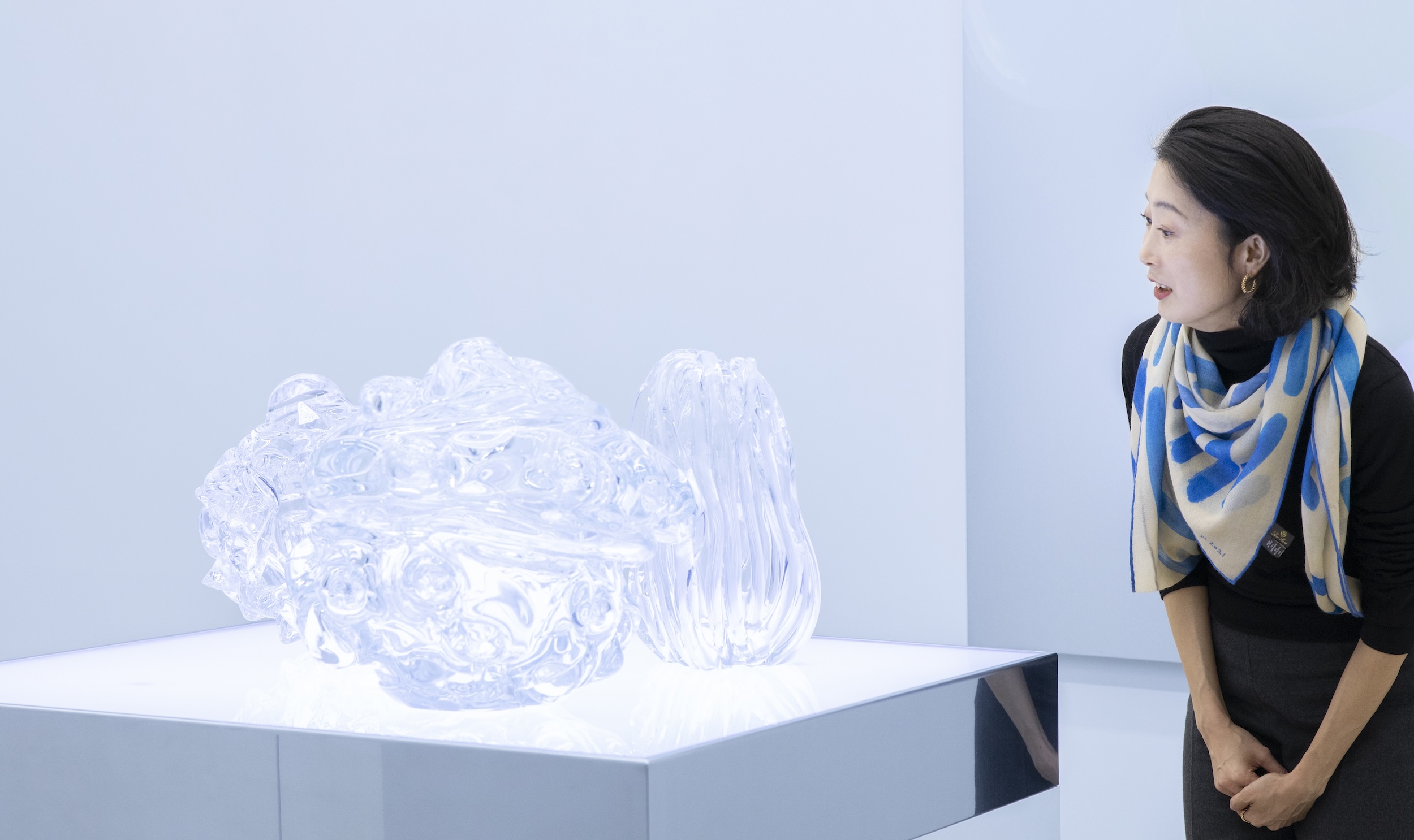
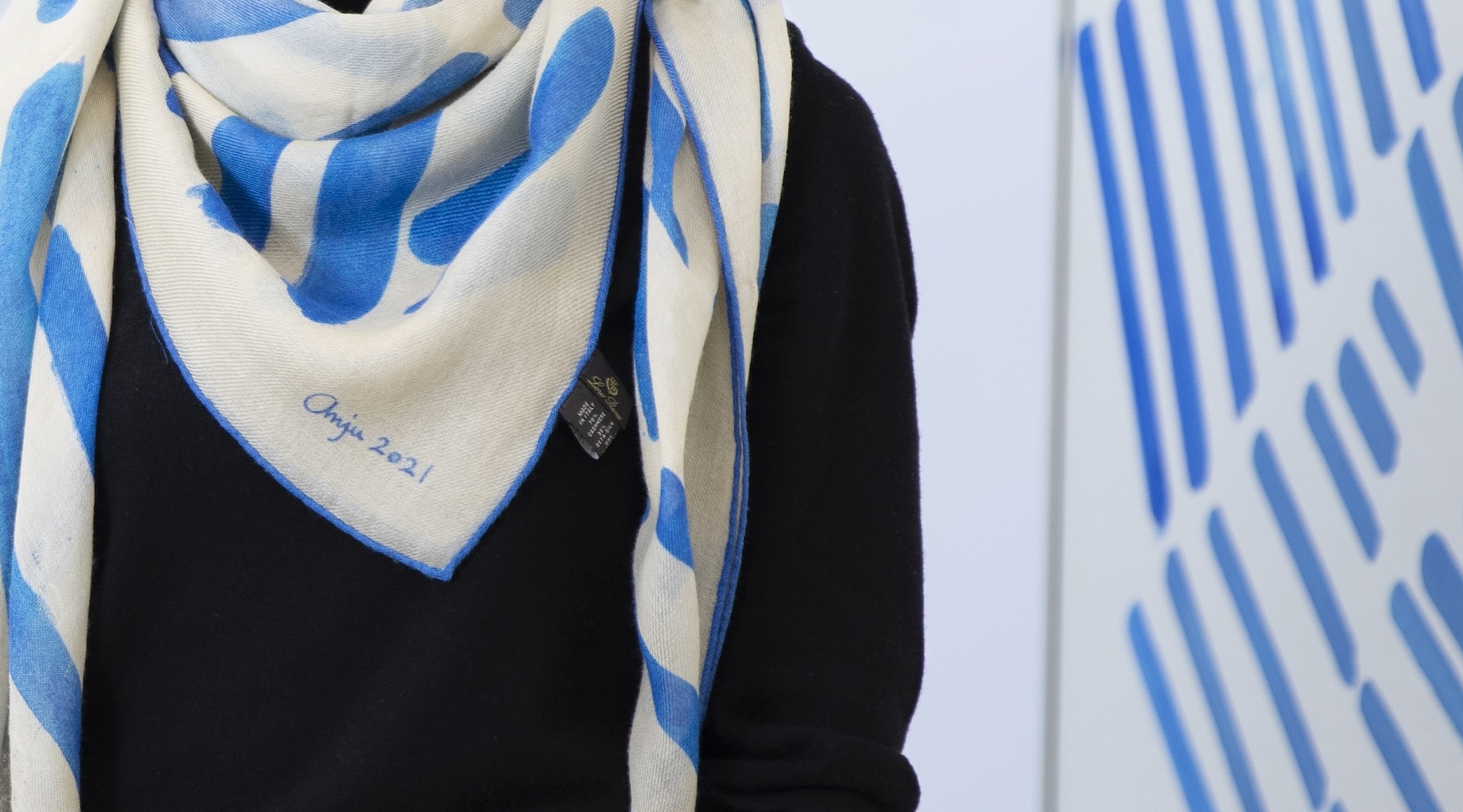
Miyagawa: So your connection with artists and their work actually led to professional opportunities. What do the pieces you've purchased mean to you, Ms. Shimizu?
Shimizu: In business, you inevitably get distracted by immediate concerns, right? The works by these two artists resonate deeply precisely because they're created with such pure intent. They quiet those distractions. Art is a source of inspiration for me. Also, as a collector, I strongly feel that purchasing works is a way to support the artists.
◆Layers of Connection
Miyagawa: Looking at your background, Mr. Shimizu, you didn't originally study art or marketing; you graduated from a law faculty, right?
Shimizu: Yes. But during my studies, I discovered the appeal of art, so while enrolled in law, I ended up getting my curator certification (laughs).
Miyagawa: A gift of serendipity, you might say. You were already a bit of an oddball back then (laughs). Going back a bit further, what about high school?
Shimizu: I attended a high school nicknamed the "Isolated Crazy Utopia" (laughs). It had many returnee students. When I visited for a reunion years later, the notices posted in the shoe lockers were in Japanese, English, German, Italian, French... multiple languages. It really struck me then how I'd grown up surrounded by such diverse values.
Miyagawa: After graduating from university, you joined P&G. But why P&G in the first place?
Shimizu: Honestly, it was pure chance. A friend who did an internship at P&G told me it was a really great company. I submitted my application, and the group discussion during the selection process was incredibly interesting. We discussed case studies as a team, like "If you were the manager of this brand, how would you develop your strategy?" Through that, I gained a real, tangible sense of what business is and what it means to become a working adult.
Looking back, P&G was an environment that suited me perfectly. It was full of unique individuals, and many of my seniors are still leading the way in marketing today. There was a culture back then that valued being different, and that felt comfortable. Also, they gave you autonomy early on. Whether the share of the product you managed went up or down, it was your responsibility. It was a very intense environment, but it was truly rewarding.
Miyagawa: As you built your career as a marketer at P&G, when did you start engaging with art professionally?
Shimizu: That happened after I moved to the Yomiuri Shimbun. My work at P&G was genuinely enjoyable. But I suddenly thought, "Wouldn't it be even more fun if the subject of such enjoyable work was art, which I love?" Right around the time I was pondering this, I opened the Yomiuri Shimbun and saw an ad for the Cultural Affairs Department recruiting staff. I thought, "This might be fate," and applied.
Miyagawa: Another stroke of serendipity.
Shimizu: They were only hiring one person. I told myself that if I didn't get it, it would mean God was saying, "You're not cut out for art." Then, surprisingly, I got the offer. I heard later that one executive, seeing me as an unusual and perhaps even bold candidate after four and a half years at P&G, said, "We need to be a company that can utilize talent like this," which led to my hiring.
After joining, I worked on exhibitions like the 'Matisse Exhibition' at the National Museum of Western Art. I even had the chance to communicate directly with Matisse's granddaughter. In terms of experiencing art, it was truly a rewarding job. I also got to be present when paintings shipped from overseas were unpacked for the first time – incredibly special moments.
On the other hand, precisely because I stepped away from the marketing world, I realized the true thrill of work where you carry the weight of a brand and shoulder responsibility. That's why I decided to return to the marketing world once more.

Miyagawa: Looking back now, how do you feel about your experience at the Yomiuri Shimbun?
Shimizu: Working on exhibitions made me realize anew that "someone is creating art history." I think that's a profoundly responsible and noble job. How to interpret the works, what aspects to focus on, and how to curate them into an exhibition. Looking back now, I see this has a lot in common with marketing.How do you identify and communicate value for a brand? Both curation and marketing fundamentally change the appeal conveyed based on the curator's or marketer's approach and editorial skill. That experience gave me a profound understanding of this. I see it as a kind of "foundation" that shaped who I am today.
Miyagawa: So it was truly an experience where art and marketing intersected.
◆Questions, Freedom, and Tangibility
Miyagawa: We've heard about your incredibly unique journey so far, Shimizu-san. It's something no one could ever replicate (laughs). Yet, despite its uniqueness, I also sensed it hinted at some "universal value." I'd like to delve a bit deeper into this concept of value.
Shimizu: Yes, when viewed through the lens of marketing, the value art brings is multifaceted, isn't it? There's the direct value as a strategy, like collaborations with artists, which can generate immediate business impact. Then there's the indirect value – the way it influences a marketer's values, sparks new ideas, or impacts the very essence of being a marketer.
Regarding direct value, artworks and artistic vision are powerful for clearly establishing or redefining a brand's worldview. In my practice, for example, when I was responsible for the shu uemura brand at L'Oréal, I collaborated with multiple artists, including Mika Ninagawa. When you want to change a brand's image or positioning, co-creation with art can send a very strong symbolic message.At Pernod Ricard, I was responsible for Perrier-Jouët, which had lower brand awareness than competitors and a weak brand image. So, we collaborated with artists like Ritsue Mishima, who embody the delicate craftsmanship and beauty of everyday life.Our goal was to define "what Perrier-Jouët is" within the battlefield of consumers' minds. It's about going beyond "communicating" to "communicating fully." The result is "effective communication." In this sense too, referencing art is an effective approach.
Miyagawa: That's textbook branding.
Shimizu: A standout example from another company is Louis Vuitton's collaboration with Yayoi Kusama over a decade ago. Back then, Louis Vuitton was the trendy brand everyone owned. Choosing Kusama at a time when the brand was nearing mass-market status, they positioned their products as standing on the same level as art. That messaging, that impact.I'm a bit of a contrarian, so I hadn't owned a single Louis Vuitton item before, but I ended up buying this collaboration product without hesitation (laughs). I think it was a perfect example of how art and brands can interact as a catalyst for opening up new customer segments.
Miyagawa: Now, regarding indirect value.
Shimizu: The term "marketing" is broad, so it can be interpreted in various ways, but I believe the essence of marketing is "presenting new value." It's not about the past, which can be spoken of through data, but about creating the future. There's no single right answer. It's about the "question." Keep questioning. I feel that art created the necessary thought process for that. What was the intention behind creating this work? What is it trying to say? Keep thinking about it.
Miyagawa: Facing situations with no clear answers. That's precisely the quality demanded of marketers today.
Shimizu: And I hold the belief that it's okay not to fit into molds, that it's okay to be freer. These days, there might be a tendency to want to take the shortest path, to demand the optimal solution. Personally, when I moved from P&G to Yomiuri Shimbun, and again when I moved from L'Oréal to Pernod Ricard, people tried to stop me (laughs).But art affirms that freedom is valid. What do you create from nothing? What questions do you pose to the world? It's all free. That's truly wonderful. And art history proves that freedom holds value.

Miyagawa: They say that to "break the mold," you first need to "understand the mold." In your case, Shimizu-san, it's interesting that you started your career at P&G—a company often seen as the epitome of structure, numbers, and logic.
Shimizu: I truly believe the sequence of my career was perfect. At P&G, for example, proposals had to be condensed into a single page. Structure and framework were fixed. If that foundation was flawed, your work wouldn't even be considered. Having my thinking and data handling methods rigorously honed through countless rounds of red-pen corrections from my superiors was invaluable.
In stark contrast, my French boss at L'Oréal was another wonderful person. He was pure aesthetic judgment. He could instantly decide "This one's good" or "This one's no good" from dozens of lipstick visuals. Of course, he was meticulous about the sound a cosmetic cap makes when closing. Even for internal documents, if the font or layout wasn't beautiful, he'd say he wouldn't read it (laughs).At first, I couldn't grasp what made them so different. But working alongside him, I gradually felt that kind of "perfect pitch" being installed within me. Eventually, when choosing one photo from several, our "This one!" moments aligned. I believe that came from the sheer volume of things I'd seen, the tangible experience of engaging with diverse materials, and the relentless repetition of deep contemplation.
Miyagawa: That's a kind of "physicality" cultivated since your student days, right down to making the effort to visit Van Gogh's "Café Terrace at Night" or his grave (laughs).
Shimizu: I place immense value on my own sense of reality and tactile experience. While information is readily available today with a simple search, physically moving around and seeing and feeling things with my own eyes—including the surrounding space—expands my senses. I believe having a wealth of these experiences in my repertoire helps me make leaps in my thinking as a marketer.
◆Creating Value
Miyagawa: You mentioned similarities between curators and marketers. Hearing you talk about "continuously questioning" and "prioritizing your own tactile experience," it strikes me that artists and marketers—often seen as worlds apart—actually share common ground.
Shimizu: That's right. As I mentioned earlier, the marketer I envision isn't primarily focused on improving based on the past or data. They are someone whose role is questioned on how well they can visualize value that isn't yet visible, someone who creates value for the future. From that standpoint, I think artists and marketers overlap significantly. However, the major difference is that artists output based on their own intrinsic motivation, while marketers are in the business of erasing themselves.They strip away all subjectivity and personal preference to make decisions as the brand. They create from the perspective of what is the right decision for the brand.
Miyagawa: Mr. Shimizu, you often use the phrase "taking care of" a brand, and you've also described yourself as "a translator, so to speak."
Shimizu: I believe taking care of a brand means valuing its "depth." We thoroughly consider why that brand should exist in society—its necessity—before even thinking about promotions.
Then, because I want to honor the background of the brand's creation and the founder's vision, I unravel that. For example, the Perrier-Jouët bottle features a floral pattern that was often perceived as merely cute. This floral design depicts Japanese chrysanthemums, drawn by Émile Gallé. Researching the historical context reveals it was during the height of Japonisme, sparked by the Paris Exposition, when an admiration for Japanese culture permeated the era's atmosphere.Perrier-Jouët excels with Chardonnay grapes, yielding a very delicate flavor. When Gallé tasted this Chardonnay, he likely associated it with the delicacy and elegance of Japanese culture. That's why I believe he chose the Japanese chrysanthemum, and then connected it to the Paris Exposition.For shu uemura, we had words left behind by the makeup artist, Mr. Shu Uemura. We immersed ourselves in reading them, thinking deeply: What would he have thought? What did he want to propose to the world?
Miyagawa: Is that also the case with Shiseido?
Shimizu: When I joined Shiseido, I visited their corporate museum in Kakegawa City. It houses the brand's historical archives, including handwritten proposals from the original team members. What was their vision when creating this brand? I let my thoughts wander there. Shiseido, among Japanese companies, has a deep appreciation for culture and has provided extensive support.For instance, in 1919, they established the Shiseido Gallery, Japan's oldest surviving gallery. The founding Fukuhara family has always prioritized cultural activities. That corporate ethos was one reason I chose to join Shiseido. Beyond its patronage, Yoshiharu Fukuhara, grandson of founder Arinobu Fukuhara, once said something along the lines of: "Art cultivates people, and those people grow the business."
Miyagawa: Speaking from the perspective of growing business and creating markets, I found myself wondering if learning from the dynamism of art history might be more valuable than referencing recent marketing success stories. I recalled how, when I met with Mr. Shimizu before, we got quite animated discussing Takashi Murakami's "Theory of Art Entrepreneurship."
Shimizu: I truly agree. Finding a convenient marketing success story and merely imitating its surface often proves utterly meaningless. To reiterate, I believe marketing is fundamentally about creating new value. Art history itself is the story of how new value was proposed to the world. Take Monet's "Impression, Sunrise," which gave birth to the term "Impressionism."That work presented a completely different way of depicting light in an era when realistic representation was considered the correct approach. I think marketing is the same. Our job is figuring out how to present new value to the world against the fixed notion of "cosmetics are supposed to be like this." Perhaps what happens is that after making proposals that spark debate and controversy, we find that we've created a new market.
Miyagawa: Like the story of Ms. Shimizu, who had decided she would never buy Louis Vuitton, yet ended up buying it unintentionally. It's discontinuous, or perhaps transboundary. That too is the power of marketing.
Also, from the perspective of "doing things thoroughly," I've come to see marketers as similar to artists.
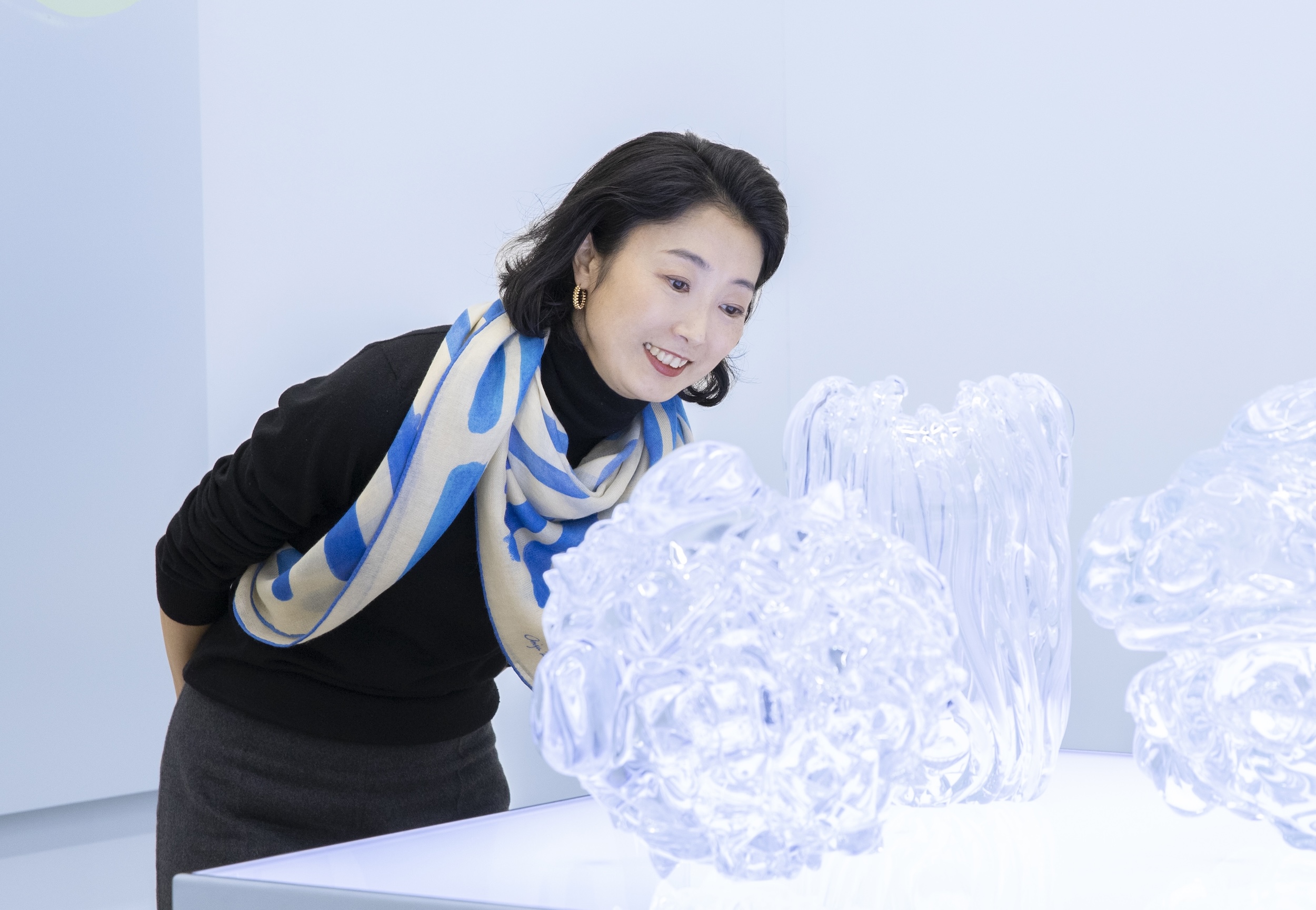
Shimizu: Simultaneously, instant decision-making and flexibility are crucial. For example, Mr. Mishima's glass works are created by artisans under his direction. Since glass hardens quickly, he must give instructions without hesitation—to those tough Italian artisans (laughs). Under this kind of "orchestration," the works Mr. Mishima envisions come to life.In business too, there are countless situations where you must make decisions while considering various factors, and with many people involved, orchestration becomes crucial.
Also, from an art collector's perspective, I've had experiences where, while I was hesitating whether to buy something, it ended up in someone else's hands... (laughs).
◆And Towards a "World Where Beautiful Things Remain"
Miyagawa: Tracing your experiences, Mr. Shimizu, I feel marketing and art resonate more deeply than they overlap. The future born from this dynamic resonance seems truly exciting.
Shimizu: When I reflect on what I aim for through my work in marketing, I realize it's about creating "a world where beautiful things endure." A future where the brands I'm entrusted with still exist 100 years from now, and where I myself can look back and think, "How wonderful." I want to dedicate my time and energy to building such a meaningful future.
The keyword "beauty" doesn't just refer to artworks. For example, meticulously crafted ingredients, or service delivered with genuine sincerity. I want to use the power of marketing to support a world where we can discern and preserve such beautiful things. I'd be delighted to hone our aesthetic sensibilities together with many others.
Miyagawa: When thinking about cultivating an aesthetic sensibility, there's so much we can learn from the land and culture of Japan, isn't there?
Shimizu: I agree. For instance, in the West, nature is often treated as something to be controlled. However, Japan, having historically faced many natural disasters, has cultivated a delicate sensibility of living alongside nature, embracing it, and cherishing it. This is a unique sensibility, even on a global scale.At Tadao Ando's "Church of Water" in Hoshino Resorts Tomamu, Hokkaido, the glass doors open, allowing the wind and sounds of nature to flow in. Ando says that for us Japanese, it's not just standing before a cross that makes us want to pray. Rather, it's when we confront the surrounding environment and nature as it is, truly feeling that we are sustained by it, that feelings of gratitude and prayer well up.This attitude of coexisting with nature connects to the concept of the eight million gods, and it embodies a beauty of acceptance—accepting things as they are, distinct from the beauty of additive ornamentation. I believe we should value this Japanese sensibility even more. I also think it represents a value that is especially needed in these unstable times.
Miyagawa: There's a sense of truth in what Shimizu-san says, having grown up surrounded by diverse values since childhood.
Shimizu: Looking back, I think I was constantly asking myself, "What do I truly like?" in that environment. What kind of world do I want to create? What kind of brand moves my heart? And I feel I've always valued trusting my own senses and determining my own happiness as I've walked this path.
Miyagawa: This time, it felt like witnessing a truly beautiful "layering."
Shimizu: Thank you. In a world that often seeks "the right answer" or "the shortest path," my journey hasn't been a straight line. It's been a messy path, guided by serendipity and my own choices, yet somehow it's worked out. If that way of walking can encourage someone else, I'd be truly happy.
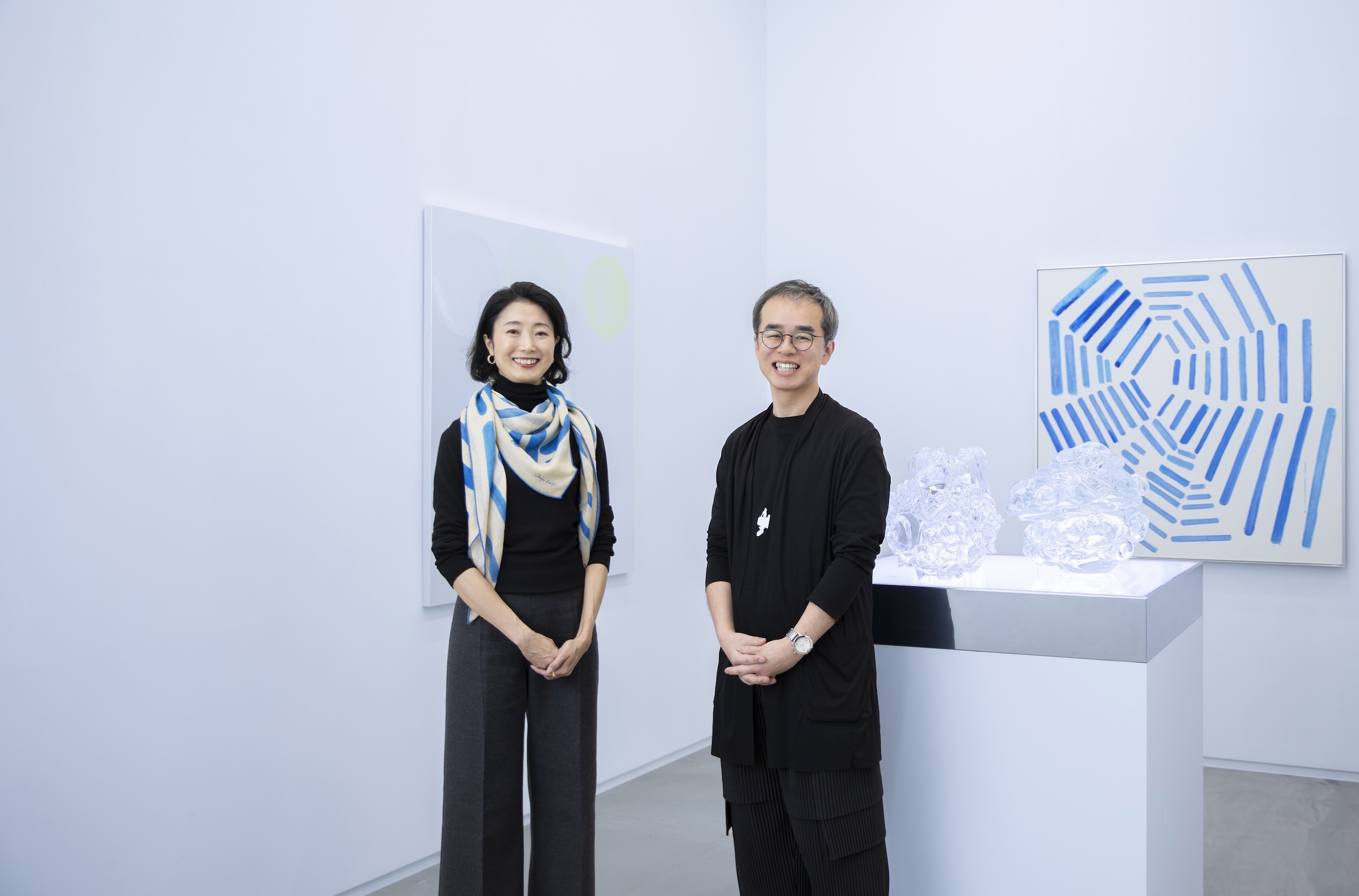
Image Production: Satoshi Iwashita
The information published at this time is as follows.
Was this article helpful?
Share this article


Newsletter registration is here
We select and publish important news every day
For inquiries about this article
Author
Akiko Shimizu
Shiseido Japan Co., Ltd.
Clé de Peau Beauté Division
Vice President of Marketing
Yutaka Miyakawa
Dentsu Inc.
Marketing Division 5
Consultant