Dentsu Inc.’s cross-functional creative organization, the “Future Creative Center (FCC),” is a group of over 100 members dedicated to supporting the creation of the future through creativity, extending beyond the boundaries of traditional advertising. In this series, FCC members will discuss their upcoming initiatives under the theme of “Future × Creativity.”
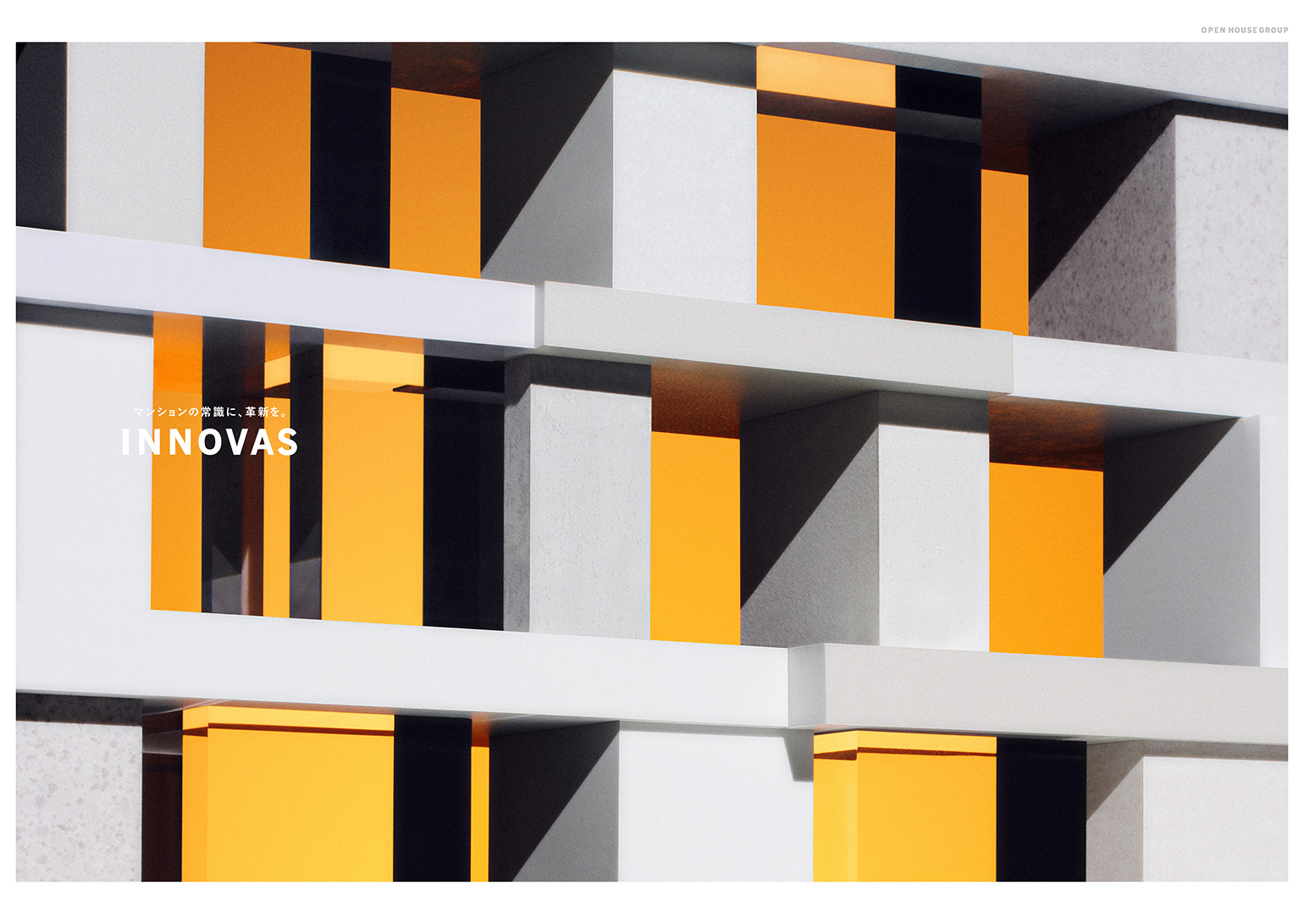
The Open House Group has spent two years rebranding its condominium business. This effort has given rise to two new brands: “INNOVACIA” and “INNOVAS.” The core concept running through both brands is “innovation”—breaking away from traditional notions of condominiums and pursuing new forms of living.
For example, are standard common facilities really what residents want? With lifestyles becoming increasingly diverse, is it appropriate to offer a one-size-fits-all plan to all residents? Confronting these “norms” of condominium living and proposing ideal living environments for the future lies at the heart of our condominium development rebranding initiative.
So, how should we go about creating such “innovative living spaces”? Shuhei Yamamoto of Open House Development’s Condominium Development Division, Taiji Kunisaki of Media Surf Communications, and Fumimi Iwasaki of Dentsu Inc.—all involved in the rebranding project—exchanged their views.
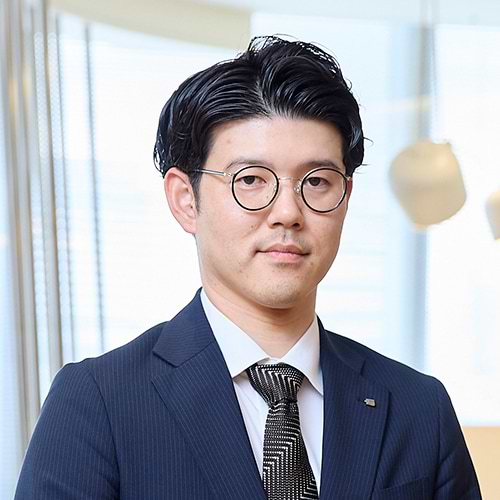
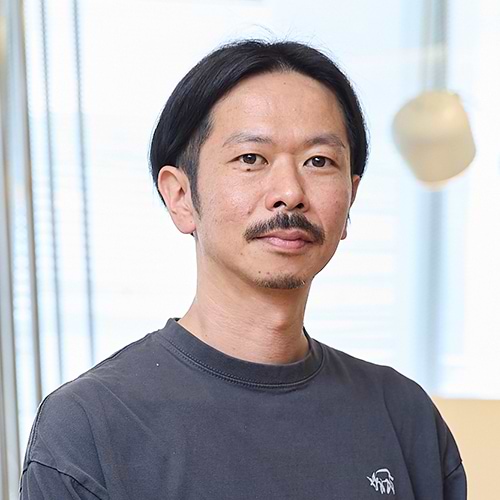
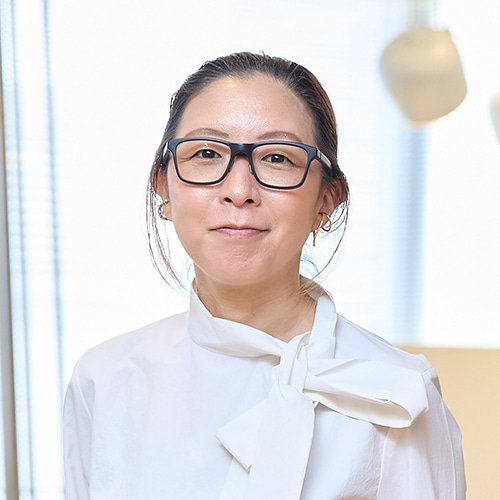
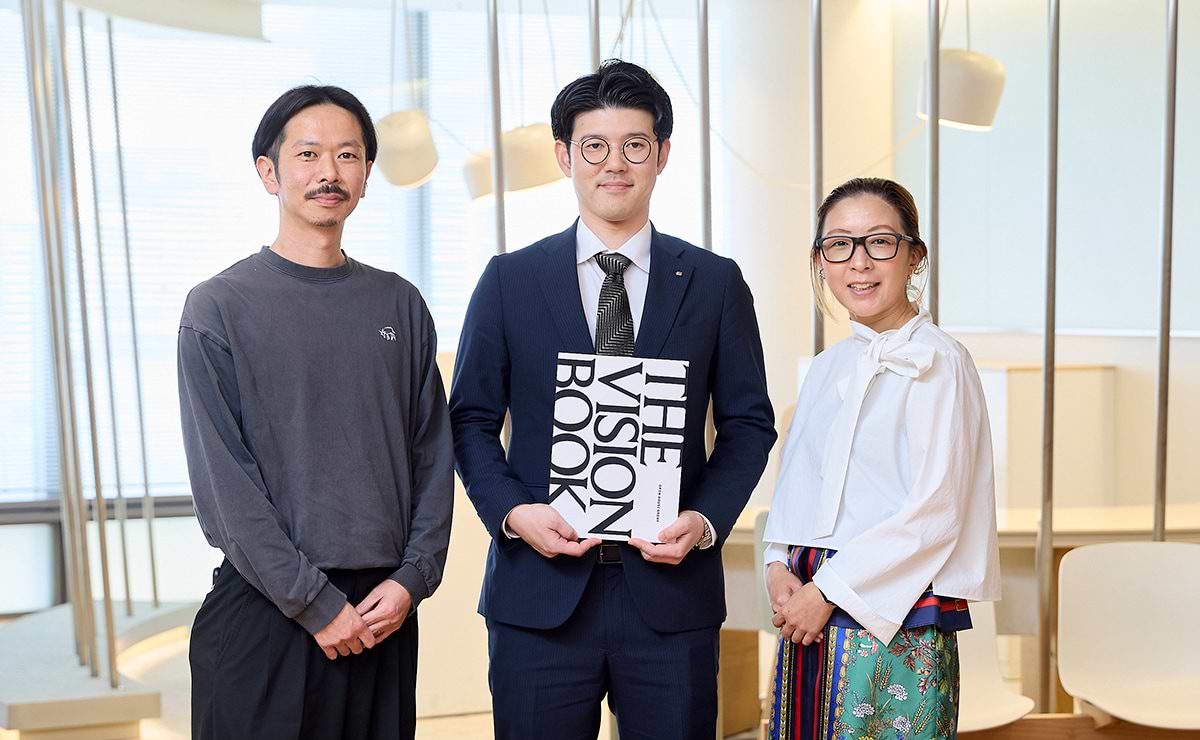
(From left) Taiji Kunisaki of Media Surf Communications, Shuhei Yamamoto of Open House Development, and Fumimi Iwasaki of Dentsu Inc.
The “Reversal of Thinking” Necessary for Envisioning Future Housing
――In this article, I’d like us all to discuss what “future housing and lifestyles” might look like, and how we can go about creating them. But first, could you tell us about the rebranding of the condominium project you recently undertook?
Iwasaki: This initiative began about two years ago.The Open House Group (hereinafter OH Group) decided to launch a new high-end luxury condominium brand. When our team at FCC proposed ideas for what kind of brand to create, we concluded that it would be best to incorporate these proposals not only into the luxury brand but across the entire condominium business, including the OH Group’s other existing brands. That’s when the rebranding of the entire business began.
Yamamoto: At OH Group, we had originally been developing a condominium brand called “Open Residencia.” Initially, the plan was simply to create a high-end line in addition to this. However, after seeing the brand vision proposed by FCC, the company decided to seize this opportunity to establish a new core brand concept that would unify our entire condominium business, including the existing Open Residencia.
――So “innovation” became the core of that new brand. What led you to choose innovation as the central theme?
Iwasaki: If you look at the history of the OH Group, we have a track record of overturning many of the industry’s conventions and assumptions. I believe it is precisely this innovation that has been embraced by people and driven our growth. In our condominium business as well, we wanted to pursue an unprecedented “vision for condominiums” with innovation at its core. We wanted to reflect that vision in our new brand.
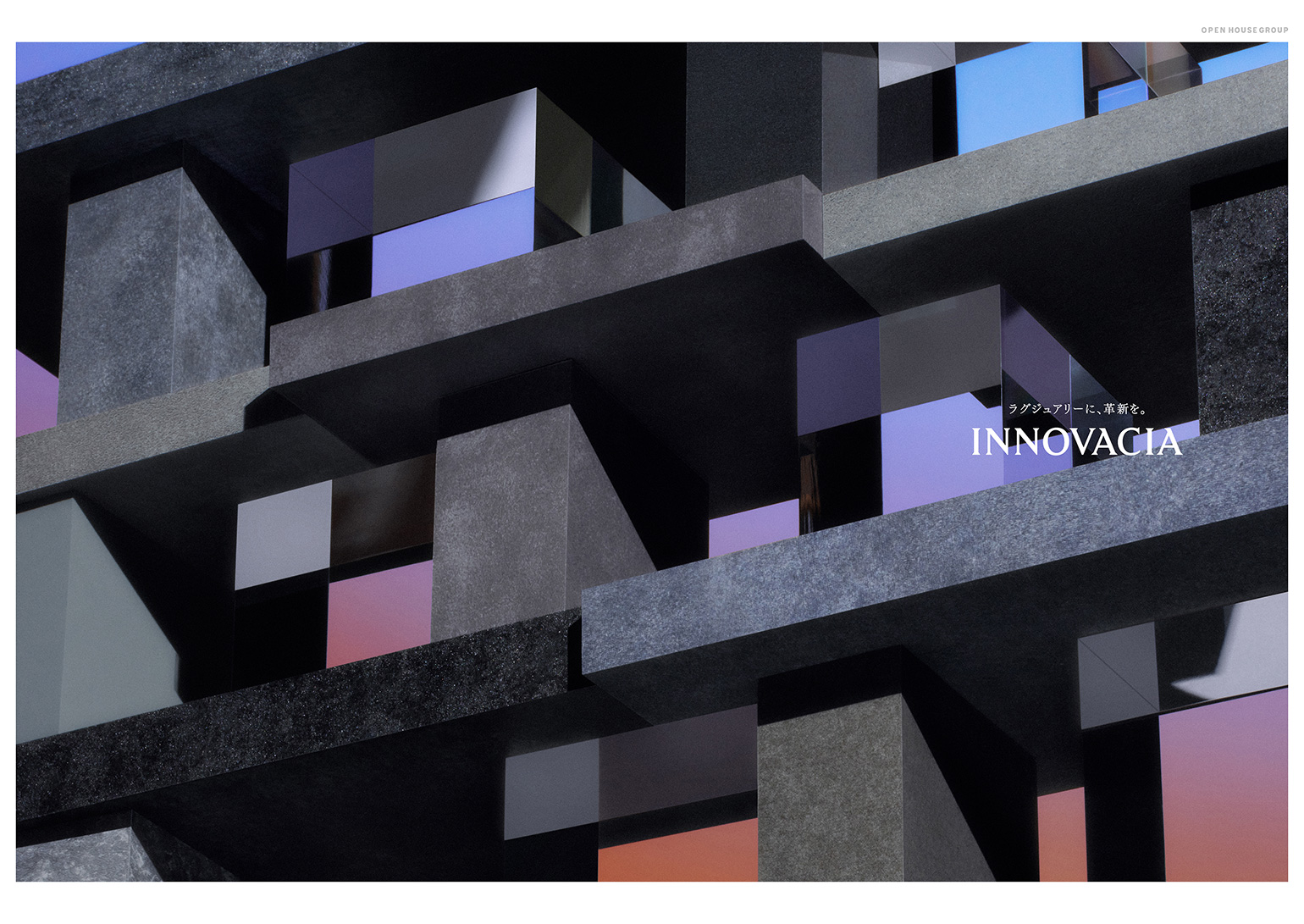
Yamamoto: Based on this philosophy, “INNOVACIA” was born as a new luxury brand. Furthermore, the condominium complexes we had been developing under the “Open Residencia” name were rebranded as “INNOVAS.” Both are brands centered on innovation.
From the key visual of the new brand unveiled company-wide in July 2025
Iwasaki: After establishing these new brands, we also began activities aimed at creating the homes and condominiums of the future. The first step was a creative session where executives and leaders involved in the condominium business across the OH Group gathered across departments to freely share their visions of the “condominium of the future” and “ideal lifestyles.” At the same time, we solicited similar opinions through a survey of all 300 employees in the Condominium Division.You could say this was a process of putting everyone’s ideas of “innovation” into words. We compiled these ideas into a “Vision Book” that outlines the future and worldview of the brand across the entire business.
Furthermore, to help employees internalize this future vision for the business brand and apply it to actual condominium development, we launched a project within the division open to all employees. This initiative was designed for those who voluntarily came together to help shape the brand, and creative sessions were also held as part of this project.
As part of that program, to create innovative properties, we also provided an opportunity for members participating in the creative sessions to learn anew about “what kind of experiential value is necessary to create the lifestyle of the future” and how the neighborhoods and buildings that form the foundation for that are created.We focused on having participants gain insights and inspiration by inviting professionals actually involved in creating experiential value for future lifestyles and cities to share their processes and expertise. Mr. Kunisaki was one of those individuals.
Kunisaki: At Media Surf Communications, where I work, we act as “urban editors,” handling urban regeneration and revitalization. For example, in recent years, I’ve been involved in the Nihonbashi-Kabutocho urban development project. Kabutocho used to be an area dominated by businesspeople, but starting around 2019, we’ve been working on a project to change that and transform it into a neighborhood that attracts a diverse range of people.
During the first session, we invited the members participating in this project to come to Kabutocho, where we explained the philosophy behind our urban development efforts while conducting fieldwork.
Yamamoto: I think it was a time for our employees to really put their minds to work in ways they don’t usually do. When building an apartment complex, it’s obviously important to start by thinking about “people’s lives.” That said, when you’ve been in the apartment business for a long time, it’s easy to fall into the habit of prioritizing factors like location and price over “people’s lives.” It’s crucial to reverse that order: first imagine the lives of the people who will live there, and then design the apartment complex based on that.This thought process was particularly essential when considering future lifestyles and housing that aren’t bound by conventional wisdom. In that sense, I feel that Mr. Kunisaki’s fieldwork was of great significance.
A scene from the session featuring Mr. Kunisaki. OH Group employees involved in the condominium business discussed innovative, ideal condominium design following fieldwork in Kabutocho.
How to Create “Homes of the Future” Unbound by Preconceptions
――From here on, I’d like us all to discuss what “future housing” and “home building” will look like, and how we should go about creating them.
Yamamoto: The vision book we created this time features several ideas for the future of housing that we’ve been exploring. Among them, the concept that I find particularly interesting is the “condominium where residents can rotate between multiple units.”
Typically, once you buy a condo, you either continue living there or sell it to buy another one. It would be fascinating to change that conventional wisdom and move between several units as your life stages and circumstances change. I thought a condo with such a system would be truly innovative.
Iwasaki: The vision book contains many other ideas as well. For example, the idea of “holding a competition to gather young architects and commission them to design condominiums, thereby supporting their career opportunities.” For buyers, there are benefits such as becoming the owner of a condominium that might be the first work of a future famous architect, and the potential for increased asset value. In this way, it includes dream-filled concepts that completely reinvent the very systems surrounding condominiums.By generating such ideas and sketching out the vision we want to realize through this project, it becomes easier to share the meaning of innovation with others. As we inspire each other by realizing that it’s okay to think on such a broad scale, new ideas naturally come to mind, so I feel this serves as a tool to expand the creative horizons of every single employee.
The vision book created for the project. It contains many ideas for future housing, such as “gathering young architects through a competition to commission condominium designs and support their career opportunities” and “condominiums where residents can rotate between multiple units.”
Kunisaki: To pursue new forms of housing, I think we first need to understand “how people change depending on the kind of room they live in.” That’s why I think it might be interesting to have an “experimental apartment building” designed specifically to explore future housing.
――An experimental apartment building.
Kunisaki: Yes. For example, I think many people decorate their rooms with flowers or art. That surely enriches the lives of the residents, but what kind of changes actually occur in people’s minds when they display art? Does the number of artworks displayed make a difference? It would be great to have a unit where we could verify those effects. By analyzing the results, I believe we can gain a clearer picture of what kind of living environment benefits people and refine our understanding of the ideal home.
How to Realize an “Apartment Building That Enriches Life”
Iwasaki: That’s an interesting point. By the way, when you think about the condominiums of the future from an urban planning perspective, do you have any ideas in mind, Mr. Kunisaki?
Kunikazaki: There are quite a few. For example, I believe revitalized cities generally follow two main directions. One is the “destination-type city,” which includes tourist destinations. The other is the “lifestyle-enriching city.” This refers to a city that offers a full range of elements designed to enrich the lives of its residents.
For instance, having a neighborhood café that serves specialty coffee or a shop lined with pottery from various Asian countries—I believe people will naturally gather in areas like this that offer content designed to “enrich residents’ lives” and “expand living culture.”
Regarding these “lifestyle-enriching cities,” I think it would be interesting to build the neighborhood around the condominium as a starting point. Since the condominium is at the heart of daily life, we could position amenities that enrich the local culture around it. As the neighborhood gains popularity through this approach, the value of the condominium will likely increase as well. This would also benefit residents when they eventually decide to sell their units.
――So revitalizing the area also increases the property value of the condominium.
Kuniaki: On a similar note, “lifestyle hotels” are currently gaining popularity in the hotel industry. One definition of a lifestyle hotel is that it doesn’t just entertain guests within the hotel itself, but invites them to enjoy the entire surrounding neighborhood—including local shops and daily life. Precisely because guests aren’t confined to the hotel, there’s an appeal in allowing them to “experience value beyond just a stay.”
It would be interesting to apply this concept to condominiums, wouldn’t it? Using the condominium as a hub, allowing residents to enjoy the entire surrounding area. Providing the necessary amenities and experiences within the neighborhood to make that possible. This would enrich the local lifestyle and culture. I believe that using condominiums as a starting point to enhance the neighborhood’s lifestyle and culture leads to “building homes for the future.”
Yamamoto: That’s a very interesting perspective. It truly creates a new virtuous cycle: the city is built around the apartment complex, the local lifestyle and culture are enriched, people are drawn to the area, and this, in turn, increases the future value of the apartment complex itself. This approach—thinking about daily life on a city-wide scale rather than simply continuing to build new things—could serve as a valuable hint for the future of our business.This rebranding initiative does not have a fixed endpoint. We must continue to ask ourselves what constitutes an innovative apartment complex and what kind of thinking is required to bring that vision to life. We must pursue the ideal apartment complex without being bound by preconceived notions. I hope we can maintain this mindset and continue to create innovative living spaces.
General Manager, Metropolitan Area Project Promotion Department, Condominium Development Division
Born in Hokkaido in 1988. After completing his graduate studies at Muroran Institute of Technology in 2013, he gained experience at an architectural design firm before joining Open House Development Co., Ltd. in 2022.Currently a member of the Tokyo Metropolitan Area Project Promotion Department within the Condominium Development Division, he is responsible for the development of “INNOVACIA Ebisu,” the first project in the flagship “INNOVACIA” brand, and “INNOVACIA Rokubancho,” the second. Leveraging his experience in both design and development, he is dedicated to creating homes that meet customer needs.
Yasushi Kunisaki
Media Surf Communications Co., Ltd.
Board Member
Born in Kanagawa Prefecture in 1982. Graduated from the School of Commerce at Waseda University. At Media Surf Communications Inc., a company dedicated to “urban curation,” he led projects from start to finish—from research and concept planning for urban and commercial development to tenant leasing and operations. He is currently exploring the impact that cultural capital, rooted in aesthetic sensibility, has on cities.
Ayami Iwasaki
Dentsu Inc.
Future Creative Lead Office, Future Creative Division 2
GM / Creative Director / Service Designer
Born in Shizuoka City in 1977. Since joining Dentsu Inc., he has spearheaded numerous future-creation projects aimed at enhancing corporate value, specializing in purpose formulation, branding, and concept development for business and service initiatives. Drawing on his background as a strategic planner, his motto is to tackle any challenge by building a solid foundation for the plan starting with hypothesis-building, and to see it through to the end—creating a flow that inspires people to take action.

 Solving Future Challenges This Way by Future Creative Center [29/29]