Dentsu Inc.’s cross-functional creative organization, the “Future Creative Center (FCC),” is a group of over 100 members dedicated to supporting the creation of the future through creativity, transcending the boundaries of traditional advertising. In this series, FCC members will discuss their upcoming initiatives under the theme of “Future × Creativity.”
“Blue” has long been established as the brand color of Mizuho Financial Group (hereinafter Mizuho FG). A project was born to reinterpret the meaning of this color and infuse new value into this historic brand.
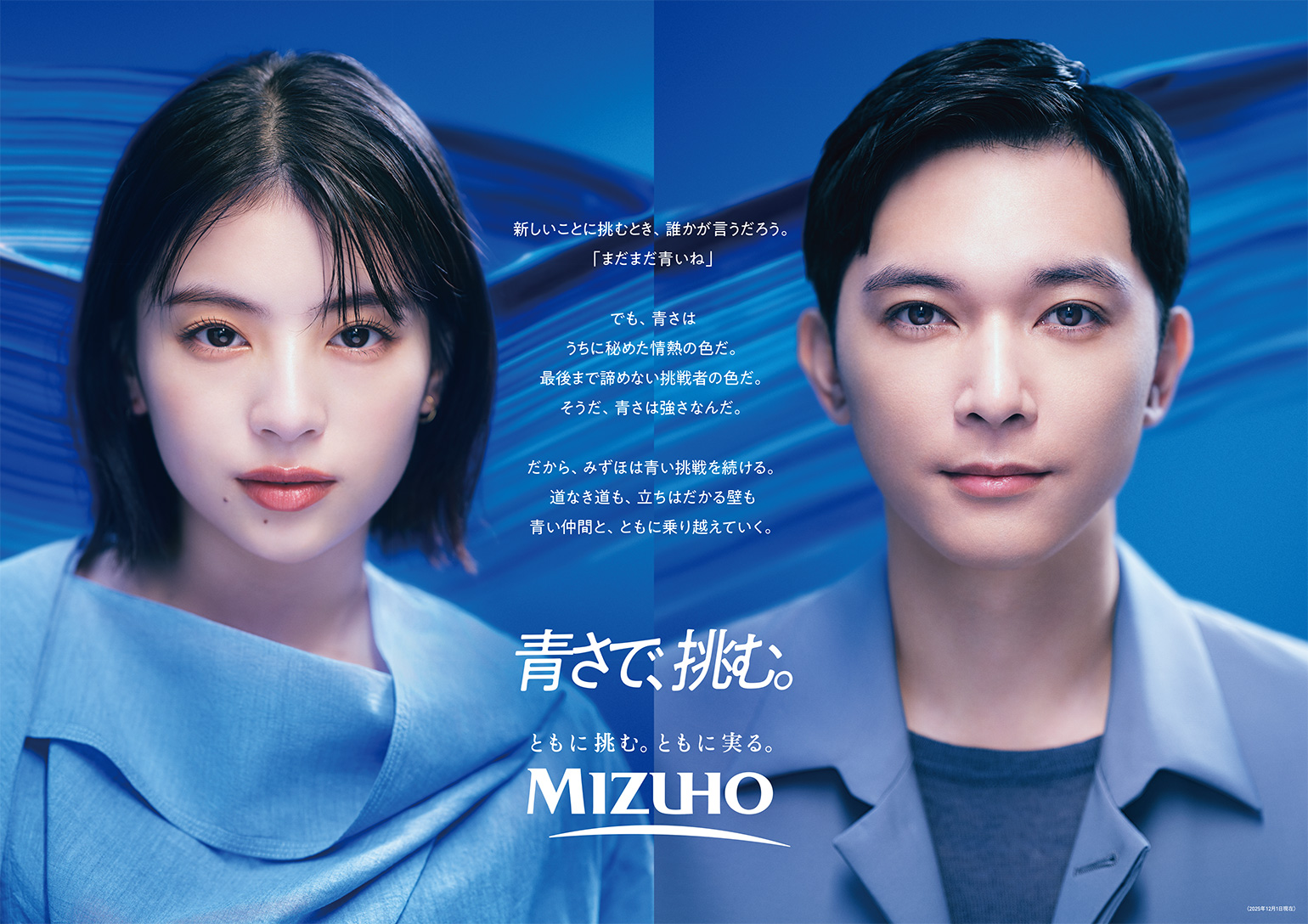
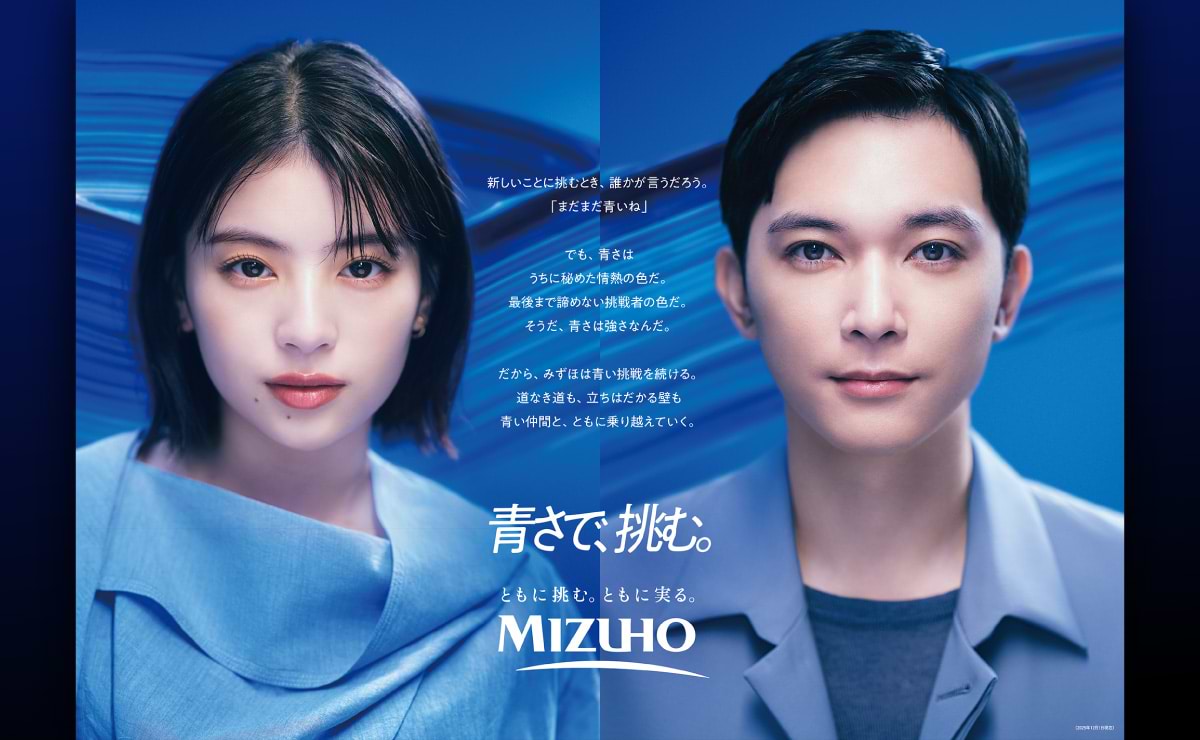
In October 2025, Mizuho FG launched a corporate branding campaign centered on the tagline “Challenge with Blue.” By reinterpreting “blue” not as a sign of immaturity but as a testament to embracing change and taking on challenges, the campaign has created a new form of brand communication.
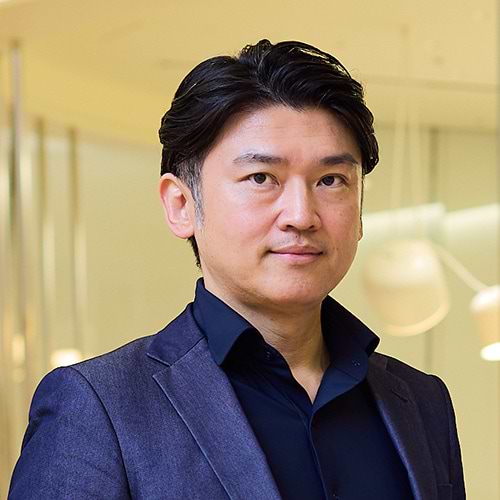
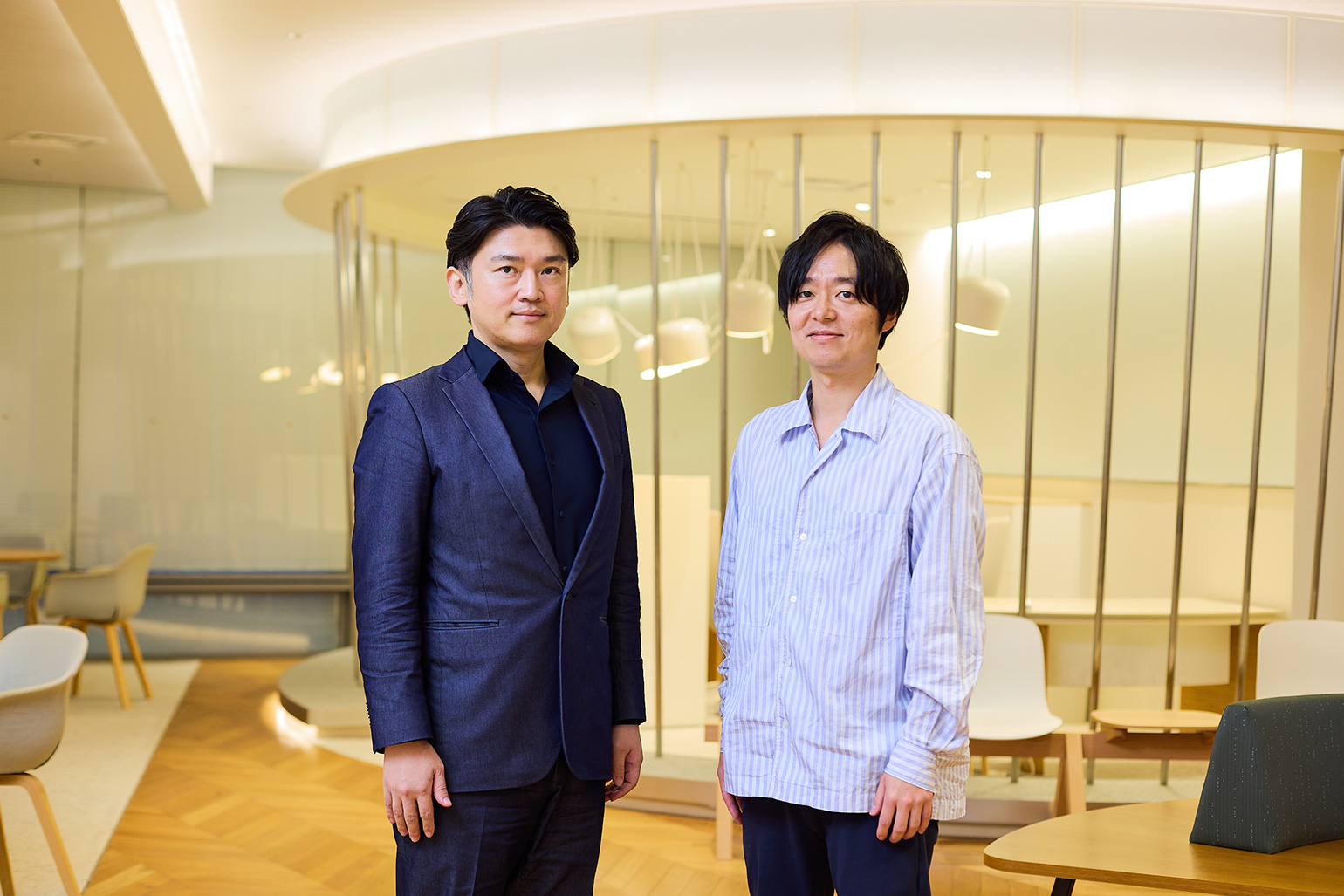
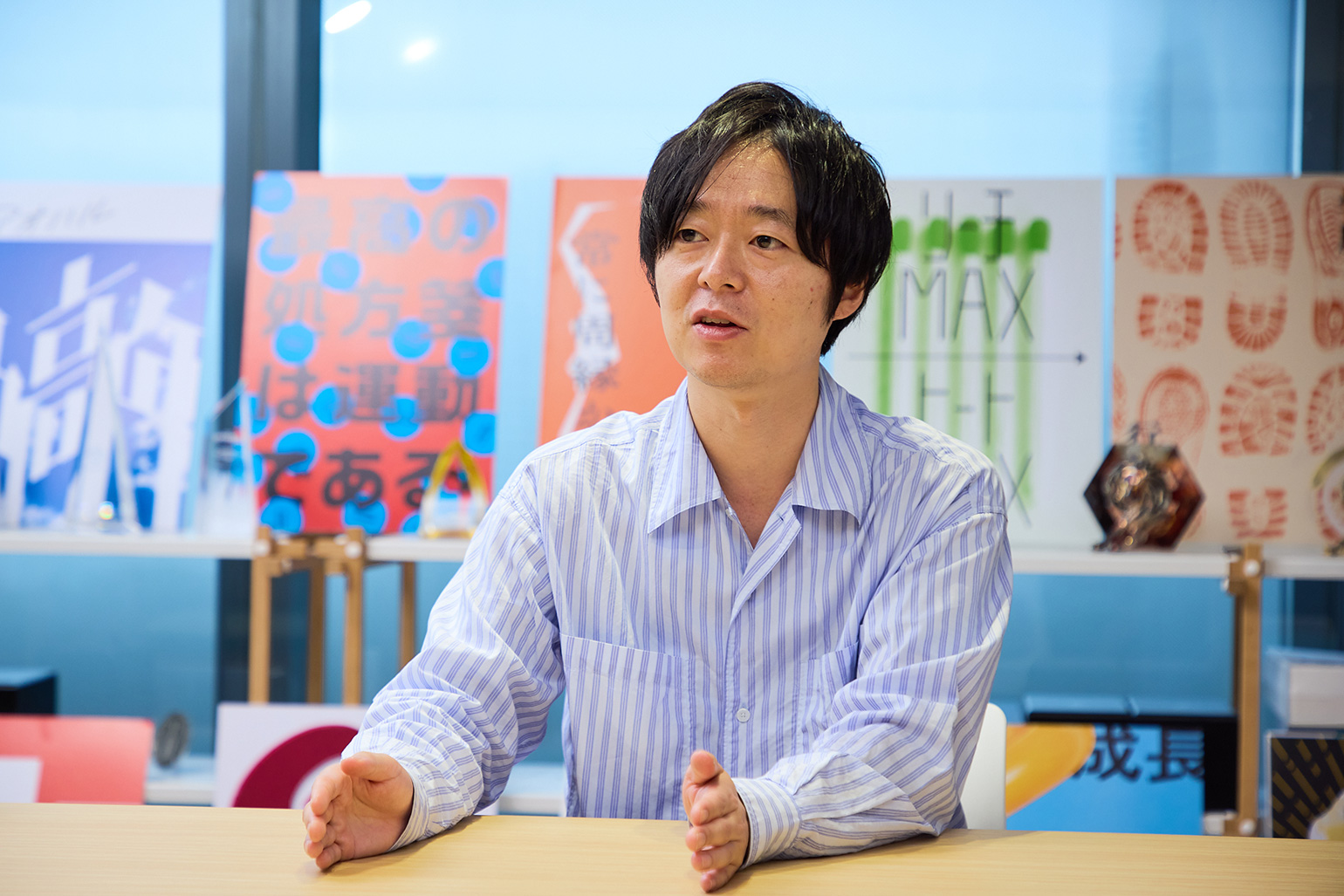
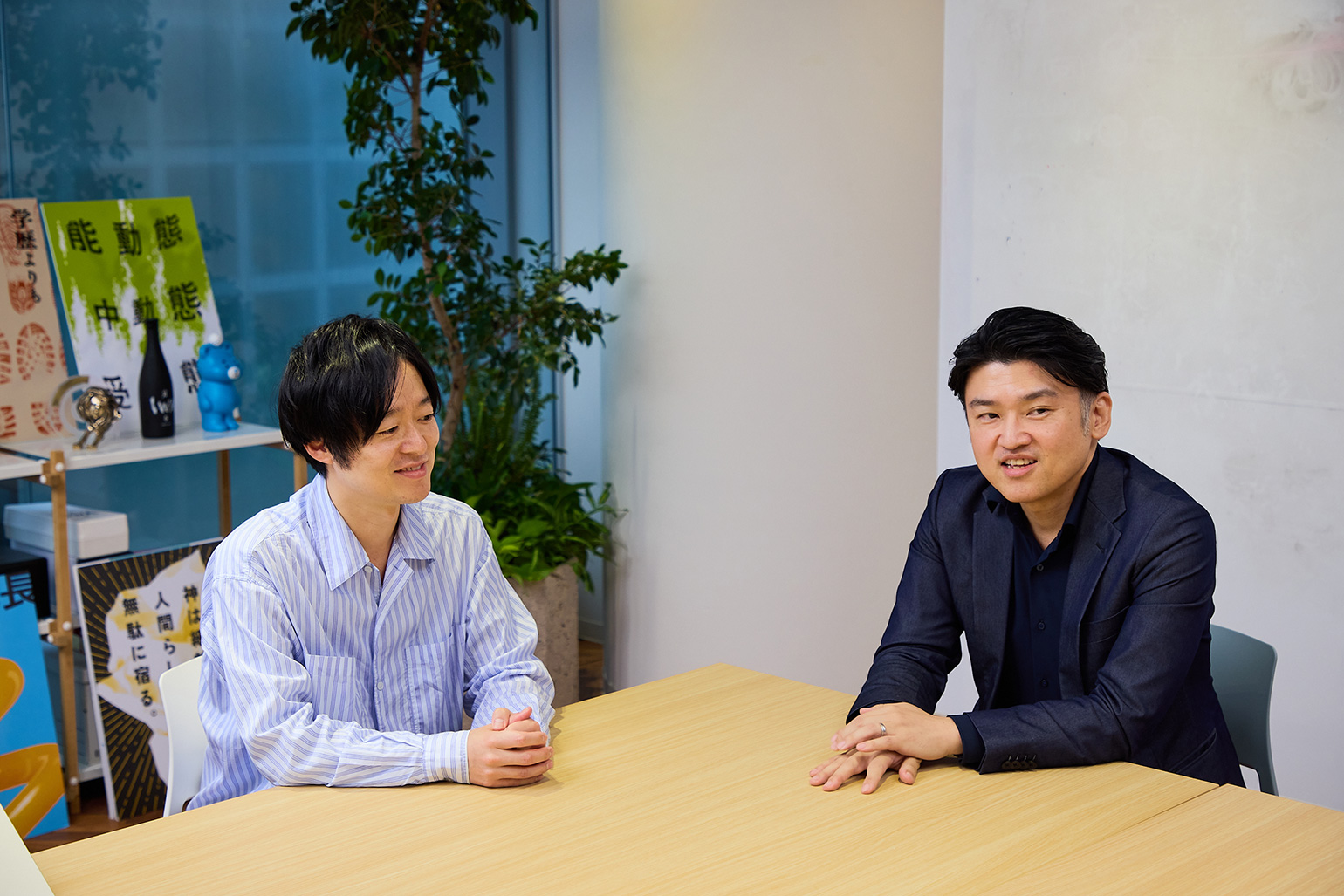
Mr. Takakatsu Iya, Head of the Corporate Culture Office and Corporate Brand Director at Mizuho FG, and Mr. Kentaro Mito, General Manager of the FC3B Division and Creative Director at Dentsu Inc., discussed the details of the project.
(From left) Mr. Katsunori Iya of Mizuho FG, Mr. Kentaro Mito of Dentsu Inc.
Seeking “Brand Expressions Only Mizuho Can Convey”
――Mizuho FG launched a new corporate branding campaign in October 2025. Could you tell us how this initiative came about?
Iya:Originally, the team led by Mr. Mito was involved in a campaign project for Mizuho Bank. It was strictly a seasonal campaign held every year and had no connection to Mizuho’s corporate branding initiatives. However, when I saw the content Mr. Mito and his team were proposing, I thought, “Couldn’t this be elevated into a corporate branding initiative?” and “In fact, this is exactly the kind of message Mizuho should be conveying right now.” That was the beginning. We then developed that proposal further and launched this corporate branding campaign.
Let me explain a bit of the background first. Over the past few years, Mizuho has been working on “establishing a corporate brand” and “transforming our corporate culture.” In April 2023, we launched the “Corporate Culture Office,” a department dedicated to these two pillars, and in May of the same year, we redefined our corporate philosophy. It was also at this time that we established our new purpose: “Take on challenges together. Reap rewards together.”
I joined Mizuho FG in October 2023. In April 2025, I became Head of the Corporate Culture Office, taking on the mission of enhancing corporate value through our corporate philosophy—specifically, establishing our corporate brand and transforming our corporate culture.
In the summer of 2024, Eiichi Shibusawa—who laid the foundation for Mizuho—was set to be featured on new banknotes, so we had begun strengthening our corporate brand communications. We were also working to ensure that these messages resonated with Mizuho employees.
It was around that time that I met Mr. Mito and his team. In the spring of 2025, the FCC team, including Mr. Mito, participated in the launch of Mizuho Bank’s “New Life Support Campaign.” When I saw the advertising communication ideas proposed by Mr. Mito’s team, I felt that these should be utilized for our corporate brand.
――What was the content like?
Iya: At the core of the communication was the tagline, “Unprecedented tailwinds for every blue challenge,” aimed at people starting a new life in the spring.
The phrase “blue challenges” left a strong impression on me. At the same time, I felt it could solve the current challenges facing Mizuho’s corporate brand. While the phrase “Taking on challenges together. Reaping rewards together” is a good expression, it hadn’t yet reached a point where people strongly recognized it as Mizuho’s own. I believed that if we could add another expression—one that “only Mizuho could say”—we could establish a brand that would resonate more deeply with people.
In that sense, the tagline “Blue Challenge,” which takes Mizuho’s corporate color as its starting point, was seen as an expression unique to Mizuho—and above all, as a phrase that resonates with the spirit of continuous challenge we wanted employees to embody amid our corporate culture transformation.
――What was the thinking behind the “Blue Challenge” slogan?
Mito: Although this campaign was limited to the spring season, I didn’t want it to be just a fleeting expression; I wanted to create something that would endure over time. I discussed with the team members, “Let’s create a phrase with such staying power that we can keep using it even 10 years from now.”
In that context, since Mizuho is often called the “Blue Bank,” we decided to place the element of “blue” at the core. However, rather than simply expressing “blue” directly, we wanted to shift the interpretation of the color itself—to redefine it and imbue it with new value.
For example, hasn’t the word “blue” often been associated with “immaturity” in the past? However, by redefining that meaning, we conceived the idea that blue could instead be reinterpreted as the courage to take a step forward, a symbol of a challenger, and a testament to dreams and passion. This is how the tagline “Blue Challenge” was born.
Updating the Copy to Make Mizuho FG the “Subject”
Iya: This campaign concept served as the starting point, and we decided to elevate the message centered on “Blue Challenge” into our corporate brand. We formed a team with the FCC members and held numerous discussions. This led to the current campaign, launched in October 2025, centered around the tagline “Challenge with Blue.”
――The copy for the first campaign had a nuance of “supporting the Blue Challenge.” However, in this corporate branding initiative, the expression has changed to “Taking on the Challenge with Blue.” What was the intention behind this?
Mito: The initial campaign was designed to support young people starting new chapters in their lives, but this time it’s a message from the company itself. In other words, we needed an expression that proactively conveys Mizuho FG’s identity and the group’s resolve regarding what we will do for the future. That’s why we updated the tagline to “Taking on Challenges with Blue,” making Mizuho FG itself the subject.
To begin with, Mizuho supports a wide range of challenges, such as “supporting the space industry” and “launching an anime film fund.” While listening to employees discuss these initiatives this time, I was truly amazed by the sheer breadth of businesses they support. I believe this truly reflects how Mizuho itself, without fear of change, continues to “take on challenges with a youthful spirit” alongside its colleagues as it looks toward the future. We decided to condense this spirit into the tagline “Taking on Challenges with a Youthful Spirit” and place it at the center of our communication.
――For this project, you also developed a design identity called “Blue Wind,” didn’t you?
Mito: Since finance is an intangible service, I felt we needed to use design to visualize Mizuho as an entity that embraces challenges. “Blue Wind” serves as a tailwind that propels these challenges forward, while also functioning as a symbol where “blue” represents “challenge.”
Iya: In my own terms, the current “Blue Wind” has evolved to about “Version 3.5.” Even after the October 2025 announcement, Art Director Sakura Yamaguchi and I continued to experiment and test various approaches, asking, “Is there a more suitable way to express the Blue Wind that propels challenges?” Through this process, the expression gradually became more refined.
Mito: In this project, the commercial also conveys how Mizuho is “continuing to take on challenges,” with the space and anime initiatives mentioned earlier serving as themes. Even in the production process itself, we made a conscious effort to incorporate “challenge”—for example, by appointing a director with no prior commercial production experience.
Shining a New Light on Corporate Assets Through the Four “S”s
Mito: In the coming era, I believe it is essential to create messages that leverage a company’s existing assets in order to conduct advertising and brand communication that ultimately leads to enhanced corporate value. This is because messages that lack context—ones unrelated to the company’s assets or business—are unlikely to resonate with people.
On the other hand, simply communicating a company’s assets in the same old way lacks novelty as a message and makes it difficult to create value. That is precisely why it is important to reinterpret a company’s assets and give them new meaning. To achieve this, we developed a branding method called “Corporate Narrative Design,” and this Mizuho FG project is one example of how we applied that method.
“Corporate Narrative Design” is a methodology that adds new value to a company’s assets while prioritizing the four “S”s: Stock, Shift, Symbol, and Story.
To briefly explain the process: First, in the “Stock” phase, we thoroughly identify the company’s existing assets. Next, we perform a “Shift” to reinterpret the meaning of these assets in a way that aligns with the times ahead. Then, we distill the new meaning into a concise “Symbol” (copy/design identity) that intuitively engages everyone. Finally, we integrate these elements and translate them into a “Story” that resonates with society.
In this project, the memory of “the blue bank”—what everyone associates with Mizuho—serves as the “Stock.” We then “Shift” the meaning of “blue,” which previously signified immaturity, to represent “challenge.” Furthermore, we create the copy “Challenge with Blue” and the design identity “Blue Wind” as the “Symbol.” We develop a statement as the story that conveys this meaning, and use it as the foundation for commercials and graphic materials.
Since it’s built from our own assets, I think it’s easier for people within the company to feel a sense of conviction. As a result, I believe it will lead to brand communication that engages both internal and external audiences.
――What has been the response to this project?
Iya: I believe the true impact will become apparent in the future, but we’re already seeing positive signs. Posters featuring the tagline “Challenge with Blue” are displayed in branches nationwide, so I think this conveys to both customers and employees that Mizuho is a group that embraces challenges and supports those who do.
――Mr. Iya, you’ve been involved in corporate marketing and branding even before taking on your current role. How do you view the importance of corporate branding at Mizuho?
Iya: Financial products are intangible assets, and there is an aspect where the framework of our services is determined by economic trends such as interest rates, so it is generally said that differentiation through branding is difficult. However, if you ask whether corporate branding is unnecessary, I absolutely do not think so.
Precisely because financial products are intangible and it is difficult to create distinctions, what has a major impact on customer evaluations is the experience at the counter or during sales interactions—in other words, interactions with Mizuho employees. Increasing the number of “positive experiences” for customers, even by just one, is more important than anything else.
And within that, what matters most is whether, while providing excellent customer service, customers feel not just that “this person went out of their way for me,” but that “this person from ‘Mizuho’ went out of their way for me.” Can customers associate “Mizuho” with the service provided by our employees? The accumulation of these experiences becomes a major asset that ensures Mizuho remains indispensable to our customers.
When I think about it this way, isn’t corporate branding what accelerates the connection between our employees’ hard work and the Mizuho brand that lies behind it? That is precisely why I believe it is so crucial.
――Mr. Mito, what kind of activities would you like to pursue as an FCC in the future?
Mito: I hope to make proposals that “exceed customer expectations.” Rather than just providing the expected answers, I want to add something they didn’t anticipate. For example, in a presentation, while thoroughly preparing the requested proposal, I’d also present a “secret weapon” from a different angle by asking, “How about this?” I’d be delighted to work with various companies on initiatives like this that lead to enhanced corporate value.
Head of Corporate Culture and Corporate Brand Director
Starting from our corporate philosophy, we view culture and brand as a unified whole, and strive to create sustainable corporate value through organizational culture transformation and the establishment of a corporate brand.
Previously, at Adobe Japan, he led B2B marketing transformation as Executive Officer and General Manager of the DX International Marketing Division.
Prior to that, he spent over a quarter of a century working in the brand and marketing fields at Hakuhodo, where he supported brand communication for global companies. He is originally from Toyama Prefecture.
Kentaro Mito
Dentsu Inc.
第3CRプランニング局 フューチャークリエイティブ3B部長
クリエイティブディレクター
Born in Tokyo in 1988. Graduated from the Faculty of Engineering at the University of Tokyo. His motto is to create “thoughtful plans” and “sustainable plans” that resonate with people’s emotions. Using “core idea generation,” he tenaciously seeks the optimal solution without being constrained by specific methods. Drawing on his background as a strategic planner, he also excels at developing strategies that address fundamental issues and crafting compelling narratives.

 Solving Future Challenges This Way by Future Creative Center [28/29]