
Note: This website was automatically translated, so some terms or nuances may not be completely accurate.
 TV Content Social Value Project [1/2]
Exploring the "Viewing Journey" of That Drama! ~Fuji TV Drama "Gentle Waves, A Perfect Day for a Couple"~

Yoshiko Shiraiwa
Video Research Ltd.
The "TV Content Social Value Project" is an initiative by Dentsu Inc. and Video Research Ltd. aimed at capturing changes in the needs and values of today’s consumers by analyzing how people enjoy TV content.In this article, we analyze data from the social media post analysis tool “Buzz Vooon! (*)” and program survey data for “Gentle Waves, A Perfect Day for a Couple.” We found that posts increased with each episode, confirming that viewers were rewatching episodes and that interest in the original work and the theme song was growing. We will explain exactly who was watching this drama—which became a hot topic primarily on social media—and how they were watching it.
* Buzz Buuun!
A service that uses "buzz" on X (formerly Twitter) to demonstrate the value of content—including TV programs—from the perspective of viewing "quality." https://www.videor.co.jp/service/media-data/buzzvieewn.html
*This article is a reprint of content from VR Digest+, with some editing.
About "Gentle Waves, A Perfect Day for a Couple"
A drama series broadcast on Fuji TV’s Thursday Theater in April 2025. Set in 1936, it depicts a couple with no prior romantic experience who were brought together by an arranged marriage, gradually growing closer through their awkward newlywed life. Against the backdrop of the pre-war era, this romantic drama portrays the preciousness of “love that begins with marriage” as the couple carefully builds their relationship through small daily events and acts of kindness.
A Unique Drama Where Social Media Posts Increase with Each Episode
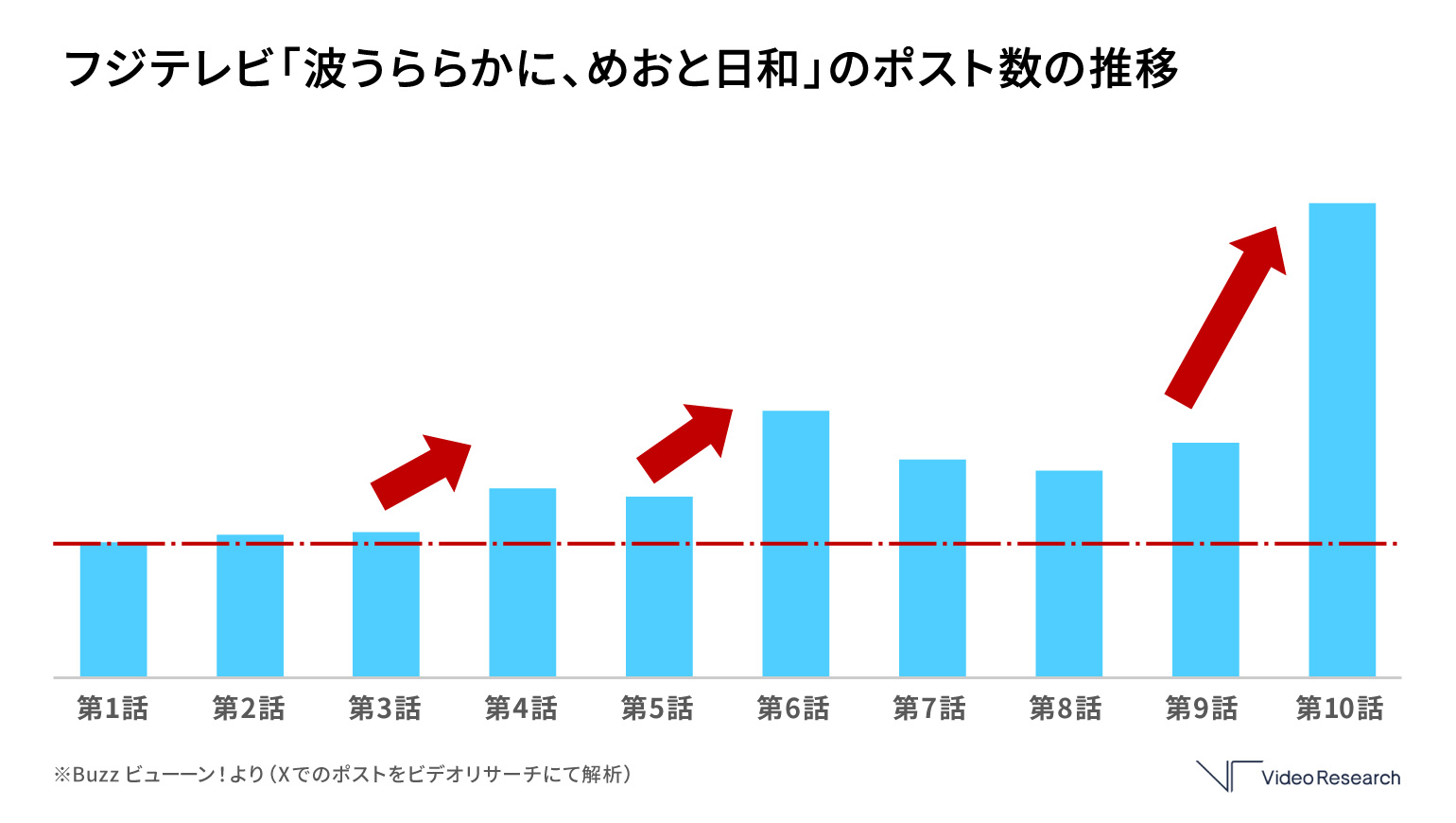
First, let’s examine the trend in X posts starting from Episode 1. Typically, the number of posts for a drama peaks in the first episode, declines thereafter, and then rises again for the finale. However, in the case of this drama, the number of posts surpassed that of Episode 1 starting from Episode 2, saw a significant increase in Episodes 4 and 6, and continued on an upward trajectory, reaching 3.5 times the number of posts from Episode 1 by the finale (Episode 10).
Past data confirms that dramas with this kind of upward trend in post numbers tend to be those whose content is well-received and becomes a hot topic. Indeed, viewers of this drama appreciated the content, which led to increased discussion.
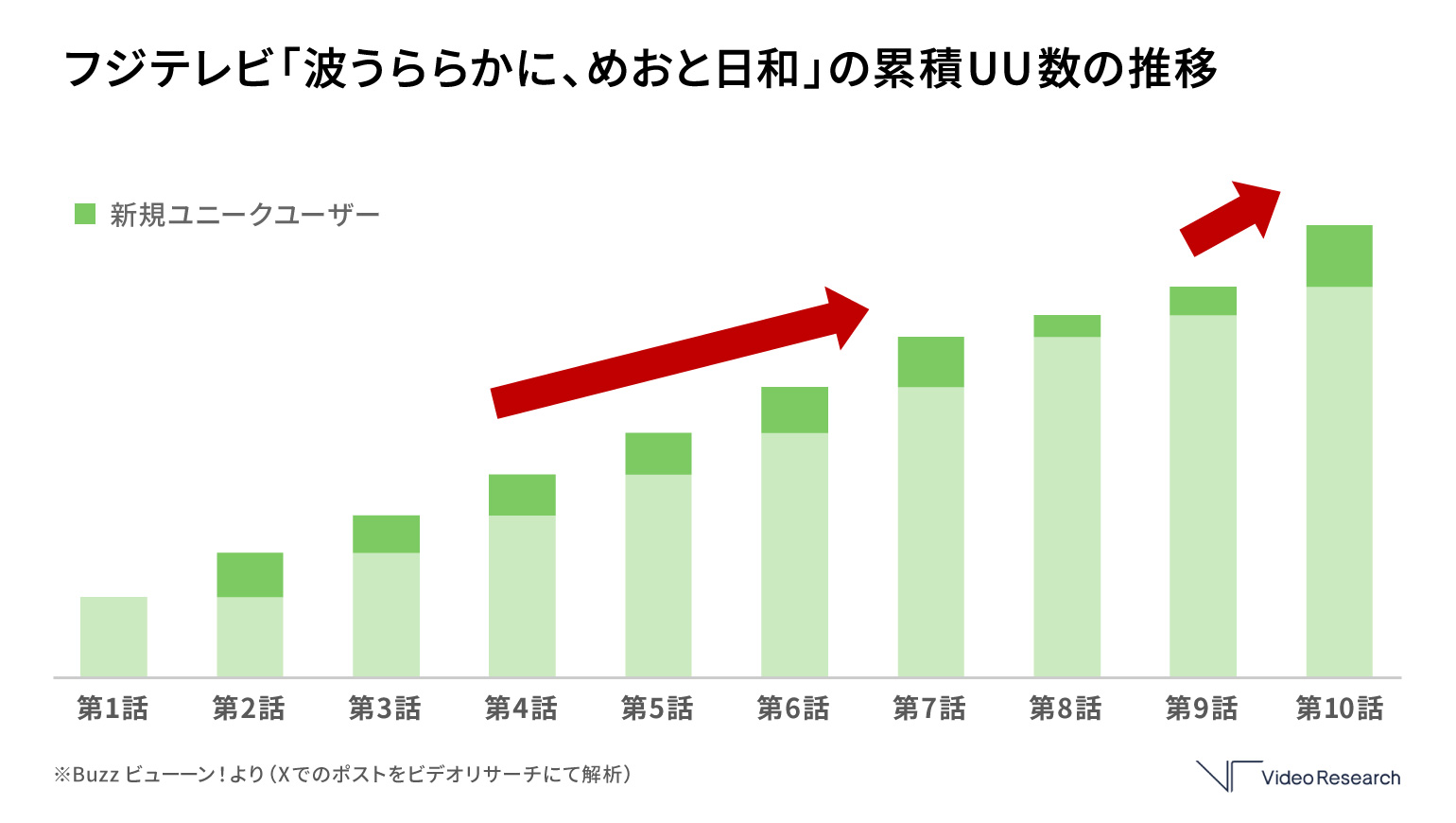
Looking at the trend in cumulative unique users (the number of unique users posting), the number of new unique users increased as the episodes progressed, showing a steady upward trend. It was confirmed that more and more people felt compelled to discuss this drama and posted about it on X.
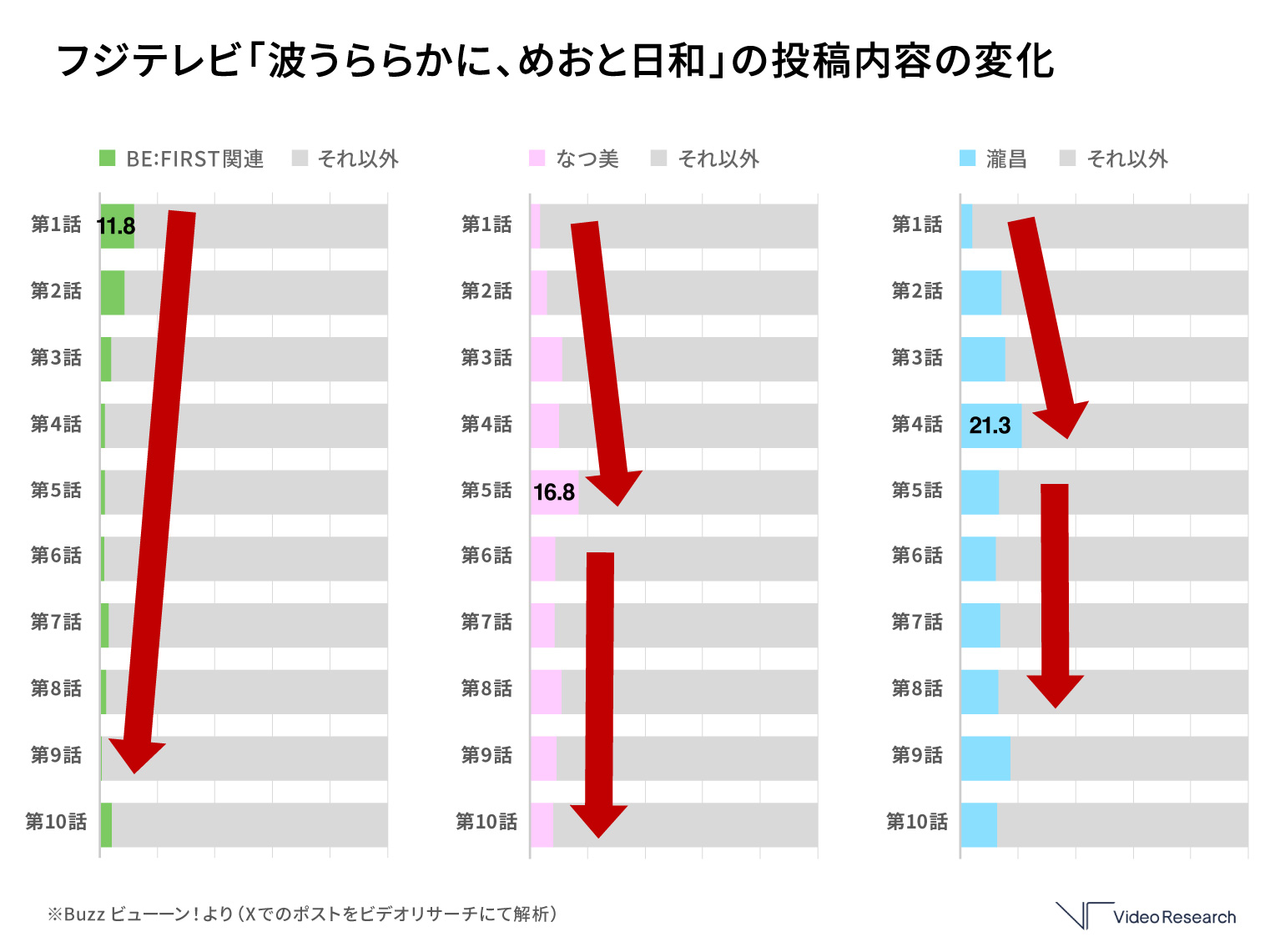
Next, what kind of content were people discussing?
We calculated the percentage of posts in each episode that mentioned BE:FIRST (who performed the theme song “Yumechu”) and Natsumi and Takashi (the protagonist and her husband).Since BE:FIRST’s “Yumechu” was released after Episode 1, BE:FIRST-related posts accounted for 12% of the total in Episode 1, but this percentage decreased as the series progressed. On the other hand, the percentages for Natsumi and Takimasa increased, confirming that mentions of the drama’s content itself grew. In terms of specific post content, there were comments from viewers who initially tuned in for BE:FIRST but found themselves drawn into the drama’s story.
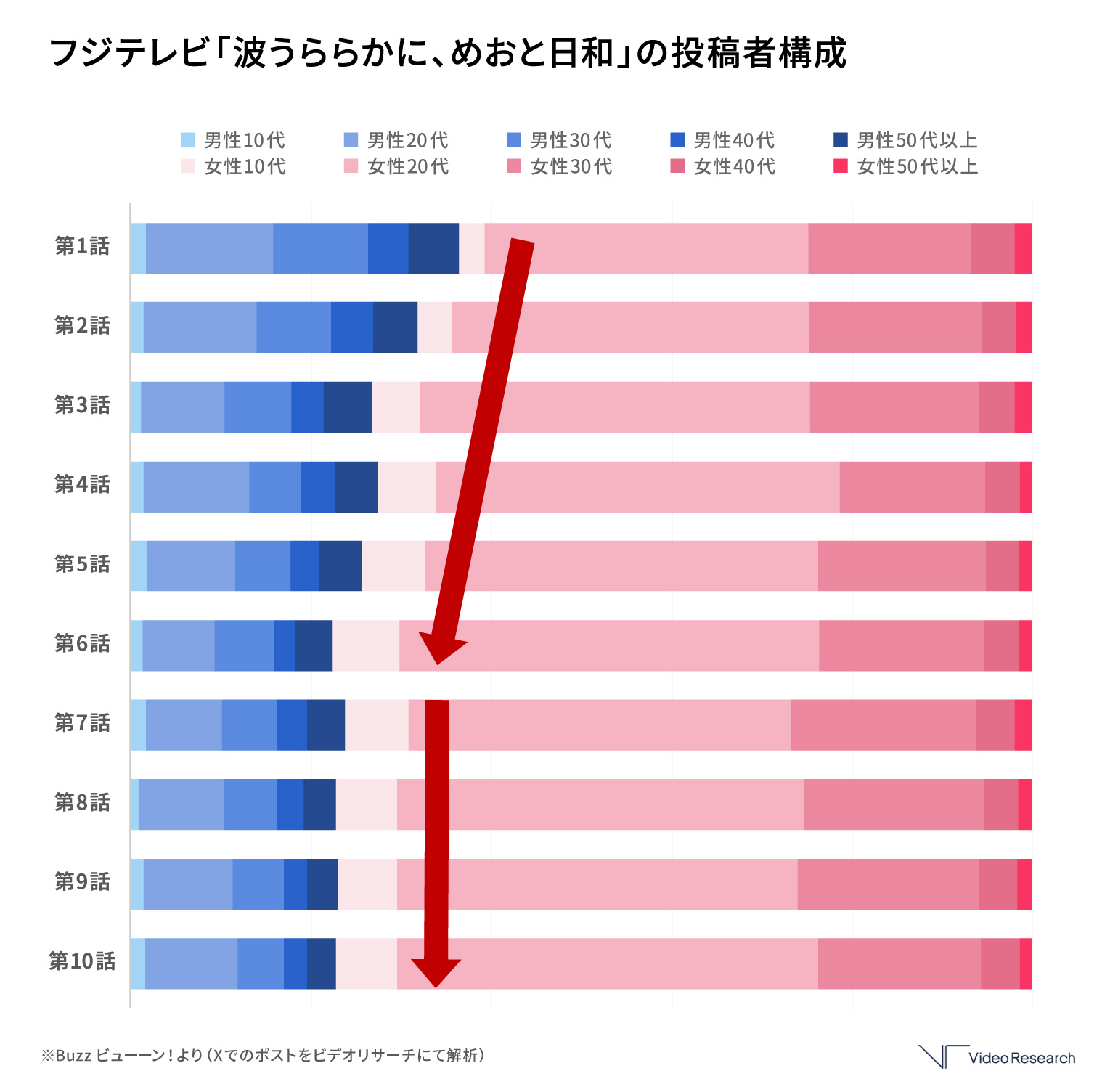
Finally, looking at the demographic breakdown of posters, the proportion of young women—specifically those in their teens and twenties—also increased as the series progressed.
Since the drama centered on the romantic developments beginning with the pure married life of the two leads, viewers likely empathized with Natsumi and Takimasa’s interactions and emotions, leading to an increase in both the number of posts and the proportion of young female posters.
Additionally, since the drama is based on a manga, many posts indicated that viewers were deeply drawn in—some mentioned watching the drama and then reading the original manga, while others said they bought the entire manga series in one go.
"Empathy," "Re-watching"... The Viewing Journey Revealed by Analysis
Next, we will use Buzz Buun! data to organize the viewing journey behaviors for "Nami Uraraku, Meoto Biyori."
Video Research Ltd.’s think tank, the “Hito Research Institute,” which publishes research insights on consumers and media, is conducting consumer research from the perspective that the “viewing journey”—the behaviors and reactions that occur “before,” “during,” and “after” watching video content such as TV programs—enhances the “viewing experience satisfaction” of that content (Figure 1).In this article, we will use the latest survey data and results from Buzz View! data analysis to highlight the <Viewing Journey> of a popular drama and how viewers enjoy it.
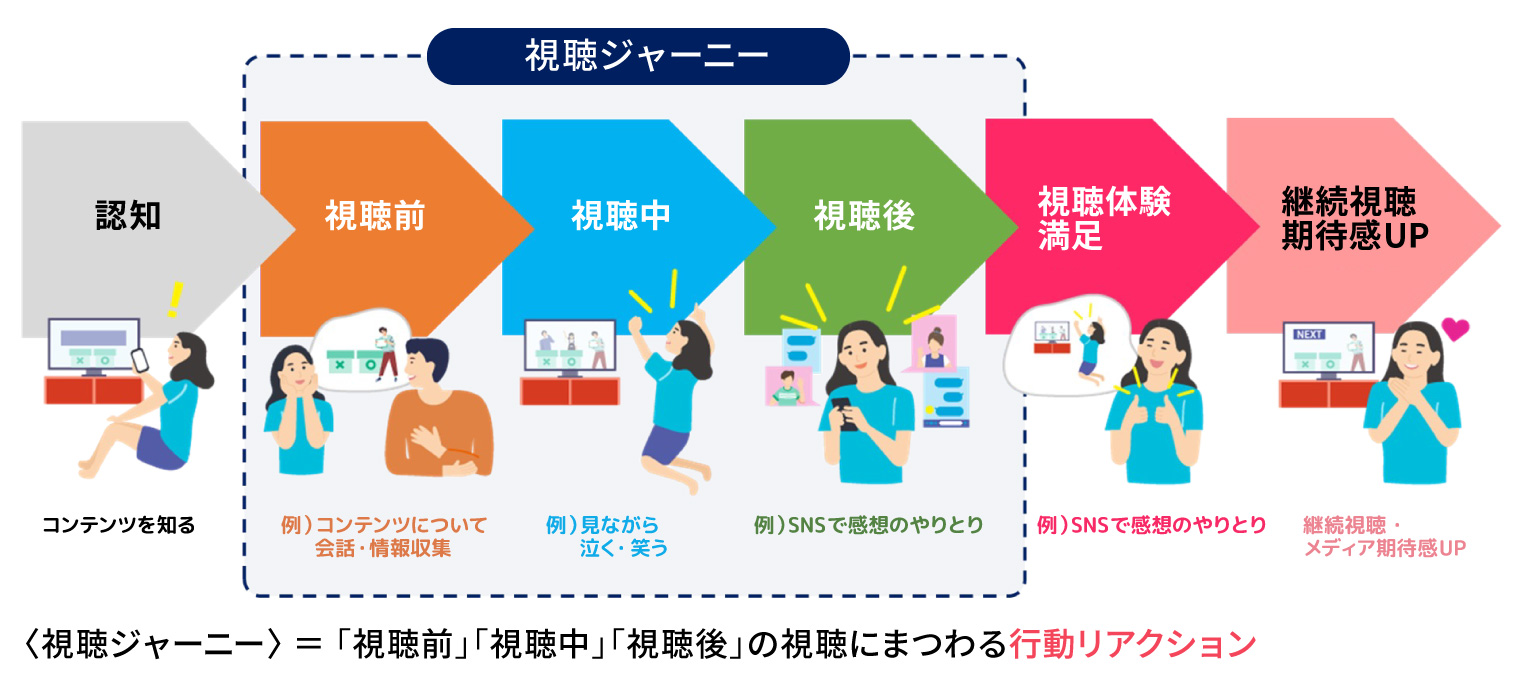
*For research articles on the Viewing Journey, click here
https://www.videor.co.jp/digestplus/tag-kw-viewing-journey/
Analysis of "Buzz Buun!" data extracted "Viewing Journey" behaviors from posts around the final episode (June 24–27), revealing a notable trend of viewers enjoying the show through repeat viewings.
● "Viewing Journey" Based on Buzz Buuun! Data
June 24……Announcement on X that a special episode would air on FOD after the June 26 broadcast, prompting declarations to subscribe to FOD
June 25……Feeling the post-show blues because tomorrow is the finale
June 26……Voices of post-show blues from the morning
Waiting for the live broadcast
Viewers expressed gratitude and shared their thoughts after the drama ended, with many hoping for a sequel
Immediately watched the special episode on FOD and rewatched the series on TVer
6/27……Watching the finale again or streaming on FOD
Additionally, the Hito Research Institute has been conducting surveys on viewing journeys for TV programs aired during each season starting in April 2024 (excluding January–March 2025). We select 10 specific programs per season to accumulate insights into everyday viewing journeys for individual shows.
Based on the results of this survey, we identified items where the score for "Nami Urarakani, Meoto Biyori" was higher than the "drama average" and extracted behaviors characteristic of this drama’s viewers.
● Hito Research Institute Viewing Journey Based on the "April–June 2025" Seasonal Survey
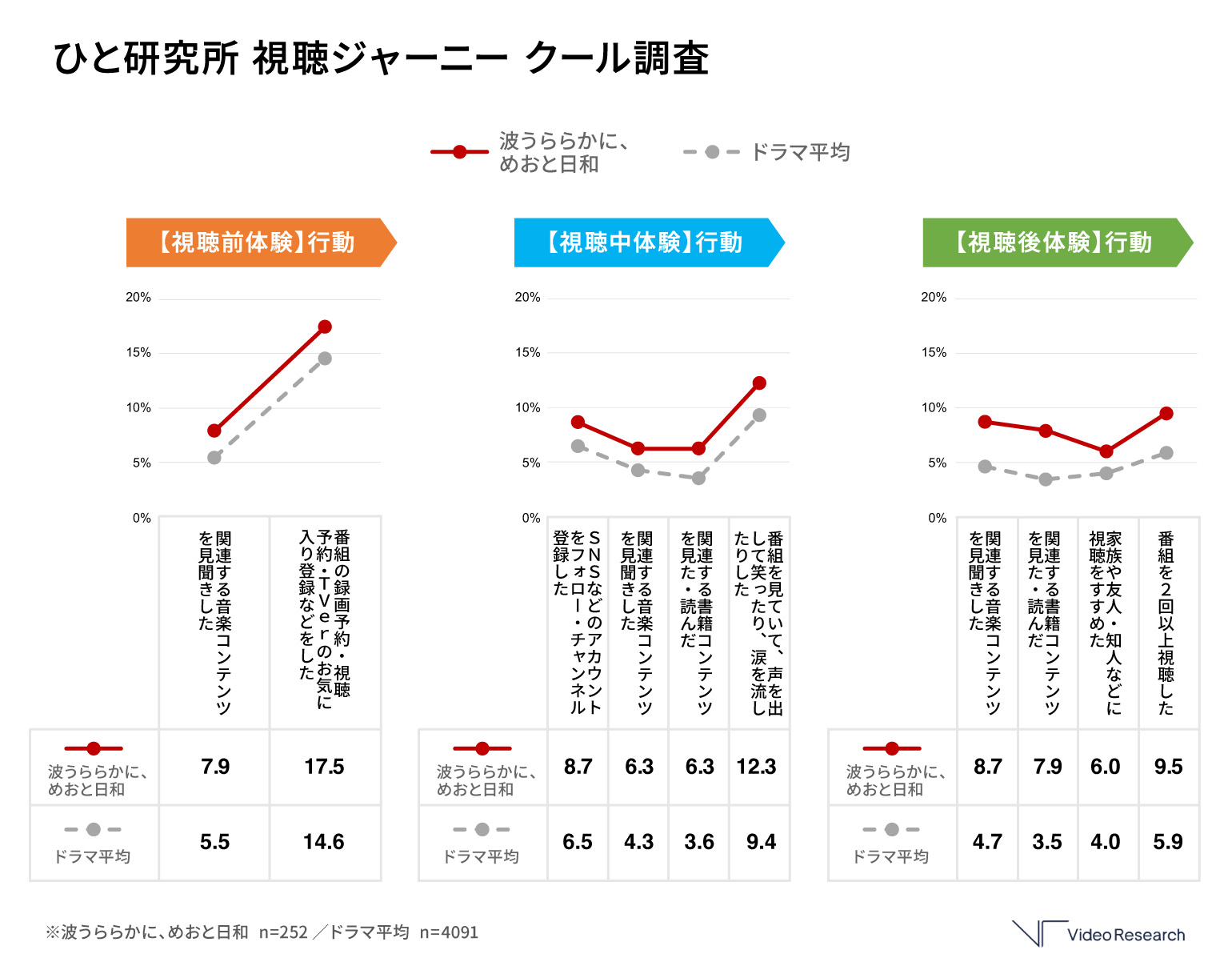
Before Viewing: Music Content, Recording Schedules, and TVer Registration
→ Fans of the theme song appear to be looking forward to it
During Viewing: Following on social media, music content, book content, reactions (laughing/crying)
→ Strong emotional reactions stemming from emotional investment; viewers also enjoy social media, the theme song, and the original manga
After Viewing: Music content, book content, recommending to friends, watching two or more times
→ Appears to enjoy rewatching the show repeatedly; word-of-mouth spread; expansion of commercial flow, such as purchases of the theme song and original manga
In open-ended responses regarding how they enjoyed the drama, readers of the original manga praised the production, stating, “It didn’t ruin the original’s worldview, had its own merits as a drama, and made it easy to immerse myself in the world.” Meanwhile, even those unfamiliar with the original manga seemed to be enjoying both the drama and the manga together, with comments such as, “Watching the drama prompted me to buy the original manga; I read up to the point of each episode’s broadcast and finished the entire series after the finale.” This revealed a positive cycle between the original work and the drama.
Even for those who started watching the drama because of the theme song or the original manga, the show’s careful portrayal of the emotional ups and downs of daily life and the characters’ consideration for one another allowed them to empathize with the characters and experience the world of the series more deeply. This likely led to a greater attachment to the show through the theme song and the original manga. Regarding empathy, one respondent noted, “Seeing them understand each other and spend time together, sometimes with a touch of humor, made my heart leap.After watching it once on TV, I wanted to watch it again on TVer, so I rewatched it.”
A characteristic expression of emotional connection in this work is “kyun,” which is believed to represent those moments when the viewer’s heart flutters—exactly as described in this open-ended response. It is presumed that viewers rewatched the series and spread the word through word-of-mouth because they wanted to experience this fluttering sensation repeatedly and share this feeling with others.The availability of platforms like TVer that allow for repeat viewing and catching up on missed episodes, combined with the numerous official social media posts featuring clips, previews, and behind-the-scenes footage, allowed the production to effectively respond to this heightened viewer enthusiasm for the drama. At the same time, it can be said that they successfully attracted new viewers.
The Impact of TV Content on Viewers’ Values
As mentioned earlier, both the Buzz Buuun! data and survey results showed that viewers were emotionally invested in the characters’ interactions and feelings. Some even found themselves overlapping their own views on marriage with the drama’s depiction of a romance that began with a marriage in the early Showa era.
For example, Buzz Buun! data revealed posts where viewers viewed the couple in the drama as an ideal pair, such as: “I only hear about miserable marriages around me, but this is how marriage should truly be,” “It really made me think that married couples should support each other,” “If I ever get married, I want to have a similar newlywed life,” and “I didn’t want to get married before, but now marriage seems like a good thing—I want to get married.”
So why did young women in the Reiwa era become so emotionally invested in a romance drama set in the pre-war era—a time with completely different historical contexts and values—and project their own views on marriage onto it? In Part 2, let’s take a look at the analysis of this work by the DENTSU DESIRE DESIGN FUKAYOMI team, which deciphers hit works to predict shifts in consumer values and future desires.
[Survey Data Overview]
Hito Research Institute Viewing Journey Cool Survey: “April–June 2024,” “July–September 2024,” “October–December 2024,” “April–June 2025”
Survey Method: Online survey
Survey Participants: People aged 15–69 (excluding junior high school students) nationwide in Japan who have watched at least one of the specified 10 TV programs broadcast during each survey period.
Survey Content: Questions regarding program evaluations and actual viewing journeys for specific TV programs (10 designated programs) among those the respondents had watched
Sample Size: 2,907 respondents for “April–June 2024,” 2,762 for “July–September 2024,” 2,896 for “October–December 2024,” and 2,228 for “April–June 2025”
*Total number of respondents includes multiple responses to different programs by the same individual, with each response counted as one respondent
Survey period: “April–June 2024”: August 2 (Fri) – 3 (Sat), 2024;"July–September 2024": Friday, October 25, 2024; "October–December 2024": Tuesday, January 14, 2025; "April–June 2025": Friday, July 4, 2025 – Sunday, July 6, 2025
Was this article helpful?
Share this article


Newsletter registration is here
We select and publish important news every day
For inquiries about this article
Author
Yoshiko Shiraiwa
Video Research Ltd.
Data Design Unit, TV Data Group