Dentsu Inc.’s “Future City Design Unit” is a specialized team that envisions the future of cities and lifestyles and provides support across various fields, from conceptualization to implementation ( click here for details).
In this series, we have explored from various angles what is required for future urban and community development, as well as what makes a city a place of high well-being.
In this installment, we focus on the “mediafication of the city” as embodied by Mori Building, which has developed many of Tokyo’s landmarks—such as Roppongi Hills and Azabudai Hills—and is also engaged in long-term town management that encompasses culture, community, and the environment.
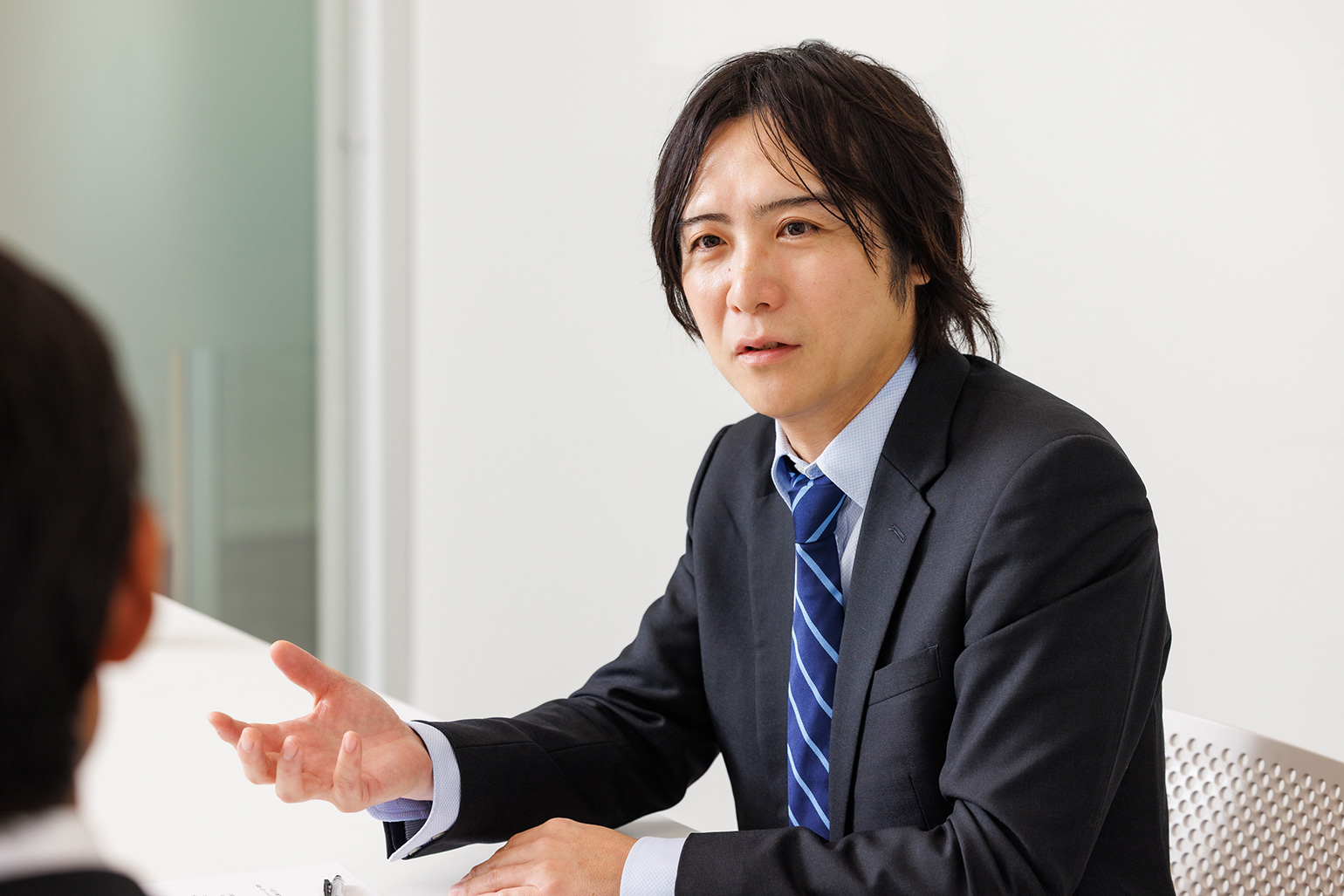
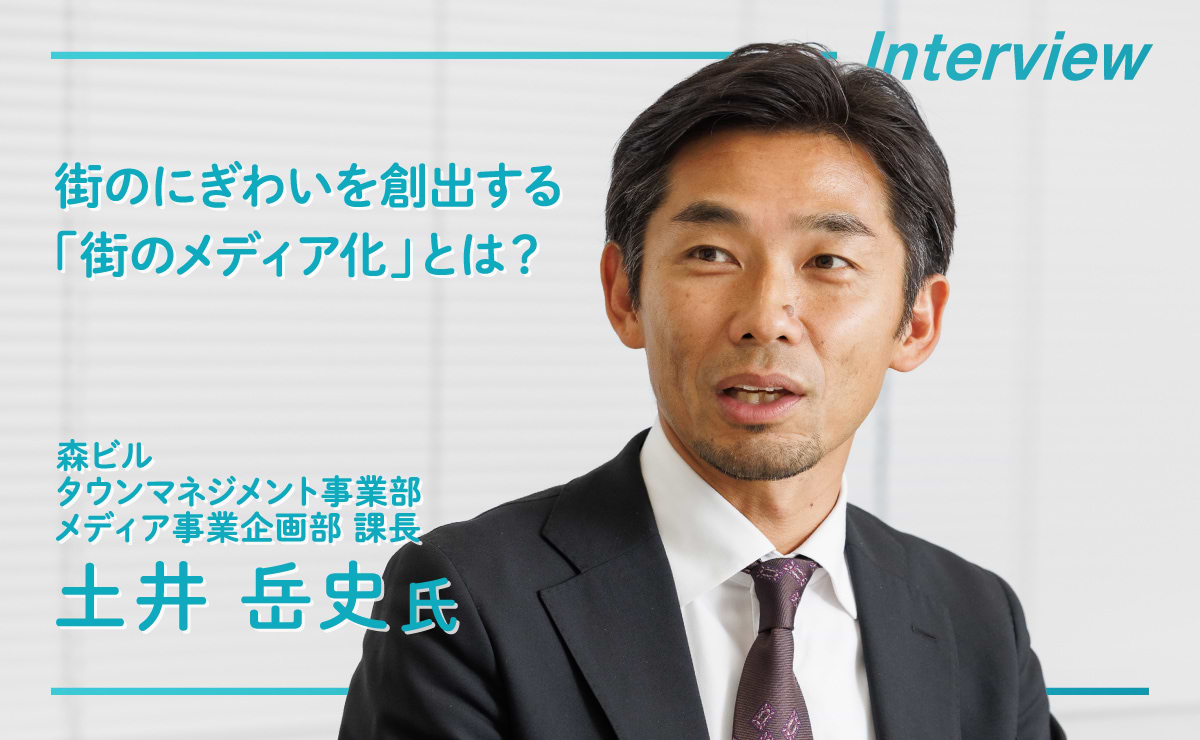
We spoke with Mr. Takeshi Doi, Section Chief of the Media Business Planning Department within the Town Management Division at Mori Building, about the significance of enhancing value and branding through urban management, as well as tips for fostering self-sustaining neighborhoods. The interviewer was Mr. Yasuharu Kano of Dentsu Inc.
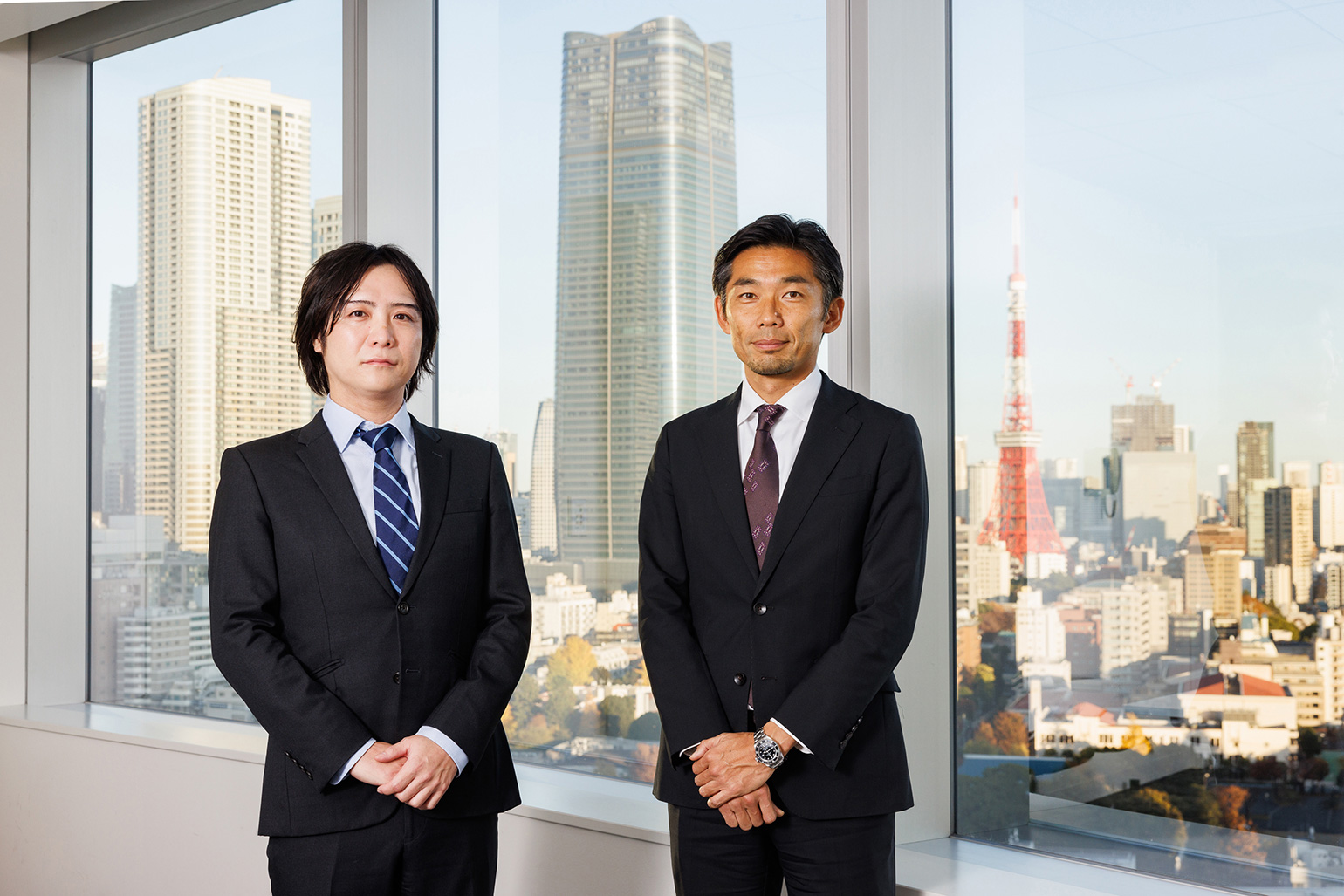
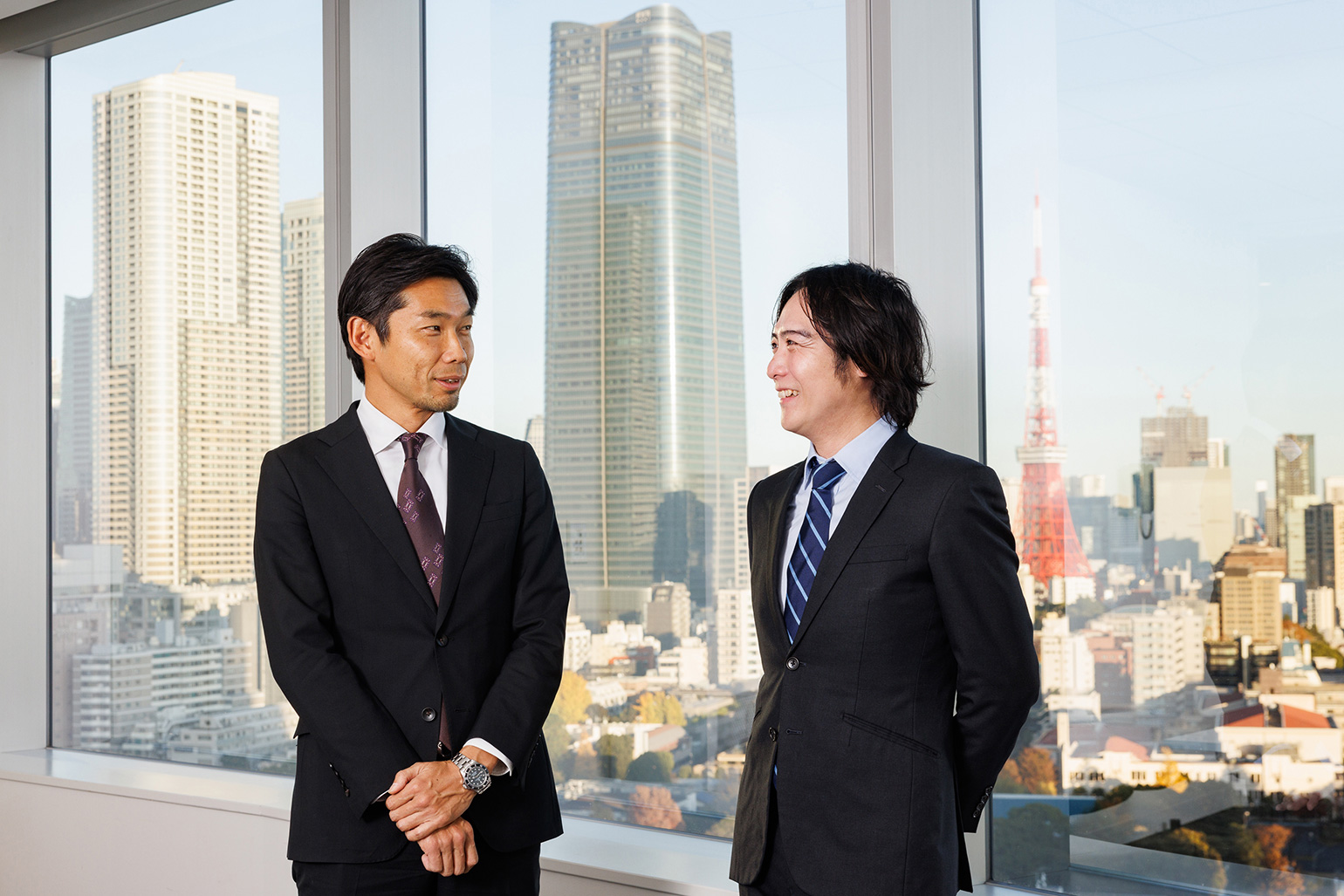
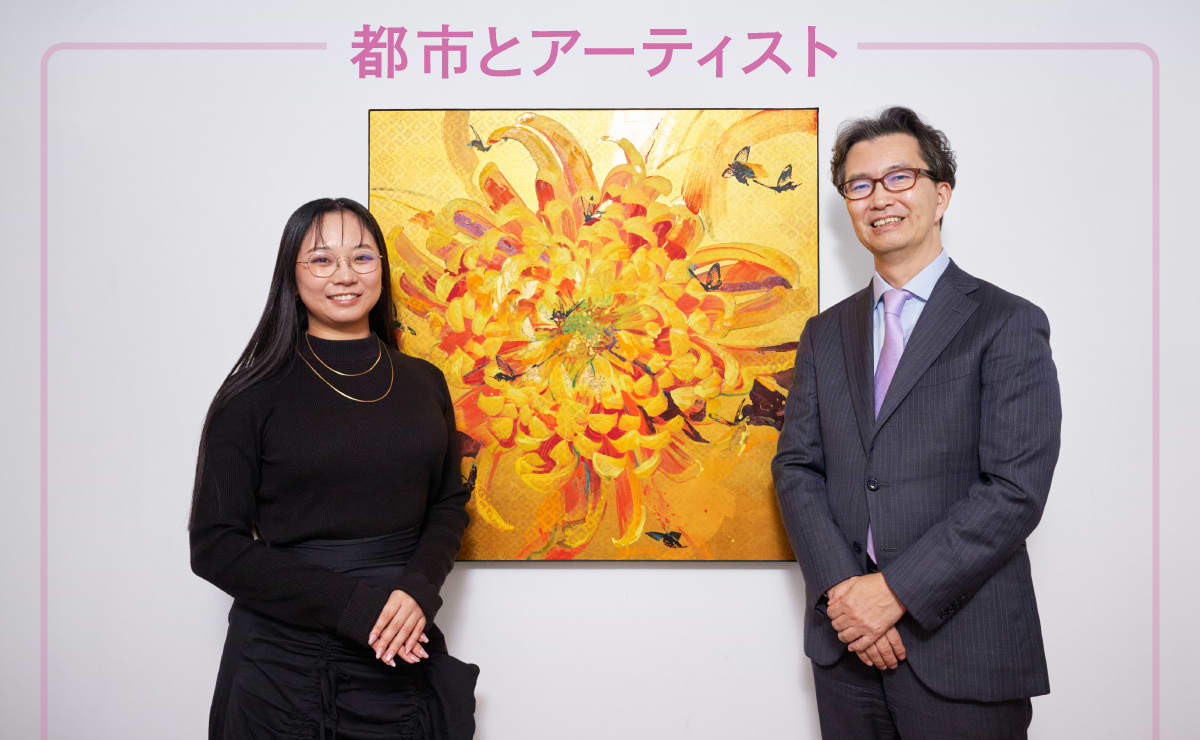
(From left) Mr. Yasuharu Kano of Dentsu Inc., Mr. Takeshi Doi of Mori Building
What Is “City Media,” Which Enables Sustainable Urban Management?
Kano: Roppongi Hills has now been in operation for over 20 years, and in recent years, with the openings of Toranomon Hills Station Tower and Azabudai Hills, Mori Building has consistently spearheaded new urban development initiatives and continued to generate a variety of topics of interest. I believe one of the hallmarks of Mori Building’s urban development is its use of advanced town management to disseminate information. Could you tell us what philosophy has guided these efforts?
Doi: Ever since the opening of Roppongi Hills in 2003, we have been promoting urban development based on the concept of “transforming the entire neighborhood into a media platform.” At the time, it was quite difficult to get people to understand what “transforming a neighborhood into a media platform” actually meant, but we have been working on this for a long time as a means of creating a vibrant atmosphere in the neighborhood.
Kano: Wasn’t the idea of turning spaces and places into platforms for disseminating information quite rare back then?
Doi: That’s right. For us, it’s not enough to simply build structures like Roppongi Hills and call it a day. As a developer, we need to continue nurturing the neighborhood and fostering its vibrancy while managing the facilities. When the neighborhood is vibrant, everyone benefits—not just the shops, but the residents and workers as well. Furthermore, we can provide visitors with exciting and enjoyable experiences.
To keep driving this kind of vibrancy, it’s important not just to spend money on events or advertising, but also to let companies and others use the neighborhood itself as a platform for promoting their brands, thereby generating vitality. When people gather there, it leads to even more vibrancy.
Kano: Rather than relying solely on special events to create a lively atmosphere, I feel that involving partner companies, sponsors, and advertisers to jointly energize the town is a town management strategy that is truly characteristic of Mori Building.
Doi: When managing the town, we first consider what kind of town we want this area to be, and then plan and evaluate appropriate communications, events, and promotions that align with that vision. We also pay close attention to every detail—from conducting staff training to maintain service quality for those working here, to the town’s landscape, including benches and greenery—as part of our branding efforts.
Through these “town management activities,” as the quality and appeal of the neighborhood continue to grow, the neighborhood itself gains a magnetic pull, naturally drawing people in. As a result, companies begin to target the people gathering in the neighborhood with promotions, which leads to revenue.
This makes it possible to create a cycle where the revenue generated here is reinvested into further branding efforts.
Kano: So, by branding the town, the target audience becomes clear, and this attracts potential partners such as advertisers and sponsors, right?
There’s a common perception that events and festivals inevitably require significant investment, and I used to feel that their sustainability depended heavily on the financial resources of the organizers. Therefore, I believe that transforming the neighborhood into a media platform to secure revenue—and thereby nurturing it into a “self-sustaining neighborhood”—is a logical and sound approach.
Doi: At Roppongi Hills, we’ve been managing the district by balancing branding and monetization since our opening in 2003. I believe the efforts we’ve built up over time have led us to where we are today.
Attracting Partner Companies Through “Brand-Safe” Urban Development!
Kano: Could you tell us about specific initiatives in Roppongi Hills’ urban development?
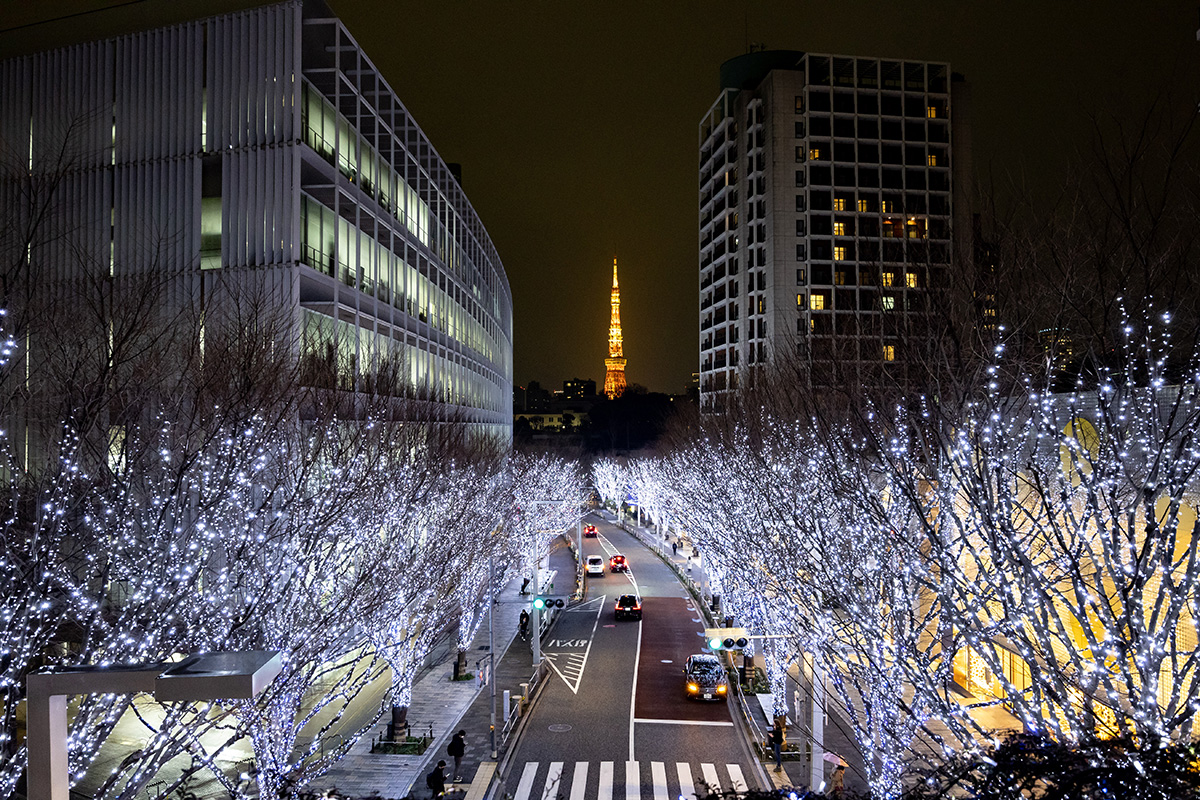
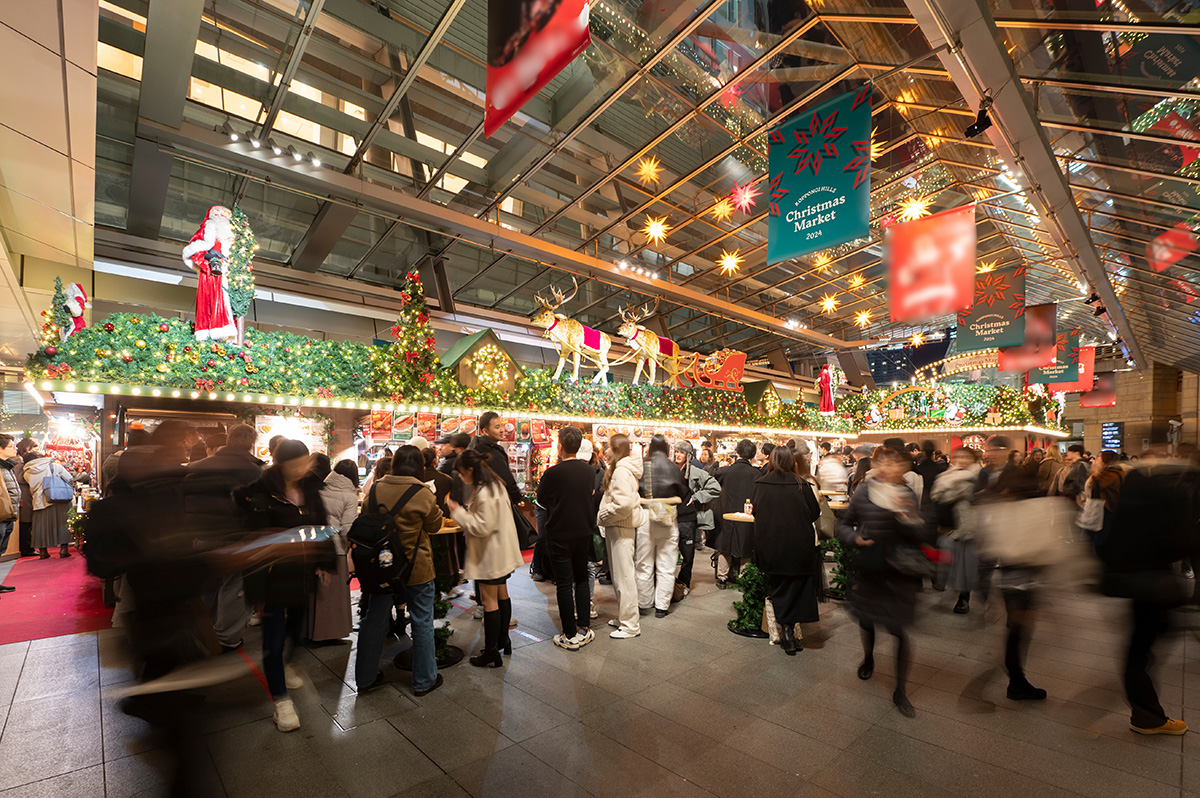
Doi: At Roppongi Hills, we host a variety of events throughout the four seasons to foster communication with local residents and visitors. One of the most popular events is the Keyakizaka Christmas Illumination, which has been held since our opening in 2003. It’s characterized by the “SNOW & BLUE” theme, where street trees are illuminated in shades of blue and white.The staff and designers at the time were committed to creating illuminations that perfectly suited this neighborhood, and it has remained a beloved Christmas tradition ever since. Additionally, for the Christmas market held during the same period, we invite shops from Germany—the birthplace of Christmas markets—to set up stalls. We are dedicated to ensuring high quality and authenticity in every event we host.
These events are funded and operated by Mori Building, but various companies also participate as sponsors, working together to enliven the neighborhood.
Kano: Perhaps it is this thorough attention to detail that captures the moments of those visiting Roppongi, creating the value of a “place you want to visit on a special day” and a “place you want to visit with someone special.”
Also, when attracting sponsoring companies or soliciting media placements, is there anything in particular you prioritize when dealing with partner companies and advertisers?
Doi: As we’ve promoted the “transformation of the neighborhood into a media platform,” what we prioritize is ensuring that Roppongi is a “brand-safe neighborhood” for our sponsoring companies and advertisers.
Since Roppongi Hills is a town created through redevelopment, there are 400 landowners and various other stakeholders. However, if each landowner and stakeholder were to manage their own facilities and equipment independently, disaster prevention, security, and the town’s appearance would become inconsistent, making it difficult to maintain the town’s quality. Therefore, Mori Building established a “unified management” system to centralize the operation and management of the entire town.
This makes it possible to coordinate the various events and promotions held throughout the year on a district-wide basis.
For example, we coordinate and manage schedules to ensure that when one foreign automaker is running a promotion, another foreign automaker’s event isn’t taking place in a nearby area at the same time.
Kano: It’s impressive that you manage the entire district as a whole. I see—that also contributes to the district’s branding.
When we talk about branding, we tend to overcomplicate it, but perhaps the key is simply creating a sense of vibrancy unique to that town.
Doi: That’s right. In urban development, I believe it’s important to adopt the mindset of ensuring that everyone who uses the area—not just office workers, residents, or visitors—can enjoy themselves.
Roppongi Hills hosts events like the Christmas illuminations that attract many visitors from around the world, but it also features community-based events deeply rooted in the local area, such as summer Bon dances, neighborhood association festivals, morning tai chi sessions, and community cleanup activities. Rather than just organizing large, one-off events, I believe that by nurturing the entire neighborhood—while cherishing these events unique to a place with a long history and community that predates the redevelopment—we can build a brand where people say, “That’s the kind of neighborhood Roppongi Hills is.”
Kano: The Town Management Department that you belong to, Mr. Doi, is also involved in neighborhood association activities, isn’t it?
Doi: At Mori Building, we place great importance on creating value for the neighborhood together with landowners and various stakeholders. To that end, we maintain close communication with local residents through monthly residents’ association activities and events.
At the Roppongi Hills Bon Odori festival, there’s a song called “Roppongi-jin Ondo,” and actually, the singer, “Roppongi Jiro,” is a former executive at Mori Building.
This song is still passed down today and helps liven up the Bon Odori every summer. The fact that we’re so deeply embedded in the community and committed to neighborhood development is one of Mori Building’s strengths.
A space that enhances the value of the town and offers new experiences through collaboration with companies
Kano: By branding a neighborhood, people gather, culture and prosperity flourish, and new ideas and products are born. When companies get involved through advertising, they can provide new topics of conversation and a sense of excitement to both residents and visitors.
To generate this kind of synergy, it’s also important to highlight the unique charm and character of this neighborhood and create an environment that makes it easy for partner companies to get involved.
Mori Building has a system called “Collaboration Partners,” in addition to partner companies such as those that sponsor events or advertisers placing ads in the media, doesn’t it?
Doi: The “Collaboration Partner” program is a system where companies that resonate with the concept of each Hills development provide year-round sponsorship and participate in the community-building process. For example, Azabudai Hills has adopted “Green & Wellness” as its community concept, and NIKE, a sports brand that shares this vision, has joined us as a Collaboration Partner.
As part of the Collaboration Partner program, we host “Azabudai Hills × Nike” running sessions every Tuesday along the approximately 1.2-kilometer running route in Azabudai Hills. We also regularly hold fitness events such as yoga and Pilates; anyone is free to participate in these, which embody “Wellness,” one of the neighborhood’s core concepts.
Kano: This is exactly the kind of initiative that’s only possible because of our collaboration with Nike, isn’t it?
Doi: That’s right. When people come to this neighborhood, they can experience wellness—such as doing yoga while out shopping or going for a run after work. For NIKE, hosting these running and fitness sessions also creates opportunities for people to consider purchasing the running shoes and workout gear they used during the sessions. I think this is a great example of a synergistic effect that benefits both the community and the company.
In addition, in July 2025, we formed a partnership with Epson Sales to jointly promote activities that reduce environmental impact, such as resource recycling at Azabudai Hills.
As a concrete initiative, we have introduced Epson’s “PaperLab,” a dry office paper-making machine, to produce recycled paper from used paper. Mori Building uses this recycled paper in its offices, thereby circulating paper resources.
Eventually, we hope to upcycle these resources to create products with new added value.
Combining the digital and physical worlds creates a stronger impact
Kano: In recent years, as digitalization has advanced, the value of physical spaces is being redefined. When we see that online shopping has become the norm and physical stores are struggling to sell goods, we have to ask: “What is the point of going out of our way to visit a city?”
The feeling of “Let’s stop by Shibuya and do some shopping,” as was common in the past, is fading. In an era where efficiency—such as time efficiency and cost-effectiveness—is prioritized in everything, are there any challenges that Mori Building is particularly focused on?
Doi: For the roughly 20 years since Roppongi Hills opened, we’ve focused our efforts on “turning the neighborhood into a media platform” to create a vibrant atmosphere. However, we can’t be certain this will continue indefinitely, and as the world changes, we must change with it. The trend toward digitalization is unavoidable, so this is certainly one of the key issues we need to address.
That said, while digital and physical spaces may seem contradictory at first glance, we’re increasingly realizing that they actually complement each other well.
When people experience in-person events or see advertisements—such as OOH—and post about them on social media, the content spreads, sometimes generating even greater impact.
Recently, when speaking with advertising executives, many have remarked, “It’s not just about digital—we really need the in-person experience, too,” and I can truly sense a resurgence of interest in the in-person experience.
Events, in particular, offer unique enjoyment and value precisely because they are experienced in person. I hope we can explore new forms of media that incorporate digital elements while cherishing that sense of being there.
However, we must not forget that the goal of “transforming the city into a media platform” is not to generate revenue. As a developer, our priority is to create attractive cities, and we will remain steadfast in our commitment to “securing revenue” as the core principle for realizing these visions and building self-sustaining communities.
Urban development and town-building driven by love—what lies beyond that?
Kano: I think we’ve seen an increase in recent years in urban development projects that prioritize well-being and livability. Finally, Mr. Doi, could you tell us what kind of town you envision as one with a high level of happiness?
Doi: That’s a tough question (laughs). Speaking from a personal perspective, it takes me back to over 20 years ago when I was job hunting. At the time, I had a job interview at Mori Building’s Ark Hills, and the interviewer was someone who held a passionate belief that “Urban development is love!”
Right in the middle of the interview, he suddenly asked me, “Have you ever walked around Ark Hills?” When I honestly replied, “Not yet,” he said, “Let’s go right now,” and I ended up walking through Ark Hills with that interviewer.
Kano: During the interview?
Doi: That’s right. He gave me a tour of the entire Arc Hills complex, and I was deeply impressed by how carefully he explained the hidden stories behind it—from the history of its development to details like, “This flower bed was designed with this concept in mind,” and “This event was created with this intention.”
I’m also proud that Mori Building brings together so many people who approach urban development with this kind of passion. I go about my daily work with the hope that if this passion and love can be conveyed to so many people—including landowners, local residents, those living in the neighborhood, office workers, and visitors—it will lead to everyone’s happiness and create a neighborhood with a high quality of life.
Kano: That’s a wonderful story. I often have the opportunity to speak with Mr. Doi and other representatives from Mori Building, and I’m constantly struck by how deeply everyone loves this neighborhood. That’s clearly evident in the relationships with the local community and residents’ associations, as you mentioned earlier.
Of course, I believe initiatives like branding through town management and the resulting media coverage of the neighborhood play a major role, but I was once again able to truly appreciate that at the core of it all lies a deep love and strong commitment to the land being developed.
[Editor’s Note] When people hear the term “turning the neighborhood into a media platform,” many might think of advertising or information dissemination systems. However, listening to Mr. Doi’s remarks this time, I was reminded that the essence of this effort lies not in “increasing exposure,” but in “continuously nurturing the neighborhood’s value.” People gather, businesses participate, and the revenue generated is reinvested back into the neighborhood. It is precisely because of this cycle that the neighborhood grows into a self-sustaining entity, rather than just experiencing fleeting bustle.
What also left a strong impression on me was that at the foundation of such a system lies a deep affection for the community and the people who gather there. Precisely because we live in an era that prioritizes efficiency and rationality, a town that people are willing to go out of their way to visit must possess a passion that cannot be measured by numbers alone. From Mr. Doi of Mori Building’s remarks, I sensed a sincere commitment to thoroughly considering the experiences of residents and visitors—the people at the heart of the development. I hope this interview will serve as a source of inspiration for those thinking about the future of urban development.
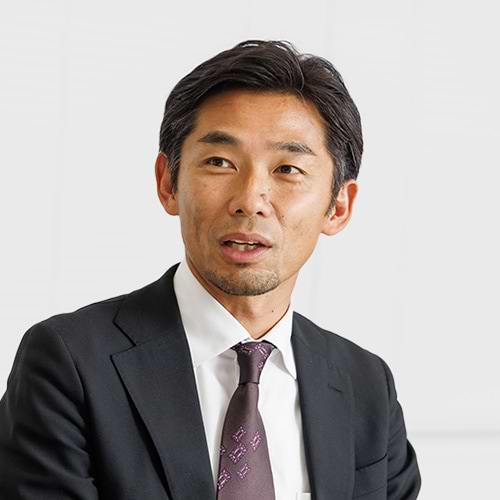
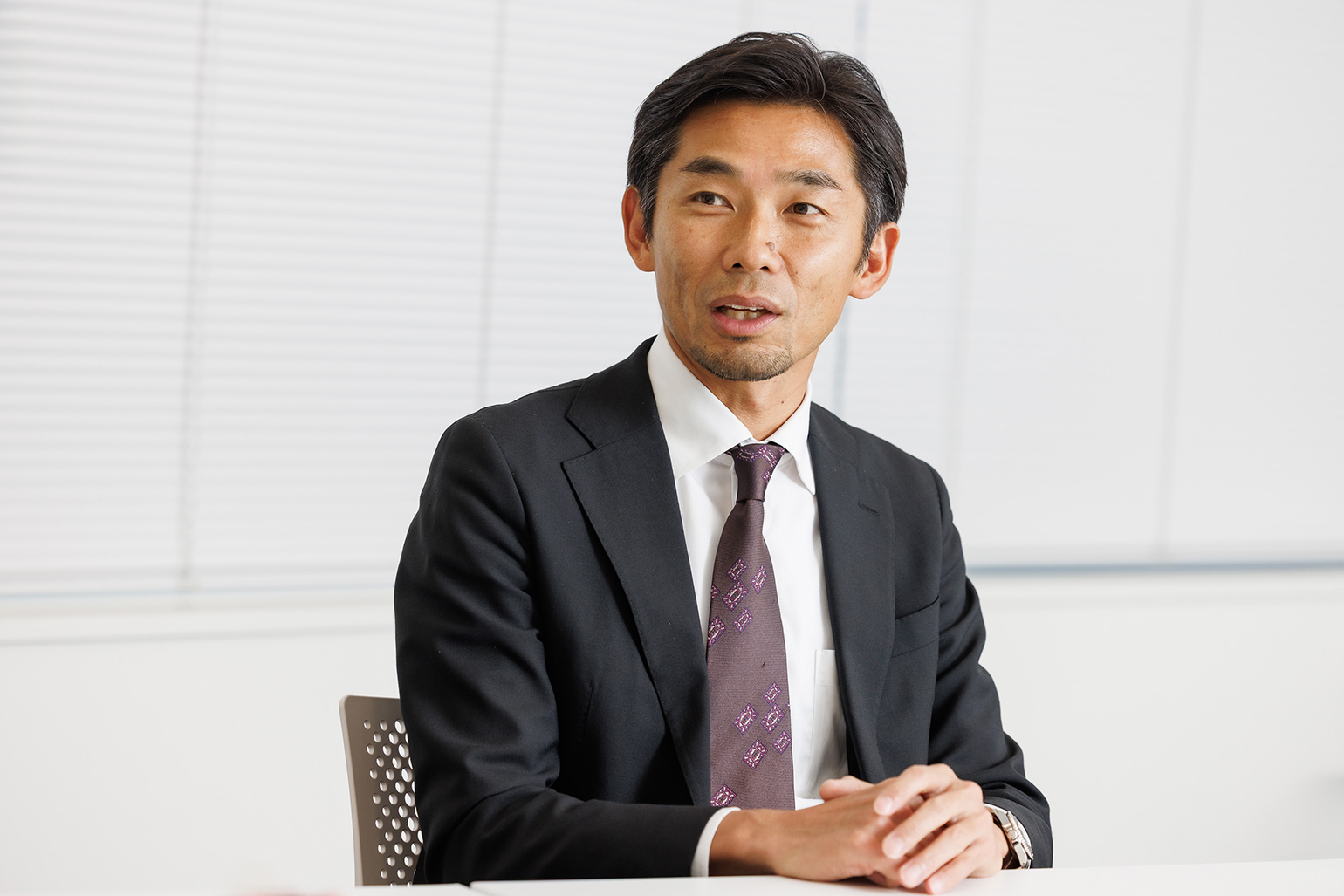
Town Management Division, Media Business Planning Department
Section Chief
Joined Mori Building in 2002. After working in the Administrative Center of the Office Sales Department, he transferred to the Residential Management Department (Roppongi Hills Residence Management Office) in 2003, where he handled on-site administrative tasks and the management of homeowners’ associations.From 2005, he was involved in the Omotesando Hills development project. Following its opening in 2006, he worked in the Omotesando Hills Operations Office, where he was responsible for the management of commercial facilities and the sales and operations of event and advertising spaces. In 2010, he transferred to the Town Management Division, where he has been engaged in town management operations for Roppongi Hills, Toranomon Hills, Azabudai Hills, and Ark Hills to the present day.
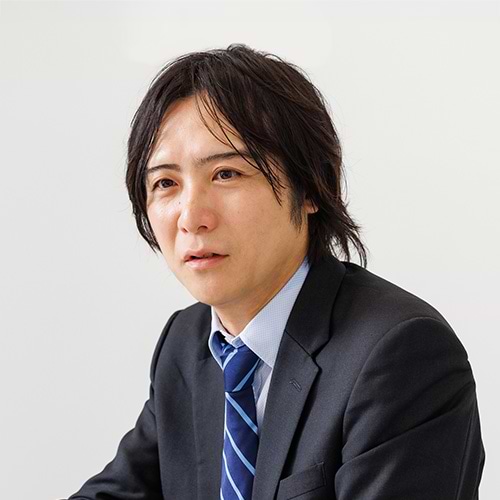
Yasuharu Kano
Dentsu Inc.
Business Producers Division 22, Account Lead Division 3
Senior Account Lead
Since joining Dentsu Inc., I have been engaged in planning and operational management within the OOH (Out-of-Home) sector, focusing primarily on monetization strategies for outdoor and transit advertising, as well as city promotions.
Leveraging my sales expertise in outdoor advertising, transit advertising, and event promotions, I support clients from the proposal to the implementation of business schemes designed to maximize the utilization of their assets.

 Urban Future Design Unit: Pursuing Happiness in the City [12/12]