Note: This website was automatically translated, so some terms or nuances may not be completely accurate.
 Where to start? Internal Communication [9/9]
How New Managers Can Develop a “Mid-Term Plan” for Corporate Branding
In recent years, an increasing number of companies have been developing 3- to 5-year mid-term plans for corporate branding in parallel with the formulation of new mid-term management plans, thereby advancing management and business strategies alongside brand strategy as two interdependent pillars.
This trend stems from the fact that, for many companies, the mid-term management plan is now positioned as the foundation for a corporate transformation narrative that integrates both financial and non-financial elements. Consequently, corporate branding activities must inevitably take the form of a multi-year plan designed to accelerate the realization of the vision outlined in the mid-term management plan, and there is a growing need for stronger alignment with management and business strategies.
However, the reality is that such initiatives lack precedent in many companies. Discrepancies frequently arise between the corporate planning department and the brand strategy department (such as the corporate communications or public relations departments), or even among different groups within the brand strategy department itself.
In this article, Naota Nakamachi, General Manager of Brand Consulting at Dentsu Inc., examines a scenario in which a brand strategy department welcomes a new leader and is tasked with formulating a mid-term plan. He explains the common pitfalls during the initial implementation phase and outlines approaches for ensuring smooth progress.
<Table of Contents>
▼The Changing Role of the Mid-Term Management Plan
▼“Sleeping in the Same Bed but Dreaming Different Dreams”: The Corporate Planning Department and the Brand Division
▼Point 1: “Revisiting” the Brand Value Definition
▼Point 2: Components of the Mid-Term Plan
▼Point 3: Engaging Department Members
▼Branding Challenges Shift Toward “Enablement”
The Role of the Mid-Term Management Plan Has Changed
In recent years, we have received an increasing number of inquiries from clients seeking to “tell the story of their mid-term management plans in a more compelling way.” In other words, many Japanese companies have begun to recognize the need to pursue both “creating” and “communicating” their mid-term management plans as two sides of the same coin. The reasons behind this shift include the following.
- In response to the expanding mandatory disclosure of non-financial information, companies must demonstrate their unique value by integrating financial and non-financial metrics to enhance the evaluation of their growth potential
- Amid growing uncertainty in the external environment, while a commitment to numerical targets remains important,
a strong determination to drive transformation is becoming increasingly critical - Co-creation with internal and external stakeholders is essential for driving transformation, and improving engagement to facilitate this has become a key challenge
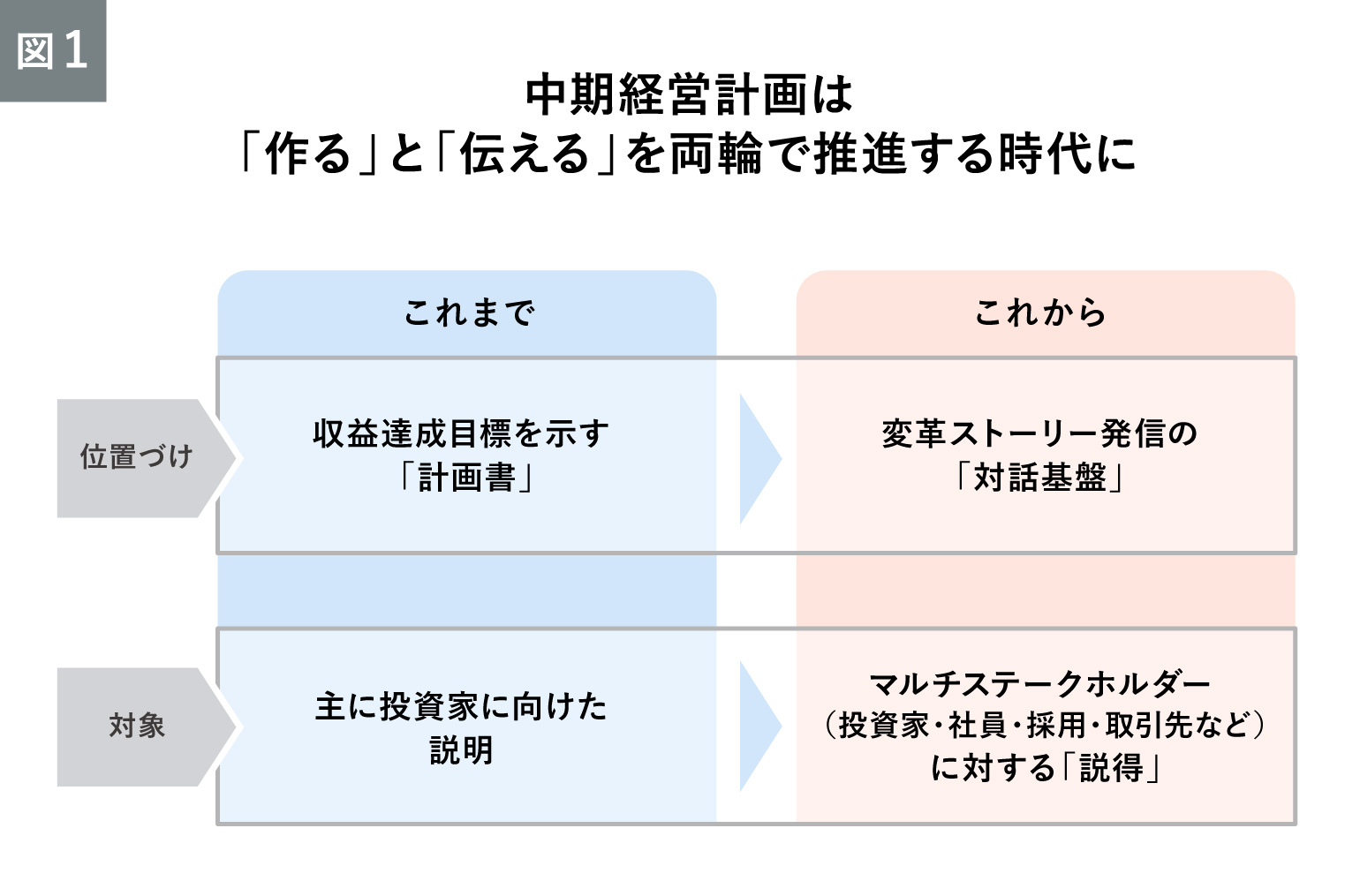
Medium-term management plans are no longer merely a tool for explaining earnings targets to investors. They are increasingly positioned as a “foundation for dialogue” to convince various stakeholders—including the company’s own employees—of the vision and the commitment required to realize it. The figure below summarizes this shift.
In light of these changes, the Corporate Planning Department and the Brand Department are required to collaborate more closely.
“Sleeping in the Same Bed but Dreaming Different Dreams”: Corporate Planning and Brand Management
However, many companies are facing the problem that it takes longer than expected for these two departments to align their perspectives. The most common scenario is as follows:
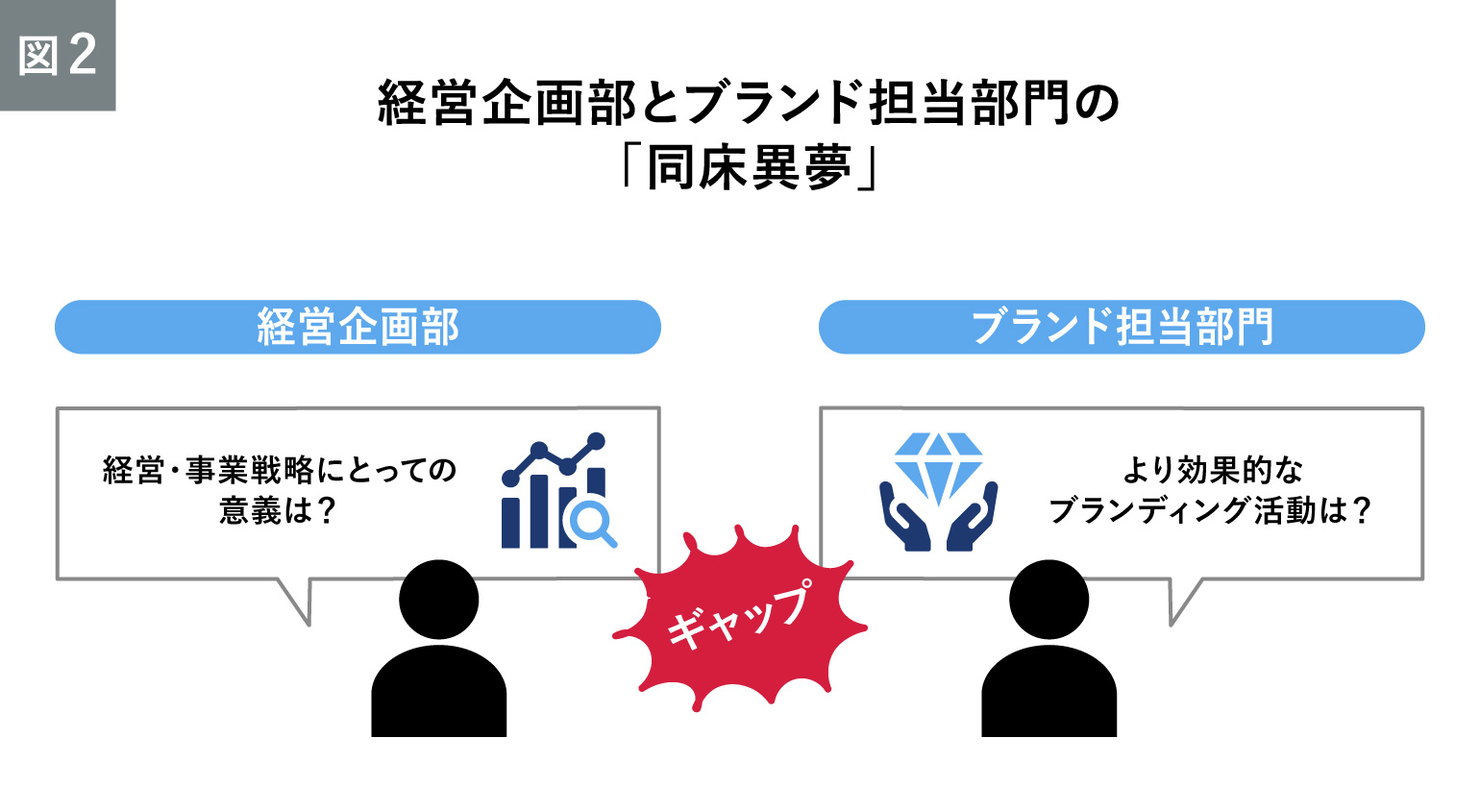
Departments responsible for brand strategy—such as the Corporate Communications Department and the Public Relations Department—propose more effective communication initiatives based on reviews of activities conducted by various groups within their departments.
However, that is not what the Corporate Planning Department is primarily interested in. Their main concern is clearly defining “how branding activities contribute to the advancement of the company’s management and business strategies.” To that end, they require a concise summary of current achievements and challenges, along with a structured presentation—from both quantitative and qualitative perspectives—of the process for moving toward the desired future state. They view discussions about specific measures as a subsequent step. This “same bed, different dreams” dynamic is illustrated in the figure below.
When such misalignments occur, not only does the resulting time loss make work schedules tighter, but it can also undermine the relationship of trust between the two parties.
Point 1: “Revisiting” the Brand Value Statement
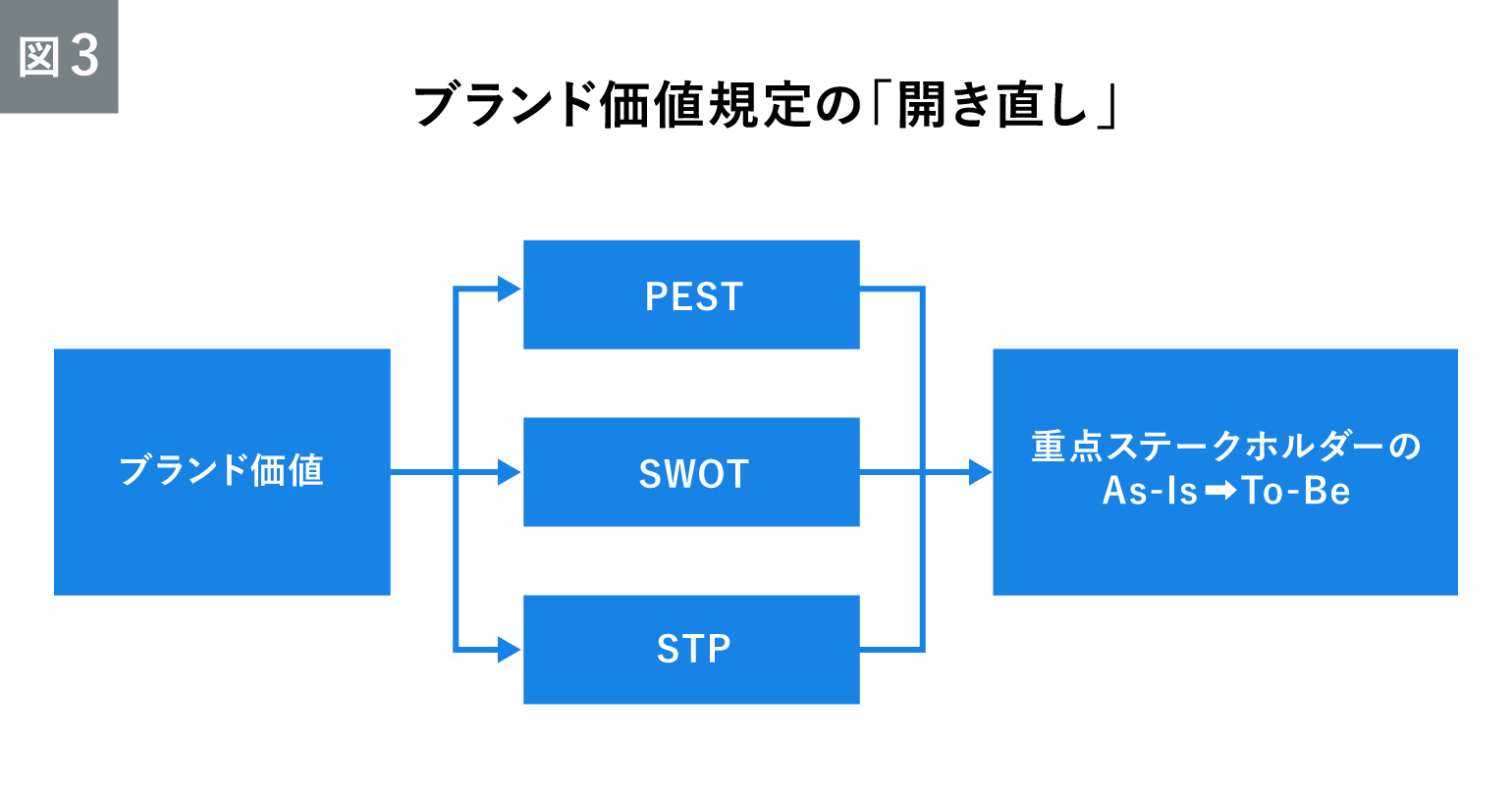
So, how should we proceed with the steps to align the perspectives of both parties? First, it is necessary to “translate” the brand value definition—which serves as the starting point for the various brand communication initiatives we have been promoting—and its background into language that other departments without specialized branding knowledge can understand. The diagram below illustrates this concept.
Brand value definitions are derived by integrating various sources of information—such as analyses of both the external and internal environments, interviews with management, and workshops with frontline employees—and consolidating them into a specific framework (which varies depending on the supporting firm). For example, at Dentsu Inc., we provide a framework called the “IV Matrix” to support corporate brand building, and many of our clients utilize it.
For the brand management department, the results consolidated into a framework are useful as a distillation of the research and analysis process conducted up to that point. However, for other departments—including the Corporate Planning Department—it can be difficult to immediately grasp the relevance to their own responsibilities, which can lead to communication gaps. Furthermore, since personnel rotations often occur every few years at Japanese companies, ensuring a smooth handover is a major challenge not only with other departments but also for new members joining one’s own department.
Therefore, brand value definitions must be formulated in a way that answers the question: “What does corporate branding mean for our company, and who, what, and how must be changed to accelerate management and business strategies?”Specifically, we will “re-examine” widely used business frameworks—such as PEST (Political, Economic, Social, Technological), SWOT (Strengths, Weaknesses, Opportunities, Threats), and STP (Segmentation, Targeting, Positioning)—in light of our corporate branding.Based on my experience, I strongly believe that summarizing and sharing this information concisely in a few reports is the “first step” toward helping others understand the significance of your company’s corporate branding activities.
Point 2: Components of a Mid-Term Plan
Next, we need to organize the components that should be included in the scenario planning for the mid-term plan. Of course, since each company’s perception of challenges and its background differ, there is no single correct answer; however, the process is generally structured as follows.
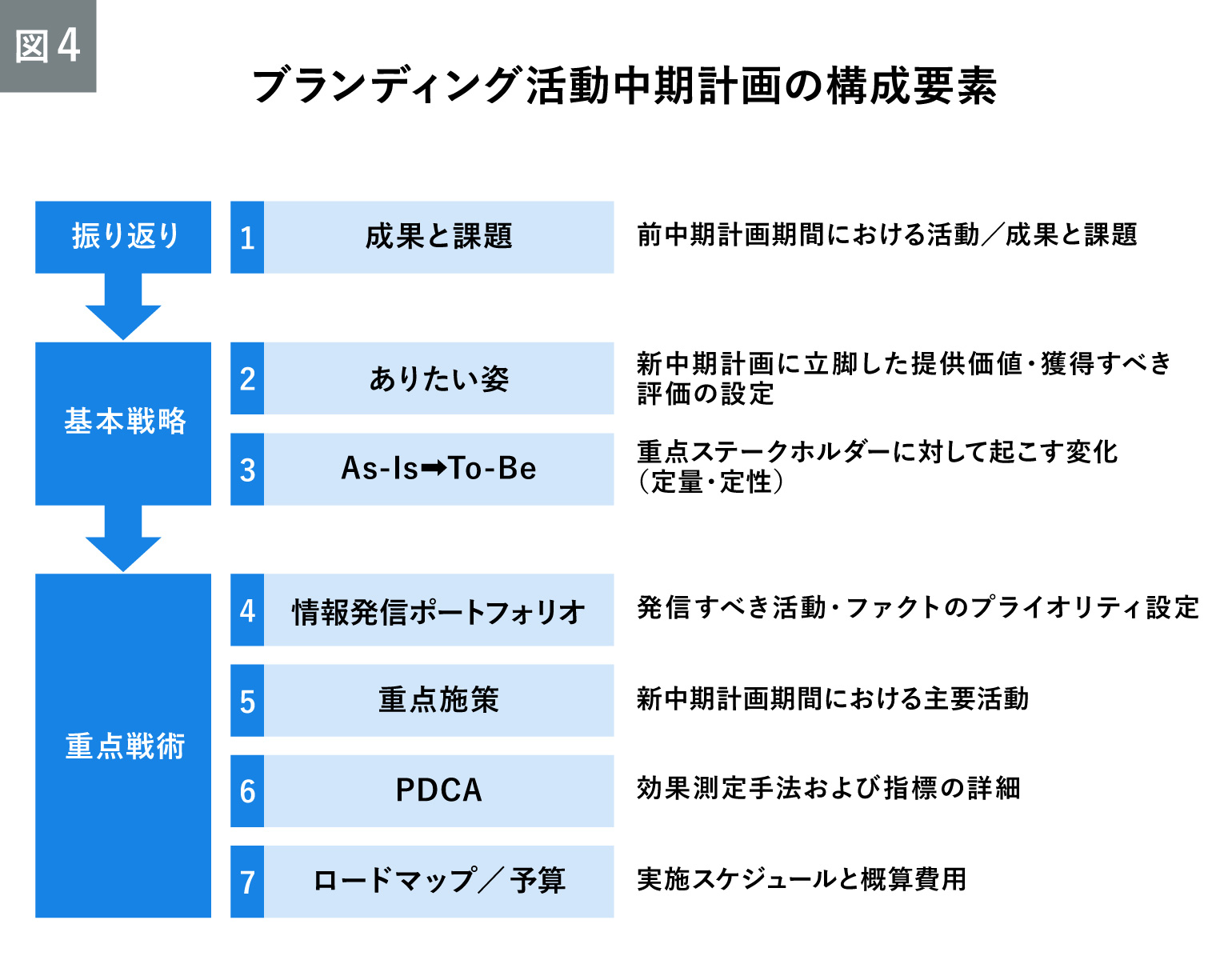
As mentioned earlier, to build consensus with the Corporate Planning Department, it is crucial to clearly define how branding activities will contribute to the advancement of the company’s management and business strategies. Therefore, you must first focus your energy on steps 1 through 3 in Figure 4. In many cases, the process involves discussing steps 1 through 3 during preliminary discussions with the Corporate Planning Department, and then refining steps 4 through 7 to prepare an activity plan and the corresponding budget request for senior management.
Point 3: Engaging Department Members
At the same time, it is important to effectively engage members within your own department. If you focus on aligning perspectives at the corporate and business strategy level primarily with department heads (director level) and managers in charge of specific areas (section chief level), a gap will inevitably emerge with staff members at the operational level who are deeply immersed in their day-to-day tasks.
Furthermore, since many Japanese companies tend to dislike “top-down impositions,” it is necessary to incorporate the voices of as many members as possible at the appropriate time and in the appropriate manner to help them take ownership of the mid-term plan. Particularly during the planning stage for priority initiatives, we recommend incorporating workshops and other methods to gather input from front-line staff while formulating the plan.
Furthermore, managers will need to consider expanding staff, providing training, and, in some cases, reorganizing the structure to drive the mid-term plan forward.Consider what new tasks you want members of your department to take on, and what skills they will need to acquire to do so. To this end, we recommend creating and analyzing a matrix that maps out your departments against organizational capabilities. This will help you visualize—before assigning action plans to specific departments within the organizational chart—which departments (or individuals) will be responsible for the organizational capabilities needed in the future, and what capabilities are currently lacking.
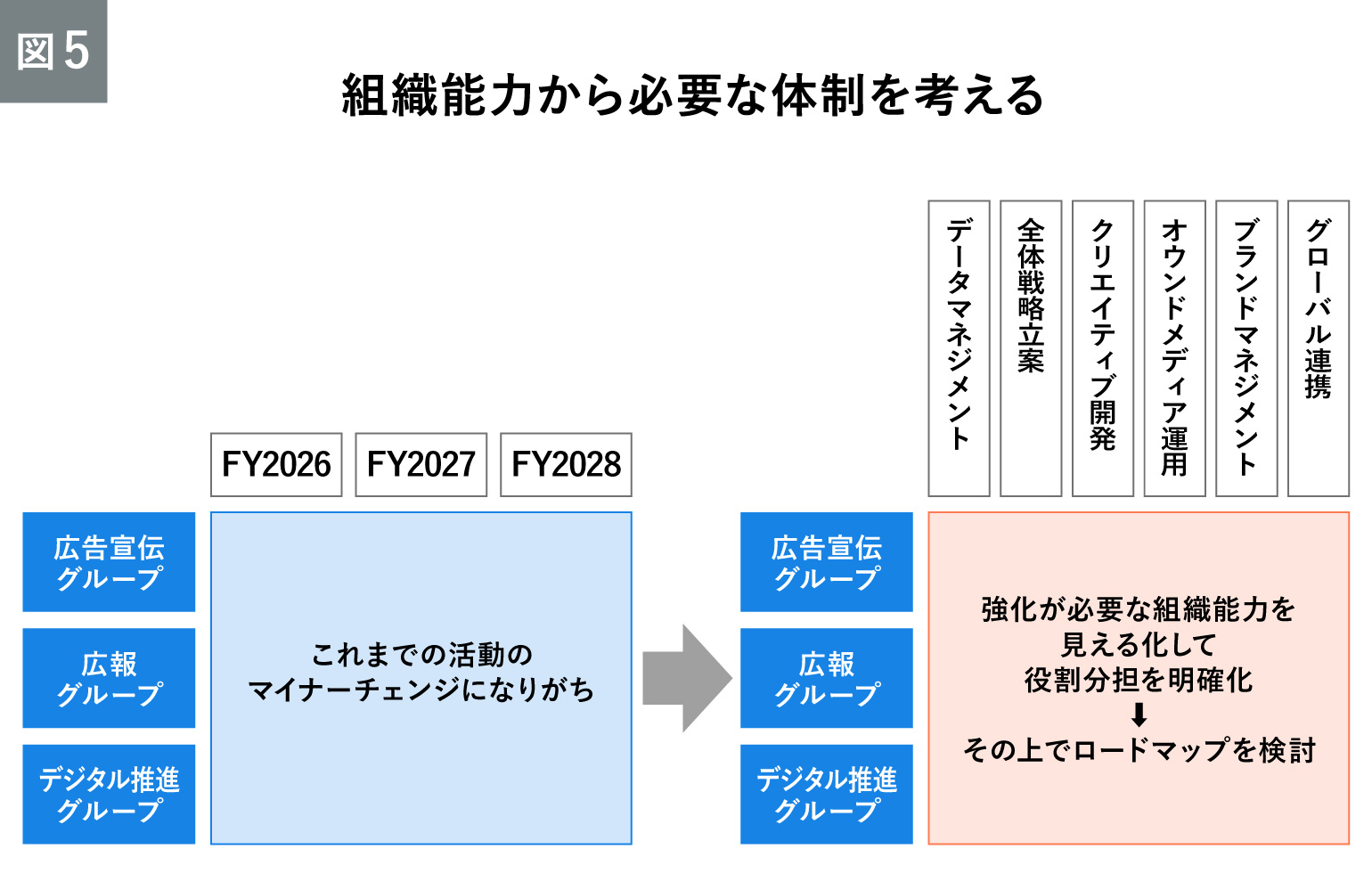
By doing this, you can shift your perspective from “forecasting”—which focuses on improving immediate tasks one by one—to “backcasting,” where you take on the challenges necessary to move toward your desired future state. This allows you to envision the future of your department’s organization and the tasks required to achieve it.
Branding Challenges Lead to “Enablement”
The majority of branding challenges we currently consult on relate not to strategy formulation, but to the implementation phase—that is, “enablement”: creating the environment necessary for the organization to deliver results and establishing systems that allow team members to take sustained action.
The Dentsu Group provides end-to-end support—from consulting on the organizational and operational structures necessary for brand strategy development and execution, through communication planning and creative production, all the way to measuring effectiveness.
Was this article helpful?
Share this article


Newsletter registration is here
We select and publish important news every day
For inquiries about this article
Back Numbers
Author

Naota Nakamachi
Dentsu Inc.
Marketing Division 4, Brand Consulting Department Manager
Senior Consulting Director