Note: This website was automatically translated, so some terms or nuances may not be completely accurate.
 Let’s talk about Cannes. CANNES LIONS 2026 [2/3]
30 seconds, 30 minutes, 30 hours. Japanese creativity that transforms people’s time into “valuable experiences.”
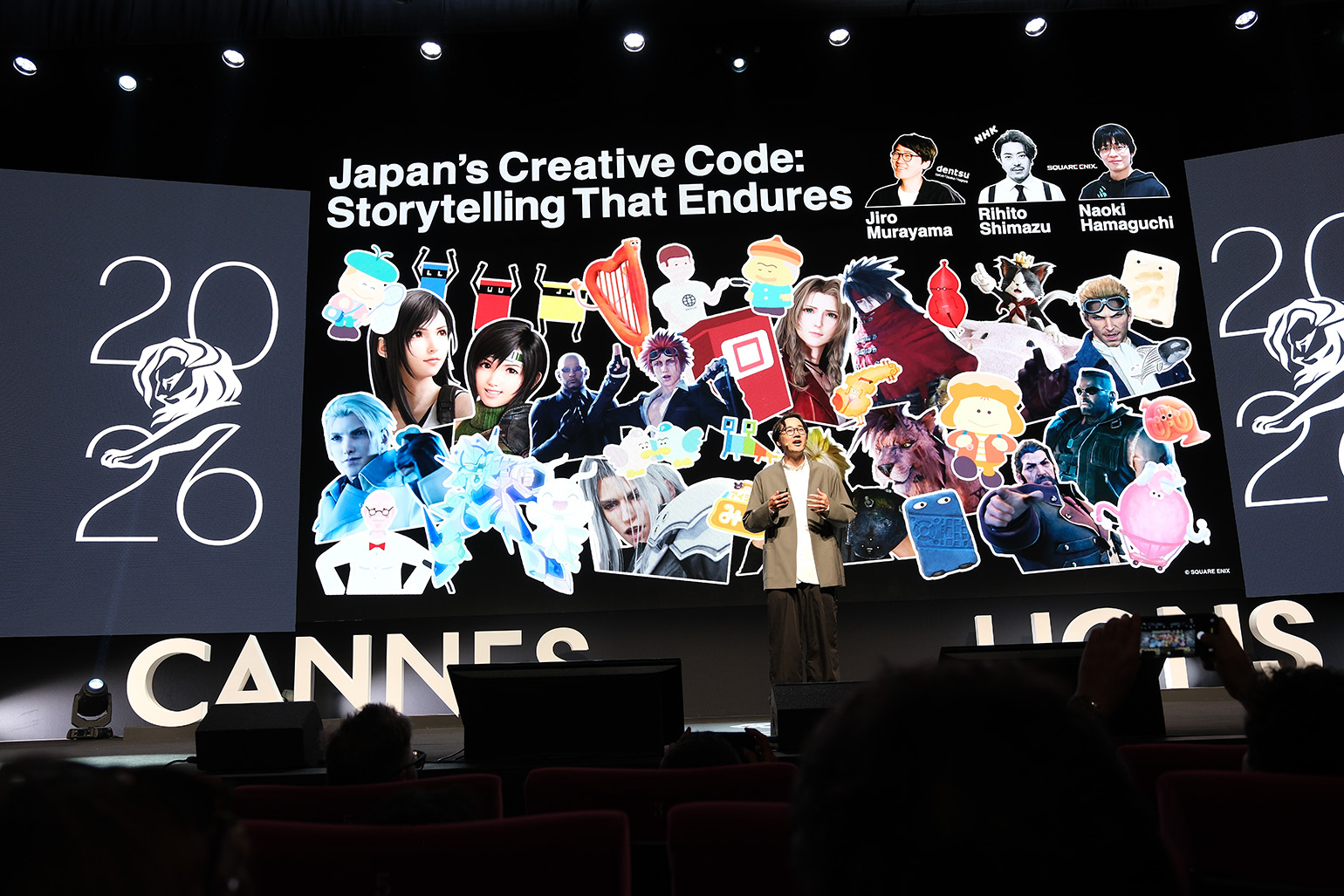
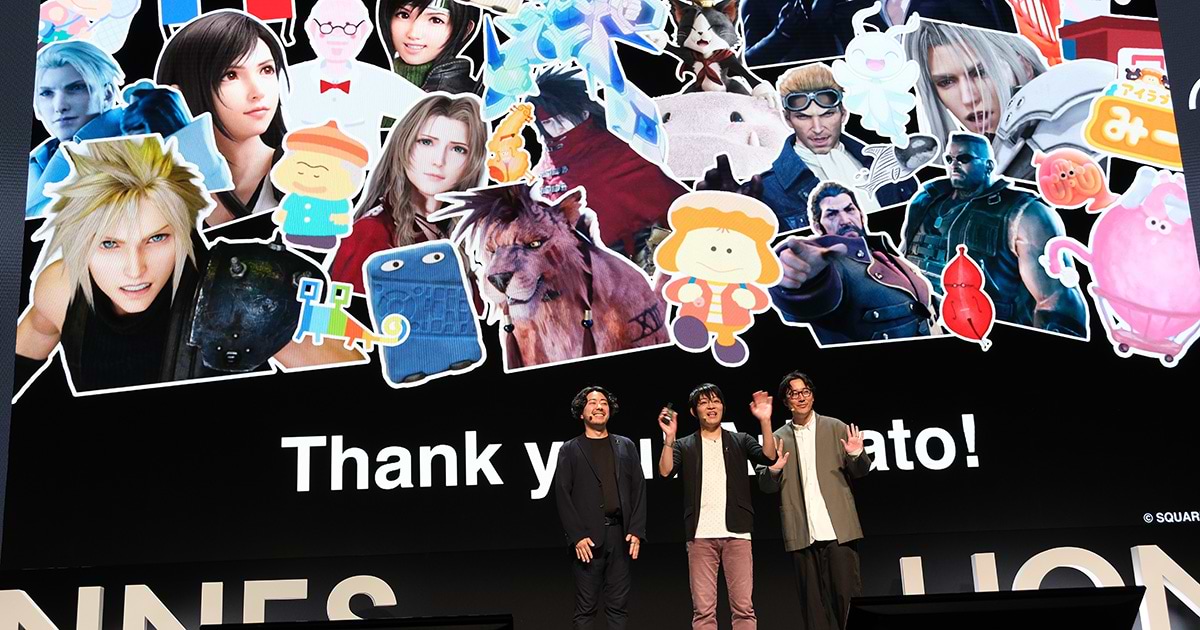
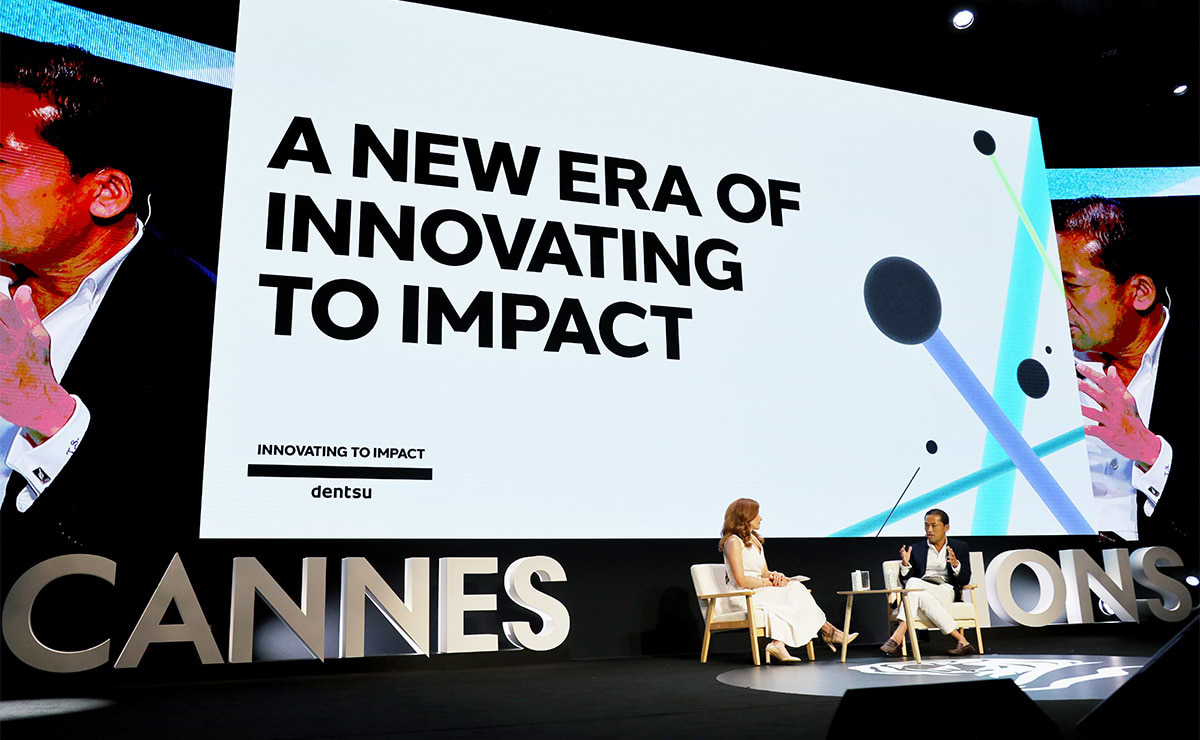
At the “Cannes Lions International Festival of Creativity 2026,” one of the world’s largest celebrations of creativity, Dentsu Inc. held a seminar on the theme of how to create meaningful moments for consumers.
With the proliferation of short videos, social media, and generative AI, the volume of content produced daily is growing exponentially. At the same time, the amount of time people have in a day remains constant. As information and content compete for people’s time, what role is creativity expected to play?
The seminar featured professionals working across different time scales: Dentsu Inc., which specializes in 30-second advertising communications; the Japan Broadcasting Corporation (hereinafter NHK), which produces 30-minute television programs; and Square Enix, which designs gaming experiences spanning dozens of hours. From their respective perspectives, they explored how to create experiences that make people want to “spend their time” on them.
Designing “Time Spent,” Not Just Content
The first speaker to take the stage was Jiro Murayama, a creative producer at Dentsu Inc.
During the Cannes Lions festival, attendees are constantly faced with the choice of “where to spend their time” amid numerous seminars, meetings, and events. However, this is not a phenomenon limited to Cannes.
“Time has become the most fiercely contested resource today. Formats are diversifying—30 seconds, 30 minutes, 30 hours—and people’s attention is becoming increasingly fragmented. We must not simply create content; we must design ‘time worth spending’ in every format and of every duration.”
If a brand unilaterally consumes people’s time, the brand’s own value will gradually erode. So, how can we create moments that people genuinely find meaningful?
Mr. Murayama presented two case studies in which Dentsu Inc. was involved.
One was the JR Group’s “MY JAPAN RAILWAY” campaign, which encouraged people to visit train stations nationwide and collect digital stamps. It transformed the time spent casually at stations during travel into an opportunity to enjoy new encounters and discoveries in local communities. By designing unique stamps for each of over 1,000 stations across the country, the campaign added new meaning to the very act of “visiting a station.”
The other was the smartphone app “Pokémon Trading Card Game Pocket.” By allowing users to open card packs for free twice a day—once in the morning and once at night—the app condensed anticipation, surprise, and the joy of obtaining cards into a single minute. Furthermore, by incorporating immersive card visuals made possible only by digital technology, it transformed brief interactions into an experience that keeps users coming back for more.
It’s not about the length of time, but how richly we can make that moment. Mr. Murayama described the philosophy common to both examples as the first “Creative Code” for deciphering Japanese creativity: “It’s not about what we create, but how we enrich that moment.”
Understanding Children’s Behavior and Sparking Their Curiosity to Learn
Next to take the stage was Mr. Masato Shimazu, a director at NHK.
In 1959, NHK launched “Educational Television,” a channel dedicated to education. Since then, it has provided people with learning opportunities through programs covering education, social welfare, language learning, and lifelong learning.
Underpinning this program production is research designed to carefully observe and understand children’s behavior.
Research conducted by NHK since the 1970s revealed that two-year-olds can concentrate on a television program for only about 2 minutes and 30 seconds. Based on this finding, the “omnibus format”—which consists of short segments of 2 minutes and 30 seconds or less linked together in a lively sequence—was developed.By combining diverse forms of expression—such as dance, puppet shows, and experiments—the segments are designed to keep children engaged from start to finish. It is said that this research-backed content is currently being utilized in schools across the country.
The new challenge Mr. Shimazu tackled was how to teach children about generative AI. Many existing teaching materials are manual-style guides that simply explain how to operate generative AI. However, these alone are insufficient to fully stimulate children’s curiosity or encourage them to think for themselves.
Therefore, prior to producing the program, he published five research papers over the course of about one year. He analyzed more than 500,000 dialogue logs obtained from 15,000 AI accounts used by elementary and middle school students. The results revealed that while children initially used generative AI like a search engine, by continuing to interact with the AI for 28 days or more, they began to explore, deepen their questions, and think from multiple perspectives.
Based on this discovery, we produced “i&AI,” an educational program about generative AI. The program combines animated story segments with explanatory segments, designed so that children can enjoy the story while learning how to interact with generative AI. In actual classroom settings, students who had struggled to generate images exactly as they envisioned were able to understand how to give instructions to the AI after watching the program. They reported that by refining their prompts, they were able to generate exactly what they had imagined.
“By combining survey data, real-life communication with children, and creativity, even just five minutes of content can bring about behavioral changes that will shape the rest of their lives.”
Rather than simply imparting knowledge unilaterally, we first seek to understand where learners are struggling. Based on that understanding, we guide them into an experience that makes them want to seek answers on their own. Inspired by Mr. Shimazu’s approach, Mr. Murayama identified “understanding the barriers people face and inviting them on a journey of curiosity” as the second element of Creative Code.
Turning Time Spent into “Personal Memories”
The final speaker was Naoki Hamaguchi of Square Enix, director of the Final Fantasy VII Remake series. With short videos and social media, the world is moving toward consuming information in a “short, fast, and efficient” manner. Furthermore, the volume of content continues to grow due to generative AI. Yet people still spend dozens of hours playing games.
Mr. Hamaguchi commented on this phenomenon as follows:
“I don’t think people are looking for shorter experiences; rather, they want to avoid time that lacks value.”
In the past, games were more like an experience of watching a story prepared by the creators. However, today, if the goal is simply to learn the plot, game playthroughs or video streams can satisfy that need. Yet people still choose to play games themselves because what they seek from games is not just a “story to watch,” but a “world to experience for themselves.” They explore vast worlds, spend time with companions, take detours, and sometimes collaborate with other players.Mr. Hamaguchi described games not as a medium for merely receiving information, but as a “media you can dwell in”—one where people actively engage and can stay for a long time.
People develop a stronger attachment to things they’ve spent a long time with themselves than to things they’ve only briefly encountered. In games, players invest their own time, make repeated choices, and create memories. As a result, events that occur within the game become not just memories of the work itself, but “their own memories.”
Mr. Hamaguchi introduced two design elements from “FINAL FANTASY VII REBIRTH.”
The first is that players can choose for themselves how to spend their time.The game features numerous minigames and side quests that aren’t directly tied to the main story. While these might seem like “filler” at first glance, it is precisely the time spent deciding for oneself where to go, with whom to spend time, and what to do that fosters a sense of attachment to that world. In this title, even key date scenes within the story change depending on which characters the player spends the most time with during their journey. Rather than observing predetermined relationships, players experience relationships they’ve cultivated themselves.
The second element is the musical design that resonates with the player’s emotions. Unlike in movies, in games, the timing and circumstances of events change based on the player’s actions. Therefore, the music isn’t static; it’s designed to shift in real time according to the battle situation and emotional shifts. By preparing multiple arrangements for the same piece and ensuring they flow naturally from any point, the music synchronizes with the player’s emotions, leaving a deeper, more lasting impression of the experience.
Furthermore, the “time spent” created within the game extends beyond the game itself. Players discuss their experiences with one another, communities form, and this evolves into a culture encompassing live events, concerts, merchandise, cosplay, video streaming, and in-depth analysis of the game.
“Isn’t the true value found in the time people spend lingering—and in the memories they take home with them? I believe the true value of technology lies not in enabling faster consumption of content, but in creating experiences that linger in people’s memories for a long time.”
Mr. Hamaguchi added that he will continue to leverage technology and creativity to create “a world people want to return to.”
Reflecting on the insights from Mr. Hamaguchi’s remarks, Mr. Murayama explained that an excellent experience does not rob people of their time but rather gives them a sense of taking control of their own time. As the third “Creative Code,” he proposed “empowering people to take control of their own time.”
From Content to Experiences That Enrich People’s Time
At the end of the seminar, Mr. Murayama revisited the three Creative Codes highlighted by the three speakers.
The first is, “It’s not about what to create, but how to enrich that moment.” The second is, “Understand the barriers people face and invite them on a journey of curiosity.” And the third is, “Empower people to take control of their own time.”
Mr. Murayama explained that what these have in common is a shift in the role of creativity: from creating content to enriching the moments people experience; from unilaterally delivering information to sparking curiosity; and from capturing attention to empowering people to choose how they spend their time.
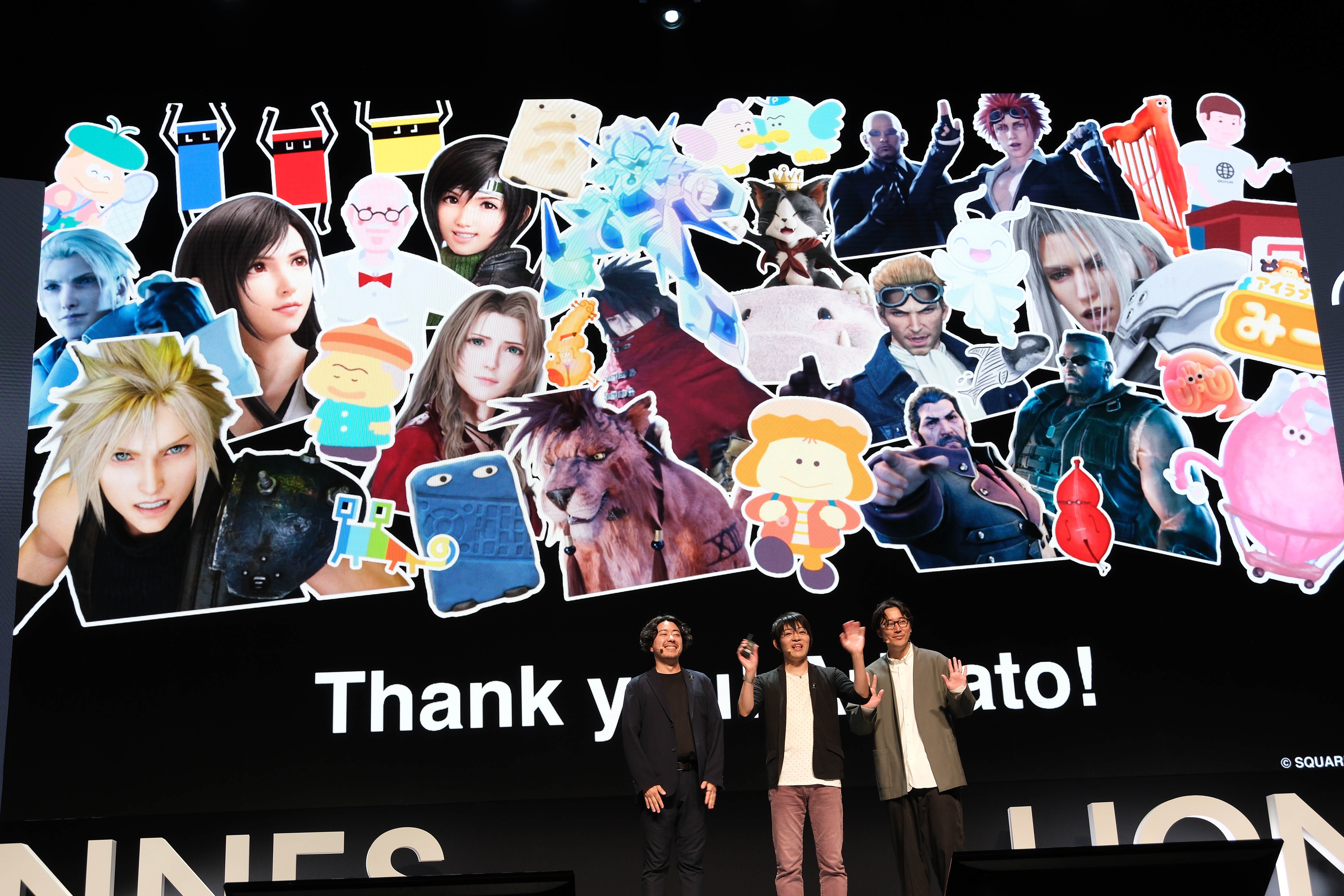
“How can we create moments that people truly find meaningful?” Mr. Murayama stated that keeping this question in mind will lead to the creativity of the future. He then concluded the seminar by presenting a video summarizing the messages from the three speakers.
Was this article helpful?
Share this article


Newsletter registration is here
We select and publish important news every day
For inquiries about this article
Author
Jiro Murayama
Dentsu Inc.
zero Dentsu Future Creative Center
Creative Producer