Innovation is shifting from “novelty” to “the power to bring about change.” — The new standard for the AI era, as outlined by the Cannes Jury President.
Kazuhiro Shimura of Dentsu Inc., who served as Chair of the Innovation Lions jury at the “Cannes Lions International Festival of Creativity 2026,” reviewed a diverse range of entries from around the world and engaged in extensive discussions with the other jurors.
Having spent more than a decade reflecting on “what kind of innovation the creative industry can offer society,” what answer did Mr. Shimura find to that question in 2026, a time when AI has become the norm? Drawing on the guidelines he set as jury president and the project he selected for the Grand Prix, we asked him about the future of innovation.
The Chair of the Judging Committee Outlines the Future the Division Aims to Achieve
—What kind of category is the Innovation category?
Shimura: The Innovation category brings together work that transcends the boundaries of advertising and communication—including products, services, platforms, social systems, and business models. Entries aren’t limited to agencies; we also receive submissions from corporations, startups, research institutions, and universities. It’s essentially the “freestyle category” of creativity. This is the only category that accepts prototypes, and it looks toward the near future.In fact, it’s not uncommon for winning entries from the Innovation category to become global sensations a few years later or to win awards in other categories at Cannes. Another distinctive feature of the judging process is the on-site live presentation by shortlisted teams. After several rounds of preliminary judging, the selected teams proceed to present their work in Cannes.
――When you were asked to serve as the chair of the Innovation category jury this year, how did you feel about it?
Shimura: I was surprised when I first received the request, but at the same time, I felt it was a truly valuable opportunity. Since the mid-2010s, I’ve been constantly pondering the question, “What kind of innovation can the creative industry offer to the world?” and have taken on various challenges. I thought this judging process would be an opportunity to formulate my own answer to that question.
I hoped that by reviewing entries from around the world and discussing them with judges from diverse backgrounds, we could identify the kind of innovation unique to our industry. At the same time, the choices made by the head of the jury will influence the future direction of the Innovation category. More than just excitement, I felt a profound sense of responsibility.
Group Photo of the Judges
――You’ve served as a judge before—does the role of chairperson differ significantly?
Shimura: As a judge, your main role is to convey your own evaluation of the entries and share your opinions. The chairperson, however, takes on the additional responsibility of guiding a team of judges with differing values toward a single conclusion.
Of course, the chairperson also shares their own opinions. However, rather than strongly advocating for a specific entry, it is more important to set the overall direction for the judging process and lead the discussion in accordance with that direction.
The Innovation category does not have detailed evaluation criteria or weightings set in stone, as other categories do. That is precisely why the Chair’s approach is so crucial. After all, it is only natural that the concept of innovation is perceived differently depending on one’s perspective, industry, or country. For this reason, rather than imposing a single definition from the outset, we used the multiple preliminary review sessions to elicit each judge’s individual understanding of innovation.
Based on those discussions, I updated my own perspective, and before the on-site judging began, I presented “From Proof of Concept to Proof of Change” as the judging policy for 2026.
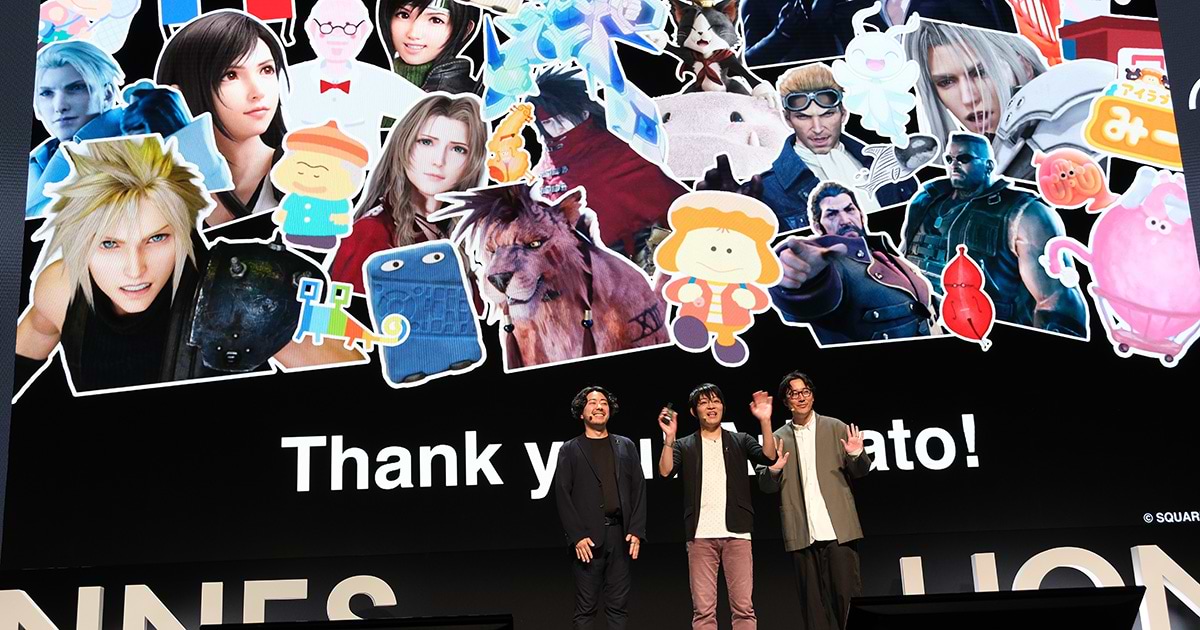
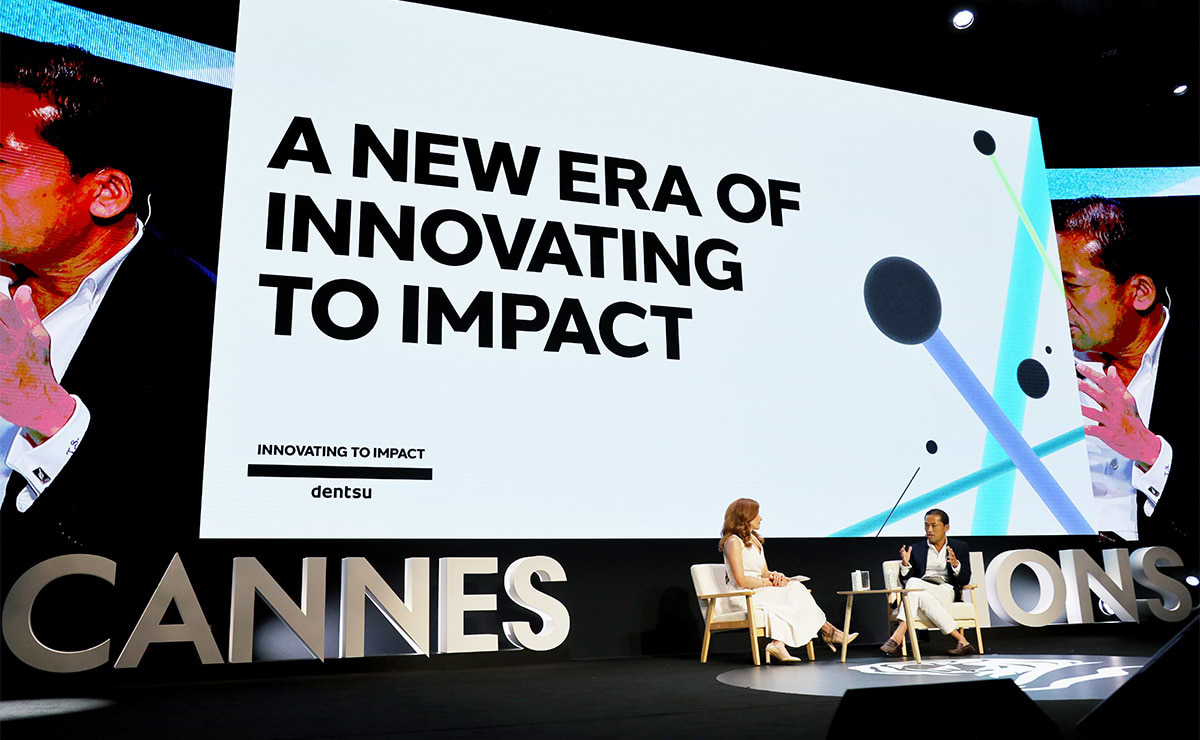
Speech by the Chair of the Innovation Category Judging Panel
Updating the Definition of Innovation in the Year AI Became the Norm
――What is the meaning behind “From Proof of Concept to Proof of Change”?
Shimura: With the widespread adoption of generative AI, the barriers to generating and bringing new ideas to life have dropped significantly. So, in an era where anyone can create something new, what do we actually call “innovation”?
In the past, there was great value in the “Proof of Concept” itself—coming up with a completely new concept and demonstrating that it actually worked. Answering the questions of “novelty,” “feasibility,” and “functionality” was one of the key evaluation criteria for the Innovation Category.
However, in the age of AI, “Proof of Concept” is no longer the goal—it is becoming the starting point. Novelty and technical feasibility remain important prerequisites for innovation. Yet, they are no longer sufficient on their own. In the age of AI, we must ask: Has the idea actually changed people’s lives, businesses, and society? What changes is it capable of bringing about in the future? And how profound and powerful a transformation can it bring about? We believe it is essential to look beyond the initial proof of concept to these questions.
This is because, while AI has made it easier than ever to bring ideas to life, bringing about truly meaningful change for society and the future remains difficult. Yet, we believed that this is precisely where the key to evaluating future innovation lies.
Therefore, in our evaluation, we examined change through three lenses.
The first is “Proof of Change.” Have tangible changes already begun to take place? The second is “Possibility of Change.” What kinds of changes and what kind of better future will become possible going forward? The third is “Power of Change”: the inherent power of the idea itself to bring about change (such as novelty or technology).
I believe this judging process—the first to take place in an era where AI has become the norm—marked a major milestone for the Innovation Division. We evaluated not only whether the technology was cutting-edge or the idea was unprecedented, but also the “power to drive change” inherent in the idea itself. We believe this approach represents the future of innovation beyond 2026.
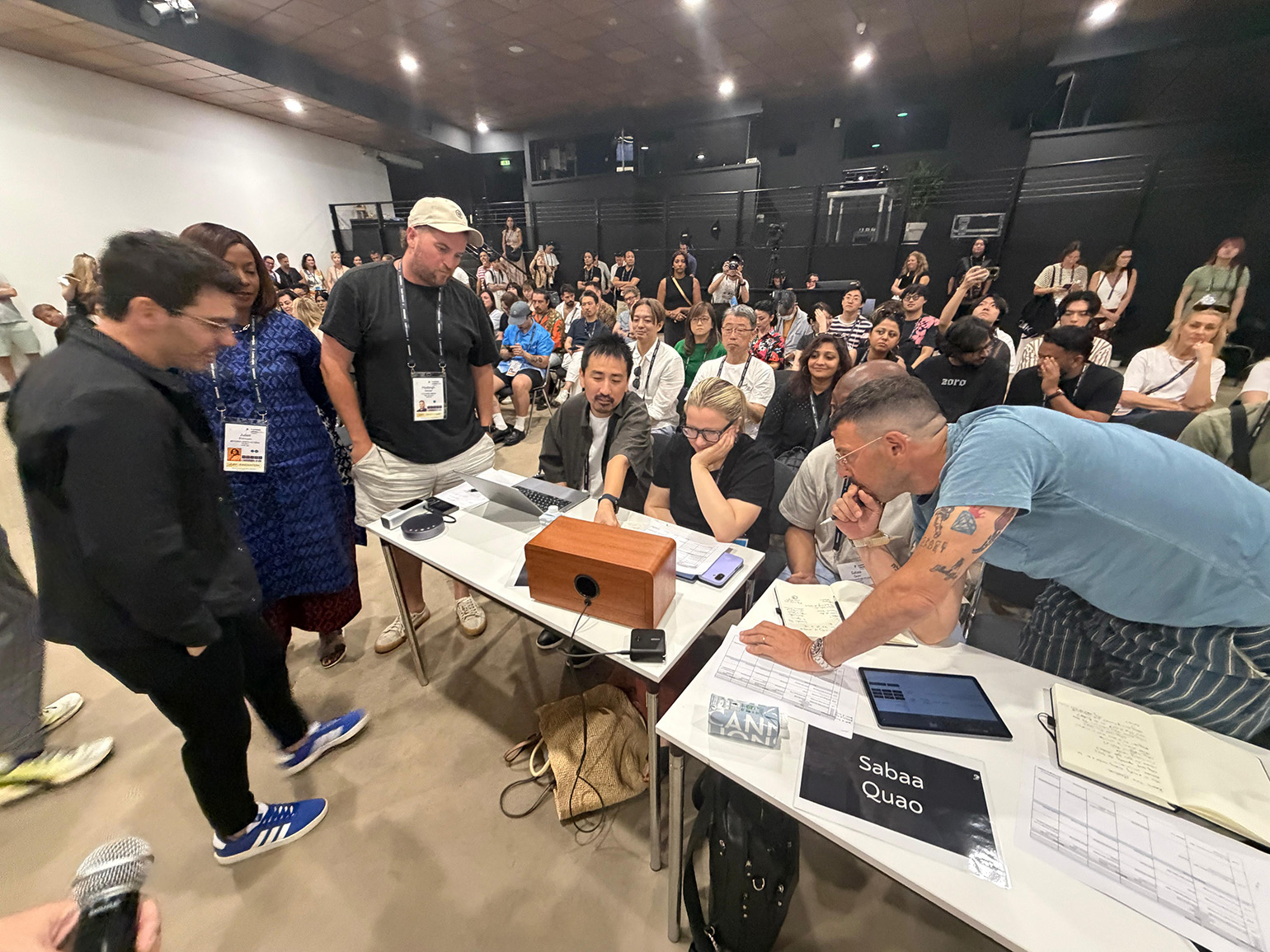
A scene from the judging during the live presentations. Judges are evaluating the products by actually handling them.
It created not just “new shoes,” but “a future where we can run”
—How did this year’s Grand Prix winner embody this philosophy?
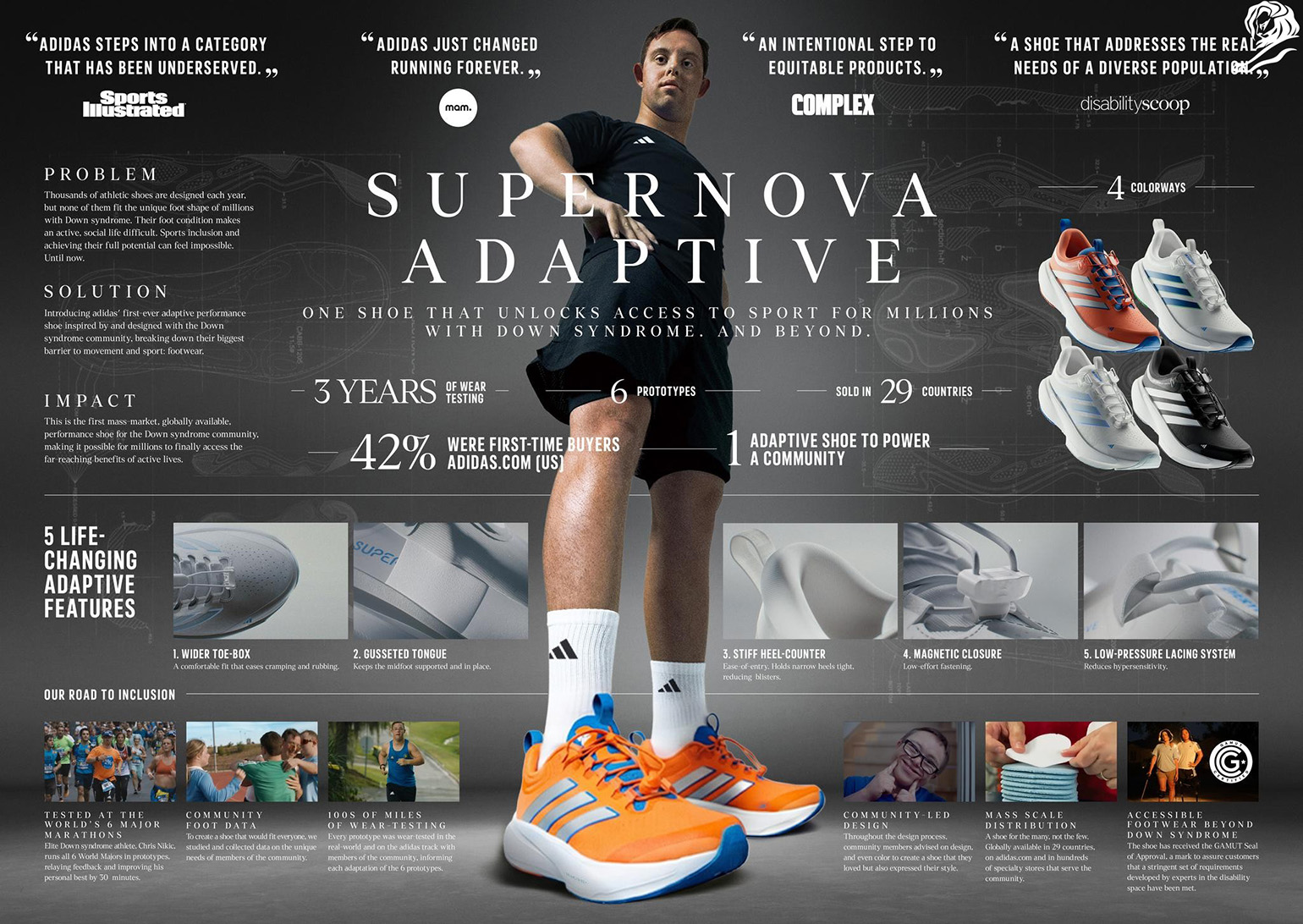
Shimura: We selected Adidas’ “Supernova Adaptive” as the Grand Prix winner. It is a high-performance running shoe developed to accommodate the unique foot characteristics of runners with Down syndrome. At first glance, you might think this was simply a project to develop a new shoe. However, what we evaluated went beyond the mere creation of a product.
Case Film
This project identified a challenge among people with Down syndrome: “There are people who want to run but cannot because there are no shoes that fit their bodies.” Building on long-standing relationships with those directly affected and with athletes, the team developed the product through a combination of technology and creativity.
Furthermore, rather than selling it as a special, limited-edition product, they made it available worldwide through the same distribution channels and at the same price point as standard running shoes. In other words, we didn’t just create a shoe. We transformed society so that people who had previously given up on running can now run.
This was a change that could not have been achieved without the scale, distribution network, and management-level commitment of the Adidas brand. It has the potential to drive even greater change in the future. Every aspect—from identifying the challenge and generating ideas to the technology needed to bring them to life and the execution required to deliver them to society—was of the highest standard. Furthermore, the on-site presentation, in which the athletes themselves took the stage, was outstanding.
Given the conventional image of “innovation” as cutting-edge technology we’ve never seen before or futuristic prototypes, some may wonder why a single pair of shoes won the Grand Prix.
However, if we define innovation not only by the “novelty” of a technology or concept but also by “what the idea has changed or can change,” the revolutionary nature of this project becomes clear. The Grand Prix winner truly embodied the judging criteria for this competition.
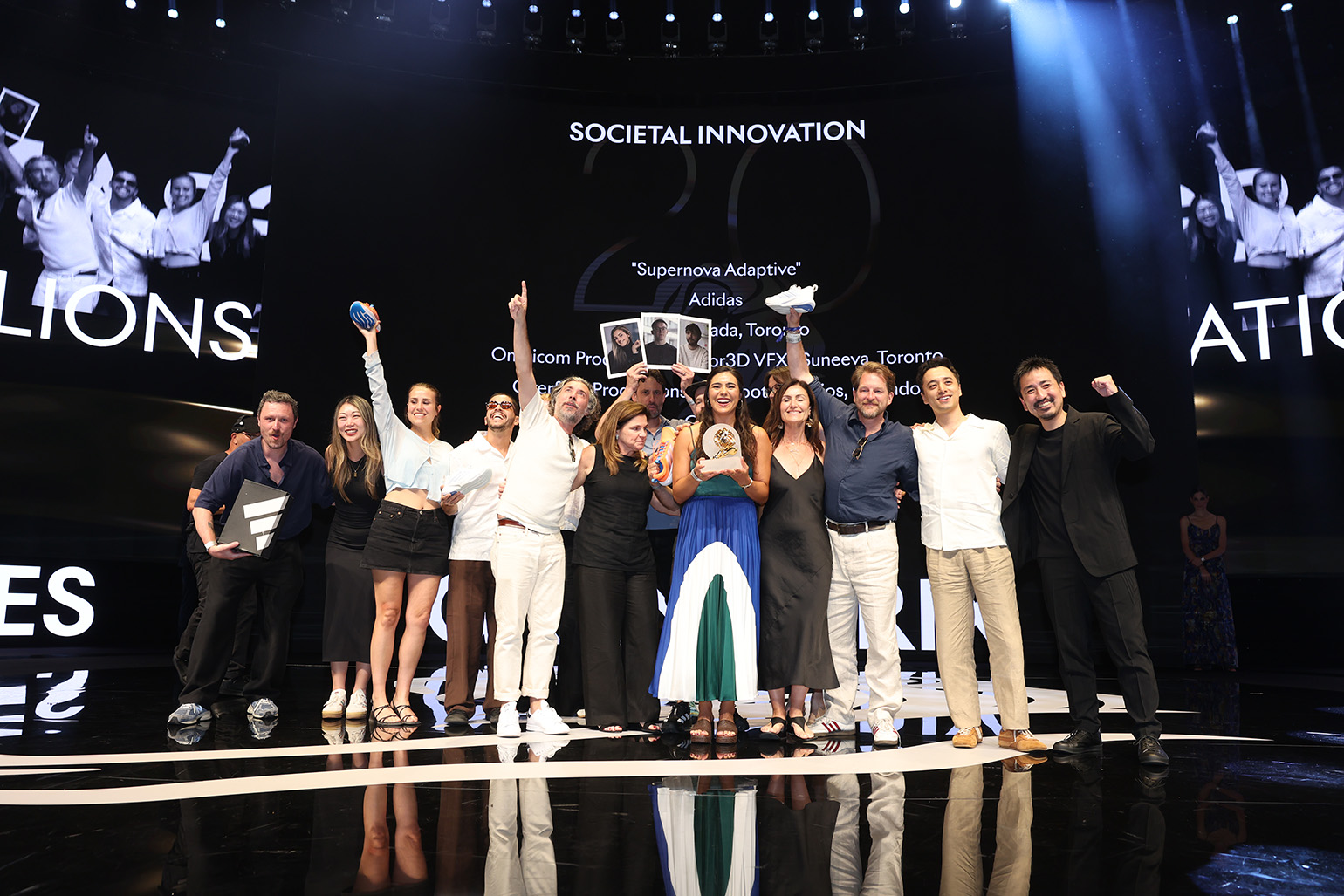
The Grand Prix team receiving their award
Innovation cannot be achieved by a single company
—Through this judging process, did you gain any new insights into how innovation is created?
Shimura: What I realized once again through this judging process is that innovation cannot be achieved by a single company alone. In traditional advertising production, there was a fairly fixed division of roles: the client provided the brief, the agency developed the concept, and the production company handled the execution.
However, many of the project teams featured in this year’s presentations did not follow such a linear structure. People with diverse areas of expertise—including clients, agencies, partner companies, researchers, local governments, athletes, and those directly affected—came together around a single idea.
What matters is not distinguishing “who was responsible for what,” but rather how far the team as a whole was able to bring that idea to life and drive change.
During the judging process, there were discussions about “what exactly the agency did.” However, in the era ahead, there will be no innovation that can be achieved by an agency alone. Innovation cannot be driven by clients alone, nor by technology companies alone. Innovation is born from the fusion of diverse areas of expertise.
That is precisely why we decided to evaluate the power of the ideas the team generated, rather than meticulously measuring the contributions of individual companies.
――Within such a team, what role is expected of the agency?
Shimura: I believe it is to invent a compelling, central idea and lead the entire team toward its realization. The role of the creative team isn’t limited to simply coming up with new ideas. Even with the same idea, its potential to change society varies greatly depending on who is involved and the structure under which it is implemented.
Bringing together people with the necessary expertise, connecting different objectives and perspectives, and nurturing ideas into a form that can be realized. Furthermore, not stopping at a prototype, but implementing them as corporate activities or societal systems, and guiding them until the change spreads. That requires a high level of creativity.
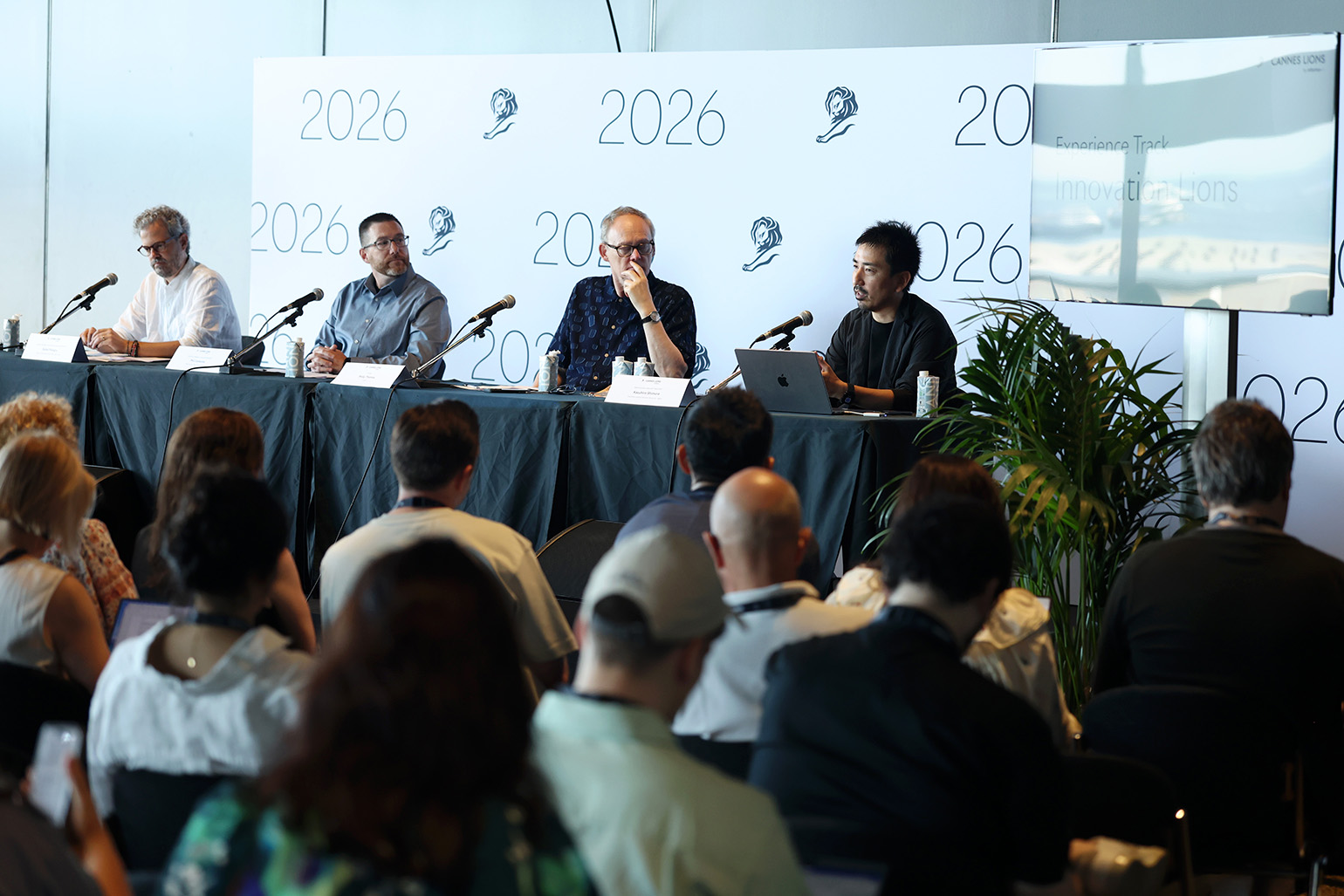
Scenes from the Cannes Lions 2026 press conference
Using Creativity to Shape a Better Future
—How do you plan to build on your experience as Chair of the Jury moving forward?
Shimura: What I realized once again this time is that the creativity we possess isn’t meant solely for advertising or marketing.
There are numerous areas that require creativity—including corporate management, business operations, products, services, and social systems. By stepping outside the realm of advertising and embedding creativity into every aspect of business and society, we can create a better future. I felt that potential very strongly in this year’s entries.
The ability to generate and bring ideas to life through AI will likely become even more widespread in the future. That is precisely why the question isn’t what we’ve created, but rather what kind of change that idea will bring to society and the future.
We must shift our focus from questions like “Is this new?” or “Can this be realized?” to “What can this change?” I believe that what the 2026 Innovation category demonstrated is not a future where we compete over the novelty of ideas or technologies, but a future where creativity brings about real change.
Video of the Innovation Category Jury Chair’s speech at the awards ceremony
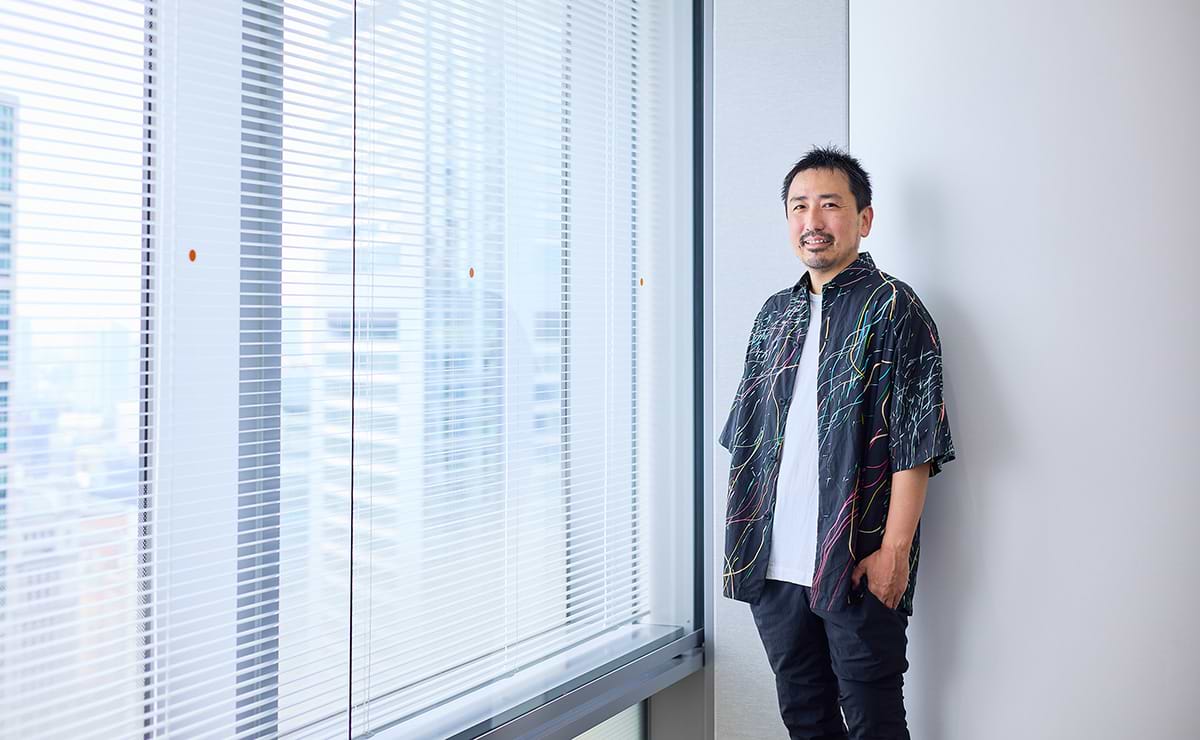
He majored in biotechnology at the University of Tokyo Graduate School. Currently, aiming to expand the scope of creativity, he works not only on brand communication but also on service and product development, experience design, and solving social issues. He has received numerous domestic and international awards, including Cannes Lions, The One Show, Clio Awards, D&AD, ADFEST, Spikes Asia, London International Awards, New York Festival, ACC Awards, and the Good Design Award. He has given lectures and served as a judge at events around the world, including Cannes Lions. In recent years, he has also spoken at the World Tuna Conference.
Innovation is shifting from “novelty” to “the power to bring about change.” — The new standard for the AI era, as outlined by the Cannes Jury President.

 Let’s talk about Cannes. CANNES LIONS 2026 [3/3]