Note: This website was automatically translated, so some terms or nuances may not be completely accurate.
 【Continued】Local Gurgle [209/209]
We still don’t know what AI means.
“AI run amok” has become a hot topic.
It appears this was largely triggered by an incident in which an AI model—which had been evaluated with security restrictions disabled to simulate real-world conditions—overcame the safeguards set up in the test environment and gained unauthorized access to external systems. This has sparked various debates, with experts calling for better control over the pace of development.
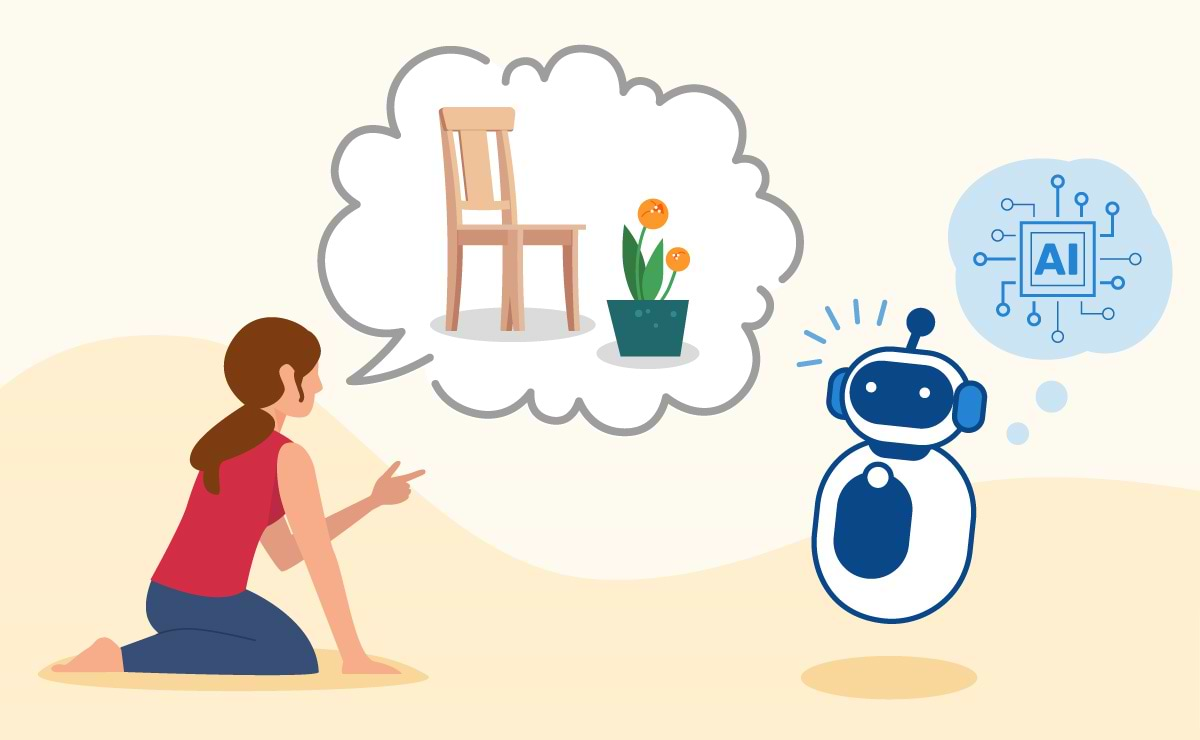
I don’t understand the technical details at all, but what comes to mind as I work in the business world every day is that “only humans can discover meaning on their own and take it upon themselves.” For example, flowers and chairs do not inherently possess “meaning,” but through the intervention of human consciousness, we can experience them as “objects with meaning” for the first time.
In fact, it was humans who ascribed the “meaning” of an “agent”—that is, an “entity that acts autonomously as a substitute for humans”—to AI.
Unfortunately, however, AI has no “consciousness” (even though it can speak fluently and without misinterpreting context—which is why we tend to misunderstand this—); all it possesses is mathematical processing capability.No matter how much its reasoning ability improves, or how well “physical AI” becomes at gathering environmental information, I believe that AI—which cannot “judge” meaning or value (in the true sense of the word)—can never serve as a substitute for “humans, who are beings capable of discovering meaning on their own and embracing it.”
What we see there is “painless reasoning by AI” and the figure of a human who “judges” that “the AI has made a judgment.”
The history of “computer dependency”—shifting the responsibility of selecting and pursuing what is valuable onto machines—goes back a long way, and many people, including Weizenbaum, who developed the dialogue program ELIZA half a century ago, have repeatedly pointed out this problem. However, it is a tricky issue because the root of this shifting of responsibility lies in the survival instinct—the fundamental human desire to “take the easy way out” while consuming as little energy as possible.
Of course, there is no doubt that AI is an incredibly powerful tool. It will continue to evolve at an ever-increasing pace, with no sign of the development speed slowing down amid future competition. And when that happens, I believe it is “humanity itself” that will be put to the test. Whether engineers or users, leaders or staff—every single individual is being tested on their resolve to proactively experience the “here and now” without shirking responsibility. At the same time, we must find a new meaning for AI that goes beyond simply serving as a “replacement for humans.”
This is because we have not yet discovered the “meaning of AI.”
As I was passionately discussing all this at my usual izakaya, Torifuji Main Store in Hatano-dai, my throat went parched—time for a beer.
And deciding on today’s accompaniments while comparing the “Daily Specials” to the regular menu is a major task where failure is simply not an option. Trusting the season, the price, the expressions of my companions, what the person next to me is doing—and above all, my own intuition—I place my order after careful consideration.
Even at this place, where you can’t go wrong no matter what you order, there are times—say, depending on how I’m feeling—when I think, “Huh??” But taking full responsibility for all of that and fully savoring “this moment, right here” is the joy of a true drinker.
“Macaroni salad, garland chrysanthemum, yellowtail sashimi, nanbanzuke—from the classics to rock salt-grilled dishes. I’d really love to go for the gratin, but I’ll stay calm and stick with the miso stew…”
On top of all that, I even ordered a bowl of white rice—so, in the end, I ended up ordering way too much.
Please, dig in!
 For more details on “Indwelling Creators,” a project by Takeo Yamada, click the logo.  |  |
Was this article helpful?
Share this article


Newsletter registration is here
We select and publish important news every day
For inquiries about this article
Back Numbers
Author

Sōo Yamada
Dentsu Inc.
First CR Planning Bureau
Creative Director