Online shopping is a “lonely journey.” Users must decipher vast amounts of information on their own, make decisions, and complete the purchase entirely by themselves; if they experience even the slightest stress in the user experience, they will immediately abandon the site. In contrast, at physical stores, sales associates listen to customers’ needs, make optimal recommendations, and guide them all the way through to the final sale.
Could AI be used to bridge this significant gap between online and in-store shopping? This question gave rise to “Dynamic Personal Web,” jointly developed by SoftBank and Dentsu Inc.
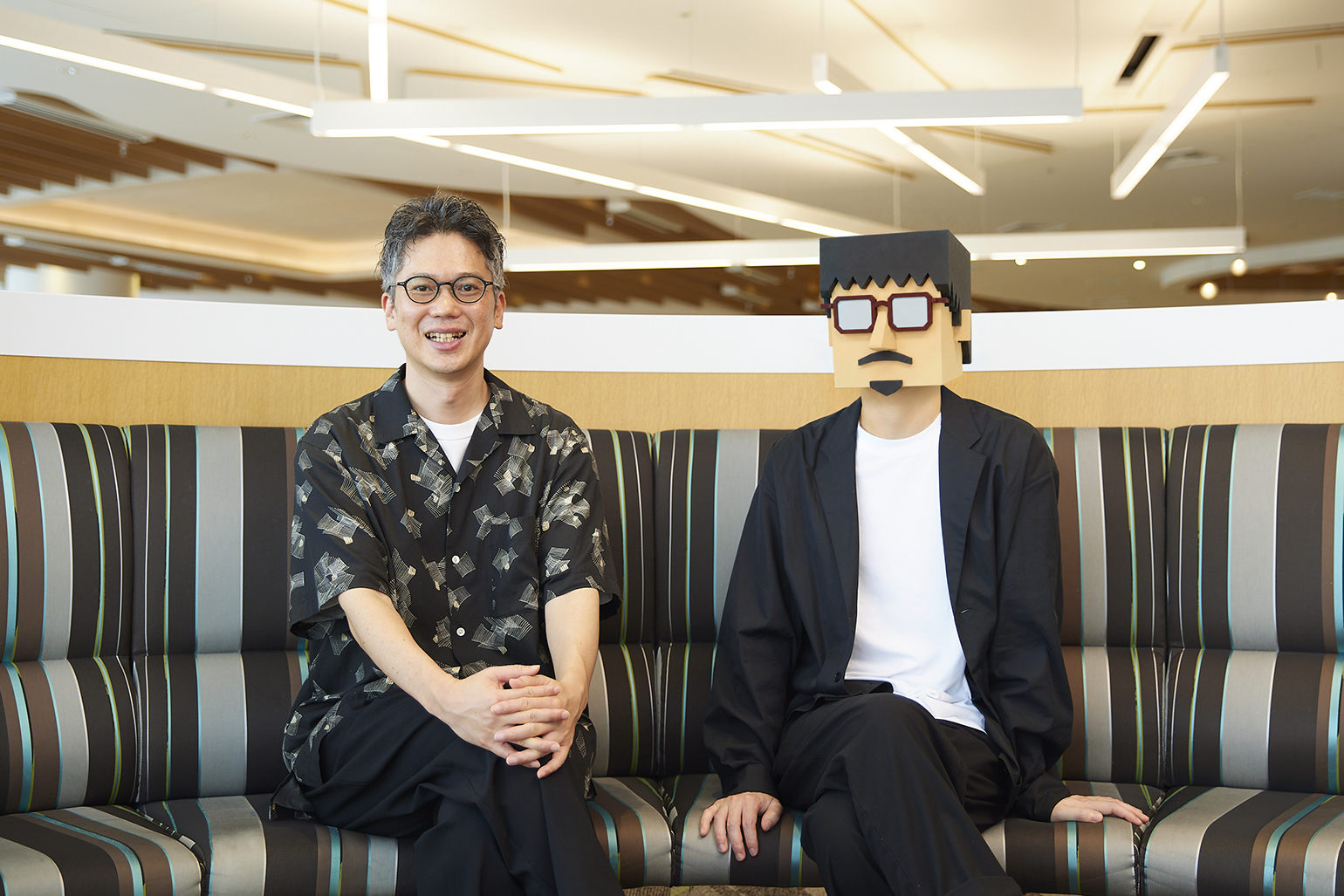
In this article, we spoke in detail with Takayuki Hiejima of SoftBank, who led the project, and Mr. Makishima of Dentsu Inc. about the behind-the-scenes story—from the background of the development and the challenges faced, to the mechanisms for preventing “hallucinations” (false responses not based on facts), and the possibilities for new customer experiences in the AI era.
Hieji: I’m part of SoftBank’s Communications Division, where I’m primarily responsible for the overall design of SoftBank’s official websites and the mobile sector. I’ve been involved with websites for a long time since joining the company as a mid-career hire in 2016.
Makishima: I’m Makishima, an experience designer at Dentsu Inc.’s BXCC Bureau. I’m primarily responsible for UI/UX consulting and experience design. I’ve been working with Mr. Hiejima’s team since 2016, so we’ve had a long relationship spanning 10 years.
──What exactly is the “Dynamic Personal Web” that was developed this time?
Makishima: It’s an AI chatbot on a website that provides dynamically personalized customer service in response to users’ concerns and questions through dialogue with the AI.
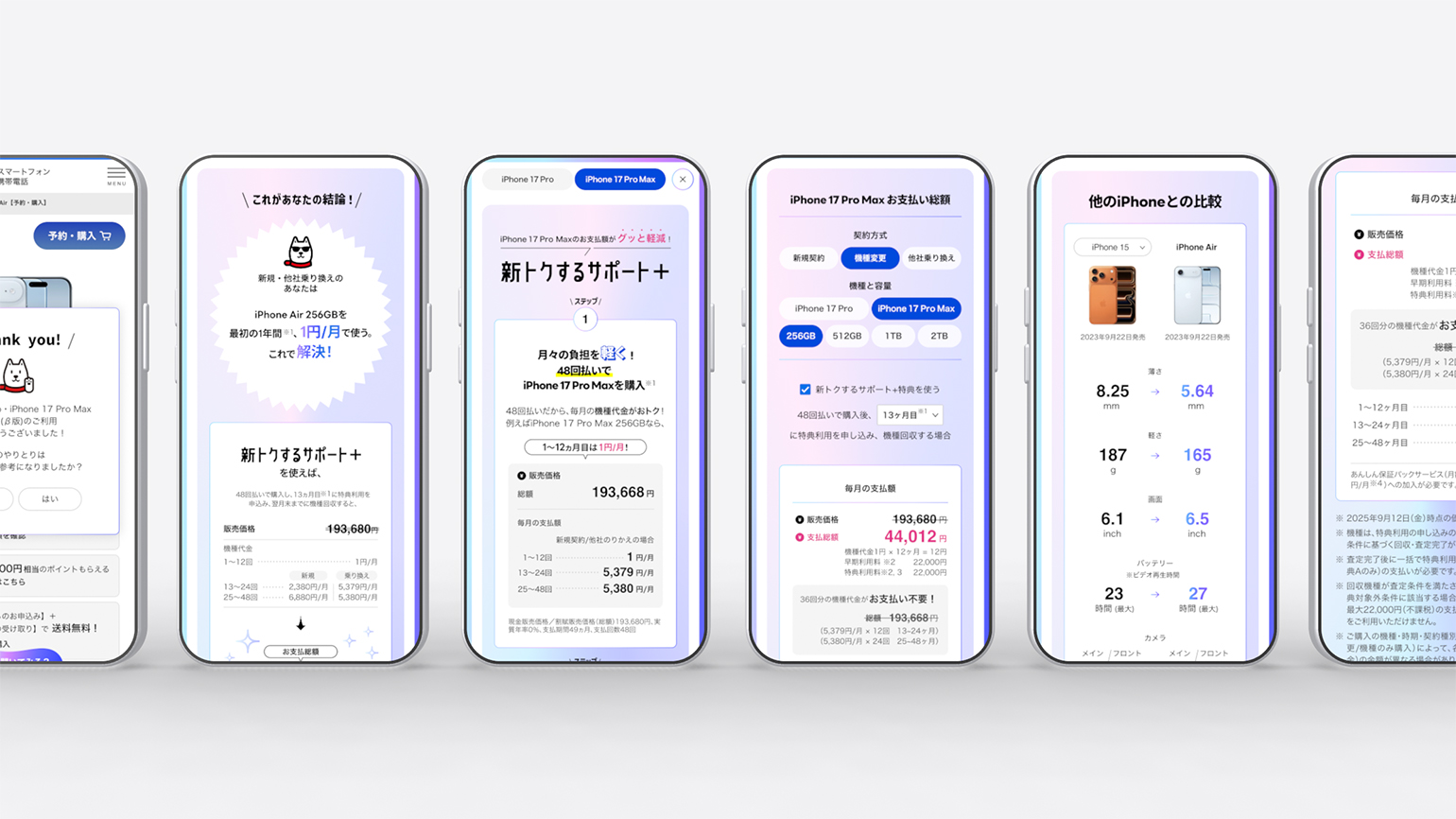
Its most distinctive feature is that it doesn’t just return text-based information like a typical AI chatbot. In a physical store, a sales associate might explain something verbally while showing a brochure or drawing a diagram by hand, right? In the same way, this AI chat on the website returns HTML content as part of the conversation. For example, if a user wants to know the price, it presents a simulator that allows them to calculate it on the spot. This goes beyond mere conversation—it provides interactive information that deepens the user’s understanding of the product.
Dynamic Personal Web
Furthermore, making a purchase requires not only information but also the process of sorting out one’s feelings and the excitement that comes with thinking, “I want to buy this!” By responding with messages that resonate with the user’s emotions, the system provides solid support not only on the informational level but also on the emotional level. This is a design philosophy focused on “customer service” that truly sets it apart from conventional websites and AI.
──Could you tell us what sparked this project?
Hieishima: It all started in 2022 when ChatGPT was released, and we began discussing internally, “How will AI change the web going forward?”
Up until then, websites had forced users to engage in what was, in a sense, a solitary process: reading and understanding information on their own before deciding to make a purchase. However, we’re now shifting from “search” to “conversation.” That’s when we began to see potential in a “supportive” experience that encourages purchases through dialogue with the user.
Makishima: When the ChatGPT API (*) was released around 2023, the technology was finally in place to integrate AI into websites. Also, as I continued to interact with AI assistants myself, I strongly felt the difference between the experience of receiving information from a website and the experience of receiving it by asking an AI. I was convinced that AI’s “ability to interpret and deliver information in an easy-to-understand way” could definitely be leveraged on websites as well.
Since there are certain insights you can only gain through hands-on experience, I made extensive use of the API. With the ChatGPT API, it doesn’t just return text in response to your input—it can also return “data structures.” I was researching what you might call “expression methods and communication that go beyond text,” such as processing those returned data structures into “representations” like images.
*API (Application Programming Interface) = A mechanism for connecting different applications and web services to integrate their functions and data.
Hieishima: I was truly amazed when Ms. Makishima showed me a website mockup during our meeting. Since dynamic content is generated instantly, it’s a completely different level of understanding compared to just hearing a verbal explanation.
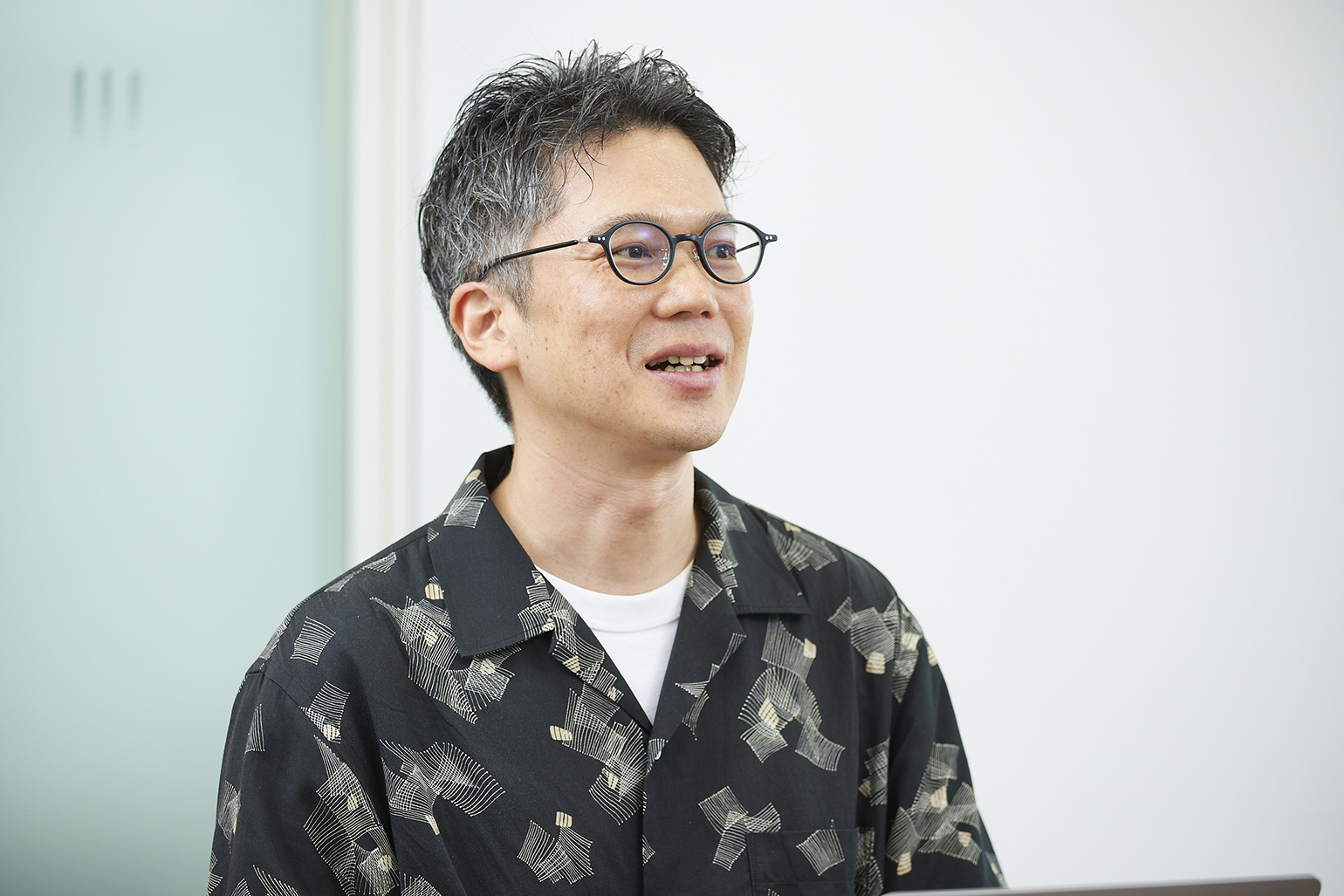
Takayuki Hiejima, SoftBank
—I understand you launched the project in 2025. What was the general attitude toward AI within SoftBank at that time?
Hiejima: From an early stage, there was a company-wide philosophy of promoting AI to make society a better place. So, I think a culture was fostered from the very beginning where people would simply experiment with AI to create something—even if it didn’t directly impact the business, the idea was to just give it a try.
Bringing “Customer Service” to the Website: Designing AI to Support Users Just Before Purchase
──What challenges led to the launch of the “Dynamic Personal Web” project?
Hiejima: Signing up for a smartphone contract involves complex factors—not just the price of the device, but also rate plans, discounts, and other conditions. We’ve made efforts to convey these clearly on our landing pages (LPs), but the more detailed information we included, the longer the LP became, making it difficult for users to find the information they needed. This left us feeling frustrated, wondering if what we thought was for the best was actually becoming a burden for users.
In physical stores, sales associates design a pleasant shopping experience through conversation. The direct catalyst for this project was the question: Could we replicate this “customer service” experience on the web?
Makishima: SoftBank’s services cater to a diverse range of users—regardless of age or gender, from teenagers to those in their 60s, and whether they’re tech-savvy or not. If we try to address all of them with a single landing page, the information that’s optimal for one person becomes noise for someone else. When AI emerged, I felt it could solve this very challenge.
I was incredibly excited at the prospect of taking on the challenge of creating a new experience—one that precisely delivers information tailored to each individual user—something that had never been possible before.
──In this project, you’re focusing on the experience “just before purchase” rather than the entire site. How did you arrive at that decision?
Hiejima: We could have implemented it across the entire site, but we felt that would blur our focus. During the information-gathering stage, existing pages are more than sufficient.
However, what’s truly important is the moment when users make a “decision” based on the information they’ve gathered. We discussed that the most effective approach is to empathize with users’ concerns and feelings and guide them through that final stage. We believed this would have the greatest impact—both in terms of business results and user clarity.
Makishima: That’s when “customer service” became the key concept. Things that are taken for granted in physical stores aren’t being done on the web. We believed AI’s role was to bridge that gap. AI is versatile, but trying to do everything leads to overly complex functionality. That’s precisely why we focused on the element of “customer service”—which was missing from the web—and made a conscious effort to use AI to help users overcome the specific challenges they were facing.
Mr. Makishima, Dentsu Inc.
Distinguishing Between What AI Should and Shouldn’t Generate to Eliminate the Risk of Hallucinations
—I imagine there were internal challenges in moving this initiative forward. How did you overcome them?
Hieishima: First of all, it was incredibly helpful that our company had a culture of “let’s just give it a try.” On top of that, I was particularly careful to carefully explain to internal stakeholders that this initiative itself held great significance, and to gain their understanding.
—So, you’re saying you didn’t just explain that you were “introducing AI,” but rather emphasized its business significance?
Hieishima: Yes. I wanted to ensure that introducing AI didn’t become the goal in itself. Rather than saying, “Let’s implement it across the entire site” or “Let’s build a perfect AI,” we took the approach of “Let’s use AI as a tool to solve the problems users are currently facing.” I believe it was precisely this focus on problem-solving that made it easier to discuss the initiative internally. Once we clearly defined the challenges and positioned “Dynamic Personal Web” as the solution, all that remained was to repeatedly explain it to the relevant departments.
──When you say “relevant departments,” which specific departments did you need to coordinate with? Also, could you tell us about any challenges you faced there?
Hiejiima: A common comment we heard was, “Other divisions are doing something similar—why don’t we just collaborate with them?” There were also many discussions from a legal perspective. AI is always accompanied by the risk of hallucination. In particular, we had thorough internal discussions about whether it was acceptable to present information to customers—such as product prices—that absolutely cannot be wrong.
──How did you address that risk of hallucination?
Hieishima: Quite early on, we clearly distinguished between what the AI should “generate” and what it should “not generate.” We immediately classified information that absolutely cannot be wrong—such as device specifications, pricing, and service terms—into the “not generate” category. We focused the AI’s generation specifically on empathetic language and contextual framing—in other words, the quality of customer service interactions.
Makishima: It might be easier to understand if we use the analogy of a sales associate handing a catalog to a customer while talking to them. The information in the catalog is absolutely accurate. However, when speaking verbally—using empathetic phrases like “You’re feeling unsure, aren’t you?” or “That must be tough”—the goal is to alleviate anxiety and help the customer take the next step forward. Our design ensures that the AI does not generate the parts equivalent to the catalog; instead, we use it exclusively for the empathetic language that connects with the customer’s emotions. This system successfully balances the accuracy of information with the quality of customer service interactions.
── I imagine that during a conversation with AI, the discussion might sometimes veer off track. Are there any design features in place to prevent this from happening?
Makishima: Since the quality of the AI’s responses depends on the user’s ability to ask questions, we drew on SoftBank’s accumulated sales know-how and UI/UX expertise to pre-design and systematize multiple “standard storylines” tailored to different user personas.
By suggesting the optimal questions for the user, the system ensures that even if the user isn’t very good at asking questions, they can still naturally follow a conversational flow that deepens their understanding and consideration. Rather than just continuing to chat aimlessly, we designed the system with a strong focus on creating a context that naturally leads toward the customer’s goal of signing up for a smartphone plan.
Hiejiima: That said, if a customer asks a question that strays from the “standard story” and the AI repeatedly responds with “I don’t know,” it would ruin the experience. So, we carefully determined the appropriate range of flexibility to ensure the conversation could still handle such deviations.
──Were there any other innovative approaches you took in the development process?
Hiejima: I view this project as a collaboration with Dentsu Inc.—a firm specializing in communication rather than AI. Rather than simply outsourcing to an AI development company, our approach was to “use AI as a tool to facilitate customer service as a form of communication,” so we didn’t push the AI to the forefront.
If we had started the project with AI as the primary focus, we might have encountered many more obstacles, such as coordinating with stakeholders. By approaching it from the perspective of communication, I think it was easier to gain buy-in from those around us—they would say things like, “That’s something we should improve.”
A 130% increase in CVR and the discovery of previously unseen customer insights
—What kind of results did you actually see?
Hieishima: We conducted an A/B test on a subset of devices, comparing results with and without the AI chatbot, and found that the conversion rate (CVR) was approximately 130% higher when the AI chatbot was present.
Makishima: Smartphones are relatively high-priced products. Precisely because they aren’t something people buy on a whim, the element of “customer service” has a major impact on the purchasing decision. Looking at the results, I realized once again that our website hadn’t been adequately addressing that aspect.
Hiejiima: Customers were likely leaving the site—for example, by searching other pages when they couldn’t find the information they wanted on the landing page. I believe that “Dynamic Personal Web” enabled them to resolve their issues right there on the page, which greatly contributed to their decision-making.
──Were there any unexpected results?
Hiejiima: We received a large number of candid comments from customers in the free-text comment field—comments expressing genuine indecision that we hadn’t seen on our website before. There were a tremendous number of questions that sounded like everyday conversation, such as, “I’m interested in this device, but I have other options and want to compare them.”
These are raw customer insights that would never have been visible through web analytics data or standard surveys. I feel that being able to aggregate this VOC (Voice of the Customer) will be a major asset going forward.
We confirmed that not all visitors to the site are people who have already decided, “I’m going to buy this”—many are still undecided and searching for information.
Using AI is not an “end in itself,” but a “means” to solve problems
—Please tell us about the future outlook that has emerged through this initiative.
Makishima: The essence of communication is to sincerely address users’ challenges and ensure they have a pleasant purchasing experience. Without wavering from this core principle, I want to achieve optimal communication that keeps pace with the times. I hope to create a comfortable experience that doesn’t frustrate users, without being tied to any specific method.
Hieishima: I want to utilize AI not merely as a tool for efficiency, but as a means to deliver new customer experiences. In the future, I’d like to develop it into something with universal value that can be rolled out across other customer touchpoints, such as retail stores and “My SoftBank.”
I also want to use AI to lower the barriers to entry in specialized fields like web development. Once we reach an era where AI writes code for us, anyone will be able to get involved in web development. When that happens, even people without specialized knowledge will be able to master AI and focus on the essential question: “Is this communication effective?”
I think it would be fascinating to create an organization where AI and humans work together within the same structure, each serving as an indispensable part of the other.
Makishima: Currently, there’s a certain limit to the ideas and outputs generated by AI. It’s human direction that elevates the quality beyond that point. In particular, the emotional aspects—such as where people find comfort in communication—are still areas where AI struggles. I believe this is an area where Dentsu Inc. can demonstrate its value as an expert in human qualities and understanding people’s feelings.
Furthermore, since this initiative has enabled us to capture users’ raw feedback, the integration between our website and physical stores should become even smoother. I’d like to contribute by designing communication strategies that take a holistic view of all customer touchpoints—such as applying the vast amount of customer insights gathered online to in-store customer service.
──Finally, could you share a message for decision-makers at companies who are hesitant about implementing AI?
Hieishima: If you aim for perfection, it will take far too long to launch. I recommend starting by focusing on the challenges right in front of you—the specific pain points customers are experiencing—and trying to make improvements with AI on a small scale.
Another important point is not to make AI the end goal. I’ve found it crucial—both for gaining internal buy-in and for achieving tangible results—not to get the order wrong: don’t introduce AI just for the sake of it; instead, use AI as a tool to solve communication challenges.
Makishima: I often hear people say they can’t do it because internal rules aren’t in place or because they can’t take risks. But risks aren’t limited to AI—they’re an inevitable part of human endeavors as well. I believe the benefits of taking action now, even if it involves taking some risks, are enormous at this point.
Furthermore, AI is permeating society at a much faster pace than the internet did when it first emerged. I believe it’s crucial right now to incorporate AI’s strengths into our business amid this trend. Start small, deliver results, and rapidly scale up the successful approaches.
In a landscape where new AI technologies are emerging even before we’ve finished implementing the current ones, moving forward while consistently delivering results is the key to making steady progress.
The information published at this time is as follows.
After working at a foreign-affiliated advertising agency, he joined SoftBank in 2016. He is primarily involved in UX design and creative work for the company’s official website.
Makishima
Dentsu Inc.
BX Creative Center / Business Development Division 1
Experience Designer
We provide comprehensive creative support for businesses, including UI/UX consulting, service concept design, and the formulation of brand identities and visions.