Note: This website was automatically translated, so some terms or nuances may not be completely accurate.
One in three people in their 20s who like their company is considering changing jobs! Beyond the Limits of Engagement
Recently, PR Consulting Dentsu Inc. has seen a sharp increase in inquiries regarding internal branding from departments related to public relations.In the past, there was a strong impression that companies would only reluctantly take action on internal branding every 10 years or so to mark an anniversary, but now internal communication takes place year-round, and strengthening engagement through internal communication has become a clear trend. In fact, to prevent turnover among younger employees, HR and PR departments are collaborating to plan and execute internal communication initiatives year-round, while also conducting frequent engagement surveys and closely monitoring year-over-year trends.
Our company is also celebrating its 65th anniversary this year. Every five years, we plan events and exhibitions to share information externally, as well as various creative initiatives to foster communication among employees internally.Looking back, our company’s anniversary initiatives have included compiling our corporate history for our 30th anniversary, a virtual event open to all employees for our 50th anniversary, and a name change for our 60th anniversary—in recent years, we’ve consistently held some kind of company-wide event at short intervals.
Amid this trend, the results of the fourth “Internal Branding® Survey”—which our company has conducted every three years—have been released. In this article, we’d like to share the latest trends regarding the relationship between employee engagement, the sense of accomplishment at work (referred to in this article as “the feeling of getting things done”), and the desire to continue working here.
*Click here for the survey overview
<Table of Contents>
▼ Is the “within three years of graduation” category now meaningless?
▼Even with high engagement, job hopping continues
▼The sense of “making adifference”determines retention
▼ When “what makes our company unique” is clear, it’s easier to feel a sense of accomplishment
▼Internal social media is becoming the infrastructure for cultural permeation
▼From “attachment” to “making a difference”
Is the “within three years of graduation” category now meaningless?
There is no doubt that in recent years, many companies have been plagued by the early departure of young employees. In particular, the fact(※) that over 30% of new graduates leave or switch jobs within three years of being hired has been a shock and a source of fear for companies. For the departments responsible, it must be incredibly frustrating to see the “human capital” they recruited—after implementing various measures and investing significant resources and costs—leave before three years have even passed.
Even recently, the attrition rate among new college graduates within three years of employment stood at 33.8% (*), remaining at a level where more than one in three employees leaves. While companies have focused on countermeasures against early attrition among new graduates in recent years, amid the current trend of increasing labor mobility, the scope of this issue is expanding from new graduates to include all employees in their 20s.
*Resignation rates among new college graduates who entered the workforce in March Reiwa 4 (Ministry of Health, Labor and Welfare)
https://www.mhlw.go.jp/stf/houdou/0000177553_00010.html
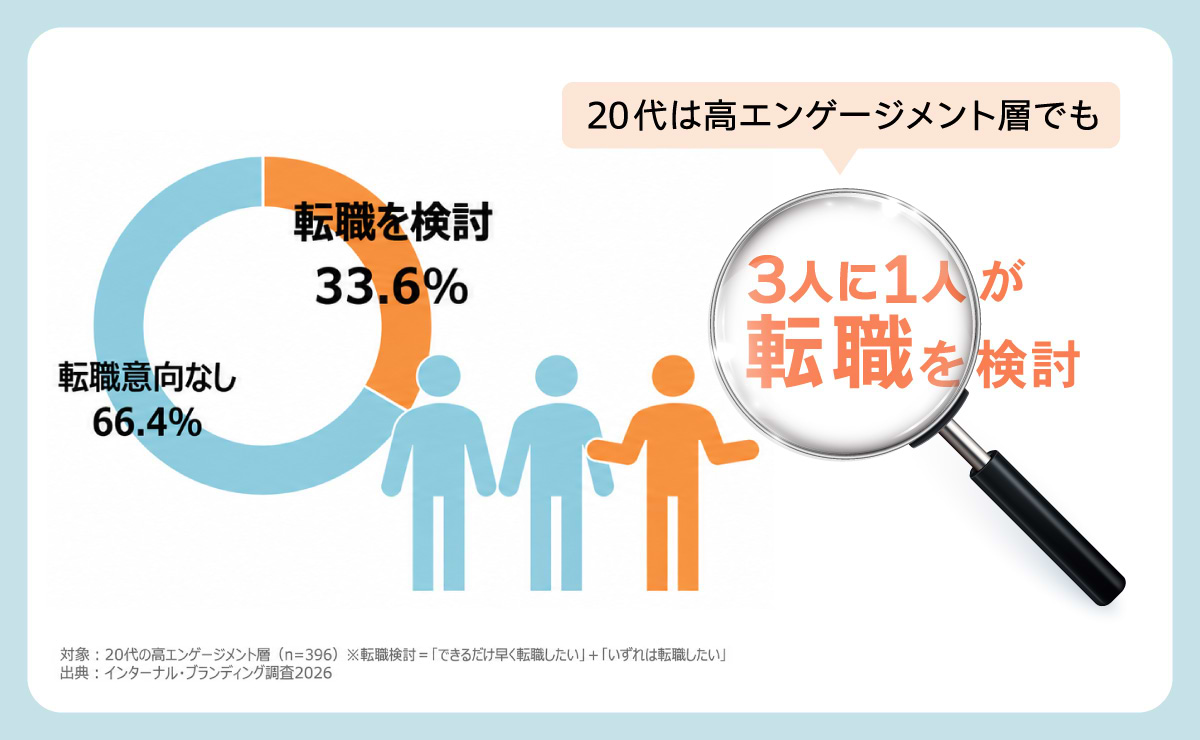
Until now, corporate retention strategies have primarily focused on retaining new graduates for the first three years after they join the company. However, with job-hopping now a common career choice, the challenge companies must address is shifting from “preventing new graduates from leaving” to “ensuring the continued success and retention of employees in their 20s.” In fact, this survey revealed that even among those in their 20s with high engagement toward their company, one in three is considering changing jobs.
According to a survey by the Ministry of Health, Labor and Welfare, the situation where approximately one in three new graduates leaves their job within three years of joining has persisted for many years. As mentioned earlier, in light of this situation, corporate talent strategies have long focused on “how to retain new graduates.” However, with increasing labor mobility and job-hopping now a common career choice, the challenges companies must address are no longer limited to new graduates alone.
Rather, companies are now being forced to confront a fundamental question regarding the entire population in their 20s: why do people stay with a company, or why do they leave? A survey conducted with this issue in mind has revealed important insights for companies’ internal communication strategies.
Even with High Engagement, Job Changes Continue
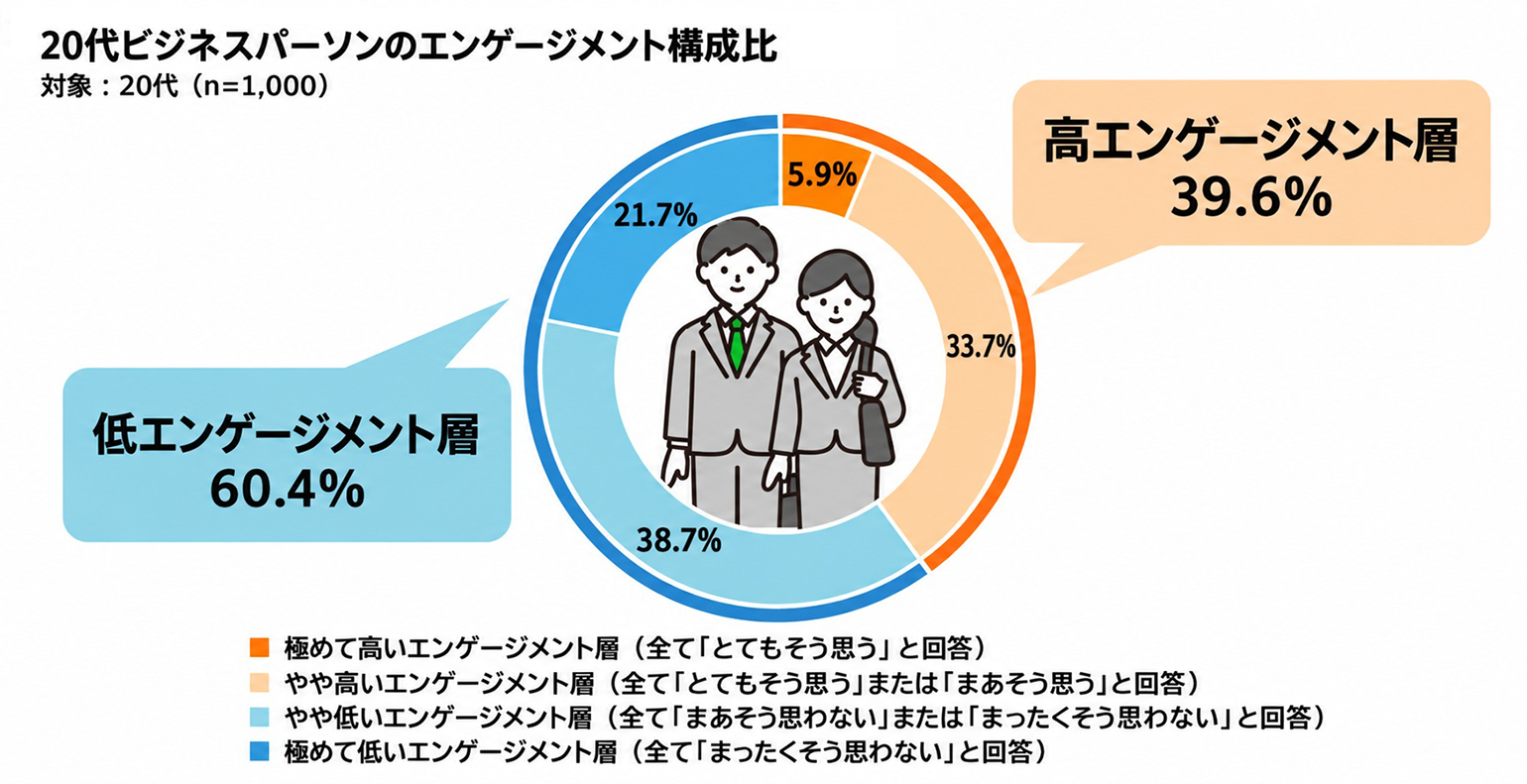
There is no doubt that employee engagement has become an established key metric in the context of human capital management. It has long been believed that fostering a sense of attachment to and empathy for the company, as well as a desire to contribute to the organization, leads to improved productivity and business performance. In fact, many companies—including small and medium-sized enterprises—are implementing employee surveys and organizational development initiatives. Perhaps as a result of these efforts, the engagement rate among people in their 20s was surprisingly high in this survey, with the group classified as “highly engaged” accounting for 39.6% of the total.
Retaining talent is not only vital for large corporations but also for small and medium-sized enterprises; it is, in fact, a lifeline for their survival and can be considered one of their most critical challenges. Based on my observations, even companies that seemed to have an open and communicative culture were conducting these engagement surveys and appeared to place great importance on the results.
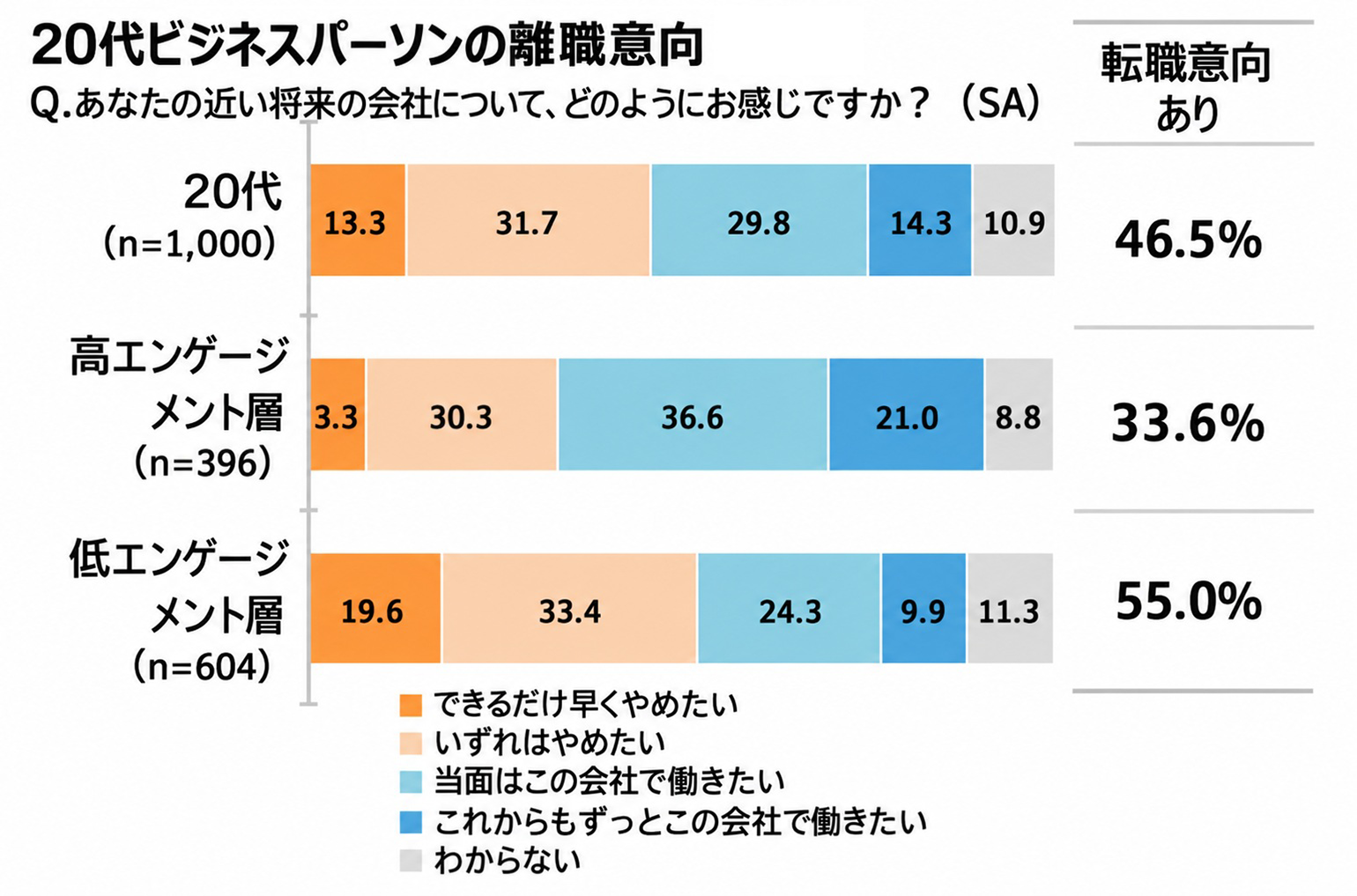
However, the most noteworthy finding from this survey is the fact that, among those in their 20s, high engagement does not necessarily preclude an intention to change jobs.
Even among those in their 20s who demonstrated high engagement, approximately one in three is considering changing jobs. From my perspective as someone who has advocated for strengthening engagement, and based on my experience using this metric as a key indicator within my own company, this was a shocking revelation. However, upon closer examination, this does not necessarily mean they “lack attachment to the company.”
Rather, today’s people in their 20s may view “empathy with the organization” and “shaping their own careers” as separate dimensions. Even if they are satisfied with the corporate culture and workplace relationships, they consider changing jobs in search of opportunities for personal growth and to enhance their market value. A situation has emerged that cannot be explained solely by the traditional relationship between the organization and the individual—where one stays simply because they like the company. These results suggest that improving engagement alone is insufficient as a solution for companies.
The key factor influencing retention is the sense of “being able to excel”
So, what motivates employees to want to continue working at their current company? The analysis reveals the importance of the “sense of contribution”—that is, the feeling of “making a difference.” In particular, the perception that “I am able to utilize my strengths and abilities” showed a strong correlation with the intention to remain with the company.
What is interesting here is that this goes beyond mere results or evaluations. Even if an employee receives high evaluations, their intention to stay will not increase unless they feel their strengths are being utilized. On the other hand, employees who feel they are able to work in a way that is true to themselves were more likely to want to continue working at the same company.
In traditional human capital management, “fostering loyalty to the company” was often cited as the primary objective; however, going forward, it will be essential to visualize and support “how employees are able to demonstrate their value within the organization.” In other words, the key to employee retention is shifting from a sense of belonging toward self-actualization.
When “what makes our company unique” is clear, it’s easier to feel a sense of accomplishment
Another notable finding was the relationship between perception of corporate culture and retention intentions. The survey confirmed that employees who understand “what makes this company unique (i.e., its corporate culture)” tend to have a stronger intention to continue working there. However, it is important to note that it is not the specific content of the culture itself that matters. Rather than differences such as whether the culture is challenge-oriented or stability-oriented, what seems to be crucial is whether the company’s unique values and behavioral norms are shared among employees.
Organizational culture is often difficult to see. That is precisely why organizations that clearly articulate their culture and link it to employees’ daily behaviors and decision-making are better able to share a common sense of purpose and criteria for judgment. Conversely, in organizations where the company’s unique identity is not visible, it becomes easy for employees to feel uncertain about what is expected of them and how their work contributes to the bigger picture. In other words, it becomes difficult for them to feel a sense of accomplishment.Given that a strong correlation was observed between a sense of achievement and recognition of corporate culture, sharing the company’s unique identity with employees may not be merely a measure to instill corporate philosophy, but should perhaps be viewed as a management foundation that supports employee success.
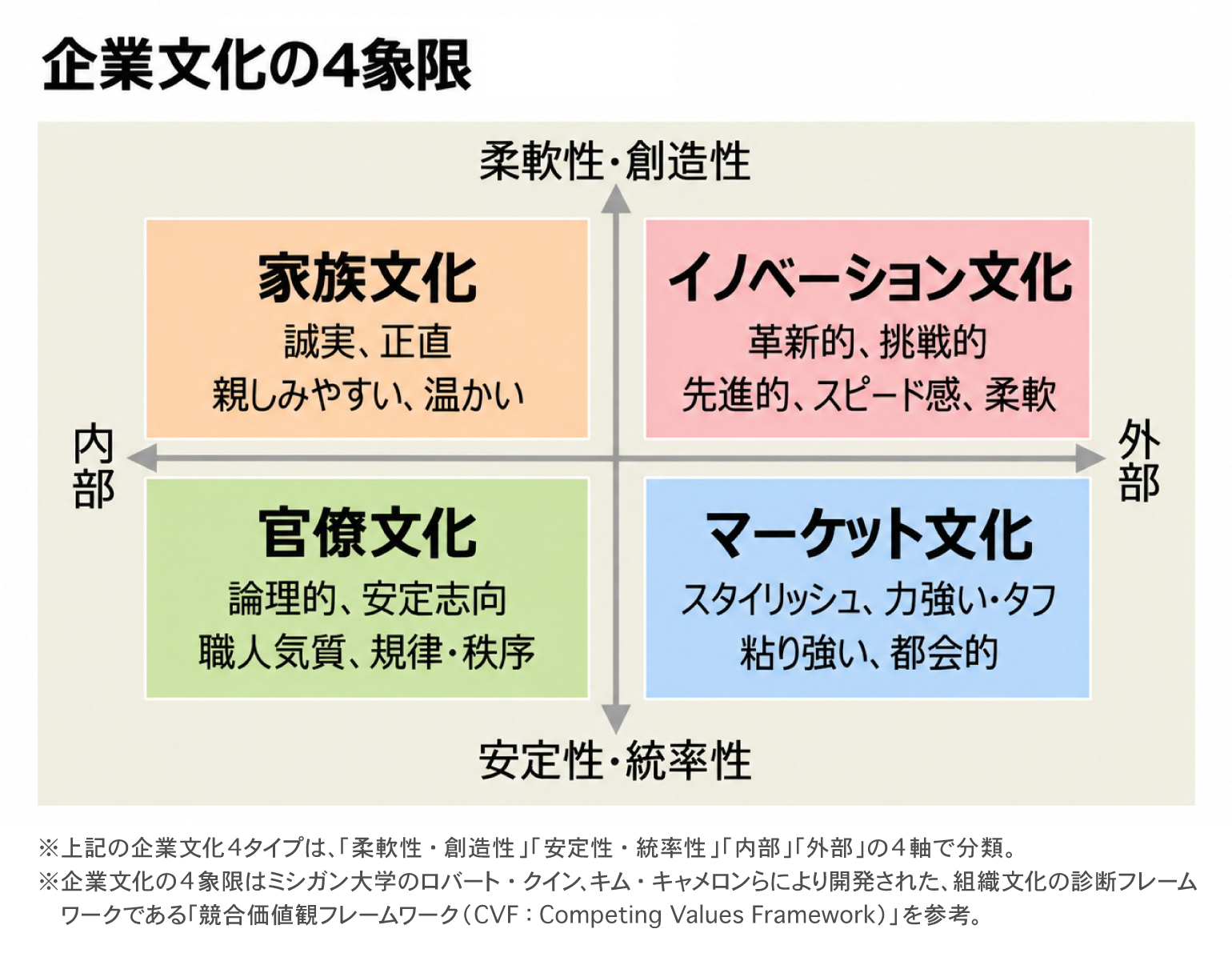
Internal social media is becoming the infrastructure for cultural integration
So, how should a company’s unique identity be communicated? In this survey, employees in their 20s—who showed the strongest intention to remain with the company—rated internal social media and apps as particularly effective channels for information.While traditional company newsletters and messages from top management remain important, for the digital native generation, the information circulating in their daily work serves as the key to understanding corporate culture. Rather than one-way communication, it is this raw, “narrative-based” information—such as how individuals evaluate the company culture—that is perceived as authentic.
Who took on what challenges? What values are being celebrated? What kind of communication is taking place across departments? Internal social media is no longer merely a tool for sharing information; it is beginning to function as a medium that visualizes corporate culture itself. It could be said that the role of internal communications is expanding from mere information dissemination to the design of cultural experiences.
From “Loyalty” to “Thriving”
This survey highlights a shift in perspective when considering how to retain young employees. Until now, companies have prioritized fostering attachment to the company by improving engagement and instilling corporate values. Of course, the importance of these factors remains unchanged. However, the fact that one in three employees in their 20s—despite having high engagement—is considering changing jobs indicates that this alone is insufficient.
Employees need to feel that they can fully utilize their abilities at this company. They need to understand what makes the company unique and envision how that aligns with their own career paths. Furthermore, this sense of fulfillment must be nurtured through day-to-day communication. The role expected of internal communications is likely beginning to shift from “making employees like the company” to “creating an environment where employees feel they want to continue thriving here.”
[Survey Overview]
Survey Name: Internal Branding® Survey 2026
Survey Organizer: Corporate Public Relations Strategy Research Institute (Director: Kanji Sakai, part of PR Consulting Dentsu Inc.)
Survey Method: Online survey
Survey Period: May 15–21, 2026
Survey Area: Nationwide
Survey Participants: Employees in their 20s through 60s working at corporations with 300 or more employees
Number of Valid Responses: 2,000 samples + 1,000 additional samples from respondents in their 20s
Was this article helpful?
Share this article


Newsletter registration is here
We select and publish important news every day
For inquiries about this article
Author

Inokuchi Tadashi
PR Consulting Dentsu Inc.
Executive Officer
Chief PR Planner
 Shinmeikai "Strategic PR"Long time no see! CRAFTPRMeasuring PR Effectiveness: Supporting Management with Data-Driven InsightsNow is the time to reexamine the essence of PR / Its futureThe Future of Corporate Museums as PR AssetsBeyond Conference Report【Special Discussion】Public Relations Enters a New Era: Proposals for PR 4.0