Note: This website was automatically translated, so some terms or nuances may not be completely accurate.
 Beyond Conference Report [4/4]
“The resolve to see it through” drives companies forward—the intersection of individual passion and organizational execution
[This article is recommended for...]
- Those who want to go beyond CSR and leverage their business and organizational strengths to tackle social issues
- Those who want to turn their personal ideas and proposals into initiatives that gain internal understanding, approval, and implementation
- Those seeking insights on embedding purpose and improving employee engagement
The “5th Beyond Conference 2026 ” brought together individuals with a strong determination to tackle social issues this year as well, sparking lively discussions. This year’s theme was “Drive the Will: Individual Will, Organizational Momentum.” The aim was to identify the points of connection between individual will—which has driven various initiatives to date—and the strong execution capabilities of corporations, in order to accelerate these efforts.

Many of the initiatives shared at this conference to date have been driven by the strong convictions of individuals—from identifying challenges to taking courageous first steps toward solutions. Eventually, individuals who resonated with these convictions connected with one another and began collaborating while leveraging their respective strengths; this so-called “individual-level collective impact” (*) has been the foundation supporting these efforts.
However, once the foundation—comprising the goals to be achieved and the methods for realizing them—is in place, a personnel structure and budget are needed to make a significant leap forward. What steps are necessary to help organizations, such as companies and associations, understand and empathize with the goals on the horizon, and to take the next major step forward? There are many agenda leaders (the driving forces behind each initiative) who hit a wall and struggle at this turning point.
Meanwhile, within companies as well, there is a growing awareness of the need to fulfill their social responsibilities as corporate citizens. However, it is not uncommon for these efforts to remain confined to the realm of traditional CSR activities. Even if a company decides to participate in such initiatives, if it views them merely as part of social service activities and fails to perceive a clear return on investment, the involvement risks remaining superficial.Under these circumstances, we explored pathways for individuals and organizations to collaborate, while also addressing the specific challenges each faces as they strive to move to the next phase but are currently blocked by the obstacles before them.
* Collective Impact: A collaborative effort across organizations—including government, businesses, NPOs, foundations, and citizens—to address a specific social issue.
<Table of Contents>
▼“Glass Rock”: A Physical Hub Where the Will to Tackle Social Issues Converges
▼Even with a Lead Organization, Companies Struggle to Find the Right Moment to Step Forward
▼“Are You Prepared to See It Through?” Becomes the Motto
▼What Is the Process for Companies to Embrace This Commitment?
▼Rediscovering the Value of the Company and Its Employees by Engaging with Society
▼A Spontaneous Will for Co-Creation and a Chain of Improvements, Born Precisely Because They Are a Group of Non-Experts
▼Turning “Special Occasions” into Opportunities for the Entire Company to Engage with Society
▼Corporate Engagement in Social Activities Is Still in Its Early Stages, but the Time to Cross the Chasm Is Near
“Glass Rock”: A Physical Hub Where the Will to Tackle Social Issues Converges
The venue for this conference was Toranomon Hills. Located there is “Glass Rock,” a physical hub that brings together a diverse range of stakeholders—including companies and organizations with a strong interest in solving social issues, government agencies, and individuals such as students. As is well known, this facility is operated by Mori Building. While the company’s previously operated Roppongi Academy Hills served as a networking hub for enhancing individual knowledge, Glass Rock can be described as a facility renovated in 2025 with a new purpose.In an increasingly complex and rapidly changing society, where various challenges can no longer be tackled by the passion of a single individual or the resources of a single company alone, Glass Rock—the successor to Roppongi Academy Hills—serves as a place where different wills converge so that organizations can pool their strengths to address these issues.
In a statement issued by and beyond company, the organizer of this conference, it reads: “The desire to ‘make society better’ has sometimes been dismissed as ‘idealistic’ and rebuffed by organizational logic and profit motives. Profit without ideals is unsustainable. Ideals without profit cannot be realized.Now is the time to transform that contradiction into energy. When individual will is fueled by the ‘engine’ of an organization, ideals become a reliable driving force that moves society.” Glass Rock is indeed the perfect venue to spark the chemical reaction—the fusion of individuals and organizations—that this conference sought to achieve.
Although there is a host organization, companies also struggle with the timing of their participation
As mentioned in previous conference reports, this conference has a slightly different atmosphere from others. Rather than passively acquiring knowledge through one-way seminars, speakers and participants are always on equal footing; all participants express their opinions in response to the speakers’ prompts, and the discussion continues until they concretely define the next step toward a shared goal.Participants who identify ways they can contribute then dive right into those activities and commit themselves to them. For this reason, the venue is always arranged to facilitate a circle-style seating arrangement, creating an atmosphere more akin to a gathering than a typical conference.
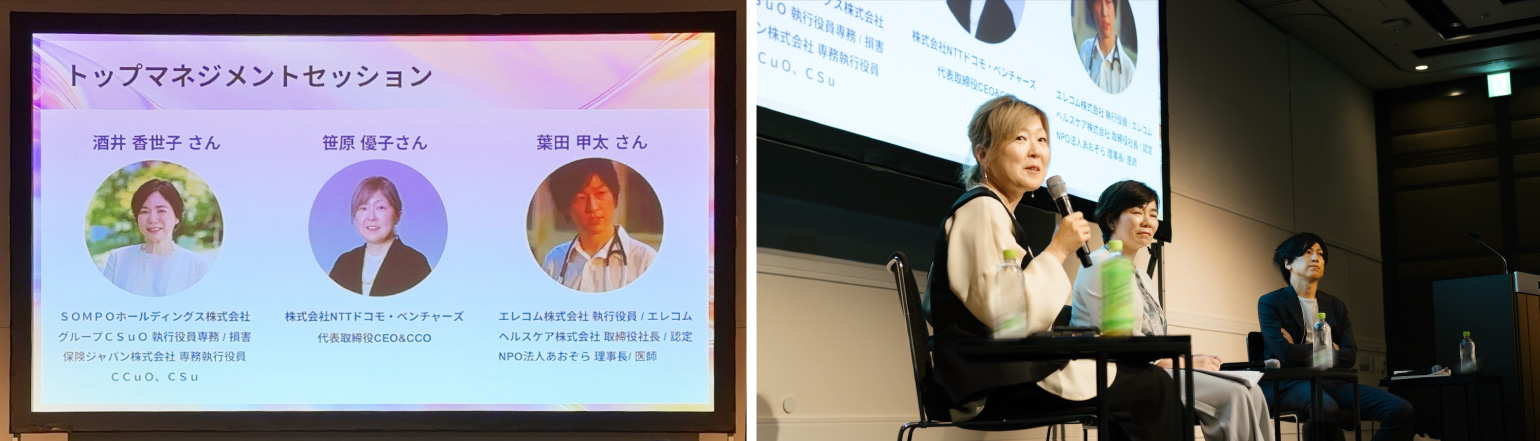
In this keynote session, the stances and concerns of corporate top management were shared at the outset of the conference. The panelists—Mr. Sakai of SOMPO Holdings/Sompo Japan Insurance, Mr. Sasahara of NTT Docomo Ventures, and Mr. Hada of Elecom/Elecom Healthcare—held a roundtable discussion under the theme “Top Management Session: Why Do Capitalism, Social Issue Resolution, and Co-creation Matter Now?”
It was a fascinating session in which the speakers candidly shared their thoughts and concerns from diverse perspectives, including the challenges of leading various organizational departments toward solving social issues and the appropriate methods for objectively evaluating concrete results.The central theme was how to commit corporate will to activities centered on solving social issues and elevate them to genuine corporate initiatives. The participants candidly discussed how individuals with a clear commitment to solving social issues are attempting—or have attempted—to drive their organizations forward, as well as the obstacles and conflicts that arose in the process.
“Do you have the resolve to see it through?” was the rallying cry
The key point all three speakers emphasized was that the starting point for everything boils down to “the resolve of the individual”—in other words, “Do you have the resolve to see it through?”
Mr. Hada of Elecom, who kicked off the discussion, emphasized from his own experience in medical and social activities that “no matter how well you structure your logic or ROI, things won’t move forward if the will to do it is weak.”He stated that if the person directly involved has a strong sense of determination, corporate leadership and those around them will eventually be drawn in, ultimately leading to organizational action. Mr. Hada, who had previously promoted various activities through his personal network, noted that while he had achieved some results that way, he felt that the organizational strength of a company would allow for greater scale and speed, which is why he joined Elecom, the company run by his family.
Although he initially felt constrained by the organization, his interests gradually broadened, and the number of people willing to cooperate increased. He explained that the key to persuading management within the company was helping them understand that addressing these social issues has the power to attract talent and ultimately leads to long-term enhancement of corporate value.Furthermore, based on that experience, he noted that no matter how well-developed the “How” and “What” in terms of skills and knowledge may be, the most important foundation is the “Why”—that is, understanding why we do something and why it must be done—which is what strengthens our resolve.
Like Mr. Hada, Mr. Sakai of Sompo Japan also noted that the strength of an individual’s will—whether they want to do something or not—influences the driving force within a company, commenting, “Personally, I believe the ‘P’ in PDCA stands for Passion.” As an example, he shared the story of when the company loaned its copy of Van Gogh’s “Sunflowers” to the Tohoku region as part of reconstruction efforts following the Great East Japan Earthquake.To realize the on-site team’s desire to uplift children in Tohoku through the “Sunflowers” painting, the team worked tirelessly to secure internal approval, but approval remained elusive. It was a remark from a superior—asking, “Do you truly want to make this happen yourself?”—that gave Mr. Sakai the push he needed. When he conveyed his determination to “seriously see this through,” the circle of support expanded, and the exhibition was a resounding success.
“To put that resolve into practice within a company, careful ‘dialogue and approval’ are essential,” says Sakai. He explains that to spread one’s vision throughout an organization, it is essential to formulate a vision that fosters empathy and to build a culture that embraces challenges; thoroughly following the process of embedding this vision—through daily communication and relationship-building with relevant departments—leads to behavioral change across the entire organization.He also noted that the term “economization” has recently come into frequent use even among sustainability experts, and expressed the view that companies must achieve sustainable growth while being mindful of both social and economic considerations.
Furthermore, Mr. Sasahara of NTT Docomo Ventures views the role of a company as a “platform connecting individual will with society,” pointing out that activities based on user value and social significance ultimately generate economic value as well. He noted that with the former i-mode service, while there was attention on its technological advancement, focusing too much on that led to over-specification, resulting in a phenomenon where the product actually drifted away from customer expectations.He argued that as technology matures and becomes more deeply embedded in society, companies must pay greater attention to “connecting with society” and consider how they can transform society from that vantage point; therefore, it is essential to maintain a dual perspective that encompasses both viewpoints.
He also spoke about the importance of a company’s purpose as the cornerstone of various activities, stating, “Rational judgment and decision-making are two different things. Decisions are made in the dark, and it is only by having a guiding philosophy or purpose that one can make unwavering decisions.” Furthermore, he noted that for inter-company collaboration to function effectively, it is essential to share a common purpose and a “determination to see it through,” rather than engaging in superficial cooperation.
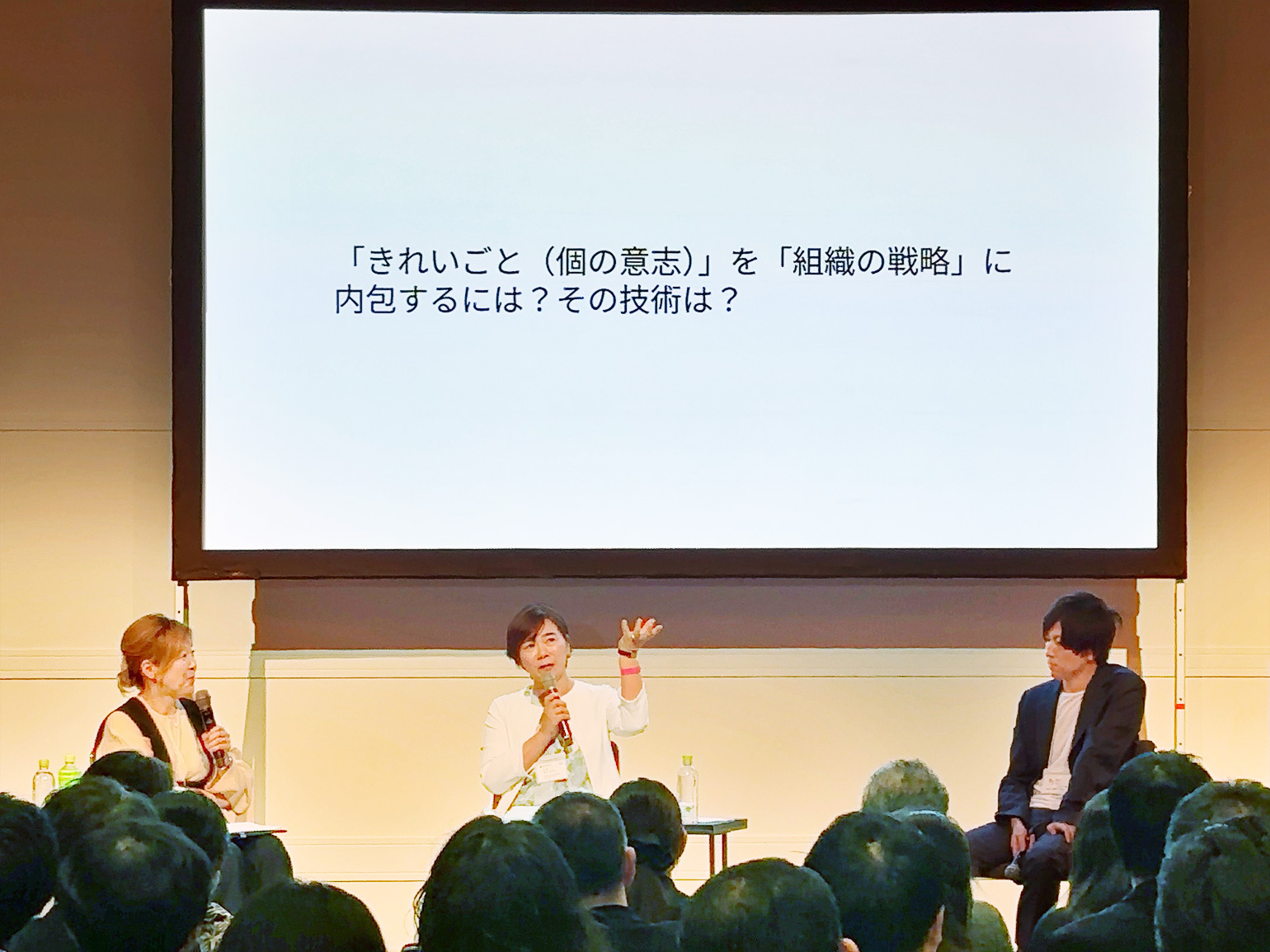
In summary, the conclusion is that “for any action, what matters most is the strength of the individual’s will driving it forward; that passion draws others in and eventually transforms into the company’s ability to execute.” Solving social issues cannot be achieved through systems and mechanisms alone; it begins with the overwhelming will of the individual.While companies should recognize their role as amplifiers that help this will permeate and expand both inside and outside the organization, it may be best not to assume that the primary responsibility for execution will shift to the corporate entity itself. Isn’t it essential to have a “face” driving the initiative as the source of that momentum? How can we propagate this “unwavering will” throughout the company? Below, I have summarized the process based on the content of the roundtable discussion for your reference.
What is the process by which a company embraces this will?
The process by which a company accepts an individual’s appropriate resolve and transforms it into action can be broadly organized into four stages. In the context of the roundtable discussion, it is essential to note that this is a process of “propagating and translating will,” rather than merely a matter of approval procedures or logic.
① Visualizing Strong Determination
The starting point is likely the individual’s overwhelming resolve and passion. As Mr. Hada explains, a level of determination—such as “I want to do this with my life on the line”—possesses the power to convey itself to those around you even before it is put into words.
- Keep Proposing No Matter How Many Times You’re Rejected
- Securing grants and gathering a team to prove the concept on one’s own
- Staying unwavering in the “Why”
Once this state is reached, supervisors and senior management will shift their perception of the initiative and its champion from “someone to be evaluated” to “a force that cannot be ignored.” In other words, this is the phase where the sheer strength of one’s resolve becomes the source of persuasion.
② “Translating” and Instilling the Message in Those Around You
However, it is still difficult to move an organization forward on the strength of an individual’s will alone. As Mr. Sakai points out, the next crucial step is to build a team. This requires a phase of “translation” and “dialogue” tailored to the level of understanding and cultural context within each department.
- Explain to the Finance Department in Terms of ROI and Risk
- Explain to frontline staff in terms of customer value and tangible benefits
- Explain to management using corporate value, human resources, and brand
Furthermore, it is crucial to recognize that behavioral change takes time. Even if your message isn’t accepted immediately, by repeating it consistently, others’ perceptions will eventually catch up. It goes without saying that even if you explain current activities using sound logic, it is difficult to gain immediate understanding and empathy if the underlying context differs.
In other words, if you can reach a point where “as time passes, others begin to articulate what you had hoped to achieve,” those intentions shift from being “personal” to being “shared among stakeholders within the company.”
③ Alignment with Purpose (Gaining Legitimacy)
The next step is connecting these efforts to the company’s raison d’être and vision.
- “Necessary for society”
- “Aligns with our company’s vision”
- “Enhances customer value”
By framing the significance of the activity within these contexts, the activity is justified. As discussed by Sasahara and Hada, a “shared purpose” is also a key condition for successful inter-company collaboration, and it makes sense that such partnerships are not driven solely by self-interest.
Only then does
“what an individual wants to do” is elevated to “what the company should do.”
④ Linking to Execution (Getting the Organization Moving)
The final stage is the phase in which the company’s resources are mobilized.
- Staffing
- Budgeting
- Commercialization and Institutionalization
- Collaboration with Other Departments and External Partners
This is where Mr. Sakai’s concepts of “approval” and “a culture that tolerates challenges” come into play.
Also, as demonstrated by Mr. Hada’s approach,
- using subsidies to keep initial investment low
- achieving small successes to build credibility
—these phased approaches help create an environment where companies can collaborate more easily.
To summarize these four processes once more, their essence might be described as “Will → Empathy → Justification → Implementation.” It could be said that the current situation reveals a steady progression in which an individual’s unwavering will is met with empathy through dialogue, justified by a shared purpose, and finally realized as the company’s ability to execute.
The order is crucial, and
- not trying to push things through based on ROI from the start
- In fact, the “passion behind one’s resolve (personal purpose)” is the key to breaking through
- and reinforcing it with logic later
—this reverse way of thinking is the very key to engaging the company.
By engaging with society, you rediscover the value of your company and yourself
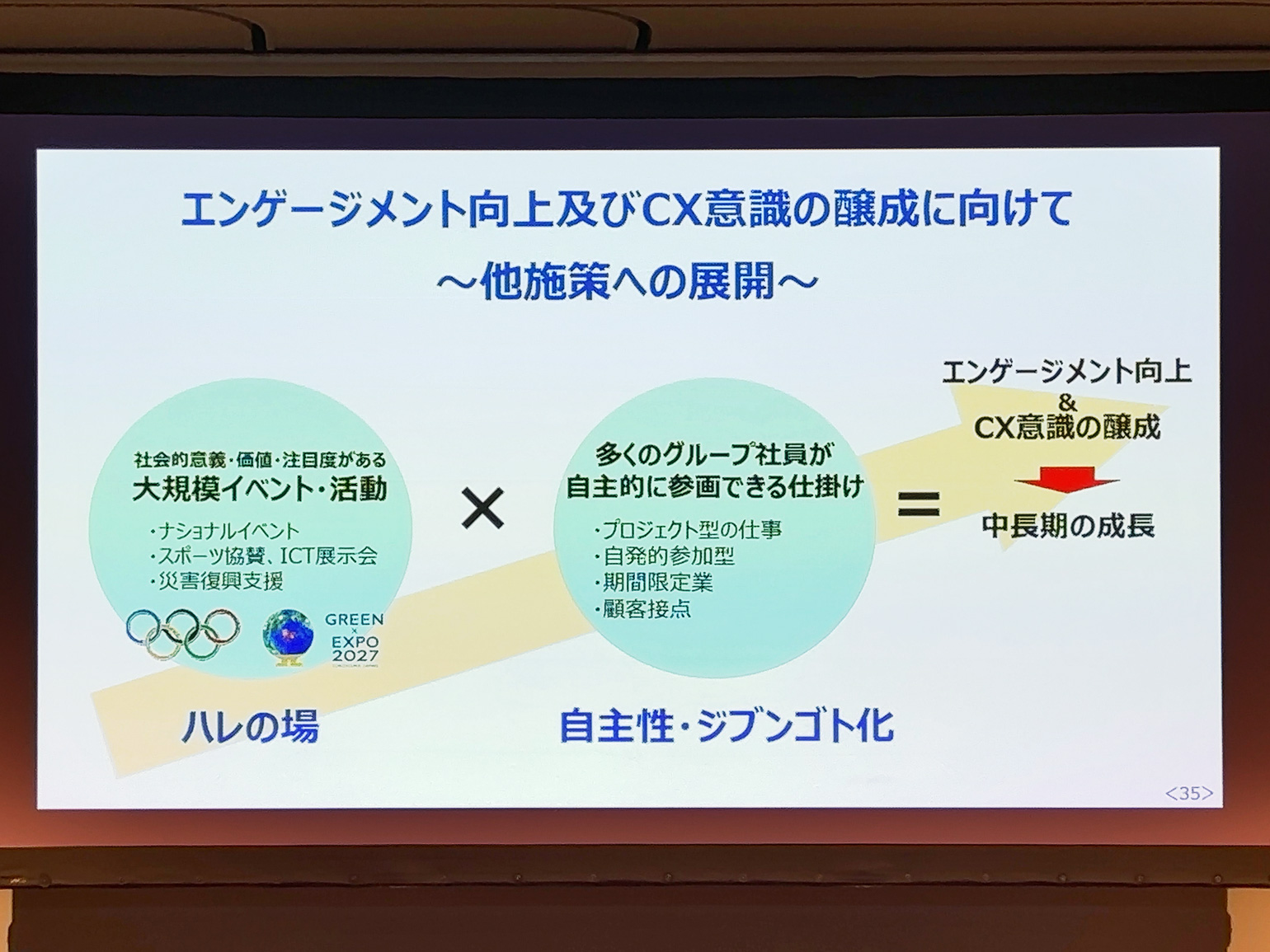
Looking at it this way, it’s clear that even the driving forces behind these initiatives constantly struggle with the question of “how to engage the company internally” and are moving forward through trial and error.While it may seem that the standard approach is for each company to steadily build up its activities, empathy, and cooperation, there are also cases where companies have seized a specific opportunity to achieve significant results. An example where this exceptional spirit of challenge stood out was the initiative shared by Mr. Yu Sato of NTT: the challenge of in-house management of the NTT Pavilion at the Osaka-Kansai World Expo. This pavilion would later be known as the “Miracle Pavilion.”
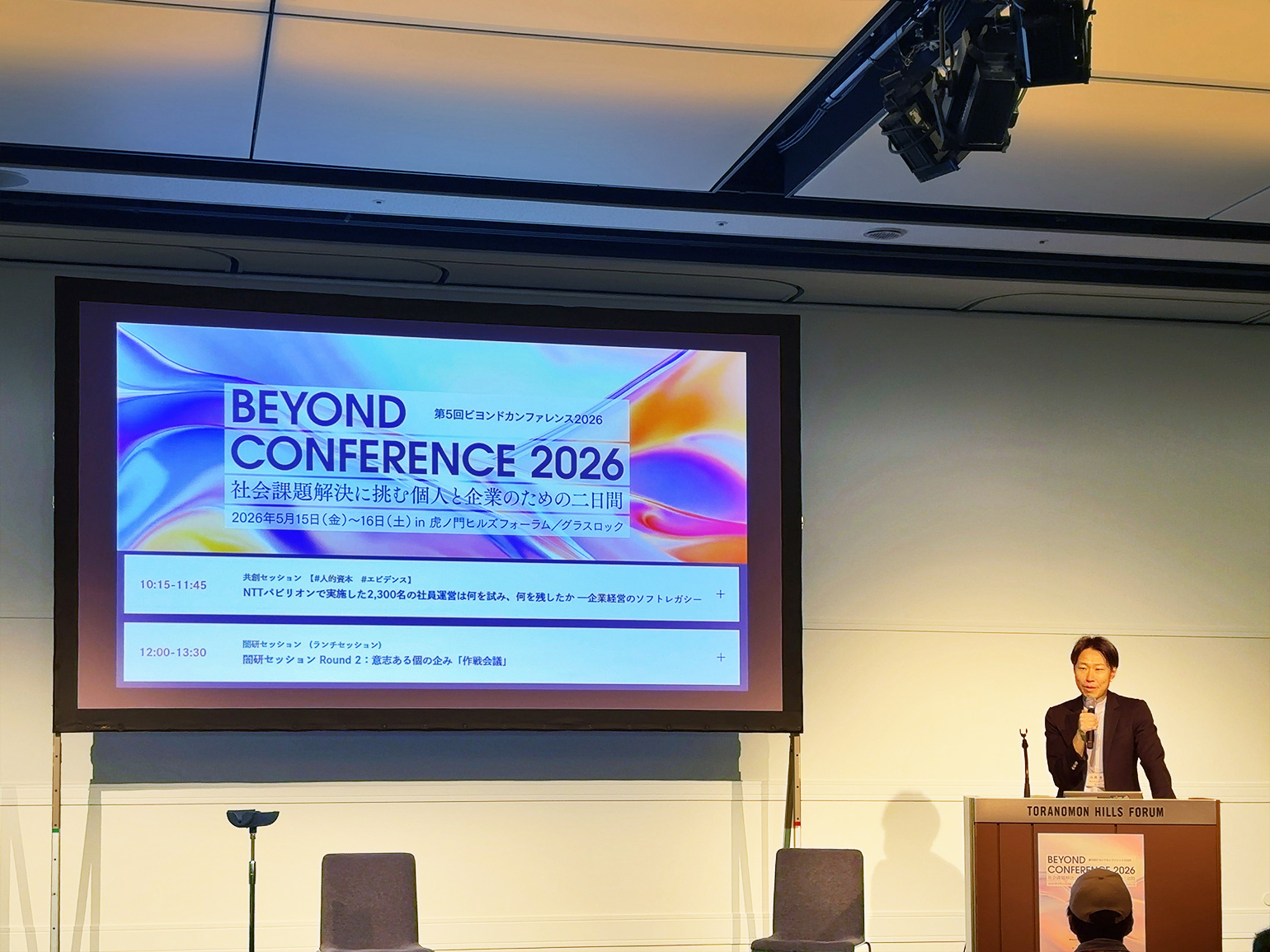
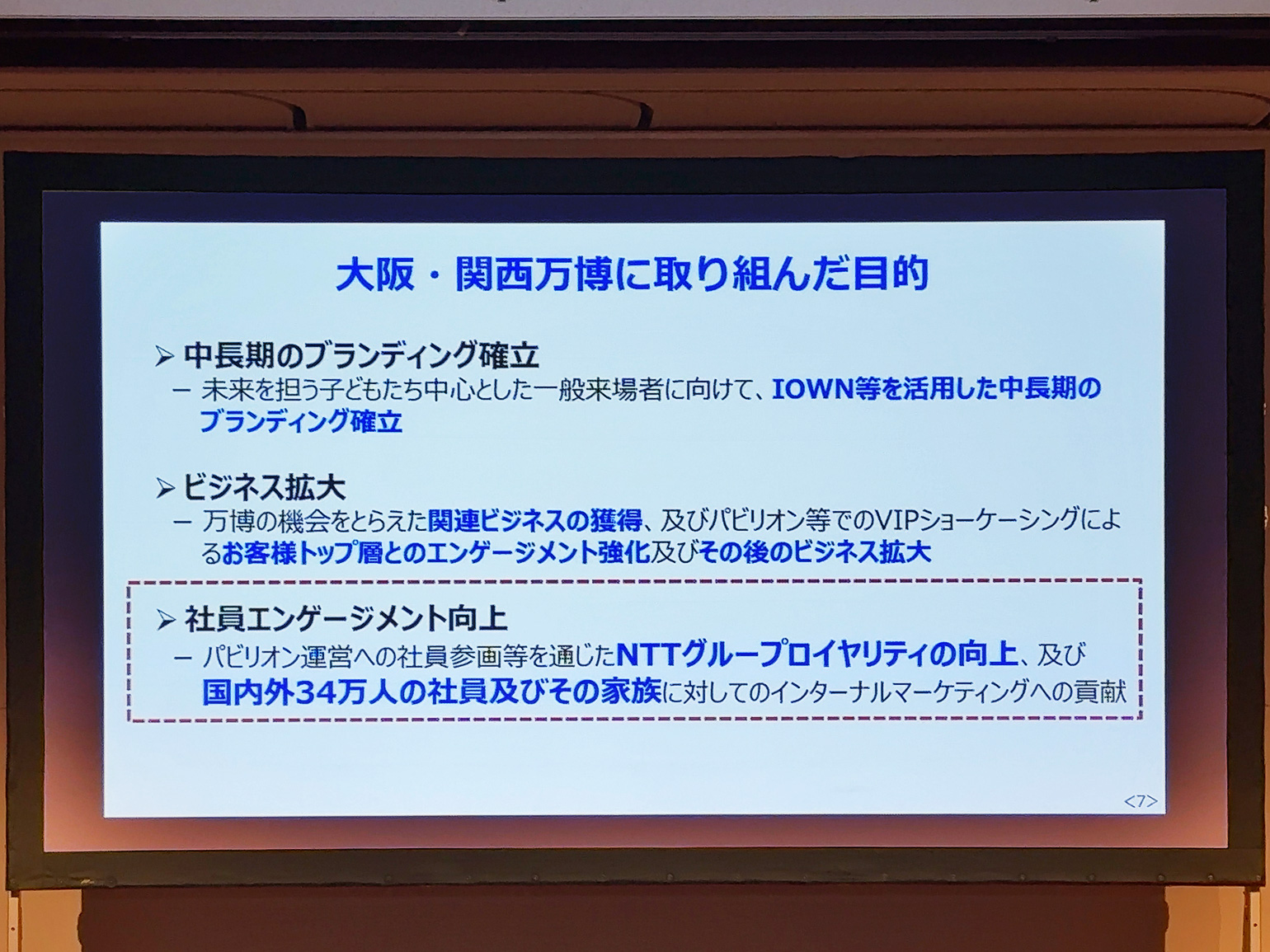
Typically, large-scale pavilions are outsourced to event production companies to ensure safety, high quality, and smooth operations. However, NTT deliberately defied this convention and adopted an operational structure centered on its own group employees.They handled nearly all aspects in-house. While cost constraints were a practical factor behind this decision, an even stronger motivation was the desire to “turn this Expo—a valuable opportunity for the company to connect directly with society—into a catalyst for the growth and increased engagement of each and every employee.”
The theme was “making it personal.” With this massive event on the horizon, the fact that the company’s own employees ran it with their own hands—facing challenges, devising solutions, and achieving success—and that the experience gained from this significantly strengthened employee engagement is a result worth celebrating. I would like to introduce the details and outcomes of how they effectively utilized this opportunity, which captured the public’s attention, to create a space where society and employees could connect.
A Will to Co-Create and a Chain of Improvements That Arose Naturally Precisely Because They Were a Group of Novices
For this project, approximately 2,300 people from the NTT Group participated through an open call. They adopted a unique operational system that divided the Expo’s 184 days into 46 blocks and rotated team members in five-day intervals. In other words, the operational staff was constantly rotating, meaning that first-time experiences were repeated over and over.Furthermore, since many participants were “amateurs” with no prior event management experience—and training was kept to a minimum before they were deployed to the field early on—this could be described as a challenge that, on the surface, might seem quite reckless.
On the other hand, it is said that this very approach led to unique discoveries. In contrast to typical pavilion operations, the rapid turnover of personnel fostered a constant influx of fresh perspectives and a sense of initiative. This created a process where each team thought independently and improved operations through trial and error—an outcome that could never have been achieved through conventional methods. In a sense, it may be considered a remarkable achievement that this massive corporate group established a new framework for fostering communication among employees and strengthening internal engagement.
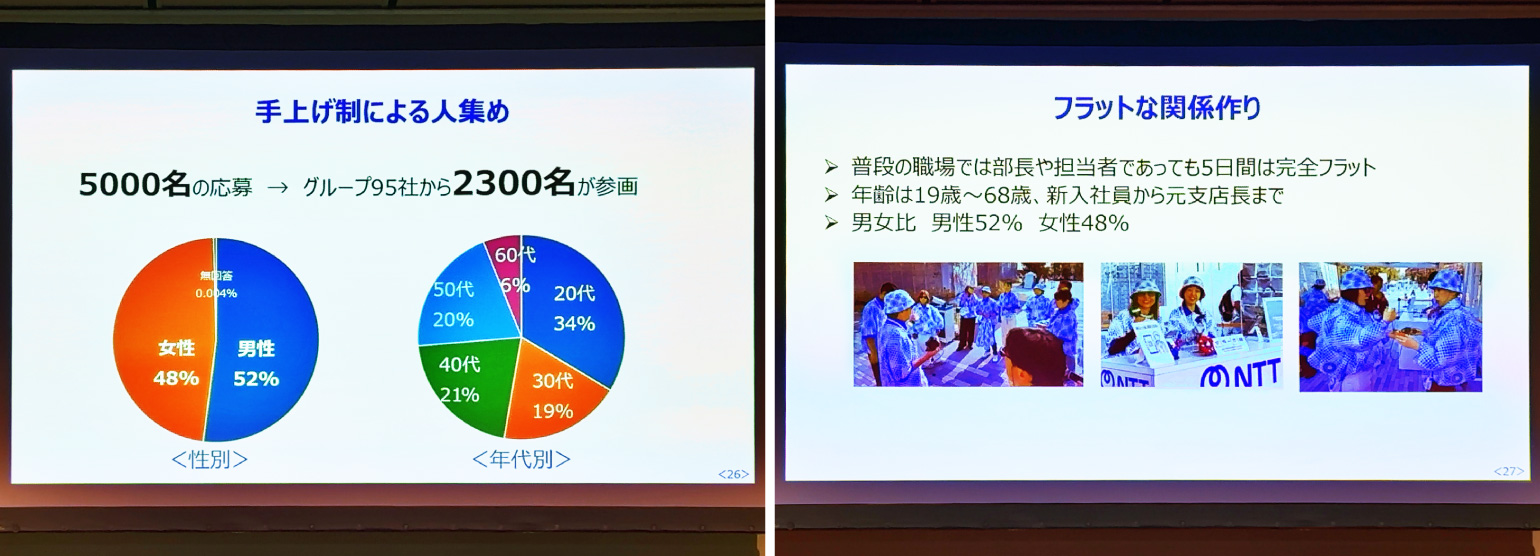
Furthermore, in terms of operations, management reportedly prioritized respecting the creative ideas of frontline staff over strict top-down directives.Initiatives such as the farewell ceremony for visitors—introduced for the first time at the Expo site—and the voluntary provision of individualized guidance for people with disabilities were born from employees’ spontaneous proposals and reportedly became key elements in enhancing their sense of purpose as corporate professionals engaged with society. Furthermore, through repeated handoffs between teams, best practices and areas for improvement were accumulated and shared, ultimately being distilled into organizational knowledge. It is said that these processes of independent proposal and improvement have been successfully replicated in each individual’s subsequent work.
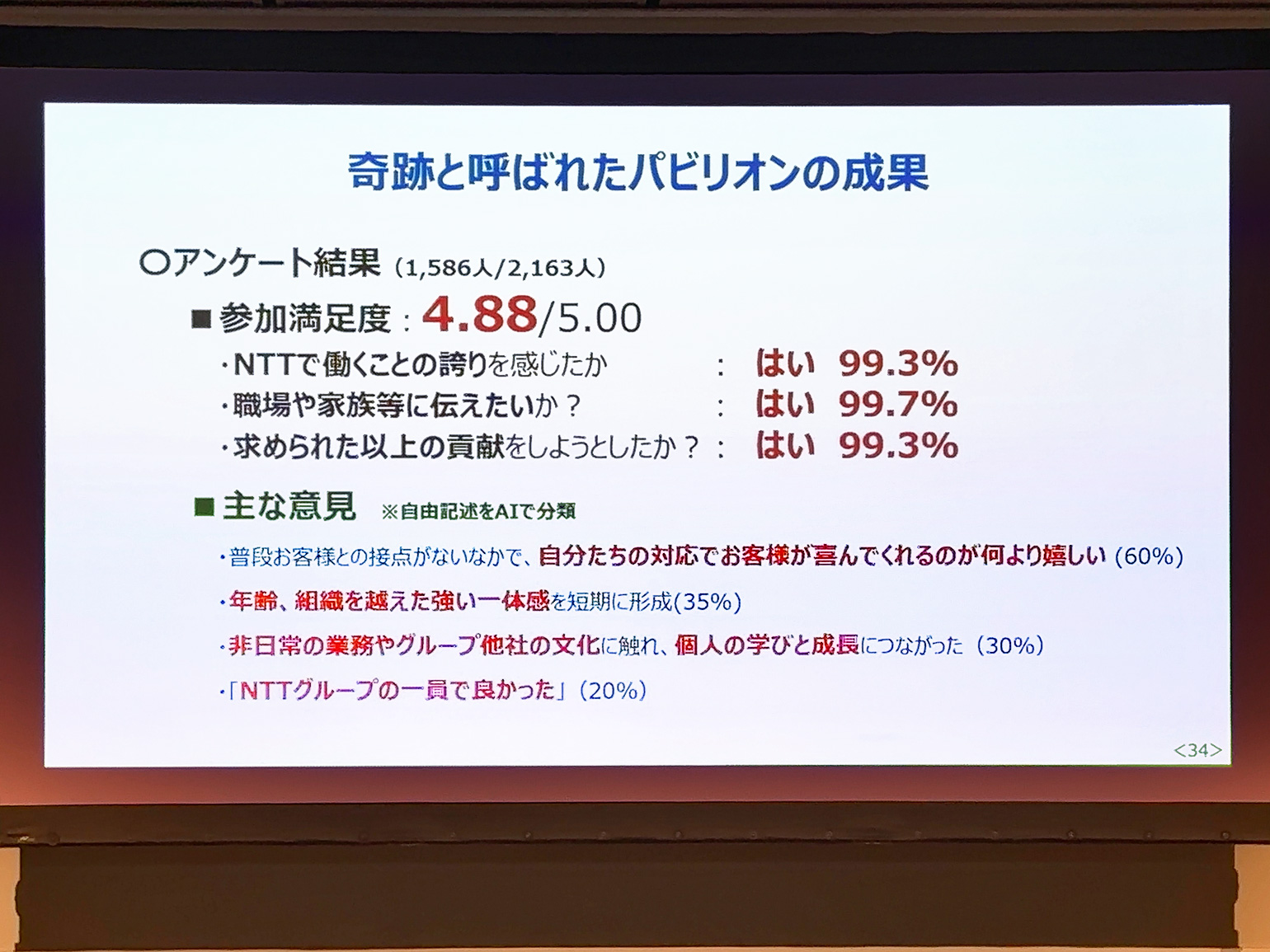
As a result, employee satisfaction was extremely high; in a survey, nearly all respondents reported feeling a strong sense of “pride in working at NTT.” The experience of employees from different companies, job roles, and generations collaborating toward a single goal not only fostered a sense of unity within the group but also served as a valuable opportunity to gain firsthand insight into how a company should engage with society through direct interaction with customers.
Turning a “Special Occasion” into a Company-Wide Opportunity to Engage with Society
The intrinsic value of this initiative extends far beyond the mere success of the event. By having employees take the lead—rather than outsourcing operations—and create value through trial and error, they were able to truly grasp what it means for a company to stand alongside society. Furthermore, the experience of thinking and acting independently on this extraordinary “special occasion” stage boosted employees’ intrinsic motivation and laid the groundwork for applying these lessons to their subsequent work.
Thus, while NTT’s decision to bring the operation of its Expo pavilion in-house began as a challenge born out of constraints, it ultimately yielded multifaceted results—including improved employee engagement, the promotion of organizational learning, and the establishment of a new relationship between the company and society—making it a case study rich in implications for future corporate activities.
Presumably, this success owes much to the strong resolve of those in charge, who overcame their hesitation about whether the project was truly feasible and carried it through to the very end with single-minded dedication. Furthermore, I take my hat off to them for the shrewdness they demonstrated in the latter stages, when they had a little more breathing room, by seeking to capture the various values generated by the project as knowledge.That said, given the risks involved, it would be natural to want to avoid undertaking such a challenging initiative on a grand stage like an Expo. However, when you think about it, “special occasions” exist in our daily lives in various forms, both large and small. To put it bluntly, even difficult events can, when viewed from a different perspective, serve as opportunities to unite the interests of those involved and foster a spirit of cooperation—a valuable lesson in itself.
The fact that Noto’s disaster response efforts have fostered inter-company collaboration and continue to expand and persist is likely due in part to this kind of environment. Furthermore, by narrowing the scope, we might discover even more everyday opportunities. “Internal suggestion boxes”—where employees collectively brainstorm what can be done when the struggles of employees or members of the public become apparent—are reportedly being widely adopted as a recent corporate initiative.
Furthermore, speakers at the conference consistently emphasized that such experiential opportunities should be incorporated into in-house training programs. Indeed, a training system that provides these opportunities regularly and sustainably seems likely to serve as an excellent way to ignite the motivation of each individual employee, rather than relying on top-down directives. As someone who proposes internal communication strategies aimed at embedding corporate purpose and strengthening employee engagement, I feel I have gained valuable insights from this experience.
Corporate involvement in social activities is still in its early stages, but the time to cross the chasm is near
What struck me most throughout this conference was the dynamism, driving force, and ability to engage others demonstrated by projects led by outstanding agenda leaders. As always, every time I heard their presentations, I found myself wanting to jump right in as a teammate. At the same time, I also came to understand that companies are often constrained by their existing decision-making processes and are still unable to take that first step toward getting involved.I keenly realized that while companies have the will, existing rules stand in the way, and it is the strength of individuals that can overcome these constraints. However, I am not discouraged. As introduced here, there is no doubt that determined individuals are steadily moving forward with their activities, gaining more allies, and coming very close to engaging corporations—which is the theme of this event. All that remains is to wait for a crack to appear in that wall, leading to a snowball effect that brings it crashing down.
The groundwork has been laid. I want to cheer them on, telling them to just keep moving forward without hesitation.
[6 Key Points for Transforming Individual Will into Organizational Strength]
- Above all, what drives an organization is an individual’s strong sense of purpose—the “why” behind their actions—and their determination to see it through.
- To spread an individual’s passion throughout an organization, it is essential to translate that value to align with others’ perspectives and engage in repeated dialogue.
- By linking individual will to the company’s purpose and business value, the organization gains the legitimacy to tackle challenges collectively.
- A company’s human resources, budget, and network have the power to amplify an individual’s will into a greater social impact.
- Opportunities for employees to engage with society and think and act independently lead to improved engagement and organizational strength.
- To sustain efforts to address social issues, it is necessary to articulate both social significance and economic value.
The information published at this time is as follows.
Was this article helpful?
Share this article


Newsletter registration is here
We select and publish important news every day
For inquiries about this article
Back Numbers
2025/05/30
That's right! I have a family business! The depth of "social capital" held by local companies, forming the foundation for promoting social innovation.

2024/08/06
Six Months After the Noto Peninsula Earthquake: What is the "Relational Population" Supporting Regional Recovery? ~The Future of Grassroots Recovery Support Networks~
Author

Inokuchi Tadashi
PR Consulting Dentsu Inc.
Executive Officer
Chief PR Planner
Shinmeikai "Strategic PR"Long time no see! CRAFTPRMeasuring PR Effectiveness: Supporting Management with Data-Driven InsightsNow is the time to reexamine the essence of PR / Its futureThe Future of Corporate Museums as PR AssetsBeyond Conference Report【Special Discussion】Public Relations Enters a New Era: Proposals for PR 4.0