
Note: This website was automatically translated, so some terms or nuances may not be completely accurate.
Aiming to Eradicate Infectious Diseases GHIT Fund Marks First Anniversary
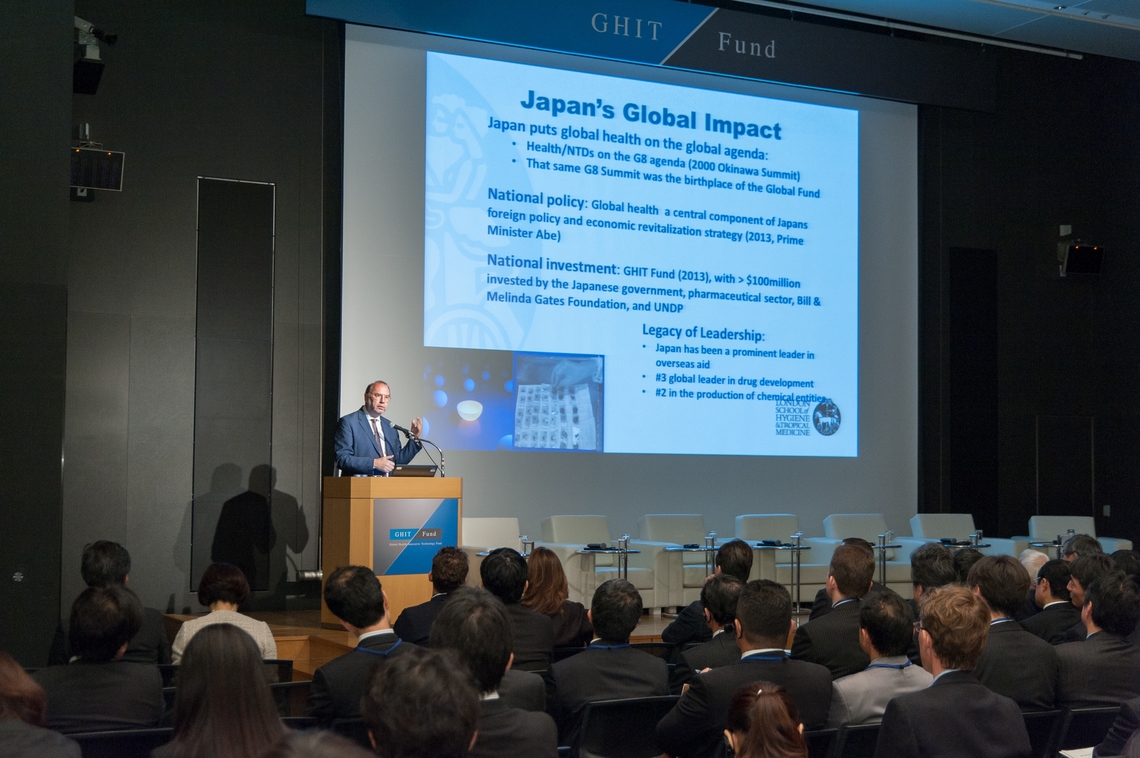 |
The Global Health Innovative Technology Fund (GHIT Fund) held its 1st Anniversary Event, "GHIT Fund 1st Anniversary Event 'Global Health R&D Showcase'," on June 6 at Roppongi Hills in Minato Ward, Tokyo. The fund was established to combat infectious diseases, including "neglected tropical diseases" prevalent in developing countries across Africa, Asia, and Latin America. It is a public-private partnership involving five Japanese pharmaceutical companies (Astellas Pharma, Daiichi Sankyo, Eisai, Shionogi & Co., Takeda Pharmaceutical Company Limited), the Ministry of Foreign Affairs, the Ministry of Health, Labour and Welfare, and the Bill & Melinda Gates Foundation (BMGF). Gates Foundation (BMGF) as a public-private partnership to advance the research, development, and commercialization of new drugs.
GHIT has attracted attention from various quarters despite its recent establishment, owing to its status as the first Japan-originated international organization in this field and Japan's history and achievements in pioneering infectious disease eradication globally throughout the pre- and post-war periods. Approximately 350 participants attended the event, representing governments, companies, think tanks, students, international organizations, and media.
 |
| 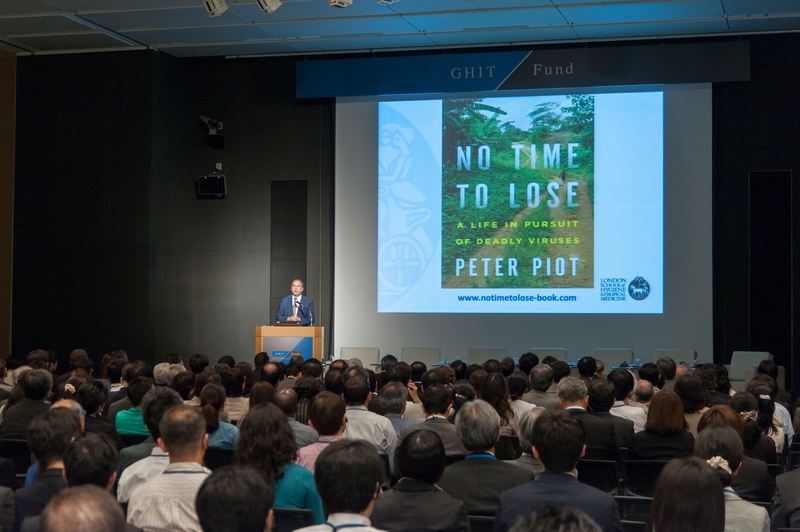 |
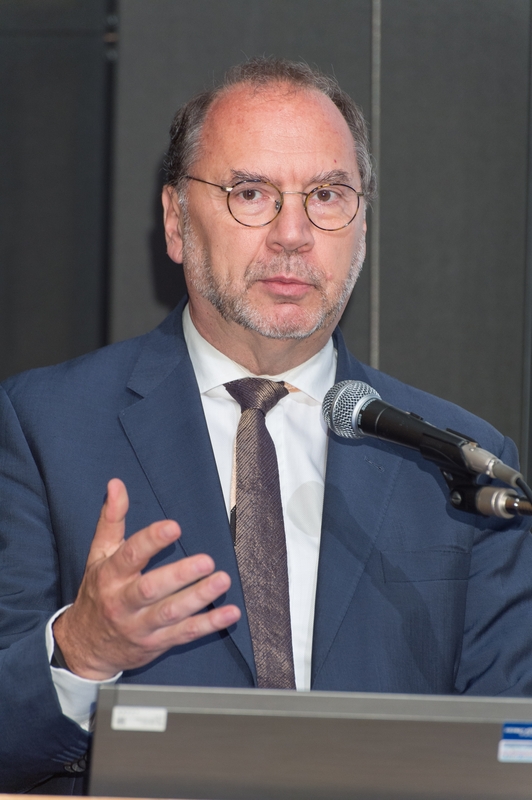
In his keynote address, Professor Peter Piot, Director of the London School of Hygiene & Tropical Medicine, stated, "Infectious diseases inevitably re-emerge even after eradication, making global solidarity essential. Japan is a pioneer in public health that dramatically controlled infectious diseases after the war, making the establishment of GHIT in Japan highly significant." He praised the initiative, stating, "No other fund has this level of participation from pharmaceutical companies." Professor Piot is also known as one of the discoverers of Ebola hemorrhagic fever.
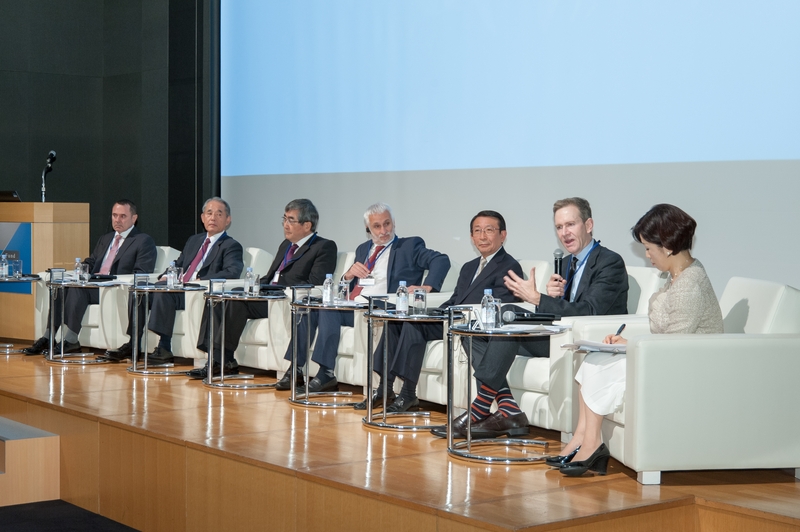 |
The panel discussion featured Takeda Pharmaceutical Company Limited President Yasuhisa Hasegawa, Medicines for Malaria Venture CEO David Reddy, Eisai Co., Ltd. President Haruo Naito, Drugs for Neglected Diseases initiative Executive Director Bernard Pecoul, Astellas Pharma Inc. Chairwoman Masayo Nogimori, and BMGF Global Health Program President Trevor Mundell.
Mr. Reddy stated, "Worldwide, as many as 200,000 fetuses die from malaria each year. This is due not only to the lack of treatment drugs locally, but also to the emergence of drug resistance. The technological capabilities of Japanese pharmaceutical companies are needed to combat new infectious diseases." President Hasegawa spoke about the change in awareness, saying, "Researchers feel that developing treatments for malaria and AIDS is socially significant, but participating in GHIT has further increased their motivation." President Naito identified challenges: "While chemical laboratories are a strength of Japanese pharmaceutical companies, the question is how to conduct chemical trials effectively. Our weakness is the lack of connections with regions where infectious diseases are rampant." In response, Mr. Pecoul stated, "Speed is crucial for controlling infectious diseases, and Japan possesses high technological and innovative capabilities. We will support building those local connections." Chairman Nogimori emphasized the significance of the initiative, stating, "By participating in GHIT, we realized the importance of fulfilling the social responsibilities of pharmaceutical companies, even if it does not lead to profits. This learning experience will become an asset for our company."
There are many challenges to eradicating infectious diseases, such as improving delivery systems and raising the level of education, but Mr. Mundell concluded, "It is meaningless if the local people do not accept it. There are many challenges, such as the need for activities based on local customs in the use of drugs, but the enthusiasm of Japanese pharmaceutical companies is wonderful."
GHIT website: www.ghitfund.org
Was this article helpful?
Share this article


