Note: This website was automatically translated, so some terms or nuances may not be completely accurate.
 Dentsu Inc. Smart Platform [2/23]
What's the feeling behind spending money with a "tap" on smartphone games? (Part 1)
I'm Iwai from Dentsu Inc. Smart Platform. Over the next two installments, I'd like to focus on "smartphone games," a particularly rapidly growing segment among the various booming smartphone services.
Dentsu Inc. Smart Platform recently conducted a survey (Note) exploring consumer insights regarding smartphone games. What emerged was the question: "Why do people 'tap' and spend money on smartphone games?" We'll explore that sentiment.
1.Smartphone Games = Entertainment Content for All Ages
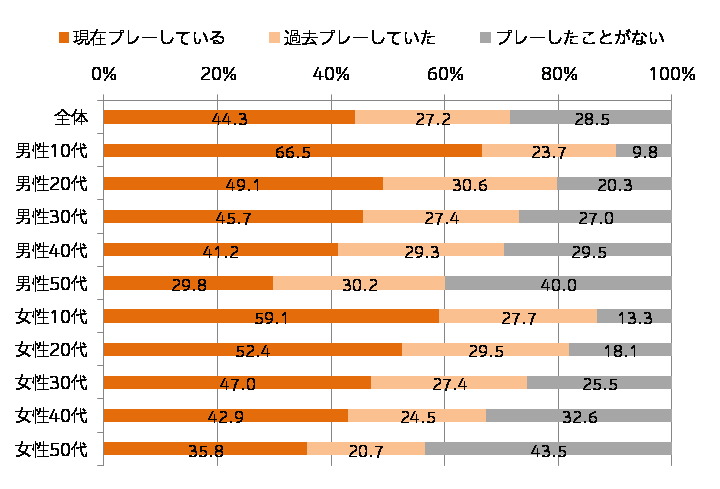
71.5% of respondents answered "Yes" to having played games on their smartphone. 44.3% said they "currently play." This means gaming has become commonplace for many smartphone owners, firmly established as one way they use their devices. Looking around on trains, it's now common to see everyone from businesspeople to students in uniforms, gals, and housewives engrossed in smartphone games.
[Q. Smartphone Gaming Experience]
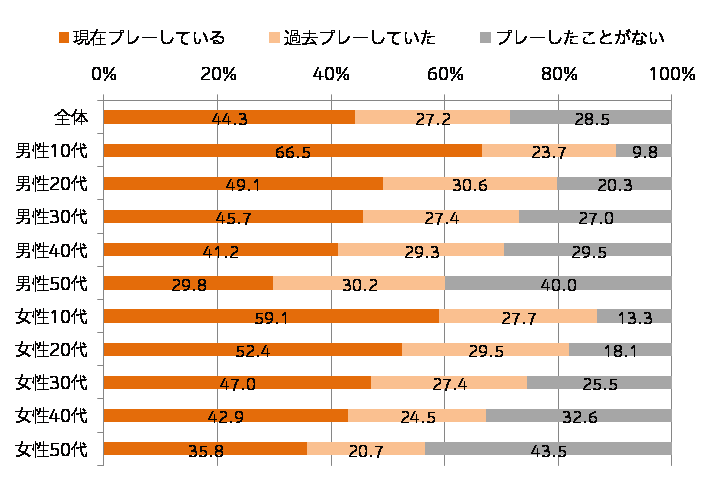
Surprisingly, it's not just younger generations—over 30% of people in their 50s are currently playing smartphone games. Indeed, both my parents have smartphone games they're hooked on.
Of course, the increasing quality of the games themselves is a key factor. Games that leverage touch controls, utilize communication features, or are optimized for short play sessions—just as home consoles evolved with improved performance, smartphone games have also evolved as content to meet the preferences of users.
Smartphones, now ubiquitous regardless of gender or age, provide an environment where anyone can enjoy games.
2.Smartphone game monetization is actually a positive thing
On the other hand, the image of "in-app purchases" often sticks to smartphone games. Hearing about in-app purchases in smartphone games might give many people a negative impression. However, looking at this survey, an interesting result emerged.
[Q. Experience with smartphone game in-app purchases (among smartphone game users)]
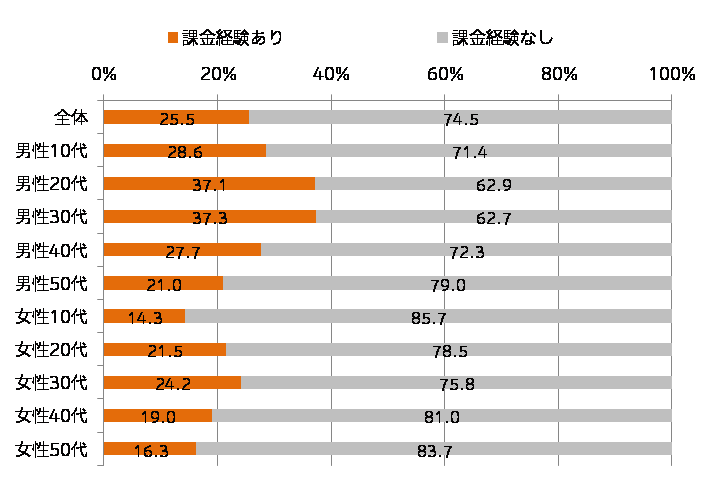
Among those with smartphone gaming experience, 25.5% reported having made in-app purchases. That's one in four people. Quite a high percentage. In other words, one in four smartphone owners has, at some point, clicked to make a purchase.
While the world is flooded with products and services, it's rare to find a service that, despite being free to use, has such a high probability of actually getting users to spend money. However, it's also true that many people feel resistance towards spending money on smartphone games.
[Q. Resistance before paying - Current paying users]
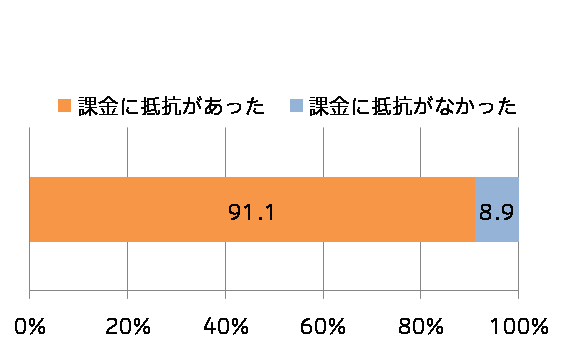
Most people never imagined they'd actually pay for smartphone games and generally felt, "I really don't like paying for games."
But once you experience making a payment, it changes to "paying is fun."
【Q. Current Resistance to Spending Money - Current Paying Users】
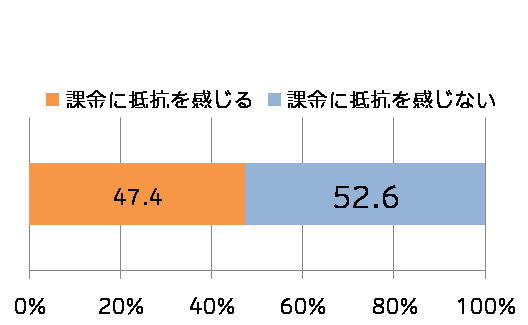
Surprisingly, resistance to spending nearly halves. Once you experience "spending," that resistance just vanishes. You can see the feeling where many people who thought, "Spending money on smartphone games...?" end up tapping the button—no, actually wanting to tap it.
Most people start playing smartphone games with the mindset of "just killing time is fine." Since their initial expectations aren't very high, their resistance to spending is also strong. However, as they play, they get hooked. Precisely because the game's quality exceeds their expectations, they find themselves hooked before they know it. This creates a cycle where they spend to enjoy the game more on their own terms.
In other words, spending money on smartphone games isn't inherently "bad" at all; it's a "purchasing action" to pursue one's own enjoyment. In Dentsu Smapla's activities, we conducted group interviews with smartphone game spenders. A common point was that everyone talked about their "personal points of getting hooked on the game" and cheerfully discussed their "reasons for responding."
Just like when you finally get that bag you've been eyeing and talk about why you bought it and its appeal, spending money on smartphone games is similarly a "positive use of money." Of course, some people still report "resistance," but as game performance improves and new ways to play are introduced, that resistance is likely to fade away.
3.Smartphone games that cater to small desires
At Dentsu Smart Plus, we call smartphones "emotion devices." We believe smartphones directly receive consumers' "psychological shifts" through the "finger movements" directly linked to those shifts.
Smartphone games are the ideal content to capture these small "psychological shifts." They fulfill the desire to "play a little," the desire to "not think about anything," and the desire to "not lose to anyone!" They provide daily little thrills, captured right where you are.
For example, the "desire" to go to an amusement park might arise, but it often remains unfulfilled due to various constraints: schedules don't align with those you want to go with, preferences for parks don't match, or (like me) you simply have no one to go with. Such unfulfilled desires exist constantly in daily life.
Amidst such constraint-filled days, smartphone games fulfill these small desires (= mini-desires). By satisfying these "mini-desires," they've grown into content that many people play and even spend money on to enjoy. Smartphone games, which generate so many positive feelings, will likely continue to grow in both quality and quantity.
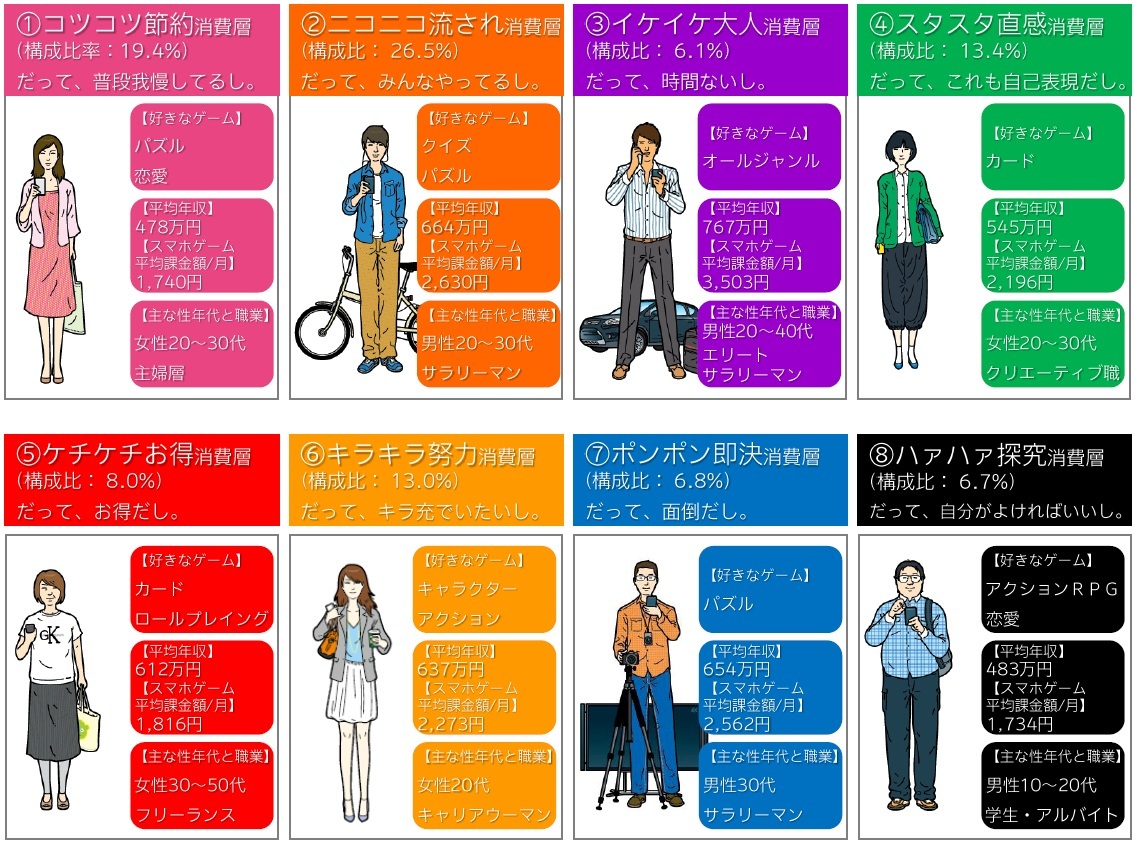
Analyzing the moments when users decide to pay on these emotion-driven devices revealed "8 Types of Purchase Behavior Patterns" on smartphones. Next time, we'll explain the motivations and reasons behind spending money on smartphones.
(Note) <About the Survey Conducted>
"Dentsu Inc. Smapla Independent Survey on Smartphone Game Payments"
Survey Method: PC Internet survey
Survey Period: Monday, May 12, 2014 - Friday, May 16, 2014
Target: Men and women aged 15-59 nationwide
Screening Survey: 18,000 samples
Main Survey: 3,000 samples
*The following three segments were each sampled with 1,000 respondents from the screening survey to obtain responses
1) Current smartphone game users (with paid usage)
2) Current smartphone game users (no in-app purchases)
3) Current non-users of smartphone games (including inactive users)

◎ What is "Dentsu Inc. Smartpla"?
It is a planning unit that contributes to the launch, growth, and expansion of businesses on smart devices (such as smartphones, PCs, and tablets).
Our team includes diverse professionals such as strategic planners, communication planners, consultants, copywriters, and producers, all with extensive experience in marketing communications for smartphone games and apps. Furthermore, as each member is passionate about specific areas, we support marketing activities by deeply exploring challenges and engaging clients with our unique personalities and human skills.
Was this article helpful?
Share this article


Newsletter registration is here
We select and publish important news every day
For inquiries about this article

Author

Yudai Iwai
Dentsu Inc.
First Integrated Solutions Bureau
Strategic Planner