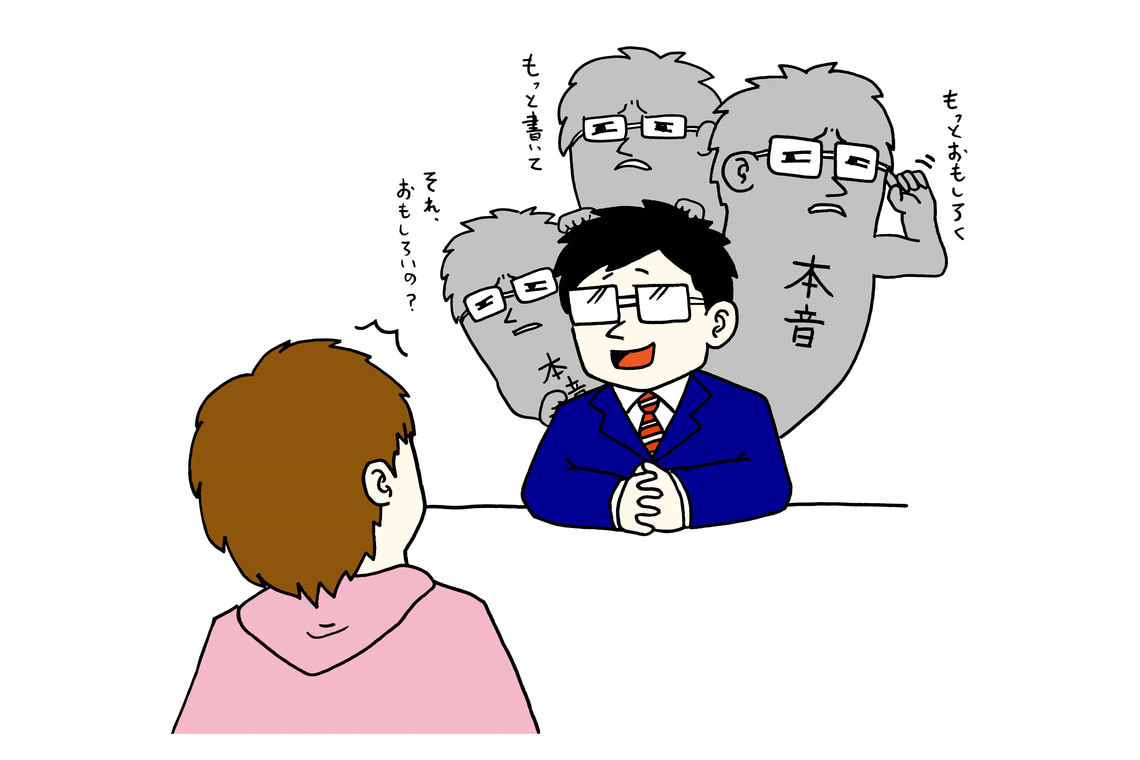
Note: This website was automatically translated, so some terms or nuances may not be completely accurate.
 How to Find That One Phrase [1/10]
Write with your right eye, read with your left.
The work of a copywriter is very analog and unassuming.
Day and night, they think about products, jotting down related words and stories that come to mind on paper, pinning those papers to walls, reading them aloud. Even during commutes or weekend walks, they constantly search for better words and expressions.
Sitting at a desk, pearls of wisdom won't just fall from the sky. It's more like going out into the streets, crawling along the ground, searching for a single gold coin.
But I actually quite like this crawling-around work.
Working alongside top-tier creative directors, copywriters, and art directors in the advertising industry, you can't help but feel the power of words. Not only are their creations unique and compelling, but their spoken words are truly distinctive and captivating. Witnessing firsthand, time and again, how a single way of conveying something, a single word, elevates the value of their work or proposals, I've reached a conclusion.
People who can do the work are people who can use words.
Being good at your job means you can move things forward. It means you can inspire people to create something new. And what you need to inspire them? Words.
My book, "Finding That One Phrase," was written with the hope of sharing the "tips for honing words" I've gained through my daily copywriting work.
A serialized column based on this book's content is now starting. The first installment is titled "Write with Your Right Eye, Read with Your Left." As the author, I would be delighted if this series proves useful to you.
― ― ―
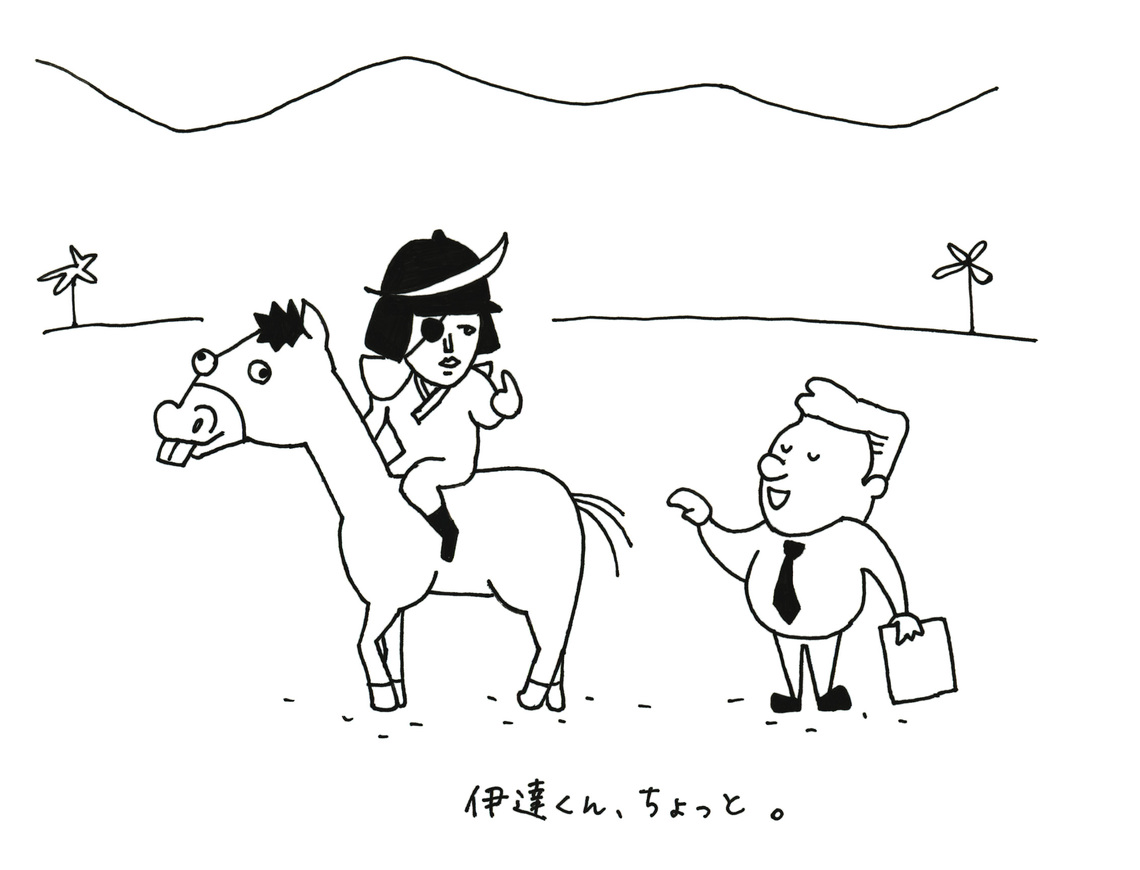 |
Illustration: Shin Hashimoto (Dentsu Inc., Creative Planning Division 5) |
Write with your right eye, read with your left. Of course, you can't literally do that, but that's the mindset I adopt when writing copy.
For example, when writing copy for a product, I think about what would make me want to buy it if I were the customer, or how I would use the product myself. Copy written this way is quite subjective. That's what "writing with the right eye" means.
"Reading with the left eye" means stepping into various people's shoes and critically examining the copy. I ask myself: Would I really buy this? Would my parents buy it? What would my friends think? I persistently repeat this process of shifting perspectives and reading with an objective eye, over and over again.
Look right, look left, look right again.
Writing is like traffic safety rules. The key to good writing is rapidly repeating this cycle: right eye = subjective thinking, left eye = objective reading.
Viewing your words and writing through the eyes of family, friends, or a lover might feel difficult at first. When I was a new copywriter, I found my own writing endearing—I had an attachment to it. So I never consciously tried to see it from someone else's perspective.
But to write a lot, "changing your perspective" is crucial. If you write solely from your own feelings, you'll hit a wall quickly.
Copy is always seen by someone. First, the art director who plans the design sees it. Next, the creative director overseeing the entire ad campaign sees it. Then, the salespeople at Dentsu Inc. see it. Finally, the client sees it.
Since so many stakeholders are involved in the copy's journey, you inevitably start wondering how they'll perceive it. At that point, you develop the habit of reviewing your copy from perspectives other than your own.
Once you've mastered this, the rest is easy. Expand that sense further and immerse yourself in the perspective of someone close to you, writing down whatever comes to mind from their viewpoint. The perspective of your father or mother, your older or younger brother, your grandfather or grandmother, your school friends, your coworkers. If you still get stuck, try thinking from the perspective of a dog or cat, or the ocean or the universe. If you're still stuck, try thinking from the perspective of an object, like a pencil or a cup.
One key tip is to fully embody the person (or thing) you're imagining. I have a colleague from Kansai, and when I picture him, I even slip into Kansai dialect, interjecting things like "No way!?" You might think it's silly, but this role-playing really helps shift your perspective.
I also recommend physically distancing yourself from words and text.
I make it a rule to write one copy per A4 sheet, using a thick marker pen. Putting the words I've thought of onto paper helps me calm down a bit.
Next, place that paper somewhere far away. You can put it on a distant desk or pin it to the wall. Physically move it to a remote spot. Strangely enough, the sense that these are your own words fades, allowing you to objectively judge whether this copy is truly good.
Another approach is to have someone nearby read your copy. If you struggle to maintain an objective perspective yourself, encourage others to freely share their honest opinions and impressions.
Of course, it feels incredibly embarrassing at first. When I first started writing copy, I felt like I was baring my entire soul, and it was terribly embarrassing. The thought of being laughed at, told I was incomprehensible, or having people think "Is this really what he's thinking?" made me break out in a cold sweat.
But ultimately, to create something good, you have to overcome that "embarrassment." Not going through that process and ending up with something dull is far more "embarrassing." Now, I make it a personal practice, almost like a discipline, to have as many people as possible review my copy.
Was this article helpful?
Share this article


Newsletter registration is here
We select and publish important news every day
For inquiries about this article
Author
Yosuke Watanabe
Dentsu Inc.
4th CR Planning Bureau (on assignment to Dentsu Inc. Isobar)