Note: This website was automatically translated, so some terms or nuances may not be completely accurate.
 How to Find That One Phrase [2/10]
Multiplying perspectives and expressions.
This is a story from when I was a newly minted copywriter.
I received a job request to create a newspaper ad for a company. The content was something like "A new service has launched." I threw myself into it, wrote about 200 pages of copy on A4 paper, and proudly brought it to the creative director.
After reviewing it, the creative director looked up and said:
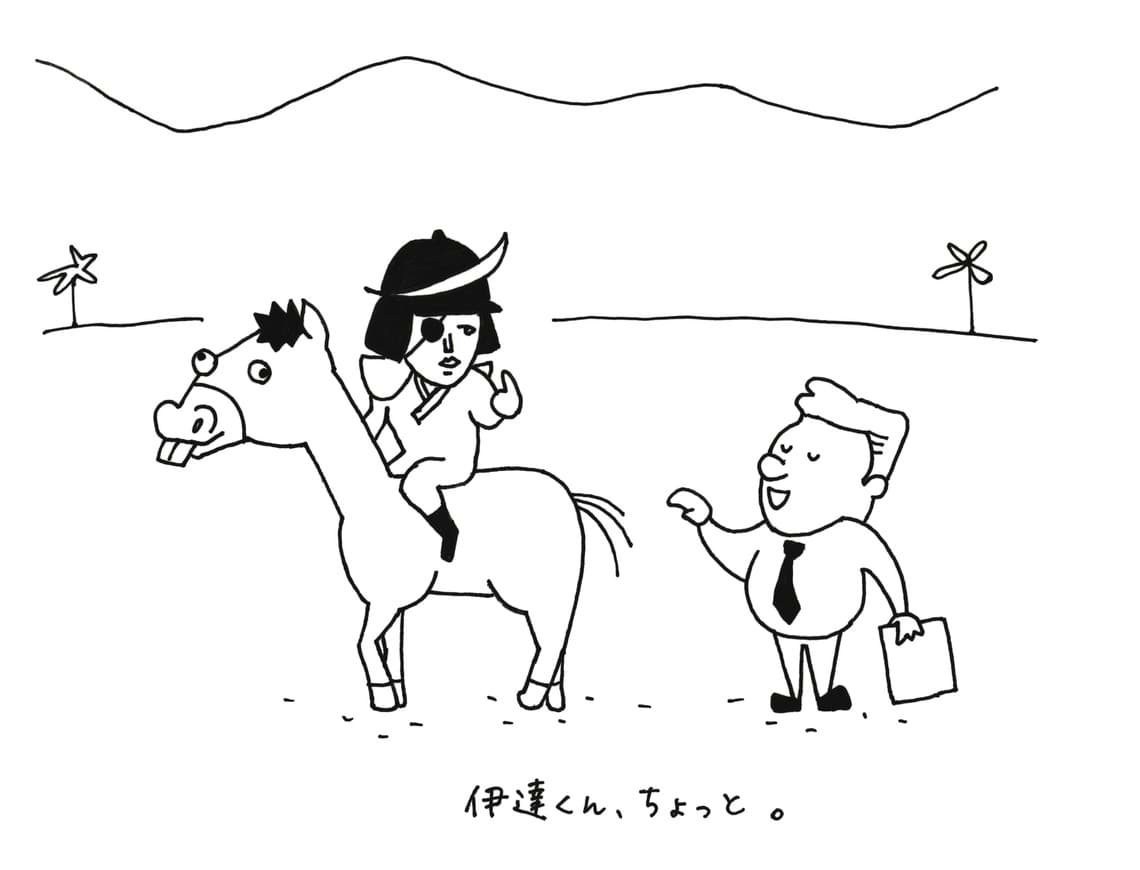
"Watanabe. There's a lot here, but only about three distinct angles."
You could call it a baptism by fire—an unforgettable experience.
"Writing down every idea that comes to mind" is important as a first step. But what's equally important next is whether you've come up with a sharp angle.
Writing 100 or 200 ideas from a single perspective—like "This service is convenient," "It's a service that didn't exist before," or "Don't you think it's useful?"—is meaningless. For example, you should consider different angles: How would you make your family want to try this service? What about friends? What about coworkers?
Picture an apple in your mind. Now slice it cleanly with a knife. Whether you cut it vertically or horizontally, the appearance of the cut surface changes completely. The "angle" is about which facet of something you show to make it look appealing. If you cut it diagonally instead of vertically or horizontally, a different angle emerges. How should you cut it to make it look most delicious?
This principle applies to copywriting too. Examine a subject intently from various angles. Consider which angle to cut it from. Find the angle that makes it look most charming. With practice, anyone can master this.
Take copy for an English conversation school, for example. There are many angles that can motivate someone to learn a foreign language: to study abroad, to advance their career, to make friends... Which angle resonates most powerfully as a motivation to learn? You write those down.
Ultimately, only one copy will be released to the world. In other words, there's only one best angle. But to judge whether that angle is good, the more angles you have, the better.
First, write down a certain number of ideas. Then, categorize them by angle. Aim for at least 10 angles.
Next, write three copies for each of those ten angles, using different phrasing. Add more if needed. And voilà—you've now completed 30 copies!
Rather than writing 100 copies per angle across 3 angles (totaling 300 copies), write 3 copies per angle across 10 angles (totaling 30 copies).
This broadens your range of ideas and actually ensures your message gets across more effectively.
You might wonder: Can I really find multiple expressions for each angle? Don't worry. There are tricks to finding expressions.
For example, let's say you're writing about when being good at English pays off.
You might say: "The real payoff of knowing English comes not in middle school, not in high school, not in college, but when you enter the workforce." Or, framing it as financial loss: "I feel like I'm not taking full advantage of opportunities during yen appreciation." Another example, exaggerating a failure in English conversation: "I kept saying 'YES' until the police showed up."
As you can see, simply comparing things, using metaphors, or exaggerating situations can yield a wealth of expressions. Multiplying your angle with your expression dramatically expands your vocabulary. If you're struggling to write a lot, please give this a try.
 |
Illustration: Yuji Numazawa (Dentsu Inc., Creative Planning Division 5) |
Was this article helpful?
Share this article


Newsletter registration is here
We select and publish important news every day
For inquiries about this article
Author

Yosuke Watanabe
Dentsu Inc.
4th CR Planning Bureau (on assignment to Dentsu Inc. Isobar)