
Note: This website was automatically translated, so some terms or nuances may not be completely accurate.
 Dentsu Design Talk [51/109]
Who Creates the Dentsu Inc. Person? (Part 2)
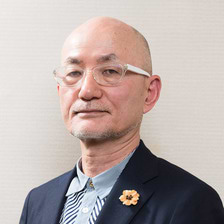
Kenji Shirotsuchi
Thinker, Former Executive Officer at Dentsu Inc.
Joined Dentsu Inc. in 1977. As a creative director, he handled numerous campaigns. After becoming an executive officer, he worked on projects ranging from management and business strategy to brand communication and corporate culture transformation for many companies, NGOs, and NPOs until stepping down as Dentsu Inc. Special Advisor this March.
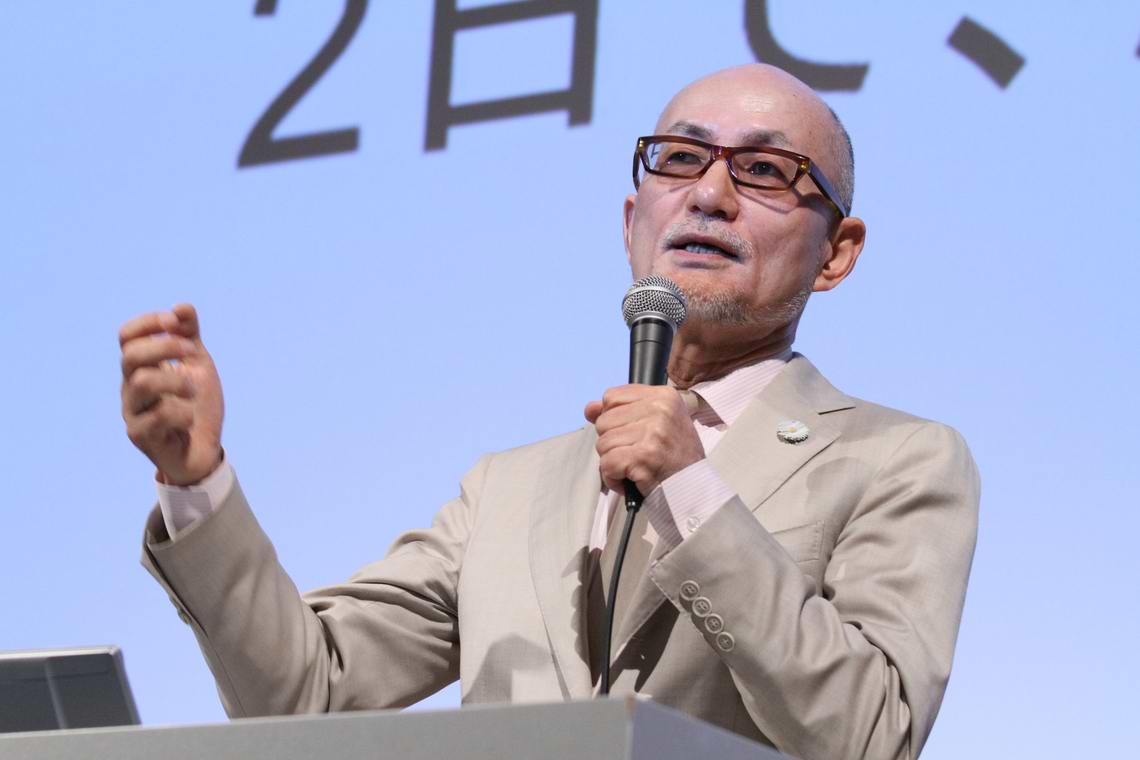
Reflecting on his 38-year career at Dentsu Inc., where he encountered senior creators and corporate leaders of intense individuality and worked alongside them, he delivered his final lecture as a message to young Dentsu Inc. employees. Here is the second part of the digest from his lecture introducing 50 people who contributed to his own growth.
Planning & Production: Aki Kanahara, Dentsu Inc. Event & Space Design Bureau
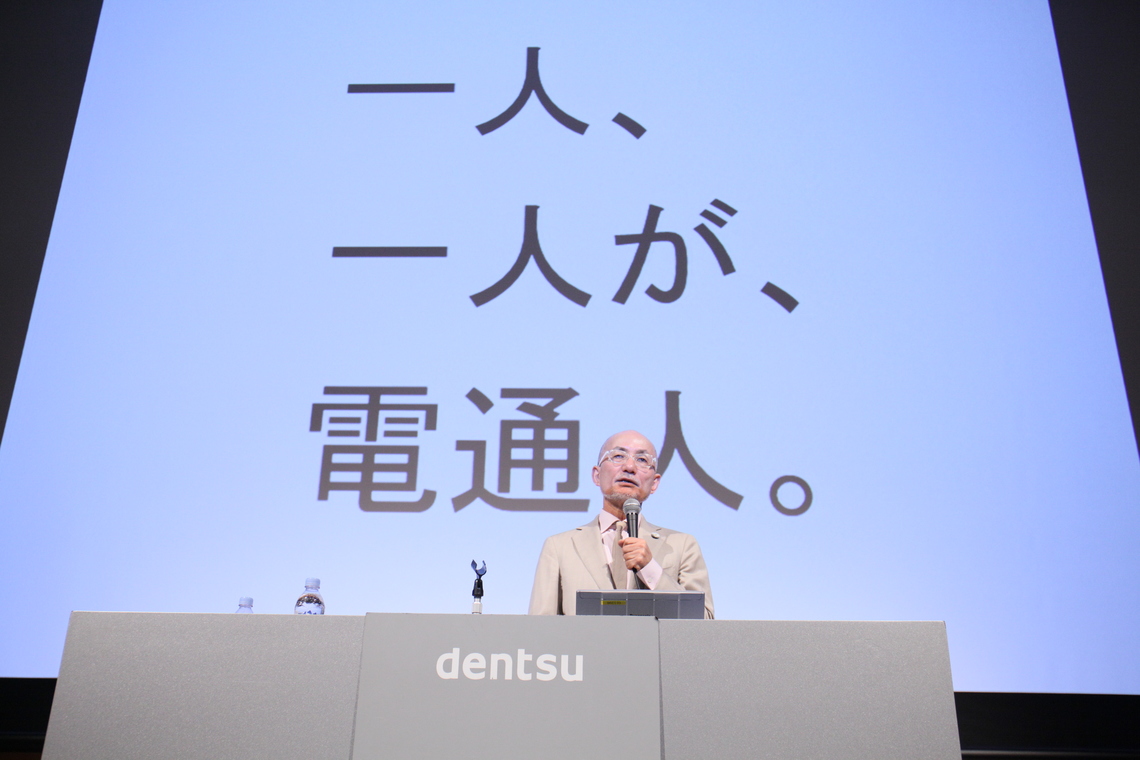
Salespeople Must Be Excellent General Producers
President Hideo Yoshida, a senior figure at Dentsu Inc., was someone whose spoken words could be transcribed verbatim into a manuscript ready for publication. What left the deepest impression on me was the record of his lecture titled "Know the Essence," delivered to sales staff at an executive meeting.
In it, he stated, "If Dentsu Inc. employees stop debating creativity among themselves, this company will decline." I was struck by how powerful this message was, directed specifically at sales. Creativity isn't just the domain of the Creative Bureau. If people in HR, General Affairs, or Sales stop thinking about how to improve things beyond the status quo, this company is finished.
Let me introduce one of my younger colleagues. I met him about 15 years ago when I was doing strategic sales in Kansai and Chubu. He was a top-notch salesman at Kansai Dentsu Inc.
One day, he asked me about a client he was handling: "Mr. Shiroto, can you open the door to the executive boardroom?" He'd heard the executives were troubled, unsure what to do about the chairman's directive to review all business operations. I told him opening the door was fine, but I couldn't take on the account.
Then he said, "If you just get me the door opened, I'll get them to tell me their real concerns, and I'll figure out the rest."
I mean this sincerely: Dentsu Inc. is a sales company, and its salespeople are exceptional producers.
Specifically, general producers who determine everything: how to view society, what themes to pursue, who should do what. People who can think long-term, have broad perspectives, and accumulate deep experience.
And if we have a general producer in sales who has the courage to say "I'm sorry" when things go wrong, then creators can take on any job, no matter how big, without fear.
Intellectual curiosity and a spirit of challenge are the driving forces.
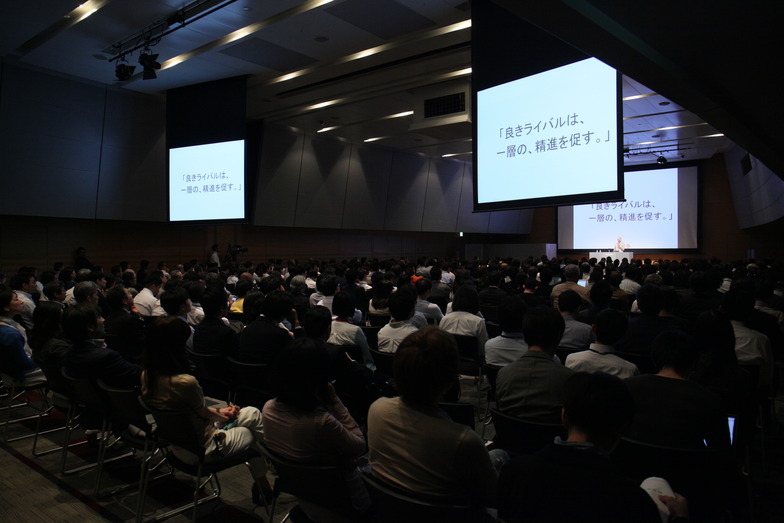
Rivalry is motivating. I've worked with Kazufumi Nagai, President of HAKUHODO DESIGN, several times on campaigns for NPOs and NGOs I volunteer with.
During one of our talks, Mr. Nagai remarked, "Mr. Hakuto, you are the epitome of Hakuhodo. If you were to join us tomorrow, you could start working seamlessly without any awkwardness."
Indeed, one foundation of my proposal templates is Hakuhodo's style, and I've long referred to myself as a "one-man Hakuhodo." Hakuhodo operates with marketing and creative teams working together, but I do that alone. Knowing Nagai-san acknowledged this without any background context truly made me happy.
Having a template is what makes you a pro. The late kabuki actor, the 10th generation Bando Mitsugoro, once said, "Kabuki is not a traditional art form. It is a transmitted art form." You master the traditional templates, transcend them to break the mold, and then pass those innovations on. That is what being a pro is all about.
There's this incredibly sharp director at a film production and distribution company.
He teased me, introducing me to a client as "Mr. Shirotsuchi is the Gandhi of the advertising world." Maybe because our hairstyles and appearances are similar (laughs). That client made various demands of me. I listened seriously and took notes.
But when I saw the test screening, nothing had changed. The client complained to that director, "Mr. Shiroto is humble, but he doesn't do anything I ask."
Then he said, "That's why I called him Gandhi. He offers no resistance, but he won't submit either." I think he had an eye for seeing the essence of things.
Once, while having drinks with a former advertising director from a major beverage company who was famous in the 90s, he asked me, "When you talk to me, are you calculating the profits of Dentsu Inc. in your mind?" So I told him that since joining the company, I'd never once worn the company badge when visiting clients. I explained, "I buy your company's products regularly and compare them with others. I always visit clients intending to represent the average customer, so I don't wear the company badge."
No matter how great the chairman or how godlike the president, they can't beat the customer.
If I say, "I am a customer," no president should be able to tell me, "Don't be ridiculous!"
Finally, I'd like to introduce Professor Norio Ogata, my seminar instructor who later became President of Rikkyo University.
Professor Ogata taught me a framework for thinking. In his political thought history seminar, we read texts, presented our thoughts on them, and debated. What he taught me was, "Think more with your own head and your own words." The author isn't necessarily right.
First, question it. Then, think deeply using your own mind and words. Try it out in practice, and only adopt what truly proves effective.
Even after joining Dentsu Inc., I have tried to follow Professor Ogata's teachings. No matter how brilliant the teaching, I have tested it myself and only adopted what I found effective as "practical knowledge."
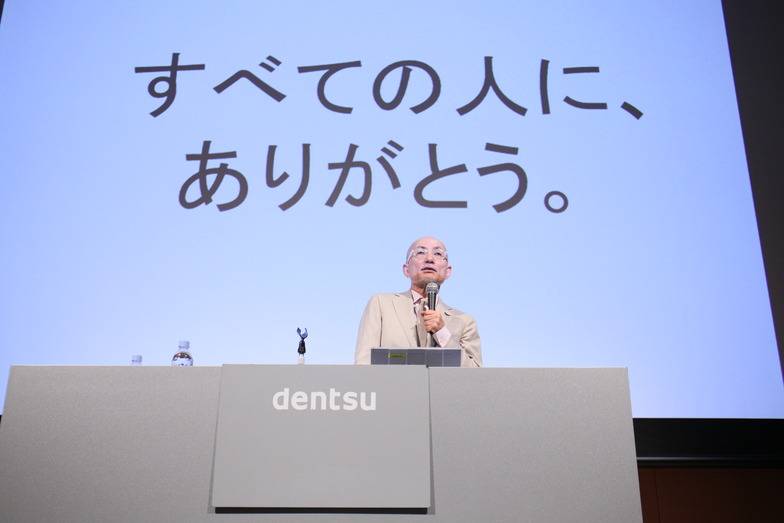
I have no special talent.
That's why I've met people, gained their wisdom and energy, and used that as my guide. I've met countless individuals and seen with my own eyes why things are the way they are. I've even gone out of my way to make unsolicited proposals. Even so, my energy is still small. Observing many predecessors, I realize that truly exceptional people displayed immense intellectual curiosity across various fields.
Unfortunately, such people are gradually becoming fewer.
But I hope you never forget that such people existed.
Supported by many people, I've been able to fully pursue what interests me. If everyone takes on diverse challenges, it will become an intellectual stimulus for each other, and our company will become a place where even more interesting things can happen.
I hope everyone will strive to maintain their intellectual curiosity and spirit of challenge, even if it's just in one area.
<End>
You can also read the interview here on AdTie!
Was this article helpful?
Share this article


Newsletter registration is here
We select and publish important news every day
For inquiries about this article
Back Numbers
Author
Kenji Shirotsuchi
Thinker, Former Executive Officer at Dentsu Inc.