Note: This website was automatically translated, so some terms or nuances may not be completely accurate.
 Thinking About My Work. My Work Newsletter [1/5]
"Working Women's Honest Survey!" ~Where Are the Best Areas to Work? Edition~
Hello, we are the Watashigoto Project.
We were established at Dentsu Inc. Chubu Branch as a solutions team focused on "working women."
In recent years, we've seen the term "working women" appear more frequently in various contexts.
However, as working women ourselves, we felt a slight discomfort at being lumped together simply because we are "working women."
Therefore, our project focuses on the "diversity" of working women and aims to uncover their true selves. We emphasize a regional perspective, conducting surveys and research across different areas throughout Japan.
So, in this series, we want to introduce the true feelings of "working women" from various angles and get closer to their real selves!
This time, we'll introduce the "Workplace Ease Ratings" for five major metropolitan areas (Tokyo, Osaka, Aichi, Hokkaido, Fukuoka) based on data from our original survey of working women in their 20s – the "young women starting their careers"!
What unique characteristics do "working women just starting out" exhibit in these five major metropolitan areas?
*Source: February 2015 Dentsu Inc. Watashigoto Project "Working Women Just Starting Out" Survey
Survey on employment and lifestyle attitudes among "working women in their early 20s" (ages 20-29), who are thought to feel the most change from "working" (Survey subjects: Female university students who experienced job hunting, plus working men in their 20s for comparison, totaling 1,070 people)
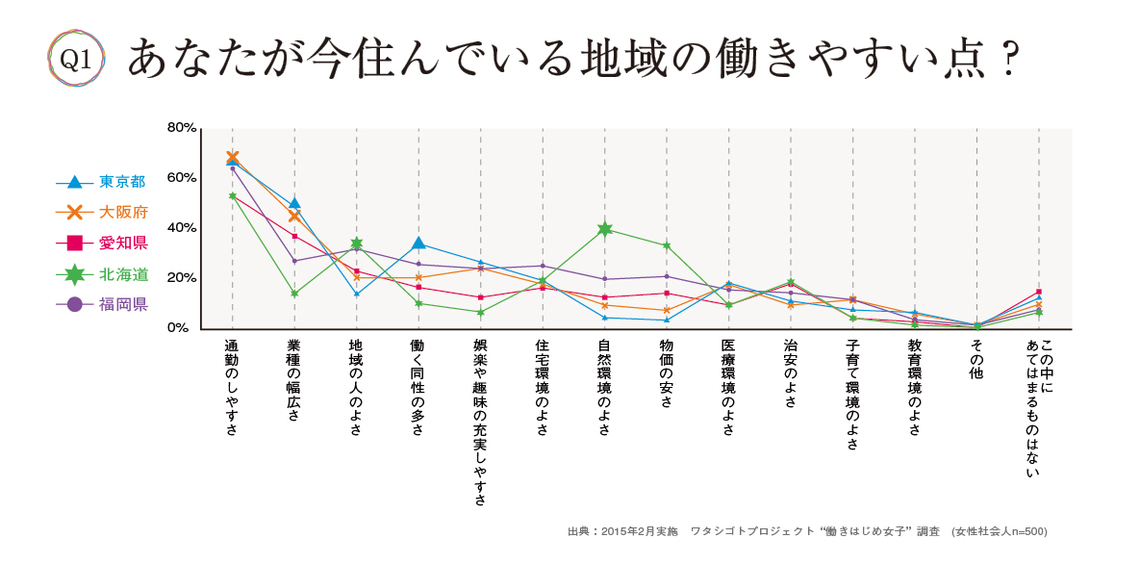
Based on this graph, let's examine the characteristics of each region and the "young women starting their careers" living there!
■Tokyo: The City Where Newly Working Women Thrive
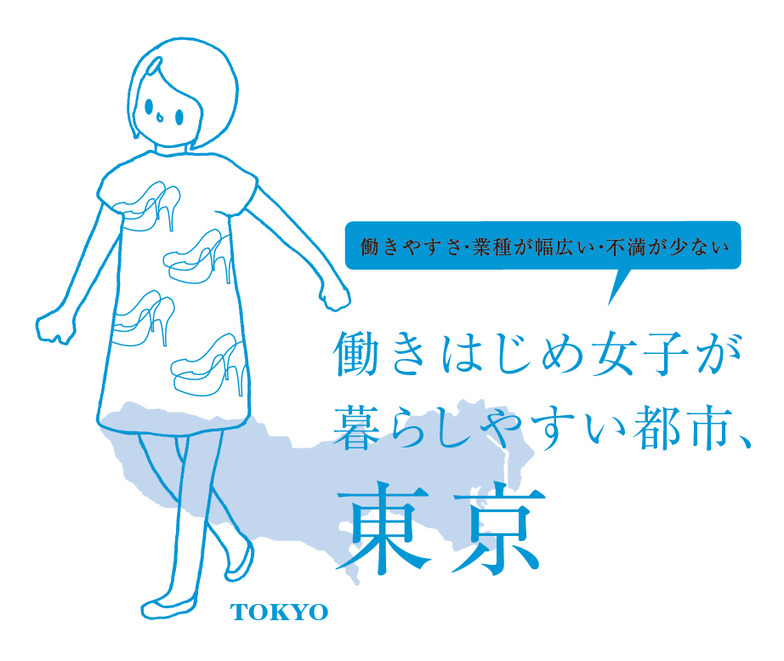
Tokyo delivered results that perfectly match the image of a metropolis: a wide variety of industries and entertainment options, plus a developed transportation network that makes daily life more convenient.
More notably, Tokyo scored highly for "the number of working women around them." Having many working women nearby likely fosters shared topics beyond just work—such as relationships with family and partners, or timing marriage—which is probably valued as contributing to "ease of working."
Incidentally, regarding workplace environment, 17% of respondents reported "no dissatisfaction" (Note 1), ranking Tokyo first in satisfaction among the five areas.
(Note 1) "No dissatisfaction with workplace": Tokyo 17%, Aichi Prefecture 8%, Fukuoka Prefecture 7%, Hokkaido/Osaka Prefecture 4%
■Osaka: Wanting to Enjoy Life to the Fullest with Earned Money
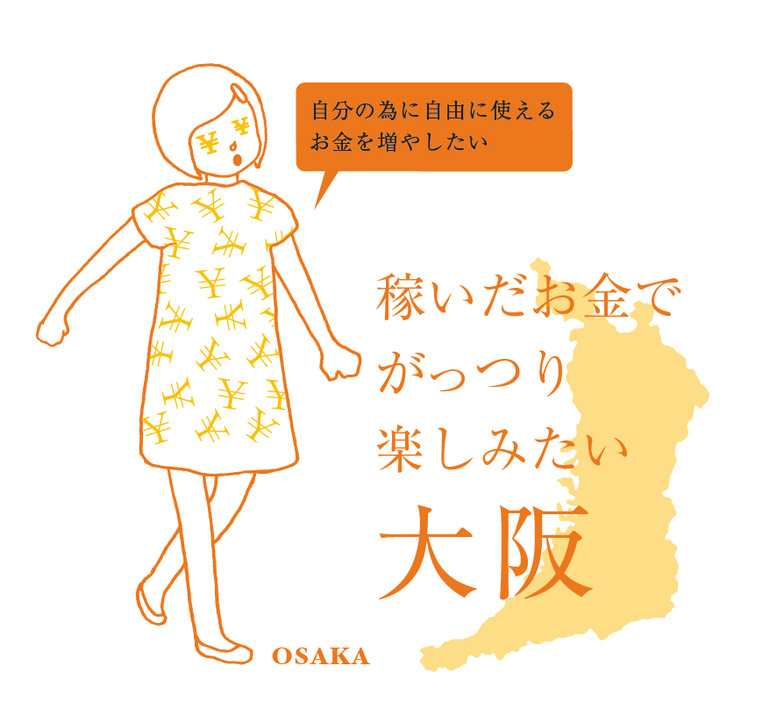
Like Tokyo, Osaka also received high marks for "ease of commuting" and "wide range of industries," showing similar overall trends as one of Japan's two major metropolitan areas.
However, a distinctive feature of Osaka was observed in work motivation.
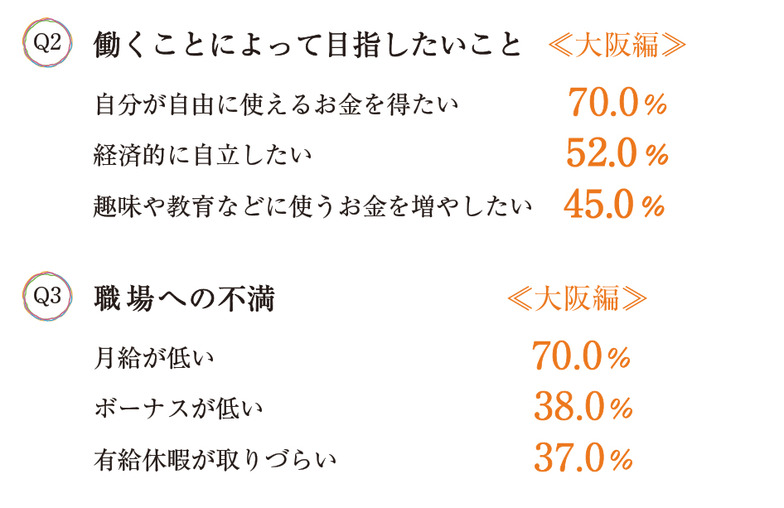
That motivation is, quite simply, "to earn money I can spend freely"!
However, dissatisfaction with the workplace also ranks "low monthly salary" as the top complaint.
These young women starting their careers in Osaka aren't just focused on work; they're also enthusiastic about events and activities (Note 2) and have a strong sense of fashion (Note 3). It seems they're using the money they earn to make their own lives fun and fulfilling.
(Note 2) "Want to enjoy events and activities": Osaka Prefecture 42.0%, Hokkaido/Fukuoka Prefecture 36.0%, Tokyo 30.0%, Aichi Prefecture 28.0%
(Note 3) "Want to put effort into fashion to look good to others": Osaka Prefecture 41.0%, Fukuoka Prefecture 29.0%, Hokkaido 26.0%, Aichi Prefecture 23.0%, Tokyo 22.0%
■ Aichi: Strong Local & Family Ties
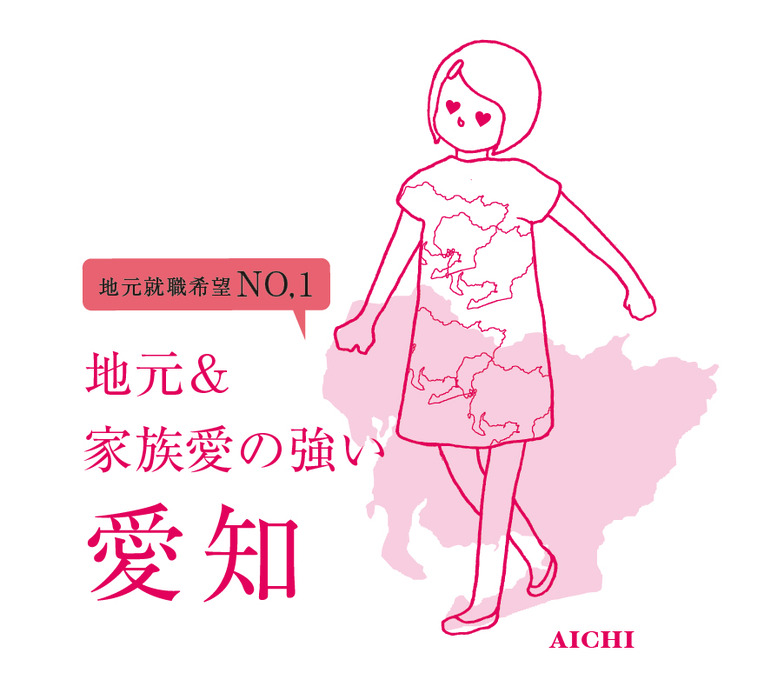
Regarding ease of working, Aichi Prefecture had the highest percentage (15%) of respondents answering "None of the above" among the five regions. Young women starting their careers in Aichi don't seem to perceive any particularly distinctive "ease of working" in the prefecture.
So, is Aichi an unpopular, unattractive place for locals? Not at all.
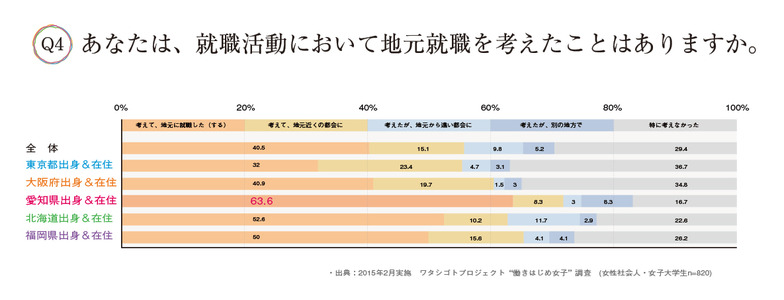
In fact, Aichi has an exceptionally high number of people wanting to work locally. Compared to the national average, it's over 20% higher. The relatively low number of women living alone (Note 4) also suggests a strong sense of local and family attachment among Aichi's "young women starting their careers," who want to work where they were born and raised, staying close to family and local friends.
(Note 4) "Living alone": Fukuoka Prefecture 37.0%, Osaka Prefecture 35.0%, Tokyo Metropolis 34.0%, Hokkaido 31.0%, Aichi Prefecture 26.0%
■Fukuoka: Where Work, Family, and Personal Time All Thrive
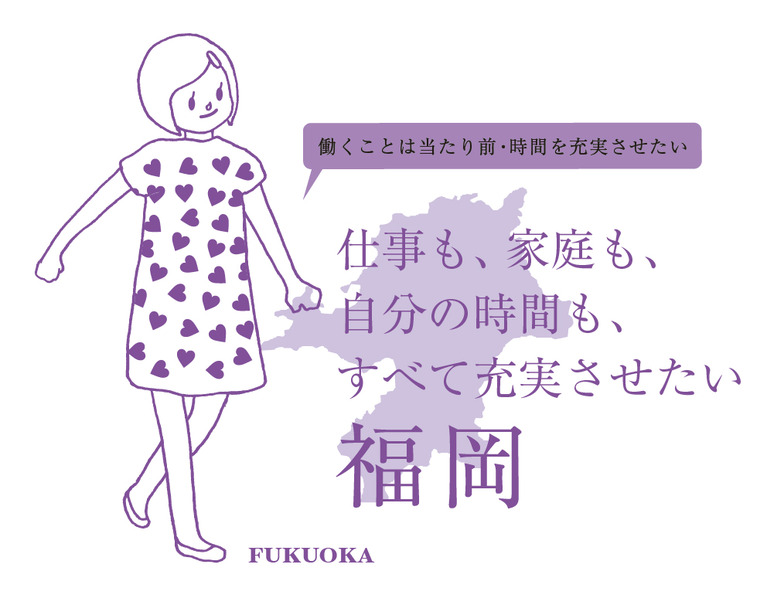
Fukuoka Prefecture is highly valued not only for its "ease of commuting" but also for its "friendly local people," "good housing environment," and "low cost of living," making it a very livable place.
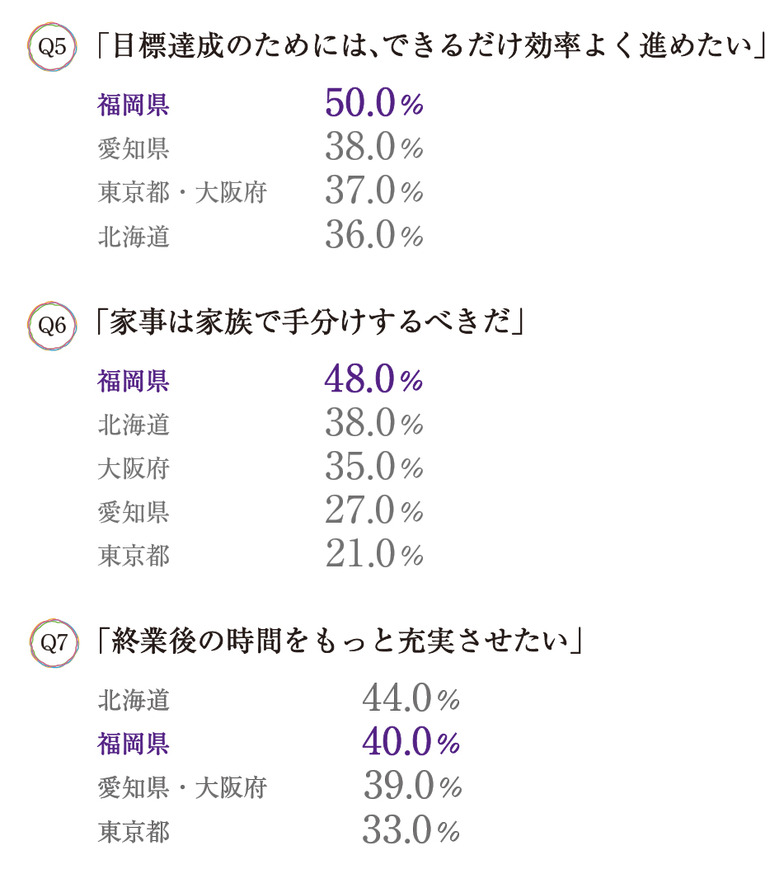
For Fukuoka's "working women starting out," "working is a given (Note 5)." Therefore, continuing to work isn't just a prerequisite for their life plans; it's also evident they have a very positive attitude of "working as efficiently as possible," "sharing household chores with family," and "wanting to make the most of mornings and after-work time" – giving their all to work, family, and personal time!
(Note 5) "Think working is a given": Fukuoka Prefecture 50.0%, Aichi Prefecture 40.3%, Tokyo Metropolis 33.3%, Hokkaido 32.7%, Osaka Prefecture 27.8%
■Hokkaido: Surprisingly Creative-Minded?!
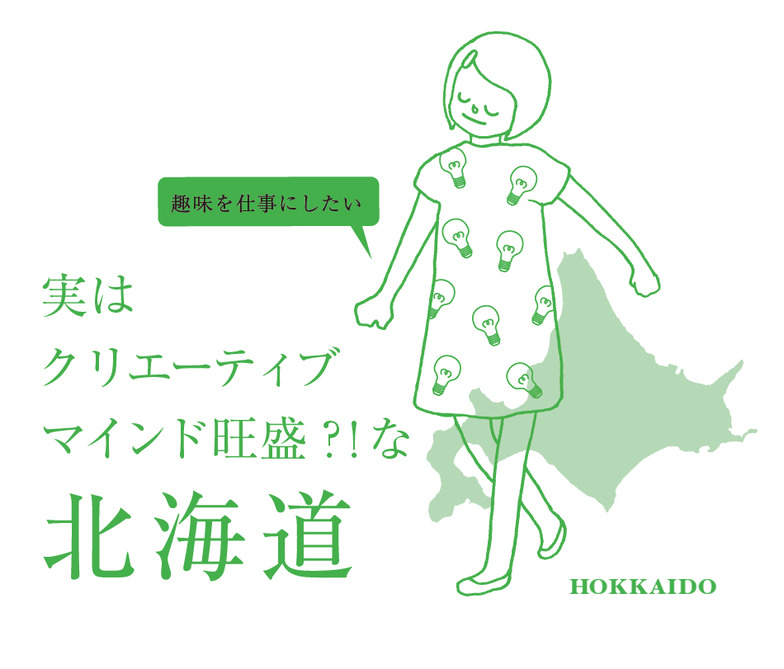
The top reason for its appeal as a place to work is "the excellent natural environment," a distinctly Hokkaido characteristic that received high praise.
Other strengths, like "friendly local people" and "low cost of living," are highly valued for livability, similar to Fukuoka. On the other hand, self-assessments for work-related factors like "easy commuting" and "wide variety of industries" seem relatively low compared to the other five areas.
Among Hokkaido's "women starting their careers," those expressing desires like "wanting to turn a hobby into a job (Note 6)" or "considering future independence (Note 7)" stand out slightly more compared to other areas.
Perhaps this indicates a hidden mindset of "If there's no job I want, I'll just create it myself!"
(Note 6) "Want to turn hobbies into work": Hokkaido 18.0%, Fukuoka Prefecture 13.0%, Tokyo/Aichi Prefecture 10.0%, Osaka Prefecture 8.0%
(Note 7) "Considering starting their own business": Tokyo 6.7%, Hokkaido 6.6%, Fukuoka 3.2%, Aichi 1.9%, Osaka 1.6%
That concludes our introduction to the "Work Environment Evaluation" by women starting their careers in each area.
We hope you gained some insight not only into each region's characteristics but also into the diverse realities of the "young women starting their careers" living there.
Next time, we will continue to introduce information that delves into the diverse realities of "working women."
"Working Women" Survey - Survey Overview
Survey Method: Online survey
Survey Areas: Tokyo, Aichi Prefecture, Osaka Prefecture, Hokkaido, Fukuoka Prefecture
Survey Participants: Men and women aged 20-29 residing in the above areas (1070 respondents)
① Working women (500 respondents)
② Female university students who have completed or are currently engaged in job hunting (320 respondents)
③ Male working adults (250 respondents)
Survey Period: February 6 (Fri) to 9, 2015
Was this article helpful?
Share this article


Newsletter registration is here
We select and publish important news every day
For inquiries about this article
Author
Ayaka Ujihara
Dentsu Inc.
PR Solutions Division
Planner