Note: This website was automatically translated, so some terms or nuances may not be completely accurate.
 Experience-Driven Showcase [23/77]
[Milan Expo] Sharing Food Culture at the Japan Salone (Part 2)
Yasushi Yamaguchi
Ministry of Agriculture, Forestry and Fisheries
Masahira Fukui
Communication Designing Institute, Inc.
Takayuki Yano
Dentsu Live Inc.
Kenichi Sakuta
Dentsu Inc.
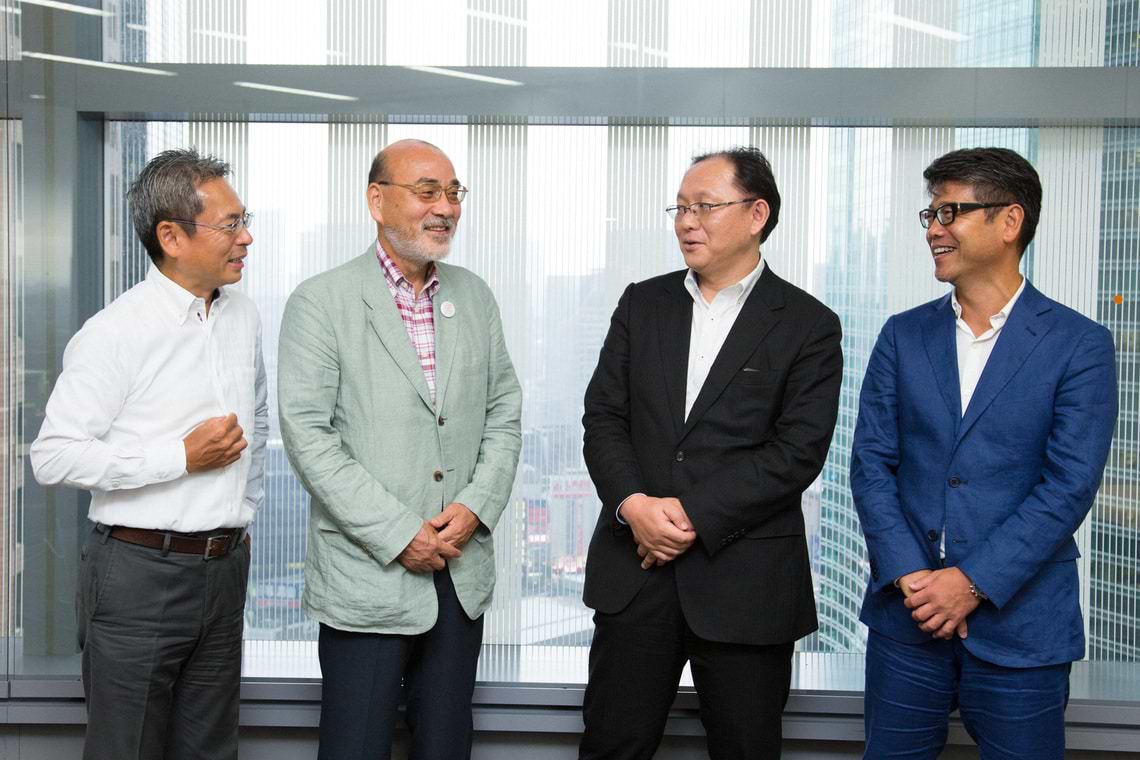
The Milan International Exposition (Expo Milano) is being held from May 1st to October 31st. Within Milan, the "Japan Salone " was held for 19 days from June 25 to July 13, with participating companies and organizations supporting the Japan Pavilion alongside the Japanese government. Yasushi Yamaguchi from the Ministry of Agriculture, Forestry and Fisheries, who planned this initiative, along with producers Shohei Fukui and Kenichi Sakuta and Takayuki Yano from Dentsu Inc., discussed the outcomes.
Reporting and Editing: Aki Kanahara, Dentsu Inc. Event & Space Design Bureau
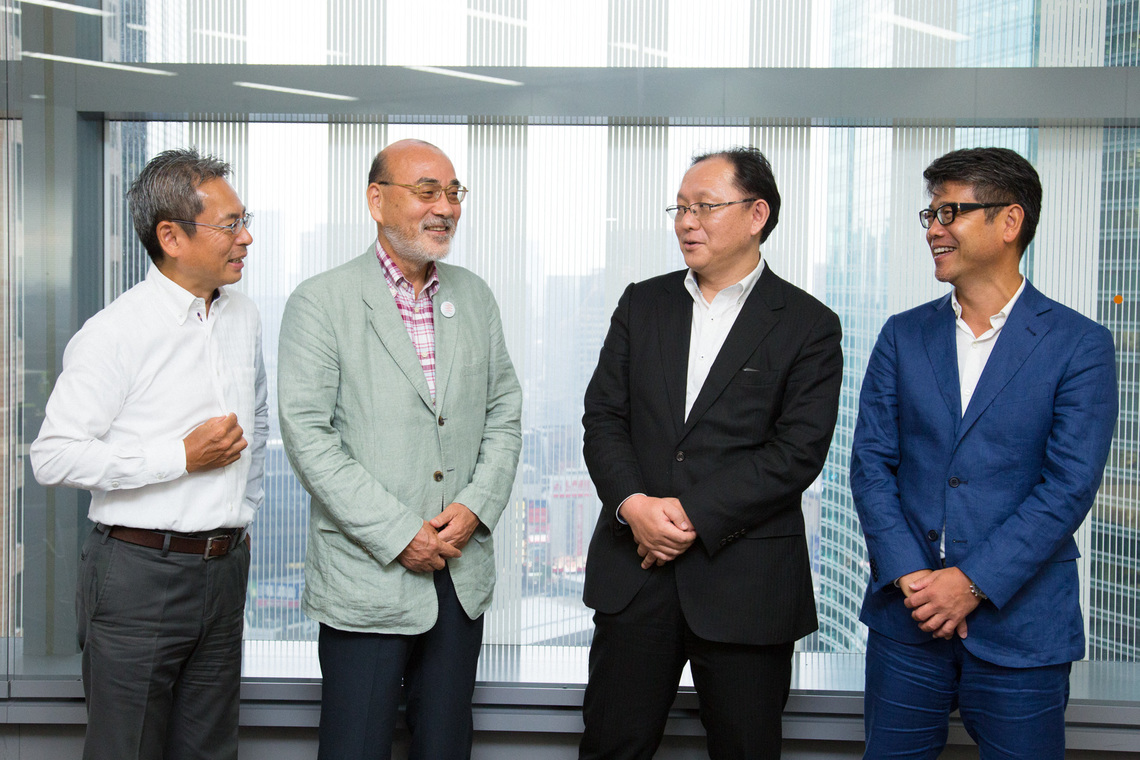
Creating value co-creation and brands through new partnerships between the nation and companies
Yamaguchi: Using this Japan Salone as a stepping stone, if Dentsu Inc. could further refine the mechanisms for value co-creation, I believe our future communications will be more effective. There are limits to what private companies can achieve alone, and when the government acts based solely on the vision of whoever is in charge at the time, it doesn't translate into business.
Fukui: Working with Mr. Yamaguchi to build the information dissemination project for 4K Internet Cloud (*), I was truly impressed by the dedication shown by the governors and mayors from regional areas who appeared at the Japan Pavilion's event plaza. Their presentation skills and passion were extraordinary. They are all exceptional performers.
Their performances were outstanding, and they demonstrated exceptional leadership.
Yano: How about the results for the 4K Internet Cloud?
Fukui: During the overall planning phase, we were striving to create a mechanism for inbound information to Japan. However, the sharp yen depreciation and the need to secure funds for the construction and exhibits ahead of schedule led to a tightening of the budget for this aspect of the project. As we pondered what to do, an idea surfaced – one we had challenged ourselves with at the 2005 Aichi Expo: leveraging the internet. We believed that if we could provide a new arena for technological innovation, we could create a collaborative scheme leveraging private-sector power. That's why we took on the challenge of building the 4K Internet Cloud framework.
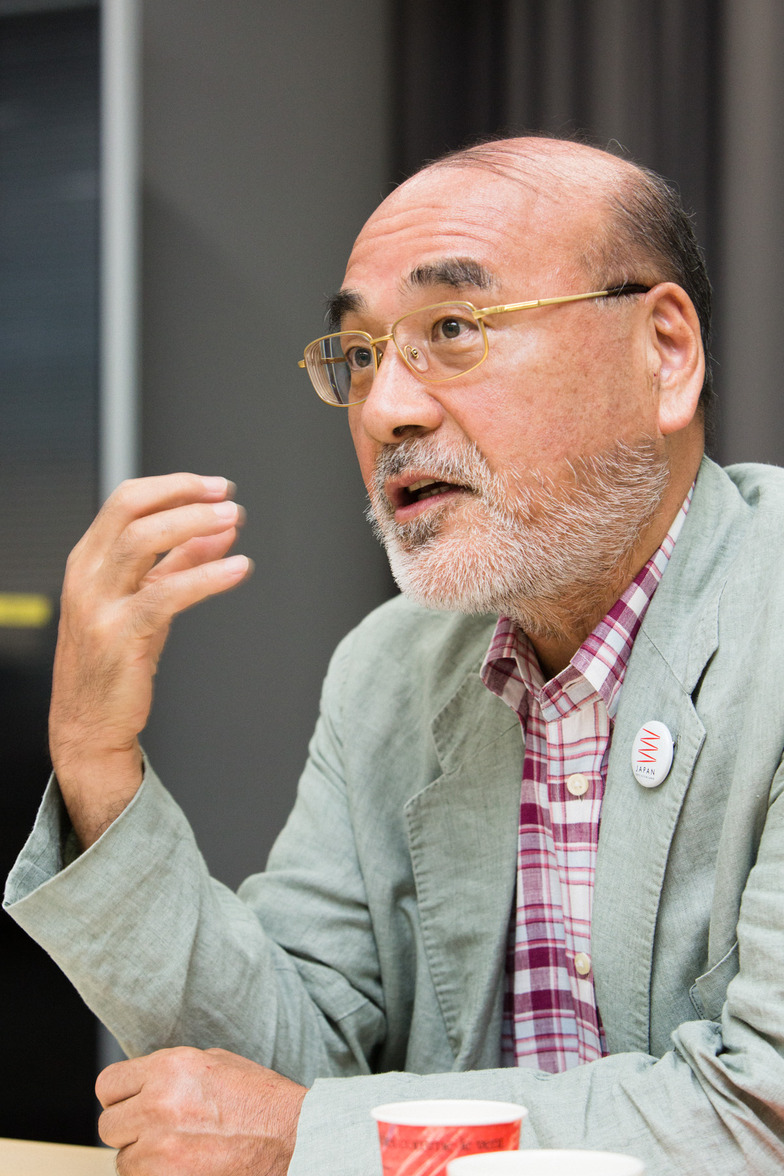
Information Inbound Created by "4K Internet"
Fukui: Together with Mr. Yamaguchi, we went to the Ministry of Internal Affairs and Communications and appealed that the 4K Internet Cloud system would be a groundbreaking project aiming for the "convergence of broadcasting and communications." While the Ministry was also promoting private-sector-based projects for utilizing 4K TV, there was still a sense that the technological innovation field of Internet Cloud was lagging. What was truly groundbreaking this time was that the private sector responded to the system development challenge.
Yamaguchi: To spread awareness of the Milan Expo across Japan, it's crucial to figure out how to deliver information to farmers living in rural areas who rely heavily on local newspapers and TV. That means we need to properly establish the people who will disseminate the information and build the system to provide it.
When Mr. Fukui proposed building such a system, we decided we absolutely had to try it.
Thanks to this, the further out into the regions you go, the more people know about it, saying things like, "The Milan Expo is really gaining momentum, isn't it?"
Fukui: The combination of the 4K Internet Cloud team, Kyodo News, and local newspapers is generating significant buzz. When it comes to reporting on the activities of each prefectural governor in Milan, local newspapers are unmatched.
Kyodo News' Milan-based reporters' articles, combined with 4K Internet Cloud's videos, achieved precise information inbound to the regions. Photos and videos taken by each prefecture's accompanying staff become work after returning home, so they inevitably lag. They're good for records and reports. But for sending the governor's presentations seamlessly and quickly on the same day, this system made a huge contribution.
Sakuta: The Milan Expo was also great because of the unique character of the friendly Italians. They weren't overly snobbish, were very friendly and complimentary, and they like Japan. In that sense, it was an excellent venue for various trials and as a first step.
Fukui: At the Japan Salone venue, Ajinomoto presented menus developed collaboratively by Japanese and Italian chefs using frozen foods. We held tasting parties featuring about four types of dishes made with Ajinomoto frozen foods – snacks, bento boxes, etc. – and they were incredibly popular.
This activity was also uploaded via 4K internet and cloud, and was extensively utilized—used as PR material in Japan, circulated for internal communication, and more. You can still see exhibitors competing to showcase their unique features.
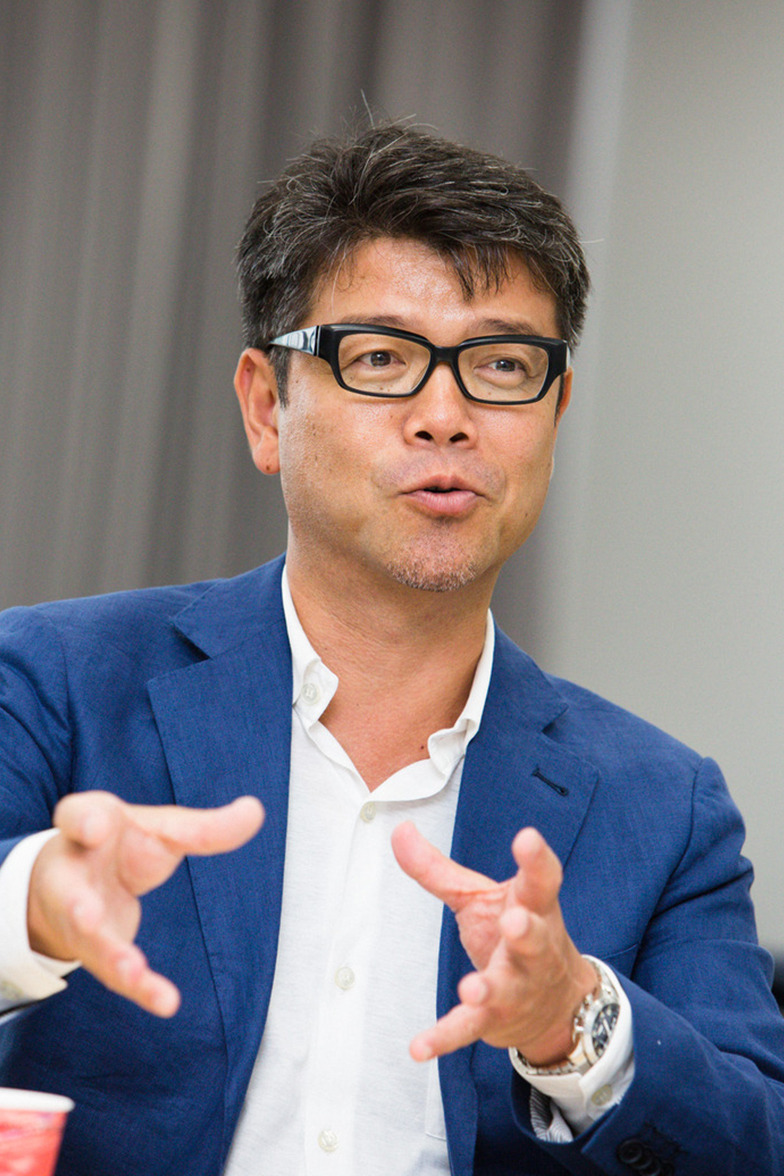
Sakuta: Isn't the world of food where creativity truly comes alive?
Yamaguchi: While each company has its own creativity, it's really about the combination. It's not just one company doing its thing; other companies are alongside them, doing different things but facing the same direction. That creates a sense of unity and depth.
Sakuta: That really makes the value stand out. Through comparison and relative perspective.
Fukui: I believe Dentsu Inc. took on various challenges at this Japan Salone. The business development team I know at Dentsu Inc. has the drive to further develop this, polishing it into a more compelling and effective system or project, and they've already built a strong track record.
As Mr. Yamaguchi mentioned earlier, this can be fully leveraged not only for the Ministry of Agriculture, Forestry and Fisheries' initiatives but also for the Japan Presentation projects at large overseas events being advanced by the Cabinet Office. Even though these are national projects, it's essential to keep proposing ways to involve private companies and create cutting-edge B2B salons. I hope they continue striving with this value-co-creation, private-sector-involvement approach.
Yano: The Japan Salon at the Milan Expo has clearly become a key piece of know-how, one of Dentsu Inc.'s weapons.
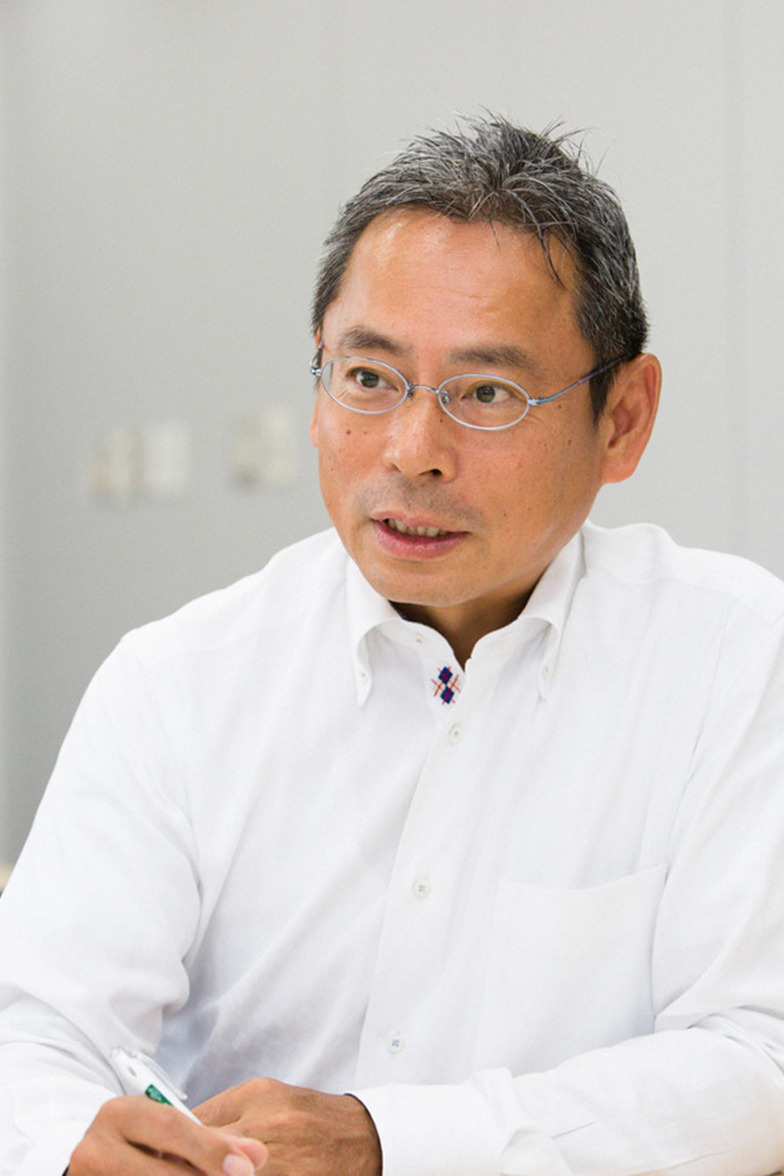
Through public-private "Health, Medicine, Food, and Agriculture Collaboration," revitalizing Japan's regions and creating vitality
Yamaguchi: To reiterate, the fundamental idea driving our future efforts is public-private value co-creation. In that sense, we see ourselves as a coalition with companies, and we aim to collaborate not just with the Ministry of Agriculture, Forestry and Fisheries, but with other ministries and agencies as much as possible.
In that context, post-Milan, we have three main ideas. First, we want to create a consortium centered around companies that participated in Milan, focusing on exports and inbound tourism.
Second, tourism is crucial. What truly delighted us was that in a popularity poll by Italy's national newspaper Corriere, Japan consistently ranked first in "Which country would you like to visit after the Expo?" While many people already wanted to visit Japan, I believe we successfully built on that without tarnishing it.
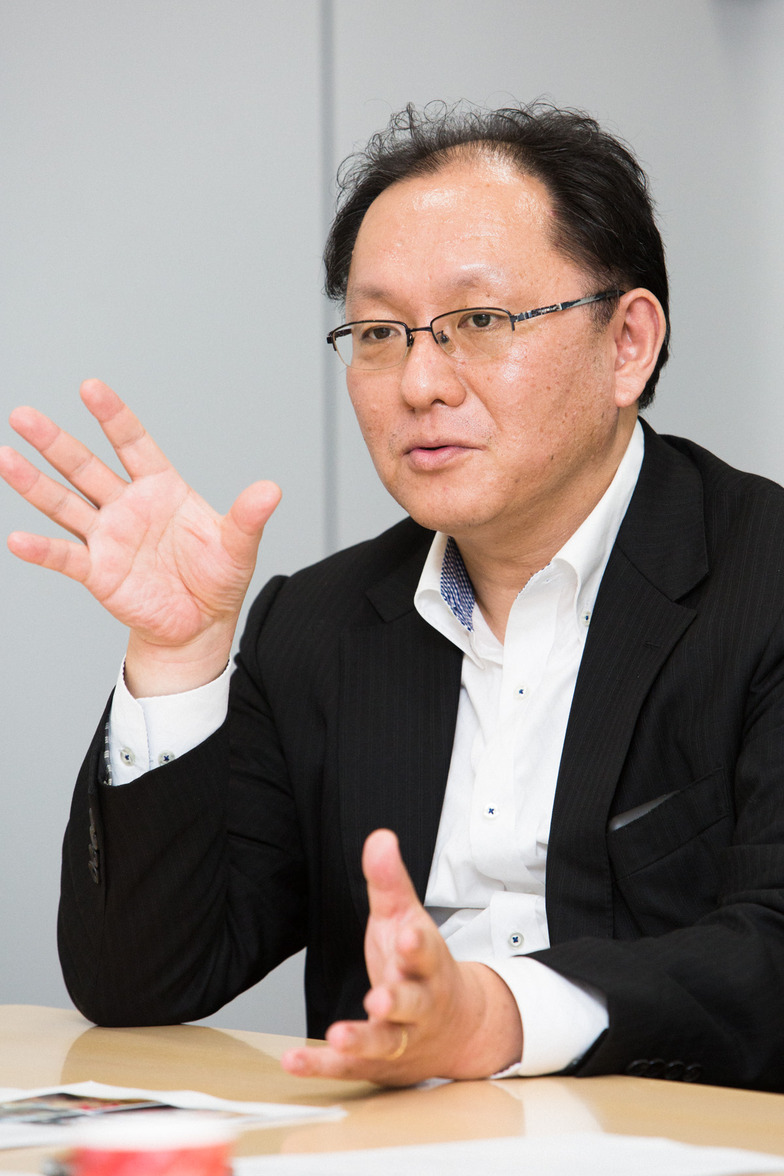
Furthermore, Japan Pavilion also ranked first in the "Which pavilion was the most impressive?" category. We want to leverage these achievements to boost inbound tourism, working together with local governments and the Japan Tourism Agency.
Then there's the framework itself – creating mechanisms to move forward while exchanging opinions with private companies. I think there's plenty the government needs to refine in that area, and if Dentsu Inc. can synthesize such proposals, it will change how we proceed going forward.
Fukui: As the Japanese government's concept for the Milan Expo, there's the "Pyramid of Life," created through the initiative of the Ministry of Agriculture, Forestry and Fisheries, right?
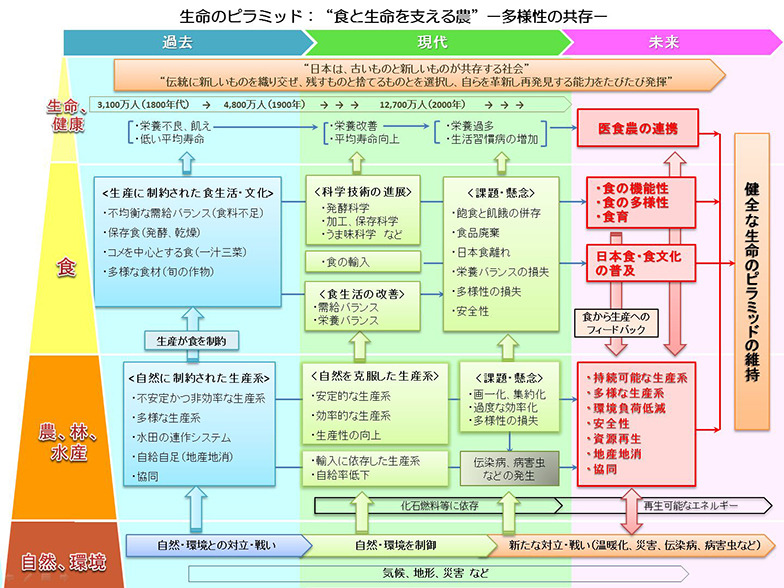
As depicted there, in building a sustainable food symbiosis society going forward, starting with coexistence with the natural environment, then sustainable agriculture, forestry, and fisheries above that, followed by advanced food processing industries, and finally diverse food cultures flourishing across Japan—how will Japan develop new vitality through "food and agriculture"? This is crucial both for regional revitalization and industrial promotion.
A key concept emerging in the pursuit of a sustainable food symbiosis society is "Health-Medicine-Food-Agriculture Collaboration." This concept expresses the idea that the collaboration between health, medicine, food, and agriculture—not just the traditional "food and agriculture" pairing—will be a defining feature and strength of Japan's future food culture. I believe this perspective is absolutely essential for creating Japan's future vitality.
The more this concept is refined, the more people from overseas will be drawn to Japan. Conversely, agricultural products and foods made in Japan will inevitably be sought after by people worldwide. I believe the leaders of local governments and corporate executives who participated in this year's Milan Expo truly grasped the importance of honing this concept.
By unearthing this potential and backing it up, the Ministry of Agriculture, Forestry and Fisheries will forge leadership in new regional revitalization and industrial vitality creation.
After all, many people initially questioned whether an expo centered on "food and agriculture" could even be feasible. Having achieved this at Expo Milano, I hope MAFF will now spearhead a new movement for regional revitalization and vitality creation through "Health, Medicine, Food, and Agriculture Collaboration," working in partnership with other ministries. I have high expectations.
Yano: So it's about spreading the concept that "Japanese food is food for the future" to the world.
Fukui: Future food, world food!
Yamaguchi: Understood!
(※) Explanation of 4K Internet/Cloud
The Milan Expo site, with a 7-hour time difference from Japan.
Each company had to organize its own on-site reporting team, and using satellite communication lines incurred high costs. This created a major problem: on-site video information wasn't being sent back to Japan.
Therefore, a system was established where a dedicated on-site coverage team would film footage upon request from each company. Footage shot with the latest 4K cameras was uploaded to the cloud using cutting-edge compression and internet transmission technology. Clients in Japan could then edit the received footage data on their computers and seamlessly download it meeting the required video specifications. This became a groundbreaking project.
For example, footage shot around noon could be uploaded to the cloud in rough-cut form. The Japanese side could then edit it down to the necessary information and incorporate it into the 7:00 PM news at the earliest, or into news programs around 9:00 PM at the latest. This enables video reports such as: "Today at the Japan Pavilion at Expo Milano, the Governor of Yamaguchi Prefecture led a presentation showcasing the prefecture's outstanding food culture, engaging in direct dialogue and exchange with the Italian public."
This groundbreaking system was initiated by the Ministry of Agriculture, Forestry and Fisheries and built by a special consortium of leading companies, including IBM. TV Asahi serves as the secretariat, with members including media outlets like The Asahi Shimbun and Kyodo News, sponsoring companies and organizations such as JA and Kikkoman, and local governments, forming the Milan Expo Media Information Distribution Executive Committee. It has been active since the opening, based at the Japan Pavilion.
Of course, events organized by local governments with Dentsu Inc.'s involvement also achieved significant results.
Was this article helpful?
Share this article


Newsletter registration is here
We select and publish important news every day
For inquiries about this article
Back Numbers


Author
Yasushi Yamaguchi
Ministry of Agriculture, Forestry and Fisheries
Food Industry Bureau
Director of the Food Service Industry Division
Masahira Fukui
Communication Designing Institute, Inc.
Representative / CI Strategy Producer / General Producer, Japan Pavilion at Expo Milano
Takayuki Yano
Dentsu Live Inc.
Production Unit
Executive Producer
Kenichi Sakuta
Dentsu Inc.
Second CR Planning Bureau