
Note: This website was automatically translated, so some terms or nuances may not be completely accurate.
 The "Specialized Talent" That Will Transform Your Company [7/7]
Learning from "Hobonichi": How to Empower Individuals and Scale Organizations (Part 2)
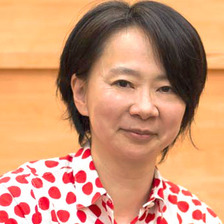
Makiko Shinoda
Tokyo Shigesato Itoi Office
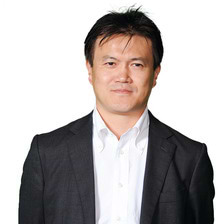
Junichi Kanno
In Part 1, we spoke with Makiko Shinoda, Director and CFO of Tokyo Itoi Shigesato Office, which operates the "Hobonichi Itoi Newspaper, " about project management at Hobonichi and the secrets to instilling the company's unique identity. Continuing from there, we hear about their talent development initiatives, including recruitment, and how they find areas of expertise.

Tacit Knowledge or Documentation? How to Share the Company Vision
Kanno: So far, we've heard about how Hobonichi operates, how projects are born, and how Mr. Itoi's words form the source of Hobonichi's identity. This past January, Mr. Itoi published a copy with the phrase " Dreams with limbs. " and a short text, right? It was the Itoi Office putting into words "What kind of company are we?" Are such statement-like communications common?
Shinoda: That particular phrase itself originally appeared in one day's "Today's Darling" column. It received an overwhelming response, so Itoi wrote a follow-up the next day and published it, eventually preserving it on a separate page as it exists now.
But when I joined, they weren't doing that kind of verbalization or communication. I think Itoi and the long-tenured staff were actually hesitant to verbalize our philosophy or policies. The moment you put something like that into words, it tends to be treated as some unchangeable truth, right? Then when circumstances shift, misunderstandings can arise in how the team interprets things. When the organization was small, the downsides and costs of summarizing policies into short phrases outweighed the benefits. So I think we operated on the principle of "just watch me."
But now, we've outgrown that approach. I think that realization is what gave birth to that phrase.
Kanno: Does that mean Mr. Itoi himself has changed since Mr. Shinoda joined?
Shinoda: I think so. Even when I joined, Itoi said he wanted "the company to thrive even after I retire," but the urgency has increased dramatically in recent years. Alongside that change, he's shifted toward valuing the importance of putting things into words and leaving a record.
He once mentioned that the "Wednesday Meetings" (※a weekly forum where Itoi speaks to employees; see Part 1 ) also serve as a place to continuously demonstrate his own growth. Watching him up close, I feel that when a company is under 100 people, the growth of the business and the growth of the leader are truly intertwined.
Hobonichi-style Personnel Evaluation Know-How
Kanno: Listening to this, I was thinking about how in a young company of a few dozen people, someone might become a department head around age 30, but then their title and reporting structure might never change again. In that case, the company's growth itself becomes the motivation. Because the company grows, even if the title stays the same, the breadth and depth of the work become more fulfilling.
Shinoda: Exactly. I believe the essence lies in the growth of both the company and its people, rather than just job titles.
Kanno: That inevitably leads to evaluation. How do you measure individual growth? How does Hobonichi handle it?
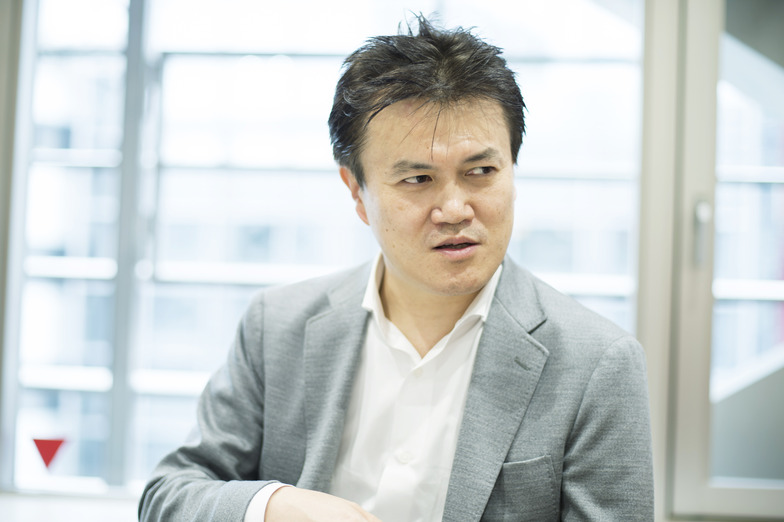
Shinoda: We try to measure it based on the breadth and depth of work, as you mentioned earlier, Kanno-san. We have fairly clear criteria across three broad stages. First, are they sufficient as a single member? Next, can they reliably manage a project? And finally, can they handle multiple projects or even get direct requests from outside the company? We evaluate each person within these stages.
Since Hobonichi is a web media company, there are no physical limits to the number of projects or content we can produce. As each person grows, the total volume of work we can deliver to the world increases. Therefore, there's no concept of competing with others for positions. Evaluations aren't based on comparisons with others, but rather on changes in the breadth and depth of one's own work.
The most substantive and honest comparison is whether someone can now handle tasks they couldn't before, and whether others recognize this. I believe this provides the strongest sense of personal growth.
Kanno: Beyond project management skills, are there any evaluation concepts unique to Hobo Nikkan?
Shinoda: It's more of a gut feeling than a formal evaluation principle, but we have an axis of "how far ahead can you see for the customer?" Whether it's reading material or a product, someone capable of running a project well doesn't just see the buyer's joy; they also see the people next to the buyer. For example, if a user brings this product to work, they can picture many scenes where a colleague might ask, "What's that?" because this part is kind of interesting.
Those who can broaden their scope further consider the broader societal mood surrounding the buyer, like "How are notebooks and writing perceived in today's world?" That ability to foresee how far the customer's circle extends is perhaps one of the core principles at Hobo Nikkan.
Even when we talk about how far we can see into the customer's world, we never base ideas solely on market needs. For any project, we always ask, "Do you genuinely find this interesting and want to do it?"
Kanno: So, maturity at Hobonichi means aligning what you want to do with what society demands. That's very clear, and it should be sustainable even as we scale up.
Shinoda: I hope so. By the way, while you say this metric is clear, it's hard for people currently growing to grasp this sense. They tend to think they're already doing it well. That might be true no matter what evaluation criteria you use...
Kanno: True, that's a tricky part no matter how you evaluate it.
How does Hobonichi avoid hiring mismatches?
Kanno: Last year, Shinoda-san co-translated the book "ALLIANCE: The New Way of Working Together" by the founder of LinkedIn. It discusses how an employment model called "alliance" is being practiced in Silicon Valley – not a lifetime employment contract, yet not a complete free agent either.
When joining a company as a mid-career hire, while your expertise is expected, there's often an implicit demand to "adopt our company's way of doing things" regarding culture and work style. While pondering this, the concept proposed here – "companies and individuals working in a flat relationship" – was fascinating. It can't work unless both sides clearly define their demands and expectations.

Shinoda: Exactly. And since the company inevitably holds more power in this dynamic, it's crucial for the company to consciously strive for greater equality.
Kanno: So far, we've mainly discussed how work is done at Hobo Nikkan, but considering the ideas suggested in "Alliance," I'd also like to ask a bit about recruitment and employment relationships.
The way work is done at Hobonichi feels like a relationship between adults who understand each other well—the company's direction is clear, and each crew member recognizes their area of contribution and motivation. Does this kind of relationship start from the hiring stage?
Shinoda: That's what we strive for, but it's a process of trial and error, and we invest a tremendous amount of energy into recruitment. We primarily hire by job type when we need people, so in that sense, we focus on specialized talent. That does sometimes result in hiring new graduates or those with limited experience.
First, a major factor in building relationships during recruitment is that we basically only advertise positions on our own website. Readers and their acquaintances consider applying, so people who resonate with what we value apply, making it a highly effective screening process. Then, for document screening, we require multiple essays and letters of recommendation from third parties. Furthermore, for product development recruitment, which we started last summer, we also held a two-day, one-night training camp as the final selection stage.
Kanno: That really shows how much effort you put in.
Shinoda: About ten candidates participated in the retreat, along with seven or eight of us, including Itoi. While you can't develop a product in just one night, it gives us a strong sense of how someone approaches creating value within a team. This makes it much easier to judge whether they'll fit our company culture.
This is where the flat relationships we mentioned earlier become crucial. We, as the company, need to approach it with the mindset: "This is the kind of company we are, with these personalities – would you choose to join us?" I believe this approach minimizes the damage caused by misunderstandings during hiring and afterward, for both sides.
We've hired based on skills and capabilities before, but that didn't always work out. Ultimately, when working within an organization, you need to draw out the strengths of those around you without stifling them, ensuring at least "1+1=2+". Considering this, I believe mutual selection based on cultural fit is especially important for mid-career hires.
Kamiya: That mindset represents one ideal for the future relationship between companies and individuals. As we've discussed throughout this series, when mutual understanding exists between companies and individuals—not just about job duties and skills, but also values and work styles—external hires can contribute effectively from day one. In that regard, the hiring process and activities like the "Wednesday Meetings" practiced at Hobo Nikkan Itoi Shinbun feel highly meaningful for building this relationship.
Two Crucial Indicators for the "Age of the Individual"
Kanno: It feels almost fated that Mr. Shinoda, as the CFO of Hobonichi, encountered "Alliance" and took on the role of spreading its ideas. While some aspects might be possible precisely because of the current scale of the Itoi Office, from your perspective with diverse corporate experience, do you think the concepts presented in "Alliance" could be applied within large corporations?
Shinoda: Well, proposing a flat structure to existing departments in large corporations is difficult because they have accumulated achievements and pride. However, for example, in new ventures where even internally transferred employees are in unfamiliar fields, the power dynamic between individuals and the company can be more easily flattened, making it possible to build new relationships.
Kanno: Earlier, you mentioned hiring specialized talent. At Hobo Nikkan Itoi Shinbun, we also involve many external professionals, including legal experts. How do you view the challenge of working effectively with these external professionals?
Shinoda: Collaborating effectively with external professionals is a profoundly deep theme for us... We rely on external experts because we lack internal expertise, but we absolutely must be able to judge whether their output is sufficient. We can't just say, "We have no idea."
Currently, I believe two capabilities are essential for effectively collaborating with external experts. The first is pure expertise in the relevant field. While we may not match the expert's level, we need enough knowledge to recognize areas we don't understand – like asking "Why is this the case?" – and discuss them meaningfully. Without this, we can't even estimate the risks.
The other is the ability to communicate our company's overarching business principles to external experts, separate from any specialized knowledge. Our fundamental principle is to never lose sight of the added value we want to provide to our readers and users. This added value is qualitative and difficult to articulate, which tests our ability to explain it clearly. Both of these are absolutely essential. That's why it's incredibly difficult to get external people to fully leverage their expertise while also moving forward together in the direction we're heading.

Kamiya: That's precisely the kind of insight you'd expect from someone like Mr. Shinoda, who's actively working on the front lines every day.
BothMr. Oka from PwCAdvisory and Mr. Sato from HBS, who appeared in previous installments of this series, spoke of "the current era being one of the individual." I strongly felt this same dynamic at Hobo Nikkan: companies building flat relationships with individuals, maintaining each person's intrinsic motivation while scaling the business. Finally, could you share a message for our readers?
Shinoda: Earlier, I mentioned two essential skills for working with external experts, and I believe the same applies to leveraging individuals. Pursuing your own expertise while also setting aside functional aspects to explore "what excites me and where I want to go." That mindset has been incredibly valuable to me.
Work isn't a paper test. Beyond just achieving expected results, how much others appreciate your work changes how you're evaluated and how much satisfaction you feel. In that sense, your added value changes depending on your relationship with the other person. Furthermore, there's the question of whether others' satisfaction aligns with your own sense of fulfillment. For example, you might receive great praise but still feel something's missing, or vice versa. If you consistently ask yourself why that happened each time, you'll gradually gain clarity on both your expertise and the direction of your interests. That's why I want you to keep stepping up to the plate.
Kanno: It's about gaining experience, reflecting, and repeating that cycle.
Shinoda: Exactly. If you're over 40, you don't necessarily have to choose things you know you're bad at. But for younger people, even if you dislike a job, you should experience it enough to fully articulate "why you dislike it." That will surely become learning for your next step.
Was this article helpful?
Share this article


Newsletter registration is here
We select and publish important news every day
For inquiries about this article
Back Numbers

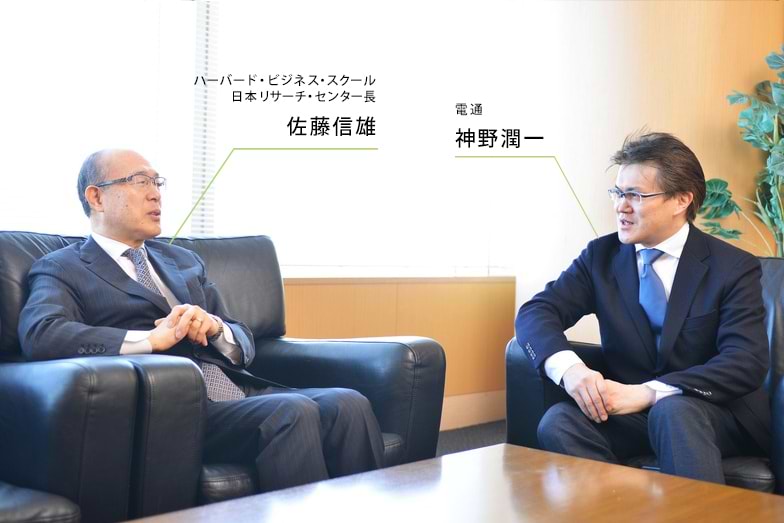
Author
Makiko Shinoda
Tokyo Shigesato Itoi Office
Director and Chief Financial Officer