
Note: This website was automatically translated, so some terms or nuances may not be completely accurate.
 Copywriter, Year 2: My First Trip to Cannes [1/2]
Learning "Border-Crossing Ideas" from Cannes 2016 Award Winners

Higashi Naruki
To Cannes, the Olympics of Creativity
Hello, I'm Higashi, a copywriter at Dentsu Inc. CDC.
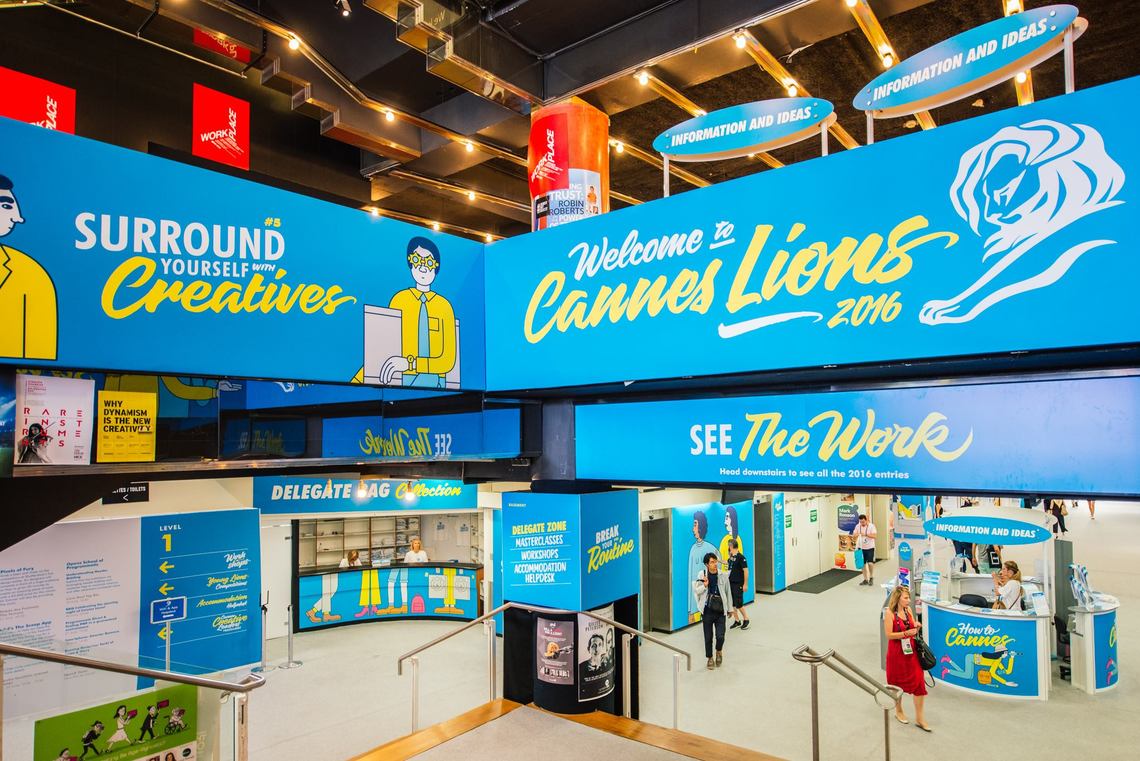
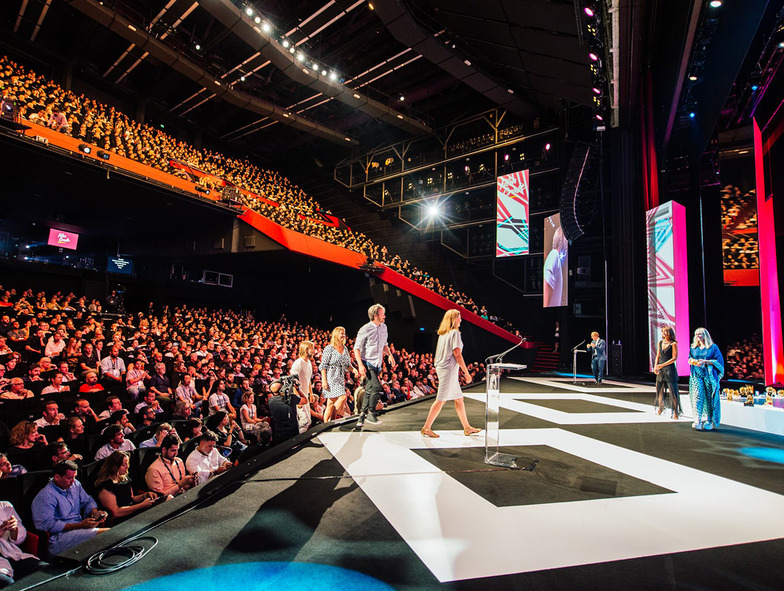
In June, the Cannes Lions 2016, an international creative festival, took place in Cannes, France, famous for its film festival. It honors ideas centered around advertising. This year, the 63rd edition, saw over 15,000 attendees from approximately 100 countries worldwide. More than 40,000 ideas that moved the world were judged and honored.
Leveraging my experience reporting and writing in Silicon Valley during my student days, I participated as a reporter for Dentsu CDC. Through interviews with jurors and award winners, I uncovered the evaluation criteria and the future of winning works, sharing insights on "The Future of Creativity."
This Year's Trends Seen Through Cannes 2016 Winners
Looking at the winning entries across categories like Cyber, Design, and Innovation, three key trends emerge this year:
1. From "for good" to "for brand"
The focus has shifted back from social contribution to enhancing corporate brand value.
2. Technology as a supporting role
Projects that made the use of technology unnoticeable were highly regarded.
3. Who benefits from AI?
AI capable of creating artworks like paintings was highly regarded. The next step is determining who this technology will benefit.
1. From " for good " to " for brand "
Recent award-winning projects often focused on "for good " initiatives, such as fundraising to dig wells in Africa or tackling malnutrition. While this demonstrated how advertising agencies' power to change perceptions and behaviors could benefit beyond corporations, there was also an increase in projects that seemed to choose social issues primarily to win awards.
This year, I believe the social impact created by major corporations was valued more than charity. Rob Reilly, Jury President of the Promotions & Activation category, stated, "We were tough on charity and celebrated brands." Let's examine what this social impact by major corporations means through two Grand Prix winners.
McWhopper (Media Grand Prix / Print & Publishing Grand Prix, etc.)
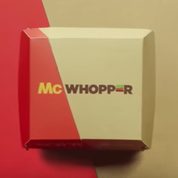
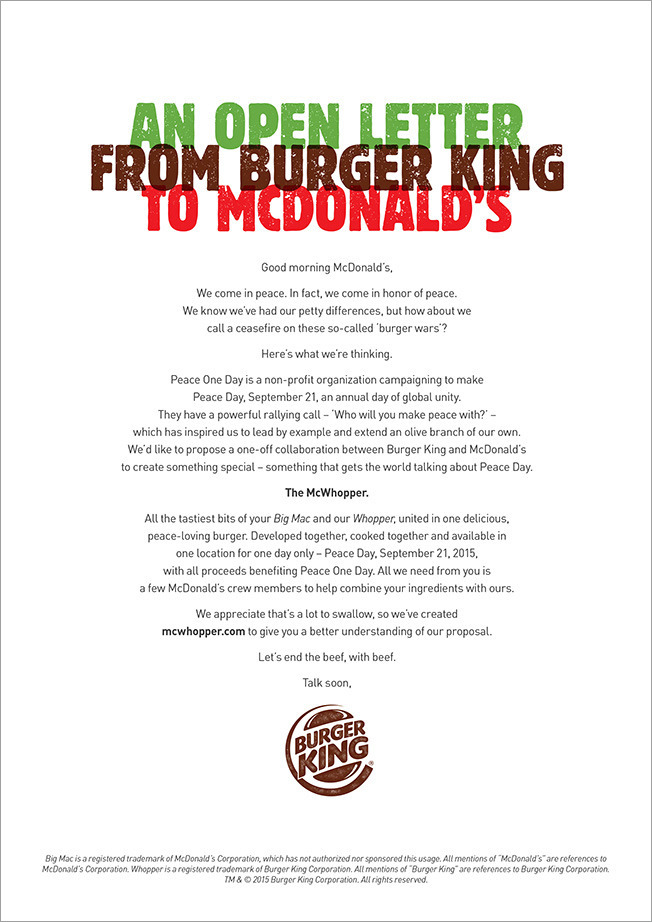
A campaign to create the " McWhopper " by stacking McDonald's Big Mac and Burger King's Whopper. It's a simple idea accessible anywhere, even for children. The website also depicts this playful concept with cute illustrations, creating a clever presentation.
The copy on this poster is absolutely delicious. First, Burger King USA calls for a "cease fire " in the long-running " burger wars " against McDonald's USA. Then, on September 21st , International Peace Day, it proposes that the two rivals unite to create a peace-loving burger called the " McWhopper ." The copy concludes with " Let’s end the beef, with beef. " The clever play on " beef " meaning both "beef" and "dispute" is brilliant.
I was surprised this campaign won the Grand Prix in the Print & Publishing category, which honors print media. This is because the work consists almost entirely of copy. The judges reportedly debated whether to select based on visuals and copy or based on social impact. Ultimately, they awarded the Grand Prix to "Mc Whopper ," considering whether that single poster would make people look up from their smartphones or serve as a catalyst for spreading across TV and the internet. It can be said they valued "how it moved people" over "how it was expressed," recognizing the social impact of a major corporation.
Brewtroleum (Outdoor Category Grand Prix, etc.)

Heineken created biofuel from a byproduct of beer production. The 300,000 liters of fuel produced were sold at 60 gas stations across New Zealand, providing an "excuse to go out for a drink" under the slogan "Drink beer to save the world." As a result, sales reportedly increased by about 10% in the struggling beer industry.
What made me wonder is how many people actually think "This beer is eco-friendly" when raising a toast? Was Heineken praised for genuinely advancing environmental measures, or was it the sheer scale of the initiative that earned recognition?
Outdoor category judge Park Wannasiri explained, "We valued the surprise factor – 'That brand doing that?!'." He noted they look for "impactful stories." Votes likely went to the brand's audacity in declaring "beer saves the world" and its sheer strength in actually pulling it off. Viewed not through an environmental lens but as a display of mischievous execution, it struck me as a quintessentially Heineken campaign.
2. Technology as the supporting actor
While many entries utilized technology, "we couldn't evaluate projects that used technology just for technology's sake," said Tristan Macherel, Head Judge of the Design category. So, what constitutes a project that effectively uses technology? We asked Chloe Gottlieb, Head Judge of the Cyber category, which evaluates digital initiatives.
"I believe AI will be valued more than VR (Virtual Reality) going forward. Originally working in experience design, I think about what can be done on a screen. But with AI, you can converse, recognize presence, and aren't bound by screens. The future of cyber is the'Time of Sensing ,' where interfaces will disappear."
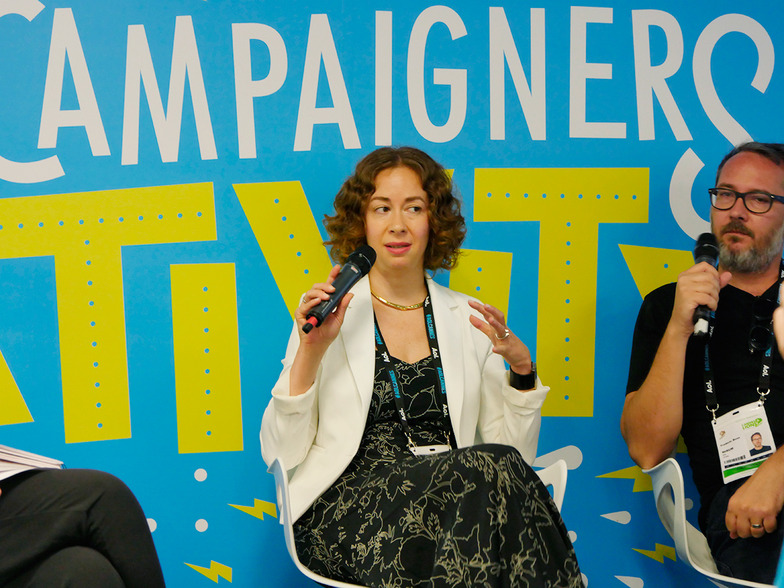
What matters isn't which technology is used, but whether the corporate brand message is conveyed smoothly. I felt technology should become like a stagehand. An example cited for such an approach was "The Swedish Number."
The Swedish Number (Grand Prix in Direct Category / Gold in Cyber Category, etc.)
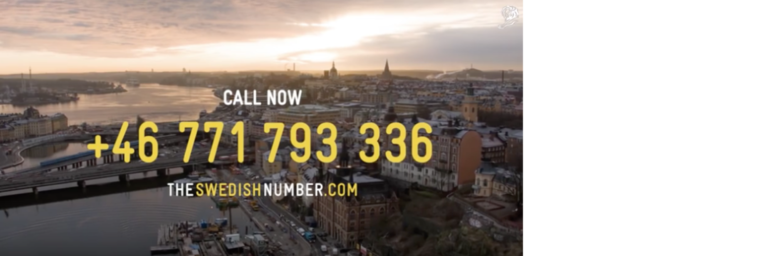
This initiative by the Swedish Tourist Board aims to boost tourism. When someone wanting to visit Sweden calls this number, they are randomly connected to a registered Swede. They can speak directly with people living in fishing villages, farmers, folk dance professionals, and more.
Hearing their real voices, we forget the phone exists and start imagining the person's life and surroundings in Sweden. What matters is how effectively the brand message connects. The Cyber category judges said, "We love human-centered work that makes you forget the technology is there."
I sometimes feel that "technology has evolved too far beyond its users." For instance, no one in my family has experienced VR. Looking at how these projects bring technology closer to users, the Gold-winning Cyber entries "The Field Trip to Mars" (which transformed the school commute into a Mars exploration by projecting VR images of Mars across the entire school bus window), "Magic Words" (a work that outputs spoken words into letters for those who cannot read or write), and "Dreams of Dalí" (a work that visualizes Dalí's paintings in VR) strike just the right balance between technology and its users.
3. Who Benefits from AI?
The Innovation category of the Lions Innovation Awards, established in 2013, recognizes technology and inventions. Fumi Hito, from Dentsu Inc. Event & Space Design Bureau, develops AI-powered business solutions and has observed this category live since last year. When asked about trends, he noted "Last year saw many social good ideas using apps and smart devices. This year, AI industry standouts like'AlphaGo, ''The Next Rembrandt,' and 'Jukedeck' won awards, showing AI concepts are taking tangible form." This indicates AI technology has reached a stage where it can be brought to market.
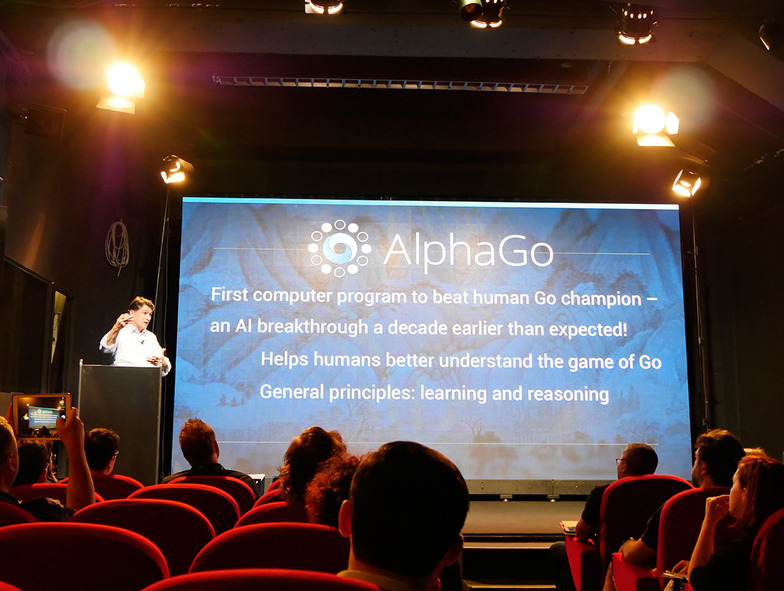
AlphaGo, which won the Grand Prix in this category, defeated Lee Sedol, one of the world's top Go players, with a 4-1 victory using AI power. When asked Google DeepMind, its creator, "What is AlphaGo's next move?", they responded, "Since it suffered one loss, it will analyze why it lost and improve. If people use AlphaGo, they can practice against the world's best opponent."
For me, as a Go player, improving accuracy from 4 wins to 5 is significant. But I believe what's more important is "in which field will AI be applied next after Go?" On July 5th, Google DeepMind announced a partnership with the UK's National Health Service to utilize AI in detecting diseases that can lead to blindness ( via The Guardian ). By learning from one million eye scan images, it will assist doctors in their diagnoses. I look forward to seeing which fields AI will be put to practical use in next year, and I want to be involved in thinking about this myself.
A pioneering example of AI application was "Amazon Emma ," which won an award at Future Lions. Future Lions is the student equivalent of Cannes Lions, a competition where participants "devise ideas for global companies that couldn't have been realized three years ago. " Five entries were selected from over 1,900 submissions, and "Amazon Emma " was one of them.

This project involves AI serving as a conversation partner for elderly individuals living alone. We asked Yanci Wu of 360i, the project's creator, about AI that benefits humans. "It is possible to create AI with human-like qualities. If you give it words, it learns keywords. If we can use neuroscience to find patterns in human emotions, AI will be able to understand humans better," he responded.
Ideas that transcend borders move people
As I took in the flood of award-winning entries, I suddenly realized: would I, a Thai person, and a German person all laugh at the same piece? That's because these projects aren't just for Japanese people, for example; they're projects for "people." Ideas that move "people," regardless of nationality, are appreciated by people from various countries. Furthermore, the Grand Prix-winning project connects to global issues, drawing in an ever-wider circle of people.
For example , " McWhopper " is an idea anyone can participate in, regardless of nationality, by stacking a Big Mac and a Whopper. Furthermore, by pairing with " Peace Day ," an initiative tackling global issues, it expands the challenge to a worldwide scale.
" The Swedish Number " makes Sweden, an intangible nation, more relatable by replacing it with individuals like Mr. [Name], a Swedish farmer. It leverages the human trait that direct one-on-one conversation fosters intimacy, while scaling this approach nationally.
I believe this project was recognized for moving hearts regardless of nationality, engaging people with national-scale challenges, and influencing both individuals and communities. It's precisely the kind of initiative only a large corporation with the stamina and recognition can execute, and this trend reflects the high number of awards won by large corporations this year.
Next time, at the Cannes Seminar showcasing the cutting edge of creativity, I'll introduce what caught my attention.
Was this article helpful?
Share this article


Newsletter registration is here
We select and publish important news every day
For inquiries about this article
Author