
Note: This website was automatically translated, so some terms or nuances may not be completely accurate.
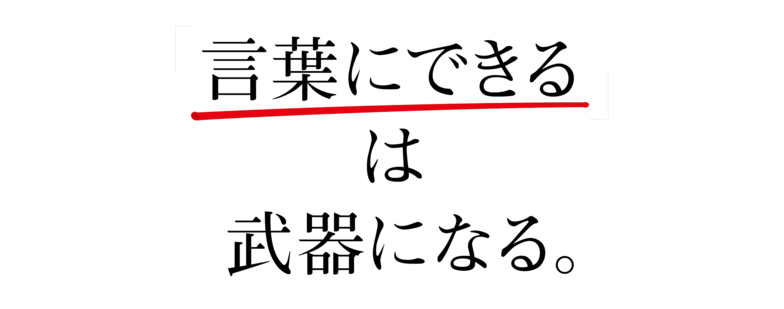
 The ability to put things into words is a weapon. [1/5]
What cannot be put into words is the same as not having thought about it at all.

Satoshi Umeda
Hello, I'm Satoshi Umeda from Dentsu Inc.'s Promotion & Design Bureau. My book, "The Power of Putting It Into Words," was released on August 29, 2016. Like my previous work, "Planners Plot Three Times," it was published by Nikkei Publishing.
The theme of this book is "words," my area of expertise. That said, it is not a book about copywriting. It covers how to accurately express your thoughts in words and, by extension, how to think correctly. I will be serializing a column on Web Dentsu News that can be considered a digest version of this book.
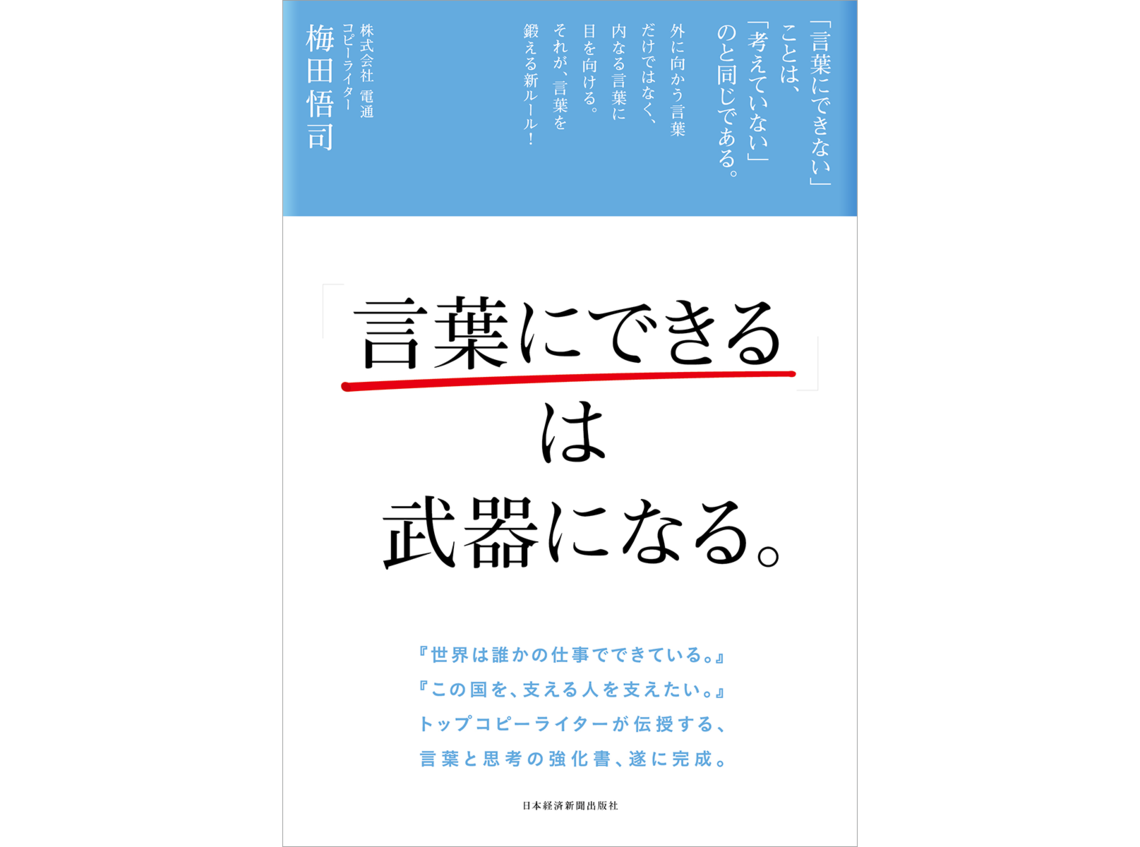
ISBN: 978-4-532-32075-1
What is the role of words?
"Mr. Umeda, how do you create words that truly resonate?"
Lately, I've been asked this question more often. When I carefully listen to why people ask it, I see glimpses of how many face challenges with words in various situations.
Take email writing, for example. With personal emails, challenges include struggling to craft thoughtful replies, finding it hard to express feelings through text alone, and conveying nuance. For business emails, people understand the need for conciseness, yet end up writing lengthy explanations, making their core message unclear.
In conversation, whether work or personal, people struggle to articulate their thoughts. They feel their message doesn't reach the other person, that they aren't understood or heard. They freeze up when faced with unexpected questions. Conversations stall.
Recently, I also notice many people expressing concerns about their social media posts. They feel their posts get little engagement like "likes," and want to write more compelling content. Some aim to improve their writing skills to attract more visitors to their blogs.
After hearing these kinds of concerns, I tend to ask the following question:
"Could it be that you're only thinking of words as tools for communication?"
Many people's eyes go blank at this question, but quite a few also show a look of sudden realization. Yes, words have another crucial role.
Generally, words are seen as tools for conveying one's own opinions and listening to others'. Words are used for this exchange of opinions, and it goes without saying that this enables deeper mutual understanding.
But if we take our thinking a step further, doesn't this lead to the following question?
"If words are tools for conveying opinions, shouldn't we first cultivate those opinions?"
My answer to the initial question lies here.
To create words that truly convey meaning, the process of cultivating one's own opinions is crucial—and words themselves play a role in this cultivation.
If you recall your own experiences, you'll understand: people often use words to form questions, to think, and to arrive at satisfying answers—even when the language differs. In other words, words also bear the role of confronting our own existence, thoughts, and values, and delving into deep reflection. Perhaps even now, as you thought "I see" or "That's true," you were uttering unspoken words in your mind.
Those words born within your mind are precisely what we call "inner words."

Words are merely the surface layer of thought.
Words come in two forms: "words directed outward" and "inner words." However, most people focus solely on "words directed outward" for communication, equating refining words with learning techniques or skills.
What's truly important is facing your "inner words" and increasing their resolution.
The reason is quite simple.
"Words are merely the surface layer of thought."
You cannot speak what you haven't thought about. When caught off guard and asked to speak, you might be unable to respond, or fail to convey your thoughts, leading to misunderstandings. In other words, what you cannot put into words is the same as not having thought about it at all.
Here, my concern is that society's prevailing trend places excessive emphasis on "outward-facing words" as tools for communication.
Bookstores are lined with books on improving communication skills or techniques for sustaining small talk, and seminars and lectures overflow with similar themes. For those wanting to enhance their daily conversational or small-talk abilities, this information is probably highly coveted...
But on the other hand, how many people who acquire these skills actually manage to put them into practice? Many probably feel the dilemma of "understanding the concept but not being able to apply it." Or perhaps some are practicing, yet feel a disconnect between their words and their inner thoughts, experiencing a sense of discomfort.
I suspect quite a few readers of this column have experienced similar struggles or concerns.
However, this phenomenon isn't caused by a lack of understanding or poor interpersonal skills. If you've read this far, you should already know the answer.
"You cannot develop your words without deepening your thinking."
What I do as a copywriter isn't just "writing things that impress people," "creating catchy phrases," or "making products and services look good through clever wording." What I actually do is think deeply alone, discuss with my team, and then give shape to those results through words. Before words are created, there is always a process of deepening thought and ideas.
I hope this series helps you understand the flow of "deepening your thoughts with inner words and converting them into outward-facing words." Doing so will surely give you the opportunity to gain a lifelong "ability to put things into words."
I am a copywriter, though I come from a purely science background and haven't read extensively. Nevertheless, defining advertising campaigns and communication concepts through "words" is my livelihood. I want to weave words to let you experience how someone like me deepens thought and creates powerful language.
Was this article helpful?
Share this article


Newsletter registration is here
We select and publish important news every day
For inquiries about this article
Author