
Note: This website was automatically translated, so some terms or nuances may not be completely accurate.
 9.America in Years 11 to 15: Leadership in an Age Without Charts [4/7]
Mayor Giuliani Speaks on 9/11

Kimié Morishita
What would you do if you were the leader bearing full responsibility while countless lives faced an unprecedented crisis?
Or what if you were a female leader thrust into an ultimate male-dominated society facing major problems, told to reform it?
What if this question played out in a massive city—a mosaic of constantly shifting races and ethnicities, where seamless collaboration is hard to achieve?
This time, let me introduce you to the leader of New York City, whom I met in search of such answers.
9.11 and Mayor Giuliani's Leadership
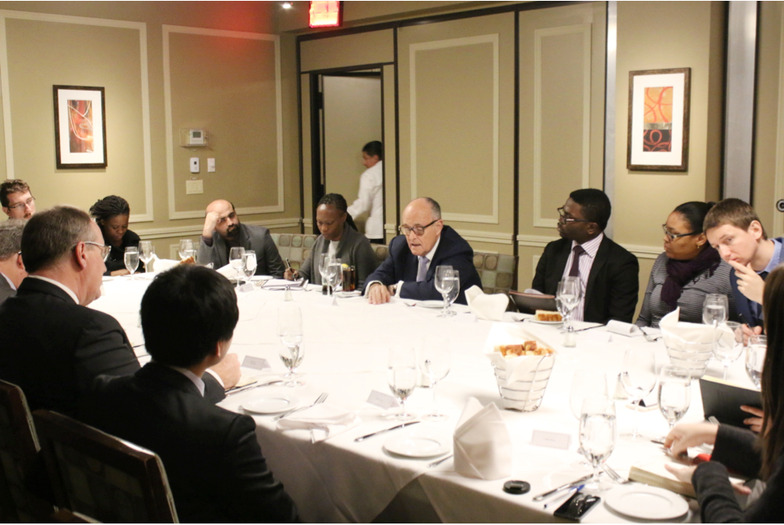
We met the middle-aged man in a private room at a Manhattan restaurant.
It was a day when remnants of the heaviest snowfall in recorded history still lingered on the streets. As soon as he entered the room, he shook hands with each of us. While ordering a Caesar salad, organic salmon, and a Diet Coke, he slowly began to speak.
He was Rudolph W. Giuliani, former Mayor of New York City.
During his eight-year tenure from 1994 to 2001, he reduced murders in New York City by 65% and cut overall crime by more than half*1, earning him the reputation as the strong-willed mayor who "made New York the safest major city in the United States." However, what cemented his fame above all was his response after 9/11.
"I received the first report while having breakfast at a hotel."
The mayor began his account with these words.
"An escort officer entered the room and whispered to my chief advisor, Dennison Young. From the look on his face, I knew something very bad had happened. The message was, 'A plane has crashed into the World Trade Center, and there's a huge fire.'"
I immediately went outside. The beautiful blue sky stretched above. In that instant, I knew it wasn't an accident. Soon after, I learned a second plane had struck the building, and I was certain it was terrorism."
From this moment, the full-scale response to 9/11 began. To address this terrorist attack, which far exceeded anything imaginable and occurred in the final year of his term, the remaining "four months until the end of December became the busiest of my life."
During this period, Giuliani took overall command of the rescue efforts for those still in the World Trade Center buildings. He not only saved the lives of an estimated 20,000 people but also ensured the city functioned normally by providing timely information through various media outlets. This prevented widespread panic among citizens and the spread of irresponsible rumors. Simultaneously, he called for an end to hate crimes against Arab and Muslim residents and urged community solidarity. This reinforced the image of New York City standing resolute against terrorism while uniting with its citizens to chart a path to recovery. This is why he is credited with saving not only lives but also souls, and forging a national unity in America's confrontation with terrorism.
Crucially, Giuliani himself was profoundly affected by the attacks. He rushed to the scene immediately after the first plane struck, witnessing many people jumping from around the 100th floor of the building, an experience that deeply shocked him. Later, he nearly became trapped in the building housing the command center when the South Tower collapsed. He managed to escape by finding an underground evacuation route. He also learned that colleagues and acquaintances, with whom he had parted ways in the rubble-strewn, dust-filled city—where fires exceeding 2000 degrees raged everywhere—wishing each other well, had lost their lives shortly after. Amidst all this, how did he manage to keep his composure and make one calm judgment after another? Mayor Giuliani distilled the answer into three points.
Lessons from Mayor Giuliani for Crisis Response
1. Stay Calm First
In fires and disasters, the calmest people have the highest survival rates. By staying calm, wisdom can control emotions. I learned this from my father. I remind myself of it every time something happens and tell myself to stay calm. If you can't stay calm, act calm.
It's also important to realize you have no choice. To fulfill the duties of mayor, if I don't hold it together, everything falls apart. When I stay calm, it radiates to those around me. In fact, I asked New Yorkers two things, and they responded.
・Refrain from attacking the Arab community
If we attack, we become no different from terrorists. This is not the time for that. Hatred, prejudice, and anger are what created this terrible tragedy. New Yorkers know a different way.
• Stay strong.
Return to normal life. Shop and dine in restaurants. Show we fear nothing. Resiliency—the strength to stand firm when struck—is the most effective counter to terror.
Fortunately, there were no attacks on Arab communities, and I was proud. Manhattan emerged stronger than ever, shaking the terrorists. We showed we were unshaken.
2. Prepare for everything and think it through
The best practical way to stay calm is to prepare for everything. In 1993, the year before I became mayor, a bomb was planted in the basement of the same World Trade Center building, killing several people. From my first day in office, I knew New York City was a target for Islamic terrorists. We developed thorough counterterrorism measures with the police, fire department, FBI, and Interpol (International Criminal Police Organization).
As a result, before 9/11, we had 27 emergency response plans and protocols covering various scenarios, including terrorism, and had conducted drills. While we certainly hadn't anticipated a building being destroyed using a commercial airliner, having scenarios based on every conceivable normal situation allows for the best possible response to unusual cases in a short time.
Next, it's crucial to mentally check and thoroughly consider everything you plan to do beforehand. Especially in crisis response, what is the worst-case scenario, and how can it be prevented? When thorough consideration is difficult, understand the reason why you are doing it. Acting without this understanding not only fails to solve problems but can also create chaos. Once a decision is made, act swiftly.
3. Stand at the very front line yourself
Some may disagree with this approach. What if you get killed, for example. However, there are advantages. First, being on the scene allows you to understand exactly what kind of battle it is. Second, it boosts the morale of the "warriors" on the ground and builds their spirit. Even if others tell you not to go, you go. You also verify whether you've done everything you can and aren't doing anything that isn't wanted.
Seeing with your own eyes is paramount. Fourteen minutes after the terrorist attack, I reached a spot where I could see the scene and realized it was far worse than I'd heard. I also stopped by the hospital, where doctors and nurses had spilled out onto the street, creating a scene like a field hospital. It was then that the massive explosion occurred, and I learned the second plane had struck. Cell phones were completely dead; information was either conflicting or not coming in at all, and utter chaos was about to erupt. Had I not seen the scene firsthand, I'm certain I would have made critical judgment errors.
To boost morale and unify the team on the ground, the leader must always be on the front lines.
In New York, immediately after 9/11, truly many leaders were active on the front lines. Firefighters and police officers saved many lives, but over 400 people (including Port Authority employees) lost their lives. According to the mayor, there's a tradition in fire department culture that "the best people, meaning those with higher ranks, are sent to the front lines." "That's why my most capable long-time partners were the first to head into the buildings and lost their lives."
Whether this was right or wrong—those who haven't experienced the scene firsthand shouldn't offer facile opinions. Still, I suspect that given another chance, many of them would act the same way... When subordinates and civilians' lives are at risk, how should someone who excels at guiding evacuation routes and rescue operations, effectively commands a team, and is deeply responsible act? It's a question that demands profound reflection on "what would I do?"—one that cannot be answered with mere resolve.
Next, according to those close to him, the mayor appeared at every scene immediately after the incident—press conferences, the crime scene, hospitals, and funeral venues. There, many citizens gathered around him, clinging to him, expressing gratitude, seeking handshakes, and showing truly reassured expressions upon hearing the mayor's words, "Everything is safe now." Just imagining a leader appearing on the scene during the most anxious moments, calmly saying "It's okay," feels incredibly powerful.
Finally, what stood out most throughout was a phrase the mayor repeatedly used: "I'm a big believer in xxx." Even in an interview months after the incident, he stated: "At the time, I said 'New York City will overcome this and emerge stronger,' but honestly, I had no idea if that was true. I just kept believing it and calling for it. Then, I steered the ship based on that conviction."
In the midst of a crisis where the situation changes by the minute, there’s naturally no one to tell you how to get through it, no clear map, no manual. In times like that, what you can rely on is ultimately yourself—or more precisely, the values, beliefs, and experiences you’ve cultivated up to that point... It was a day that made me realize how tough it is to suddenly try to build that when the moment arrives.
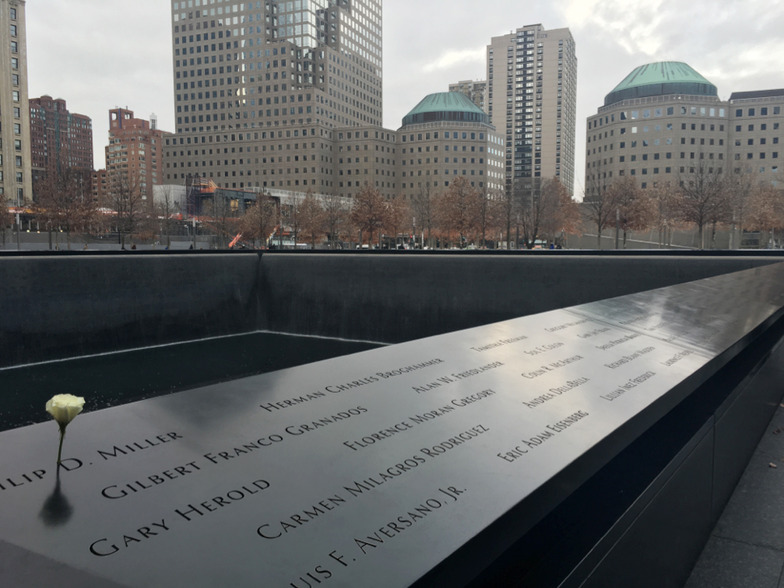
Next time, I would like to share the story of a female leader safeguarding the security of New York City—a city that continues to grow even after enduring an unprecedented tragedy, and where the mosaic of diverse races and ethnicities continues to deepen. Behind the wisdom and efforts required to maintain safety in a modern, peacetime metropolis lie numerous challenges and possibilities unique to a multi-ethnic nation.
*1: From the New York City Official Homepage ( www.nyc.gov/html/records/rwg/html/bio.html )
Was this article helpful?
Share this article


Newsletter registration is here
We select and publish important news every day
For inquiries about this article
Back Numbers
Author