
Note: This website was automatically translated, so some terms or nuances may not be completely accurate.
 Communication Showcase [1/4]
Visualizing Invisible Electricity? Panasonic "Life is electric"
Communication Showcase

A project acclaimed at Cannes for its innovative and cute visual approach
The importance of electricity in modern society goes without saying. However, while we can easily imagine the convenience, enjoyment, and comfort electricity brings, the image of electricity itself remains somewhat elusive. It feels somewhat plain, or rather, like a behind-the-scenes workhorse.
Against this backdrop, Panasonic launched a campaign centered on the concept of "giving form to invisible electricity."
Are you familiar with the product "eneloop"? It's a rechargeable nickel-metal hydride battery manufactured and sold by Panasonic.
"Life is electric" was an attempt to visualize electricity, leveraging this product's characteristics.
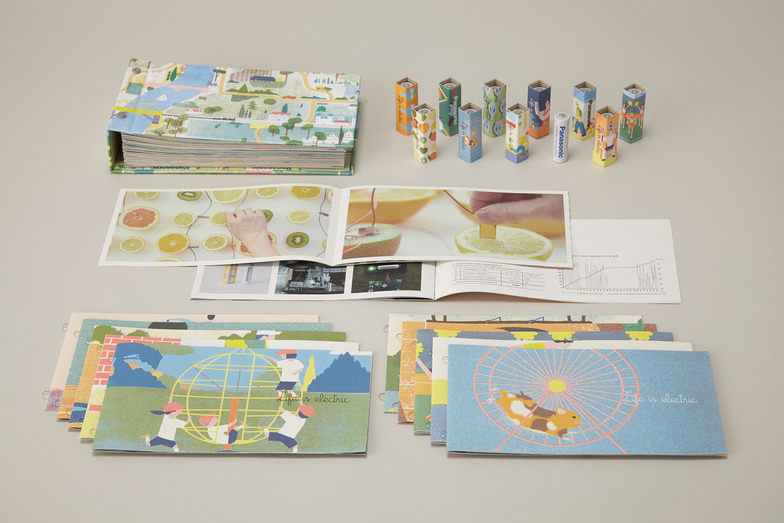
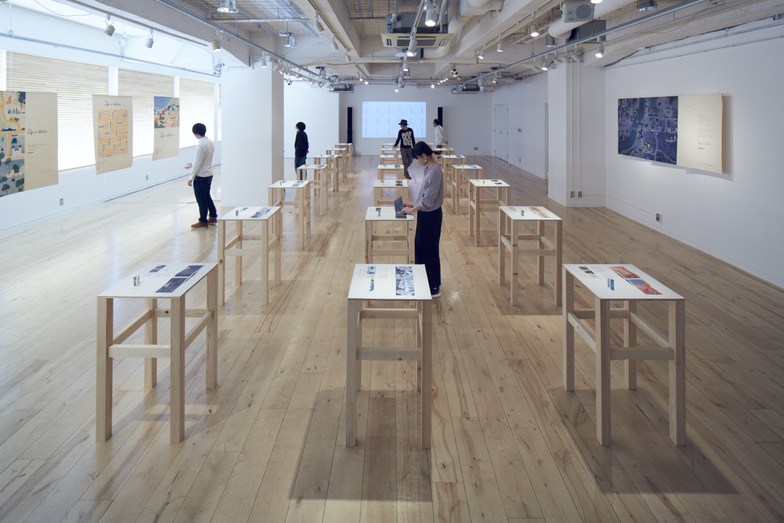
For example: "Hamsters' Cute Electricity" (0.34% charge), where six hamsters spun three exercise wheels for 60 minutes of actual work. "Kids' Energetic Electricity" (99.5% charge), where ten children rotated a glove jungle gym for 63 minutes of actual work. And "Cocktail's Romantic Electricity" (charging rate 0.43%), where one adult shook a cocktail shaker for 33 minutes of actual operation. We charged Eneloop batteries in various everyday ways, creating 21 distinct batteries. Each battery features special packaging illustrated with the method used to generate its electricity. We are holding the "Life is Electric" exhibition showcasing these 21 Eneloop batteries. We filmed the charging process and released it as a web movie. While all look identical as Eneloop batteries, their charge levels vary. The methods used to generate their electricity also differ. Reflecting on these backgrounds, the same batteries begin to appear as distinct entities, each with its own unique character.
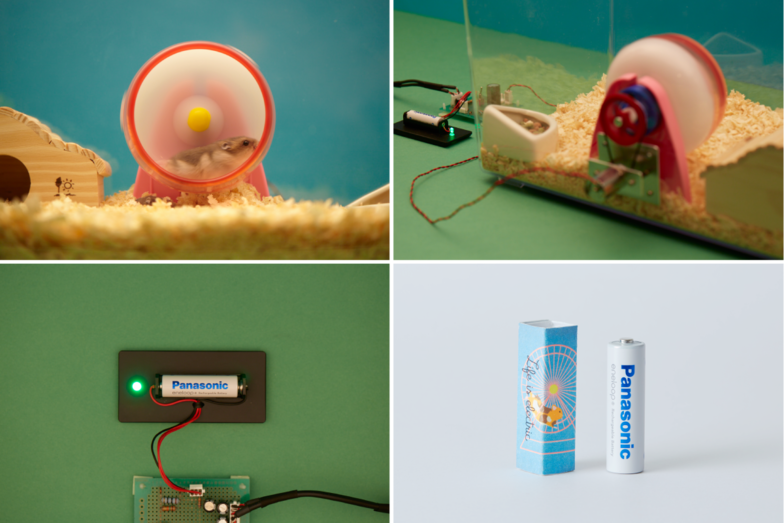
In other words, it might be described as personifying electricity, an invisible force. Moreover, this project succeeded in making electricity feel more familiar and relatable.
It should also be noted that this initiative, due to the high quality of its concept, earned Japan its first Grand Prix in the Design category at the Cannes Lions, along with numerous other prestigious awards.

Dentsu Inc. CDC Haruko Tsutsui
Branding through design.
Panasonic is a brand operating across various countries and regions, so the client originally had this desire for global branding—or rather, creating a unified image. It's a company developing everything from home appliances to housing, devices, and energy businesses, but fundamentally, it wants to deliver happiness through the power of electricity. Above all else, we wanted to clearly communicate that. Coincidentally, it was also the 10th anniversary of the Eneloop launch, so we decided to use this product as our subject for the appeal.
For example, the starting point was: wouldn't it be interesting if you lined up 10 regular batteries and they were all different inside? It's the same electricity, but each one is different. It's like creating a catalog for each individual battery. Then, giving each one a name. Furthermore, we depicted the town where everyone lives. Without that, it would just feel like a charging event. By adding the heart element through illustration, we thought it might evoke not just cool records, but a variety of emotions.
What I focused on was not over-explaining. Not going overboard. With the text, the visuals, the texture. I was always mindful of whether it was appropriate for the product and the expression itself. In a way, I created it trusting the viewer's imagination. But the reactions were beyond what I expected. At the event venue, children would stare intently at the products and videos. School teachers told us they wanted to try lessons like this. I'd worried whether people overseas would understand projecting emotions onto objects, but they actually felt it more deeply. It gets across just fine without being verbose. It might be a bit different from direct sales or promotion, but I felt it became a proper, advertising-like advertisement.
When we talk about design, it often quickly becomes about appearance or craftsmanship. But what's truly important, I believe, is what aspect of the brand it embodies and the purpose behind the design. Thinking this way, design is very closely tied to branding, isn't it?
Was this article helpful?
Share this article


Newsletter registration is here
We select and publish important news every day
For inquiries about this article
Author