Note: This website was automatically translated, so some terms or nuances may not be completely accurate.
 Working at the British company we acquired [5/5]
London Correspondence: What English Words Do You Hear Often in Global Workplaces?
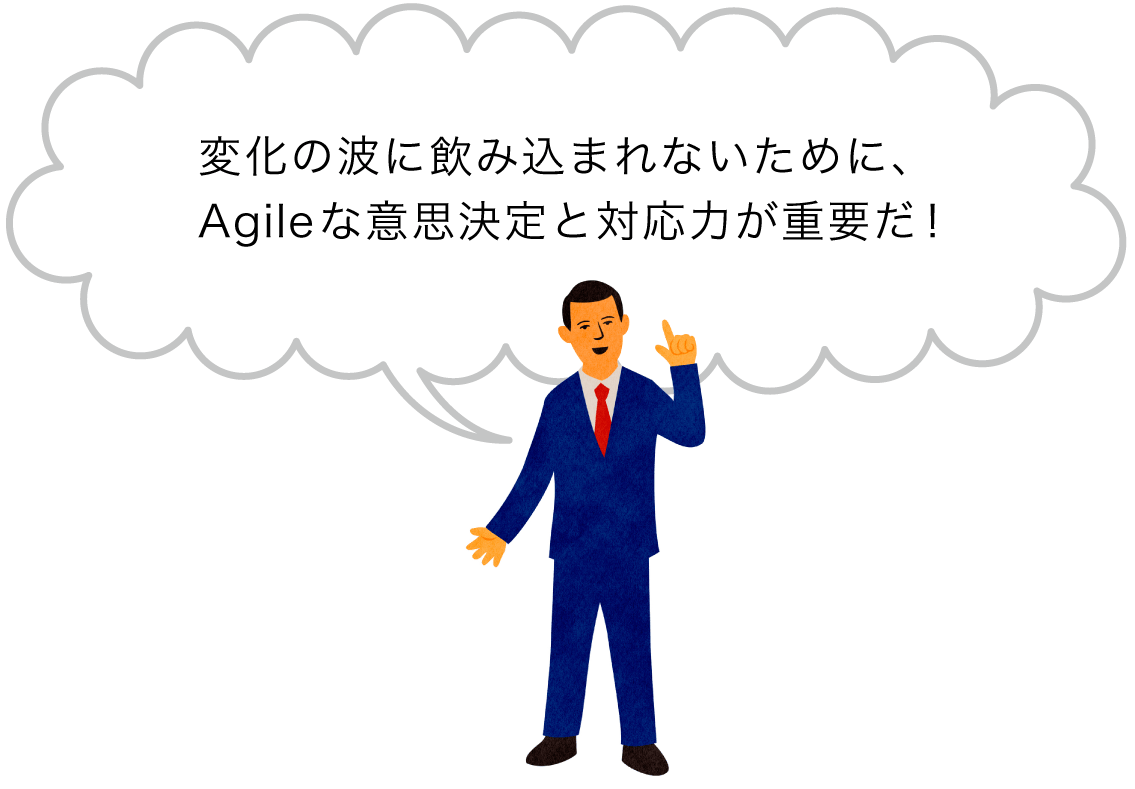
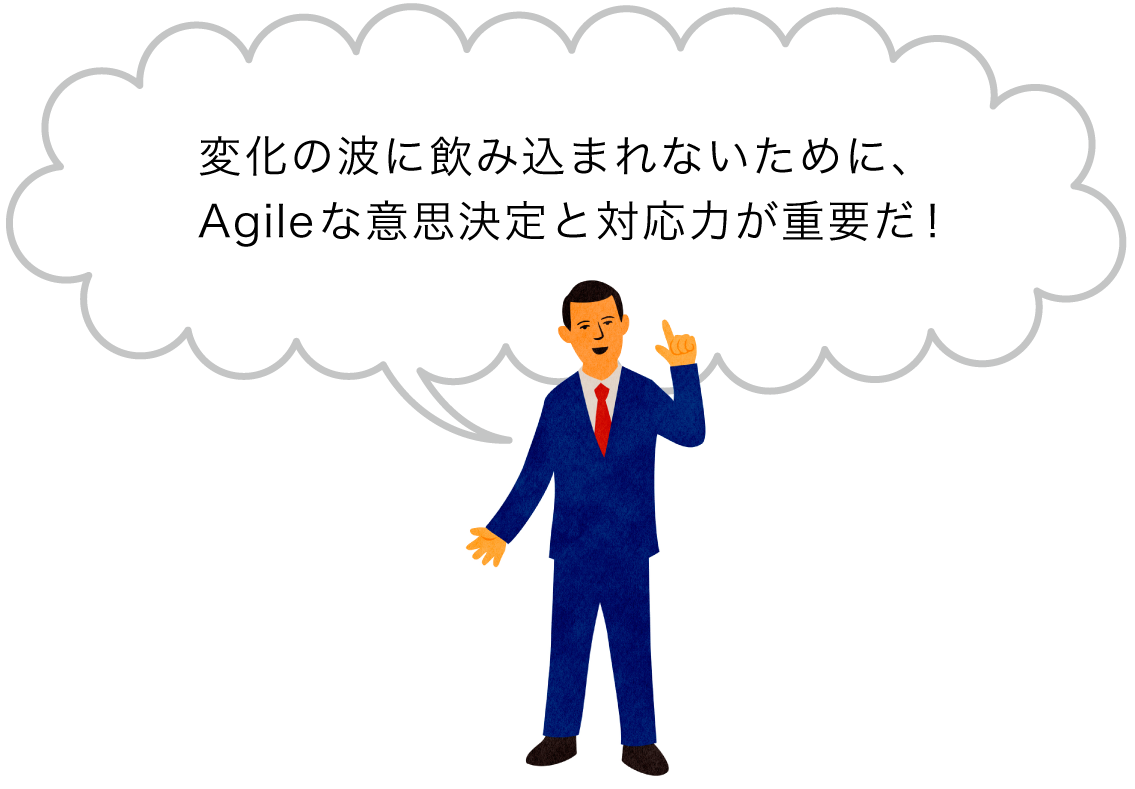
"Takashi, agile decision-making is crucial for this project."
"Without a narrative at the beginning of this document, it's impossible to grasp the core message."
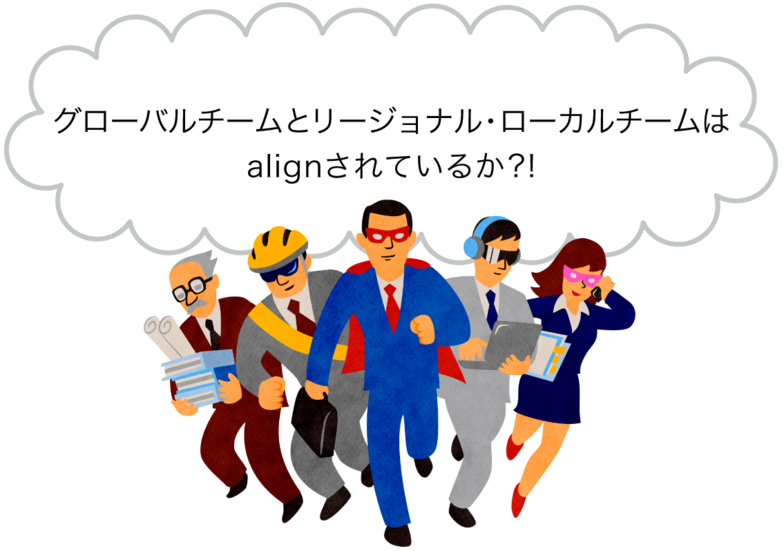
"Are you properly aligned with the local team?"
It's been a year and seven months since I joined Dentsu Inc. Aegis Network (DAN) in London, and these are just a few examples of phrases I often hear in the London workplace.
Even after over 15 years of international work within my Dentsu Inc. career, I still struggle with English. Especially when I first arrived in London, it took time to get used to the English accent. Beyond accents, I've learned many new words here and frequently hear terms rarely used in Japan. This time, I'll introduce words that well represent the way of working at DAN and in this city.
Agile: The state of being able to move forward with consistency and flexibility
Agile, literally translated, might mean "nimble." I hear it's recently started being used in Japanese business settings too.
It's used in phrases like, "Agile decision-making and responsiveness are crucial to avoid being swept away by the waves of change."
In London, however, it means more than just being quick. It implies a foundation of "consistency based on simple rules," which enables flexible responsiveness and a constant readiness to take action. That is Agile.
Currently, the DAN global team is creating a new credential (company introduction) presentation. It needs to cover the constantly evolving full picture of DAN, shaped by M&A and other factors, in a timely manner. Therefore, we decided to structure the presentation itself into nine units, enabling updates to each unit individually. Furthermore, even before all nine units are complete, we plan to release them incrementally to address current needs. This struck me as a perfect example of Agile in practice. I also feel that keeping things simple and starting with what is achievable are incredibly important in Agile.
A compelling story that anyone can understand = Narrative
Narrative is one of the eight major English writing formats, alongside ①Explanation (explanatory text), ②Procedure (step-by-step guide), ③Information Report (information report), ④Recount (reflective writing), ⑤Exposition (comprehensive explanation), ⑥Discussion (debate), and ⑦Description (narrative).
It's used to describe a cohesive block of text within a proposal document, or to say something like "the presentation as a whole is a Narrative."
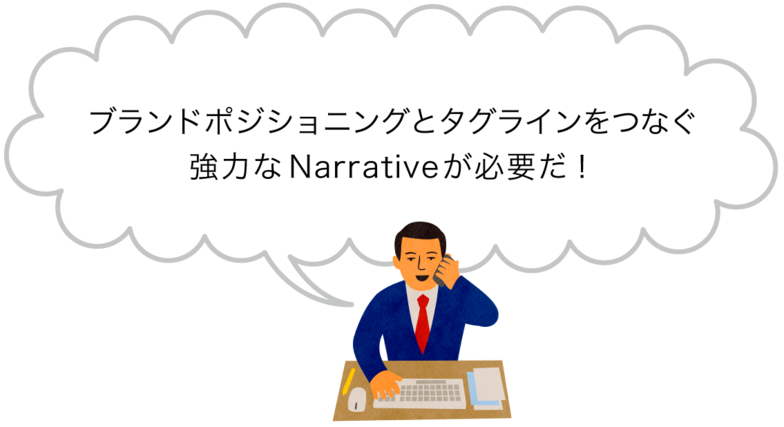
For example: "We need a powerful Narrative that connects this brand positioning with the tagline." This isn't a list of key points or a PowerPoint outline; it's a coherent "document" that allows the reader to understand the content naturally just by reading it from start to finish.
At first, I thought, "Isn't it just explanatory text?" But beyond the clarity that ensures anyone can understand it the same way, it demands a compelling story that persuades as many readers as possible. Only recently have I truly grasped the difference from simple explanatory text. Proposal materials for clients must be written with the awareness that they will circulate internally at the client's company, or even within our own company, requiring globally accurate communication of intent. Thus, they are crafted as a persuasive story—a Narrative—that resonates with anyone.
A state where everyone faces the same direction and forms a scrum = "We are aligned"
Align is a verb meaning "to bring into line" or "to arrange," but in the passive form, "We are aligned," it's often used when mutual agreement has been reached. It conveys a sense that, beyond "We have agreed," there is mutual confirmation of intent, shared understanding of next steps, and readiness for action. Simply put, if "agree" is like shaking hands on a deal, "be aligned" is like forming a scrum facing the same direction.
To put it another way, we agree with clients, but within our company or group, we be aligned. As I wrote in the article "http://dentsu-ho.com/articles/4419," the most crucial state when working in a global virtual team is this "be aligned" state.
For example, when dealing with global clients, if the global team and regional/local teams within DAN aren't aligned, it's easy to end up in a "they're saying different things" situation. And while content is obviously important, I feel it's equally crucial to share the same level of passion.
Scalable: Capable of being applied to other regions or domains
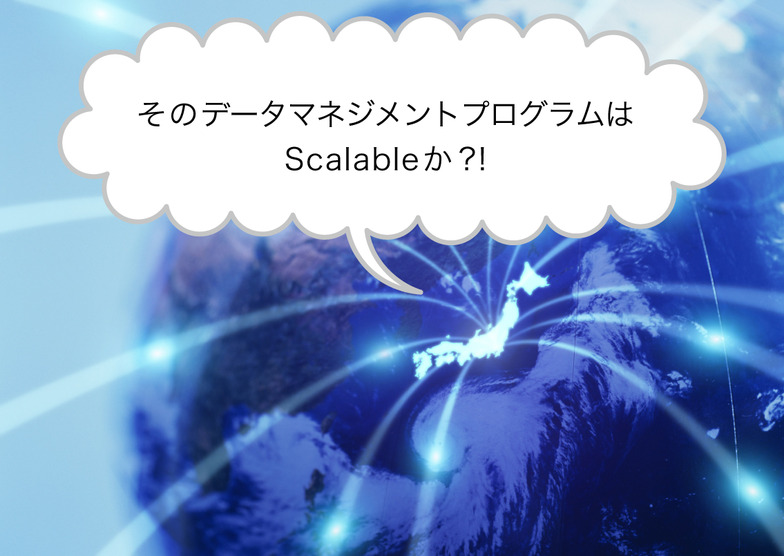
In Japanese and English, "scale" often refers to "size" or "specifications" (as in "this view has a large scale"). In London, the adjective "scalable" is frequently used to mean "capable of being deployed across other regions (or domains)".
For example, if you develop a data management program for a specific industry in London, you'd assess whether it's scalable—meaning whether it can be deployed to other countries or other industries.
Conversely, it seems everyone at DAN works with constant awareness of scalability. The prime example is DAN's proprietary consumer research database, CCS (The Consumer Connection System), which holds data from over 50 global markets with a total sample size exceeding 300,000. While the surveys themselves are quite simple, they are designed precisely for this reason to be implementable in any country worldwide. This meets the needs of global clients seeking to compare regions across various metrics. Rather than questioning whether something is scalable, the emphasis is on how to make it scalable from the outset.
For someone like me, who grew up solely in Japan and was accustomed to customizing things independently without considering lateral application, this was a very fresh perspective. While Dentsu Inc. has generated various Good Innovations within Japan, I strongly feel that what's needed now is how to make these scalable outside of Japan.
Through this series, I received feedback from Japanese colleagues ranging from "Well, London and Japan are different, so it's not really relevant" to enthusiastic agreement like "That really hit home!" I hope it serves as a catalyst for as many people as possible to realize that what's taken for granted in Japan isn't necessarily so just one step outside its borders. Drawing on my London experience, I aim to continue helping solve diverse client challenges while contributing, however modestly, to Dentsu Inc.'s true globalization.
I look forward to meeting you all again somewhere.
Was this article helpful?
Share this article


Newsletter registration is here
We select and publish important news every day
For inquiries about this article
Back Numbers


Author
Takashi Koyanagi
Dentsu Inc. Media & Holdings India
Director