Note: This website was automatically translated, so some terms or nuances may not be completely accurate.
 Working at the British company we acquired [4/5]
London Correspondence: Is it true they won't do anything not written in the contract?
The Japanese term "service" (サービス) often carries a strong connotation of something given for free or discounted, as in phrases like "Today, I'll give you a mackerel service!" (今日はさんまサービスしときますよ!). In contrast, the English word "service" is synonymous with "work" and inherently implies receiving compensation for providing it. This experience has made me realize this distinction anew. Today, I'd like to discuss such services and the partnerships built upon them.
Advantages and Disadvantages of Contract-Based Culture
At Dentsu Inc. (DAN ), we typically sign a contract with clients before starting work, clearly defining the Scope of Service. We strictly outline what we provide and the corresponding fee. In many cases, we also stipulate success-based compensation—bonuses tied to outstanding service performance or positive impacts on the client's business.
Contract negotiations occur via email or phone, and the intensity can sometimes be quite high. Even matters that might cause hesitation in Japan are discussed politely but candidly, and once concluded, we move on to finalizing the contract without lingering. We verbalize all conditions, negotiate to find the point where our economic rationalities align, and establish the relationship – this is the beginning of a "partnership."
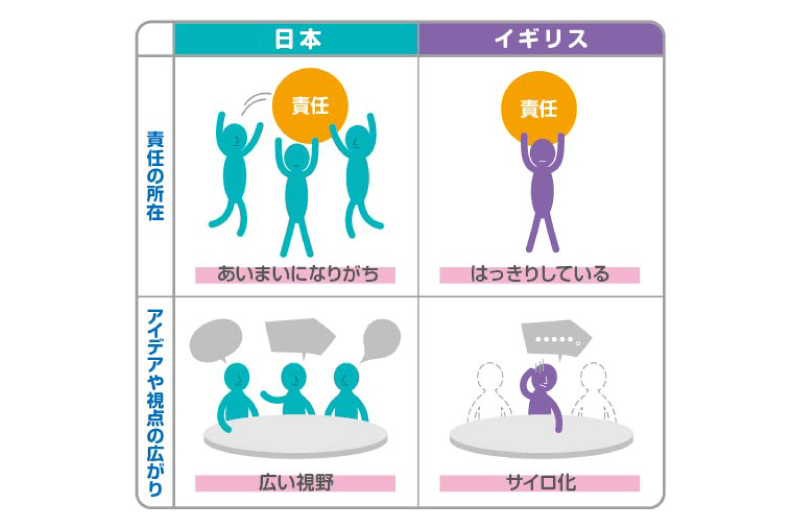
The practice of "detailing the scope of work beforehand" – I understood this concept myself over ten years ago when I started working with overseas partners. Consequently, I interpreted it as meaning "they won't do anything not written in the contract." However, when I recently spoke with a client-facing director, he explained: "At the staff level, it's hard to refuse requests for work outside the scope when they come from the client. People tend to do it anyway, driven by a desire to prioritize relationships and strengthen ties. But doing that leads to a lack of restraint, and it becomes difficult to ensure proper profitability. So, the director's job is to prevent that kind of scope creep. I totally get how the staff feels, so it's really tough." It struck me how difficult it is to strictly manage human actions with contracts, especially when everyone involved is driven by a strong sense of pride in delivering high-quality work and receiving fair compensation for it.
This made me reconsider why contracts are necessary. Simply put, when people with different cultures and shared understandings collaborate, contracts serve to prevent misunderstandings by putting things in writing. Conversely, if everything is understood through unspoken understanding and bound by strong trust, contracts might not be needed at all—though that's an extreme case. Writing everything down is simple, or rather, it's the obvious thing to do. But I also find myself thinking that the Japanese world of unspoken understanding has its own human warmth and charm.

Partnership with Media Companies
DAN has established a specialist group within its network called The Story Lab (TSL), dedicated to content marketing. We are actively pursuing content business opportunities and building partnerships with media companies in new ways. The TSL team has already achieved several successes in Europe, one being the format sale of Ninja Warrior (based on the Japanese TV show SASUKE). Dentsu Inc. secured the European format sales rights and is executing this through TSL. In France, where broadcast began ahead of several other countries, it airs on TF1, the top commercial broadcaster, and has achieved high ratings since Season 1. Regarding this, a DAN France executive recently made an excellent point: "Takashi, Dentsu Inc. has elevated DAN France to a whole new level. Before, TF1 looked at us with this 'So, how much advertising will you bring in next season?' kind of eye. But thanks to Ninja Warrior, TF1 now sees us as a true partner. Isn't that incredibly exciting?"
The establishment of TSL stems from a trend where "those with good content win," driven by recent media fragmentation due to digitalization, changes in viewing habits, and the commoditization of media buying. DAN has further launched the Global Media Partnership program with giants like Google and Facebook, initiating efforts to create new value.
Founded in 1901 as Nippon Telegraph Agency, Dentsu Inc. began as a news distribution company. This background has allowed it to expand its business by contributing to the business development of media companies. Beyond broadcasting rights deals with TV stations and collaborative program production, it has recently launched various platforms in partnership with media companies.
The success of Ninja Warrior is precisely the overseas expansion of the business model created by the predecessors and colleagues of Dentsu Inc. Knowing that it works here in Europe too was a moment that brought tears to my eyes.

Was this article helpful?
Share this article


Newsletter registration is here
We select and publish important news every day
For inquiries about this article
Back Numbers

Author

Takashi Koyanagi
Dentsu Inc. Media & Holdings India
Director