
Note: This website was automatically translated, so some terms or nuances may not be completely accurate.
 Inbound Strategy from a PR Perspective [1/5]
What We Should Consider in the Era of 40 Million Inbound Tourists

Mamiko Tominaga
The Growing Inbound Market
"Inbound," meaning "foreign visitors to Japan," has rapidly become a familiar term in recent years. Around 2010, when I first worked in inbound tourism, annual visitor numbers stood at 8.61 million. This was just as the term "Chinese New Year" began appearing in the media.

The Japan Tourism Agency set a target of 15 million annual visitors by 2013, but at the time, it seemed a distant goal. However, thanks in part to steady promotional efforts, the number finally surpassed 20 million in October 2016. As the base grew, overseas travelers became more diverse in their destinations, behaviors, and ways of enjoying their trips, propelling inbound tourism into a new stage both in terms of volume and quality.
On the other hand, as the term "inbound" became firmly established, and as foreign tourists began appearing everywhere at a pace faster than the term's adoption—purchasing services and goods—more people likely found themselves troubled: "We finally need to get serious about this, but we don't know where to start," "We started something, but we don't know what to change from our domestic PR," or "We thought it was unrelated to our industry, but it actually seems connected."
Even among pioneering companies and municipalities already tackling inbound tourism, as the market expands and competition intensifies, some managers are grappling with questions: Is our current approach sufficient? Should we rethink and expand our strategy, keeping the 2020 Tokyo Olympic and Paralympic Games and the post-event period in mind? They find themselves wrestling with these issues as they analyze the data they've gathered.
In November, Dentsu Inc. Public Relations, in collaboration with its Beijing-based group PR company, Dentsu Inc. Public Relations Advisors (Beijing), published a specialized book on PR for Chinese visitors to Japan titled "Inbound Strategy from a PR Perspective. "
Web Dentsu Inc. News will introduce the book's essence over five installments, providing insights for considering Chinese inbound tourism. This first installment serves as an introduction, revisiting the fundamental question of what inbound tourism is and exploring what PR can contribute to inbound strategy planning.
Tourism: The Remaining Growth Industry and "Inbound"
Why is it necessary to focus on inbound tourism in the first place? And is investing in it worthwhile? The spotlight on inbound tourism stems from the fact that the tourism industry, specifically inbound tourism targeting foreign travelers, holds significant potential as a growth industry.
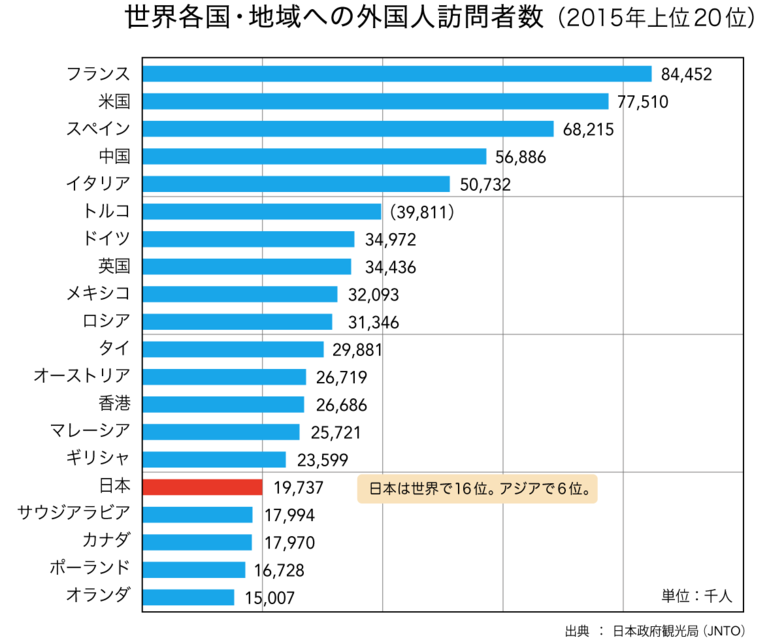
France, the world leader in tourist arrivals, welcomes approximately 84 million visitors annually, while the United States ranks second with 77 million. Japan, however, ranks 16th globally and only 6th in Asia, trailing China, Hong Kong, and Thailand. On the outbound side, the number of global travelers is certain to continue growing steadily, correlated with the economic growth of countries like Southeast Asia and India. This means tourism not only has significant potential for increased inbound arrivals now but is also a market certain to expand in the future.
Furthermore, tourism is a broad-based industry. While it is often thought to only involve travel agencies, lodging, and transportation, it actually extends to service industries like restaurants, entertainment facilities, and interpretation, as well as retail and finance. Particularly with today's travel style emphasizing experiences, its reach is expanding further. However, according to the Japan Tourism Agency, the tourism industry's contribution to Japan's GDP was only 4.9% (2014), remaining low compared to the global average.
For regional areas, this also presents a significant opportunity to attract visitors. For a long time, domestic tourists were the main visitors to regional areas. According to the Japan Tourism Agency, of the 22.5 trillion yen economic scale of the tourism industry in 2014, domestic overnight trips by Japanese people accounted for a substantial 14.3 trillion yen, or about 64%.
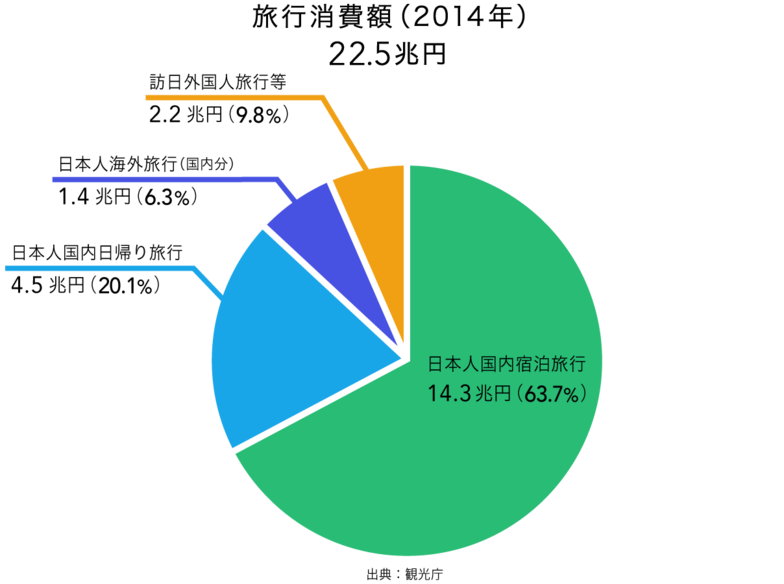
In contrast, inbound foreign travel amounted to only 2.2 trillion yen, or 9.8%. However, while domestic overnight travel has been shrinking year by year, inbound foreign travel is growing, playing a role in expanding the overall pie.
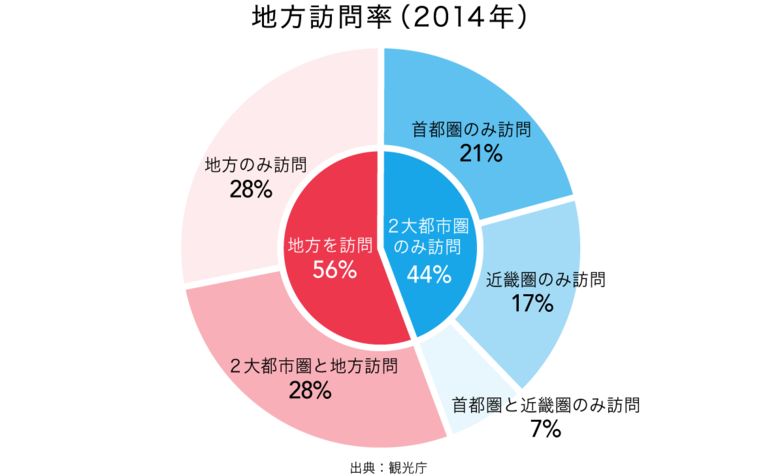
Furthermore, foreign tourists visiting regional areas accounted for only 56% of the total (2014). This means that attracting the increasing number of foreign tourists to regional cities and encouraging them to spend there represents a significant business opportunity for these areas.
What PR Can Do for Inbound Strategies
What value can PR (Public Relations) provide when formulating and executing inbound strategies? There are three main areas. The first is support for marketing and communication, the second is support for branding, and the last is support for internal communication and community relations.
There are two approaches for marketing and communication support. If you have a destination, service, or product you want to promote, we take a product-out approach: identifying the optimal target audience from the diverse pool of international visitors and developing a communication strategy.
On the other hand, if direct flights operate from specific cities, resulting in a relatively defined group of inbound tourists, or if you wish to expand existing products/services with an established customer base, we adopt a customer-centric approach. This involves discovering compelling service features (content) that resonate with customers and developing a communication strategy aligned with those features.
Regardless of the approach, the increasing number of inbound travelers means customers are diversifying. We can no longer lump everyone together as, say, "Chinese tourists." Even among Chinese visitors, there are significant differences based on region of origin, age, and income, and different types of people are visiting Japan now.
Furthermore, cultural differences mean that applying the same mindset as for Japanese customers can lead to oversights. It is essential to understand inbound foreign visitors and devise the optimal communication strategy, but the reality is that this is difficult for traditional domestic teams alone.
Regarding the second point, branding, as this is the most crucial aspect, we will cover it in detail in Part 4.
Finally, support for internal communication and community relations. When pursuing inbound initiatives, not everyone will necessarily agree. In fact, cautious voices are likely to prevail, such as "It's difficult both structurally and in terms of personnel," or "We don't really need to attract more foreign tourists to the area; we should focus on improving welfare instead."
Resolving these internal obstacles within organizations and communities to align everyone's direction is one of the core competencies of PR agencies. If you're facing challenges like "the team is fragmented and progress isn't as expected," "we need to accelerate our efforts," or "we want to gain residents' understanding," it might be time to seek support from a PR agency.
Parts 2 and 3 will feature insights from PR experts at Dentsu Inc. Public Relations Advisors (Beijing) on Chinese consumer trends and the latest media landscape in China. Stay tuned!
Was this article helpful?
Share this article


Newsletter registration is here
We select and publish important news every day
For inquiries about this article
Author