Note: This website was automatically translated, so some terms or nuances may not be completely accurate.
 Code Awards 2017: Digital Marketing Advertising Awards [2/3]
PARTY Naoki Ito × Takram Kinya Tagawa: The Present and Future of Digital and Creativity

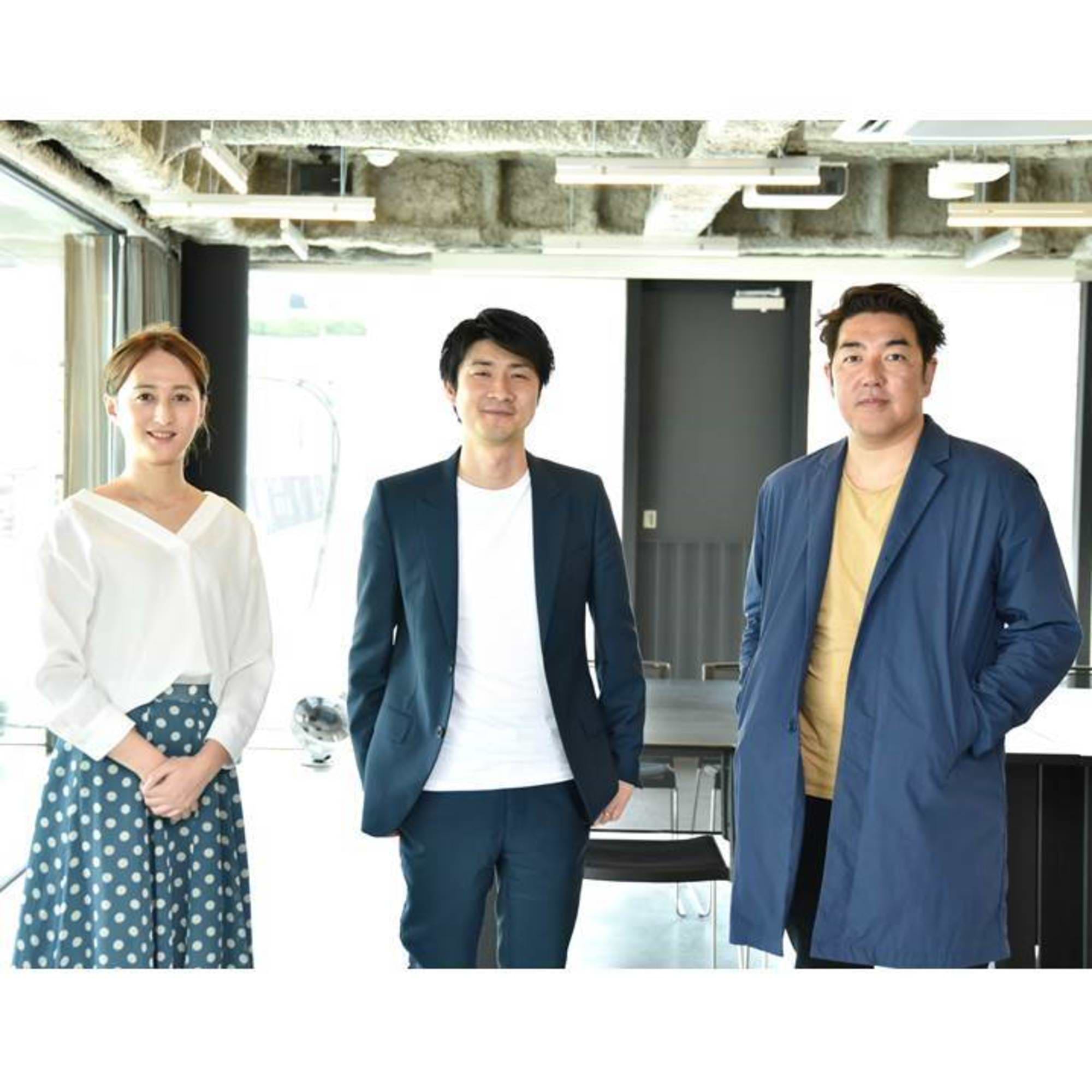
This time, we welcomed Naoki Ito (CEO of PARTY), who served as the head judge for the digital marketing advertising award "CODE AWARD 2017," and Kinya Tagawa (CEO of Takram), who participated for the first time this year. I, Sera Nakata (D2C Inc.), serving as the CODE AWARD Executive Secretary, acted as moderator. They discussed the challenges facing digital marketing, the future we should aim for, talent development, and real-world work experiences.
New Trends in E-commerce: Entertainment and Community
──From your perspective at the forefront of digital marketing, how do you perceive current industry trends evolving?

Ito: What's getting really interesting right now are e-commerce (EC) sites and owned media. EC sites weren't traditionally areas we were involved in. But we're seeing more work that incorporates entertainment elements into EC.
We call this "Entertainment Commerce" – making the process of selecting products, adding them to cart, and checking out a little more enjoyable. For example, when you go to a large shopping mall, it somehow becomes fun, right? But when it comes to EC sites, that sense of fun and excitement is still lacking. This is an attempt to design thrilling shopping experiences using things like artificial intelligence.
──Handling vast numbers of products and delivering them incredibly fast. With massive platforms like Amazon and Rakuten now established, new entrants face a tough landscape. Is the core of "entertainment commerce" a mindset of "then let's prioritize the customer experience"?
Ito: More than that, it feels like a kind of pendulum swing. The companies you mentioned are the winners in e-commerce. Many retailers consolidated by riding that wave, but now there's a renewed push to "do it ourselves." Similarly, amid the trend of owned media where companies "create their own content," there's definitely a movement to combine e-commerce sites with owned media and "operate it ourselves."
Tagawa: I knew the topic of e-commerce would come up eventually. What you mentioned about "entertainment commerce" is really interesting. Along similar lines, something Takram members are currently fascinated by is "community commerce." It's a model where you build a community first and then provide products or services within that community in a closed format. Either way, I feel the momentum of digital commerce is accelerating more and more.
The old equations are being overturned, and e-commerce is entering an era where quality is key.

Tagawa: Over the past few years, various models have been proposed online. For example, crowdfunding platforms like Kickstarter emerged, allowing creators and makers to deliver products directly to customers without going through existing channels.
However, with crowdfunding, once payment is completed and the product is delivered, the relationship between creator and recipient ends there. Instead, if a system emerges where supporters can continuously follow an individual or a company, it could enable business based on a completely different equation than before.
As Mr. Ito mentioned, when viewed from a bird's-eye perspective, the new trends surrounding commerce seem like a backlash reaction against Amazon and similar platforms. Within this, if we look closely at the specific needs, each one has its own unique appeal and characteristics.
Ito: It feels like the concept of retail promotion, or POP, is finally taking root in the online world too. While e-commerce sites represent online retail, whether it's hospitality or providing experiences, differentiation is easier than in the physical world. Everyone is scrambling to figure out how to differentiate themselves.
The thinning of currency leads to payments becoming a form of communication
──Coincidentally, both of you mentioned the keyword "e-commerce." Is this also tied to the payment systems undergoing significant changes during this transformative period?

Tagawa: I experience that change daily. For instance, I myself can now live without hardly ever touching bills or coins (laughs). Of course, the tactile feel of physical money is important, but life without opening my wallet is more enjoyable now. In a world where the act of payment itself is becoming digital, people in the future probably won't calculate things like "How much was in my wallet?"
After the traditional monetary system goes digital, many new forms of commerce we haven't even imagined yet will likely emerge. Rather than just the practical value of efficiently acquiring things through search and recommendations, I think value will start to emerge more from the experience itself, leaning a bit more towards communication. Services like Mercari are a good reference point here. Communication that arises between seller and buyer, like "There's a scratch here," will be reevaluated as one of the essential values in buying and selling.
Ito: As the intrinsic value of physical currency diminishes, Bitcoin becomes impossible to overlook. Bitcoin significantly enhances the potential for C2C business. As e-commerce becomes more communication-driven, C2C naturally increases. This makes systems reliant on margin-driven financial institutions increasingly cumbersome. I'm interested in how Bitcoin will feature within this trend and feel "C2C" will become a key keyword.
Exploring Possibilities in Artificial Intelligence and Concerns About Talent Shortages
──Now that new movements are emerging, I think it's the perfect time to seize new opportunities. On the other hand, what are your thoughts on the challenges currently facing the digital marketing industry?
Ito: In terms of communication, I see challenges in the utilization of artificial intelligence. While the trend of customers and companies connecting online to build engagement and maintain relationships is established, a company's persona towards its customers should fundamentally be unified. The personality of the "corporate entity," so to speak. You could call it a unified identity. Yet, call centers are often outsourced, and the personality varies depending on who responds. This leads to complaints, followed by corrective actions, and the cycle repeats. Amidst the shift towards replacing this with AI, the question arises: "Is it truly possible to install a company's personality into AI?"
This personality formation, or branding, involves unifying the attitudes and behaviors of the entire company across all methods. Therefore, elements like the mission statement, code of conduct, and "WHAT WE DO" (often prominently featured on websites, especially for international companies) are typically essential. Currently, many companies are eager to introduce AI into various communications, starting with chatbots. However, according to the literature, imbuing AI with personality remains quite challenging.
──So, for future corporate brand communication, we must instill brand image into AI as well, to effectively convey the brand's vision and values to people!
So, Mr. Tagawa, what are your thoughts on the challenges facing the industry?
Tagawa: What I feel on the ground in my work is that there are overwhelmingly few people who can effectively utilize digital marketing techniques. Authentic Japanese companies, for better or worse, operate in a world where the flow from producer to retailer is well-established. Some people haven't even experienced traditional marketing. Then the internet arrived, making it technically possible for companies to connect directly with customers end-to-end.
This evolution has significantly expanded the scale of the digital marketing industry. Yet, there are far too few people who can keep up with or are comfortable with digital and online trends. Consequently, before even considering ideas, the real challenge is training personnel who can meet these needs. I feel this necessity keenly every day.

From Intern to Mentor: Educational Programs Worth Learning From in the UK
Ito: I teach at Kyoto University of the Arts. As a university focused on practical skills, I strive to teach design as a practical business discipline. However, practical training within university education programs is extremely limited. In fact, when I talk to graduates, they all say, "The gap between what I imagined during job hunting and reality was too huge." Hearing that makes me keenly aware that the practical and academic sides really need to come closer together. Mr. Tagawa, you teach at the Royal College of Art in London. Is it different there?
Tagawa: At the school where I teach, each department has only five professors or permanent tutors, while there are about 100 students, including PhD candidates. But besides those five permanent teachers, there are about 100 people called visiting tutors. These are all active professionals working in various fields. A system is established where these experts just hang around the studios, and students approach them to learn.
The visiting tutors are all alumni of the school. We recruit graduates working in the field who are interested in teaching, creating an ecosystem where students can learn the practical aspects directly from them. What's great about this system is that the visiting tutors only need to come to school about once every three weeks and just hang around, making it incredibly casual. In Japan, they'd be classified as lecturers, which means they'd have to teach classes regularly, which is pretty demanding, right?
Ito: Japanese universities should also introduce more mentor programs staffed by young corporate employees or senior university alumni. The alternative in Japan is corporate internship programs, but from a management perspective, the burden is too heavy. Companies want to hire interns to help their young employees, but if those young employees end up spending all their time mentoring interns, it defeats the purpose. The educational costs are also too high. Having practitioners come into educational institutions as mentors to teach is a truly ideal approach.
Organizational reform on the ground is also urgent. Abandon silos and move toward cross-functional collaboration.
──As someone involved in this industry, more conscious talent development is essential.
Tagawa: Simultaneously, we must improve the organizational structures of those already working in the field. As the internet has grown rapidly, even people in traditional industries struggling to keep pace with that growth are now compelled to handle digital marketing. However, Japan has extremely low workforce mobility. People don't move from internet companies to traditional industries, and the receiving companies are often bewildered, hindering the digital transformation of the entire industry.
Even authentic companies need organizational reforms, like creating dedicated digital marketing and branding departments.

Ito: Organizational reform is absolutely right. For example, when we say "create IoT," it encompasses not just product design or packaging design, but communication design too, right? These departments should collaborate to create it, yet most companies keep them separate. We need to think of it as one integrated package, including data science, but this unification is slow to happen.
Tagawa: Innovation and marketing departments absolutely need to be right next to each other. Only through daily, close interaction between departments can new innovation emerge. To add to that, it's not uncommon for the research labs responsible for product development to be located in the middle of nowhere, far removed from the business front lines (wry smile).
Ito: Speaking of which, Mr. Tagawa, you also run facilitation workshops, right? The impact of having an outsider mediate can be huge.
Tagawa: Companies have reporting lines, so even with someone sitting next to you, you might get told, "Please go through my boss" (laughs). That's where we external people have an advantage – we can sort of rudely barge in saying, "Sorry, I don't know your company's situation..." Because we don't need to play politics, things actually move more smoothly.
Ito: Exactly. When you're inside, you overthink things. Like, "If I bring that person in, will they get angry?" (laughs). So an outsider's role is also to loosen up internal tensions. Once you take off the armor, things often move surprisingly simply, but organizational labels become shackles.
Hybrid creativity is what sparks innovation
──We've heard many insightful points so far. Next, please share your thoughts on the "Code Awards" theme: "Digital and Creativity."
What do you consider key points for integrating digital-driven creativity into corporate marketing activities?
Ito: The collaborative mindset we discussed earlier is a major point, right? Narrowing it down specifically to creativity, I'd say the importance of design thinking. It feels like design thinking is finally taking root in Japan too. What's your experience, Mr. Tagawa?
Tagawa: Design thinking itself is already an established classical method. While it feels like the latest approach from a Japanese perspective, the concept of design thinking was proposed over 20 years ago. Looking at the history of design, Europe was its center for a long time. There, the "Maestro model" – creativity dominated by masters creating through their subjective vision and worldview – held sway.
However, in the 1980s, new industries began emerging in Silicon Valley. Europeans who felt the limitations of the "Maestro-type" approach immigrated there. Design thinking was born in that environment. It's a "post-Maestro-type" system emphasizing observation, prototyping, and teamwork. Why did the mainstream shift from the "Maestro model" to the "post-Maestro model"? Simply because the latter fit better with business. The reason for this fit is straightforward: design thinking is easier to integrate into the PDCA cycle, has lower individual dependency, and facilitates reproducibility – in other words, it aligns closely with business values. That's why design thinking spread.
However, it emerged in an era when the internet wasn't yet ubiquitous. Consequently, cutting-edge approaches are now emerging. Furthermore, we're entering a phase where people are saying, "Why not use any method that works? Maestro or design thinking—it's all about the right tool for the job!" In that case, as Mr. Ito says, collaboration is indeed indispensable. We're beginning to step into a hybrid zone where people doing business, people doing technology, and people doing creative work intermingle. We call this hybrid approach the "BTC type," and we believe that teams encompassing these three elements are the core drivers that spark innovation.
Presentations are all about communication first. Collaboration with companies is key.
──Could you share tips for presentations aimed at persuading senior executives at large corporations or clients?
Tagawa: We rarely do presentations per se. What matters is daily communication and feedback. We refine prototypes and logic by carefully evaluating what to incorporate and what to discard from that feedback. So, situations where "it got approved in one shot!" are actually quite rare. In a way, continuous, incremental communication might be the real key.
Ito: I agree. Creative work is purely fee-based; we're paid for the time we invest. Because of that, rather than focusing on "how many presentations," we aim to have two or three discussion opportunities per month. So the concept of a formal presentation is practically nonexistent. It's more like an open-source approach, building something together.
Tagawa: Exactly. To put it bluntly, the key is to do the first presentation as soon as the project starts and get the client to tell us, "You don't understand anything at all!" (laughs). That way, the direction that wasn't clear during orientation becomes crystal clear. Then you just refine it as you move through the project. Ultimately, it's about whether you end up with solid results. So you start with the mindset of "I think half of this is probably wrong..." (laughs). But you do it quickly.
Questioning the status quo is what makes you a next-generation leader.
—I see. It feels like outdated methods were overturned here too. Finally, could you share a message for the younger generation who will lead digital marketing's future?
Ito: Look at the "Top Companies to Work For" rankings—they haven't changed in decades. Of course, there's unique appeal to authentic large corporations, but I want people to pay more attention to internet companies too.
I teach at an art university, and many students aim to become designers. They all uniformly say, "I have to get a job at a design firm." But game companies are hiring in-house designers, and companies like LINE actually employ many designers too. I want to tell them, "If you broaden your horizons, there are still plenty of places where you can find enjoyment," and I think it's an interesting challenge.
As I've discussed, precisely because we're now seeing a demand for convergence across all fields, the potential for excitement is greater than ever. Those who recognize this trend and start moving now have a high chance of becoming the next leaders.
Tagawa: The greatest advantage of using digital tools is that they vastly expand each individual's potential. Consequently, the skill sets demanded of individuals also become more sophisticated, and commoditization occurs in the products that lie beyond the creative work.
Where mastering one thing used to take 20 or 30 years, the internet is flattening the world. Now, I feel you can reach the depths of a field in just 5 or 6 years. While time is compressed like this, the capacity an individual can hold is also expanding tremendously, driven by the power of the internet. The near future is one where individual potential is maximized. That's why I think today's young people shouldn't necessarily listen to what their elders say. That's just the common sense of people from the pre-internet era. I want to tell them, "You should completely doubt what BI people (Before Internet people) say—that's the right approach" (laughs).
──Thank you both for such insightful discussions.
For the Code Awards 2017, public voting to select the most popular works from the finalists is currently open on the official website ( http://www.codeaward.jp/ ) from Monday, June 12th to Sunday, June 18th. Anyone can vote, so please cast your vote for your favorite work.
Was this article helpful?
Share this article


Newsletter registration is here
We select and publish important news every day
For inquiries about this article
Back Numbers

Author

Naoki Ito
PARTY
Creative Director
Yoshiya Tagawa
Takram Design Engineering
Representative / Design Engineer / RCA Visiting Professor

Serra Nakata
D2C Inc.
Public Relations and Advertising Office
Code Award Executive Director