
Note: This website was automatically translated, so some terms or nuances may not be completely accurate.
 ADWASIA 2017 Report [1/6]
Isobar: The Concept of "Brand Commerce" That Realizes the Customer Experience Ecosystem

Advertising Week Asia 2017
Advertising Week, the marketing and communications festival that made its Asian debut last year, returned to Tokyo this year as Advertising Week Asia 2017. Over four days from May 29 to June 1, Tokyo Midtown gathered top executives and CMO-level leaders from around the world, focusing on a wide range of themes including brands, media, and technology. The number of partner companies and organizations increased from 50 last year to 64, with approximately 13,000 attendees.
Gene Lin, Global CEO of Isobar—a company that has globally led digital creative—delivered a keynote explaining how to capture the hearts of younger generations and co-create the brands of the future. "Using digital to transform business, brands, and people's lives—that's what Isobar is passionate about," he passionately declared.
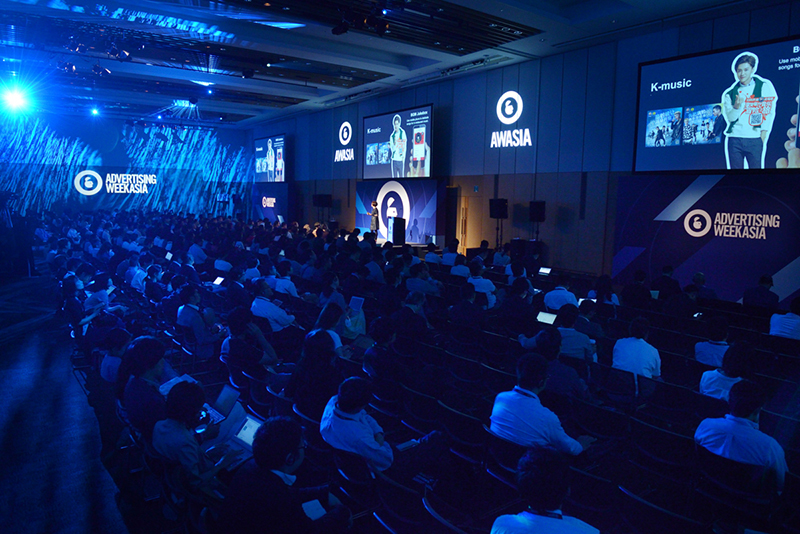
Companies with stronger digital capabilities are seeing higher revenue growth
Digital transformation is now an urgent priority for companies. Drawing on her experience working with brands worldwide, Lynn stated, "This has been the most frequently discussed theme over the past two years." "Every organization is devising strategies to drive digital transformation. Our clients, who lead outstanding businesses globally, are actively engaged in this very effort. This reality fills me with both anticipation and apprehension."
The hope lies in the certainty that achieving digital transformation will yield positive outcomes—whether in sales or customer relationships. The anxiety stems from the question: How long will it take to see those results?
What does digital transformation bring to an organization? And what does it mean for the individuals working within that organization, living in this digital age? To explore these questions, Isobar collaborated with data company Alpha DNA to analyze 75 billion consumer interactions across 1,000 U.S. companies. This led to the creation of the "Digital Strength Index," a metric indicating a company's digital prowess. Mr. Lin presented a graph showing the relationship between this index and each company's revenue over the past five years, explaining, "Companies with stronger digital capabilities see higher revenue growth. This is also a factor closely linked to stock prices."

Four Principles for Driving Digital Transformation
So how can companies drive digital transformation, enhance customer experiences, and increase revenue? Presenting the following four principles, Lin stated, "By keeping these in mind, whether B2B or B2C, you will satisfy your customers more."
1. We are in an experience economy: customer-centric, demand-led.
Today, consumers have entered what could be called an "experience economy." The key factors here are, first, putting the customer at the center, and second, redesigning your business based on customer needs. Thinking in the opposite direction risks reverting to the marketing mindset of an era when products sold simply because they were made.
2. A brand’s marketing, products, and services are more connected than ever.
A brand’s marketing, products, and services are more interconnected than ever before due to digital technology. This makes it easier to form an ecosystem for communicating with customers. Therefore, it is crucial for companies to view these three parts holistically, not in silos.
3. Invent and design frictionless and inspiring customer experiences is key.
So, what is the ideal customer experience? It should be an experience that causes the customer no stress whatsoever, while simultaneously inspiring them. Humans sometimes make irrational decisions, but unlike AI, they possess emotions and crave stimulation of their sensibilities. Therefore, we need to redesign customer experiences that not only feel seamless but also incorporate human elements, creating exciting stories that resonate.
4. Effective transformation bridges the gap between brand inspiration and commercial interaction. We call it Brand Commerce.
Finally, to rapidly execute this digital transformation, bridging the gap between brand inspiration and commercial transactions is the most direct path. In business, the last mile of purchase is undeniably crucial, yet that moment often feels disconnected from the brand experience. However, from the customer's perspective, it should be consistent—a concept Isobar terms "Brand Commerce."
Brand Commerce: Extending the Brand Experience to the Moment of Purchase
"Brand Commerce" is not merely a superficial combination of "Brand Plus Commerce." It involves tightly integrating every touchpoint from the first brand encounter to payment, treating them as a unified experience, and designing them to lead to the next interaction. Only then can a customer experience ecosystem be built," explains Lin.
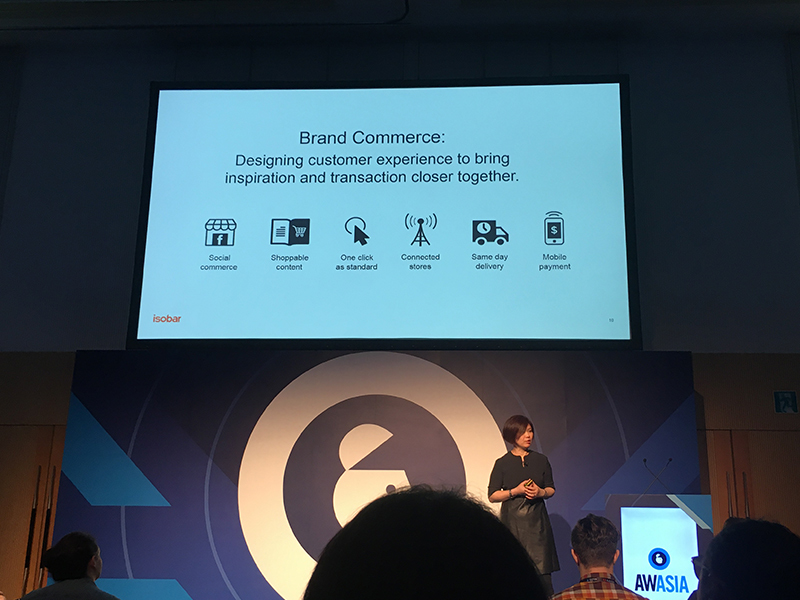
The purchasing aspect is often considered in isolation, but that approach fails to build an ecosystem. Beyond purchasing, various sections within the organization must collaborate closely, integrating data and other elements—both online and offline.
Creativity is, of course, essential to realizing "Brand Commerce." "However, it shouldn't be limited to what we know at this moment," says Lin. It's also crucial to keep an eye on new channels and forms of expression, just as with new technologies, and to simultaneously consider their testing and evaluation.
As an example of Isobar's brand reconstruction work based on this concept, Lin cites the transformation story of KFC China. The company entered China about 30 years ago and boasted a very large scale globally, but faced challenges when confronted with the wave of digitalization. Isobar became a partner in May 2015 and launched a digitalization project. As a result, within 18 months, they acquired 77 million members for a new membership program, enabled online ordering at over 5,000 stores, and significantly increased sales.
How they captured China's "post-95" generation
Beyond these figures, the brand refresh achieved in just a year and a half is particularly noteworthy. According to RTG Consulting Group research, KFC holds the position of the most intimate food and beverage brand for Generation Y (those born in the 1980s and 1990s). Furthermore, among the younger Generation Z (those born after 1995), or the "Post-95s," KFC secured the second position, trailing only Pepsi. "For a brand with a long history in China, this is a tangible achievement," said Lin.
Specifically, Isobar explored rebuilding the customer experience through three key approaches: "Digital Marketing" to provide inspiring, immersive experiences that customers can personally relate to; "Digital Ecosystem" to connect the brand with business revenue; and "Digital Products" designed to particularly appeal to Generation Z. Unpacking their values, Lin noted the keywords "love," "play," and "eat" emerged. They love their country and take immense pride in it. Mobile and technology are deeply integrated into their lives; in fact, China's gaming market surpassed the US in 2016 to become the world's largest. The "eat" keyword might seem a bit surprising, but for them, food is an element of self-expression. They want to express themselves to their peers through food. In China, live streaming is extremely popular. While "gaming live streaming"—watching people play games—is thriving, "dining live streaming"—watching people eat—is also popular.
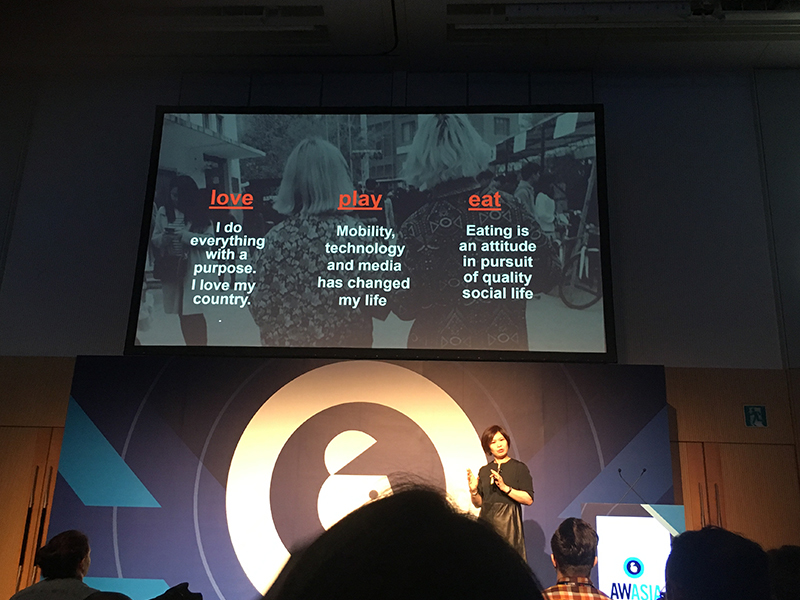
Against this backdrop, KFC implemented several initiatives and campaigns to comprehensively upgrade the dining experience through digital means. For example, they introduced the AI-powered robot "DUMI" in stores to offer a fresh purchasing experience and collaborated with the popular game "Onmyoji" to refresh their image and boost their presence.
During the 2016 Rio Olympics, KFC launched the "Red Encouragement" campaign. This centered on the idea of turning the iconic KFC barrel (the bucket holding the chicken) upside down and striking it, combining China's traditional drumming cheers with the shared color of red for both China and KFC. The campaign featured numerous celebrities popular with Generation Z to capture their attention.
These initiatives created a synergistic effect, achieving the aforementioned results in a short timeframe. However, Lin cautioned, "Not every operation will yield such results." He emphasized that by infusing brand inspiration into the final mile of the purchase journey with creativity, "brand commerce" can be rapidly realized. "This allows us to build the future brand together with the next generation of customers," he stressed, concluding his presentation.
Was this article helpful?
Share this article


Newsletter registration is here
We select and publish important news every day
For inquiries about this article
Author