
Note: This website was automatically translated, so some terms or nuances may not be completely accurate.
 ADWASIA 2017 Report [6/6]
Dentsu One Indonesia / Dwi Sapta Group What is the secret to success in Asia, where economic growth and the digital wave are surging simultaneously?

Advertising Week Asia 2017
The marketing and communications festival "Advertising Week," which made its debut in Asia last year, was held again in Tokyo this year as "Advertising Week Asia 2017." Over four days from May 29 to June 1, Tokyo Midtown gathered top executives and CMO-level leaders from around the world, focusing on a wide range of themes including brands, media, and technology. The number of partner companies and organizations increased from 50 last year to 64, with approximately 13,000 participants.
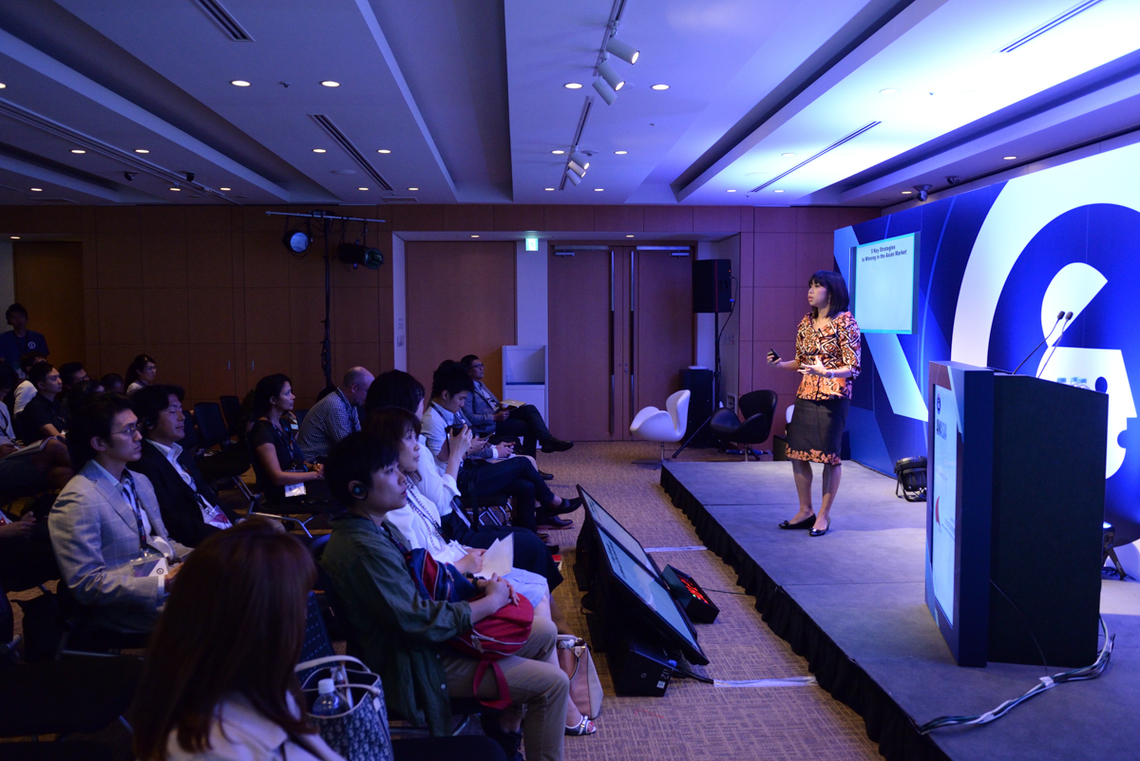
The final report focuses on Asia. "AdAsia 2017 Bali" will be held in Indonesia from November 8-10 this year. AdAsia is Asia's largest advertising conference, hosted biennially by the Asian Federation of Advertising Associations (AFFA). Ahead of this, two agencies under the Dentsu Group operating in Indonesia—Januju Aliyanto, CEO of Dentsu One Indonesia, and Maya Watono, CEO of Dwi Sapta Group—delivered a presentation titled "GlobalizAsian," discussing the current state and potential of the Asian advertising market. They explained strategies for succeeding in the Asian market, which is rich in unique cultures and values and is home to a large millennial population.
Asia: Home to 58% of the World's Millennials and Rapid Growth
Asia is home to over half the world's population, hosts the world's second and third largest economies (China and Japan), and features countries with entirely distinct cultures and values even when neighbors. As the trend of "Globalization" intensifies, its presence is growing not only in the global economy but also in the world of advertising communication. Januju Aliyanto, CEO of Dentsu One Indonesia, and Maya Watono, CEO of Dwi Sapta Group, introduced the keyword "GlobalizAsian," suggesting that innovations born in Asia's diverse markets offer significant lessons for global breakthroughs. Watono stated that the AdAsia 2017 Bali event in November will feature participation from 14 countries, providing an opportunity to present and share case studies from each nation.

"The potential held by Asian countries is immeasurable," Watono emphasized. Focusing first on 2017 economic growth, while Europe and the US are projected at around 1% year-on-year, ASEAN is expected to grow by 4.8%, and Southeast Asia specifically by a substantial 6.0% (※FocusEconomics Consensus Forecast). The prevailing view is that Asia will continue to drive the global economy. Asia is also contributing to advertising expenditure growth. Growth in the digital sector is remarkable; the large population combined with economic development has led to double-digit growth across the board for internet users, social media users, and more. The rate of mobile users relative to Asia's total population is also extremely high.
Furthermore, compared to developed nations, Asia has a larger youth population, with 58% of the world's millennials residing in Asia (※ UN World Population Prospects 2015; A.T. Kearney analysis). Moreover, in the Q4 2016 Global Consumer Confidence Survey, Asia dominated the top 10 rankings: India took first place, followed by the Philippines, Indonesia, Vietnam, and five other Asian countries (※Nielsen Consumer Confidence Survey-Q4 2016).
Technology adds complexity to the diversity of languages and traditions.
Watnho summarizes the strategy for succeeding in this dynamic Asian market into the following five points.
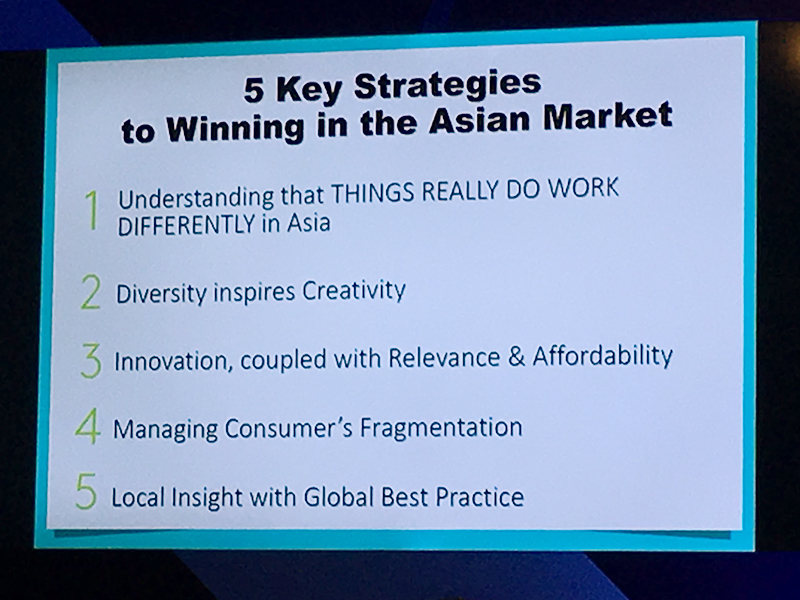
First, understand that in Asia, everything differs from country to country. There is no common language or tradition to begin with, and the region is inherently diverse. Furthermore, as incomes rise, the speed at which technology is adopted increases, making people's attitudes and behaviors even more complex.
"For example, Jakarta suffers from severe traffic congestion, which is why the motorcycle taxi service 'GO-JEK' is now so popular. You can book online using a dedicated app, and they take you to your destination on a motorcycle, two people riding together. So, for a few kilometers, it feels like you get there instantly. But when I move around Tokyo, even short distances feel very far. In other words, if you don't consider each country's specific circumstances, the brand experience will also change," says Watano.
Second, this diversity provides hints for creativity. Precisely because geographical features and cultural differences are significant, more creativity is needed to develop effective communication. In fact, services like the aforementioned motorcycle taxi, which capture people's needs from a local perspective, are developing in various countries.
Third, any innovation must offer cost-performance value. Even with rising incomes, services won't gain traction unless they deliver value commensurate with the price paid. In the digital world, Watono notes, it's not just about innovative ideas; price competition is also fierce. "Everyone is sensitive to how reasonably priced a service is, so strategies must factor this in."
Fourth, managing consumer fragmentation across devices and platforms. Indonesians now often use four devices simultaneously: TV, laptop, tablet, and smartphone. Watno explains, "Successful brand communications provide a consistent experience across all touchpoints. Synergy between media is more important than the number of channels used."
Finally, the fifth point is maintaining both local and global perspectives. "Local insights are vital, but it's not about pitting local against global. Understanding the specific circumstances and challenges in a given market can actually lead to solutions that become global standards."
Focus on the growing middle class becoming "First-time Buyers"
Following strategies for success in Asian markets, Janu Arjanto, CEO of Dentsu One Indonesia, introduced characteristics of the Asian market from a cultural anthropology perspective and features of campaign scenarios.
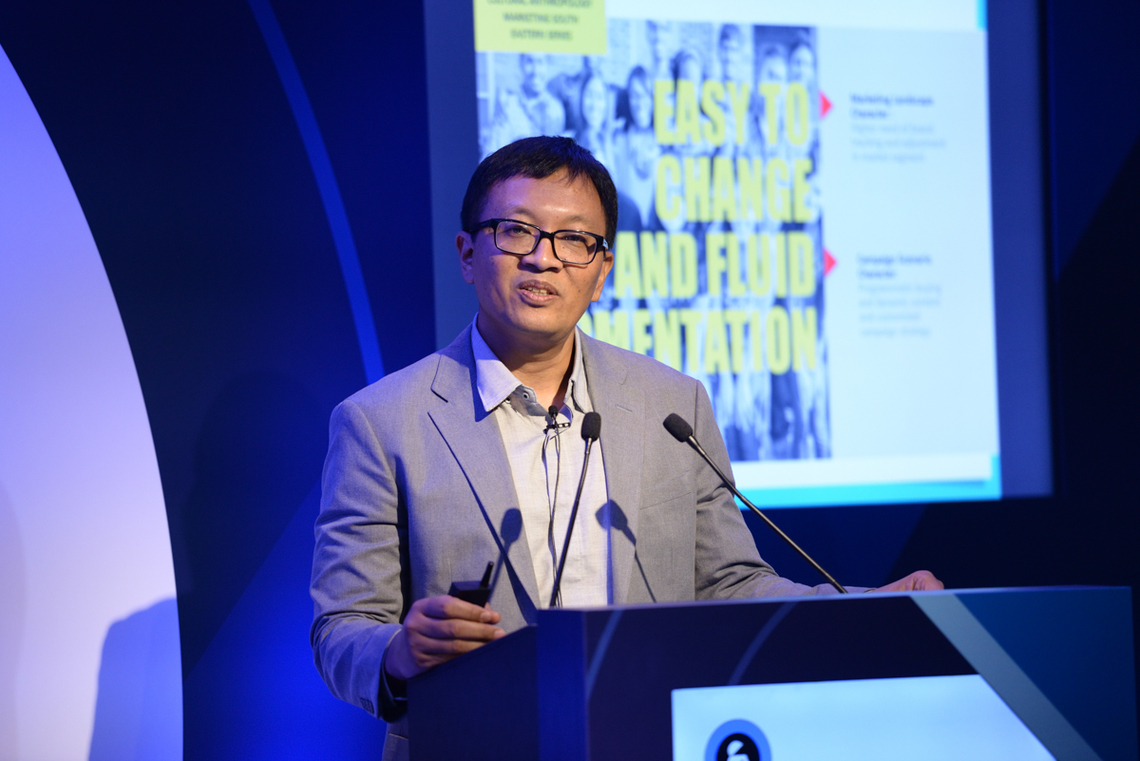
For example, the high number of "First-Time Buyers." Mr. Aliyanto stated that "a large market is expanding" in Asia, whether for automobiles or luxury brands. This is because, unlike Western countries, the target demographic purchasing these items for the first time in their lives is growing. To reach these people—who can be considered a new middle class with increasing incomes—the key is to focus on direct marketing that integrates content and includes education to help them recognize the product's value, along with activation.
Unstable conditions also present opportunities. "Thailand and Indonesia show political and economic uncertainty. However, many brands view this unstable context as an opportunity for growth, and some are achieving rapid expansion. Smaller, local brands, in particular, are responding more nimbly," says Alijant. Campaign scenarios require communication that is shorter-term and carefully attuned to the context of the moment.
Collectivism and SNS are closely intertwined, with significant family influence
Another characteristic is a strong tendency toward collectivism, where consensus with others is highly valued. Therefore, in marketing, it is crucial to understand market development based on local communities and ethnicity and to seek direct engagement. In such cases, involving local influencers, creating highly customized content, and community-rooted CRM are effective. "Under these tendencies, social media movements are vital for any brand," states Alijanto.
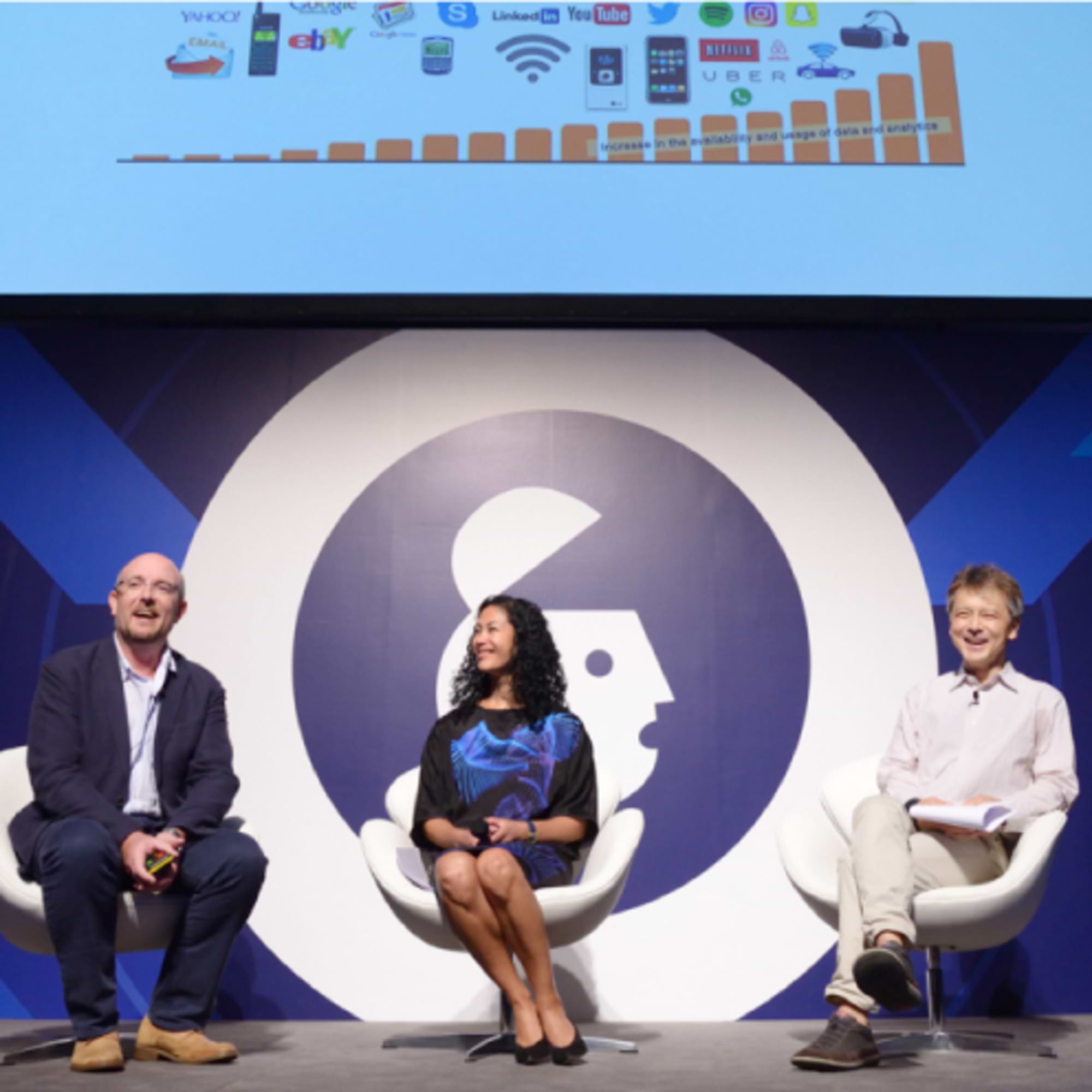
One major characteristic of Asia is that the digital wave is surging at a time when it is rapidly growing economically while embracing diverse cultures and traditions. Aliyant highlights the keyword "hybrid," explaining, "The reality is that both markets and audiences are a blend of multiple elements." While television remains highly influential, digital touchpoints are also expanding. Therefore, strategies combining both are essential.
Family connections are another crucial point to always consider. Unlike Japan, an advanced nation within Asia, family presence is very significant in many countries, and recommendations from family and friends strongly influence decision-making. Consequently, visuals depicting enjoyment in groups with family and friends are frequently used in campaigns.
Building on Watno's final point, Alijent also emphasized, "It's crucial to maintain a strong respect for the local while keeping a global perspective." He added, "Global trends and local matters can be embraced simultaneously. By developing a 'Fusion Brand' that blends local content with a global brand, we can potentially capture audience needs."
This presentation served as a preview of highlights to be shared at AdAsia in November. Anticipation is building for what insights will emerge from the AdAsia discussions and how they can be developed globally.
Was this article helpful?
Share this article


Newsletter registration is here
We select and publish important news every day
For inquiries about this article
Back Numbers

Author