Note: This website was automatically translated, so some terms or nuances may not be completely accurate.
What is the ideal form of content marketing? A conversation with key figures.
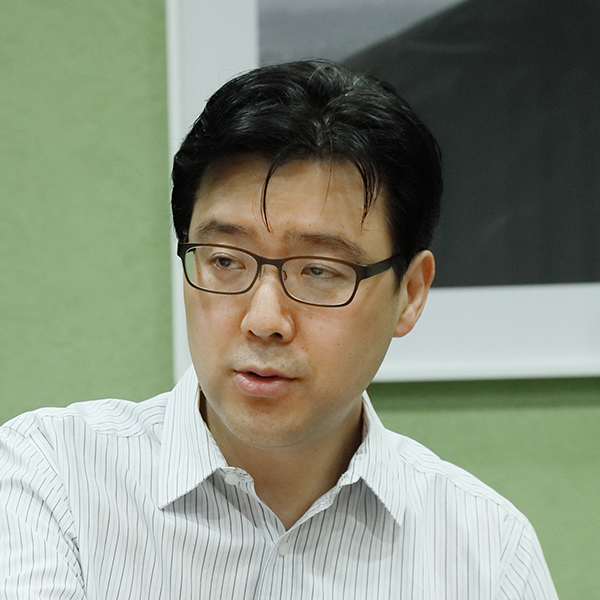
Charles Hough
NewsCred

Yaron Galai
Outbrain
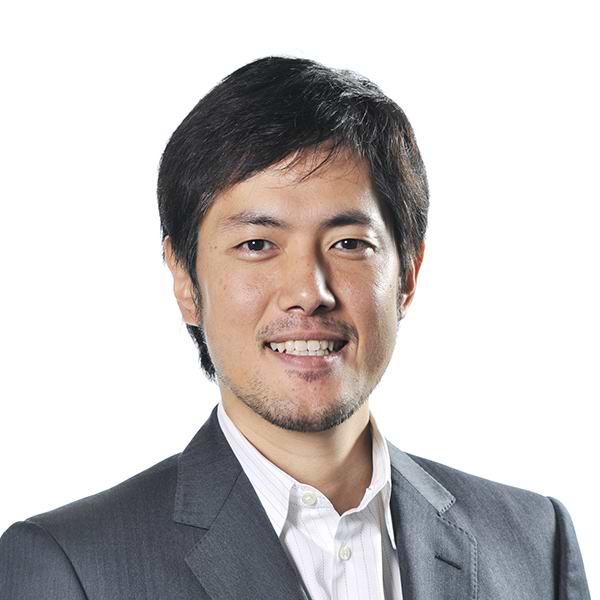
Hiroshi Shimose
Outbrain Japan Inc.

Keigo Aoki
Dentsu Group Inc.
As millennials take center stage as the market's key players, efforts toward content marketing are gaining serious momentum. Outbrain, a pioneer in this field, is increasing its presence in Japan as an indispensable platform for content distribution. However, the initial excitement has subsided somewhat, and voices from the field are now heard saying things like, "Consistently creating content is still incredibly difficult," and "While there's a sense of expectation for content marketing, we can't implement it unless the effects can be quantified."
Amidst this, Outbrain founder Yaron Galai visited Japan for the first time in three years. This time, he actively engaged with Japanese marketers alongside NewsCred, which provides content and support services. He also spoke at an event held on July 12th.
In this Dentsu Inc. News report, we present a dialogue between Outbrain's Yaron Galai and Charles Huff, Senior Vice President of NewsCred. Together with our readers, we explore the fundamental question: Is content marketing truly effective for targeting Millennials? The discussion also included Hiroshi Shimase of Outbrain Japan and Keigo Aoki of Dentsu Business Creation Center.

──We last spoke with Yaron in July 2014 (article: How to Deliver Content to Consumers? ). Three years have passed since then, and more Japanese brands and companies are now engaging in content marketing. At the same time, some have questions that arise precisely because they've started implementing it, or even doubts about whether content marketing is effective in the first place.
First, could you share your current perspective on the situation?
Yaron Galai (hereafter Yaron) : Looking at the challenges surrounding marketing today—like the widespread use of ad blockers and the fake news problem—I think the themes we focused on when we founded our company have become even more important.
Fundamentally, in communication, understanding "what consumers want" is crucial. When asked what consumers pay the most attention to, it's whether the content is interesting or relevant to them. Marketers need to recognize this reality.
Charles Huff (hereafter Charles) : I agree with Yaron.
And to add a bit, when advancing communication centered on content, the mindset toward effectiveness verification is changing. I believe a major factor is that, driven by technology, we can now concretely visualize content effectiveness and measure the ROI (Return on Investment) of activities.
As the rapid adoption of ad blockers clearly shows, consumers are actively resisting anything that disrupts their content experience. Given this context, content-driven marketing should go beyond merely acquiring fans; it should take a step further and be leveraged to tangibly improve business revenue. This movement to more effectively contribute to achieving core business objectives is accelerating.
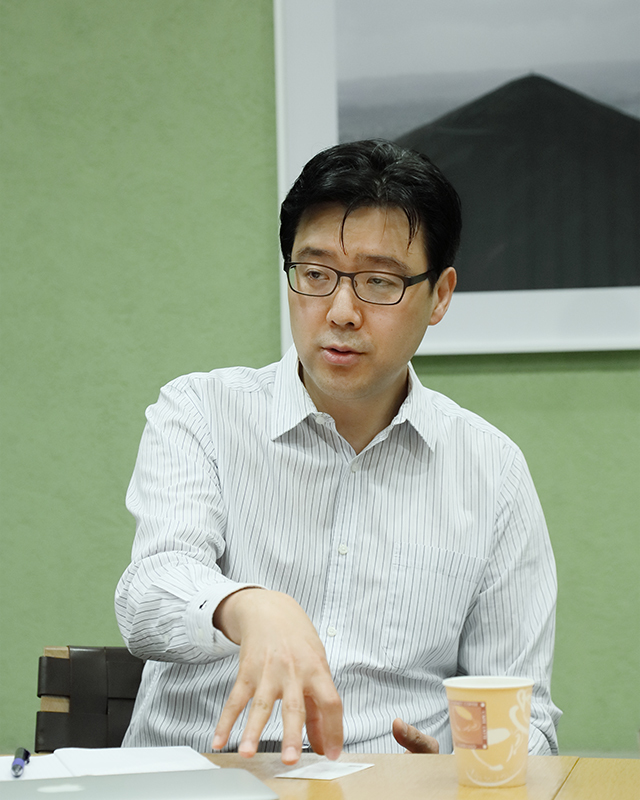
Keigo Aoki (hereafter Aoki) : Charles and his team advocate "scientific content marketing," believing that leveraging the best aspects of both content and science enables content marketing to contribute to business growth. Providing genuinely useful ideas for businesses through their solutions is a key part of their concept.
──That's an ambitious concept. But I think this theme is an interesting discussion for those who question content marketing.
Yaron: It's true that content marketing often targets the top of the funnel (based on the AIDMA/AISAS model), meaning it appeals to consumers' latent needs, which can make proving ROI challenging.
Currently, methods to fully visualize and evaluate how much content contributes to the business are still developing. However, I doubt any marketer would deny that content is effective for marketing. Therefore, proving the solid value of content provided to this top-of-funnel audience will become increasingly important going forward.
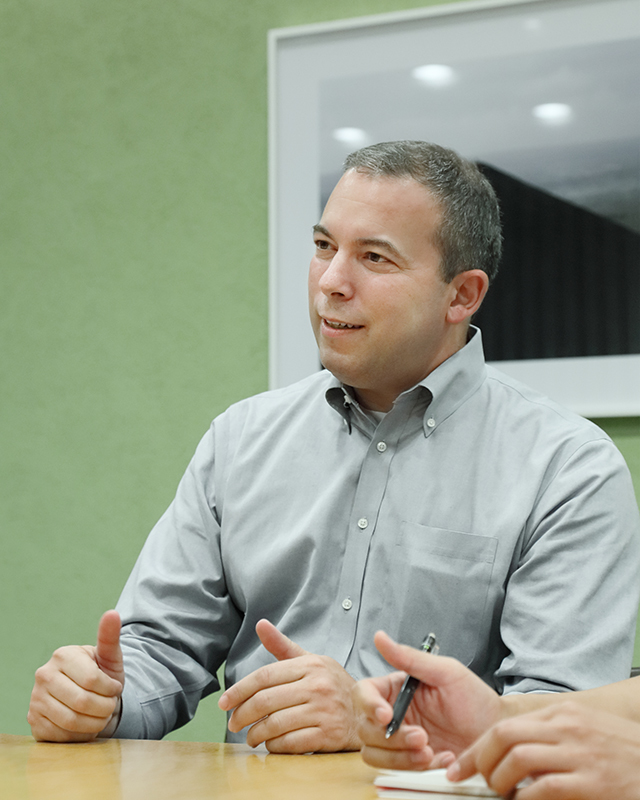
Charles: In the US, five years ago, online content marketing was just getting started. But over these past five years, brands have learned how to leverage content, and that experience has accumulated. I feel the focus has shifted from simply creating a lot of content to thinking about what kind of content to create and how to deliver it to achieve business results.
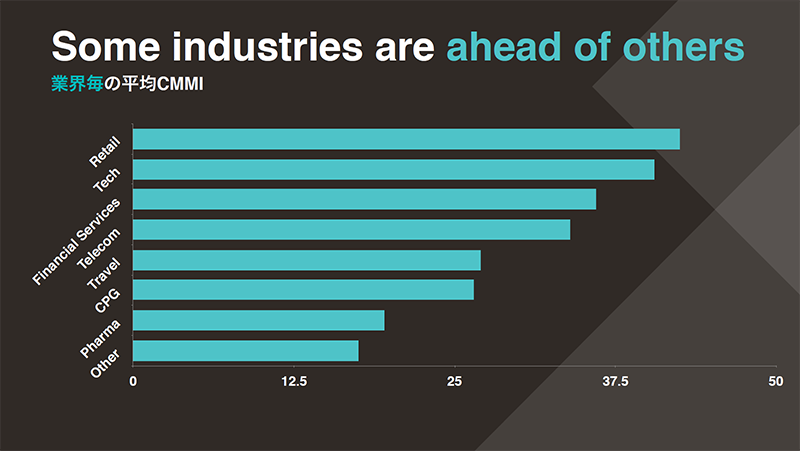
In response to this need, we offer a tool called "The Content Marketing Maturity Curve," which helps companies and brands understand their current state of content marketing (Figure 1). Additionally, separate from this tool, we provide a metric called the CMMI (The Content Marketing Maturity Index), which scores organizations on a scale from 1 to 100. This CMMI incorporates various parameters, allowing for self-assessment based on elements from past successful content marketing programs. The CMMI also has another application. Figure 2 shows the level of content marketing utilization calculated by industry. Here, offline retail is struggling, while online retail's content marketing programs have achieved a very high level, meaning high maturity.
Figure 1
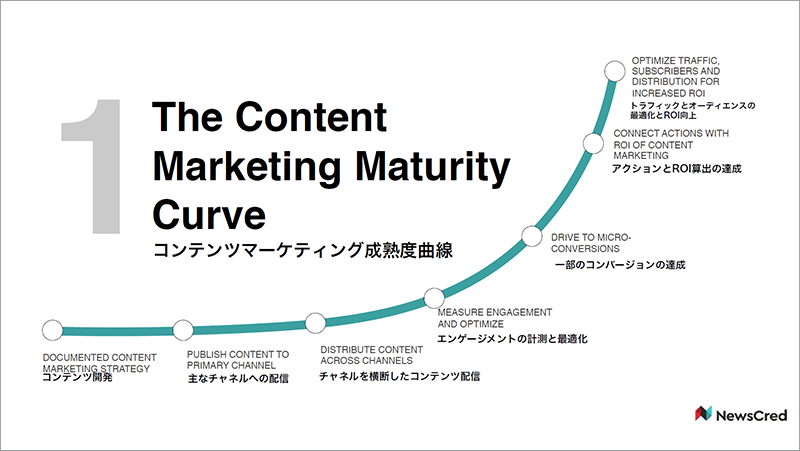
Figure 2
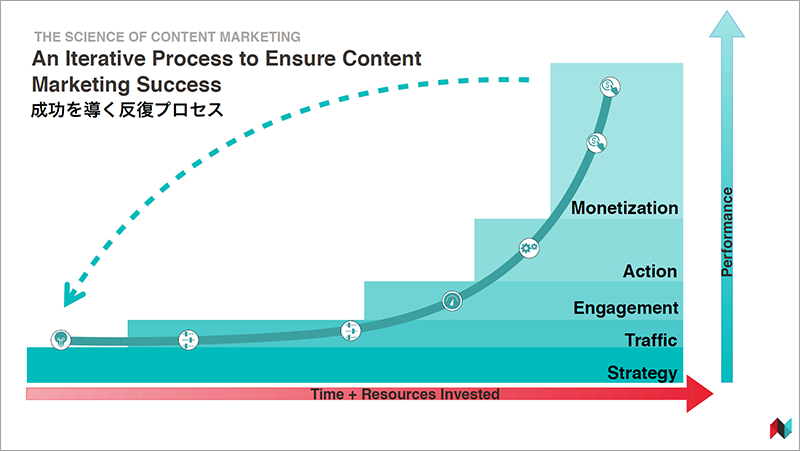
In addition to these two tools, we have developed a methodology to guide you to success. We want to emphasize this point: we believe content marketing must align with business strategy. Therefore, our methodology starts with strategy, then sequentially implements five phases—Traffic, Engagement, Action, Monetization—and iteratively optimizes them to drive success. This is the Value Framework (Figure 3).
Figure 3
Aoki: Charles and his team propose that content marketing should not be treated merely as a communication tactic; it should be strategically considered for how it contributes to the entire business. To achieve this, one must first accurately assess the current situation, then design the overall strategy, and clearly define the objectives. Only then can the ROI of content marketing be visualized. This approach should help align the expectations marketers hold with the actual outcomes.
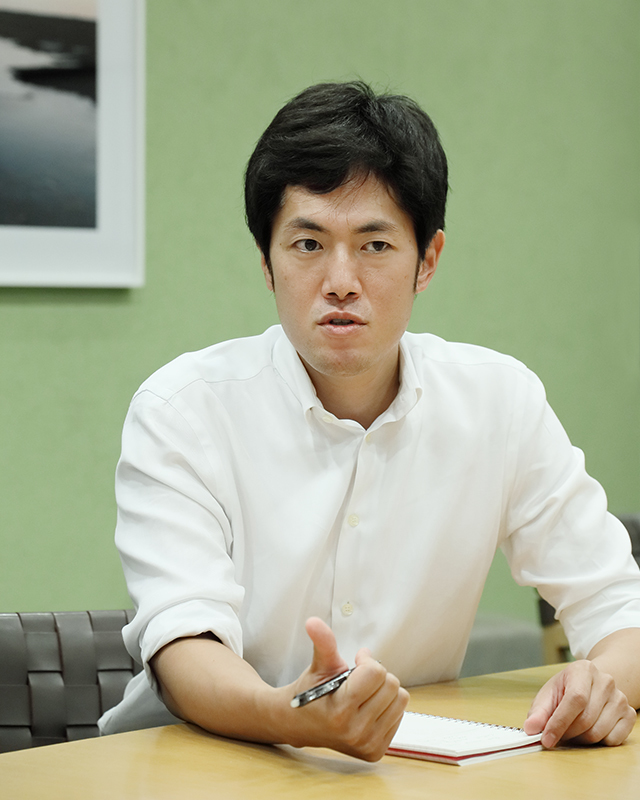
Hiroshi Shimose (hereafter Shimose) : In my actual interactions with Japanese clients, I've encountered cases where measurement (methods for assessing effectiveness) was inappropriate or where they lost sight of what should be measured.
Recently, I received a consultation about a blog where most traffic came from email newsletters. The visitor count was stable, but the bounce rate was extremely high, causing concern. In this case, assuming "high bounce rate = bad" would lead to seeking improvement measures. However, in reality, most readers were regular customers who had already read nearly all articles via the newsletter. They would leave after reading new content. Therefore, a high bounce rate isn't necessarily bad. Instead, the focus should be on expanding content and implementing strategies to attract and retain new unique users. Digital marketing involves various metrics, but each has its context. Judging things based solely on metrics, without considering that context, rarely leads to good results.
In today's rapidly changing landscape, marked by technological innovations and the rise of Millennials, traditional digital marketing playbooks no longer apply. In fact, sticking to the playbook often leads to failure. Therefore, failure is to be expected, and ROI must be considered holistically, including what we learn from those failures. That said, failures can naturally be mitigated through the accumulation of concrete experience, and companies that establish this capability will gain the initiative. The value proposition for us on the solutions side and agencies lies in how well we can support clients. Even if initial goals aren't met, we can collaborate with marketers to assess where they are on the learning curve.
──News Credo's collaboration with the Amana Group to expand operations in Japan (details here ), coupled with the growing adoption of Outbrain, will accelerate content marketing. That's something to look forward to.
But even midway through the learning curve, marketers likely have candid questions—like what contributions their initiatives will make, or the mindset needed for successful content marketing case studies. What are your thoughts?
Yaron: To reiterate, grasping the fundamental shift in how information is consumed is crucial. Millennials not only have changed consumption tendencies but also react entirely differently to advertising. This forces us to fundamentally rethink how we communicate.
Charles: From my perspective, I'd highlight three "O's": Organization, Operations, and Optimization. Organization means clearly understanding what services your organization provides and what message you want to convey. Then, based on understanding what consumers want, figure out what to do. At this stage, you must avoid being self-serving. Even if you clearly know what to do, without the operations to execute it, you can't actually deliver. Therefore, you should thoroughly consider how to execute. The third, Optimization, is unavoidable in this era of performance marketing where KPIs and ROI are emphasized. With that as a given, visualize each individual result. And persistently continue these visualization efforts.
Aoki: To add further, I believe it's crucial to confront the question of what actions are necessary to achieve your company's "objectives" using excellent "tools" like Outbrain or NewsCred. In doing so, we agencies can leverage insights into consumer behavior and industry trends. We can also provide comprehensive consultation, adapting their overseas initiatives to the Japanese context.
Overseas, leading examples show content marketing contributing to business growth. In Japan, it's often perceived merely as one marketing tactic, with its true potential to drive business growth not fully understood. True content marketing contributes to concrete business growth. We need to work together to focus on this aspect. I believe future agencies must be driven by the question: how can we tangibly contribute to our clients' business growth?
──"True content marketing can contribute to business growth" is quite an ambitious statement. Advocating this means agencies must also change their mindset. I look forward to seeing how this develops. Thank you.
Related Article:
The Potential of Content Marketing to Enrich Brand Narratives[2017.09.11]
Was this article helpful?
Share this article


Newsletter registration is here
We select and publish important news every day
For inquiries about this article
Author
Charles Hough
NewsCred
President & COO
Yaron Galai
Outbrain
Co-Founder & CEO
Hiroshi Shimose
Outbrain Japan Inc.
President
Keigo Aoki
Dentsu Group Inc.
Dentsu Inc. Innovation Initiative
Executive Director