Note: This website was automatically translated, so some terms or nuances may not be completely accurate.
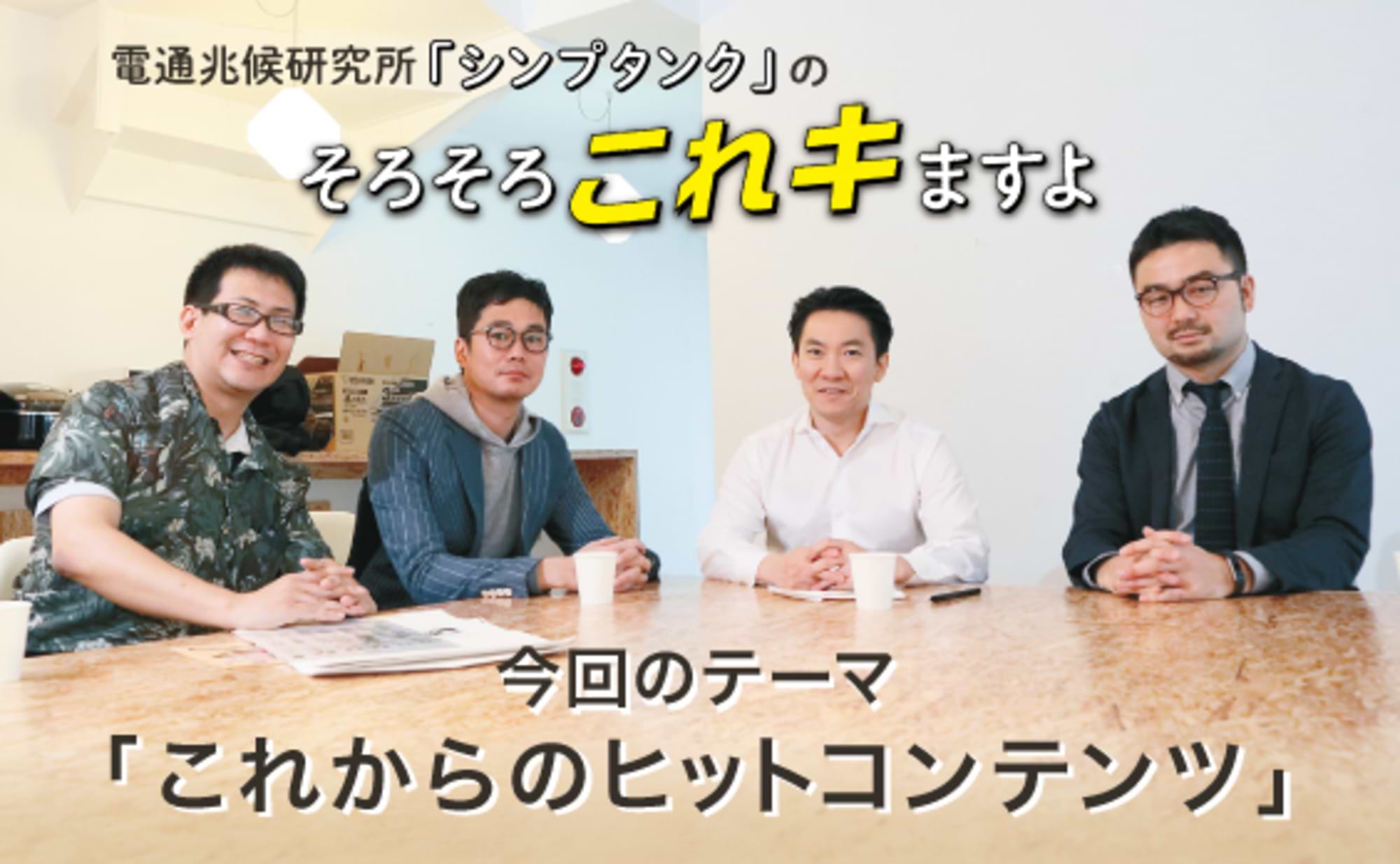
 Dentsu Inc. Megatrend Research Institute "Simptank" is about to hit the big time. [4/4]
【Prophecy】 Outrageous works are born from "Shared Delusions (House)".

This segment features employees of Dentsu Inc. as "mysterious paper researchers" exploring various societal symptoms (SYMPTOM).


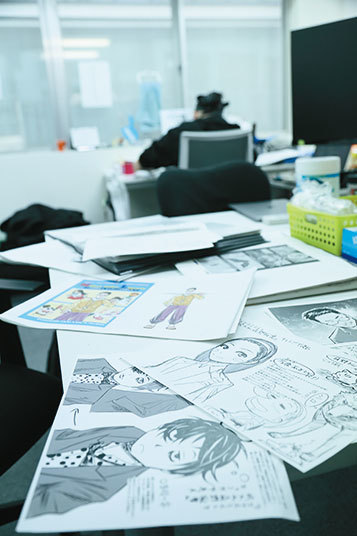
Bunkyosha, an up-and-coming publisher championing "practical entertainment." In its seven years since founding, it has sold 2.8 million copies of the 'Unko Kanji Drill' series and 1.9 million copies of the 'Life Will Work Out Somehow!' series. While this success is more than sufficient, they apparently remain unsatisfied. To become a hit-maker like Pixar, producing revolutionary works one after another, their current project is the "21st Century Tokiwa-so(※)". President Shuji Yamamoto has provided a building in a central Tokyo location, fully supporting aspiring writers whose works are featured on "Tamerand," a platform gathering "entertainment with substance." Bunkyosha aims for the next big hit from this very room. What is their secret strategy for fostering innovation?
※Tokiwa-so: A legendary apartment in the 1950s where Osamu Tezuka and other future giants of Japanese manga lived together.


Kobayashi: Tameland launched late last year. Do you still consider "self-improvement entertainment" your company's domain?
Mizuno: That's been our focus all along. The practical entertainment we pursue is structurally "advertising." We incorporate entertainment and humor to encourage desirable actions, subtly embedding messages about behavior within that framework.
Kobayashi: We're now in an era where hits driven by "entertainment that encourages better behavior" are prominent. Starting with the TV drama based on your book (TBS's "I'm Not the Type Who Can't Get Married, I Just Choose Not To"), and including the currently bestselling manga 'How Will You Live?', it feels like Bunkyosha's philosophy is propelling the content industry.
Mizuno: That's a welcome development. Practical entertainment is still a genre with a lower status compared to pure entertainment. But revolution doesn't happen unless it's a "genre that gets looked down on."
Kobayashi: "Unko Kanji Drill Inc." also achieved huge success by stepping into the "poop" territory that no one had seriously ventured into before. Where do you find these young writers gathered here today, who could be called the "post-poop" generation?
Kitagishi: Through connections at art and design schools, or by going to Comiket. Then we all interview them, including Yamamoto.
Kobayashi: President Yamamoto, being a former trader at a foreign financial institution, excels at quantifying the intangible nature of creativity, right?
Mizuno:Yamamoto-san has a godlike eye for spotting talent and predicting how many copies it will sell. We call it the "Devil's Eye," inspired by the "Death God's Eye" in Death Note that reveals a person's lifespan at a glance (laughs).
Yamamoto: No, no, it's not that I can actually see it, but what people I think "This person is great" have in common is that they're completely dedicated to what they've decided to do.
Kobayashi: "The Devil's Eye." It's an eye that coldly discerns investment and return, yet also warmly watches over unwavering talent.
Mizuno: Exactly. Imagine we're chatting and get excited about an idea like, "Practical entertainment could change ethics and morals—couldn't that transform compulsory education itself? That's a massive market, right?" Then Yamamoto responds with, "Whoa, that's huge! " That's huge.
Kobayashi: We kept the momentum going through sheer conviction and delivered results.
Mizuno: What if that conviction had been wrong? What if Starbucks founder Howard Schultz had stayed in that backstreet coffee shop? Even then, he'd have kept going, driven by the desire to "bring this amazing coffee to people on the street." We also have a kind of intuition that says, "This is necessary for society."
Kobayashi: In the world of product creation, where there are no clear answers, Mizuno-san's godlike storytelling ability has driven the talents around him, starting with President Yamamoto. This "Tamerand Building" also feels like writers living and working together, passionately exchanging their wild ideas and pushing each other to grow.
Mizuno: Exactly. To use the Starbucks analogy, there's that history where the vice president somehow persuaded the reluctant Mr. Schultz: "I get that coffee is amazing, but let's try a popular café latte too! I know black coffee is delicious, but just one cup!" And that led to Starbucks' huge success. Everything starts with conviction, but at the same time, I believe the "friction" between our convictions and customer needs is crucial.
Kobayashi: So you're saying young creators are doing that now?
Mizuno: That's the ideal. Like how Pixar shared the work-in-progress of the movie 'Big Hero 6' with directors of other projects within the company.
Kobayashi: That friction across creative boundaries refines wild ideas into highly objective works.
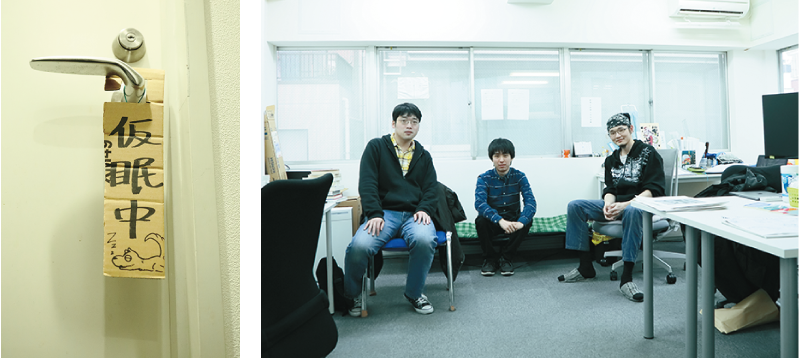
Kitagishi: We're truly gathered here because we genuinely believe that practical entertainment, when pursued to its limits, can become top-tier entertainment. We give each other honest feedback on our work. That's the difference from the original Tokiwa-so, where artists didn't interfere with each other's work. It's a new approach. Thanks to that, the atmosphere is great.
Yamamoto: My job as president is to provide a space where we can fuel each other's imagination. I can't guarantee success, but I believe I can create an environment that increases the probability of hitting it big. Rather than churning out mid-level hits, I find it exciting—and meaningful for society—to fully support budding creators. Even if it takes time and they temporarily fade from the public eye, the potential for an "absolutely incredible breakthrough" is what drives me.
[Hypothesis]
What's needed to create something new is comrades who fuel each other's wild ideas.
They fuel each other's unrealized fantasies while objectively refining them. The publisher that made the "Poop Kanji Drill Inc." a 2.8 million-copy hit is now building its next hit—a somewhat unassuming scene. Yet, those incredible zero-to-one hits are likely cultivated in a stoic environment, where a small group of comrades immerse themselves together, far from any glamour. Will Bunkyosha succeed again because they've delivered spectacular results before? Even they don't know. They bet on it simply because they believe it's what they must do. More than the first penguin voicing the fantasy, the comrades who encourage each other's wild ideas are indispensable to innovation.


Was this article helpful?
Share this article


Newsletter registration is here
We select and publish important news every day
For inquiries about this article
Back Numbers

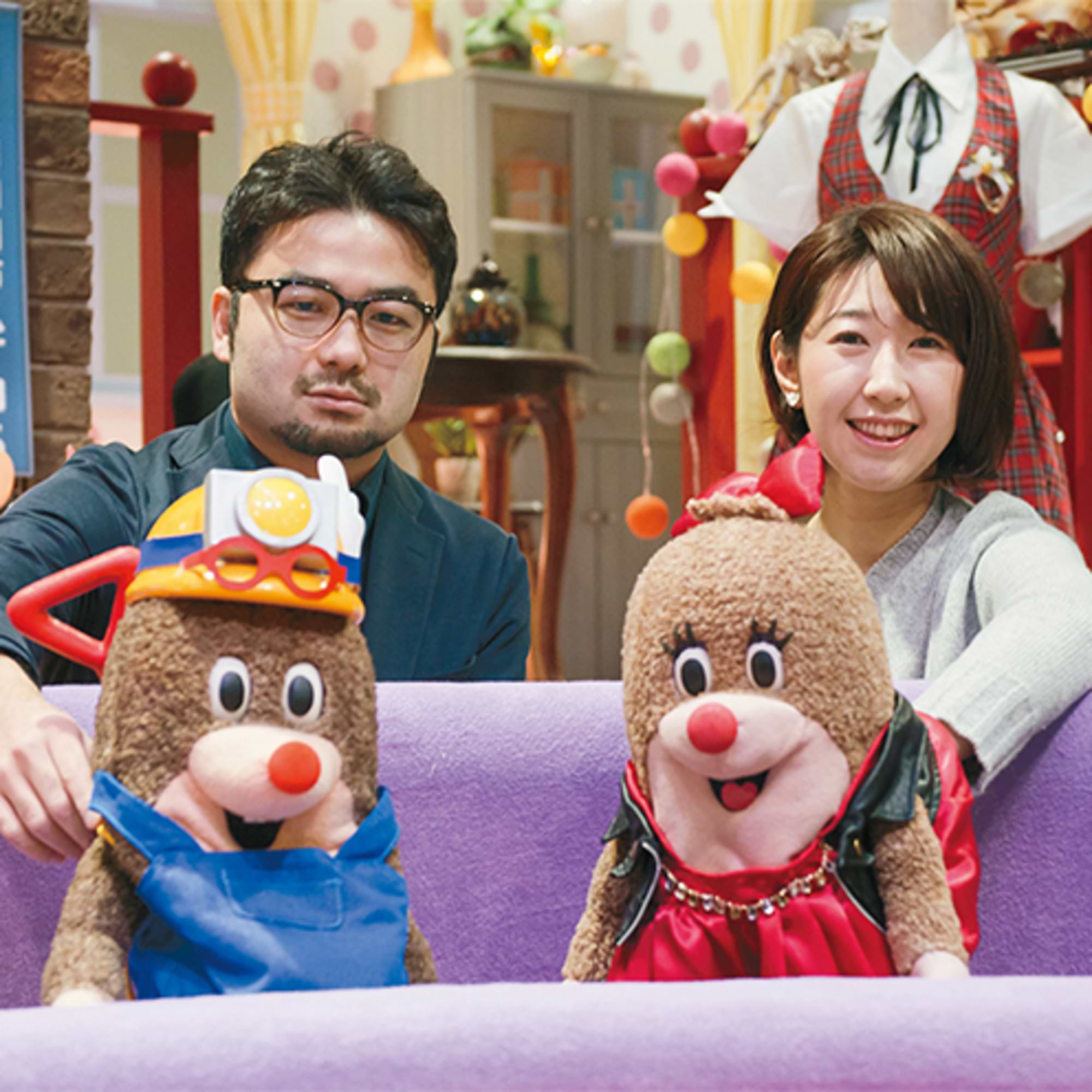
Author

Yamamoto Shuji
Bunkyosha
President and CEO
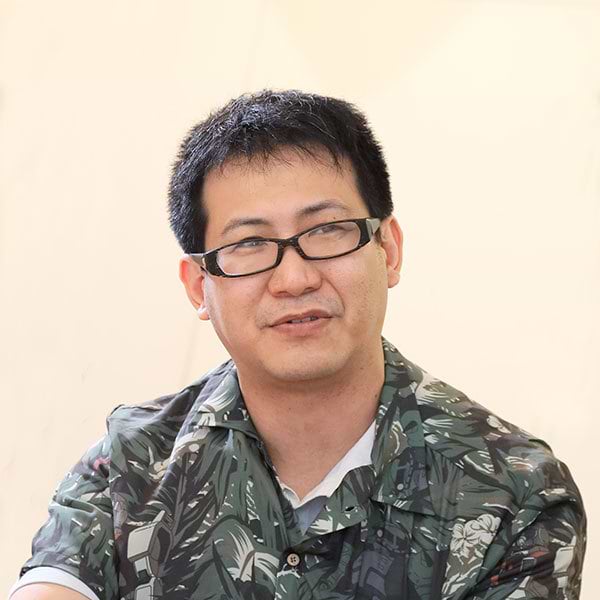
Yoshihiro Kitagishi
Bunkyosha
Tamerland Manga Editor-in-Chief

Mizuno Keiya
writer
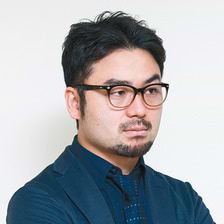
Masahiro Kobayashi
Dentsu Inc.
Business Development & Activation Division / Business Production Division
Principal Researcher / Senior Consulting Manager