Note: This website was automatically translated, so some terms or nuances may not be completely accurate.
 1+1=∞ Collaborative Marketing [5/6]
How News is Made
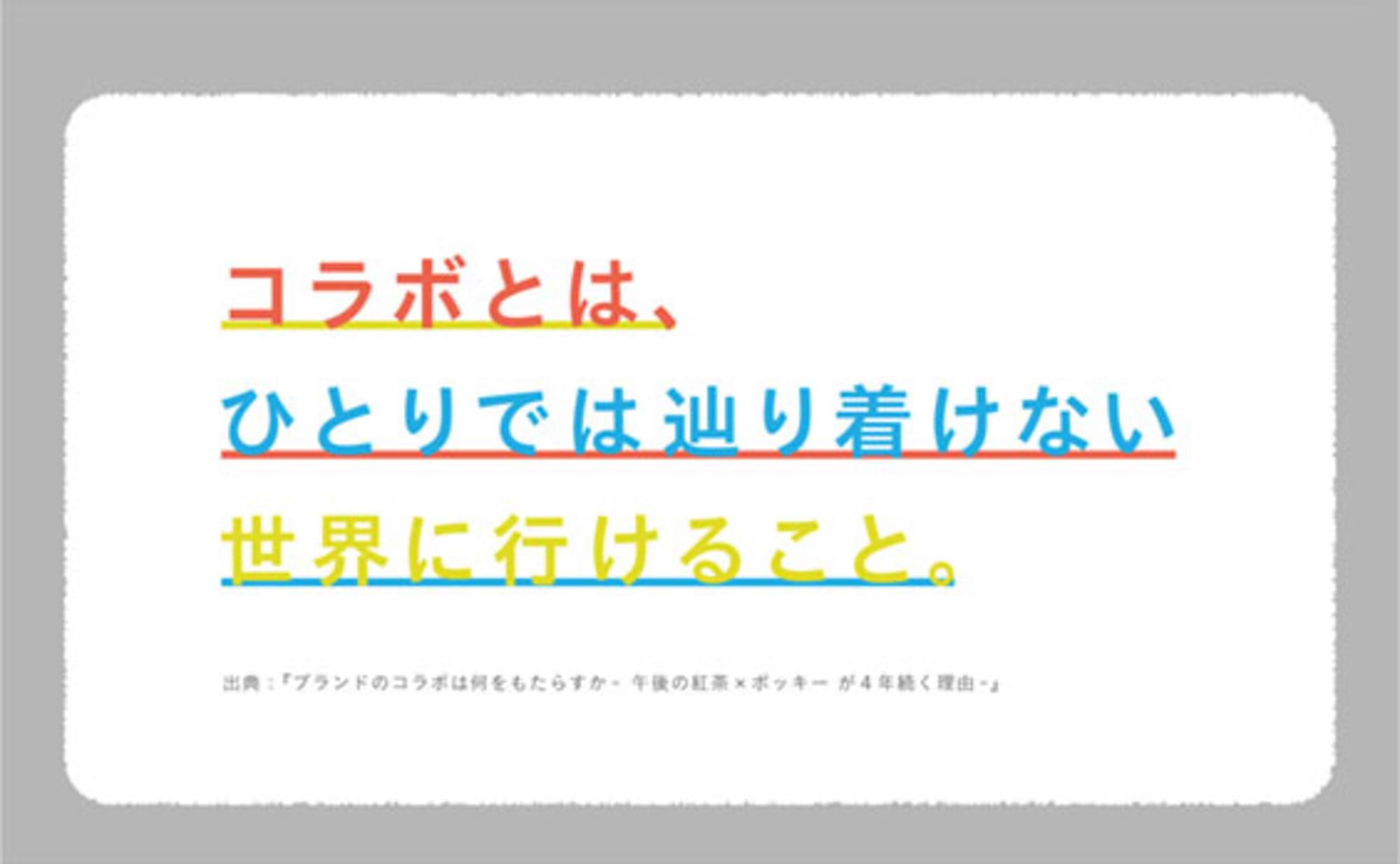
Even a collaboration achieved with great effort can yield vastly different levels of satisfaction for those involved, depending on whether it becomes news that spreads widely.
However, creating news is far from simple, involving countless unpredictable factors. Something as minor as a random comment from someone somewhere can suddenly boost it at incredible speed, or conversely, it can get completely overshadowed by a sudden major news story and gain no visibility at all – leading to completely opposite outcomes.
Rather than relying solely on luck, I hope to share some hints that might offer a little assistance in creating news.
The Synergy of "Benefits" and "Risks"
Collaborations are often positioned separately from core brand communications. Reasons include their lower priority as brand activities and the potential to be influenced (for better or worse) by the partner.
Consequently, release timing is often pushed aside from the main "prime time" and placed during quiet periods or news-less times. When development requires resources, it can also be influenced by the status of other projects.
However, it's important to note that when discussing news creation, the "timing" should not necessarily be determined by elimination. There are various timing points: the start date for teaser ads※1, the press release date, the launch date, and so on.
While the "release date" is often considered most crucial, the "information embargo lift date"—the moment of unveiling—is also highly significant. Days like Fridays or holidays, when many are busy and not checking their phones, or when there are no information programs the next day, are generally considered less ideal for releases. Even a single-day shift can create a difference in subsequent reach.
Beyond just the day of the week, another key consideration is whether to align with major calendar events. Riding the wave of existing events or holidays makes it easier to give your news release context and meaning.
For the collaboration between Afternoon Tea and Pocky, the product timing was deliberately set for the Valentine's Day & White Day season, when the "couple" concept stands out (though other reasons exist).
However, there's a caveat when aligning with such seasonal events: you must be mindful of the risk of being buried among countless other news items. The larger the event, the more pinpoint news stories targeting it (or even requiring that specific day) are created.
Yet the amount of space allocated for news topics across mass media, web, and SNS remains constant. To avoid burying your hard-earned exposure potential, you might need to consider slightly shifting the timing away from the exact day.
Changing perspective, you could also view it as riding the wave of a major event's popularity.
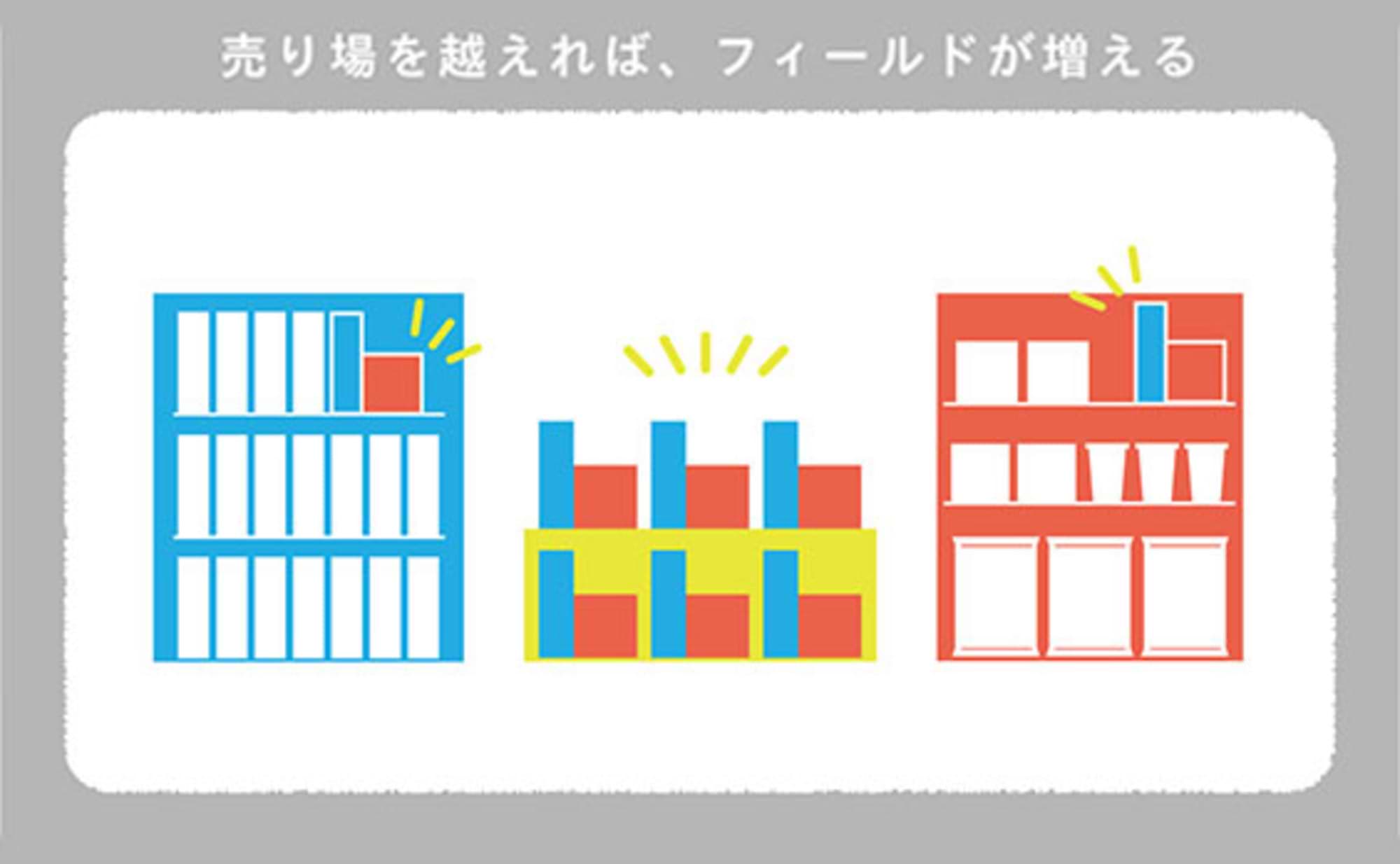
If the collaboration involves retail products, opportunities for exposure increase, such as having them displayed in clusters in prominent locations like end caps. Of course, there's a possibility they'll just be one among many products and won't get the spotlight on their own.
On the flip side, during non-event periods, even launching a single new product carries the risk of failing to secure end-cap placement, resulting in it fading away without generating buzz.
Leveraging collaborations requires both the planning power to secure end caps and create events solely with your own brand, and the persistence to steadily build momentum that turns the world into an event. Furthermore, since collaboration projects themselves have a very high potential to become topics of conversation, if you're also running advertising campaigns, the secret to sustaining buzz is to prepare hooks across multiple stages: "product release," "teaser ads," "product launch," and "post-launch ads."
When doing this, it's wise to anticipate multiple potential targets, locations, and pathways that could generate buzz, and design them in phases with staggered timing.
There are also methods for timing selection from a brand perspective.
For example, Pocky has "Pocky & Pretz Day" (November 11th: inspired by the way the sticks line up), and Afternoon Tea has "Afternoon Tea Day" (May 5th: a play on "Gogo" and 55). Creating news tied to the brand's anniversary is another way to increase exposure.
※1 An advertising technique that deliberately withholds some elements to capture customer attention.
※2 The area on both sides of the shelf, a prime spot for making products stand out.
News Penetration
To reiterate, we must not forget that collaboration news is inherently complex.
Surprise, in other words, is a situation where something unusual is happening. First, how do you get people to understand that? Then, what part do you want them to find interesting? Initially, you should release the news to the world as simply and clearly as possible.
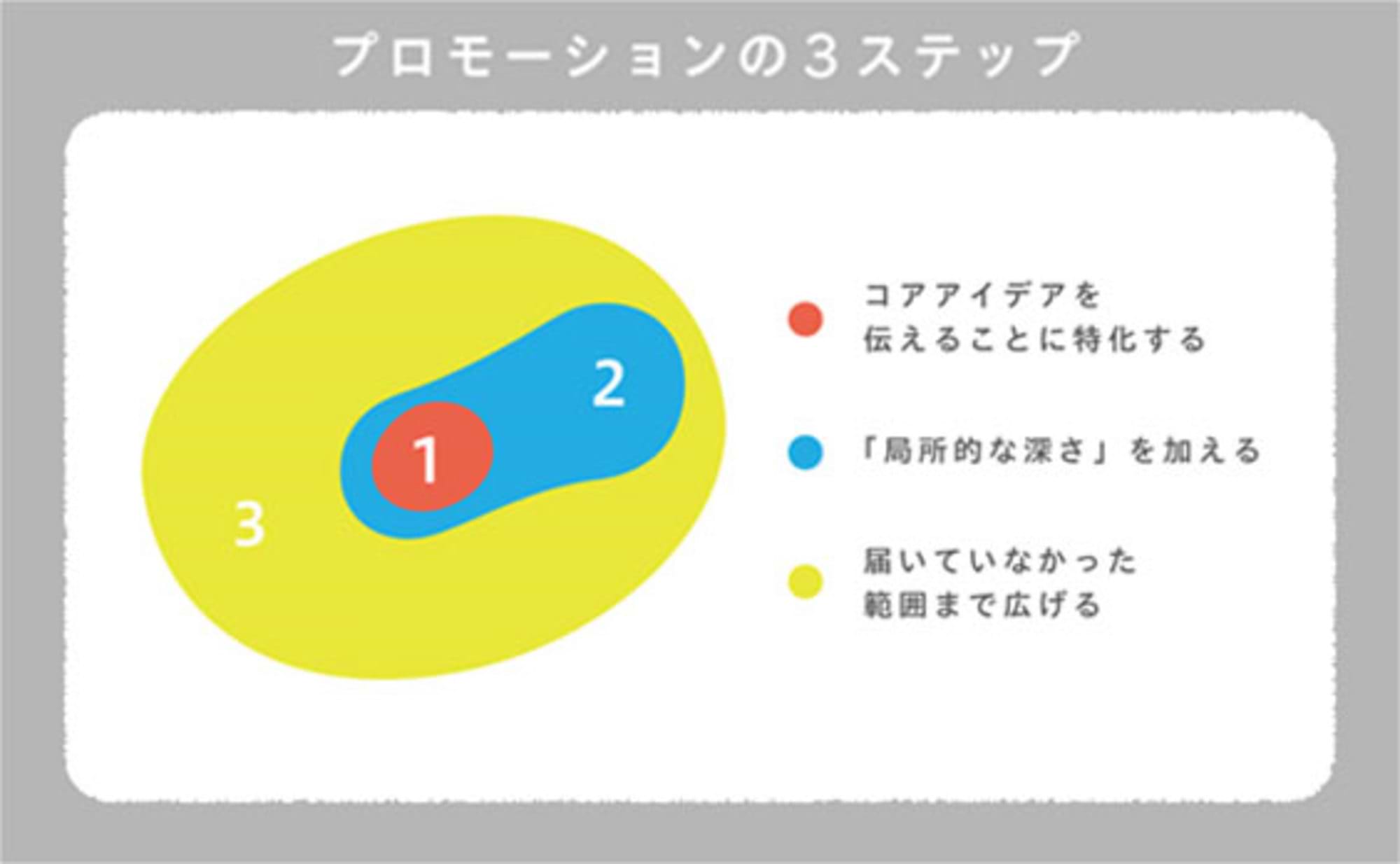
This understanding is also a prerequisite when planning promotions. Based on this, we recommend building a three-step phase structure based on the level of penetration into the market.
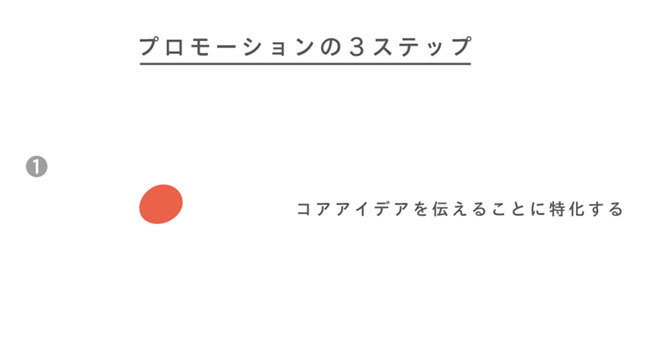
Phase 1 should focus solely on "communicating the core idea." Narrow the scope of information as much as possible to make it stronger.
Keep it minimal, like "●● and △△ have collaborated" or "□□ has been created by ●● and △△!" It takes courage to compete solely on that core idea, without adding anything extra.
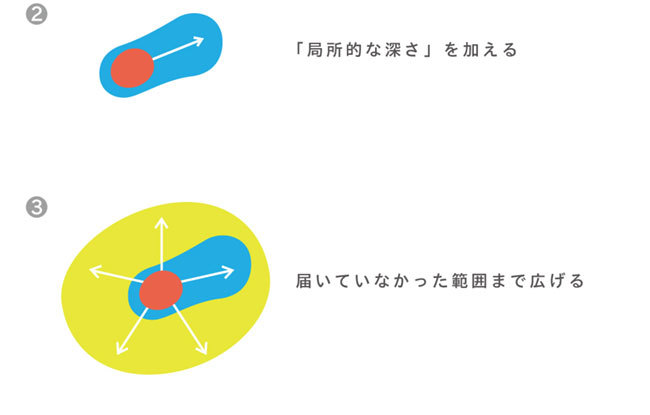
Phase 2 retains the content from Phase 1 while adding "localized depth." Expanding it indiscriminately is still unnecessary.
For example, prepare content that resonates specifically with the core fans of one partner in the collaboration. Find a narrow niche where you can guarantee a hit and target it precisely.
Phase 3 is when you finally reach the stage of widely disseminating information. You expand the reach to places where the news hadn't previously penetrated.
Beyond that, various approaches become possible. Repeating Phase 3 allows the concept to permeate society as a whole. Adjusting the focus of Phase 2 can aim for explosive impact. This enables promotions tailored to specific objectives.
Next time, in the final installment, we'll provide a comprehensive summary. We'll explore collaborations that can serve as new entry points for brands and, of course, the potential to make the world a little more interesting.
(To be continued)
Was this article helpful?
Share this article


Newsletter registration is here
We select and publish important news every day
For inquiries about this article
Author

Sakamoto Yako
Dentsu Inc.
Business Production Bureau (on secondment to CACDO)
Copywriter/Interactive Art Director