Note: This website was automatically translated, so some terms or nuances may not be completely accurate.
 1+1=∞ Collaborative Marketing [3/6]
Find a Partner
When it comes to collaborations, who should you partner with? While starting with something like mutual admiration or a pun is perfectly fine, this time we'll be looking at choosing collaboration partners purely "calculatedly" (laugh).
How to Choose the Best Partner
In collaborations, who you partner with is obviously crucial. This essentially means assessing the brand resources you can mutually benefit from – what you can get (or give) from the other party.
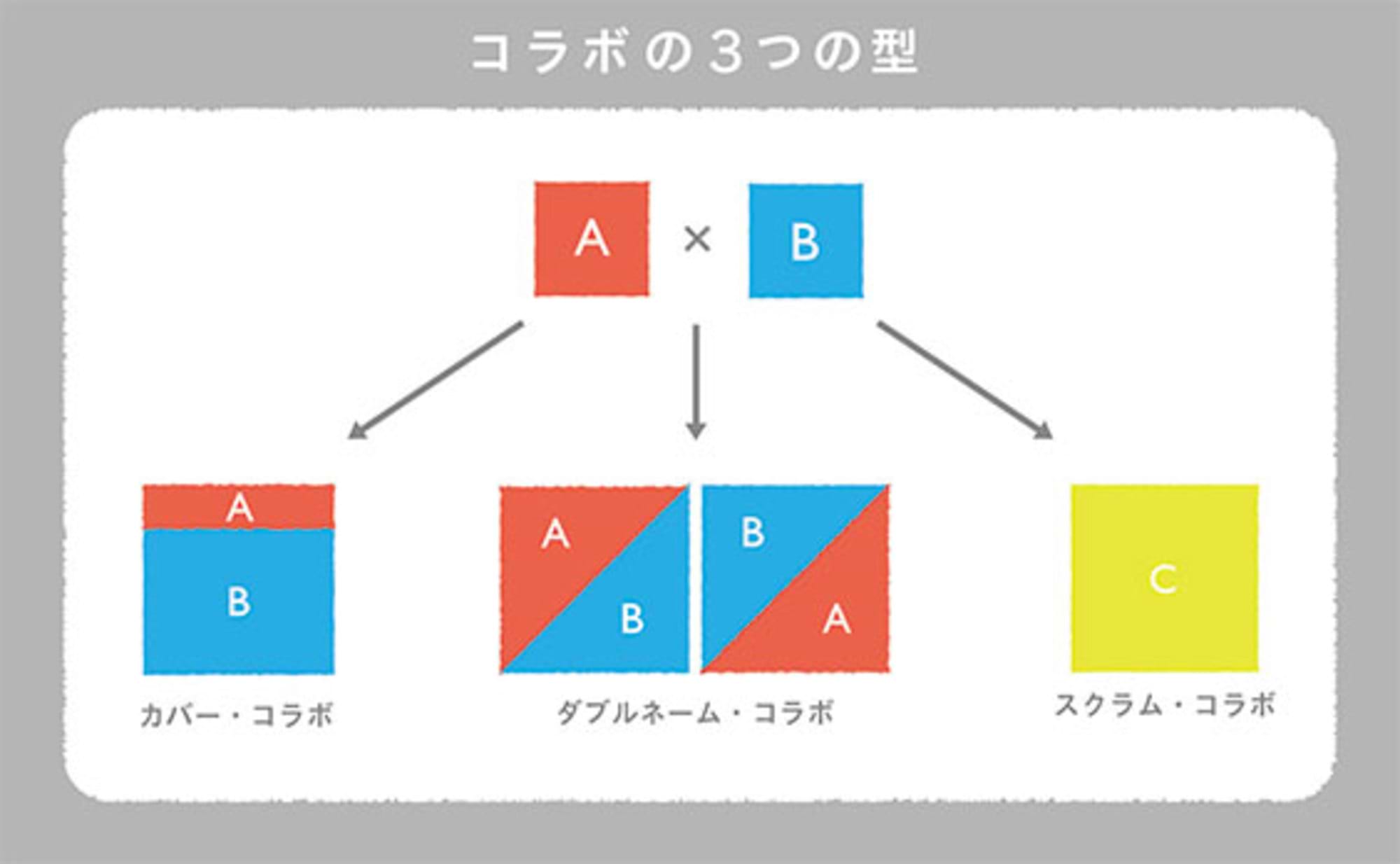
As discussed in the first installment, collaborations can take many forms. The first type that often comes to mind is matching "like with like" – partners in similar situations or occupying the same position within a close category.
In this case, the mutual benefits and risks are roughly equal, making the collaboration much more feasible. For a collaboration to succeed, the absolute value gained must be perceived as equivalent by both parties. Only when both sides feel it's a win-win according to their own standards will the project move forward. In this sense, collaborations between similar partners are also easier for decision-makers to justify and are expected to produce outputs that are more readily accepted by the public.
The greater the distance, the better
However, "similar partners" aren't always the best choice. If the goal is simply to generate buzz through the collaboration, choosing a partner that's far removed from your own brand and offers an element of surprise is often the quicker route.
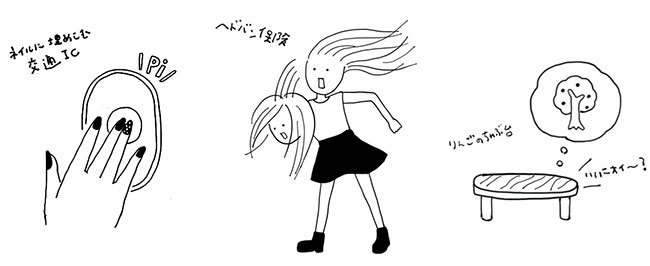
For example,
・Railway company and nail salon
・Health insurance and a rock band
・Fruit farms and furniture makers
Even combinations that seem to have nothing in common at first glance can be seen as a fusion of brands rich in qualities your own brand lacks, if you shift your perspective slightly.
Leveraging that distance creates ample novelty, naturally sparking ideas. Responding to the earlier examples, one can imagine things like transportation IC cards embedded in nails, headbanging insurance, or low tables made from old fruit trees—things that don't exist yet but could well be developed someday.
Distance isn't solely created by partnering across different industries or business models. Differences in history or region also offer significant advantages. For instance, a traditional yet increasingly outdated brand could partner with a trendy, casual brand to inject freshness. Conversely, the latter could gain a sense of assurance and trustworthiness.
Moreover, among the shared resources lies an irreplaceable ally: the "fans." Of course, if an unexpectedly bizarre collaboration disappoints existing fans, it defeats the purpose. However, it presents a major opportunity to attract the high-quality fans the partner brand has carefully cultivated to your own brand.
Matching from a distance is challenging, yet overall, the returns are substantial.
Expanding Your "Field" of Competition
Regarding sales channels, I'd like to propose the conclusion that the farther apart partners are, the better. The reason is that it allows you to more than double the number of fields where you can compete.
Products and brands are placed in specific fields based on the buyer's perspective. Cucumbers go in supermarkets or greengrocers; high-end apparel belongs in department stores. Within these, products have specific "permanent spots" we naturally picture: "that area" on the shelf at our usual supermarket, or the back of a certain floor in that Ginza department store.
While recognizing these fixed spots, we also have an awareness of "free zones" not dedicated to any specific product. Think periodically changing event spaces or seasonal special sales areas. Even if we don't know what will be placed there, there are places we naturally visit with a sense of anticipation, aren't there?
Of course, we don't go there looking for our usual cucumbers. We wouldn't call a clerk just because the Christmas decorations that were there last month are gone in January. We subconsciously separate the fixed locations from the free zones.
Collaborations allow us to expand these fixed spots. While keeping existing permanent displays intact, we can create a new base in the partner's section. Squeezing products from a different category into a predetermined display area isn't easy. Yet, the sense of incongruity from seeing something unusual there becomes a greater surprise the further that category is from the usual offerings.
And leveraging that buzz significantly increases the potential to expand into the free-standing display areas. These prime locations, coveted by all products regardless of category, allow unrestricted display, leading to the most impactful presentation possible.
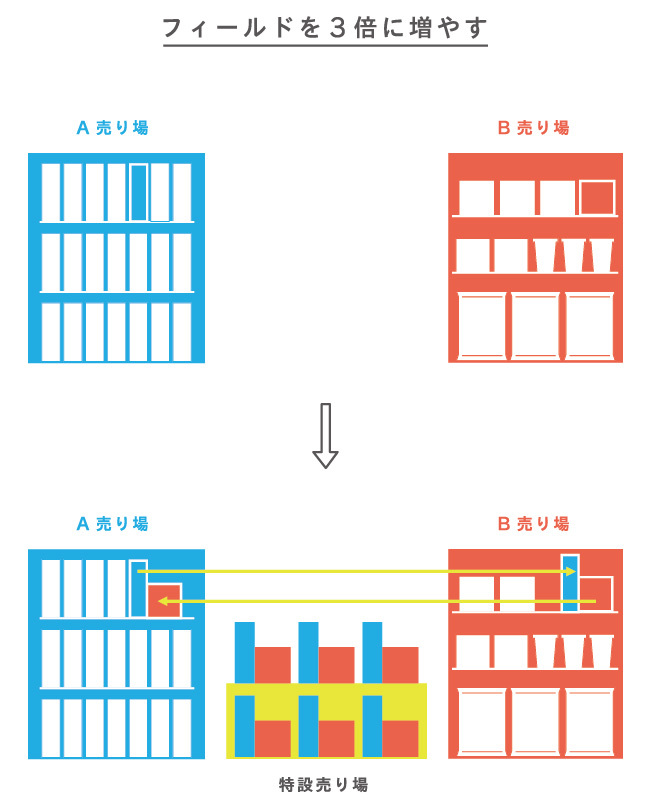
Expanding your fields—beyond your existing store, partner stores, and special displays—boosts not only direct sales but also your overall presence in the market. Thinking this way, working backward from the field you want to enter to find the right partner could be one effective strategy.
We've discussed partner selection so far, but have any partners you're itching to collaborate with come to mind? It's also interesting to imagine your collaboration announcement making the top of Yahoo! News or landing in a press release headline.
Next time, we'll discuss creative planning for collaborations.
(To be continued)
Was this article helpful?
Share this article


Newsletter registration is here
We select and publish important news every day
For inquiries about this article
Author

Sakamoto Yako
Dentsu Inc.
Business Production Bureau (on secondment to CACDO)
Copywriter/Interactive Art Director