Note: This website was automatically translated, so some terms or nuances may not be completely accurate.
 1+1=∞ Collaborative Marketing [1/6]
Collaboration Strategy
Nice to meet you, I'm Yako Sakamoto, a copywriter at Dentsu Inc.
A book I co-authored with the client, titled "What Does Brand Collaboration Bring?", has been published. It covers the "Afternoon Tea × Pocky Collaboration Project" we launched four years ago.
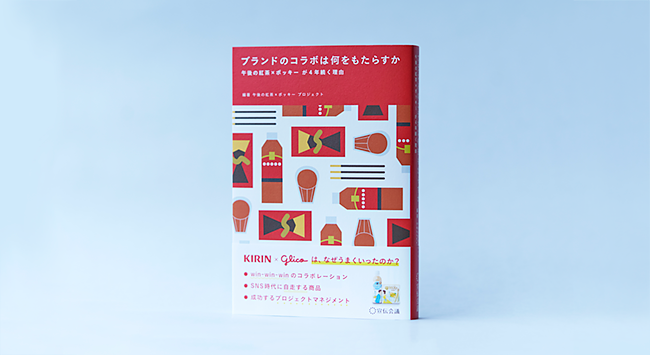
In this column, I'll discuss the various outcomes "collaboration" can produce, drawing on parts of the book. I aim to cover everything thoroughly—from essential collaboration know-how like partner selection and sales expansion strategies, to scheduling techniques for creating buzz, and photogenic concepts for generating organic momentum on social media, revealing new marketing methods uncovered through collaboration. Please join me for all six installments. (I wonder how many times I'll say "collaboration" from here on out...)
Is collaboration even necessary?
This book highlights the collaboration between Afternoon Tea and Pocky as a successful case study.
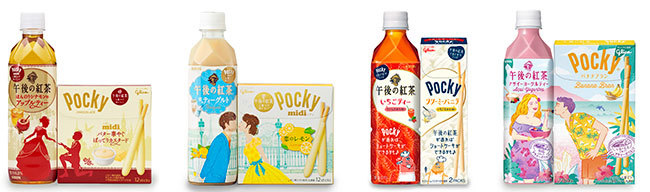
Typically, measuring the success of such "special event" collaborations is challenging. However, this project yielded visible results: not only did both products see strong sales, but the boom's impact extended to core products, boosting overall brand sales. Despite no paid advertising, extensive media and social media coverage made it a societal news topic.
We ventured into areas difficult to achieve through regular marketing activities and successfully implemented bold ideas. For instance, packaging featuring a man and woman kissing side-by-side would be absolutely impossible for a standard product. This project was realized precisely because it was a "collaboration" where mutual interaction enhanced both parties.
However, collaborations are merely one "means" to achieve objectives. Within a brand's overall strategy, it's crucial to clearly define the purpose of the collaboration and its specific role.
This is because, by its very nature, a "collaboration project" cannot be positioned as a core plot point within a brand's strategic main storyline. Even for brands like Afternoon Tea or Pocky, no matter how many years a collaboration lasts, the collaborative product will never become the main flagship item. The sales boost it can deliver is also short-term. It remains, fundamentally, just one "tool" to energize brand activities.
Furthermore, different brands and companies have entirely distinct cultures, language, and approval processes. Not only does aligning these require immense effort, but the number of senior decision-makers you must get on board also multiplies exponentially (or even more!).
Considering this, collaboration projects are high-cost endeavors requiring significant investment in human resources like "people" and "time," even though they aren't core business (there, I said it...).
When considering a collaboration, it's important to understand this aspect.
We don't want the same things
"We want to create new buzz for a stagnant brand."
"We want to gain more fans by teaming up with new partners."
"Hitch a ride on the other party and just want to reap the benefits"
When starting a collaboration, your goals may differ from your partner's. In such cases, the project's approach changes depending on which collaboration "model" you choose.

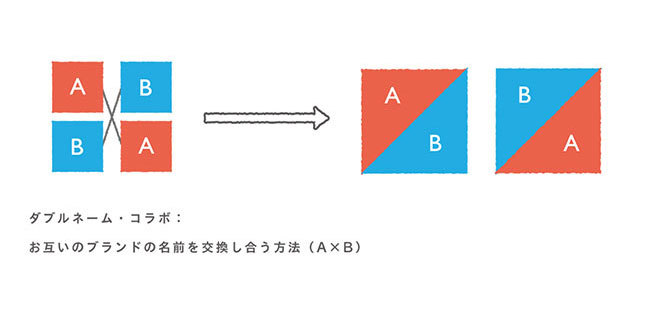
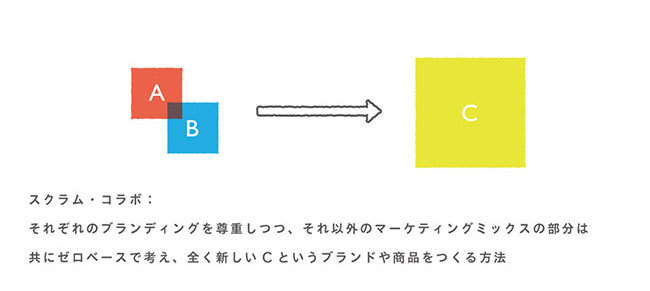
There's no single "correct" model—choose based on the project. However, the model you select will influence the criteria for detailed decisions and where the initiative lies. It's crucial to disclose each other's objectives and desired outcomes as early as possible. This leads to a win-win outcome.
Collaboration inherently involves costs and risks. Moreover, when coordinating with partners running fundamentally different businesses, it's impossible for your company's position to prevail 100% of the time.
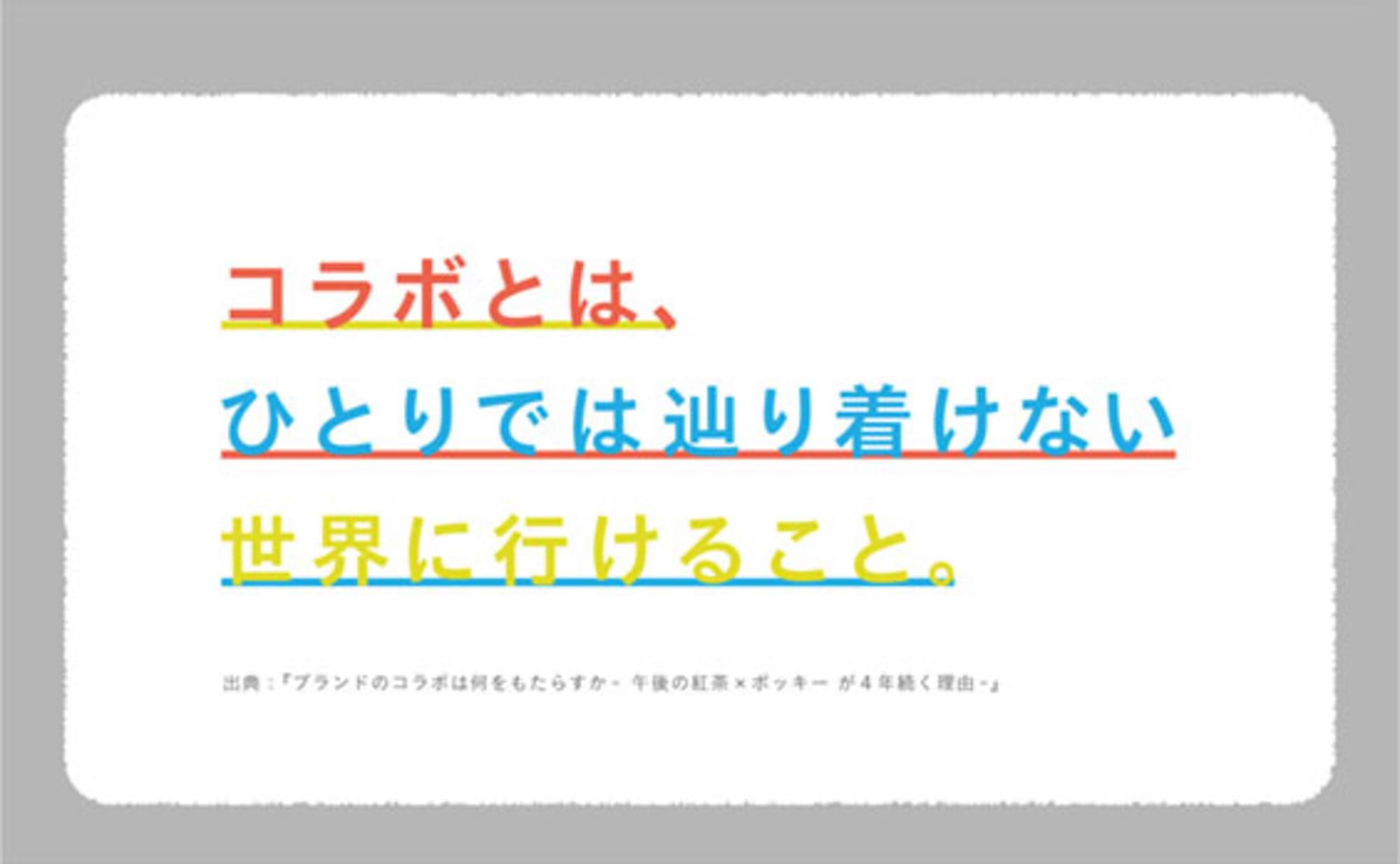
Yet collaboration remains fascinating. It's a means to effortlessly reach worlds that would be utterly unattainable alone or through a single brand. We'll gradually unravel the essence of such "collaboration" from here on.
(To be continued)
Was this article helpful?
Share this article


Newsletter registration is here
We select and publish important news every day
For inquiries about this article
Author

Sakamoto Yako
Dentsu Inc.
Business Production Bureau (on secondment to CACDO)
Copywriter/Interactive Art Director