Note: This website was automatically translated, so some terms or nuances may not be completely accurate.
Bringing the spirit of traditional Kabuki to the modern age. The creators behind impactful posters.
Kabuki, a traditional Japanese performing art. With a history said to span over 400 years, it remains an important part of Japanese culture today. Yet, even among Japanese people, the number of those unfamiliar with Kabuki or who have never seen it is growing.
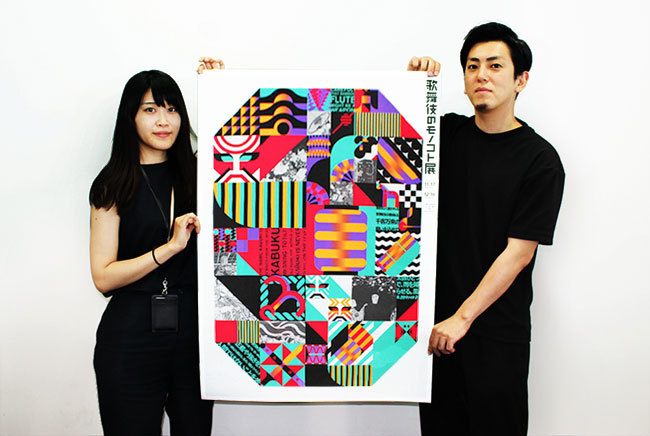
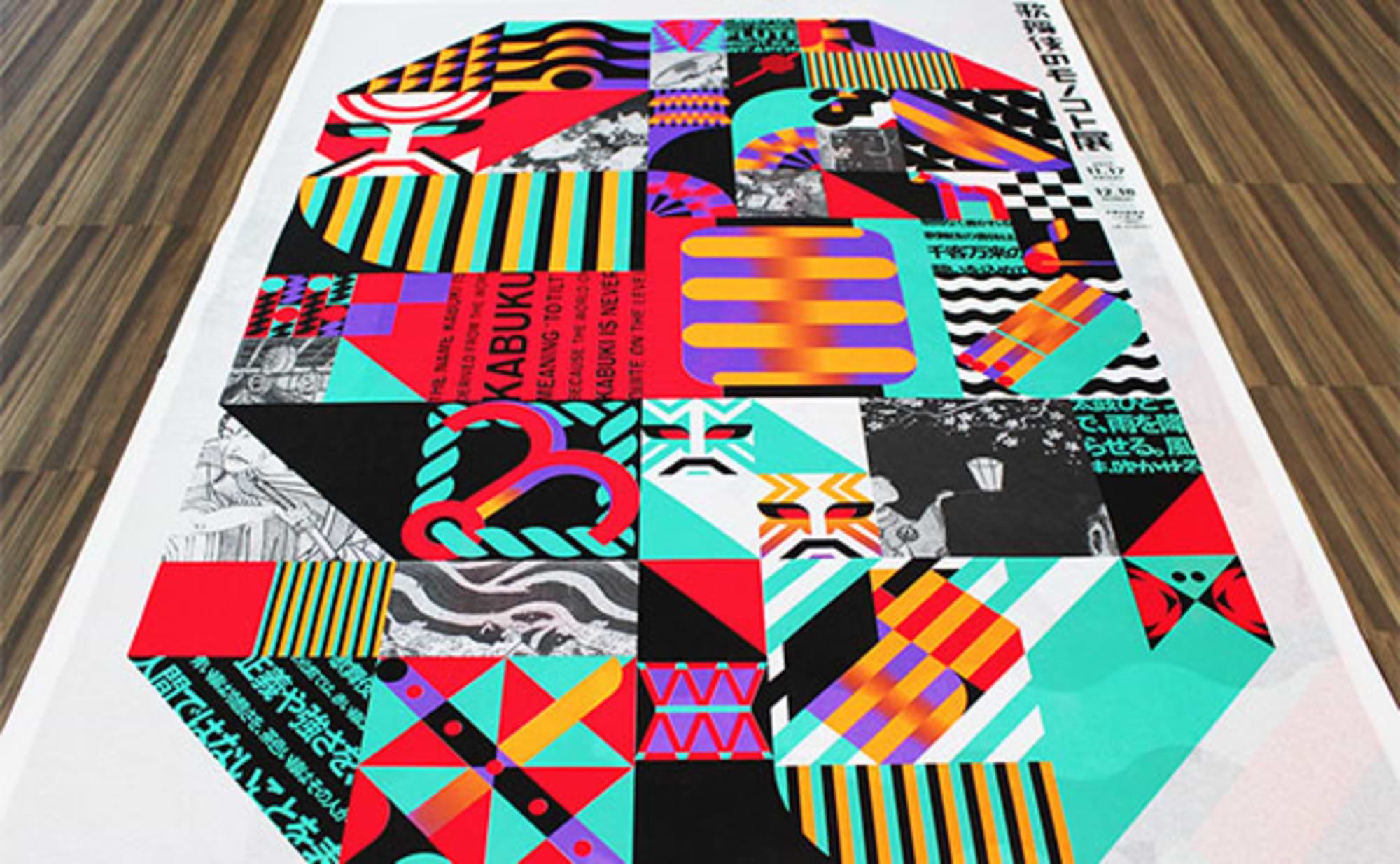
Amid growing domestic efforts to help modern people understand kabuki's appeal and essence, a poster created last year drew attention. It was for the "Kabuki Mono Koto Exhibition" held in Kyoto, a hub of Japanese traditional culture. The work, which preserved inherited traditions while boldly condensing striking colors and impactful design, was the result of the creators' pursuit of "what is the essence of kabuki?"
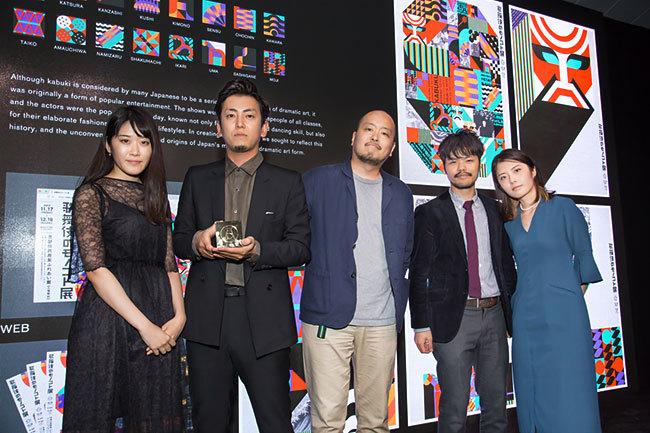
The poster won the D&AD Yellow Pencil, ONE SHOW Gold, and NYADC Gold awards. How did this internationally recognized work come to be? We spoke with Art Director Yuki Tsutsumi (Dentsu Inc., Creative Planning Division 4) and Copywriter Marina Danjo (Dentsu Inc., Creative Planning Division 2) about the behind-the-scenes story of its creation.
The core concept was rooted in the original spirit of "Kabuki"
—The poster for the "Kabuki MonoKoto Exhibition" received high praise internationally, including winning a D&AD award. As its creators, how do you feel about this response?
Danjo: We originally created this poster with the intention of sparking interest even in people unfamiliar with Kabuki. In that sense, it's especially gratifying that it resonated with audiences overseas, who are further removed from Kabuki. It means our aim was understood. I'm also deeply grateful to the staff at Minamiza (a Kabuki theater in Kyoto operated by Shochiku), our client, for allowing us to pursue this form of expression.
Tsutsumi: We were also delighted to hear many overseas viewers describe it as "emotional and powerful," showing interest in the poster or reacting to it even without detailed knowledge of Kabuki itself.
—First off, what was the background behind creating the poster?
Danjo: Last November to December, it was decided that an exhibition called "Kabuki: Things and Stories" would be held in Kyoto. It featured displays of costumes and props used in Kabuki, along with hands-on workshops. The event organizer, Nanzō, then requested that we create promotional materials for the exhibition.
Tsutsumi: Listening to them, I sensed that while the prestige of Kabuki as a traditional performing art is important, that very image of high barriers can be a hurdle to attracting new audiences. So, I wanted to create promotional materials that would spark new interest even in people who previously felt distant from Kabuki.
For this poster, under the direction of our team's Creative Director, Yoshihiro Yagi, I handled the overall design. Danjo is a copywriter, so naturally she handled the copywriting, but in her case, she also took the lead in developing the overall concept for the poster, including the visuals.
Danjo: I often take on the role of considering the overall direction and conceptual ideas. This time, I established the core concept, and based on that, Tsutsumi handled the design production.
When deciding on a concept, I always start by researching the subject. Since I wasn't familiar with Kabuki either, I went to see performances and read books and magazines. Within that process, I considered, "What aspect of Kabuki should we convey to spark interest in people unfamiliar with it?"
One thing that stuck with me while studying kabuki was its etymology. While there are various theories, it's said to derive from "kabuku." "Kabuku" carries the nuance of "a mindset that seeks to shock or defy convention." While kabuki is now seen as a quintessential traditional art form with a prestigious image, in its early days, it might have been entertainment where unconventional people wore flashy clothes and danced.
That "kabuku" spirit—that desire to shock—is perhaps the very essence of kabuki. I believed conveying this could spark new interest in many people.
Tsutsumi: When kabuki first began, those costumes and performances must have made a tremendous impact. What if we tried that today? That was the core concept behind this poster.
Unifying the entire poster around "kabuku"
—Once the concept was set, what design elements did you focus on, Tsutsumi?
Tsutsumi: Kabuki involves many elements like costumes and props, and this exhibition showcases them all generously. For the poster, I iconized each element and designed by combining them. But within that, I had to express the "kabuku" spirit. I agonized over what a modern version of "kabuku" would be that could resonate with people who previously felt distant from Kabuki.
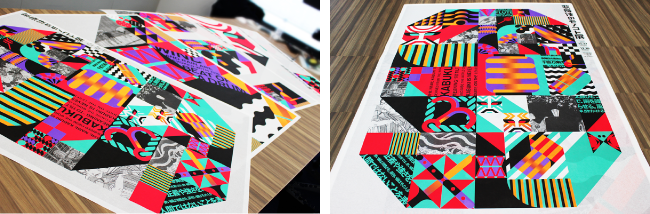
Of course, we couldn't compromise the essence of Kabuki, but we also needed to make an impact on viewers. Every aspect—the color palette, each icon, and their combinations—had to convey a powerful impression. We especially experimented with the color tones right up until the printing stage.
For icon creation, we didn't depict elements like "kumadori" (Kabuki actor makeup) literally; instead, we slightly deformed them to create impact. In terms of color scheme, we made icons colorful while using monochrome for photos to create contrast.
—Perhaps it was these meticulous details that were recognized this time.
Tsutsumi: If so, that's wonderful. I believe this accumulation of meticulous work is a strength that connects to Japanese creativity and craftsmanship.
Danjo: What worked well for this project was having a strong, unwavering initial concept. Having clear guidelines from copy to visuals was crucial. Personally, I always prioritize returning to the "original purpose" and "target audience" at every stage of my work, and this time, we established that foundation firmly from the start.
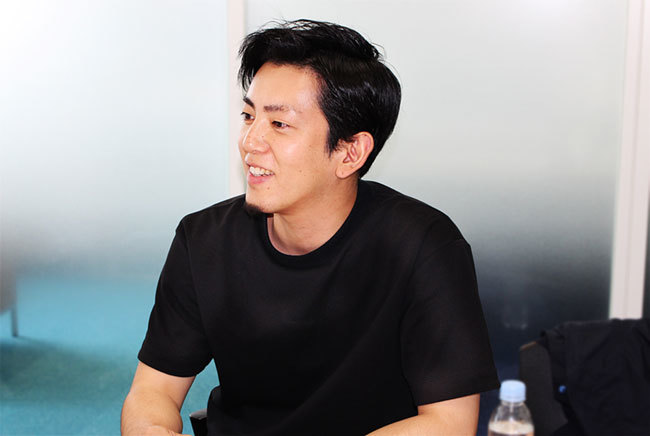
What the "Undecided Style" Brings to the Work, as Perceived by the Two
—Why do you place such importance on returning to the beginning?
Danjo: I believe it's essential work for improving quality. Once you start charging ahead, you often end up straying from the original purpose. We do it to constantly keep the essence of the project—the concept, for example—in mind.
While making decisions is inevitable during production, we consciously avoid rushing them and instead focus on thoroughly discussing opinions. That's something I learned from seniors like Yagi, who was the team leader this time.
Tsutsumi: What was distinctive about this team was that we simply didn't "decide." Even after discussing things in meetings, we deliberately avoided reaching conclusions. Even when I submitted design proposals, it wasn't clear if they were approved or not... At first, that made me uneasy, but as we progressed, I came to understand the reason behind not deciding.
Essentially, if you decide too early, you can't go back if you later realize something's off. Instead, you float ideas everyone likes, keep many options open, and gradually refine them. Then, at the very end, you connect everything perfectly. That way, you end up with something high-quality that truly fits the concept. Once I understood this, I actually started enjoying the non-decision style.
Also, as I mentioned earlier, Danjo presents the concept and direction, including the visuals. Since he often sketches visual ideas himself, it made things easier.
Danjo: Personally, I enjoy design-focused work like this and am happy to be involved. While I do pure copywriting jobs, coming from an art school background means I often take on roles involving broader design concepts and approaches for design-centric projects like this one.
Tsutsumi: Design-focused projects naturally have less text, so copywriters can sometimes be undervalued. However, since she handles concept development that spans into design, I think she should be recognized for that broader scope. She's a rare type of copywriter.
—Tsuge-san, do you have any particular principles you adhere to in your work?
Tsutsumi: It's about clearly defining the emotional response you want the viewer to have and building from there. For this project, we had the concept of the podium, and on top of that, we simply aimed to "create a powerful impression." You need to clarify as simply as possible what feeling you want the viewer to have. Otherwise, it's hard to truly connect.
However, I don't rely solely on my own intuition; objectivity is crucial. I actively absorb ideas from other team members. This broadens my own output and prevents me from becoming self-indulgent. In fact, some of the visual references I used were inspired by the visual concepts proposed by Danjo.
—Finally, could you share the kind of creators you both aspire to become?
Tsutsumi: I want to become someone who can create more "durable designs." Right now, partly due to digital influences, designs that excel at creating that "peak moment" of viral spread on social media tend to get the most attention. But to build a long-term brand, you need designs that are loved for the long haul—durable designs.
For example, I really like the "dentsu" logo. It might not be something that instantly becomes a hot topic, but you can tell it was crafted with meticulous attention to detail. I think designs like that are the kind that endure. Going forward, I want to create designs meant to last, like logos for commercial facilities or buildings.
Danjo: I often work with Yagi's team, including this project. I'd love to build a team like that myself. As digital and other expressions become more complex, I think it's best to assemble people with distinct areas of expertise. People who know things I don't, or who appreciate the same things. I believe forming a team with such individuals, working on projects with a relatively fixed core group, leads to better results.
To make this happen, I must first master my own specialty. Otherwise, I won't become someone others seek out. That's how I want to become a creator capable of leading large teams. Even then, I won't rush to define a fixed work style. Like this project, I want us to move forward through discussion.
Was this article helpful?
Share this article


Newsletter registration is here
We select and publish important news every day
For inquiries about this article
Author
Yuki Tsutsumi
Dentsu Inc.
4th CR Planning Bureau
Art Director


Marina Danjo
Dentsu Inc.
Second CR Planning Bureau
Copywriter